Golf Bag Technology Innovations in 2025

The golf bag technologies that genuinely matter in 2025 are the ones that engineer weight out, structure in and organisation higher — lightweight and carbon-fibre materials that cut carried mass, reinforced bases and high-denier waterproof shells that survive rough handling, and smarter organisation such as full-length dividers, magnetic perfectly-in-place pockets and self-standing frames — while the genuinely useful smart features earn their place with real battery, connectivity and security value rather than gimmick digital displays. The winning innovation in 2025 is not any single feature but the integration: materials science drives lighter, tougher shells; structural design drives stability; and the few thoughtfully integrated smart functions improve the round without breaking it.
Bag tech moves fast, and the marketing moves faster, which makes it easy to overpay for features nobody needs or to miss the innovations that actually change the round. This guide separates the category into materials, structure, organisation and smart features, and applies a blunt test to each: does it carry less, protect more, organise better or earn its battery? Keep that test in mind and the noise of the 2025 catalogue becomes a short list of upgrades with a real payoff.
The Tech Stack Inside a Modern Golf Bag
The useful technology inside a modern bag can be grouped into four practical families: materials that save weight and add strength, waterproofing that is engineered rather than coated on, organisation systems that protect clubs and speed access, and connected features that earn their battery by solving a real problem. The thread linking them is that technology only earns its place when it survives the round, which is why a reputable factory tests each layer to repeatable standards before it ships. A divider that tangles clubs, a zipper that fails after a season, or a sensor that needs charging every round all read as gimmicks no matter how clever the engineering behind them. The honest test for any feature is whether it still works on the back nine in the rain, and that standard shapes both what is worth building and what is worth buying.
A modern premium golf bag is less a canvas satchel and more a layered assembly of technology, and it helps to name the layers before you judge any one feature. At the base sit the materials: the shell fabrics, the coatings, the structural frame elements. Above that sits the construction: the base plate, the dividers, the strap anchors and the stand geometry. Next come the organisation features — pockets, magnets, cooler slots, full-length dividers — and finally the smart layer: battery, connectivity, trackers, and any app or display. Each layer earns its price only if it serves the round, and the best bags balance all four rather than loading up one.
Judged as a stack, you can see where a bag is genuinely engineered and where it is merely decorated. A budget bag that advertises one magnetic pocket while saving money on the base plate and fabric is spending tech on the wrong layer; a premium bag that spends on materials and structure first, then adds one or two well-built smart features, is spending it well. Understanding the stack is the whole game of buying better bag technology in 2025.
Materials Science: Lighter Shells, Stronger Frames
The quiet revolution is in fabrics. High-denier ballistic and ripstop fabrics, engineered polyester weaves and lightweight waterproof membranes have cut bag weight while raising toughness, and carbon-fibre components — the frame, the base plate, the leg and the top in the premium tier — shed grams where it matters most without flexing under a loaded bag. Weighing 4.5 lb (2 kg) and under for a carry bag once cost durability; the 2025 material sets give a genuinely light bag that still survives years of car boots, carts and rough handling.
The material trend connects directly to a deeper engineering story, and both are covered in the material-innovation deep dive on golf bag material developments. The practical buyer's test remains raw and simple: weigh it empty, load your set, and feel whether the frame flexes when you lift. If a light bag still tracks its load and does not sag, the materials are doing the work; if it feels hollow, the grams were saved at the wrong seam. A quick pick-up test — grab by the top and feel whether the frame holds level with a set inside — reveals within seconds whether the weight engineering was honest or just a thin shell, and it is the fastest material verdict in the shop.
Carbon Fibre: Where the Real Weight Wins Are
Carbon fibre earns its premium in exactly the spots where a bag gets handled: the top collar, the base and the leg mechanism. Replacing aluminium or steel there can trim meaningful weight while improving stiffness, and because those parts also take the roughest handling, the carbon must be engineered right or it cracks. The result in 2025's premium tier is a bag that is simultaneously lighter and stiffer than its metal-framed predecessor, which is a rare and genuinely valuable combination.
For most players the carbon premium pays off if they walk often and want to notice the reduced heft at the shoulder without losing stability. For riders the benefit is smaller, since the bag rides rather than rests on the back. The trade-offs are worked through in the carbon-fibre performance analysis for the golf range, but the rule of thumb holds: spend on carbon where the bag is handled, not where it is decorated.
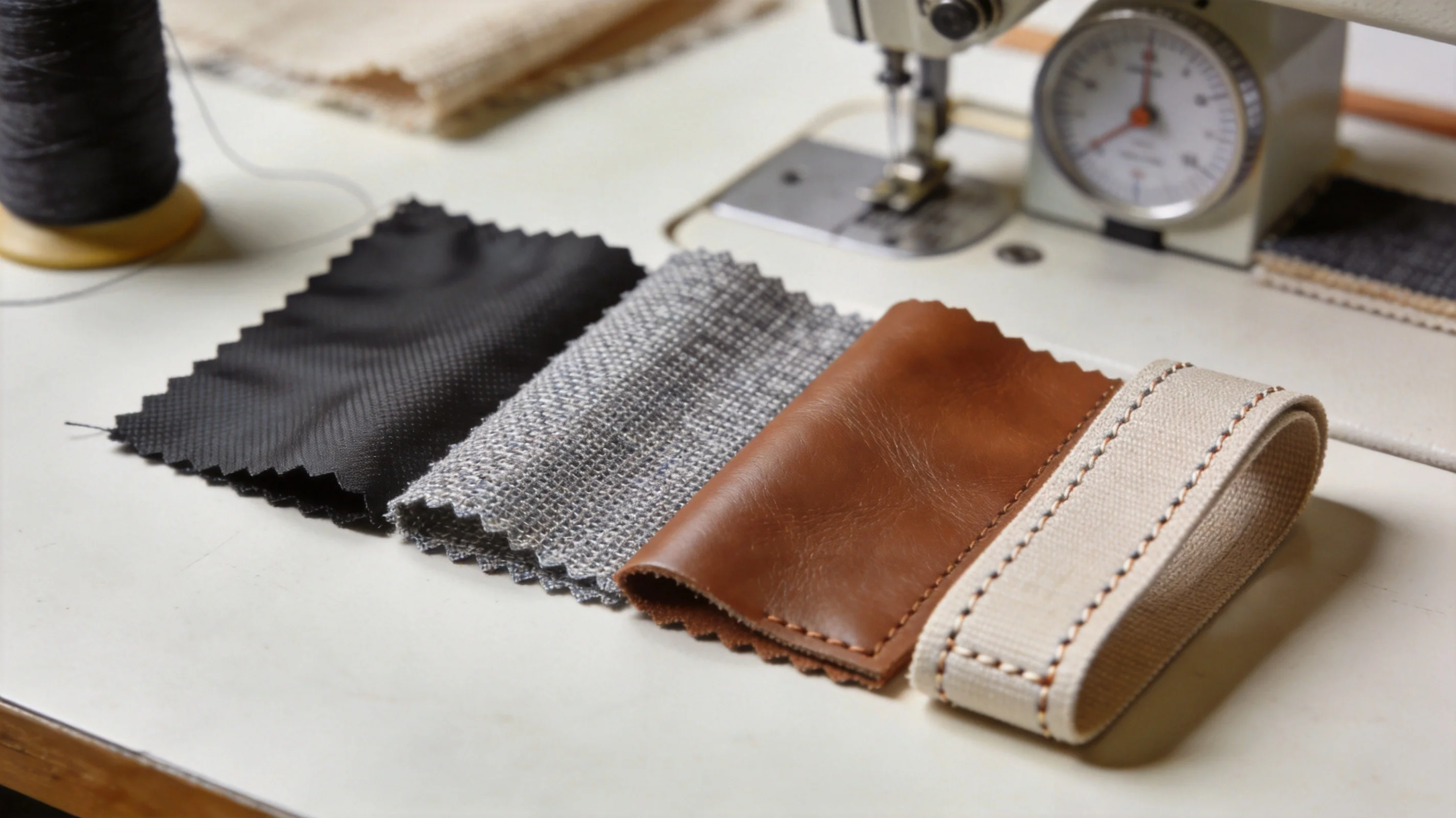
The material trends connect directly to a deeper engineering story, and both are covered in the material-innovation deep dive on golf bag material developments.
Waterproofing Technology: From Coating to Construction
Waterproofing has grown from a spray-on coating to a engineered construction in its own right. The most effective bags now pair a coated outer shell with taped or sealed seams, water-resistant zippers and an integrated rainhood, so the protection survives repeated washing and wet rounds rather than wearing off after a season. Denier counts and membrane layers distinguish a genuinely waterproof bag from a merely water-repellent one, and for players who face regular rain the difference is whether the contents stay dry.
Technology here pays twice: a sealed bag keeps clubs and electronics dry, which protects expensive equipment as well as comfort. Check the seams and zippers as carefully as the fabric, ask what happens to the coating after repeated wet rounds, and favour construction-based waterproofing over coating-based claims. The waterproof-travel-bag guide extends the same reasoning to airline abuse.
Organisation Tech: Dividers, Magnets and Self-Standing Frames
Some of the most valuable bag tech is the least glamorous. Full-length dividers protect each club's shaft and grip for a full set; magnetic pockets let you drop a ball glove or rangefinder into a perfectly-placed, springless closure; and self-standing frames keep the bag upright on its own legs so you never lean it against a cart and never bend awkwardly. These are structural and organisational innovations that change the round more than a flashing display does, because they protect clubs and speed up play every single time the bag is used.
A well-designed organisation system stops you rummaging: valuables pocket high and safe, a lined cooler for hydration, a glove and rangefinder pocket exactly where the hand naturally goes. The benchmark study is the intelligent organisation systems guide, but the buyer's test is behavioural — set the bag down and count how many seconds it takes to reach the most-used item. Great organisation tech makes that number feel like zero.
| Technology | What it does | Genuine value | Watch-out |
|---|---|---|---|
| High-denier shell | Tough lightweight shell | Less weight, more durability | Cheap 'waterproof' spray |
| Carbon frame | Stiff, light frame/base/leg | Lighter and stiffer carrying | Quality of the layup |
| Full-length dividers | Each club separated | Protects shafts and grips | Truly full-length vs partial |
| Magnetic pockets | Springless quick-access | Fast, one-handed reach | Magnet strength & closure |
| Self-standing frame | Upright rest on legs | No leaning, easy pick-up | Leg durability |
| Tracker / app | Location, data, lock | Reassurance & convenience | Battery & subscription |
Smart and Connected: What Earns Its Battery
The highest-profile bag tech is the smart layer, and it is also the easiest to over-buy. The genuinely useful functions in 2025 are a loss tracker (find the bag anywhere, whether under a hire queue or stolen), a simple status display (club count, lock state, battery) and, on elegant premium models, a clean integrated panel rather than a bolted-on phone cradle. Each of these earns its place because it responds to a real moment — lost bag, locked bag, or a battery you did not expect to die. The most prized of the three is the loss tracker, because a bag that vanished from a hire queue is worth far more to find than the small integration it cost.
The features worth skipping are decorative displays that need constant attention, apps whose only job is to sell you more, and charging ecosystems tied to one brand of gadget. Apply the battery test: a smart feature should add value proportionally to the battery and attention it asks for. The reference work is the overview of smart golf bag technology in 2025, which ranks the features by real usefulness.
Connectivity and Battery Realism in 2025
Any bag with a battery raises the practical questions most reviews skip: how long the charge lasts across a season, how it is charged (USB-C is the honest answer in 2025), how it behaves in wet rounds, and what happens to the app when the bag's brand discontinues the connected service. Premium bags handle these with sealed, serviceable battery cells, a widely available charge cable, and connectivity that works through a standard app rather than a proprietary walled garden.
The connected trend is analysed well in the IoT integration guide, but the buyer's takeaway is hostile realism: ask what the tracker battery lasts in standby across a season, whether you can replace it yourself, and whether the brand commits to long-lived app support. Technology that strands you with a dead battery or an abandoned app is not innovation, it is planned obsolescence wearing a tech label. The same realism extends to the ecosystem: if the connected features only function inside one brand's walled service, a rival's open approach that keeps your data portable is worth a preference, because a golf bag that should serve you for years should not be retired by a discontinued subscription.
Battery Power and Charging Built In
A smaller but growing tier adds charging to the bag itself — a USB port powered by the bag's battery so you can top up a rangefinder or phone mid-round. Useful when a portable power bank is already going to ride in the bag; a nice consolidation. The polite engineering question is the same realism as the tracker: capacity, charge cycles and whether the power system is easily replaceable. A bag-integrated port that is not serviceable becomes a liability the day it dies, so treat integrated charging as a convenience for people who already carry a power bank, not a buying reason alone. The dedicated look at wireless charging and power management sizes the trade-offs precisely.
Security: Locks, Trackers and Anti-Theft
Security tech pairs a mechanical lock or zipper clasp with a digital tracker for the strongest protection, and in 2025 it is the smart feature with the clearest job: a golf bag left on a trolley or a hire complex is a genuinely attractive target, and a tracker that finds it, or a lock that discourages the walk-off, earns its battery faster than any display. Integrated trackers use the standard global finder networks rather than proprietary ones, so the bag is findable wherever the golfer travels.
For retailers there is a reassurance angle as well as a theft one — a tracked, lockable premium bag is a stronger upsell and a better product story. The security angle is covered in detail by the biometric and anti-theft systems guide, but the simple advice for most players is to prioritise a dependable mechanical lock and a tracker that does not need its own monthly subscription to be useful.
How the Factory Tests Technology Honest
The credibility of any "innovation" rests on how it is tested, and in 2025 the honest factories test materials, structure and hardware to repeatable standards before they ship labels. Fabric abrasion and seam-strength checks, flex and drop testing on the frame and legs, zipper and closure cycle counts, and moisture resistance on the sealed shell separate a genuine upgrade from a marketing sticker. A bag's technology claim is only as strong as the test that verifies it.
Our affiliated 4,950 m² factory, producing golf equipment since 2004 and established as a company in 2014, runs seven production lines, 126 sewing machines and 137 staff, making 200,000 bags a month for 200+ brands across 100+ countries, and passed an SGS audit in March 2026. It can develop innovative materials and construction into a private-label range, with sampling in 10-20 days and production in 45-60 days at a 200-piece MOQ (100 for test orders). The factory-to-feature pipeline behind such R&D is also the subject of the AI and machine-learning applications guide — technology is only real when it is built and tested, not just announced.
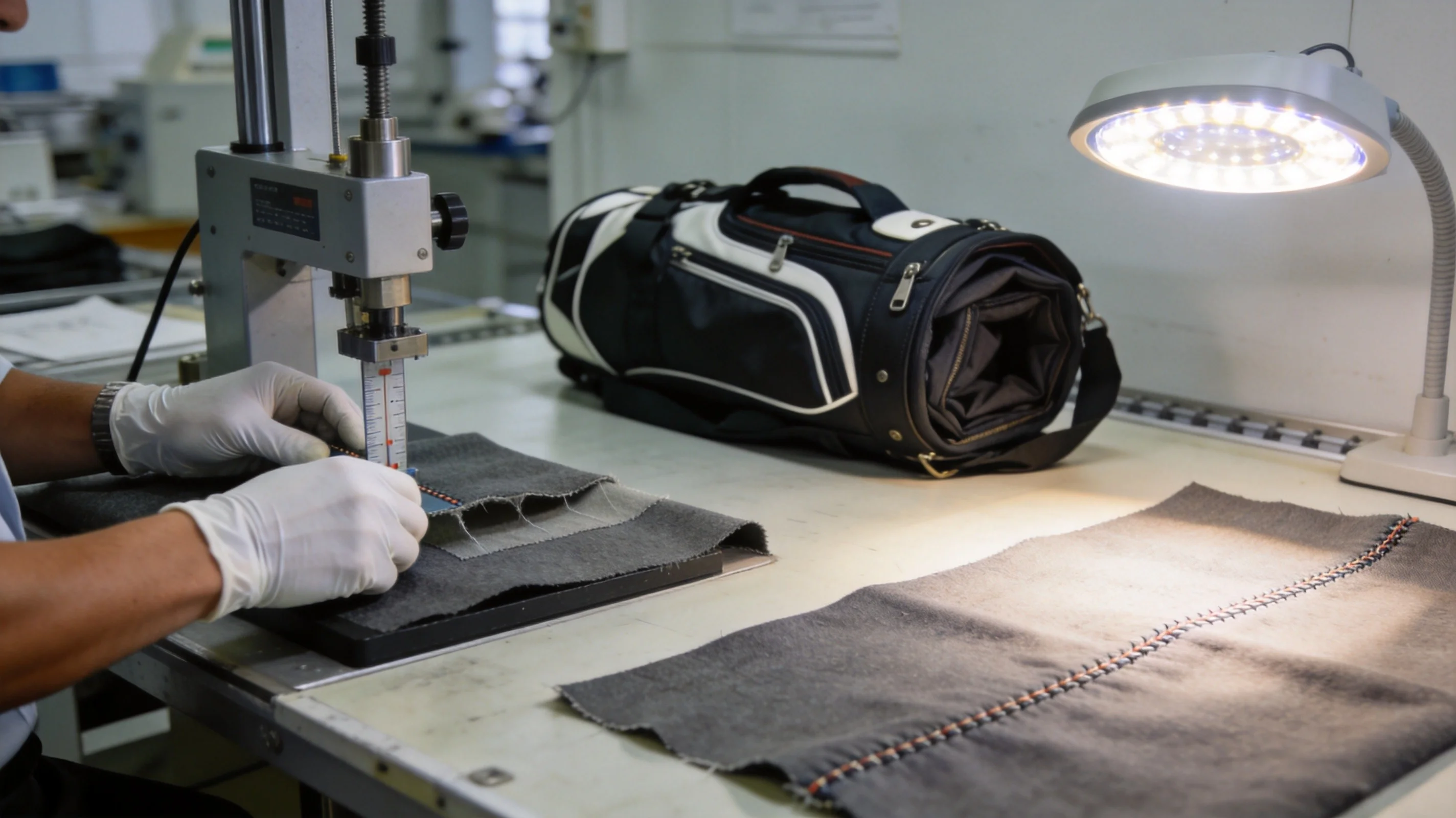
Because testing separates real innovation from marketing, a buyer comparing suppliers should ask what evidence accompanies a claim: an abrasion report, a seam-strength figure, a flex or drop test, a zipper cycle count. The factory that can show the test behind the label is the factory whose technology can be believed — which is exactly why an audited operation leads the credible field.
Accessorising the Tech Bag: Choosing Features That Complete
Technology does not stop at the bag itself, and the strongest 2025 setups combine a few well-considered pieces rather than one over-equipped product. A partner rangefinder case with a quick magnetic mount, a sealed hip-cooler that clips to the chest strap, a matching umbraphilic rainhood and a dedicated glove pocket complete a system without asking one bag to do everything. The principle is modularity: each accessory earns its space by solving one specific problem, and the whole beats the sum of a dozen gimmicks.
For retailers, a modular range is also simpler to stock and upsell — the customer upgrades by adding a proven piece rather than replacing a whole decorated bag. Choose features that make the round faster or the kit more secure, skip preconfigured bundles that force features nobody wanted, and the tech bag becomes a coherent, dependable system rather than a catalogue of bright parts.
Conclusion
The Shift From Gimmick to Standard
Golf bag technology on the whole is shifting from headline-gimmicks to dependable standards — the features that survive are the quiet ones that reduce weight, protect clubs and organise the round, not the ones that flash. What was once premium slowly becomes the default: lightweight high-denier shells, carbon where it matters, full-length dividers and construction-grade waterproofing are now found far down the price ladder. The smart layer is following the same curve, with trackers and USB stays while decorative displays fade.
If there is an outlook for 2026, it is for more of this integration at lower prices rather than a new feature frost: materials get tougher and lighter, organisation gets smarter, and the battery-driven layer consolidates around the features that prove themselves. The future-development outlook looks further ahead, but the present test is unchanged — a bag's tech earns its price only if it carries less, protects more, organises better or pays for its battery in use.
Conclusion
The golf bag technology worth buying in 2025 is the integration, not the novelty: lighter and tougher materials reduce carried mass, carbon and reinforced structure keep a light bag rigid, full-length dividers and magnetic pockets organise the round, construction-grade waterproofing protects the contents, and the few smart features that survive — trackers, simple status, honest charging — earn their battery. Apply the test consistently, buy the layers of engineering that change the round and skip the gimmick, and the powerful bag is not the one with the most features but the one that carries less, protects more and organises better for every round you play.
Sources
Frequently Asked Questions
- What golf bag technology actually matters in 2025?
- The durable, practical tech: lightweight high-denier and carbon materials, reinforced structure, full-length dividers, magnetic pockets, self-standing frames and construction-grade waterproofing, plus genuinely useful smart features like trackers and simple status displays.
- Are smart golf bags worth the extra money?
- Only the features that answer a real need — a loss tracker, a lock state or a usable charge port — are worth it. Decorative displays and subscription apps that only sell more features are easy to skip.
- Is carbon fibre worth paying for on a golf bag?
- Yes where the bag is handled — top collar, base and leg mechanism — because it is lighter and stiffer there. For riders who do not carry, the benefit is smaller.
- How do I tell real waterproofing from a coated claim?
- Look for construction-based protection: a coated shell plus taped or sealed seams, water-resistant zippers and an integrated rainhood. Favour sealed construction over spray-on coatings that wear off after wet rounds.
- How long should a smart bag battery last?
- A good tracker battery should last a season of standby, charge by USB-C, stay sealed in wet rounds, and be replaceable. Ask about serviceability and long-lived app support before buying.
- What technology should I avoid on a golf bag?
- Gimmicky displays that need constant attention, apps whose only purpose is to sell more, and proprietary charging or tracking ecosystems tied to one gadget. These add weight and cost without improving the round.
- Do lighter materials mean a less durable bag?
- Not in 2025. High-denier ballistic and ripstop fabrics, reinforced bases and carbon components give a genuinely lighter bag that still survives years of handling — if the grams are saved in the right seams, not the base plate.
- What is the most useful organization tech?
- Full-length dividers to protect every club, well-placed magnetic pockets for one-handed access, and a self-standing frame so the bag rests upright on its own legs.