Branded Golf Travel Bags for Golf Club Members
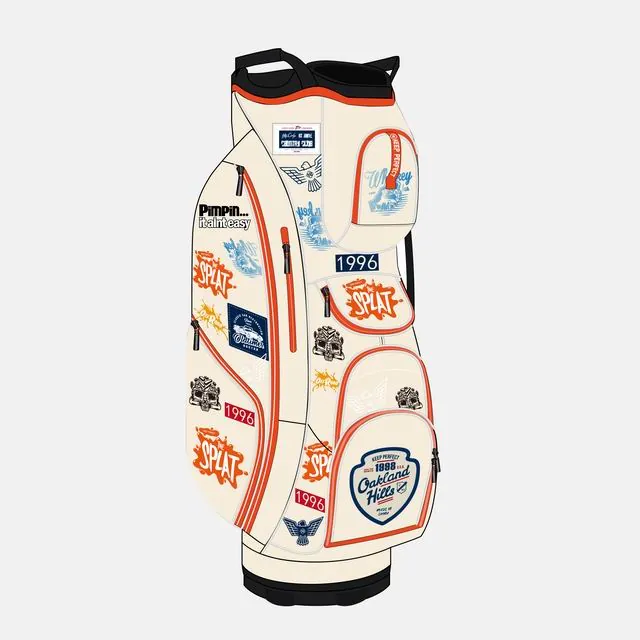
Branded golf travel bags are one of the highest-value promotional investments a golf club can make: a durable, customised bag worn on every member trip keeps the club name in front of members, guests, airline staff and airport crowds for years, while safeguarding premium clubs worth several thousand dollars. In golf, travel and club identity go hand in hand — a share of every member's rounds now begins with a flight, and the bag they wheel through the terminal is the most visible, longest-wearing piece of club merchandising there is. This guide, written by QUANZHOU JUNYUAN BAGS, explains how to design, budget for and source a branded golf travel bag that performs as a travelling billboard. Our founder entered the golf trade in 2004 and the company was established in 2014; we now manufacture on an affiliated 4,950 m² main factory with seven production lines, 126 sewing machines and 137 staff, shipping to more than 200 brands across 100+ countries.
Why Golf Clubs Need a Branded Travel Bag
A golf club's brand is built in three places: on the course, in the clubhouse, and increasingly in transit. When members and guests fly with their clubs, the golf travel bag is the packaging their equipment travels in and their club identity travels with. Unlike a staff bag that sits in a corner of the pro shop or a stand bag carried for a few hours, a travel bag is handled in full public view at check-in counters, baggage carousels and shuttle transfers — each touchpoint a free impression for the club.
The economics favour branding a travel bag over almost any other club give-away. A single durable travel bag, bought in bulk, is seen on every trip by its owner and by everyone travelling alongside it, and it keeps working for years rather than one event. Retailers and tour operators already know this: branded golf apparel and travel accessories are counted among the fastest-growing segments of the golf merchandise market because they convert everyday use into repeated visibility. For a club looking to raise its profile with members and attract new ones, a sharp logo and a colourway matching the club crest turn a practical purchase into marketing that pays for itself.
There is also a practical retention angle. A club that presents a high-quality, customised travel bag to members or to captains and guests signals care and adds tangible value to a membership. It becomes a reward, a thank-you and a recruiting tool in one. In our experience supplying clubs and resorts, the clubs that treat the travel bag as a marketing platform rather than a commodity see measurably more member engagement with the gear and stronger word-of-mouth around the brand journey they represent.
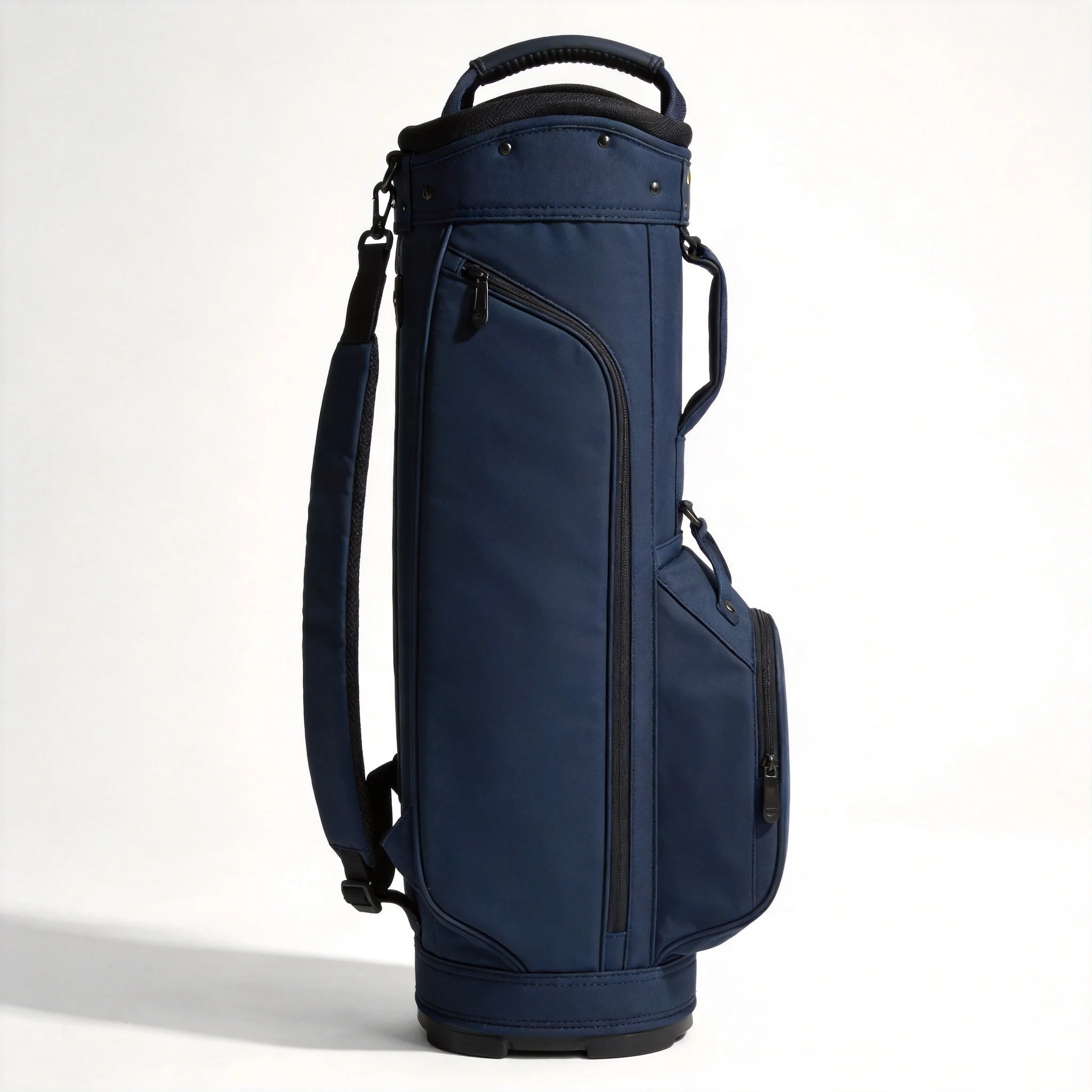
Soft-Shell Branding
A plush-lined soft travel bag offers a flexible, lightweight canvas for full-color club logos and is easy to store when not flying.
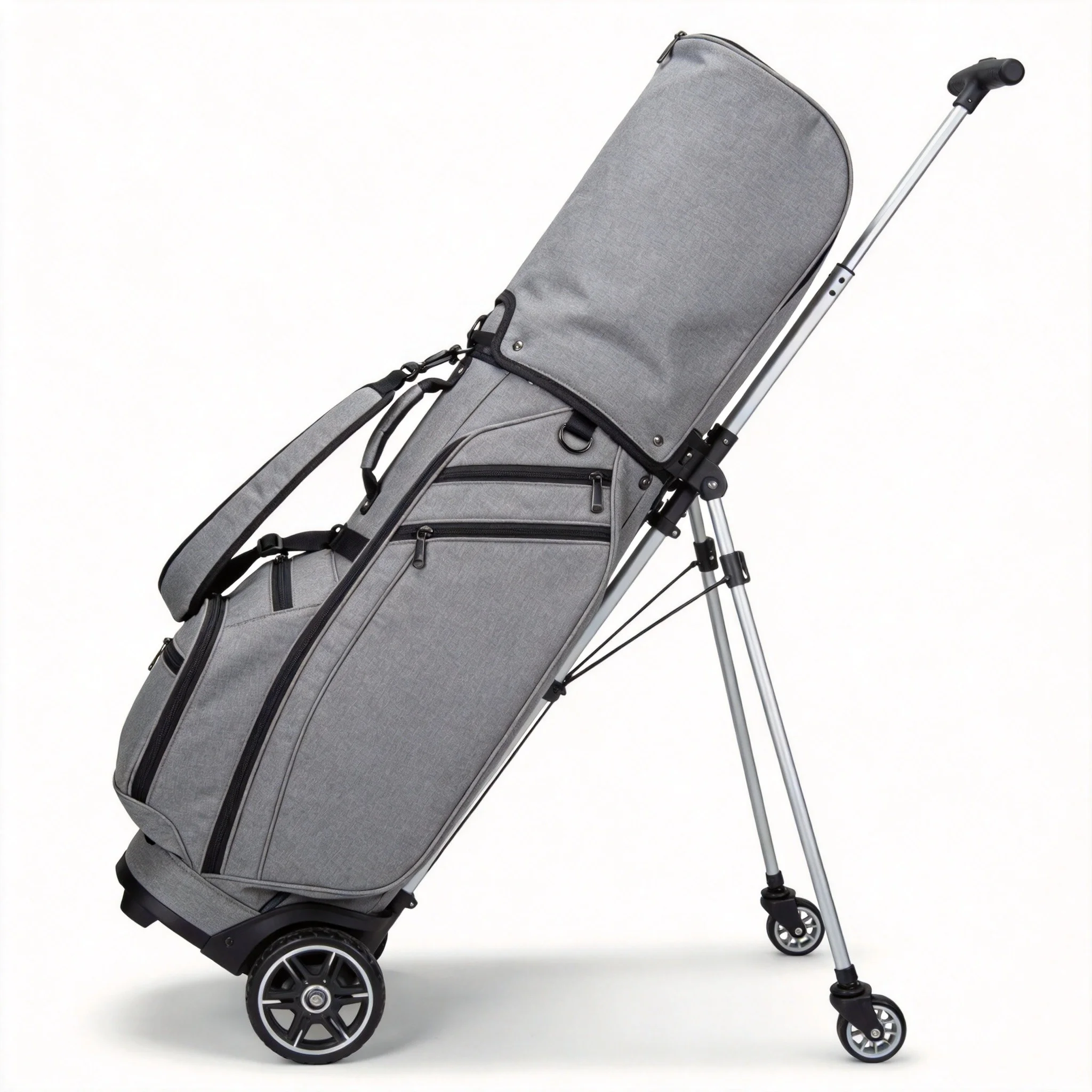
Wheeled Brand Reach
Wheeled travel bags extend brand visibility through airports while making member travel effortless and protected.
Understanding the Member Travel Loop
To design the right branded bag, a club has to understand how its members actually travel. Some fly internationally two or three times per season, others drive to regional courses, and a growing number combine golf with business trips. Each pattern stresses the bag differently: air travel demands impact resistance, airline-friendly sizing and locking protection, while road trips put the emphasis on storage, packing speed and a bag that fits the car boot.
The travel decision is also seasonal. Spring and autumn are the peak golf-travel windows in most regions, and branded bags ordered late miss exactly the trips that generate the most visibility. Planning the order several months ahead — our sampling runs 10–20 days and bulk production 45–60 days — ensures the bags arrive in time for the season's first member tournament or resort partner event. A club that treats the travel bag as an annual, planned purchase gets both better design and better pricing than one that orders in a rush.
Finally, the club should consider who the bag serves. A member-focused program that gifts or sells bags to individuals favours premium, durable construction and a neat storage profile; a resort or tournament program that rotates bags among guests may prioritise lighter weight and easy cleaning. Defining the program's goal — member retention, new-member attraction, tournament branding, or pro-shop revenue — determines the construction, the features and the budget that will serve it best.
QUANZHOU JUNYUAN BAGS builds golf travel bags on an affiliated 4,950-square-metre main factory that entered the industry when our founder started in 2004 and was established as a company in 2014. The facility runs seven production lines with 126 sewing machines and a team of 137 staff, supporting a monthly capacity of up to 200,000 units for more than 200 brands across 100+ countries. Sampling typically takes 10–20 days and bulk production 45–60 days, with a standard MOQ of 200 pieces and 100 for test orders. The factory was independently audited by SGS in March 2026. Contact service@junyuanbags.com or +86 17750020688.
Branding That Lasts: Print, Embroidery and Materials
A branded travel bag only works as marketing if the branding survives real use. The two workhorse techniques are embroidery for the club crest or monogram and heat-transfer or screen print for large, colourful panels. Embroidery is the most durable for logos on the main body, adding a premium feel and resisting scrapes on conveyor belts; print is better for large surface art, gradients or team-colour sweeps across the shell. A strong design combines both, using a printed panel or accent with a stitched crest in a position that stays visible even when the bag is standing.
Material choice sets the ceiling for how the brand looks over time. Heavy-duty, abrasion-resistant nylon or polyester in a structured weave holds colour and resists tearing, so the logo does not sit on fabric that quickly scuffs or fades. For full-colour branding, a smooth printable face and a stable liner keep logos crisp shipment after shipment. And the closures matter as much as the fabric: robust zips and reinforced webbing keeps the bag — and therefore the brand it carries — functioning trip after trip.
Colour and placement deserve real thought. Matching the bag's main colour to the club crest creates instant recognition; placing the logo on both faces and, where practical, on the handle or hood maximises visibility from every angle. Pantone-matched colours keep the club's brand consistent with its own identity and with any pro-shop apparel. Our design team supports full Pantone matching, so the red in a club crest is the same red on the bag as it is on the flag and the members' blazer.
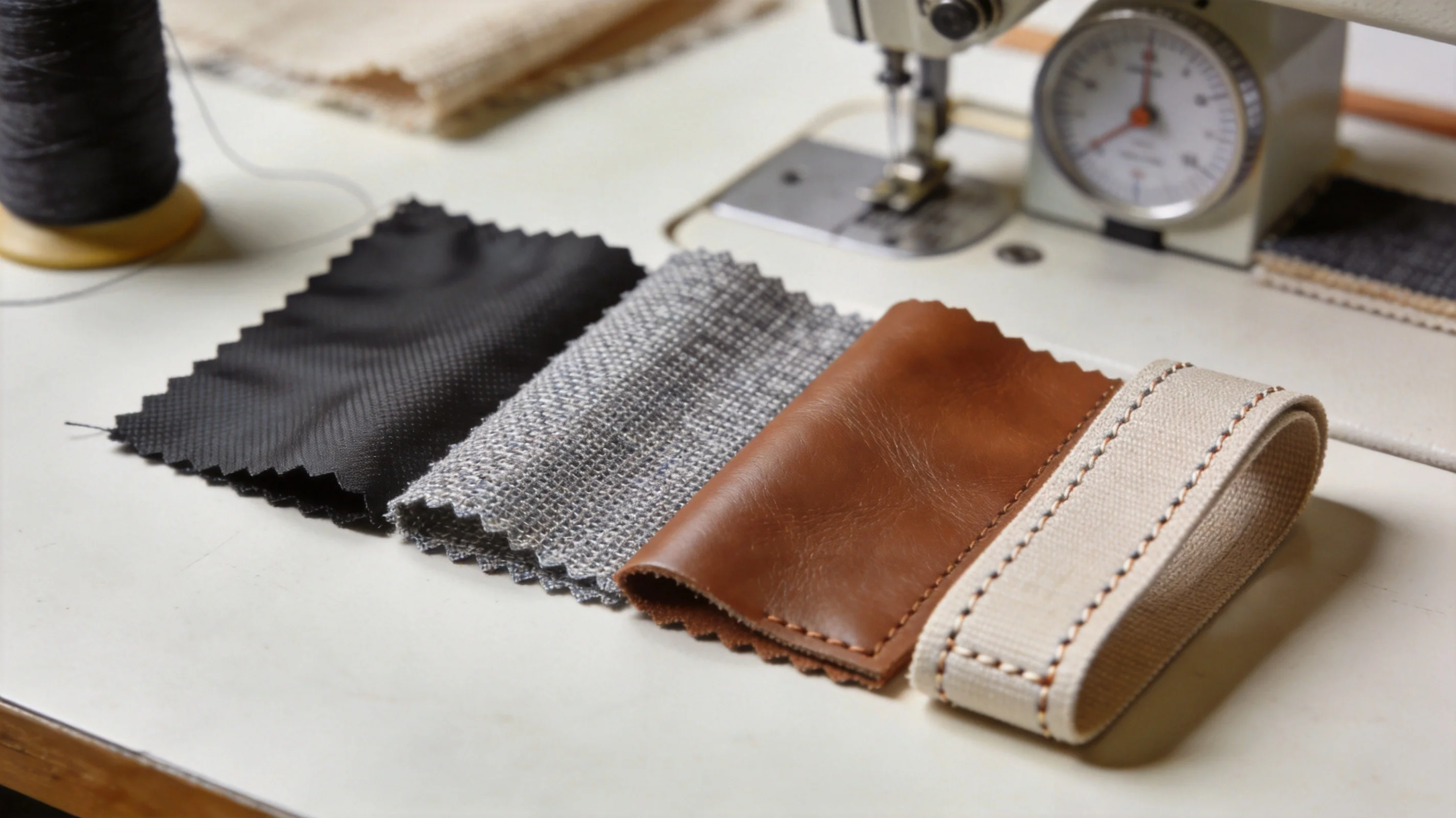
Material Precision
Matching materials and Pantone colours keeps a club logo sharp and consistent with club identity.
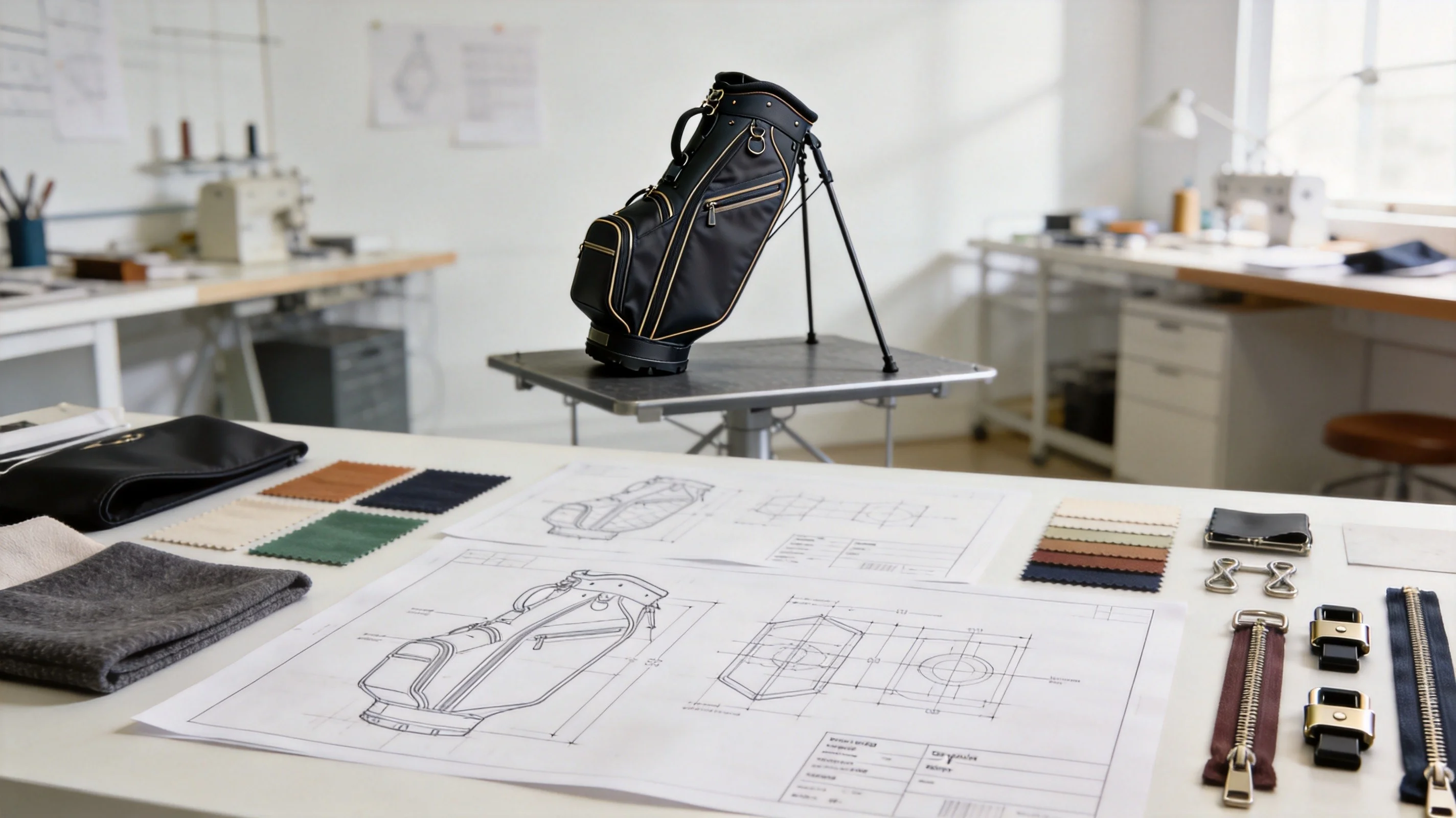
Sample Approval
A physical prototype lets the club approve exact colour, placement and construction before bulk production.
MOQ, Budget and Sourcing Realistically
Budgeting a branded travel bag program starts with the order size and the level of customisation. As a rule, the more bags ordered and the less complex the decoration, the lower the unit cost. Our standard minimum order is 200 pieces, with 100 available for test orders — a practical entry point for a club that wants to pilot a design before committing to the full membership rollout. Larger orders push unit pricing down and make embroidery and Pantone matching even more economical per bag.
The price-driving choices are the shell material, the lining, the wheel and handle system, the closure hardware and how much surface area carries branding. A simple single-colour crest on a standard shell is the most economical; a full-panel colour graphic with custom lining and a premium wheel system costs more but delivers measurably more visibility. A club should compare the cost per impression, not just the cost per bag — a slightly pricier bag that members actually use and keep is cheaper than a cheaper bag that gets left in the attic.
Our pricing model is transparent: $? hold the line on MOQ and per-unit economics while offering factory-direct access through our wholesale channel. Because we manufacture rather than resell, clubs avoid the trader markup and can invest the saving in better materials or more decoration. For programs that need extra margin or a full retail range, our private-label and ODM services let a club or a partner brand roll the travel bag into a complete merchandise line with one source of accountability.
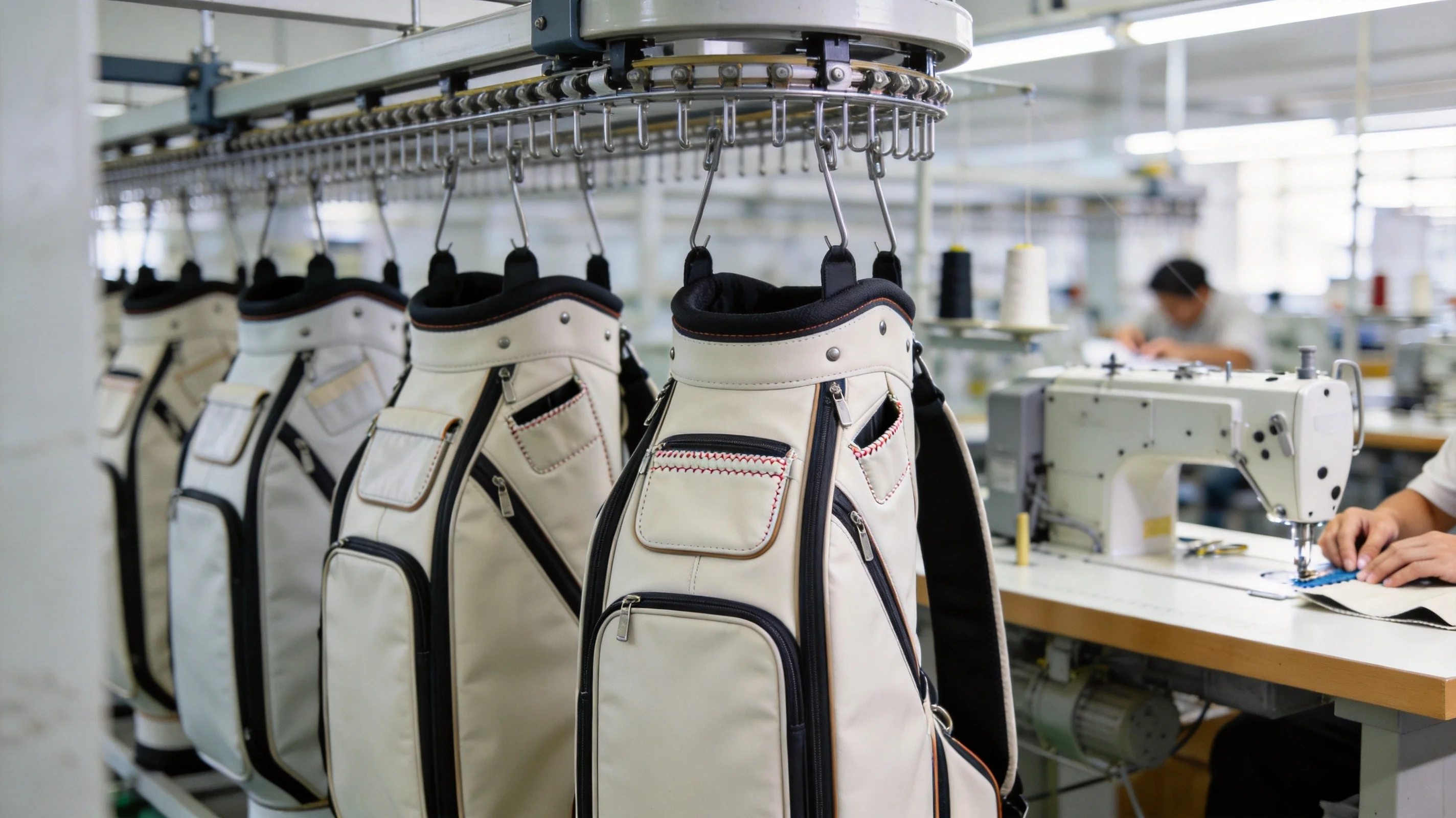
Production Scale
A seven-line, 126-sewing-machine facility keeps bulk branded orders on schedule.
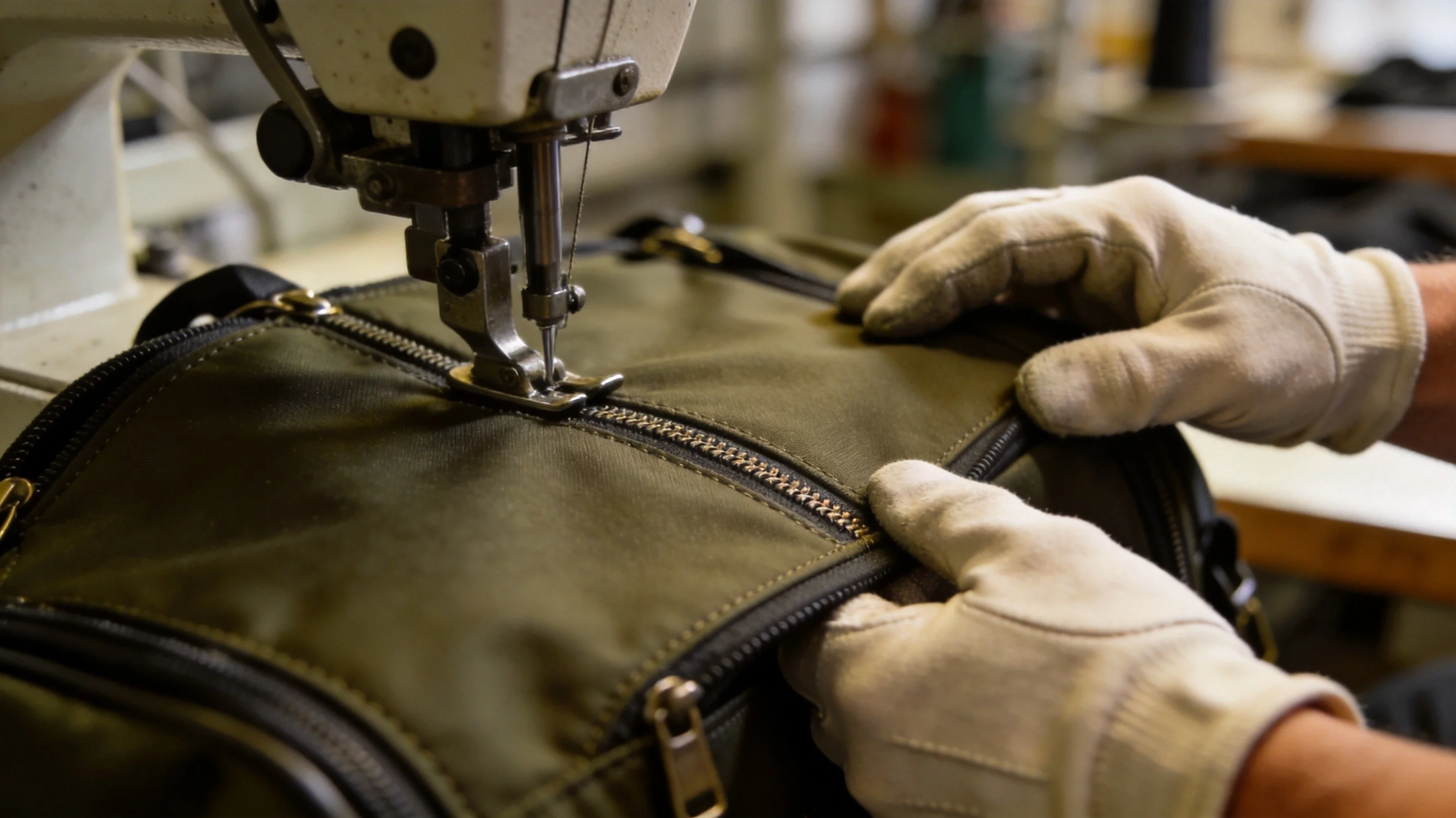
Verified Facility
Independent SGS auditing in March 2026 confirms the manufacturing standards behind member-facing gear.
Designing for Protection While Protecting the Brand
A branded travel bag protects two things at once: the golf clubs inside and the club's reputation outside. The bag needs impact-absorbing structure, likely a protective hood over the club heads, and sturdy outward-facing panels that keep the logo surface clean. A bag that protects its contents and still looks sharp at baggage claim reinforces the message that the club is thorough and quality-conscious.
Protection design also determines how often the bag is used, and each use is another brand impression. Members will reach for the bag that makes air travel easy and safe — cushioned club compartments, robust wheels that roll smoothly, locks that satisfy airline security and an overall weight that stays within airline limits. Function drives usage, and usage drives the brand's mileage. Conversely, a fragile or awkward bag gets abandoned, and with it the club's investment.
Construction quality is what lets a branded bag serve both goals. Reinforced stitching at load-bearing seams, heavy-gauge zippers, a well-anchored handle and durable wheels are the parts that fail first under travel and the parts our quality-control process checks at every stage. Clubs buying a branded bag are buying reliability, and reliability is itself a brand statement. A member who trusts their bag to protect a set of irons trusts the club that provided it.
How to Brief a Factory for Your Club Program
A clear brief turns a good factory relationship into a fast, on-brand result. Start with the essentials: the number of bags, the season you need them by, your colour reference (Pantone codes if available), the logo artwork in a vector format, and the member travel pattern you are designing for. Sharing real usage — mostly air, mostly road, or mixed — lets the factory recommend the construction that fits rather than a one-size catch-all.
Ask the factory the questions that reveal manufacturing quality. Which materials and deniers do they recommend and why? How do they handle reinforcements at the seams and base? What is the sampling and approval process — do you get a physical proto before the production run? Do they test for impact, fabric strength and zipper durability, and are they independently audited? At QUANZHOU JUNYUAN BAGS we answer all of these with documented processes, and our SGS audit in March 2026 is part of the evidence we share.
Finally, agree on the logistics and the follow-through. Confirm lead times in writing (our sampling is 10–20 days, bulk 45–60 days), agree the incoterms and shipping method, and set a quality-inspection checkpoint before the goods are packed. A documented brief with agreed expectations is the single biggest de-risker for any branded program, and it is how a club gets exactly the bag it imagined — on time and on brand.
QUANZHOU JUNYUAN BAGS builds golf travel bags on an affiliated 4,950-square-metre main factory that entered the industry when our founder started in 2004 and was established as a company in 2014. The facility runs seven production lines with 126 sewing machines and a team of 137 staff, supporting a monthly capacity of up to 200,000 units for more than 200 brands across 100+ countries. Sampling typically takes 10–20 days and bulk production 45–60 days, with a standard MOQ of 200 pieces and 100 for test orders. The factory was independently audited by SGS in March 2026. Contact service@junyuanbags.com or +86 17750020688.
Sizing the Bag and Bag Program for Members
A branded travel bag must work for the majority of the membership, which means sizing it to standard airline allowances and to the largest common set of clubs. Golf travel bags are typically sized to hold a full set of up to 14 clubs plus shoes and accessories, and the outer dimensions stay within the lengths airlines expect for checked club containers. Because airline rules on golf equipment differ between carriers, a club should check the live requirements and buy bags that comfortably satisfy the strictest ones on the routes members actually fly.
Beyond the physical fit, the program should size the mix. If members range from occasional players to teams and pros, a club may want two tiers — a premium, feature-rich bag for frequent travellers and a solid, economical one for the broader membership. Offering choice makes the brand program feel responsive and lets members self-select the bag that matches how much they actually travel, keeping the whole rollout efficient.
Our golf-bag-types guide and the size-requirement guide on this site walk through fitting and airline dimensions in detail. Because a bag that is too tight loses protection and one that is needlessly large is heavier and harder to carry, matching the bag to the typical member's kit is worth the planning. A properly sized bag is both more protective and more wearable, which translates directly into more trips and more brand impressions.
Member Pricing, Retail and Revenue Models
Clubs monetise branded travel bags through three models: gifting, cost-price sale, or a modest retail margin in the pro shop. Gifting builds goodwill and is ideal for captains, pros and long-standing members; cost-price sale to members covers the club's outlay while encouraging widespread use; and a retail approach turns the bag into a small, reliable revenue stream. Each model changes the target cost and the volume, which in turn shape the order.
Wholesale ordering is the key lever for all three models. Buying factory-direct in bulk — often 200 units and up — brings the per-unit cost to a level where a club can either absorb it as a benefit or sell it at an attractive member price while still holding margin. This is why the wholesale channel should be part of every club's plan, even one that starts with a pilot batch. The wider the rollout against the fixed design and set-up costs, the lower the average price.
Retailers and pro shops already demonstrate the appetite: golf shops consistently move branded travel accessories as add-on sales at higher margins than almost any other category because they pair with the largest purchase a golfer makes — the clubs. For a club that owns or partners with a pro shop, a fleet of branded travel bags is inventory that sells itself while marketing the club on the road. The same bag that earns margin in the shop earns awareness at every airport.
Choosing Between Soft, Wheeled and Hard-Wheeled Bags
The branded bag's body style shapes both how it protects and how it is seen. Plush-lined soft bags are the lightest and most packable, ideal for occasional travel and easy clubhouse storage, and they offer the smoothest surface for full-colour branding. Wheeled soft bags add the convenience that frequent travellers value most — effortless rolling through terminals — and keep the brand at a convenient height for visibility. Hard-shell bags offer the maximum impact protection for airlines that handle gear roughly, typically with wheel systems and the sturdiest construction, at the cost of more weight and bulk.
Our travel covers and hard-case product lines let a club mix these options: a soft, logo-heavy shell for everyday value plus a hard-case upgrade for members who fly the most. Offering a small menu rather than a single SKU lets members match the bag to their travel and lets the club capture a wider price band while keeping one branded identity across the range.
Whichever body style you choose, the brand identity should be consistent across all of them — same logo, same colourway, same placement logic. Consistency is what makes a fleet of different bags read as one deliberate brand system rather than leftovers. Members instantly recognise the club's gear whether it is a soft weekend bag or a hard case on a long-haul trip, and that recognition is the entire point of the exercise.
Common Branded Bag Mistakes and How to Avoid Them
The mistakes clubs make with branded travel bags are predictable, and they are all avoidable. Undersizing the order drives up per-unit cost and runs out exactly when the season peaks; late ordering misses the very trips the bag was meant to advertise; and weak artwork — low-resolution logos, wrong colours — cheapens the brand on every single flight. Each error converts a good marketing idea into wasted spend.
Construction shortcuts are the second trap. A bag that saves a few dollars but fails on its first trip actively harms the club's brand, not just its budget. Buying from an unaudited or poorly characterised source risks inconsistent quality and no accountability. Because the bag represents the club publicly, the manufacturing standard behind it should be verified — we are happy to share the SGS audit that verified our facility in March 2026.
Avoid these by planning early, ordering enough, insisting on vector artwork and Pantone matching, and sourcing from a factory you can inspect evidence from. Lock the lead times into the calendar, order a physical sample for approval before bulk, and build a small reorder buffer into the program. A well-planned branded travel bag program is simple, and it is the difference between advertising that works for years and a one-season disappointment.
Quick Comparison: Branded Golf Travel Bag Options for Clubs
The table below summarises the main options a golf club should weigh when planning a branded travel bag program, based on how members actually travel.
| Bag Type | Best For | Branding Surface | Protection | Weight & Storage |
|---|---|---|---|---|
| Soft plush-lined | Occasional / road travel | Smooth, full-colour panels | Good; hoods over heads | Light and packable |
| Wheeled soft | Frequent air travellers | Good; more hardware cuts surface | Good; balanced on wheels | Moderate; rolls easily |
| Hard shell / hard case | High-touch airlines, long haul | Limited high-gloss panels | Maximum impact protection | Heavier, needs storage |
| Two-tier mix | Whole membership, wide price band | Consistent identity across fleet | Varies by tier | Offers a choice to members |
Base the mix on how your members travel and on the brand visibility you want at each touchpoint. For the widest member adoption at the best economics, a soft or wheeled workhorse bag with strong branding is usually the core, with a hard case offered to the travellers who need it most.
Plan Your Club's Branded Travel Bag Program.
Design a flight-ready, logo-perfect branded golf travel bag for your membership or event. Our factory-direct team supports Pantone matching, embroidery and print, physical sampling, and bulk or private-label rollout.
Start Your Custom Bag Brief →Frequently Asked Questions
- How many branded golf travel bags should a club order?
- A pilot of 100 (our test-order MOQ) lets a club approve a real sample and the fit, then a full rollout of 200 or more brings the per-unit cost down to the most economical factory-direct level.
- How long does a custom branded travel bag take?
- Our sampling takes 10–20 days and bulk production 45–60 days from confirmed sample, so clubs should allow several months from design to in-hand for the season.
- Embroidery or print for a club logo?
- Embroidery is the most durable for the crest and resists conveyor scrapes; heat-transfer/screen print is best for large colour panels. Many designs combine both.
- Do our bags need to be airline-size compliant?
- Yes — size the bag to standard checked-club allowances and the strictest carrier on the routes members fly so every trip is risk-free.
- Do you offer Pantone colour matching?
- Yes. We match Pantone colours so the bag's identity is consistent with the club crest, flag and pro-shop apparel.
- Can the bags carry big logos and full-colour art?
- Yes. Large printable panels support full-colour graphics and team-colour sweeps, combined with a stitched crest for a premium finish.
Sources
- USGA — golf equipment and club-protection references supporting durable travel design.
- IAGTO — golf tourism data illustrating the scale of member golf travel and brand exposure.
- SGS — independent factory verification supporting the manufacturing claims in this guide.
- ASTM International — material and textile test methods informing construction quality expectations.
Related Reading
Explore more of our expert guidance on golf travel bags and manufacturing to plan the right product for your next trip or program:
- Travel covers for golf clubs and equipment — covers that protect and travel easily alongside your clubs.
- Wheeled travel protection for easy transport — wheeled options that make airport journeys effortless.
- Hard case travel protection — hard-shell protection for maximal rigidity on demanding routes.
- Golf bag types guide — understand the full range of bag categories and how they fit together.
- OEM & ODM manufacturing services — how a brand or club brings a custom travel bag from design to production.
- Factory-direct wholesale — economical ordering for clubs, pro shops and retail rollouts.
- Impact resistance explained — our guide to verified impact resistance for every traveller.