Cobra Golf Bags 2025 Professional Review: Complete Analysis & Buying Guide
Cobra golf bags in 2025 centre on the lightweight Ultralight series, balancing featherweight carry with durable materials and smart pocket systems.
A factory-level analysis of Cobra golf bags — with a focus on the lightweight Ultralight series, construction, stand mechanics, straps and lifecycle — plus an honest guide to buying and an OEM comparison.
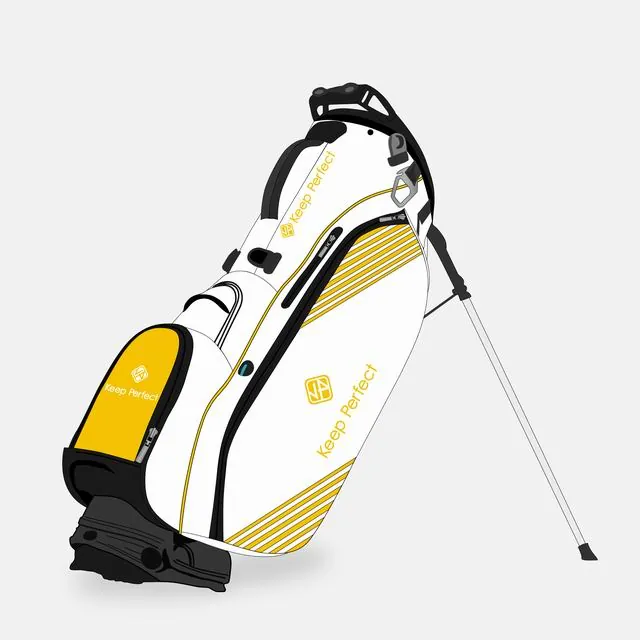
Table of Contents
- 1. Professional Verdict: What a Factory Sees in Cobra Bags
- 2. Cobra's Place in the Golf Market
- 3. The Ultralight Philosophy: Weight Reduction Done Right
- 4. Construction Deep-Dive: Shell, Seams and Stand
- 5. Straps, Carry Geometry and Comfort
- 6. The Cobra Lineup: Ultralight and Beyond
- 7. Materials, Divider Systems and Organisation
- 8. Cobra Models Compared
- 9. Lifecycle, Maintenance and Value Over Time
- 10. Buying Guide: Match Model to Golfer
- 11. Cobra vs OEM Private-Label Bags
- 12. Frequently Asked Questions
- 13. Sources
Cobra golf bags are a genuinely strong pick for walkers, and the Ultralight series is one of the lowest-weight options on the market — around 2.5 to 3 pounds — without giving up a dependable stand or proper padding. Here is the factory short answer up front: Cobra's strength is disciplined weight reduction. Where some brands sacrifice the base or stand to cut grams, Cobra trims weight in the fabric and hardware while keeping the parts that matter — a workable stand, reinforced seams and a decent strap system. The Ultralight is the dedicated walker's benchmark; more premium Cobra models trade a little weight for clearer divider organization and richer storage. Construction is mainstream-to-premium and priced competitively, which makes Cobra strong value for weight-conscious golfers and a sensible OEM-style benchmark for fleets that want a lightweight private-label build.
Cobra's Place in the Golf Market
Cobra has long been known as a metalwood and driver brand with a performance-first identity, and that same engineering mindset carries into its bag line. Cobra does not try to be the broadest catalog of premium bags; it focuses on doing a few categories very well, with the lightweight segment as its clear strength.
That focused identity matters to a buyer. A brand that concentrates its engineering on one direction tends to do that direction better than a brand that tries to cover every possible segment. Cobra's concentration on the walking and carrying golfer — and specifically on pulling weight out of the bag — has made it a reference point for lightweight carry bags.
For a factory, Cobra is also an interesting benchmark because it shows that weight reduction is not only about materials. It is a systems problem across the fabric, the hardware, the stand and the strap architecture, and it requires careful coordination between design and production. That is a valuable lesson for any private-label program that wants to build a light bag without ending up with a flimsy one.
The brand's identity also carries a younger, more approachable tone than some heritage competitors, which gives Cobra a strong position with amateur and mid-handicap golfers. Retailers value that because it brings a wider and often newer audience into the bag category, and it makes Cobra a useful complement to a heritage-heavy lineup.
The Ultralight Philosophy: Weight Reduction Done Right
The Cobra Ultralight is the clearest expression of the brand's engineering priority. A bag that weighs around 2.5 to 3 pounds is meaningfully easier to carry over 18 holes, especially on hilly courses and for players who walk several rounds a week. When every pound you do not carry stays in the bag-room, the arithmetic of comfort is simple.
What impresses a factory is not the low number itself but the decisions around it. Cobra cuts weight by using lighter-duty fabrics and slimmer hardware in the places where that is safe, while protecting the high-stress points — the base, the stand hinges and the strap attachments. That is the correct order: trim weight where the material is not load-bearing, keep it where it is.
The trade-off is honest. A very light bag cannot have the exact same heavy-duty shell as a premium tour cart bag, and subtle fabric wear may appear sooner under hard daily use. For a walker who owns the bag and carries it a few times a week, that trade is almost always worth it. For a fleet used daily in rough conditions, a slightly heavier but tougher build may outperform on total cost. This is exactly the kind of decision we help brand partners make when they choose between a featherweight line and a durability-first line.
It is also worth noting that the low weight is complemented by engineering, not achieved by simply removing material everywhere. The stand still has to deploy reliably, the straps still have to distribute load, and the base still has to keep the bag upright. Cobra solves all three, which is why the Ultralight is a benchmark rather than just a novelty.
Construction Deep-Dive: Shell, Seams and Stand
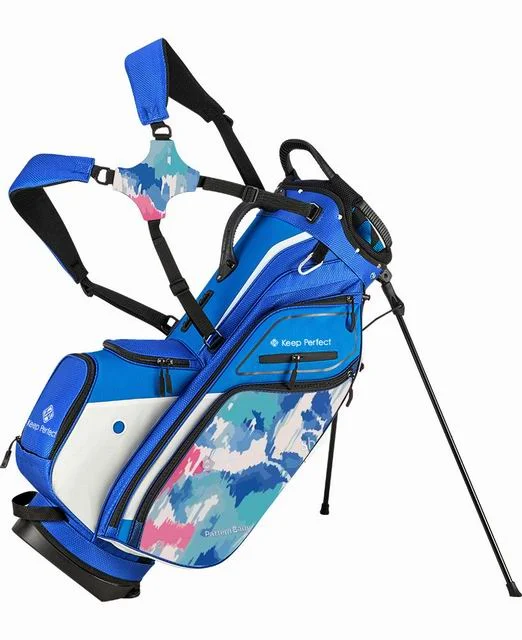
Under the fabric, Cobra bags are built with the weight-reduction philosophy in mind. The shell is a tailored polyester chosen to balance weight and durability, dense enough to resist scuffs and light moisture but not so heavy that it fights the whole weight story. Seams are finished to protect edges, and the stress points — straps, base, stand and divider openings — are reinforced so the light construction does not become fragile construction.
The stand mechanism deserves specific attention because it is the highest-risk component of any lightweight bag. A light bag can still have a robust stand if the legs, the locking mechanism and the frame are engineered correctly. Cobra invests in the stand because a bag that falls over in the wind, or whose legs fold unpredictably, fails its core job no matter how light it is. Our own durability analysis treats the stand as one of the two most important failure surfaces on any carry bag.
From a quality-control perspective, Cobra's tolerance for consistent production is what makes the lightweight concept workable. Bags come off the line uniform in stitching, zipper behavior, divider alignment and stand deployment — the hallmarks of disciplined QC. Weight reduction magnifies the importance of quality: a heavy bag can hide a slightly weak seam, but a light bag has no margin, so every component has to be right.
Two details deserve attention when inspecting any Cobra-style bag. First, the zippers: they must glide under load and be sewn into reinforced tape so the slider does not tear out under tension. Second, the stand legs and hinges: they must deploy cleanly every time and lock without wobble. These are the details that keep a lightweight bag dependable, and they are exactly where budget lightweight bags usually fail.
Straps, Carry Geometry and Comfort
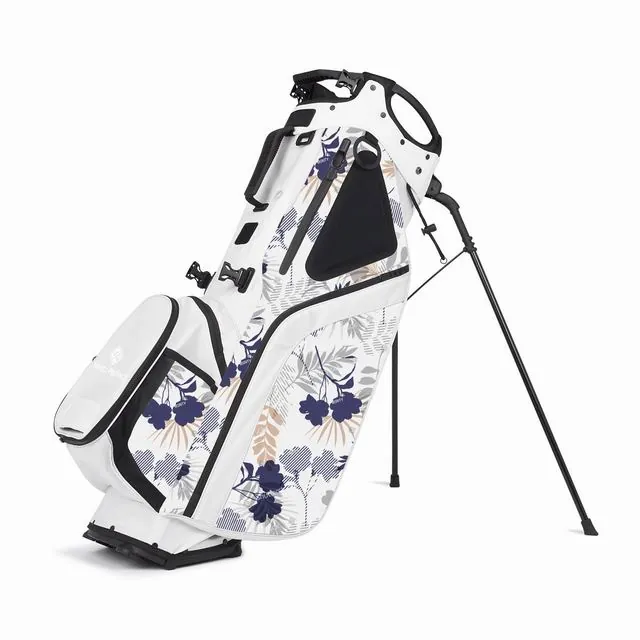
For a walking bag, straps matter as much as the shell, because they decide whether 18 holes feel punishing or pleasant. Cobra's dual-strap system is padded and adjustable, designed to keep the bag sitting high and balanced rather than dragging low and lopsided. That geometry is central to comfortable carrying.
Good carry geometry is easy to underestimate until you feel it. A bag that sits high with weight distributed across both shoulders causes far less fatigue than one that pulls to one side, and it keeps clubs upright so nothing falls out mid-walk. Cobra pairs its low weight with this geometry, which means the already-light bag also carries efficiently — a combination that compounds the comfort.
For buyers and fleet operators, verify the straps adjust easily and hold their setting, and test the padding density. Soft, spongy padding feels good in a shop but compresses after a few seasons and transfers weight straight into the shoulders. A firmer, denser pad holds shape longer and distributes load more evenly over time, which is why fleets favor compression-resistant padding even when a softer foam feels plush at first.
The chest strap is a smaller detail that frequent walkers should not skip. A good dual-strap bag includes a sternum strap that keeps the two shoulder straps in place across the chest, preventing the bag from swinging on uneven terrain. Without it, even a light and well-padded bag drifts when you lean forward on a hill, which is tiring over 18 holes.
Existing Materials, Divider Systems and Organisation
The material choices in a Cobra bag are shaped by the same priority that defines the brand: get the weight down without making the bag fragile. The shell uses a lighter polyester that is still dense enough to resist scuffs and light rain, and the zippers and webbing are selected to shave grams while holding tension. A factory notices that every material decision in this line is made against the weight budget, which is a discipline most brands do not apply consistently.
The divider system is where the Ultralight makes an honest compromise. Lighter bags often use a 4- or 5-Way top because full-length dividers add material and weight. That is usually the right call for a dedicated walker, because the primary job of a carry bag is to sit lightly on the shoulders, and four balanced quadrants still give clean club access. Golfers who absolutely want every club in its own slot can step up to the premium stand line, which spends that weight budget on a higher divider count instead of keeping the bag featherlight.
Pocket organisation follows the same principle. Cobra fits a focused set of pockets — essentials, a valuables pocket and enough space for layers and a light snack — rather than adding every possible compartment and undoing the weight work. For a walker, that is exactly right: the most useful bag is one with enough organisation to stay tidy and light enough to carry comfortably. If a golfer needs substantial extra storage, the premium stand and cart ranges carry that weight instead.
From a maintenance and inspection standpoint, the lighter fabric and trimmed hardware mean buyers should check the high-wear points a little more diligently than on a heavyweight shell. Confirm the zippers are sewn into reinforced tape, the divider-top openings do not snag grips, and the stand legs lock without wobble. These checks are second nature to a quality control line, and they are the difference between a light bag that stays dependable and one that starts to fail in the second season.
The Cobra Lineup: Ultralight and Beyond
Cobra's range is led by the Ultralight carry series and extends into more feature-complete stand bags and cart-style options. Choosing correctly avoids overpaying for features you will not use.
Cobra Ultralight
The Ultralight is the flagship walking bag: the lightest option in the range, with a dependable stand and a balanced pocket set. It is the right answer for golfers who carry their own clubs most rounds and want to minimise weight without losing function.
Premium Stand Bags
Cobra's premium stand bags step up in features and trim, adding clearer divider organization and richer storage at a slightly higher weight. These suit golfers who want more structure and are willing to carry a little more for it.
Cart & Travel Options
For riders and travellers, Cobra also covers cart-style and travel configurations that maximise storage and protect clubs in transit, complementing its walking-focused carry line.
Within those directions, Cobra offers seasonal colourways and pro-driven editions that refresh retail appeal without changing the underlying engineering. For a retailer, that mix is attractive: a price-accessible core product refreshed often enough to draw repeat attention.
Cobra Models Compared
The table below summarises the core directions of Cobra's line. Figures are approximate and vary by model year; confirm against the current product page before ordering.
| Model | Type | Divider | Weight | Use Case | Typical Price |
|---|---|---|---|---|---|
| Ultralight | Carry stand bag | 4 or 5-Way | ~2.5–3 lbs | Walking carry | $180–$240 |
| Premium Stand | Carry stand bag | 5–14-Way | ~4–5 lbs | Feature-complete walking | $220–$320 |
| Cart / Travel | Cart or travel bag | Full-length | ~6+ lbs | Riders, travellers | $180–$280 |
Read the numbers together rather than in isolation. A lighter weight matters to a walker, but only if the stand and straps hold up; a richer divider count matters only if the golfer needs the extra organization. Match the spec to the routine, not the largest figure in the brochure.
Lifecycle, Maintenance and Value Over Time
Cobra bags are designed for a competitive lifecycle that turns value on the price you pay against the years of use. A bag in the mainstream price band that lasts several seasons delivers strong value, especially because Cobra's price is lower than the premium heritage brands while offering comparable weight performance.
Realising that lifecycle still depends on habits. Empty the bag when it sits unused, keep it out of direct sun for entire seasons, and address a stiff zipper or a slipping buckle early rather than living with it. Wash the shell occasionally with mild soap and water instead of harsh detergents that attack the coating. Because Cobra's light fabrics are deliberately weight-optimised, protecting that finish is more important than on a heavy-duty tour shell.
Storage habits also protect the longest-lived parts. When a bag is set aside between seasons, remove the clubs, loosen the straps and store it upright on its base on a shelf, avoiding folded or hanging positions that stress the frame and flatten the padding. Keep it cool and dry. Zippers should be closed but not forced, and gritty hardware can be lightly cleaned and lubricated with a product made for zippers and buckles.
For fleet and rental operators, lifecycle is the whole business case. A fleet that invests in dependable construction — whether Cobra stock or an equivalent OEM build — recovers its cost over dozens of rental rounds. In volume, reliability is the cheapest thing you can buy. Our maintenance guide walks through the methods in detail.
Buying Guide: Match Model to Golfer
The professional buying guide for Cobra is short and practical. Start with how the golfer moves, then fit the model to the routine.
Walks and carries every round, weight matters most: the Ultralight is the pick, with the lowest weight in the range and a dependable stand. It is the clearest expression of why many golfers choose Cobra at all.
Walks and wants more organization: a premium stand bag with a higher divider count suits you better, trading a little weight for club separation and richer pockets.
Rides or uses a push cart most of the time: a Cobra cart-style option with a stable base seats well in a trolley. The same walking versus riding bag choice logic we apply to every brand applies here.
A word on buying for a corporate or club program: define a small spec checklist before price shopping. Write down the expected golfers, the walking-riding split, the seasons expected in service and spare-part expectations, then evaluate Cobra and its alternatives against that same checklist. This prevents paying for features nobody on the roster will actually use.
Maintenance and aftercare matter more on a lightweight line, because weight-optimised fabric has less margin for harsh treatment. Two practical habits protect a Cobra bag across many seasons. First, when the bag is not in use for a while, empty it and store it upright on its base rather than hanging it by the straps, which slowly stretches the webbing and flattens the padding over time. Second, choose cleaning products carefully: mild soap and a soft brush protect the coating, while harsh solvents strip it and stiffen the shell. For fleet managers who rotate many bags, documenting these steps once and applying them consistently across the rotation protects the whole investment.
Finally, weigh the bag empty and consider what a full set adds, and check the divider count against how many clubs are actually carried. Most golfers carry 14 clubs; some only need a lighter, lower divider configuration. Buy for the real bag content, not the maximum marketing claim.
Cobra vs OEM Private-Label Bags: An Honest Comparison
Fairly comparing Cobra with an OEM private-label bag means separating brand equity, engineering and customization.
Brand equity is Cobra's advantage among its audience, particularly with the tech-savvy, price-conscious golfer who knows the lightweight line. If the Cobra name matters to your customers, branded stock is the right call.
Engineering, especially weight reduction, is achievable at parity by a capable factory. The strengths that make Cobra's Ultralight work — coordinated weight reduction, a robust stand, reinforced seams — are standard production engineering. A well-built private-label lightweight bag performs comparably.
Customization is where OEM wins decisively. You control colours, logo placement, embroidery, dividers, pockets and the exact weight targeting, which is impossible with retail brand stock and essential for clubs, courses, teams, events and new brands. Our OEM and ODM services guide explains the whole private-label program from sampling to bulk production.
Many operators run both: Cobra stock for brand-loyal, weight-focused retail; OEM-built bags for everything needing a custom identity. That is the most sensible allocation for most clubs and distributors.
Frequently Asked Questions
- Are Cobra golf bags lightweight?
- The Cobra Ultralight series is among the lightest on the market, with several models weighing around 2.5 to 3 pounds. That is achieved by trimming weight in the fabric and hardware while keeping a quality stand, making the Ultralight the standout pick for dedicated walkers.
- Which Cobra bag is best for walking the course?
- The Cobra Ultralight is the best choice for walkers, combining a low weight with a dependable stand and well-padded straps. It is engineered around the person who carries the bag themselves nearly every round.
- How durable are Cobra golf bags?
- Cobra balances weight reduction with durability by reinforcing the high-stress points: base, straps, dividers and zippers. With normal care a Cobra bag typically lasts several seasons, though lighter fabrics may wear a little sooner than the heaviest premium shells.
- What is the difference between the Cobra Ultralight and the more premium Cobra models?
- The Ultralight focuses on minimum carry weight for walking. More premium Cobra models add higher divider counts, richer storage and trim at a slightly higher weight, for golfers who want more features and are willing to carry a little more.
- Are Cobra golf bags good value for money?
- Generally yes. Cobra prices competitively in the mainstream band, and the Ultralight in particular offers strong value for walkers who want weight reduction without paying a premium name tax. For fleets, an OEM private-label build offers similar value with customization.
- Can I build a Cobra-style lightweight bag under my own brand?
- Yes. QUANZHOU JUNYUAN BAGS offers OEM and ODM programs with a conventional MOQ of 200 pieces (test orders from 100), sampling in 10-20 days and bulk production in 45-60 days. Contact service@junyuanbags.com or +86 17750020688.
Sources
This review is based on the manufacturer's own production experience plus the following publicly available references for third-party product data:
- Cobra Golf – Official Bag Collection (official product line and specifications)
- MyGolfSpy – Best Golf Bag Testing (independent performance data)
- Golf Digest – Golf Bag Buying Guide (independent retail guidance)
- Golf Monthly – Best Golf Bags Review (category analysis and recommendations)
Published by QUANZHOU JUNYUAN BAGS, an affiliated custom golf bag factory serving 200+ brands across 100+ countries. For OEM or ODM enquiries: service@junyuanbags.com · +86 17750020688.