Custom Branded Golf Ice Bags for Marketing Campaigns
Custom branded golf ice bags are one of the most cost-effective on-course marketing tools you can produce, and with typical order volumes between 100 and 300 units, retention of 4-8 hours, and logo options from screen printing to embroidered patches, the entire process can be completed in as little as 45-60 days of bulk production after a 10-20 day sampling phase. For an established golf bag factory, this article walks through the exact specification decisions, costing levers and sourcing steps that turn a cooler bag into a walking billboard without burning the campaign budget. We cover insulation physics, logo techniques, MOQ math, sample workflow, quality gates and real-world campaign planning so marketing teams, sports agencies and course operators can brief a factory with confidence.
Golf is played increasingly in warmer months, and branded hydration accessories are among the highest-impression deliverables a sponsor can place in front of a live gallery and on a player's cart. A custom golf cooler bag carries eye-level visibility for a full round, far longer than a banner or a one-day sign. This guide assumes you already know you want a cooler bag and focuses instead on how to specify, price and land it correctly.
Why a Branded Cooler Bag Is a Strong Promotional Asset
Promotional merchandise fails when it is ignored. A cooler bag succeeds because it is used repeatedly, stored in the trunk, carried to the course and shared between players. Each use is an exposure. Compared with a t-shirt that sits in a drawer or a pen that gets lost, an insulated bag earns ongoing impressions because people keep drinks in it all summer.
- Long dwell time: A cooler bag travels with a player for hours, visible on ride carts and push carts all round.
- High emotional value: Drinks for the group mean the bag is shared, multiplying and extending brand reach beyond one person.
- Utility drives retention: A bag that works stays in rotation for years, not days.
- Photogenic moments: Players and their foursomes frequently photograph drinks and bags, generating organic social exposure.
- Giveaway synergy: Cooler bags pair cleanly with corporate events, member gifts and tournament goodie bags.
Within a broader base of custom golf bags, a cooler variant becomes the practical, fun product that keeps your brand on the 19th hole long after the last putt. Many sponsors report that a well-branded insulated bag is the single most kept item from a tournament year after year.
The Physics That Decide Cold Retention
Before you choose materials you should understand how an insulated bag loses cold. Heat enters through the fabric, the zipper and every opening event. The insulation layer slows conduction, the liner reflects or blocks radiant heat, and a tight zipper reduces convective airflow. Retention therefore depends on the thickness and density of the insulation foam, plus the sealing quality of the closure.
Most quality cooler bags use food-grade PE foam or EPE bonded to a waterproof or leakproof liner. A 12-15 mm PE foam structure is a sensible default for a marketing bag, balancing cost, weight and a genuine 4-6 hour retention. If the campaign promises full-day chilling for a group, upgrading to 15-20 mm PU foam or an EPE blend can stretch retention toward 6-8 hours in mild conditions.
Cold retention is always stated in a range because ambient temperature, how often the bag is opened and how much ice is packed all affect the result. Realistic campaigns describe 4-8 hours and let the product exceed the promise on cooler days. This honesty also protects you from complaints—an honest range is easier to verify than an inflated number.
Choosing the Right Insulation and Liner
The liner is the part that touches food and drink, so food-grade, easy-clean materials matter as much as the foam itself. Common liners include heat-sealed TPU or PVC-free coated polyester, silvered thermal liners that reflect radiant heat, and wipe-clean PE liners that are inexpensive and dependable.
For a promotional program we typically recommend a thermal-reflective liner with a wipe-clean inner surface. It keeps drinks colder longer, resists leaks and is simple for home users to clean. The outer fabric should be a durable 600D or 900D ripstop polyester with a water-repellent coating, because the bag will sit in carts, trunks and on damp ground. Zippers should be sturdy coil or YKK-style, ideally waterproof on the main compartment to prevent ice melt from seeping out.
The combination of an insulated panel, a leakproof liner and a weather-resistant shell is what separates a gift that keeps working from a promotional item that quickly disappoints.
Logo Techniques Compared for Cooler Bags
Logo placement and method drive both brand impact and unit cost. The flat side panels and front pocket of a cooler bag are ideal branding surfaces. For promotional tiers, screen printing and heat transfer are the most economical for flat areas and large, single-color designs. Silicone patches and high-density embroidery suit canvas or fabric bags where a raised, tactile logo reads as premium.

For a marketing campaign, mixing two techniques on one bag is common: a printed logo on the front panel for color accuracy and an embroidered or patch logo on the side pocket for durability and depth. Always order a physical sample to confirm how the colors read in sunlight, because print and embroidery can shift slightly off-screen.
Minimum Order Quantity and Sizing Math
Pricing for a custom cooler bag hinges on MOQ. Because setup, pattern-making and print plates carry a fixed cost, smaller runs pay more per unit. At our factory the standard starting MOQ is 200 units, with a 100-unit test tier that lets pilot campaigns validate the product. As volumes climb to 300, 500 or 1,000 units, the per-piece price falls because the setup cost spreads across more bags.
When budgeting, remember that per-unit cost rises with the number of print locations, the size of the bag, premium insulation, extra pockets and stronger zippers. A single-color logo on a medium bag keeps cost low; a full-color patch plus two side prints and a valuables pocket pushes it up. Marketing teams should prioritize which brand elements genuinely need to be large and tactile, and which can be delivered with economical printing.
Spec Table: Promotional vs. Standard vs. Premium Tiers
The table below summarizes how cooler bag specifications change across three common ordering tiers. Use it as a briefing sheet when you talk to a factory.
| Spec | Promotional Tier | Standard Tier | Premium Tier |
|---|---|---|---|
| Approx. volume (liters) | 6-10 L | 12-18 L | 14-24 L |
| Recommended MOQ | 100-200 pcs | 200 pcs | 300+ pcs |
| Insulation | PE foam 8-10 mm | PE foam 12-15 mm | PU/EPE 15-20 mm |
| Cold retention (typical) | 3-5 hours | 4-6 hours | 6-8 hours |
| Logo methods | Screen / heat-transfer | Silicone patch + print | Embroidery + woven label |
| Pockets | 1 main zip pocket | 1 main + 2 side | Main + side + zippered valuables pocket |
Sample Workflow Before Bulk Production
The sample stage protects your entire campaign. The typical flow is a 10-20 day sampling window in which the factory produces one or two physical samples from your artwork. The sample confirms logo placement, color matching, zipper quality, insulation layers, pocket sizing and overall stitching before you approve a bulk run that may span 45-60 days.
- Brief the factory with vector artwork, Pantone colors and clear logo placement on a bag diagram.
- Review the digital proof for print areas, sizes and pocket layout before any cutting begins.
- Receive and stress-test the sample—fill it with ice, check retention, open and close the zipper, and photograph it in sunlight.
- Approve in writing and archive the sample plus photos so the bulk run matches exactly.
- Schedule the bulk run within the 45-60 day production window and agree on inspection points.
Rushing past sampling is the most common reason bulk batches disappoint. An approved physical sample is the single strongest tool you have to enforce consistency at scale.
Quality Control Gates That Matter
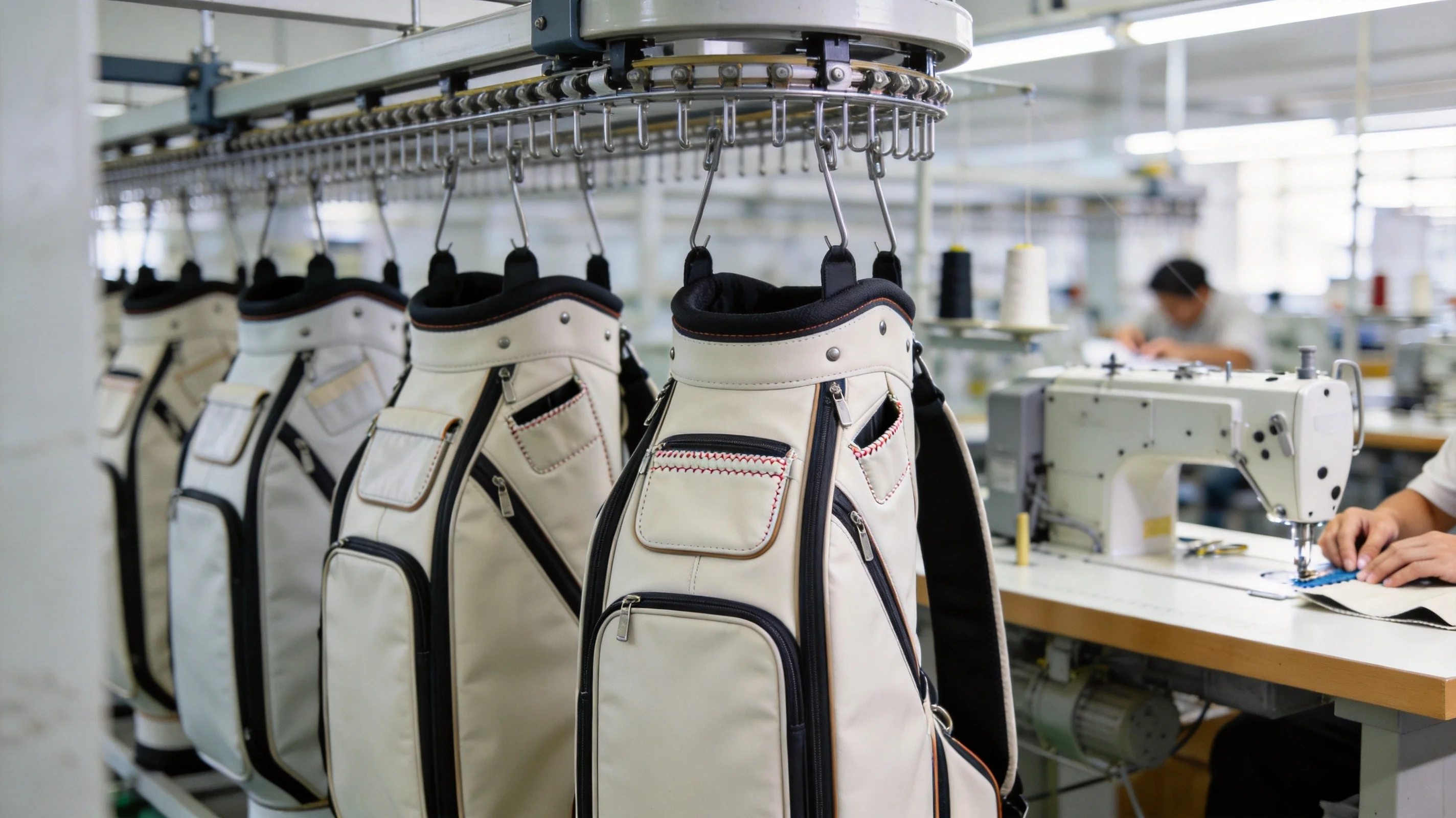
A marketing program is only as good as the consistency of every unit. Our standard approach runs three inspection stages across the production line: incoming material checks, in-process inspection during cutting and sewing, and a final AQL-based inspection before packing. In 2026-03 our affiliated factory completed an SGS factory audit, and the facility maintains quality systems that international brand buyers rely on.
Focus your checklist on the details users notice immediately: zipper smoothness, alignment of prints, consistent logo colors between units, clean seams, and no leaks from the main compartment. Spot-check retention on a few random units and verify that foil liners are fully peeled and sealed, because a torn liner quietly kills performance.
Factory Sourcing and the Data Behind Our Recommendation
When you source a partner, look for a factory with a track record of cooler bags and hard-goods sewing, not just a general garment shop. Our affiliated factory was established in 2014, our founder entered the industry in 2004, and the facility runs 7 production lines with 126 sewing machines and 137 staff, producing up to 200,000 units a month for 200+ brands across 100+ countries. The 4,950 m² main factory operates as an allied production partner (we do not describe it as our own facility), and we represent it transparently to clients.
For sourcing help, our OEM/ODM services page explains how we translate a brand brief into a production-ready cooler bag, while our wholesale ordering section covers volume and logistics. If you are expanding a cooler line into a full bag collection, our golf bag types guide helps you place the cooler bag in a coherent product range.
Planning the Campaign Timeline
Backwards-planning is essential. If your tournament is on a fixed date, count back 45-60 days for bulk production, add 10-20 days for sampling, and then add 2-4 weeks of margin for shipping, customs and any correction round. Reserve factory capacity before peak season, because summer giveaway slots fill early. The same margin protects you from a single delay in sampling or an extra correction round.
Build a calendar with approval milestones: artwork frozen, sample approved, bulk started, inspection passed, cargo shipped. Assign an owner to each milestone so the campaign does not stall waiting for a signature. A simple gantt-style tracker shared between your team and the factory keeps everyone aligned and reduces the risk of a late delivery that misses the event entirely. Build in a weekly status call during the 10-20 day sampling phase and the first weeks of bulk production, when the most reworkable decisions are still cheap to change.
Measuring ROI Beyond Unit Cost
Pairing impressions with conversion matters too. Sponsors who bring their own inventory to the course—co-branded with a tournament partner—can also track redemption through a printed promo code or a pocket-sized card. This turns a physical bag into a measurable acquisition channel, letting you compare its per-recipient cost against digital spend.
The cleanest way to aggregate results is to agree on a small set of key metrics before the campaign: units distributed, photos or tags received, and any redemption on a promo code. Review these at the midpoint so you can adjust artwork, messaging or distribution before the bulk of units are handed out.
Finally, treat the cooler bag as a durable channel. Because it stays relevant all season, a bag that costs modestly more to build can still deliver the lowest cost per impression of any item in your gift kit, which is precisely why repeat sponsors return to the format year after year.
Unit cost is only half the story. Measure campaign success by impressions per dollar, retention of the item, social mentions, and how many recipients actually use the bag on course. A slightly more expensive bag that players keep for years out-earns a cheap one that is discarded after the tournament.
Encourage user-generated content by making the bag photogenic—large readable logos, an on-brand color, a clean design—and by including a simple call to action such as a handle loop or a small printed handle tag. Tag-friendly designs and a co-branded hashtag printed subtly on the interior turn every round into a mini photo shoot for your brand.
Common Pitfalls to Avoid
Beyond the top-level mistakes, smaller execution errors quietly erode results. Shipping cartons with unmanaged moisture can tarnish printed panels before they ever reach the event. Packing bags too loosely lets them crush and deform in transit. And failing to share a color standard with the factory usually leads to a panel that looks one shade off under clubhouse lights.
Mitigate these by specifying export packaging, requesting a transit-loading photo, and fixing a named Pantone reference on the artwork sheet. None of these steps are expensive, but together they keep a handsome, on-spec bag from becoming an on-time but disappointing liability.
- Unrealistic retention claims: Saying your bag chills for 10+ hours invites disappointment. Claim 4-8 hours and over-deliver.
- Skipping the sample: Color and zipper problems found in bulk are far more painful than in a sample you can reject.
- Over-branding that hurts usability: Too many logos and patch prints can make the bag feel like a billboard instead of a gift.
- Ignoring the liner: A decorative bag that leaks ice-melt is a gift nobody keeps. Invest in the leakproof liner.
- Under-budgeting shipping time: A great product that arrives after the event is worthless. Build shipping margin into the plan.
Sustainability and Repeatability
Choose shell materials that photograph well under real light. Since the bag is seen on carts and in hand all day, matte fabrics with a subtle texture read more premium on camera than glossy alternatives that glare. Make sure the primary brand panel is large enough for a clean logo read at arm's length, which is the most common framing when recipients snap the bag for social media.
Recipients increasingly notice the environmental profile of promotional items. Options include recycled polyester outer fabric, PE liners that are easier to recycle, and packaging that limits single-use plastic. If your brand already emphasizes sustainability, ask the factory about certified recycled materials so the cooler bag messaging stays consistent with your corporate narrative rather than contradicting it.
Because cooler bags are a recurring category—annual tournaments, seasonal product drops, new client gifts—lock in a repeatable design. Keeping the same insulation and liner platform while rotating logo colors and patch designs lets future campaigns run faster and cheaper than starting from scratch each time.
Ready to Brief a Custom Cooler Bag Program?
Tell us your event date, target quantity and logo approach and we will return a spec sheet, sample plan and realistic timeline. Our team supports global marketing teams through the full OEM/ODM process.
Start Your Campaign Query →Frequently Asked Questions
- What minimum order quantity applies to custom branded golf ice bags?
- Our standard MOQ is 200 units for a custom printed golf cooler bag, with test orders accepted from 100 units. The MOQ scales with the number of print locations, bag volume and whether you need a brand-new mold, so marketing teams should confirm their design complexity before budgeting. For small campaign pilots, the 100-unit test tier lets you validate the artwork on the course before committing to a larger rollout.
- How many custom printed golf cooler bags can a factory deliver in a season?
- Under the standard 45-60 day production window for large orders, a factory of our scale typically ships the full batch in one to two container loads per program. Sampling takes 10-20 days first, then bulk production follows. Peak-season slots fill months ahead, so campaign planners should reserve production capacity early to guarantee on-time delivery before a tournament or launch date.
- What is the realistic temperature retention of a branded golf ice bag?
- A well-built insulated golf cooler bag retains chilled temperatures for roughly 4-8 hours in normal summer course conditions, depending on insulation thickness, zipper sealing and how often the bag is opened. Marketing campaigns should describe retention in this industry-accepted range rather than unrealistic claims, which keeps both the promotion credible and the product easy to verify.
- Can the same bag be used as a giveaway and a retail product?
- Yes. Many brands run a single factory-program that produces a premium version for retail and a simplified version for giveaways. Keeping one bag platform and changing the logo method, pocket layout and accessories lets you control cost per unit while preserving a consistent brand look across both channels.
- What logo methods work best for promotional golf bags?
- For durable everyday promotion we recommend woven labels, silicone patches and high-density embroidery for fabric panels, with screen printing or heat-transfer for flat surfaces. Combination branding, such as an embroidered chest logo plus a printed pocket, gives the strongest visual presence without adding excessive production time.
- Do marketing teams need a sample before a bulk order?
- Yes, a pre-production sample is almost always worth the 10-20 day sampling window. It verifies logo color matching, zipper quality, insulation performance and how the brand appears in real sunlight. We keep a photo and archived sample of every approved design so the bulk run can be matched precisely.
Custom branded golf ice bags are a proven, high-retention promotional asset. By specifying insulation honestly, choosing the right logo method, locking in a sampling gate and planning the calendar backwards, marketing teams can deliver a cooler bag that generates impressions all season while remaining a useful, kept item for every recipient.
For more on building a full branded collection, see our golf cooler bags product range, the insulated cooler options, or our OEM/ODM process guide. Contact the team at service@junyuanbags.com or +86 17750020688 with your brief.