Custom golf bag personalization trends for 2025 are moving from simple logo printing toward deep, identity-driven and production-smart personalisation — tonal embroidery, full custom colourways, monograms, badge systems, RFID-compatible storage and co-designed private labels — all delivered through an OEM/ODM pathway that protects brand consistency at scale. This guide covers the eight trends that matter, the psychology and e-commerce logic behind them, how they vary by buyer type, and the concrete workflow to move a personalised golf bag project from logo brief to shipping container.
Personalisation has become the fastest-growing commercial lever in the golf bag category precisely because it is visible, durable and repeat-purchase-friendly. A personalised bag is walked onto the course for years, photographed, and shared — turning every owner into a walking advertisement. The 2025 trend set reflects that reality: buyers want personalisation that is not cheap logos but considered identity, produced with colour and embroidery discipline that holds up in sunlight and on camera. This guide is designed for both individual players planning a one-off statement bag and commercial buyers building a private-label or team programme.

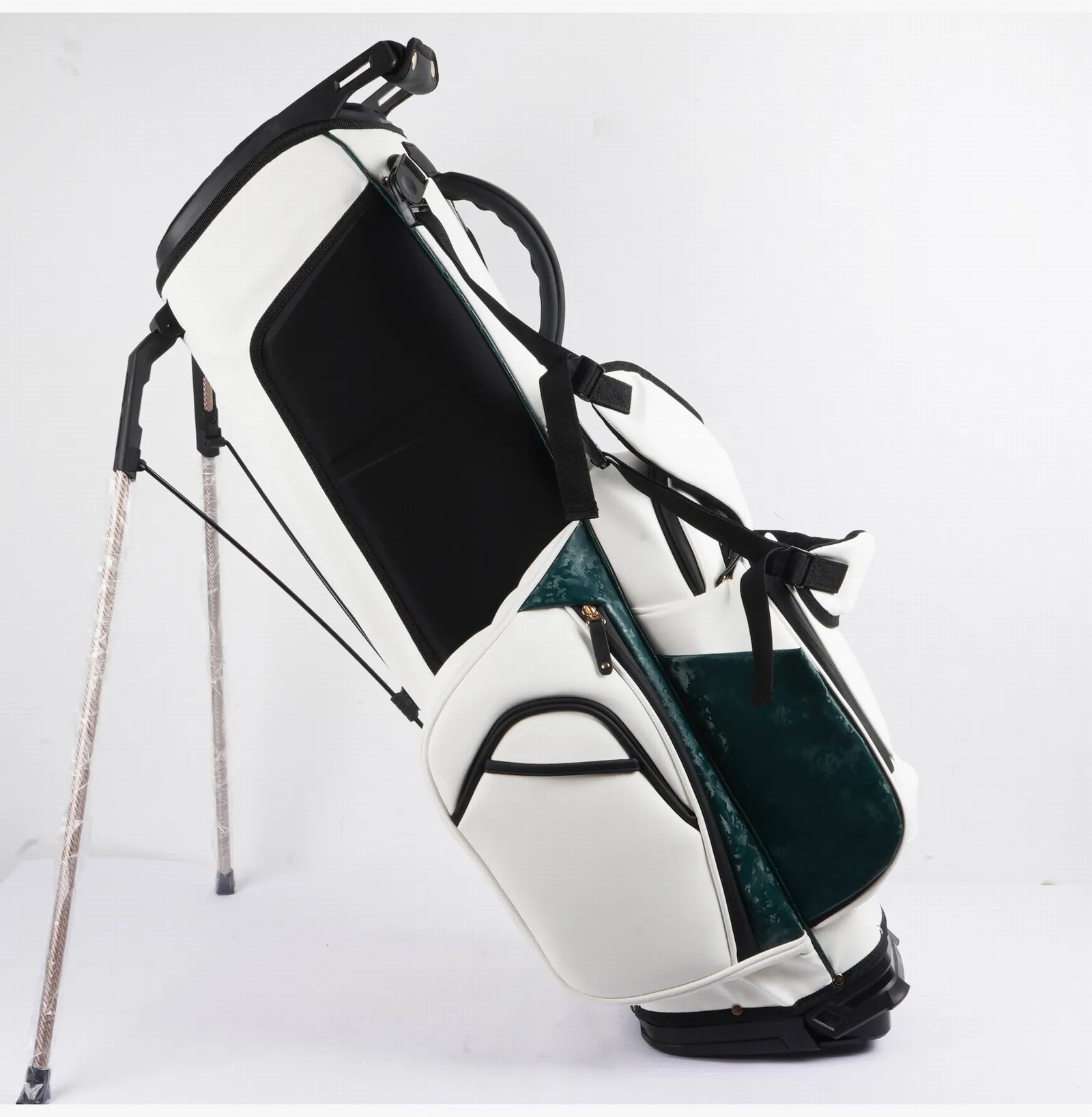
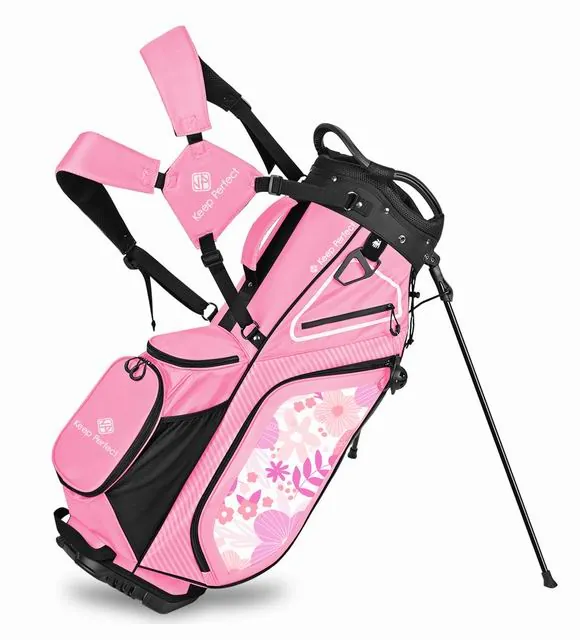
Custom golf bag personalisation showing embroidery and a full custom colourway
Why Personalisation Is Booming in 2025
Personalisation in golf bags has moved from a nice-to-have to an expected feature, and the drivers are structural. First, the game is widening its audience toward younger, more expressive players who treat their kit as identity. Second, golf clubs, academies and corporate buyers increasingly use personalised staff and team bags as branding and membership tools. Third, e-commerce reward differentiation: a personalised colourway and monogram photographs differently and converts better than a standard SKU.
For commercial buyers the economics are compelling. A personalised bag is almost impossible to comparison-shop against, so margin protection is built in. Repeat orders for teams, academies and tournament sponsors create a recurring bespoke revenue stream that standard stock rarely delivers. And because personalisation is personalised, switching costs rise — a satisfied partner tends to re-order season after season.
Finally, the psychology of ownership boosts retention and happiness. A bag designed for the user — their colours, initials, name or club — is valued higher and cared for better than an off-the-shelf twin. This is the emotional core of the trend, and the 2025 approaches below are all designed to deliver it without compromising production reliability.
2025 Personalisation Trends at a Glance
| Trend | What It Is | Best For | Key Benefit |
|---|---|---|---|
| Tonal Embroidery | Same-colour, textured logo stitching | Premium single-colour brands | Understated, lasting, resists fading |
| Full Custom Colourway | Complete colour system, not just logo | Brands, academies, private label | Distinct shelf identity |
| Monograms & Initials | Personal initials or names | Individual golfers, gifts | Emotional ownership |
| Badge & Patch Systems | Interchangeable logo/member badges | Clubs, events, loyalty | Flexible identity, easy refresh |
| Smart/Connected Options | Pockets and panels for connectivity | Tech-forward buyers | Future-proofed |
| Co-Designed Private Label | Brand-managed OEM/ODM range | Retailers, distributors | Recurring bespoke revenue |
These trends are not isolated; they combine. A modern personalisation programme typically layers a full custom colourway with tonal or contrast embroidery, a monogram or badge option, and a co-designed structure that the brand can refresh each season. The table gives you the full menu in one view.
Trend 1 — Tonal Embroidery and Understated Branding
The biggest shift in golf bag personalisation is away from loud, application-heavy logos toward tonal and understated embroidery. Tonal embroidery uses stitching in a marginally lighter or darker shade of the base fabric, creating a texture-defined logo that reads as deeply premium and resists the fading and cracking that silkscreen and heat-application suffer. It is the preferred finish for premium private labels and club brands that want authority without shouting.
The psychology is restraint and longevity. A tonal logo is a quiet signal of quality that the owner reads daily and others notice up close. It photographs with subtle elegance, and because it is woven in and shares the fabric's colour, it stays legible far longer than printed marks. Detail guidance on embroidery and monogram work is in our custom logo and embroidery guide.
For production this is the safest personalisation choice too, because it is tight-tolerance, repeatable and hard to mismatch. A tonal-embroidered logo is well within any disciplined factory's capability and is the least likely finish to be rejected at QC — a material reassurance for buyers scaling a range.
Trend 2 — The Full Custom Colourway
Personalisation in 2025 increasingly means a complete custom colourway, not just a logo on a stock bag. Buyers are moving away from generic black-with-logo toward a bag where base, trim, hardware, piping and logo are specified as one coherent system. This is what differentiates a genuine private label from a rebranded stock item, and it is the economics of it — a fully custom colourway is incomparably harder to copy.
The colourway is where golf bag colour psychology does its work: a calm green base signals sustainability for consumer lines, a navy base reads authoritative for corporate, and an expressive accent drives visibility for e-commerce. The colour decision should follow the audience psychology described in our golf bag colour psychology guide, specified as a documented colour-matching standard.
Production-wise, a full custom colourway is straightforward at moderate MOQ but demands disciplined colour matching across batches. The right partner locks a physical colour reference, verifies tolerance in inspection, and keeps the standard across repeat orders — which is precisely how a brand protects its bespoke identity season after season.
Trend 3 — Monograms and Personal Initials
For individual golfers and gifts, the monogram remains the most reliable and personal win. Initials, names or a family crest embroidered onto a customised golf bag create instant emotional ownership and make the bag a genuinely personal object rather than a commodity. Monograms work beautifully on a premium neutral base and pair naturally with tonal or contrast embroidery.
The trend in 2025 is toward bigger, more considered monogram placements — a larger monogram on the front pocket, a name along the side panel, or a small monogram integrated into the logo panel. Placement is a design conversation: too small reads as an afterthought, too large cheapens the premium read. A good partner advises on sizing and placement against the bag's proportions.
For corporate buyers, monograms extend to team or staff names, reinforcing the personal and professional identity that staff bags now carry. A golf academy can monogram every member's bag, turning the range into a walking roster and deepening the sense of belonging, which is exactly the emotional outcome personalisation is designed to produce.
Trend 4 — Badge and Patch Systems for Clubs and Events
Interchangeable badge and patch systems are the 2025 solution to the "how do we refresh branding" problem. Instead of reworking a whole bag, clubs and event organisers attach member, sponsor or tournament badges to a standardised base, refreshing identity quickly and cheaply while the bag structure stays common. This suits membership programmes, annual events and multi-sponsor tournaments.
The sophistication lies in the attachment and placement: badges must be securely attached, interchangeable enough to refresh, yet stable enough not to flap or loosen in play. Reinforced panels, velcro or rail systems, and tonal pocket frames integrate badges elegantly while keeping the premium read. This is where a manufactured bag differs from a DIY add-on.
The business benefit is compelling: a club can run one stocking SKU of base bags and personalise at point of allocation, dramatically cutting inventory and dead-stock risk while still delivering personalised kit. Tournament sponsors gain a repeatable sponsorship asset that is reused each season with only the badge refreshed.
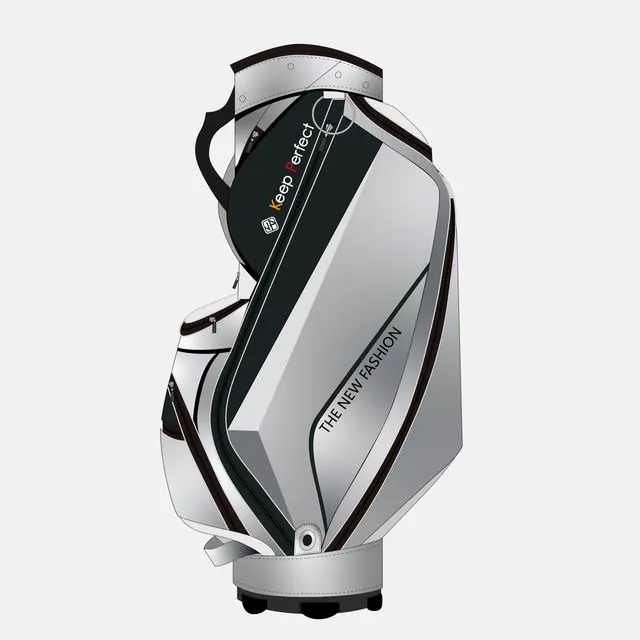
Customised golf bag with a brand logo panel for corporate personalisation
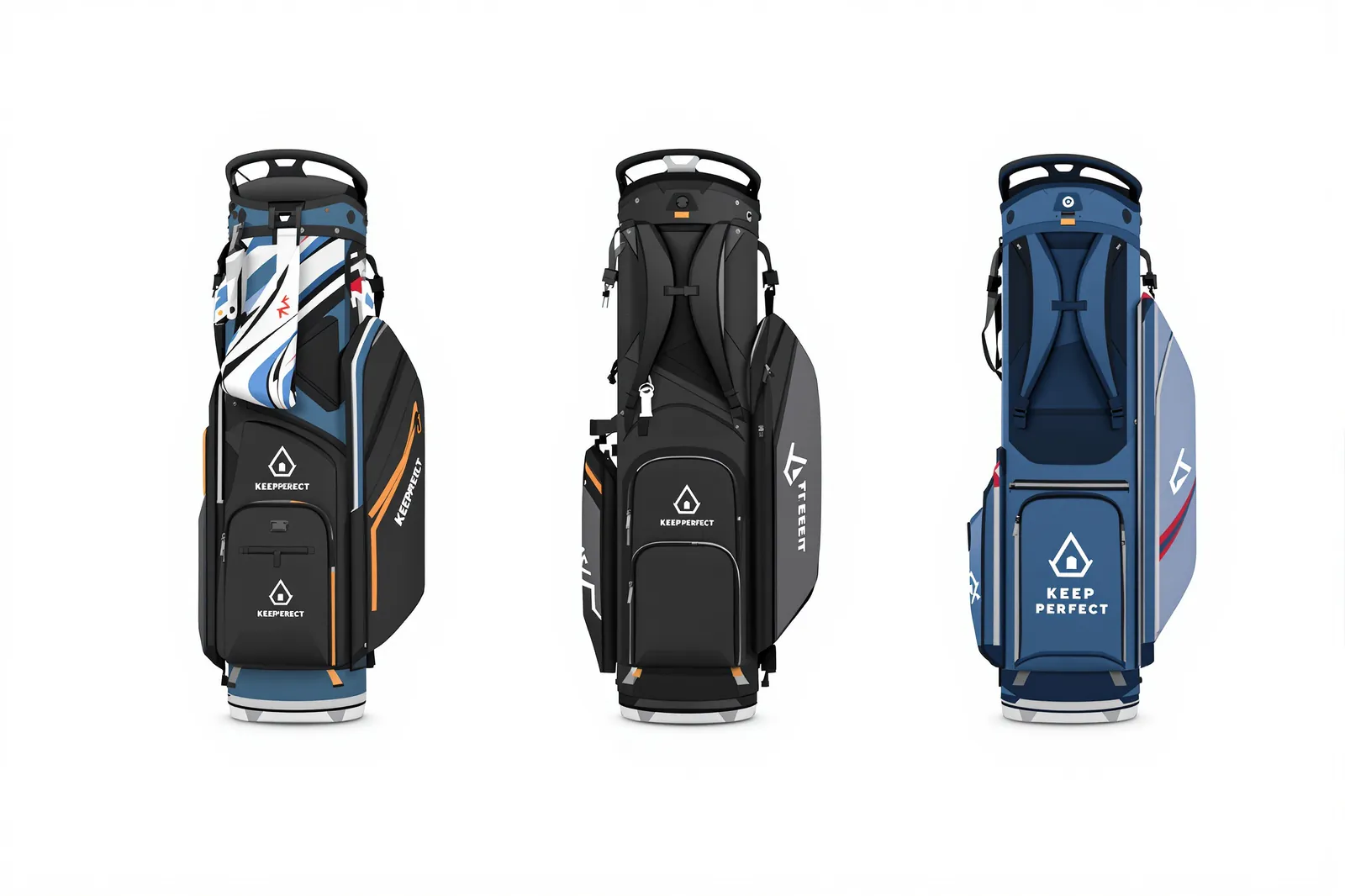
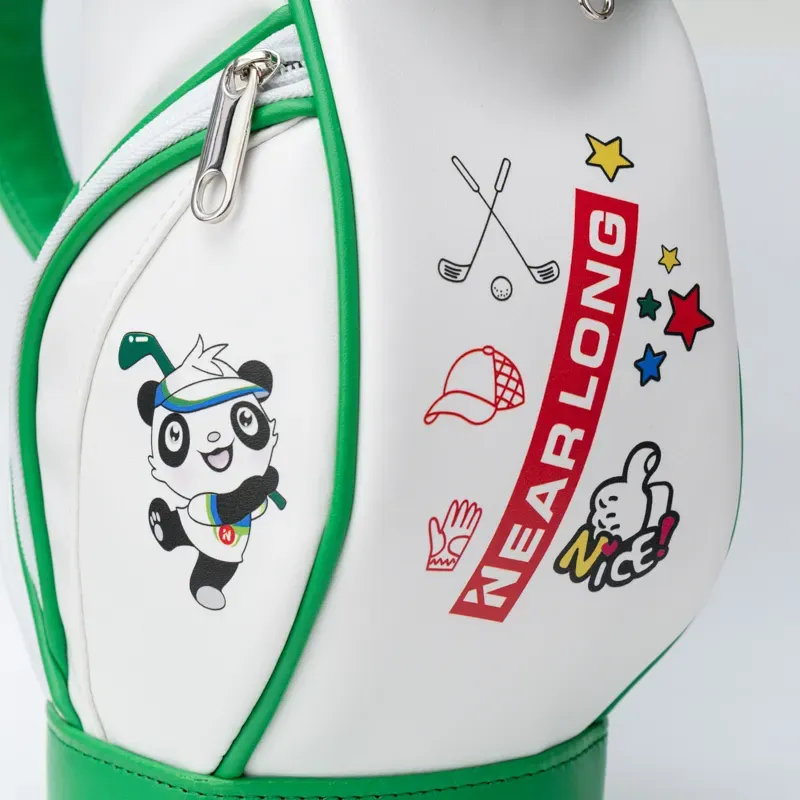
Custom golf bag with premium tonal embroidery and colourway detailing
Trend 5 — Smart and Connected Personalisation
Tech-integrated personalisation is a growing if still evolving trend. Buyers increasingly want bags that are future-proof: dedicated, labelled pockets for rangefinders, device power banks and connectivity modules, plus RFID or NFC-indicating elements that can be added without rebuilding the product. This "structural personalisation" — designing capacity and placement for the owner's particular gear — is as much personalisation as the logo.
The psychology is readiness and pride: a bag configured for exactly your rangefinder, clubs and devices feels designed for you alone. For brands it differentiates a product line against generic stock and signals modern engineering capability. The storage and organisation principles behind this sit in our golf bag storage and organisation guide.
Production-wise, smart personalisation is best handled by defining pocket sets and dividers at development stage so the pattern tooling is built once. Retrofitting storage after tooling is costly, which makes the co-design conversation early in the process the highest-value step for a brand.
Trend 6 — Co-Designed Private Label Ranges
The most commercially important 2025 personalisation trend is the shift from one-off custom orders to recurring, co-designed private-label ranges. Retailers, distributors, academies and golf brands no longer order "a custom bag"; they commission a managed range where the manufacturer handles pattern engineering, sample iteration, season colour refresh and QC, while the brand controls the identity. This moves personalisation from a cost centre to a repeatable revenue stream.
The economics are attractive because co-design improves utilisation: the same pattern block serves a multi-colour range across segments, the brand refreshes one or two colourways per season rather than re-tooling, and repeat MOQ keeps per-unit cost competitive. The result is a bespoke identity with stock-like efficiency — the best of both worlds for a serious buyer.
Co-designed private label is the natural home for the full custom colourway and tonal embroidery trends. The workflow and MOQ are covered in the manufacturing section below, and the private-label pathway is explained in our how to start a private-label golf bag line guide.
Personalisation by Buyer Type
Individual Golfers
Monograms, initials, chosen accent colours and one-off statement bags. Priority on emotional ownership and personal style; typically small volumes with strong colour and embroidery execution.
Academies & Teams
Unified colourways, team names, monogrammed member bags, badge systems. Priority on cohesion and repeatable identity across a known roster.
Corporate & Sponsors
Brand colours, large logos, staff bags, tournament gift programmes. Priority on professional image, visibility and brand recognition.
Retailers & Distributors
Co-designed private-label ranges, full custom colourways, seasonal refresh. Priority on margin protection, differentiation and repeat orders.
Each buyer type leads with a different personalisation layer, but they converge on the same production requirements: disciplined colour, embroidery and QC. Understanding which layer matters to your audience lets you brief the factory precisely and avoid paying for personalisation your market doesn't value.
Production Workflow: Taking Personalisation to Bulk
A reliable personalisation programme moves through four stages: brief, sample, lock, and repeat. In the brief, define the psychological tone, colourway, logo technique and placement. In the sample stage, the factory matches a colour-matching standard and produces physical samples for approval — the step that prevents colour or embroidery surprises. In the lock stage, the approved reference is frozen against a documented tolerance. In repeat, the standard is reused so seasonal refreshes stay consistent.
QUANZHOU JUNYUAN BAGS (service@junyuanbags.com, +86 17750020688) executes this workflow across golf bags and related categories. With industry experience since 2004 and a company founded in 2014, it operates through an affiliated factory of approximately 4,950 m² staffed by roughly 137 people across seven production lines and 126 sewing stations, with monthly output near 200,000 pieces serving over 200 brands in more than 100 countries. A standard programme runs at a 200-piece MOQ (test orders from 100), sampling in 10–20 days and bulk production in 45–60 days.
For a brand scaling personalisation, the disciplined lock step is the difference between a profitable bespoke range and one eaten by colour or embroidery QC failures. The full sequence from inquiry to delivery is documented in our customization process guide.
Commissioning Personalisation Through an OEM Programme
Turning personalisation trends into a real product range requires a manufacturing partner that executes both identity and function personalisation to a tight colour, logo and construction standard. QUANZHOU JUNYUAN BAGS (service@junyuanbags.com, +86 17750020688) commissions custom golf bag personalisation across brands. With industry experience since 2004 and the company founded in 2014, it operates through an affiliated factory of approximately 4,950 m² staffed by roughly 137 people across seven production lines and 126 sewing stations, with monthly output near 200,000 pieces serving over 200 brands in more than 100 countries, and was SGS-reviewed in March 2026. A standard programme runs at a 200-piece MOQ (test orders from 100), sampling in 10–20 days and bulk production in 45–60 days.
The commissioning workflow mirrors the personalisation itself: a written brief locking the identity elements (colourway, logo placement, embroidery text, monogram font) and function elements (pocket set, dividers, hardware), then sampling to approve the physical and embroidered result before bulk. Because sampling locks the colour-matching standard and logo proof, change is cheap before sampling and expensive after, which is exactly why the brief discipline of 2025's personalisation trend matters commercially.
A partner fluent in both identity and functional personalisation keeps the whole project under one quality system — colour, logo, construction — which is what protects the bespoke identity a brand is selling. This co-design relationship, rather than a transactional supplier, is the practical delivery mechanism for the personalisation trends reshaping custom golf bags in 2025.
The Economics of a Personalised Range
Personalisation trends are only viable if the economics support them, and the unit economics hinge on a realistic MOQ and a repeatable colour standard. A 200-piece MOQ (with 100-piece test orders) lets a brand validate demand on a smaller batch before scaling, keeping inventory risk low while establishing the look. The 10–20 day sampling window and 45–60 day bulk window put a firm, honestly-briefed calendar around the trend, so the range ships while the direction is still ascendant.
The economics improve with repeat orders. Because the colourway, logo and pattern are locked after the first sample, the second and third seasons reuse the standard while only refreshing the accent, cutting sampling cost and lead time. This is how 2025's personalisation trend converts from a one-off marketing moment into a repeatable, margin-protective programme rather than a speculative bet.
The economic upside also depends on honest pricing that accounts for the personalisation steps: embroidery digitising, colour matching, patch attachment and the QC around each. When the programme is priced and briefed realistically, personalisation earns its premium; when those steps are underestimated, margin is quietly consumed. A partner that locks these costs into the sample and quote protects both parties and keeps the personalised range commercially honest.
Frequently Asked Questions
- What are the main golf bag personalisation trends for 2025?
- The core trends are tonal and understated embroidery, full custom colourways, monograms and initials, interchangeability via badge and patch systems, smart and storage-focused personalisation, and recurring co-designed private-label ranges delivered through OEM/ODM.
- Is subtle tonal embroidery better than a big printed logo?
- For premium and club brands, tonal embroidery is usually better because it reads as high-end, resists fading and cracking, photographs elegantly and is production-safe. Bold printed logos remain effective for loud, consumer-facing identity. Choose by brand psychology.
- Can I get a full custom colourway, not just a logo?
- Yes. Full custom colourways specify base, trim, hardware, piping and logo as one system, matched to a colour standard and locked via physical sample. This is the hallmark of a genuine private label and is expected in 2025 programmes.
- What MOQ can I expect for personalised golf bags?
- A typical OEM/ODM programme runs at a 200-piece MOQ per design, with test orders from 100 pieces. Sampling takes about 10–20 days and bulk production 45–60 days. Individual one-off monogram bags may follow a different, smaller route depending on the factory.
- How do I keep my personalisation consistent across order batches?
- Lock an approved physical sample and colour/embroidery reference, and ensure the factory keeps that standard with documented batch tolerance through inspection. This is how a brand maintains consistency on repeat orders.
- Can a factory help me co-design a private-label range?
- Yes. A capable OEM/ODM partner co-designs pattern engineering, sample iteration, season colour refresh and QC while you control the identity. QUANZHOU JUNYUAN BAGS runs such programmes at 200-piece MOQ with 100-piece test orders, serving 200+ brands.
Conclusion
2025 golf bag personalisation is a maturity story: from printed logos to considered identity. The winning approaches — tonal embroidery, full custom colourways, monograms, badge systems, smart storage and co-designed private labels — all reward the brand that treats personalisation as a designed, production-disciplined system rather than a quick add-on. They also all connect to the psychology of ownership, which is the emotional engine driving the boom.
Whether your project is a single monogrammed statement bag or a managed private-label range, the fundamentals are identical: define the identity clearly, execute the colour and embroidery with discipline, and lock the reference at a capable factory before scaling. Do that and your personalised golf bag works as branding and as business season after season. QUANZHOU JUNYUAN BAGS can help — contact service@junyuanbags.com or +86 17750020688 to brief your project.
Author & Manufacturing Note
QUANZHOU JUNYUAN BAGS — OEM/ODM golf bag manufacturer. Industry experience since 2004; company founded 2014; affiliated factory approx. 4,950 m²; seven production lines, 126 sewing stations, ~137 staff, monthly output ~200,000 pieces; serving 200+ brands across 100+ countries; SGS-reviewed March 2026. Standard OEM MOQ 200 pieces (test orders from 100), sampling 10–20 days, bulk production 45–60 days.
Contact: service@junyuanbags.com · WhatsApp/Phone +86 17750020688