Custom OEM Golf Travel Bags From Chinese Factories
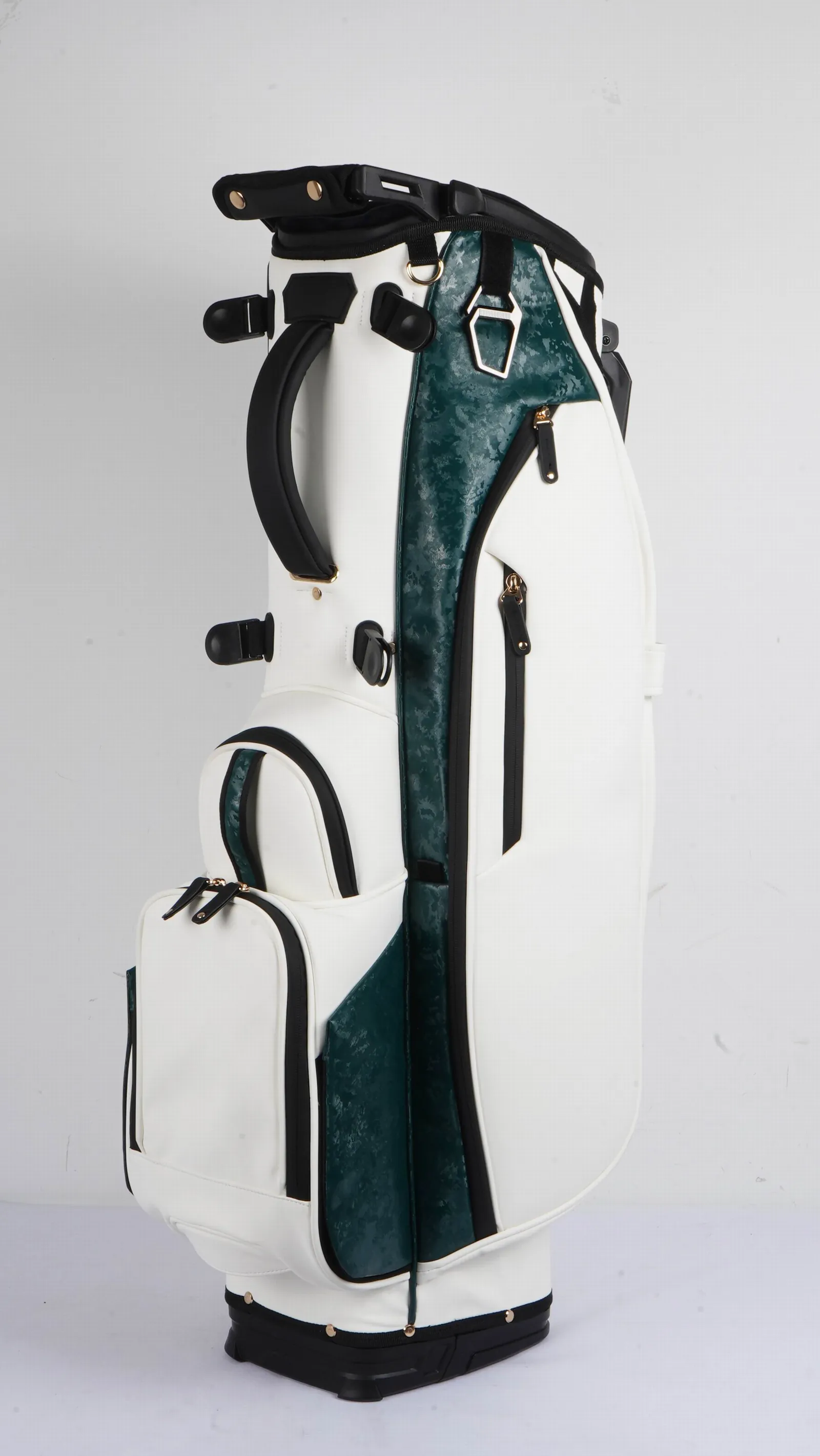
China remains the world's single largest production base for custom OEM golf travel bags, and the realistic path for most brands is to partner with one carefully vetted factory that handles design, materials, sampling, quality control and export for you — rather than trying to negotiate dozens of suppliers on your own. A brand that sources well in China typically lands a lower per-unit cost, access to specialised materials and production lines, and a governed supply of a product that is outsized in value (top and tail of the golf bag range) but small in volume. This guide, from QUANZHOU JUNYUAN BAGS — a factory founded in 2014 whose founder entered the trade in 2004 — explains how OEM golf travel bag programs work, what to specify, what to pay, and how to protect quality and IP when manufacturing in China. We run a 4,950 m² affiliated main factory across seven production lines, 126 sewing machines and 137 staff, supporting more than 200 brands across 100+ countries."
Why China Leads Custom Gold OEM Travel Bag Manufacturing
China dominates OEM golf travel bag manufacturing for a combination of structural reasons that are hard to replicate elsewhere. It has the densest concentration of specialised soft-goods and plastics factories, an unmatched ecosystem of zipper, webbing, hardware and textile suppliers, and decades of accumulated experience in building exactly the products - from lightweight soft shells to injection-moulded hard cases - that golf travel demands. For a brand, this means every material and every manufacturing step is available within short distance, which keeps lead times and co-ordination cost down.
The depth of the supplier base also means a brand is not locked into one factory's limitations. Materials such as honeycomb-board, EVA, ripstop nylon and the specific impact-absorbing foams used in club protection are all sourced locally and competitively, so an experienced Guangdong- or Fujian-based workshop can translate a designer's specification into a real, testable product quickly. The result is a genuine OEM capability: the factory builds to the brand's specification, with the brand's name on it, out of the brand's material choices.
None of this is to claim every Chinese factory is equal - quality and reliability vary widely, which is exactly why independent verification and disciplined sourcing matter. But for a brand that does its homework, China offers the best combination of capability, price and speed in golf travel bag manufacturing anywhere in the world today. The task is not whether to use China, but how to use it well.
QUANZHOU JUNYUAN BAGS builds golf travel bags on an affiliated 4,950-square-metre main factory that entered the industry when our founder started in 2004 and was established as a company in 2014. The facility runs seven production lines with 126 sewing machines and a team of 137 staff, supporting a monthly capacity of up to 200,000 units for more than 200 brands across 100+ countries. Sampling typically takes 10–20 days and bulk production 45–60 days, with a standard MOQ of 200 pieces and 100 for test orders. The factory was independently audited by SGS in March 2026. Contact service@junyuanbags.com or +86 17750020688.
OEM vs ODM: The Two Ways to Source
OEM (original equipment manufacturing) means the factory builds to a design and specification you provide. You own the design; the factory supplies materials, craftsmanship, quality control and export. This suits a brand with its own strong design and a clear idea of its product. ODM (original design manufacturing) means the factory supplies or co-develops the design from its established product platform, and the brand customises it with its logo, colours and features. This suits a brand that wants to move fast without a full in-house design department.
The two routes affect everything downstream. With OEM, you carry more design risk and more opportunities for differentiation, and you typically need a more detailed spec and more sampling rounds. With ODM, the factory's existing patterns and tooling mean faster sampling and lower development cost, but your product is likely to share a platform with other brands - a real consideration if you need a distinctive product. Our ODM / OEM services support both, and our design team can advise which fits your brand, timeline and budget.
Many successful brands run a hybrid: an ODM core that is fast and proven, plus one or two OEM-designed hero products that establish differentiation in the range. Getting the mix right depends on your team's design bandwidth and your market positioning. The practical skill is knowing which products justify custom tooling and which are best served by an agile platform, and letting the factory's engineering input guide that call.
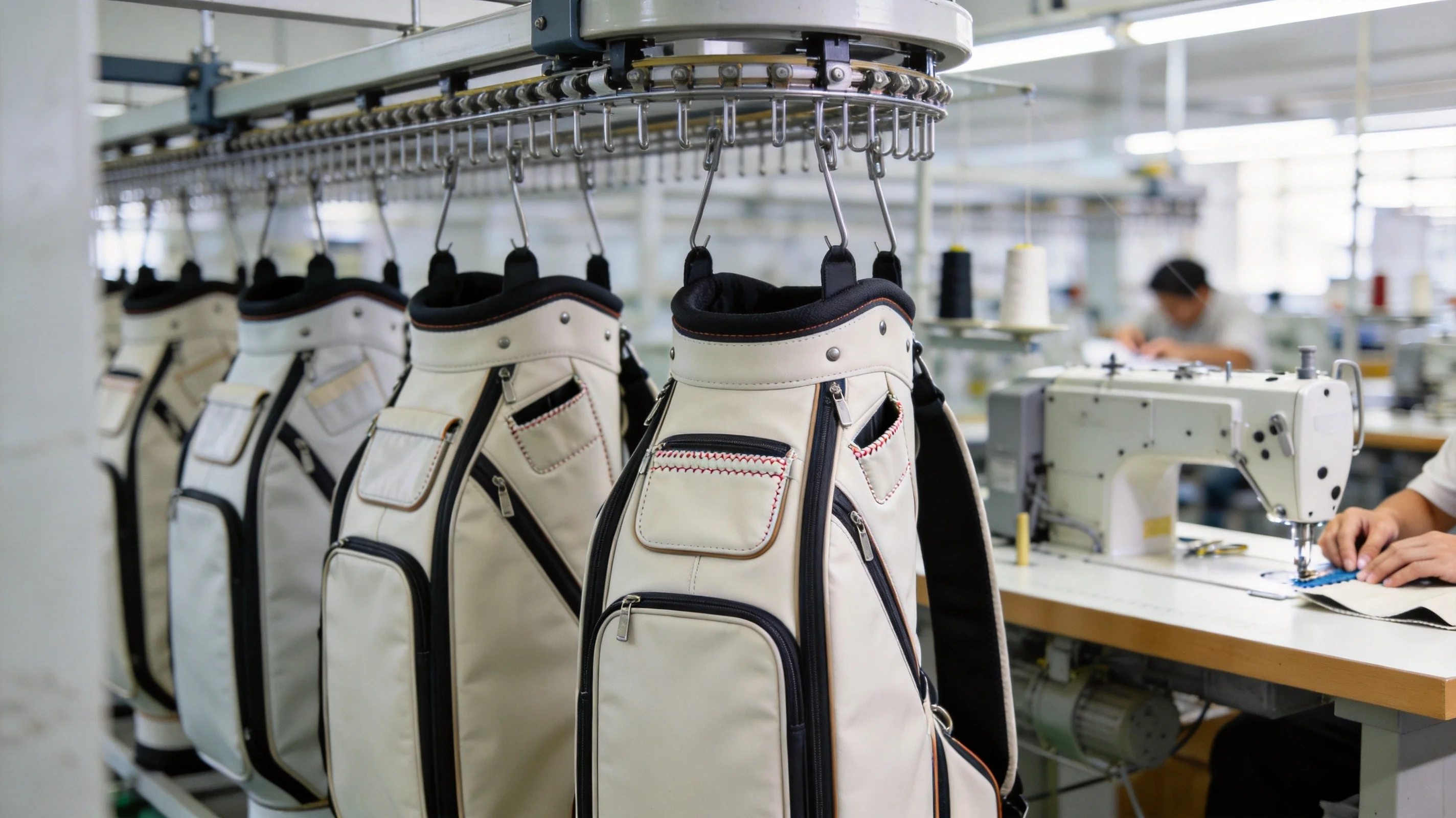
OEM Build
A specialised line turns a brand's spec into a real, tested travel bag.
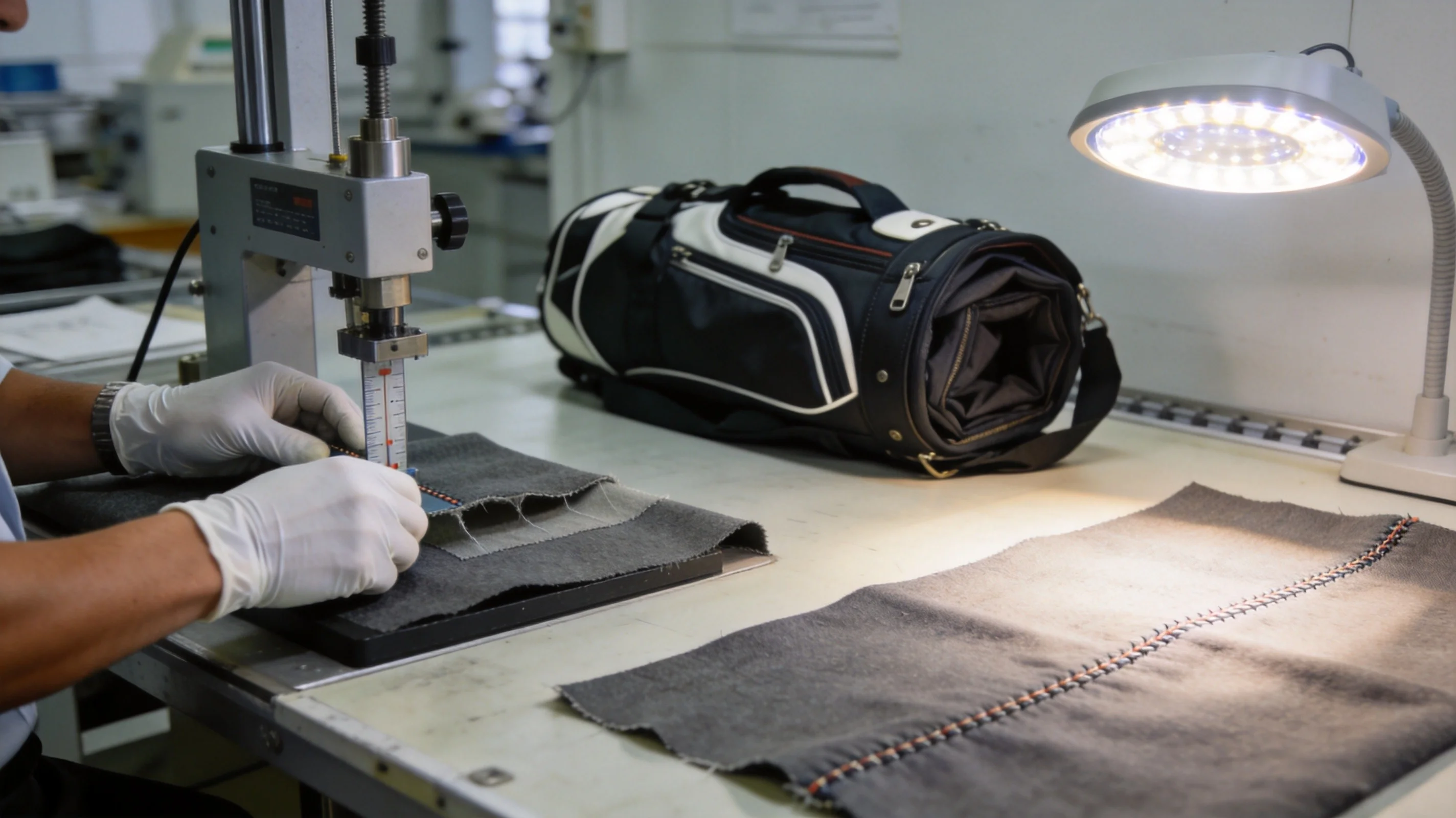
QC Stage
Documented inspection verifies materials, stitching and finish before shipment.
Specifying a Custom Golf Travel Bag That Works
The quality of the product starts with the quality of the specification, and a good spec reads like a clear contract for the factory. It should fix the outer shell material and denier, the lining, the padding and foam at the club head and base, the wheel or handle system, the closure type and hardware, the internal pocketing and club divider, and the exact decoration (embroidery or print, placement, Pantone colours). Vague specs invite variation; precise ones produce repeatable results.
It is equally important to specify performance, not just materials. State the target packed weight, the expected impact protection at the club head, the abrasion resistance and water resistance of the shell, and any airline-size compliance the bag must meet. Where relevant, require the bag to pass defined tests - for example stiffness of the top structure or zipper cycle ratings. Giving the factory clear performance targets lets their engineers select the construction that passes, rather than leaving them guessing at taste.
Our factories walk this road daily, and the guidance we give is consistent: start from the member or customer journey (how the bag is actually used and handled) rather than from a one-off feature list. A bag that is designed around the reality of terminals, car boots and clubhouse storage, with protection and usability treated as performance targets, is far more likely to ship as a quality product that earns its retail price and repeated use.
QUANZHOU JUNYUAN BAGS builds golf travel bags on an affiliated 4,950-square-metre main factory that entered the industry when our founder started in 2004 and was established as a company in 2014. The facility runs seven production lines with 126 sewing machines and a team of 137 staff, supporting a monthly capacity of up to 200,000 units for more than 200 brands across 100+ countries. Sampling typically takes 10–20 days and bulk production 45–60 days, with a standard MOQ of 200 pieces and 100 for test orders. The factory was independently audited by SGS in March 2026. Contact service@junyuanbags.com or +86 17750020688.
Materials That Define a Transport-Ready Bag
Material choice is where a custom bag earns or loses its reputation. For the outer shell, high-denier polyester or nylon in a tight weave resists abrasion and holds its colour; coated or laminate finishes add water resistance without much weight. Inside, the club head area needs an impact-absorbing foam or padded layer, and the base and lower panels need reinforcement to take the scuffs of handling and rolling.
Hardware does the mechanical work and has to be over-specified rather than under-specified. A wheel system that rolls smoothly over tiles and kerbs, a handle that lifts a fully loaded bag without strain, and heavy-gauge zips that run freely for years - these are the parts that fail first under real travel, and the parts where quality visibly separates a premium bag from a disposable one. It is worth asking the factory which components and mechanisms they recommend and why, and to verify them against your expected usage.
Weight is a silent but powerful differentiator. Airlines charge for checked golf bags by weight, and a heavier bag eats into the passenger's baggage allowance and appeals to more painful handling. The skilled task in manufacturing is to keep the bag light enough to fly economically while stiff and cushioned enough to protect. Lighter advanced materials such as EVA panels and honeycomb structures help, and the availability of these locally is one more reason China factories can deliver a well-balanced, travel-ready product.
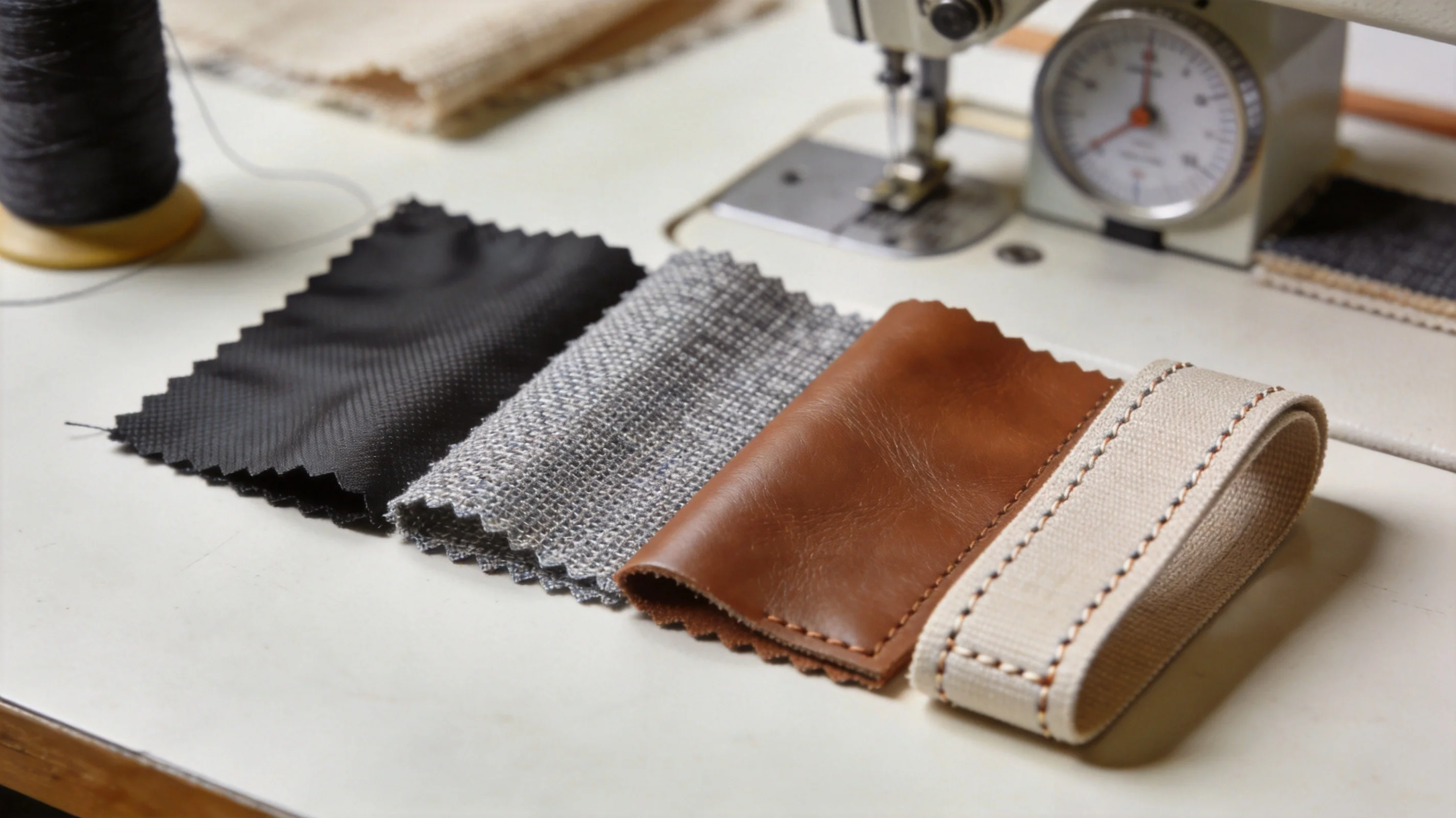
Material Control
Cells of shell fabric, lining and foam are chosen and matched before the bag is built, balancing weight, stiffness and cushioning.
Sampling, Lead Times and MOQ Realities
Every good OEM program is anchored by an approved physical sample. Design work, spec and materials all converge on a physical prototype that the brand can inspect, measure and feel before committing to bulk. Our design and sampling process takes 10-20 days and produces a working sample with your exact colours, hardware and construction so you approve the reality, not a rendering.
From an approved sample, bulk production takes 45-60 days, and that window is where scheduling discipline really matters. Lock the order date, the incoterms and a quality-inspection checkpoint into the plan, and confirm who inspects (you, a third party, or the factory) and at which stage of production. A clear, written commercial calendar protects both sides and keeps large orders predictable rather than stressful.
Minimum order quantities shape the economics. Our standard MOQ is 200 pieces per style, with 100 available for test orders. Below a certain order size, per-unit cost rises and the value of the program starts to disappear; above it, unit cost and freight drop, making the bag more economical. Since MOQ can be set per style rather than per order, a brand can carry several styles within one overall programme so long as each style clears its own floor. Understanding this is the key to unlocking the price benefits of Chinese manufacturing.
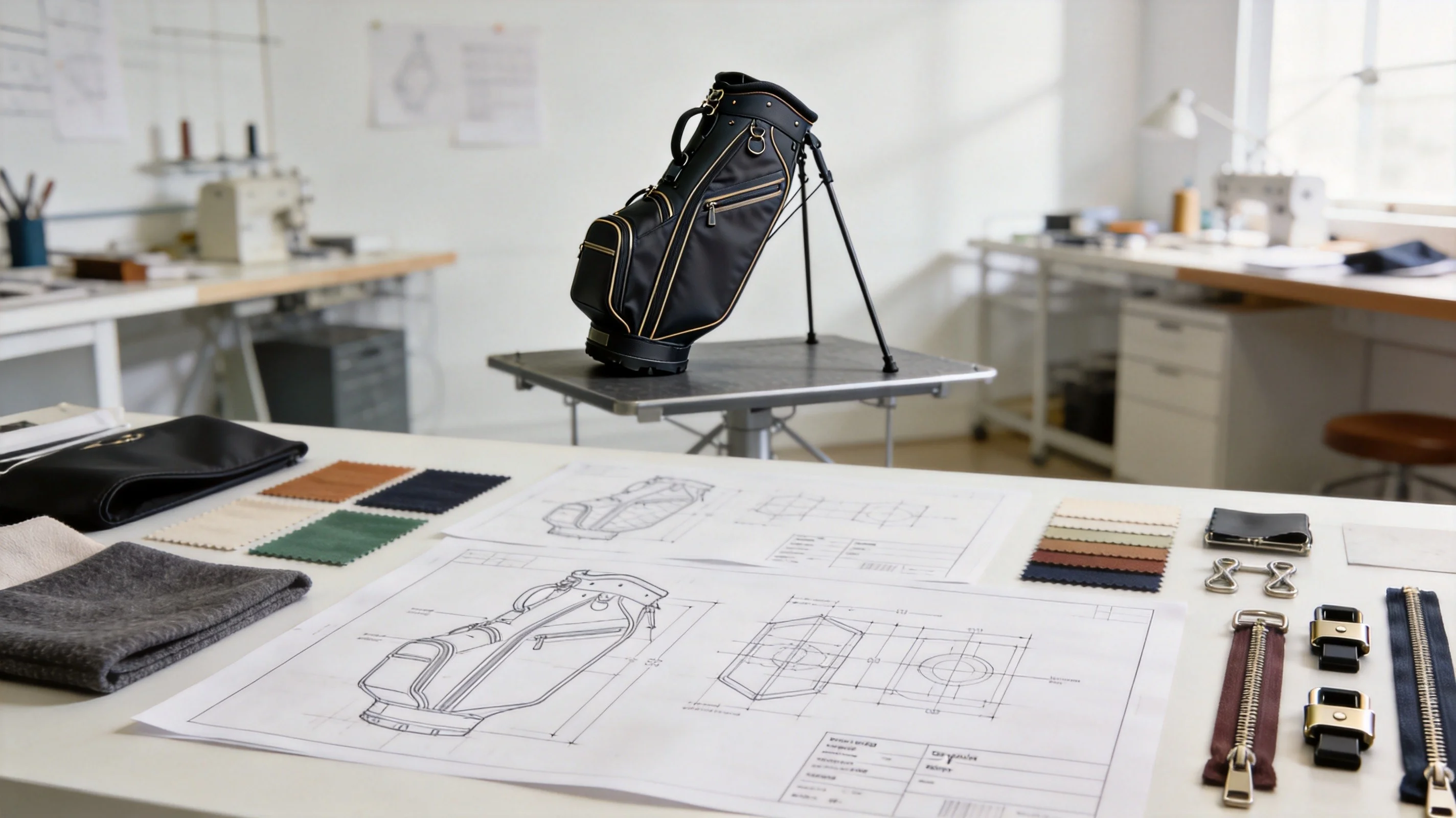
Sample Build
A physical proto locks in colour, materials and construction before bulk.
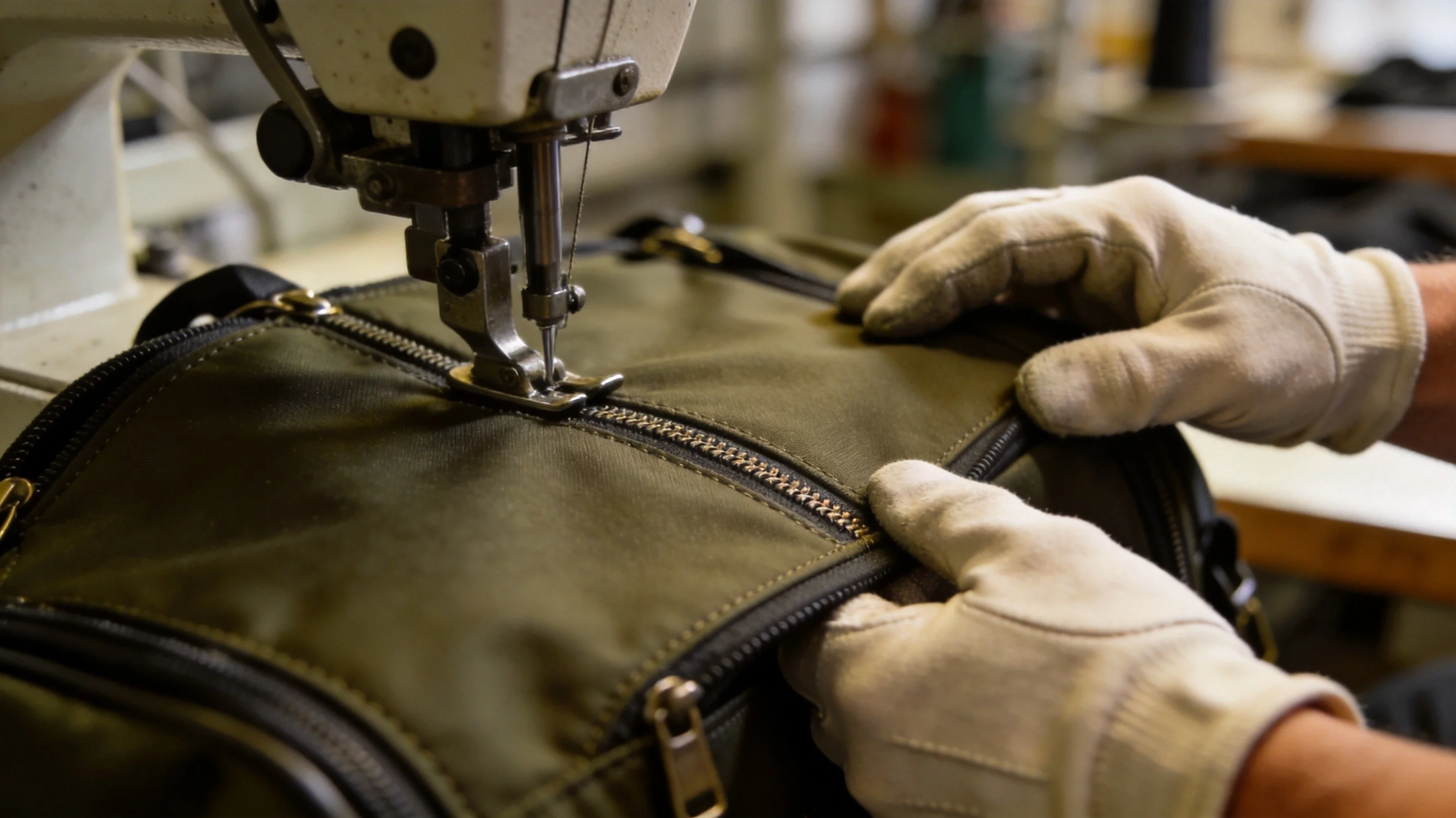
High-Capacity
A seven-line, 126-sewing-machine facility with a monthly capacity of up to 200,000 units.
Quality Control and Verification You Can Trust
Trust in an overseas factory has to be built on evidence, not on promises, and the evidence falls into three layers. The first is independent certification: a factory that has passed a reputable factory audit - we passed our SGS audit in March 2026 - has opened itself to external inspection of its facilities, processes and social and environmental compliance. The second is in-plant quality control: documented inspection at each stage, from incoming materials to cutting, sewing, assembly, and a final check before packing.
The third layer is physical verification of the product during production. Whether you send your own QC, book a third-party inspection company, or rely on the factory's in-house checks plus photos and reports, the point is to have an accountable checkpoint before the goods are packed and shipped. With a contracted inspection before leaving the factory, small defects are caught while they can still be fixed at source, rather than arriving at your door as a whole bad batch.
Quality control is not only about catching faults; it is about catching them at the right stage. A stitch issue found during sewing is a two-minute fix; discovered after 5,000 bags are packed it is a crisis. This is why a quality-minded factory treats inspection as a continuous discipline across the line, and why independent verification of the factory's own quality system is a sound basis for trust. The more verifiable the evidence, the safer the partnership.
Protecting Your Design and Intellectual Property
Manufacturing in China raises understandable questions about design protection, and they deserve a serious, practical answer. The strongest protections begin before production: sign a clear supply agreement that sets out design confidentiality, non-disclosure of your artwork and tooling, and limits on what the factory may do with the design. Confirm the factory does not use your design for another brand without your written consent, and clarify ownership of any moulds or dedicated tooling.
Operational discipline protects your product day to day. Supply logos and artwork in vector form on a need-to-use basis, control who sees full design files, and consider keeping the most sensitive pattern or decoration work segmented across stages so no single supplier holds the entire product. Registering your design or a design patent in the markets where you sell - and knowing how to register in China if you plan a big China business - gives you enforceable rights if they are ever tested.
A reputable, long-standing factory is usually the best protection of all. Factories that serve 200+ brands and support repeat clients to success have a strong incentive to protect their own trust and reputation, because a leak or a misuse would cost them far more than a single project earns. In our experience the relationships built on good commercial terms, clear contracts and mutual respect produce designs that are treated with care - and the few that do not are filtered out by basic due diligence.
Pricing, Incoterms and Total Landed Cost
Pricing a Chinese-made golf travel bag properly means thinking in total landed cost, not just the FOB (free on board) unit price. The FOB price covers the goods at the port; after that come freight, insurance, duties, customs brokerage, inland shipping and any inspection or testing fees. A bag that looks cheapest at FOB can end up no cheaper - or more expensive - once logistics and risk are added, so it is wise to compare estimates on a landed-cost footing.
Understanding incoterms avoids costly surprises. Whether you buy EXW, FOB or CIF-DDP changes who arranges freight, who owns the insurance and who clears customs, and it changes where risk transfers to you. A clear incoterm, agreed per shipment, makes the hand-off between your business and the factory predictable. Our export team commonly quotes FOB or CIF and advises on the option that best fits your logistics setup and cash-flow cycle.
Scale remains the biggest lever on unit price. Larger orders spread fixed costs - pattern cutting, sampling, tooling if any, production set-up - across more units, which is why the MOQ-to-price curve matters. Buying less than the economic floor, or ordering in several small batches, silently leaves money on the table. Work the programme around as large a per-style batch as the business allows, and use the factory-direct saving to reinvest in better materials or decoration rather than simply shaving the price.
QUANZHOU JUNYUAN BAGS builds golf travel bags on an affiliated 4,950-square-metre main factory that entered the industry when our founder started in 2004 and was established as a company in 2014. The facility runs seven production lines with 126 sewing machines and a team of 137 staff, supporting a monthly capacity of up to 200,000 units for more than 200 brands across 100+ countries. Sampling typically takes 10–20 days and bulk production 45–60 days, with a standard MOQ of 200 pieces and 100 for test orders. The factory was independently audited by SGS in March 2026. Contact service@junyuanbags.com or +86 17750020688.
Doing Due Diligence Before You Commit
Before placing a first order, a short due-diligence checklist makes the difference between risk and reassurance. Ask for the factory's business licence, factory address and facility overview; review sample work or a reference order; request an independent audit report (ours is the SGS audit of March 2026); clarify ownership of tooling; and speak to a reference client in your market if possible. None of these steps is difficult, and together they form a defensible basis for trusting a partner with your brand.
Verify the concrete capabilities behind the marketing. How many production lines, machines and staff? What is the monthly capacity, and is it consistent with the lead time quoted? Do they ship to the markets you sell in, and do they have export documentation and compliance experience? Numbers that are specific and internally consistent - seven lines, 126 sewing machines, 137 staff, up to 200,000 units a month - are more credible than vague claims, and they let you sanity-check lead-time promises.
Finally, test the relationship with a small order before scaling. A test order of 100 pieces - our test MOQ - lets you experience sampling, communication, production and delivery with a manageable commitment, and it builds the working rapport that large orders depend on. Done well, due diligence is not a barrier to doing business with China; it is the disciplined entry that lets a brand take full advantage of China's genuine strengths.
Choosing the Right Sourcing Route for Your Product
The table contrasts the main sourcing paths a brand faces when manufacturing custom golf travel bags in China.
| Route | Design Ownership | Speed to Market | Differentiation | Best For |
|---|---|---|---|---|
| OEM (yours) | You own the design | Slower, more sampling | High | Distinctive hero products |
| ODM (factory platform) | Factory supplies or co-designs | Faster | Platform shared | Fast rollout, core range |
| Hybrid OEM + ODM | Mixed | Balanced | Strong | Full range differentiation |
| Private label / wholesale | Quick, catalogue-based | Fastest | Low-moderate | Retail and pro-shop margin |
The right route depends on your design bandwidth, timeline and how much your product needs to stand apart. A hybrid that anchors the range on ODM and differentiates a hero product with OEM is a proven pattern.
Source Custom OEM Golf Travel Bags the Right Way.
Partner with a verified, factory-direct team that handles design, materials, sampling, QC and export. Support both OEM and ODM, with SGS-verified facilities and a 200-piece MOQ (100 for test).
Discuss Your OEM Program →Frequently Asked Questions
- What is the difference between OEM and ODM?
- OEM builds to your design; ODM supplies or co-develops the design from its own platform. Many brands run a hybrid of both.
- What is the minimum order for a custom golf travel bag?
- Our standard MOQ is 200 pieces per style, with 100 available for test orders to approve a sample first.
- How long does manufacturing take?
- Sampling takes 10-20 days and bulk production 45-60 days from an approved sample, so plan several months ahead of the season.
- How do I protect my design when manufacturing in China?
- Sign a supply agreement on confidentiality and tooling ownership, control artwork, keep sensitive work segmented, and register designs in your sales markets.
- Can I verify a factory before ordering?
- Yes - request the business licence, facility overview, an independent audit (ours is the SGS audit of March 2026) and a reference client, and run a small test order.
- What is included in the price?
- Compare total landed cost (FOB unit price plus freight, insurance, duties, customs and inspection) rather than the FOB figure alone.
Sources
- SGS — independent verification of factory audits and quality systems supporting this guide.
- IAGTO — golf tourism data illustrating the size of the global golf-travel market.
- USGA — golf equipment references supporting product design standards.
- ASTM International — material and textile test methods used in quality control.
Related Reading
Explore more of our expert guidance on golf travel bags and manufacturing to plan the right product for your next trip or program:
- Factory-direct wholesale — the economical factory-direct route for brands buying in volume.
- OEM & ODM manufacturing services — how design, sampling and production flow through a Chinese golf bag factory.
- Golf bag OEM & ODM process guide — the end-to-end workflow from brief to bulk shipment.
- Golf bag manufacturer selection guide — how to vet and choose the right manufacturing partner.
- Golf bag quality standards guide — the quality and QC benchmarks worth demanding.
- Private label for brands — house-brand travel bags built on a verified factory base.