Custom Golf Bag Design: Personalization Options & Bespoke Manufacturing Guide

Personalizing a custom golf bag is straightforward when you control the supply chain directly: choose a bag type, fix capacity, dividers, pockets, and materials, lock your colour and decoration technique, then prove everything on a production-matched sample before a bulk run. At QUANZHOU JUNYUAN BAGS, a Quanzhou-based custom golf bag manufacturer founded in 2014 with a founder who entered the bag-making industry in 2004, we have delivered personalised and bespoke bags for 200+ brands across 100+ countries. This guide covers every personalization option — from embroidery and monogramming to full bespoke manufacturing — and the step-by-step path that protects your design from sketch to shelf.
A personalised golf bag is a long-lived, highly visible product, so the personalization decisions compound. Choose the structure well and the bag performs for years; choose the decoration well and the brand or owner feels pride in it every round. This guide is structured as the complete design and manufacturing handbook: it walks the personalization options in detail, then the bespoke manufacturing process, then the sampling and quality gates that make a custom product reliable. Whether you are personalising a single gift or briefing a wholesale line, the same discipline applies — define, sample, approve, produce.
The Personalization Options at a Glance
Personalization spans two families: structural and decorative. Structural options change what the bag does — capacity, dividers, pockets, materials, colourways, hardware. Decorative options change how it looks — a logo, a name, a pattern, a monogram, an inside label. Most projects blend both: a structural specification that fits the user, topped with decoration that carries identity. The table below summarises the main options and the manufacturing mode each suits.
| Personalization Option | Type | Typical Use | Best Manufacturing Mode |
|---|---|---|---|
| Embroidered logo / crest | Decorative | Brand, team, corporate mark | OEM / ODM |
| Monogram / name | Decorative | Individual gift | ODM |
| Full-panel print (sublimation) | Decorative | Bold brand or team design | ODM |
| Custom colourway | Structural | Signature brand colours | OEM / ODM |
| Bespoke architecture | Structural | Unique dividers, pockets, materials | OEM / Bespoke |
| Inside woven label | Decorative | Brand authenticity | OEM / ODM |
Selecting the Bag Architecture
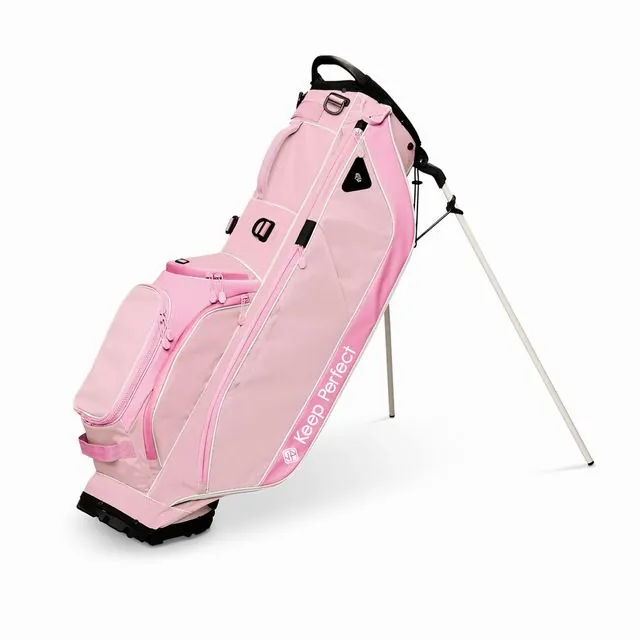
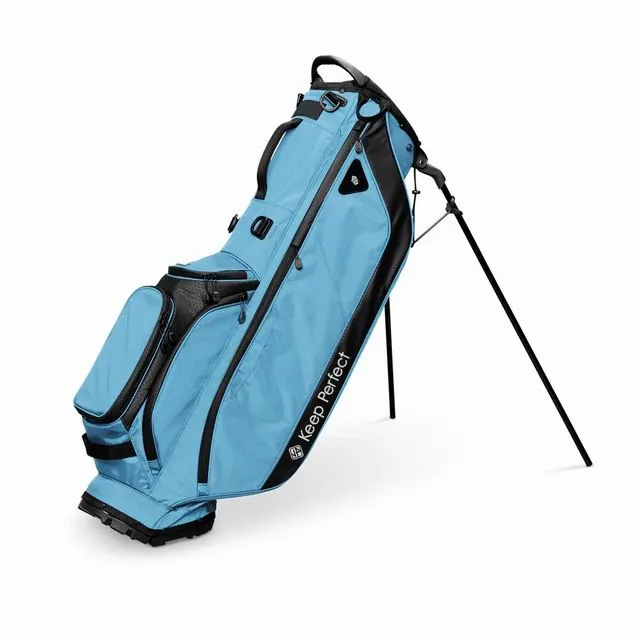
Architecture is the first and most consequential decision. A stand bag suits the walking golfer, with retractable legs, comfortable straps, and a balanced pocket build. A cart bag rides a trolley and can be larger with more storage and a wide base, giving a broad colour and logo canvas. A staff bag is the prestige option for coaches and professionals, holding a full set plus teaching gear. A travel bag prioritises protection and durability for transit. The architecture sets capacity, weight, materials, and decoration constraints, so it should be settled first and everything else designed around it.
Capacity follows the player. A standard player needs room for a full set of fourteen clubs; a juniors or casual player can carry fewer with a lighter, simpler bag. Divider choice — a full-length 14-way top versus a simpler 5-/6-way — turns on how many clubs the owner carries and how much club protection they value. Structure decisions like these are exactly what distinguishes a genuine bespoke bag from a rebranded commodity, and they are best locked with the factory before decoration begins.
Materials, Colour and the Build Specification
The material spec defines feel, durability, and decoration compatibility. 600D polyester balances cost and performance; 1680D polyester is denser and more premium; nylon adds tear resistance and a smooth printing surface; PU-coated and waterproof shells suit wet climates. Hardware quality — zippers, buckles, bases — is where a custom bag proves itself. Colour, specified in Pantone, is matched against physical swatches so the bag matches the brand or the owner's intent rather than a screen rendering.
Because material and decoration are coupled, specify them together. Sublimation needs a high-polyester shell; embroidery suits dense nylon and 1680D; prints favour smooth polyester. Lock the material library and the colour system in the brief, and confirm both on the physical sample. Our material comparison in materials for custom golf bags gives the full trade-off matrix, and our ergonomic guidance in golf bag ergonomic design covers the comfort side of the build.

Decoration and Personal Marks
Decoration carries the personal identity. Embroidery is the premium default for crests, names, and low-colour marks — durable, textured, and respected. Screen and heat-transfer printing handle full-colour logos economically on smooth polyester. Sublimation bonds full-panel, all-over colour into the fabric so it cannot peel, ideal for bold patterns and gradients. Woven labels finish inside tags and small marks. Monogramming — a name or initials on the front pocket, handle, or upper panel — is the purest personal touch for individual buyers and is typically embroidered for durability.
Placement deserves its own plan. The main logo goes on the upper side panel at chest height; a secondary mark on the lower panel or base; a tonal mark on the front; small marks on the rain hood, handle, or inside. A placement sheet fixes every mark so a fleet or a reorder stays identical. For the techniques in full and how they match different bag types, see custom logo printing and embroidery for all golf bag types.
Bespoke Manufacturing vs. Built-to-Catalog
There is a meaningful difference between customising a catalog model and commissioning a bespoke product. A built-to-catalog project takes a proven factory model and personalises colours, decoration, and small details — fast, low-risk, economical, and ODM-friendly. A bespoke project re-engineers the product: a unique shape, a new divider system, a custom base, or a novel material, built to your drawings or the factory's engineering (OEM). Bespoke delivers maximum uniqueness and a defensible product story, but costs more and takes longer with more sampling iterations.
Most programs sit on a spectrum between the two, selecting a proven architecture as the base and adding bespoke pockets, materials, or decoration. We cover the mode decision in OEM and ODM services explained, and the engineering of a full line in designing a full golf bag collection. Choosing the right level of bespoke ambition up front prevents scope creep and timeline surprises.
The Bespoke Manufacturing Process, Step by Step
Bespoke manufacturing follows a document-driven sequence. It opens with a technical brief: bag type, capacity, dividers, pockets, materials, colours, decoration, packaging, and ship date. The factory engineer then releases a technical drawing and a material mock-up for approval. Sampling follows — at QUANZHOU JUNYUAN BAGS this takes 10–20 days — and you approve a production-matched sample covering structure, materials, colour, and decoration. Bulk production then runs 45–60 days, followed by final inspection, packaging, and shipping. The engineering depth of bespoke means the sample stage may include an iteration to refine the design.
The approved master sample is the contract. Every unit matches it, and the factory retains it as the reference across the line and any reorder. Because bespoke engineering carries more risk of subtle defects, quality control is a non-negotiable gate — our process is detailed in golf bag manufacturing quality control. The complete order and approval gates, including sampling checkpoints, are mapped in the bulk golf bag order process.
MOQ, Samples and the Pilot Run
Our standard minimum order is 200 pcs per design, and we support a pilot run of 100 pcs so you can validate a personalised or bespoke design on a small batch before committing to scale. Sampling always comes first and typically takes 10–20 days; the sampling fee is usually credited when you move to bulk, so validating the design costs little in real risk. The pilot is especially useful for a bespoke architecture or a new decoration technique, letting you correct any issue on a small run before the full program.
For a multi-season bespoke program, plan a small replacement buffer of a few bags per size so a damaged unit can be swapped without re-running the full order. On reorder, pass the original colour-batch codes and approve any material substitution against the master sample. This protects fleet consistency over years. Our MOQ and pricing detail is in custom golf bag MOQ and pricing.
Quality Control, Testing and Compliance
A custom product is only as good as its consistency. The QC system should include inline line inspection, a final inspection against the approved samples, and testing of the decoration (adhesion, abrasion, colourfastness) and of any claimed performance such as waterproofing. For export, confirm chemical compliance with destination rules — US and EU markets have expectations around fabric and ink chemistry — and request the test reports and factory-audit documentation. Our affiliated factory has completed an SGS audit (2026) and maintains the compliance records buyers request.
Capacity and accountability matter in bespoke work. With 7 production lines, 126 sewing machines, and 137 staff producing about 200,000 units a month, our operation absorbs bespoke programs without crowding them out, and our affiliated factory spans about 4,950 sqm, serving brands across 100+ countries. A single accountable factory with one QC standard is what keeps a bespoke fleet consistent over seasons. Our compliance and testing approach is covered in more detail in golf bag quality control and testing standards.
Sustainability in Bespoke Personalization
Bespoke does not need to mean wasteful. Recycled polyester shells, water-based inks, minimal packaging, and removable branding let a personalised product carry both identity and responsibility. Durable construction extends life, and removable branding means a retired bag can be reused or donated. If sustainability is part of the design story, specify the responsible options in the brief so the material library and decoration are correct from the start. More options are in eco-friendly golf bag manufacturing.
Frequently Asked Questions
- What is the difference between customizing and bespoke manufacturing?
- Customizing personalises a proven catalog model (colours, decoration, details). Bespoke re-engineers the product itself — unique shape, dividers, materials, or base. Bespoke is more unique but costs more and takes longer.
- What personalization options can I choose from?
- Embroidered logos, monograms, screen or heat-transfer printing, full-panel sublimation, custom colourways, bespoke architecture, and inside woven labels — typically combined into one design system.
- What is the minimum order for a personalised bag?
- The standard MOQ is 200 pcs per design, with a 100-pc pilot available. Sampling takes 10–20 days, and bespoke engineering may need an extra iteration. Bulk runs 45–60 days.
- Can I commission a completely bespoke golf bag design?
- Yes, via an OEM route. You bring drawings or the factory engineers the product. It takes more sampling iterations and a higher budget, but you own a unique, defensible product.
- How do I keep reorders matching my original bags?
- Approve and retain a production-matched master sample, pass colour-batch codes on reorder, and have the factory reference the sample across the line. One factory + one QC standard = consistent fleets.
- Do you support sustainable bespoke options?
- Yes. Recycled polyester, water-based inks, minimal packaging, and removable branding are available. Our affiliated factory has passed an SGS audit (2026) and documents destination-market compliance.
Designing Around Your Specific User
The most successful bespoke bags begin with a precise user profile rather than a wish list. A tour-oriented player wants maximum club separation and a balanced, secure build; a travelling golfer wants a compact, durable, easy-carry bag that protects clubs in transit; a corporate recipient wants a premium, logo-led bag that flatters the brand; a junior wants a shorter, lighter bag they can manage. Naming the user and their playing habits up front converts vague preferences into a concrete brief — capacity, dividers, pockets, materials, and decoration all fall out of the profile. The bag that fits its user is the bag that gets used, and a used bag is the best advertisement for its maker.
For a personalised gift with a name or monogram, confirm the placement, font, and technique early. Monograms are usually embroidered on the front pocket, the handle wrap, or the upper panel, and they work best simplified for legibility. For a brand building a line, the wholesale and private-label mechanics — and how the decoration system stays coherent across models — are covered in our private-label golf bag line guide and full collection design guide.
The Cost of Bespoke: Where Your Budget Goes
Bespoke manufacturing costs more than personalising a catalog model, and it is worth understanding where the budget goes. The main drivers are engineering time (pattern, construction changes, and iteration), materials, hardware quality, the number of engineered zones, the decoration area, and the extra sampling cycles a new design requires. Request a line-item quotation — shell, lining, hardware, decoration, packaging, sampling — so you can see each component and decide where to invest and where to trim. For most bespoke projects, a durable shell, a well-structured divider system, and a clean, durable main logo are the parts to protect.
Volume also shapes price. A bespoke design at 200 units costs more per unit than the same design at 1,000, so committing to a program quantity, or combining the bespoke work with a broader order, lowers the per-unit cost meaningfully. Because bespoke pricing is detail-heavy, a clear technical brief returns the most accurate quote and the fewest surprises. Our custom golf bag pricing factors and our MOQ and pricing guides break down the levers in detail.
Logistics, Import and Distribution
A bespoke bag program is not finished at the factory gate — it must reach the recipient or shelf. Plan the logistics with the same care as the design: confirm carton dimensions and weights for freight, clarify Incoterms, and understand the duty, labelling, and compliance requirements of the destination market before production so there is no hold at the border. Request test reports and the SGS audit documentation that US and EU importers frequently ask for. Because bespoke bags are often delivered to events or season starts with hard deadlines, building transit time into the plan — on top of the 45–60-day production window — protects the schedule.
For multi-national or recurring distribution, a supply-chain and import plan turns one-off deliveries into a dependable pipeline. Guidance on importing custom golf bags into the US and on export strategy is available in importing custom golf bags from China and golf bag international trade and export strategies, and bulk logistics in packaging and shipping for bulk orders.
From Brief to Bulk: A Documented Workflow
A bespoke program runs smoothly when every decision is documented in a single technical brief. The brief should list the bag type and use-profile, capacity and dividers, every pocket with size and closure, the shell and lining materials, the Pantone colours, the logo and monogram files, the placement sheet, packaging, quantity, and the target date. A complete brief lets the factory engineer precisely, returns an accurate quote and timeline, and turns the design into something repeatable. Once approved, the master sample becomes the reference for the bulk run and every reorder — which is why retaining it and logging its construction detail is the backbone of a consistent bespoke program.
That documentation also de-risks handover. If a designer or buyer changes, the technical brief and approved sample let the next person continue without guesswork. And because we log colour formulas and construction, a reorder months or years later matches the original. Our golf bag customization and personalization guide and our guide to requesting golf bag samples provide the checklists and approval gates that keep a documented workflow disciplined.
Starting Small: The Pilot for a New Bespoke Design
Before a full bespoke program, a pilot run — at our factory a 100-pc pilot against the standard 200-pc MOQ — is the smartest way to validate a genuinely new design. The pilot proves the structure, the materials, and the decoration in real production, lets you correct any subtle defect on a small batch, and confirms the receiving market's feedback before you commit to scale. It is the concrete place where the sample's promise meets the reality of the line. For teams, a pilot can also serve the first season's need while the program grows.
Because the pilot shares the same masters and QC as the bulk run, units from the pilot and the bulk match, and nothing is wasted — pilot stock can be sold, used, or held as replacement inventory. Treating the pilot as a deliberate phase rather than an emergency keeps timelines honest and quality high. The order and approval sequence around sampling, pilot, and bulk is mapped fully in the bulk golf bag order process and golf bag manufacturing production workflow.
Supporting a Personalised Gift with After-Sales Care
For personalised gifts and bespoke programmes, after-sales care closes the loop. Provide the recipient with a simple care card explaining how to clean and store the bag and how to handle the logo, and give the buyer a clear warranty and repair path through the factory. For teams and fleets, hold a small buffer of stock for replacement and understand the repair lead time, so a damaged bag is swapped quickly rather than left unused. A bespoke or personalised product that is looked after by its owner and supported by its maker earns the loyalty that turns a one-off sale into a recurring programme. For the shipping, packaging, and logistics that sit behind after-sales reliability, our packaging and shipping for bulk orders and golf bag international trade and export strategies guides give the operational detail.
About the Author
This guide was prepared by the production and sourcing team at QUANZHOU JUNYUAN BAGS, a custom golf bag manufacturer in Quanzhou, China. Our factory was founded in 2014, and our founder entered the bag-making industry in 2004, giving the team 20+ years of hands-on experience. We operate 7 production lines with 126 sewing machines and 137 staff, with a monthly output of about 200,000 units, serving 200+ brands across 100+ countries. For project-specific advice, email service@junyuanbags.com or call/WhatsApp +86 17750020688.
Sources & Further Reading
- USGA Equipment Rules — official golf equipment standards referenced for bag dimensions and compatibility.
- ISO 9001 Quality Management — the quality standard behind our factory's management system.
- BSCI Social Compliance — the social-compliance scheme referenced for responsible manufacturing.
- SGS Factory Audit — third-party audit completed at our affiliated factory in 2026.