Budget vs Pro‑Level Golf Stand Bags: Real Differences
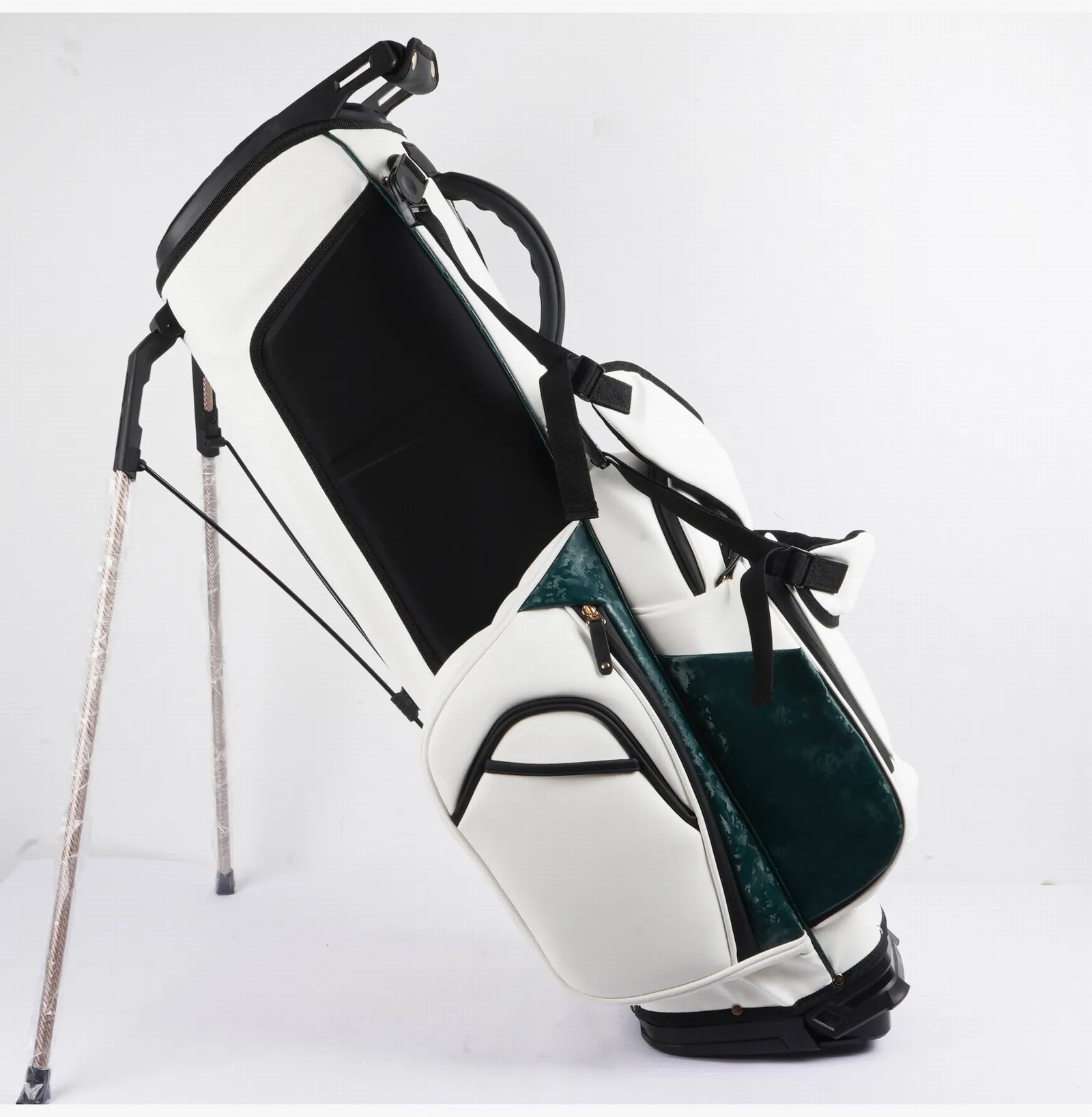
The real differences between budget and pro‑level golf stand bags are engineering depth rather than simply price: stronger fabrics with better weight-to-strength balance, full-length dividers that protect grips, smoother and more reliable leg mechanisms, well-padded adjustable dual straps, premium rust-resistant zippers and hardware, and stricter multi-stage quality control. A pro bag typically lasts several seasons, carries more comfortably, and wears far better than a budget model that fails at the same known hot spots — strap junctions, leg hinges, zippers and the base. This factory-floor comparison from QUANZHOU JUNYUAN BAGS (founded 2014, serving 200+ brands across 100+ countries) breaks down exactly where the money goes so you can buy or source the right tier the first time.
Price Tells Only Part of the Story
Walk into any golf shop and the stand bag price range can stretch fourfold and more, which naturally makes buyers ask what the extra money buys. The honest answer is that list price is a poor proxy for quality on its own, because branding, distribution and margin push prices across the spectrum. What a factory can tell you is what sits inside the bag at each tier: which fabric reaches the shell and base, how the legs are built, how the dividers run, what hardware is fitted, and how much inspection each unit passes. Those are the differences that decide whether a bag survives a season or three.
So the useful question is not "is expensive better?" but "what specific engineering does this bag pay for?" A mid-price bag that carries the most important pro features — full-length dividers, adjustable dual straps, decent hardware — can genuinely out-perform a logo-heavy premium bag that skimps on seams. When you strip away branding, the durable value sits in the points a smart buyer checks. To understand where stand bags fit among all bag and cart types before comparing tiers, our golf bag types guide is a good starting point.
Materials and Fabric Weight
The most visible difference between tiers is the fabric. Budget stand bags typically use a 300D-600D polyester that is lighter to buy and cuts cheaply, but it is thinner, more prone to abrasion, and sags under load. Pro bags use 600D-840D and sometimes denser weaves, which add strength and a better hand-feel while roughly maintaining a low weight. The base panel is the telling detail: budget bags often use the same fabric top to bottom, while pro bags reinforce the base, which meets grass and cart rails, with a heavier panel or a hard-wearing PBA base plate. This single reinforcement is a meaningful price driver because the base endures the most punishing contact of any part of the bag.
Seam construction changes too. Budget bags may use lighter stitching and fewer seam passes, which read as clean in the shop but wear at the stress points first. Pro bags use reinforced, bar-tacked seams at high-load zones — dart, gusset, strap and base seams — so the fabric does not tear away from the frame after a few hard sessions. We engineer seam density per zone because the cheapest seam failure is invisible to a shopper who never rides the bag. Hardware and coating follow the same curve. Budget zippers can be lightweight and narrower, wearing and jamming sooner; pro bags fit heavier, rust-resistant zippers and stronger sliders. Waterproofing is a spectrum rather than an on/off: budget bags may simply carry a visual PU finish that repels a light shower, while pro builds use a laminated membrane with sealed seams for genuine all-day protection. When you inspect two bags side by side, the fabric weight, the base, and the zipper are the fastest read on the gap. Our material science guide and the waterproof bag guide explain how coatings and membranes differ by grade.

The Stand Mechanism: Legs That Work Every Time
The legs are a stand bag's defining mechanism, and they are a true tier separator. A budget leg mechanism cost-cuts the hinge and retention system, and the result is legs that bind, splay unevenly, or retract lazily — the bag tips or the legs drag as you walk. A pro mechanism uses a smoother hinge, a positive lock in the open position, and a base engineered to sit level on grass. When we build stand bags we cycle-test the legs thousands of times because a bag whose legs feel cheap is judged cheap regardless of its fabric.
Leg width and base geometry also differ. Pro bases spread the contact wider so the bag sits stable on a grassy lie without pitching over, and the legs are often wider and reinforced against bending under a fully loaded bag. Budget bags may use narrower, lighter legs that flex under load and make the bag wobble on the tee. If you set a loaded bag down on grass and it stays planted, it is doing its job; if it rolls or tips, that is the mechanism failing its only test. The leg and base engineering is explored further in our stand bag design guide and carry weight guide.
Dividers: Full-Length Is the Pro Standard
Dividers are another decisive difference. Budget bags often use a simple top-only divider system: a moulded 4-way or 5-way ring that separates clubs only at the very top. Below the ring the shafts touch and tangle, so grips get dinged and clubs clatter on the shoulder. Pro stand bags use full-length dividers that run the entire depth of the bag, keeping each shaft separated to the base. That protects your grips and club finishes over a walking round and keeps the bag organized when you set it down.
For walkers, the difference is felt every time the bag comes off the shoulder and goes back on. A full-length system also supports a clean putter well and a logical home for every club. Pro bags typically pair full-length separation with a well-constructed top and a rigid collar so the bag keeps its shape. Budget bags can feel floppy at the top as the ring flexes. If you carry even a modest set, full-length dividers are the single feature most worth paying for; our divider systems guide covers the layouts in depth.
Straps and Comfort Engineering
Comfort is decided at the straps, and budget and pro bags differ here sharply. Budget models may ship a single basic padded strap or a lightweight dual strap with thin padding that does not spread load. Pro bags use broad, contoured dual shoulder straps with dense foam or memory-gel padding, adjustable lengths, and sometimes a chest or load-lifter strap to lock the bag against the back. Walking 18 holes carrying 10-14 kg, the padding and the way weight spreads across both shoulders is the difference between an energized walk and a sore round.
Equally important is the strap junction — the point where straps meet the bag. Budget bags often attach straps with minimal reinforcement, and that is the first place a loaded bag fails. Pro bags bar-tack and reinforce the junction, and integrate the strap system so the attachment does not pull apart under repeated lugging. If you are buying a pro bag, load it and adjust the straps; the adjustment range, the padding density and the solidity of the junction tell you at once whether it is engineered for comfort or assembled to look like it. Our strap adjustment guide and ergonomics guide dive into this biomechanics in detail.
Pockets, Organization and Hardware
Pockets follow the same quality curve. Budget bags often carry a lower pocket count with fewer closures and weaker zippers. Pro bags add better-sorted pockets — valuables, rangefinder, apparel, removable cooler — built with handle-friendly closures, magnetic or self-closing valuables access, and water-repellent linings. The hardware quality climbs in parallel: heavier zippers, smoother sliders, stronger magnets and dimension-taped openings that survive frequent use. A pro bag's valuables pocket is not an afterthought but a small engineering project in its own right, soft-lined and weather-secure because that is where the phone lives.
For a walker, the practical sink is not pocket count but how each pocket opens and closes under real use. A pro pocket system is sized to what you carry, placed where your hand falls, and fitted with closures that last. When we design stand bag storage we put the closure and lining budget into the pockets that get opened most, because that is where cheap hardware shows up first. Balance and placement are part of the engineering too: heavier gear sits lower and closer to the body so the loaded bag does not torque on one shoulder, an effect a budget bag often ignores entirely. For the full pocket and compartment picture, our storage compartments guide and the pocket organization guide give the layout logic.
Comparison: Budget vs Pro Stand Bag at a Glance
| Attribute | Budget | Mid-Price | Pro-Level |
|---|---|---|---|
| Shell fabric | 300D-600D polyester | 600D polyester | 600D-840D, reinforced base |
| Dividers | Top-only | Full-length (4-5 way) | Full-length + putter well |
| Straps | Single/light dual | Dual padded | Broad contoured dual, load-lifter |
| Leg mechanism | Basic hinge | Smoother hinge | Cycle-tested, stable base |
| Hardware | Lightweight zips | Durable zips | Rust-resistant, reinforced |
| Quality control | Basic/visual | In-process checks | Three-stage, third-party verified |
| Typical lifespan | 1-2 seasons | 2-3 seasons | 3+ seasons of weekly play |
Representative comparison drawn from factory specifications across the price tiers.
Quality Control: The Invisible Pro Feature
One of the least-discussed but most important pro differences is inspection. A pro stand bag passes a tighter quality process: incoming raw-material checks, in-process supervision of seaming and leg assembly, and a finished-goods inspection testing zipper cycles, leg operation, strap strength and seam integrity. Budget production skips or thins these steps to hit a price, and the defects simply ship to the customer. This is why two bags built from similar-looking materials can behave completely differently over a season — one was inspected into reliability, the other was rushed to a price point.
Stand bags deserve especially strict QA because they have a moving mechanism the other bag types lack. Leg cycle testing, base level-stability on grass, strap pull tests and zipper-cycle checks all sit above the checks a plain bag might pass. For a brand, the difference shows in the warranty line: a properly inspected pro bag produces far fewer returns over its life, which protects retail margins that a cheap, defect-heavy order quietly erodes. At QUANZHOU JUNYUAN BAGS, stand bags pass a three-stage inspection, and our affiliated factory underwent independent SGS and Alibaba verification in March 2026 — the kind of third-party confirmation a buyer of pro-tier bags should always request. When you source pro-spec stand bags for a brand, the quality process is as much a specification as the fabric weight. We recommend the concrete checklist in our quality standards guide and manufacturer selection guide.
Beyond raw comfort and inspection, pro bags are engineered for better balance. When loaded, a pro bag's weight is distributed so the center of gravity sits close to your body and low, which reduces the torque on your shoulder and lower back as you walk. Budget bags often place pockets arbitrarily, letting heavier contents hang high and wide, which makes a nominally similar weight feel much heavier by the turn. Pro strap systems and pocket placement work together so the loaded bag rides naturally rather than pulling you off balance.
This is why two stand bags with the same empty weight can walk completely differently. The ergonomic difference is cumulative: over 18 holes and thousands of steps, a well-balanced bag saves measurable fatigue, and a poorly balanced one produces a sore shoulder that makes you want to switch to a cart. For the biomechanics of how bag weight, strap geometry and balance interact on your posture, our posture guide and ergonomics guide give the detail.
Why Pro Bags Stay Lighter Despite Doing More
It seems contradictory that pro bags are lighter even as they add features, and the answer is better materials and smarter construction. Pro shells use higher-grade, lighter-mill fabrics; pro hardware uses aluminum and composites where budget bags use heavier steel and plastic. Features are engineered to add function without runaway weight, so a pro bag can include full-length dividers, dual straps and a putter well while staying within a carry-friendly empty weight of about 1.8-2.6 kg. A budget bag may start lighter on paper but trade away exactly the reinforcement that matters, and its heavier hardware can negate the savings.
For walkers, the right number is "light enough to enjoy" — the weight at which durability and comfort both hold. Chasing the absolute lightest bag forces painful trade-offs; chasing robustness at any cost defeats the point of carrying. The balance, and how loaded weight shifts the center of gravity, is laid out in our bag weight analysis and the carry load guide.
Buying or Sourcing Pro Stand Bags for a Brand
For retailers and brands, the budget-versus-pro decision is a margin story as much as a quality story. Pro-spec stand bags command higher retail prices and build brand trust, but they need the right supplier. The wholesale route is standard: a 200-piece MOQ per design and colorway, 100-piece test orders for a new spec, sampling in 10-20 days, and bulk production in 45-60 days. Because pro bags carry more features and stricter QA, the unit cost sits at the top of the category — and so does the retail headroom.
We recommend prototyping any pro-spec bag before a large run so fit, features and finish are certified before committing thousands of units. For the workflow from spec to shipment, our custom solutions and OEM/ODM services pages cover the path, and customizing a stand bag ties decoration into the same build.
Seven Quick Checks Before You Buy
- Full-length dividers: run a hand the whole depth to confirm shafts are separated.
- Adjustable dual padded straps: comfort is decided here.
- Cycles the legs: they must open, lock and retract smoothly every time.
- Reinforce base and strap junction: the two classic failure points.
- Zipper quality: heavier, smooth sliders outlast budget hardware.
- Waterproofing where it matters: valuables pocket and base, matched to your climate.
- Third-party QC: ask for inspection records and independent verification.
Frequently Asked Questions
- What is the real difference between a budget and a pro golf stand bag?
- Engineering depth, not just price: pro bags use stronger fabrics, full-length dividers, smoother leg mechanisms, better padded dual straps, premium zippers and hardware, and pass stricter quality control.
- Are expensive golf stand bags worth the money?
- For regular walkers, yes. Pro bags last more seasons because seams, strap junctions, leg hinges and zips are reinforced and inspected; a budget bag bought twice often costs more than one pro bag.
- Why are pro stand bags lighter despite more features?
- Pro bags use lighter-mill, higher-grade fabrics and aluminum/composite hardware to save weight while keeping strength, so they add features without the weight penalty of heavier budget materials.
- Do budget stand bags fall apart faster?
- Yes, typically at the known hot spots: strap junctions, leg hinges, zippers and the base — exactly the reinforced, inspected points that separate a durable bag from one that fails in a season.
- Can I get a pro-quality stand bag built for my brand at a fair MOQ?
- Yes. Factories build pro-spec stand bags at a 200-piece MOQ per colorway with 100-piece test orders, sampling in 10-20 days and bulk production in 45-60 days.
- What should I check before buying a premium stand bag?
- Check full-length dividers, dual padded adjustable straps, smoother leg operation, waterproofing where it matters, zipper quality, reinforced seams and base, and third-party factory verification.
- Is a mid-price stand bag a good compromise?
- Often yes. Mid-price bags increasingly carry the most important pro features like full-length dividers and adjustable dual straps while trading away premium materials and minor extras.
Caring for a Pro Stand Bag to Protect Its Value
Once you invest in a pro stand bag, simple care keeps it paying off. Keep the leg mechanism free of sand and grit, which are the top cause of sticky deployment; a periodic wipe and a sparing dry lubricant keep hinges smooth. Air the bag out after wet rounds and refresh DWR water-repellency once a season. Check strap junctions and base for wear before a loose seam becomes a tear, and store the bag upright and loosely packed so dividers and base hold their shape.
Regular attention to the two most-punished zones — the base that meets damp grass and the valuables pocket that opens constantly — often doubles a premium bag's serviceable life. For the full routine, our maintenance guide and stand bag care guide cover cleaning, hardware and storage.
Factory Verdict: Where the Money Really Goes
From the production floor, the honest summary is this: budget and pro stand bags diverge on materials, dividers, leg mechanisms, straps, hardware and quality control — the engineering that shows up over seasons, not on a peg price tag. For a once-a-month casual loop, a budget bag may do. For anyone who walks weekly, or a brand selling to walkers, the pro tier is where the value lives because it carries the reinforcement and inspection that turn a bag into a long-term workhorse.
QUANZHOU JUNYUAN BAGS has built both budget and pro-tier stand bags since founding in 2014, backed by a 200,000-piece monthly capacity and 7 production lines. If you are upgrading your own carry or sourcing a stand bag program, we will spec the right tier for your golfers and your budget. Reach us at contact, service@junyuanbags.com, or WhatsApp +86 17750020688.
Looking for a Reliable Manufacturing Partner?
From budget value bags to pro-spec stand bags, our team builds quality factory-direct. Test orders from 100 pieces, sampling 10-20 days, bulk in 45-60 days.
Request a Bulk Quote →