Future Trends in Golf Bag Design and Manufacturing (2026-2030)
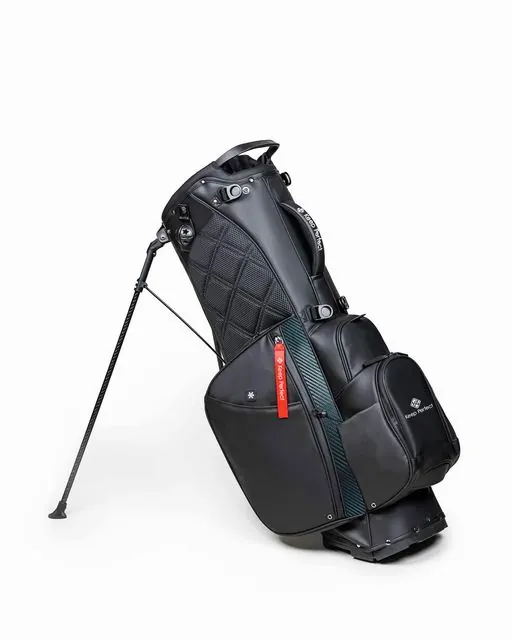
Between 2026 and 2030 golf bag design and manufacturing will converge on four forces: sustainability (circular, recyclable and lower-footprint materials with eco-friendly construction), connectivity (smart, tracked and app-integrated bags moving from premium novelty to dependable standard), lightweight performance (carbon and high-denier materials that cut carried mass without losing durability) and true personalisation (modular, custom and small-batch direct-to-golfer production). On the factory floor the same period brings automation, data-driven quality and on-demand runs that make customisation possible at sensible prices. The bag of 2028 will be lighter, smarter, more personal and built to be repaired and recycled — yet it will still have to carry clubs, stand on its own and last, because the constants of the sport never change.
Forecasting a five-year window is always partly guesswork, but the trends below are already visible in R&D, trade shows and consumer behaviour — they are directions researchers and factories are investing in today. This outlook explains each trend, what it will mean for golfers and for the brands that make bags, and where the hype should be separated from the substance as the market moves from 2026 toward 2030.
The Five-Year Trajectory at a Glance
Taken together, the trends of the next five years point to a bag that does more for every gram it carries. The clearest direction is a convergence: lighter and stronger shells, connected and smart features that are useful rather than decorative, personalised buying that starts from the customer instead of the stockroom, and manufacturing that is both more sustainable and more data-driven. None of these is a single invention; each is an accretion of small, credible advances in materials, electronics and production control that compound into a noticeably different product by the end of the decade. For a buyer or a brand preparing today, the practical move is to lock a design direction early and let a factory engineer toward it across several sampling cycles, because the bag of 2028 is specified on the pattern table now, not discovered at launch. Factories already investing in recycled fabrics, lighter composites and flexible production lines are the ones best placed to bring that trajectory to market at volume without sacrificing quality or consistency.
| Trend | 2026 | 2030 |
|---|---|---|
| Sustainability | Recycled fabrics, eco coatings | Circular, repairable, recyclable standard |
| Connectivity | Premium tracker & status | Smart standard, open ecosystems |
| Materials | Carbon & high-denier | Lighter, stiffer, performance-optimised |
| Personalisation | Config, colour, name | Modular, custom, on-demand |
| Manufacturing | Automation & data QA | Smart precision, small-batch DTC |
The table compresses five years of movement into two snapshots. The point to notice is momentum: every row starts as an option and moves toward a standard, which is how categories change. Sustainability, for example, begins as a recycled-fabric option and arrives as a round expectation; connectivity begins on premium models and settles as an expected default; personalisation begins as an added choice and becomes the natural way to buy. Manufacturing follows by automating what the market demands.
Sustainability and the Circular Golf Bag
Sustainability is the consumer force reshaping the bag, and it moves from feature to obligation through the period. Recycled polyester and recycled fabrics, water-based and solvent-free coatings, reduced-impact production and packaging, and — increasingly — repairability and recyclability at end of life are becoming categories of their own. The golf buyer is starting to ask where a bag is made, from what, and whether it can be recycled or repaired, and that question will be routine by 2030. The manufacturing case for eco-friendly construction is worked through in the sustainable golf bag manufacturing guide.
The durable new idea is circularity: a bag designed to be disassembled, repaired where possible and recycled where not, rather than a sealed artefact thrown away. That favours replaceable parts — straps, bases, liners and electronics — which is exactly the direction our affiliated factory can build into a private-label programme. Sustainability is expensive only when done as a sticker; done as design it reduces waste, lengthens product life and tells a brand story that increasingly sells. By mid-decade the credible brands will publish the material breakdown and the recycling path of each bag, and the ones that cannot will feel the gap in both pace and perception — so the winning position is to design for circularity from the first sketch, not to bolt a recycled label onto a bag that was never planned for repair or recovery.
Smart and Connected Bags Moving to Standard
Connectivity is maturing from a premium novelty into a dependable expectation. By the end of the decade an integrated loss tracker, a simple status display and an honest charging port will be standard on the mid-and-up range, served through open ecosystems rather than one brand's walled garden. The features that survive earn their battery — finding a lost bag, reporting whether it is locked, saying whether the battery is healthy — while decorative displays and subscription apps fade. The integration story is followed closely in the IoT integration guide.
The 2030 smart bag will likely feel less flashy and more quietly competent: a bag that is findable, lockable and thoughtfully powered without demanding attention on every round. That is the trajectory of all maturing tech — from novelty to invisible reliability — and it is the honest destination for the connected golf bag. Retailers can expect the smart tier to become a real margin story rather than a niche curiosity.
Lightweight Materials and Performance Kept in Balance
Weight continues to fall as materials rise. Carbon-fibre frames, bases and legs, high-denier ballistic and ripstop fabrics, and lightweight engineering will push premium carry bags comfortably under the 4.5 lb (2 kg) mark without the flex and sag that once came with going light. The performance analysis for carbon fibre shows where the grams are legitimately saved — in the parts that are handled — and that logic extends across the next generation, because lighter and stiffer is a genuinely better combination for a bag that must also survive years of cars, carts and rough treatment.
The balance to watch, however, is durability versus lightness. The market rewards a bag that is both light and tough, and the factories that measure drop, flex and abrasion rather than only scale weight will lead the credible field. Weight is no longer the sole headline; it is achieved in the context of a bag still built to last, which is the design constant that no trend is allowed to break.
Personalisation Becomes the Natural Way to Buy
Personalisation is the trend with the clearest retail momentum. What starts as choosing a colour or adding a name becomes, by the end of the period, a natural configurable way to buy: a golfer selects the format, the material tier, the pocket layout, the colourway and the personalisation, and receives a bag made to spec rather than pulled from a catalogue. For the golfer this is a better fit and a more personal, treasured product; for the retailer it converts a stock sale into a higher-value custom appointment and a stronger brand story. The configurable model also solves a chronic retail problem — the shelf full of colourways that nobody bought — by producing to demand rather than to guess, which frees cash and cuts markdowns while giving every customer a bag that looks like it was made for them, because it was.
The factory side of personalisation is exactly where on-demand and small-batch production earn their keep, because configurable bags need low MOQs, fast sampling and flexible runs rather than a wall of pre-made stock. Externally this is the destination the direct-to-consumer movement has been converging on for years, and the manufacturing capability is already here. The OEM/ODM path that makes custom easier is laid out in the complete OEM/ODM services guide.
Manufacturing Automation and Data-Driven Precision
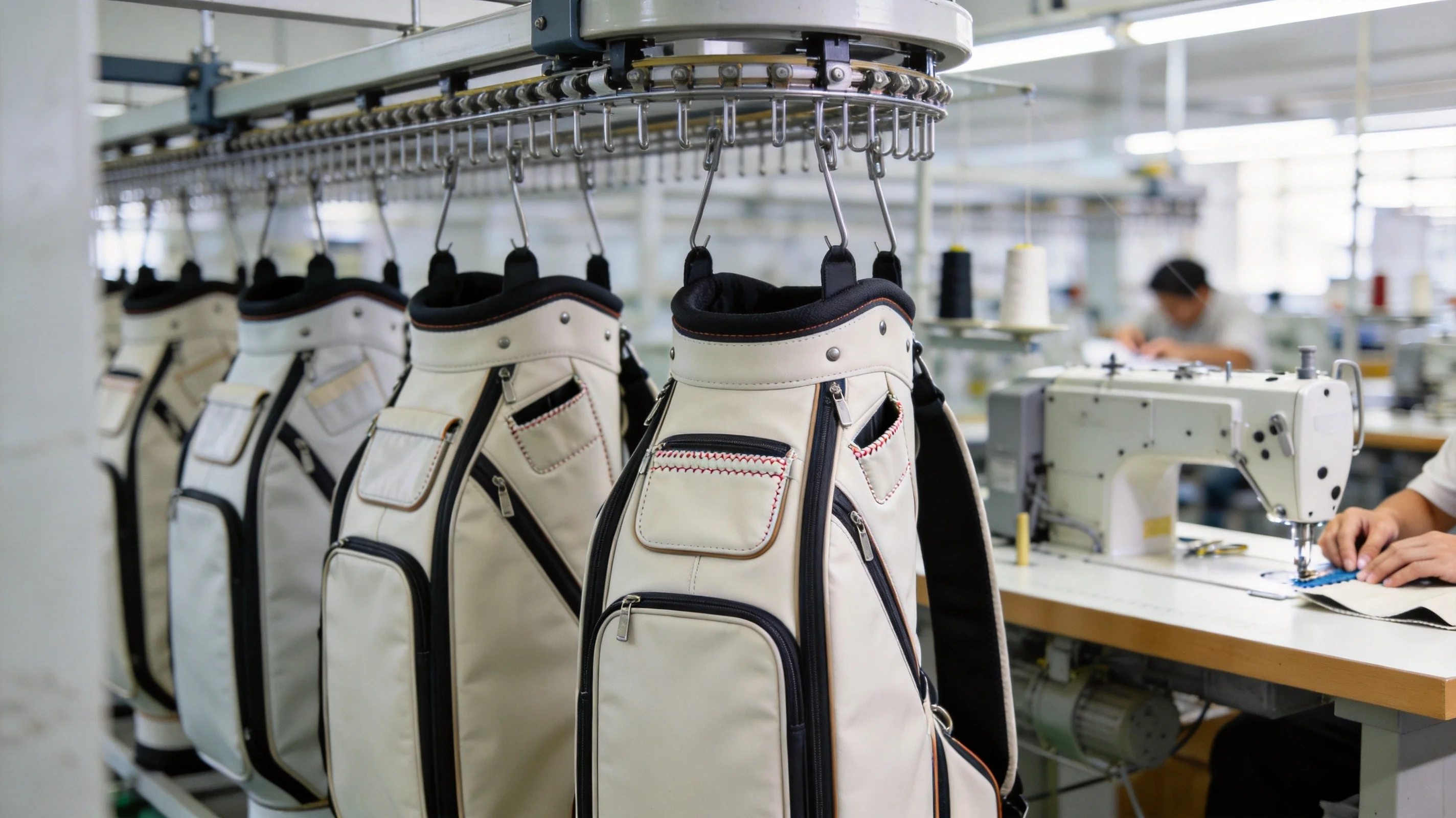
Inside the factory, the next five years belong to automation and data. Automated cutting and laying, consistent stitching and assembly processes, and sensor-and-report quality gates make production more repeatable and precise, which keeps quality high as runs grow shorter and more varied for custom orders. Data collected through production — material use, defect rates, seam and hardware performance — feeds back into design, so the next generation is engineered from evidence rather than guesswork. This is the discipline covered by AI and machine-learning applications in golf bag production. Short-run custom lines especially depend on this: the more the factory measures, the more confidently it can promise a one-off colourway or material iteration without betting the whole batch on an unverified change.
Automation is not a rush to robots replacing people; it is precision where the measuring is hard and craft where it is valued. The result the golfer sees is a bag with more consistent quality, better-priced customisation and stronger traceability, while the skilled workforce concentrates on the details machines cannot judge. Together they keep a 2028 bag both affordable and trustworthy — the quiet backbone of every visible trend.
Modularity, Repair and a New Ownership Ethos
Supporting both sustainability and personalisation is a rising modularity: bags designed so the strap, base, liner, and even the electronics can be replaced rather than throwing the whole bag away. A replaceable strap that wears out, a swappable base that takes hard use, an upgradeable electronics module — these turn a bag from a fixed purchase into a product you maintain and refresh, which is cheaper over time and kinder to the planet. The ownership ethic shifts from "buy once, discard" to "own and repair", and retailers gain a service relationship with the customer instead of a one-off sale.
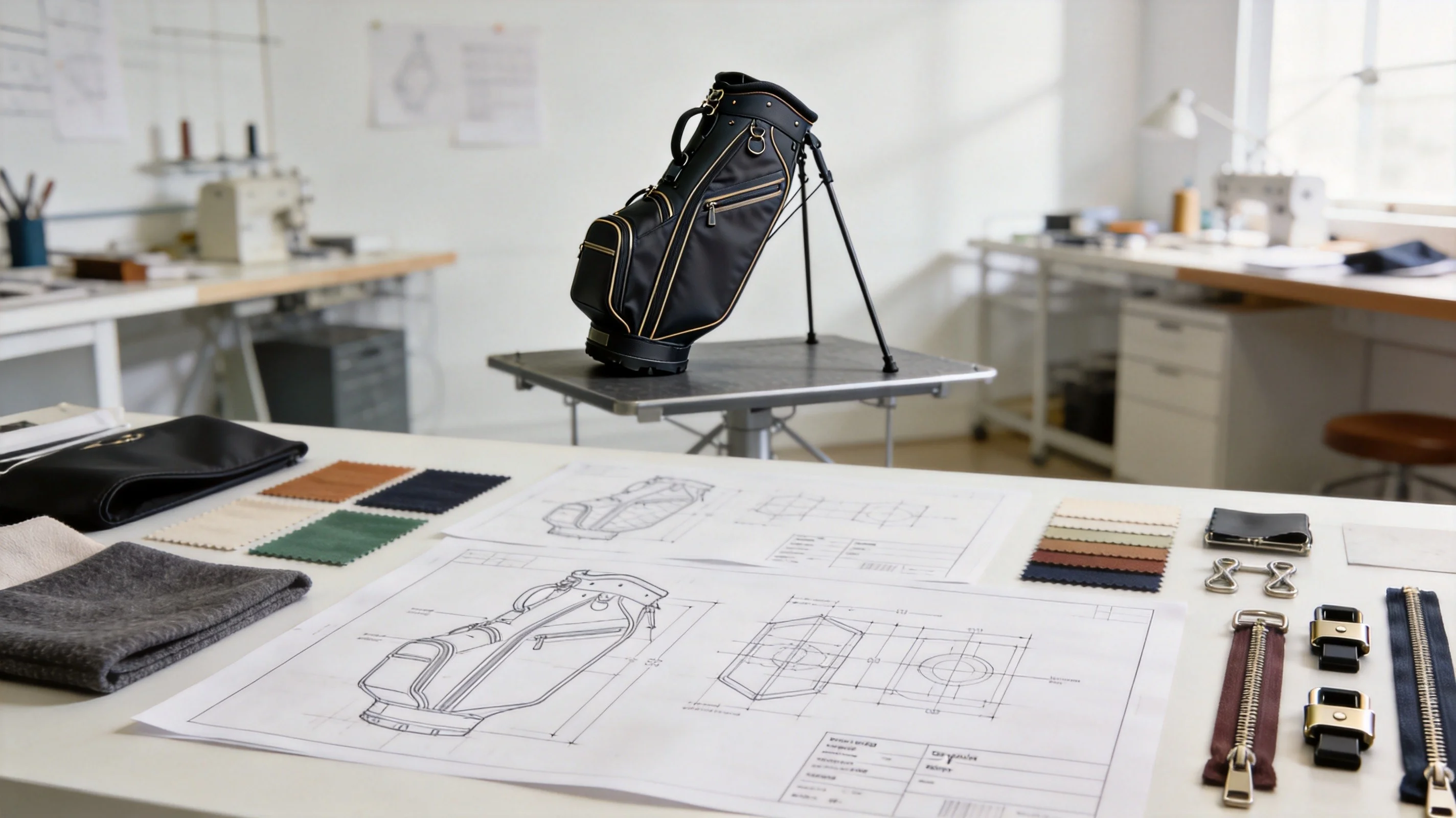
The practical effect is a longer-lived bag with a smaller footprint and a stronger brand connection, because a bag you can repair is a bag you keep and recommend. Modularity is the quiet bridge that makes sustainability believable and personalisation meaningful, and it is a design principle any forward-looking factory can already engineer into a private-label programme.
On-Demand and Digital-First Retail
Retail of golf bags shifts further toward digital-first and configurator-led selling. Rather than choosing from existing stock, the customer configures, previews, orders and sometimes waits for a short production run, turning the bag from inventory to a made-to-fit product. Online configurators, better product imagery and transparent factory/store credentials support this, and in-store the story becomes the made-to-spec appointment rather than the fastest shelf. The pro shop's advantage — fitting with your own clubs in hand — survives, but it increasingly ends in a configurable order rather than a box off a pallet.
For retailers the shift changes stocking: a smaller plain stock plus a strong configurable offer replaces a wall of dead colourways, releasing cash while raising the average ticket and the brand's distinctiveness. The retail-experience side of custom bags for the trade is examined in the why retailers sell custom travel bags article, and the same logic generalises across the category.
Quality and the Data-Driven Factory Behind the Trends
Every trend above — heavier personalisation, shorter sustainable runs, more connectivity — depends on a factory that can hold quality at smaller batch sizes, and that is what data-driven manufacturing supplies. Repeatable measurement of fabric, seam, hardware and structural performance, documented test evidence for every claim, and audited working standards are what let a brand promise "custom and durable" in the same sentence and mean it.
Our affiliated 4,950 m² factory, producing golf equipment since 2004 and established as a company in 2014, runs seven production lines, 126 sewing machines and 137 staff, making 200,000 bags a month for 200+ brands across 100+ countries, and passed an SGS audit in March 2026. It can develop the new-generation materials, connectivity and on-demand production into a private-label range, with sampling in 10-20 days and production in 45-60 days at a 200-piece MOQ (100 for test orders). That combination — scale for standard lines and flexibility for custom — is exactly the capability the 2026-2030 trends reward, and it is the reason the most forward-looking brands are rebuilding their supply chains around it.
The Role of Pro Shops and Fitting Studios in 2028
As personalisation grows, the pro shop and the fitting studio actually become more important, not less. The made-to-spec bag needs a place where the golfer tries formats, tests a harness loaded with their own clubs and agrees the configuration with an expert — then places it as a custom order. The studio becomes the point of advice and the brand experience, while the automated factory becomes the efficient maker behind that experience. In 2028 the winning shops sell the service and the story of a configurable bag, not a wall of identical stock, and that turns the physical retail moment into a memorable appointment rather than a commodity grab.
For golfers this is a better outcome — a bag fitted, configured and personal rather than bought off a shelf — and for the industry it raises the value of expertise and service, which is a healthy direction after years of price-led online shopping. The fitting studio and the data-driven factory are two sides of the same future: one hears the customer, the other delivers precisely what was heard.
What Stays Classic: The Design Constants
For all the change, the design constants of a golf bag do not move. A bag must still hold a set of clubs with organised, protected dividers; still carry comfortably with a harness that fits; still stand on its own on a stable base; and still survive years of handling, weather and travel. No amount of connectivity or eco-credential replaces those basics, and any trend that forgets them fails even if the marketing is perfect. The enduring destination the future development outlook describes is the fusion of the new with the never-changing.
Treat the constants as the foundation and the trends as the build above them. A 2028 bag that is lighter, smarter, personal and sustainable but still carries badly is simply a failure with better adjectives; one that carries beautifully while quietly adding all four trends is the genuine future. Buyers, brands and factories all do well to keep that one sentence as the test.
A Scenario for the Typical 2028 Golf Bag
Put the trends together and the typical mid-2028 bag becomes concrete: a carry bag under 4.5 lb built from recycled high-denier fabric and a carbon-fibre frame, with a 14-way divider top, a self-standing leg, a full-length reinforced base, an integrated lightweight tracker and a USB port, in a colourway the owner configured and a name the owner chose, produced in a short on-demand run with documented quality evidence and made to be repaired. It is a bag the sport has never quite had, and it is the product of every trend in this outlook converging on one object. Buyers will judge it on the same four questions — lighter, smarter, sustainable, personal — and it will answer all four by design rather than by accident, which is exactly the standard the next five years set.
Not every bag will be that ambitious, of course — the range will still span budget to premium — but the entire field moves in that direction, so what is premium in 2028 begins as the direction of 2026. That is why the smart move today is to build for the trajectory rather than chase the momentary gimmick, and why factories already investing in sustainability, connectivity, materials and flexible production will be the ones the next generation is built around.
Conclusion
Between 2026 and 2030 the golf bag becomes lighter and stronger, connected as standard, sustainable by expectation and personal by design, while manufacturing turns to automation and data to make customisation affordable and quality traceable. The throughline is integration: material advances reduce weight, connectivity pays for its battery, sustainability moves from option to obligation, and personalisation becomes the natural way to buy — all built on the untouched constants of carrying, organising, standing and lasting. For golfers that means better-fitting, more personal, more responsible bags; for brands and factories it means the ones who build for the trajectory will lead the decade, and the ones who mistake decoration for direction will be left negotiating from behind. Start by checking which of the four forces your next product actually serves: if the answer is "none, it is just a new colour", the decade will leave it behind; if the answer is at least one real improvement — lighter, smarter, sustainable or personal — the bag is already on the right trajectory, and the factory partnership that can deliver it is the one worth building around.
Sources
Frequently Asked Questions
- What are the biggest golf bag trends between 2026 and 2030?
- Sustainability and circular design, smart and connected features becoming standard, lightweight carbon and high-denier materials, and true personalisation with on-demand, custom production.
- Will golf bags really become more sustainable?
- Yes — recycled fabrics, eco coatings, repairability and recyclability move from an option to a shopping expectation over the period, and circular design (replaceable parts) becomes a genuine category.
- Will smart golf bags become standard or stay a gimmick?
- The useful features — a loss tracker, a status display and an honest charging port — move toward standard, served through open ecosystems, while decorative displays and subscription apps fade.
- How light will golf bags get by 2030?
- Premium carry bags using carbon frames and high-denier fabrics should sit comfortably under 4.5 lb (2 kg) while holding durability, through weight saved in the handled parts rather than thin shells.
- Is personalisation realistic or just a marketing story?
- It is becoming the natural way to buy: configurable formats, materials, colours and names, produced in short on-demand runs. This is enabled by low-MOQ, fast-sampling factories.
- How does manufacturing change by 2030?
- Automation and data-driven quality gates make production more repeatable and precise, letting factories hold quality at smaller, more customised batch sizes while keeping runs affordable.
- What will not change in golf bag design?
- The constants: holding and organising a full set with protected dividers, carrying comfortably, standing on a stable base, and surviving years of handling, weather and travel. Trends build above these, never replacing them.
- What should a brand invest in now for the next five years?
- Build for the trajectory — sustainability, smart integration, lightweight materials and flexible on-demand production — rather than chase the momentary gimmick, and source from a factory that can deliver custom at scale.