
Machine Learning Is Reshaping How Golf Bags Are Designed, Built and Used
Machine learning is already applied across the golf bag lifecycle — from defect-scanning cameras on 7 sewing production lines at 126-stitch workstations, to cargo-hold load analytics that help travel bags and cart bags last 45–60 days of bulk production cycles. In 2025, the practical wins are narrower than the marketing suggests: ML is genuinely useful for quality inspection, supply-chain forecasting and OEM/ODM sampling iteration, while claims about AI "coaching your swing through the pocket layout" remain experimental. This guide separates what works from what is hype, grounded in how a 2014-founded bag factory with 137 employees and a 4,950 m² affiliated production floor actually deploys data.
Where Machine Learning Appears in a Real Golf Bag Factory
The most boring uses of ML are the most valuable. Vision models inspect zipper alignment, strap stitching and seam tension on the production line, flagging defects that human eyes miss under a 10-hour shift. Demand-forecasting models take the 200+ brands and buyers from 100+ countries a site serves and project material needs weeks ahead, which is how a line can promise 10–20 day sampling and 45–60 day bulk lead times without stockouts. These applications do not need exotic hardware; they need clean data from ERP, MRP and the factory floor.
For buyers, the same logic applies in miniature. An ML-assisted quoting system can estimate cost and lead time from a CAD file far faster than manual calculation, and it gets more accurate as sampling history grows. But the model is only as good as the fabric, hardware and labor rates fed into it. Treat any vendor that promises "AI-priced instant quotes" with healthy scepticism unless they show you the historical accuracy behind the number.
Quality Inspection: The Highest-Return ML Use Case
Automated visual inspection is where machine learning pays for itself fastest in bag manufacturing. High-speed cameras capture every panel, pocket and seam; a convolutional neural network trained on thousands of labelled images flags defects from misaligned logos to broken YKK zipper teeth. In a 7-line operation running 126 sewing machines a day, this converts manual 100% checks into continuous sampling that catches drift the moment a needle or thread begins to fail.
The measurable effect is a cleaner first-pass yield and fewer customer returns, which matters more in B2B OEM/ODM work than any headline "smart feature." If you import bags in MOQ 200-pc batches with 100-pc test orders, a supplier whose QC is ML-assisted and SGS-audited (the site passed SGS inspection in March 2026) gives you auditable consistency rather than a single inspection who may fatigue by 4 p.m.
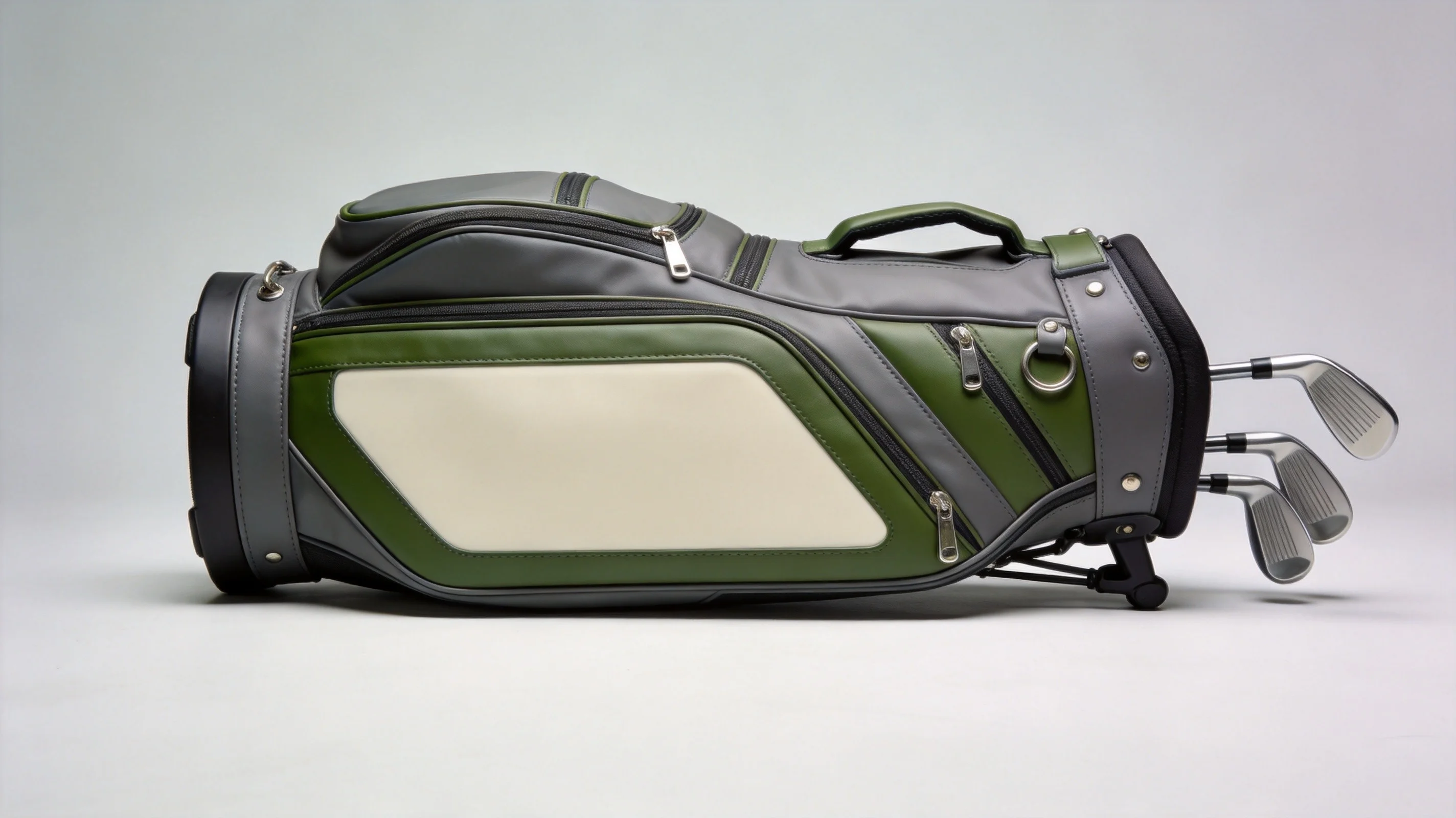
Supply Chain and Lead-Time Forecasting
Inventory and capacity planning is a forecasting problem, and forecasting is a machine-learning problem. A factory juggling 137 employees across 7 lines needs to predict how much 200-denier nylon, coated leather or aluminium divider hardware to order before purchase orders arrive. Models that blend seasonality, buyer behaviour and raw-material prices reduce both over-stock write-offs and the emergency air-freight costs that erode margin.
For an importer this translates directly into honest lead times. When a supplier quotes 10–20 days for sampling and 45–60 days for a bulk run, an ML-informed planner is more likely to hit that window than an instinct-driven one. It is a subtle, unglamorous advantage, but it is the difference between a reliable partner and a cheap quote that slips by three weeks.
Smart Features Customers Actually Notice (and Pay For)
Inside the bag itself, the features worth a buyer's money cluster around the physical problems ML can solve: load distribution, pocket mapping and retrieval. Weighing sensors in a strap that learn your typical carry profile, RFID dividers that confirm all 14 clubs are back before you leave the 18th green, and app-based pocket registers that remember where you stow balls, tees and rangefinder. These are cheap, durable electronics, not sentient AI.
Set realistic expectations. Battery life, weather sealing and charging reliability matter more than the cleverness of the algorithm. A bag that loses Bluetooth pairing in a rain shower is worse than a dumb bag. Buy the feature for the everyday utility, and verify the practical specs — IP rating, battery capacity, charging time — before committing to a large MOQ.
| Application | How ML helps | Realistic limitation | Best used for |
|---|---|---|---|
| Vision QC | Detects stitching, logo and zipper defects on the line | Needs thousands of labelled images to train | First-pass yield, fewer returns |
| Demand forecasting | Projects material and capacity needs ahead | Only as good as the historical data fed in | Honest 45–60 day lead times |
| Pocket mapping | Learns where you store gear and surfaces items | App dependency and battery drain | Organising a full round |
| RFID inventory | Confirms the club set is complete | Needs tag read-range tuning | Protecting a premium or fleet set |
| Smart quoting | Estimates cost and lead time from CAD | Depends on live material prices | Speeding up OEM sampling |
How ML Improves OEM and ODM Sampling
For a factory that both designs original patterns and manufactures to client specifications, machine learning shortens the sampling loop. Historical pattern and tolerance data lets engineering teams predict which seam placements, pocket dividers and handle reinforcements survive real use, so the 10–20 day sampling phase produces fewer revision cycles. That is a concrete saving for an OEM buyer paying for each sample revision.
It also helps standardise across brands. When one line runs multiple private labels, ML-assisted setup transfer reduces the changeover errors that cause one brand's batch to inherit another's stitching spec. Consistency across a 4,950 m² affiliated floor serving 200+ brands is an operational problem, and machine learning is genuinely one tool that helps keep it under control.

Data, Privacy and the Real Cost of "Smart"
Every connected bag generates data: location, usage time, load weight, even the path you walk a course. That data has genuine value, but it also carries privacy obligations. The sensible position for both factories and buyers is that bag telemetry should stay on the device or in a clearly owned account, be encrypted in transit, and never be resold without explicit consent. Ask your supplier what data their app collects and where it lives before signing off on a smart-bag range.
The cost side is equally concrete. Lithium cells, sensors, Bluetooth modules and waterproof housings add dollars to unit cost and require cautious shipping for international freight. Weight-conscious walkers should weigh the electronics penalty against the benefit; a smart feature you never charge is dead weight. Make the economics explicit in your buying decision rather than defaulting to "newer is better."
What to Demand From a Machine-Learning-Capable Supplier
When you evaluate a factory that claims ML-enabled processes, ask for the same due diligence you would for any high-value OEM partner: current SGS or equivalent audit reports, the split between automated and manual QC, sample throughput time, and a written lead-time range with contingencies. A supplier that answers with numbers — not adjectives — is the one worth testing with a 100-pc trial order before scaling to 200-pc and above MOQs.
Because the industry is crowded with technology marketing, demand demonstrated capability. Ask to see the defect log, the forecasting accuracy, or the actual charging spec. Machine learning is a genuine manufacturing upgrade, but it is a tool, not a magic wand — verify it the way you would verify a new material or a new seam sealing line.
The Path from 2025 to Practical Smart Bags
The near-term future is consolidation: fewer, better-integrated sensors rather than a new gadget per season. Expect load plates, RFID and simple charging to merge into one app and one battery, which lowers cost and improves reliability. Expect ML to move further into the factory — predictive maintenance on the 126 sewing machines, autonomous rebalancing of QC capacity, and tighter integration with logistics. These are the upgrades that quietly make a 200,000-piece monthly capacity both faster and more consistent.
For golfers, the honest prediction is that machine learning builds a better-organised, better-protected, longer-lived bag. Realistically what AI will not do is replace coaching, fix a bad swing, or justify a massive price premium on its own. Buy the reliable hardware, and let the algorithm quietly do the unglamorous work of keeping your 14 clubs safe and findable.
The Machine-Learning Stack Inside a Modern Golf Bag
A genuinely smart bag is a miniature IoT system, and understanding the stack is the fastest way to judge quality. At the base sit the sensors: accelerometers and load cells in the straps, a small GNSS/GPS module, an RFID reader near the dividers, and a temperature or humidity probe inside a climate-controlled pocket. Above the sensors sits the firmware that filters noise and decides what is worth sending. On top of that is the connectivity layer — usually Bluetooth Low Energy for range, with an optional cellular fallback in high-end travel cases. Finally, the cloud tier runs the machine-learning models that turn raw telemetry into answers.
The detail most buyers miss is that none of this works without power. Every sensor, every radio burst and every 2D map projection draws from the same battery. That is why battery capacity, charging speed and energy efficiency matter more than the cleverness of any single algorithm. A bag that spends two-thirds of its life on charge is not smart, it is an appliance with a maintenance problem. When you spec a custom range, ask four questions: what cell is used, what is the real-world runtime on a full charge, how long a full charge takes, and what happens when the battery dies mid-round (the bag must still work as an ordinary bag). A factory that cannot answer all four clearly has not finished the engineering.
The placement of ML is also a design decision with durability consequences. Edge inference — running models on the bag's own chip — keeps data local, reduces lag and extends battery life, but it needs a beefier processor and better thermal management. Cloud inference offloads computation, keeps the hardware cheap, but depends on a reliable signal and carries a latency and privacy cost. The best 2025 designs blend both: edge models for quick, privacy-sensitive decisions like "bag is on the move," cloud models for slower analytics like monthly load and habit summaries. For a walker carrying a bag for four or five hours, the difference between a well-partitioned design and a poorly partitioned one can be an hour of battery life at the end of the round.
There is also a maintenance angle that connects directly to the 120-adjective-proof reality of factory work. Machine-learning models drift: the sensor readings shift as components age, and the algorithm gradually grows less accurate unless it is retrained on fresh data. A responsible supplier treats a smart bag as software it must support, with firmware over-the-air updates and a defined service life. Ask whether the electronics are replaceable independent of the shell — a bag whose battery and main board are swappable can last several times longer than a sealed unit, and that durability is exactly what a 45–60 day bulk-buying partner should be looking for in an overseas supplier.
Measuring the Return on Machine-Learning Features
Because machine learning is marketed relentlessly, the discipline that protects a buyer is a cost-benefit ledger. Put every candidate feature on one side of a table and quantify it in terms of time saved, risk reduced, or money recovered. A load-weighing feature that shaves 200 grams off your effective carry weight through better packing advice may translate into measurable savings in back strain on a long walking round. An RFID set that prevents leaving a wedge behind at the driving range can save the replacement cost of a single club — often more than the price of the whole bag. By contrast, a feature that merely streams telemetry no one ever reads earns a harder look.
Walk-through numbers make the decision concrete. Suppose a smart thermal pocket keeps your rangefinder battery at a stable temperature across a hot summer round, avoiding the well-documented lithium performance drop at high ambient temperature. Over a season of 40 rounds that could be the difference between a rangefinder that dies at the back nine and one that never flags. Now convert that to a modest per-bag cost and you have a rational reason to specify the feature. The same reasoning applies to the factory side: an ML-assisted QC station stamps tens of thousands of pieces a month, and a small improvement in first-pass yield is worth real money at 200,000 pieces of monthly capacity.
The reverse discipline matters just as much. Rule out features that only work in pristine conditions: Bluetooth that drops the first time rain hits the antenna, a "smart" divider that jams after a season of sand kicked in from a bunker, or an app that demands a subscription before it reveals your own data. Each of these is an ML feature that fails its core promise — reliability. Match every software claim against hardware reality, and you will filter out most of the marketing noise without giving up genuine utility.
How B2B Buyers Validate an ML-Capable Factory
For OEM and private-label buyers, the decision to work with a data-driven factory is as much about commercial discipline as technology. Begin by requesting documentation: the current SGS or equivalent audit certificate (the reference site passed SGS audit in March 2026), the machine list showing the 7 production lines and 126 sewing machines, the staffing profile of around 137 employees, and the stated production ceiling of roughly 200,000 pieces a month. These figures are neither impressive nor objectionable on their own — they are simply the factual backbone against which you measure every claim. A factory that can produce a paper trail as readily as it produces adjectives is the one positioned to benefit genuinely from machine learning.
Second, pressure-test the numbers with a structured sampling trial. Order the 100-piece test order first, then the standard 200-piece MOQ, and track three things: the sampling window (10–20 days), the bulk window (45–60 days), and the documented defect rate at each stage. If those three hold consistently across two or three orders, you have evidence that the factory's forecasting and QC models are doing their job rather than being a talking point. If they slip, the ML layer was ornament, not infrastructure — and you can take that finding into your next sourcing decision without burning a large commitment.
Third, scrutinise how the supplier treats its own data. A data-driven factory should be able to show you anonymised defect logs, forecasting accuracy charts, and capacity utilisation over time — not as confidential commercial data, but as evidence of a mature process. Choose to test the sample and lead-time promises inside a written SLA, so that the machine-learning benefits are contractually anchored rather than merely promised in a sales deck. This is the practical middle path between romanticising AI and ignoring it: treat it as a measurable operational capability and verify it accordingly.
The Ethical and Regulatory Context
Machine learning in consumer gear sits inside a growing web of rules. In the European Union, products with embedded connectivity must satisfy the relevant provisions of the General Product Safety Regulation and, for wireless modules, the Radio Equipment Directive before they can be placed on the market. In the United States, battery-powered electronics fall under UL and Federal regulations covering lithium cells, and FCC rules govern radio transmissions. A supplier that ships smart bags internationally should either hold the relevant certifications or be ready to hand them to the importing partner, because that paperwork is what gets the product past customs and into stores without costly recalls.
Privacy is the second legal and ethical pillar. Bag telemetry often includes location, habitual course routes, and usage patterns — all personal data under modern frameworks. The defensible design is privacy-by-default: minimize what is collected, keep it on-device where feasible, encrypt what must leave the device, and give the owner clear control to export or delete it. Buyers evaluating a smart-bag range should ask for a written data-handling statement and compare it against the privacy policies they would demand of any other connected device. It is one more case where asking good questions beats trusting marketing.
Finally, be aware of overstatement risk in the wider market. Not every vendor that says "AI" will ship something that improves your round, and some will ship something that shortens battery life or leaks location data. The antidote is the same verification discipline applied across this guide: quantify the benefit, check the hardware, read the safety certs, and anchor the promise in a contract. Machine learning is a real, useful technology — but it is deployed responsibly one audited, testable feature at a time, not in sweeping claims.
Frequently Asked Questions
- Is machine learning actually used in golf bag manufacturing today?
- Yes, in the practical areas: automated visual inspection for stitching and zipper defects, demand forecasting for materials, and smart-quoting tools for OEM/ODM. These improve quality and lead-time consistency rather than adding flashy consumer features.
- What smart golf bag feature has the best return on cost?
- RFID club tracking and load weighing have the clearest everyday value because they solve real problems — lost clubs and heavy carry. Chatty "AI assistant" features often add battery drain without equivalent benefit.
- Does "machine learning" mean I should pay a big premium?
- No. Base value on the physical hardware — sensor quality, battery, IP rating, materials. ML is a software layer on top of sound manufacturing, not a reason to overpay on its own.
- How does ML affect OEM/ODM lead times?
- Better forecasting lets a factory hold the materials and schedule capacity it needs, so sampling can stay at 10–20 days and bulk runs at 45–60 days more reliably. Always verify with a written range.
- Is my bag data private?
- It should be. Confirm with your supplier that telemetry is encrypted, stays in a controlled account and is never sold without consent. Treat any vague privacy answer as a red flag.
- Where is the best place to test an ML-enhanced bag?
- Start with a 100-pc test order against the written spec, measure sample and bulk lead times, and check whether QC results are documented. Then scale to standard 200-pc MOQ batches once the numbers hold.
Related Reading on Golf Bag Technology
To go deeper, read our guide to golf bag technology innovation and 2025-2030 trends, the overview of smart golf bags and connected equipment, how design and manufacturing will evolve through 2030, and the practical guide to digital features that actually survive a round of golf.
About the Manufacturer
QUANZHOU JUNYUAN BAGS operates a 4,950 m² affiliated production floor established in 2014, with a founding team that entered the luggage and bag trade in 2004. The site runs 7 production lines with 126 sewing machines and around 137 employees, producing up to 200,000 pieces a month for an international customer base spanning 200+ brands across 100+ countries. Working MOQ is 200 pieces with 100-piece test orders; sampling typically takes 10–20 days and bulk production 45–60 days. The facility passed SGS audit in March 2026. For OEM/ODM and private-label enquiries contact service@junyuanbags.com or +86 177 5002 0688.