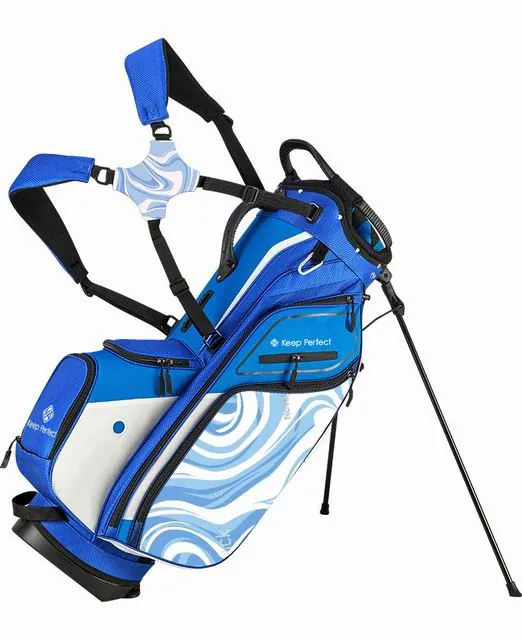
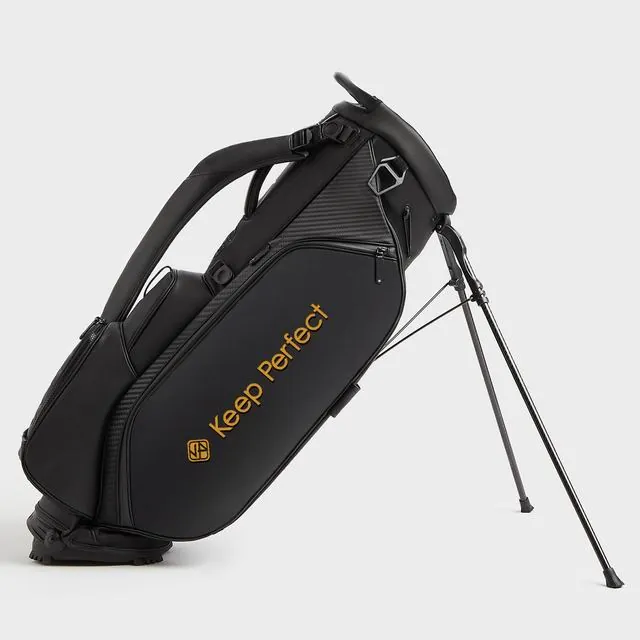
Golf bag colour design trends are the visual rules that tell you which colourways, material finishes and accent combinations dominate the market, why they win with buyers, and how to translate them into an OEM or ODM production programme that actually sells. Global wholesale data consistently shows that a small set of colour directions — premium neutrals, expressive accents, heritage tones and sustainable finishes — repeatedly outperform novelty. This guide explains the psychology and commercial logic behind every major trend, breaks down colour behaviour by market and bag type, and gives manufacturers and brands a step-by-step way to develop a trend-aligned colourway without gambling on production.
Colour is where design and commerce meet most visibly in the golf bag category. Because bags are a repeat-purchase, visible, camera-friendly product, colourway is the fastest lever a brand can pull to refresh its range without changing geometry or pocket architecture. This is exactly why trend reading matters: the smartest manufacturers keep their pattern blocks and keep rotating colourways, letting the psychology of colour do the selling. The sections below cover the hard data behind the trends, the player psychology that drives them, and the production choices that make a colourway survive contact with a factory and with the weather.
Modern golf bag colourway balancing a premium neutral base with an expressive accent
Why Colour Trends Matter in Golf Bag Design
Colour trends are not arbitrary fashion whims; they track measurable shifts in buyer psychology, demographics and retail economics. Golf is currently widening its audience toward younger players, more women and more casual play, and each of those groups brings a distinct colour preference that wholesale buyers are learning to respect. A trend-aligned colourway expands the addressable market; a trend-ignoring one quietly shrinks it regardless of construction quality.
There is also a strong retail dynamic: e-commerce thumbnails reward saturated, high-contrast imagery, so colourways that photograph well outperform technically identical bags that photograph flat. And because a colourway is married to production tooling for seasons, the cost of guessing wrong is locked in for months. Reading trends correctly is therefore a profitability decision as much as an aesthetic one, and it is precisely the discipline that separates professional buying teams from casual buying.
Finally, colour signals positioning. The same pattern in matte charcoal reads corporate and premium, while the same pattern in mint and coral reads fresh and consumer-facing. The colour system carries the price-point message before a single feature is examined — a lever too powerful for any serious golf bag brand to ignore.
The Core Colour Directions in Golf Bag Design
Premium Neutrals
Black, deep navy, charcoal and warm white remain the volume leaders. They register as premium, carry logos cleanly, photograph well and meet the psychology of authority and trust that corporate and professional buyers demand. Neutral bases are the skeleton of almost every profitable range.
Expressive Accents
Coral, electric blue, mint and pulsing accents inject energy into neutral bases. They satisfy the growing consumer desire for personality and social visibility, and they lift e-commerce thumbnails. Accents are the trend-forward layer that makes a range feel current.
Heritage Tones
Forest green, tan, saddle and muted earth tones channel classic golf club heritage. They appeal to tradition-minded clubs and regions favouring understated prestige, and they photograph with a timeless quality that resists seasonality. Heritage tones pair strongly with leather-finish details.
Sustainable Finishes
Low-impact dyes, recycled-fibre options and visibly "natural" tones signal environmental responsibility. As buyer scrutiny shifts toward sustainability, eco-inspired colourways without loud messaging are becoming a mainstream preference rather than a niche statement.
In practice the most successful ranges combine one dominant neutral base with a single expressive accent, keeping the psychological signal and the e-commerce photograph clean while still feeling current. A range built entirely on one direction — all-neutral or all-neon — narrows its appeal unnecessarily.
Colour Behaviour by Market and Buyer Group
| Market / Buyer | Dominant Colourway | Psychology At Work | Trend Signal |
|---|---|---|---|
| North America | Navy, black, white + brand colour | Authority, trust, logo clarity | Clean, logo-forward |
| Europe | Heritage tones, muted neutrals | Understated prestige | Timeless, low-key |
| Asia-Pacific | Bright accents, fresh pastels | Expression, self-identity | Expressive, vibrant |
| Corporate / Academy | Single brand colour + neutral | Team coherence, recognition | Unified identity |
| Resort / Social | Bright, seasonal, lifestyle | Enjoyment, visibility | Photo-ready, social |
| Women's & Juniors | Mint, blush, fresh blues, brights | Expression, freshness | Light, energetic |
This table captures the psychology behind regional and segment colour behaviour. The commercial lesson is that a single global colourway is often suboptimal: running a preferred variant for each target region or segment, from the same pattern block, is a disciplined way to serve distinct psychologies without multiplying production complexity.
2025 Colour Trends in Detail
The 2025 season consolidates several directions rather than introducing a single breakout hue. Muted refresh greens — somewhere between mint and sage — are the standout consumer story, reading as calm, modern and sustainable without being childish. Dusty blues and warm off-whites continue to grow, giving lighter finishes a premium, sun-washed character that suits both resort and home-market retail. On the accent side, coral and electric blue are the energy notes that many ranges now thread through zippers, piping and logo panels.
Heritage tones are also returning as a counterpoint to bright consumer colour. Forest green, tan and saddle accents capitalise on the enduring appeal of classic club style, and they are increasingly paired with earth-tone graphics or subtle tonal embroidery. The net effect of 2025 is a "both directions at once" market: durable premium neutrals for commercial programmes, and a lively, expressive floor for consumer and resort retail — exactly the combination that one neutral base plus one accent delivers neatly.
For buyers this means briefs should specify a dominant tone, not just a season. Telling a factory "this year we want something fresh" produces chaos; telling it "calm green base, warm white accents, electric blue piping" produces a manufacturable, on-trend colourway the team can cost and sample reliably.
Colour Psychology Behind the Trends
Every 2025 colour direction has a psychological rationale that explains why it sells. Calm greens lower arousal and signal balance and sustainability — ideal for a modern consumer base tired of visual noise. Dusty blues and warm whites inherit the trust and clarity of blue and the cleanliness of white, photographing as premium and easy to live with. Coral and electric blue provide the injection of energy and confidence that bright, socially-visible buyers seek when they are consciously choosing a bag to be seen with.
Heritage tones carry the authority and prestige psychology associated with established clubs and tradition, while the matte finishes now standard across the category add a technical, robust nuance that glossy alternatives rarely match. The reason the market rewards this palette is that it serves several distinct psychologies at once: authority for professional use, calm for everyday play, energy for social visibility and trust for long-term ownership.
Choosing on-trend colour therefore is not a gamble for the brand that understands its audience; it is a matched-specification exercise. The detailed psychology behind each hue is covered in our companion piece on golf bag colour psychology.
Corporate golf bag design using brand colour accents for logo visibility
Colour by Bag Type: Staff, Cart, Stand and Travel
Staff Bags
Largest branding surface; colourway is essentially the sponsor identity. Typically brand colour + black/white/navy base for maximum logo contrast and tournament visibility.
Cart Bags
Balances visibility and function. Bold base colours with clear pocket-edging differentiation improve organisation and identification on shared carts.
Stand Bags
Walkers' personal kit; freedom for expression and bright consumer finishes. High-contrast straps and accents aid identification at busy ranges.
Travel Covers
Combines protection with easy airline identification. Bright, high-visibility colours help avoid bags being lost or misclaimed; durable coated fabrics hold colour.
Each bag type leans on colour differently, which is why a coherent brand range will vary colourway emphasis by category while keeping a recognisable family resemblance. Guidance on fitting these categories to purpose is in our golf bag sizing and fit guide.
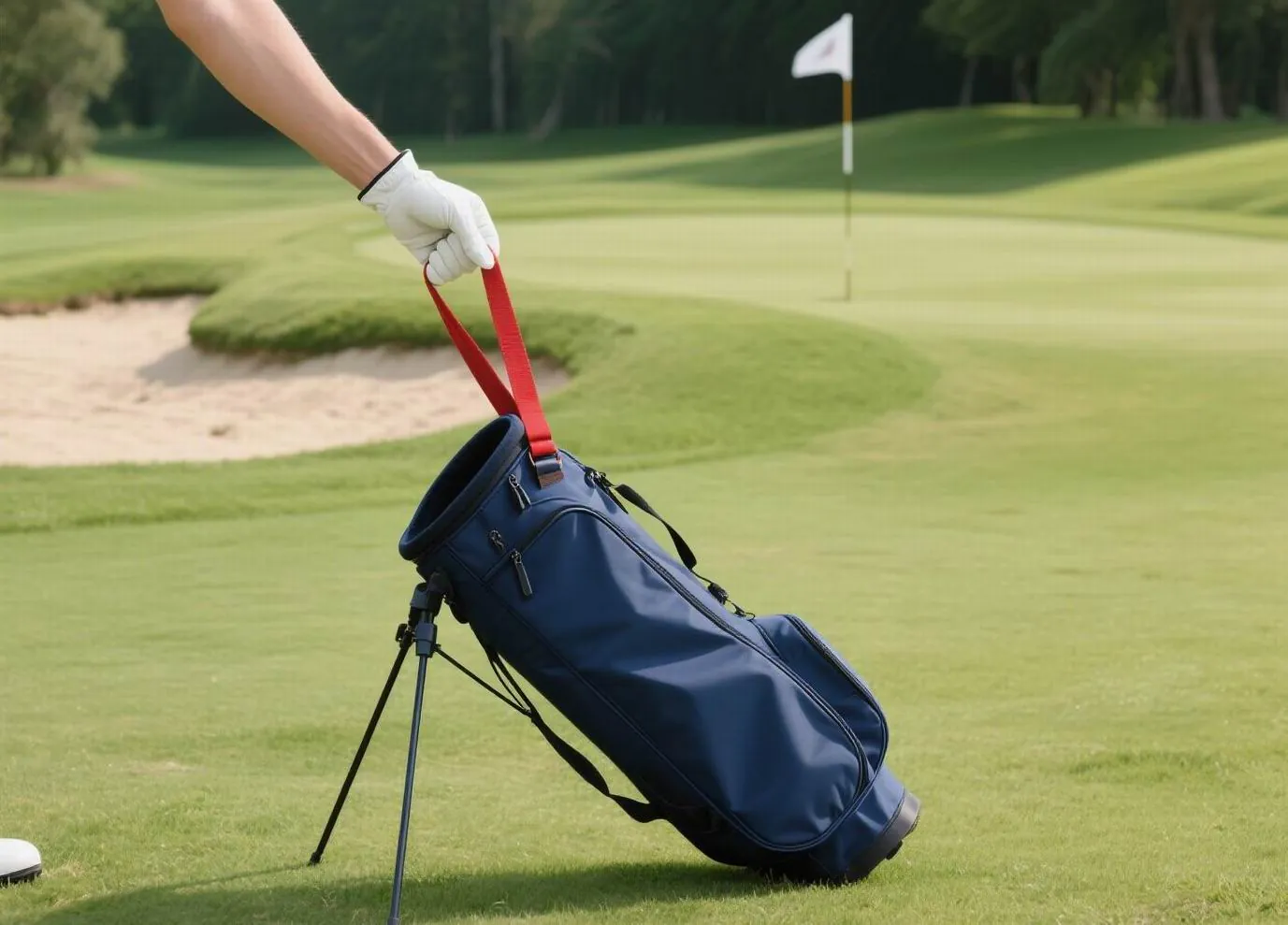
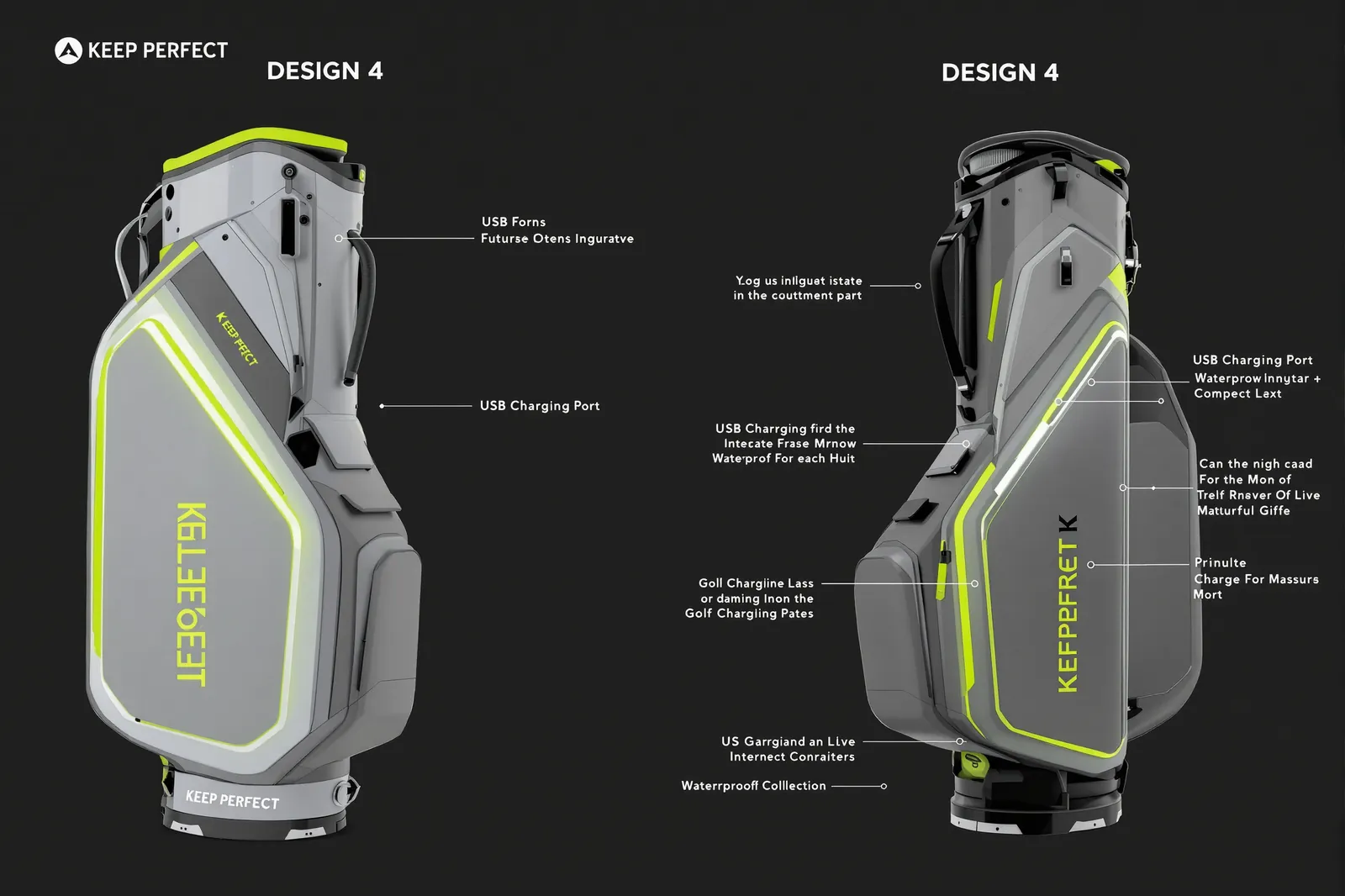
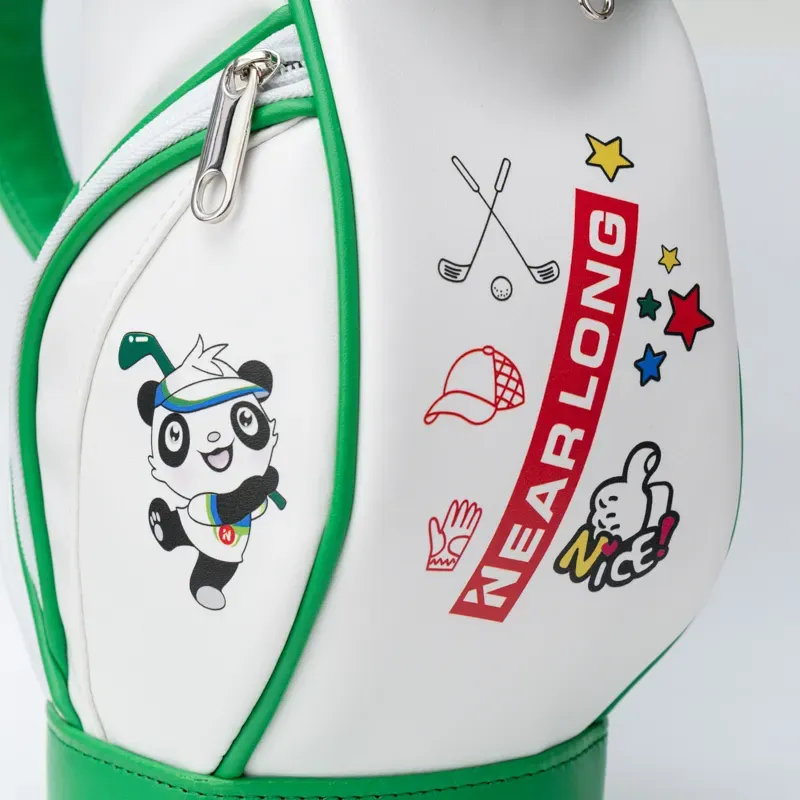
On-trend golf bag design blending heritage and contemporary colour directions
Material and Finish: Protecting the Colourway
A trend-aligned colourway fails if the substrate cannot hold it. Solution-dyed polyester and high-fastness pigments retain colour far longer than surface-printed designs, which fade, crack and rub off under sun and repeated use. For premium neutrals and heritage tones, matte finishes with subtle texture read as technical and robust; for expressive accents, the finish must keep saturation without sheen that looks cheap.
Colour consistency across panels and across production batches is the single most common quality complaint in private-label sourcing. Serious manufacturers therefore run an approved colour-matching standard and inspect batch-to-batch against documented tolerance. A buyer who verifies this capability before committing is protecting the entire colour strategy from day one.
Sustainability concerns also meet colour at the material level. Lower-impact and recycled-fibre options increasingly come in the calm greens, warm whites and earthy heritage tones that fit the 2025 direction, letting brands signal responsibility through the palette itself. Deeper material guidance is available in our custom golf bag material comparison.
Making Trends Manufacturable: From Brief to Sample
Turning a colour trend into a sellable bag is a production discipline, and the winning teams treat it as such. The brief should state a dominant psychological tone, a substrate recommendation, a finish, and a target accent — not just a season buzzword. From there, the manufacturer matches a colour standard, produces a physical sample against it, and locks the reference before bulk production.
Working with an experienced partner de-risks this. QUANZHOU JUNYUAN BAGS (service@junyuanbags.com, +86 17750020688) has been involved in the golf bag industry since its founder's 2004 entry and was founded in 2014, operating through an affiliated factory of approximately 4,950 m² staffed by around 137 people across seven production lines and 126 sewing stations, with monthly output near 200,000 pieces serving over 200 brands in more than 100 countries. A realistic programme runs at a 200-piece MOQ (test orders from 100), sampling in 10–20 days and bulk production in 45–60 days.
Because colour is the element of a bag most likely to be rejected or returned due to mismatch, the physical-sample step is non-negotiable. A capable partner will also advise on accent placement and finish durability, keeping the colourway both on-trend and production-safe. For the full development sequence, see our golf bag customization and production process guide.
Building a Cohesive Multi-Colour Range
The strongest 2025 ranges are not collections of random colours but disciplined systems built from a base group and a set of accents that rotate. Start with two or three premium neutral bases, define a single hero brand colour, then allow the bright consumer accents to vary by season. This architecture gives the range a recognisable identity while keeping it alive and current.
Range planning also benefits from colour-by-function logic: reserve the most expressive colourways for consumer and resort items, keep staff and corporate items in unified brand colours, and keep travel covers in high-visibility tones that serve their identification function. The result is a family that reads coherently on a rail, a website or a sponsor's bag wall while still differentiating by use case.
Finally, photograph and publish the full colourway set consistently. Because e-commerce rewards saturated, high-contrast imagery, the way you shoot your range is itself part of the colour strategy. A well-shot neutral-based range with one strong accent consistently outperforms a technically varied range shot poorly.
Colour and Material Finish: Making the Trend Last
A colourway is only as strong as the material that carries it, and the finish choice shapes how the trend reads in person and on camera. Solution-dyed polyester and high-fastness pigments retain colour far longer than surface-printed designs, which fade, crack and rub off under sun and repeated use. For premium neutrals and heritage tones, a matte finish with a subtle texture reads as technical and robust; for expressive accents, the finish must keep saturation without the glossy sheen that can look cheap on product photography.
Finish also communicates positioning independent of the hue. A gentle matte texture signals modern engineering and durability, while a glossy finish reads as sportier but tends to scratch visibly and photograph with distracting glare. Excellent colour programmes pair the hue with the finish deliberately — calm greens read best in matte, while energetic coral and electric-blue accents keep their vibrancy on a soft-touch texture. Getting this pairing right is what lets a trend-aligned colourway look premium in both the showroom and the thumbnail.
Colour consistency across panels and across production batches is the single most common quality complaint in private-label sourcing. The same supplier that matches a vivid accent on the first batch can drift on the third unless a colour-matching standard and a documented batch-tolerance inspection are in place. A buyer who verifies this capability before committing is protecting the entire colour strategy from day one — and, because a trend lasts only a season or two, the consistent execution of an on-trend colourway is what turns a passing trend into a profitable run.
How to Apply Colour Trends Without Over-Commitment
The best way to capture a colour trend without gambling your whole range is to isolate the risk in accent and trim rather than committing to a full base-colour reinvention. A neutral base remains the safe, premium commercial core, while the trend is expressed through accent piping, logo panels, zipper pulls and a single hero colourway released in limited volume. This "anchor plus trend accent" strategy lets you test the market's response to a new direction before scaling it across the range.
Commercial buyers should also time trend adoption to the seasonal calendar. Because sampling takes 10–20 days and bulk production 45–60 days, a trend adopted at the start of a season reaches shelves while the direction is still ascendant, whereas a late adopter ships into a cooling market. Building the colourway and colour-matching standard into a repeatable programme means the accent can be refreshed season to season from the same pattern block, keeping the range current without re-tooling.
Finally, let the e-commerce photography carry the trend. Saturated, high-contrast imagery of the anchor-plus-accent range outperforms flat presentations, and the same colourway will read differently across clothing, accessories and bags the player already owns. Testing trends on small, fast batches with a factory that locks colour standards is the disciplined way to ride the 2025 direction with measured risk and repeatable, saleable colourway execution.
Frequently Asked Questions
- What are the main golf bag colour trends for 2025?
- Premium neutrals (black, navy, charcoal, warm white) remain the volume leaders, joined by calm saturated greens, dusty blues, warm off-whites and expressive accents of coral and electric blue. Heritage tones such as forest green and tan are also returning for prestige and consumer segments.
- Which colour sells best in wholesale golf bags?
- Black, deep navy, charcoal and white dominate global wholesale because they register as premium, carry logos cleanly and meet the psychology of authority and trust. Bright accents are layered on top for consumer and resort retail.
- How do I choose a colourway for my brand's golf bags?
- Anchor with one functional neutral base tuned to your audience, fix a single dominant brand colour, and add one expressive accent. Test across your target regions because colour preference varies by market, then lock the reference through a physical sample.
- Do colours photograph differently for e-commerce?
- Yes. Saturated, high-contrast colourways photograph better and drive higher click-through in product grids than flat, low-saturation tones. Shooting a neutral base with one strong accent reliably outperforms shooting a technically varied but poorly-presented range.
- Why does the same colour look different between batches?
- Differences in dye lot, substrate and finish can shift a colour between production runs. Buying from a manufacturer with a documented colour-matching standard and batch-tolerance inspection prevents this, which is why the physical-sample-and-lock step matters.
- Can I develop a custom on-trend colourway through a factory?
- Yes. Custom colourways are developed via an OEM or ODM programme, typically at a 200-piece MOQ with 100-piece test orders, 10–20 day sampling and 45–60 day bulk production. QUANZHOU JUNYUAN BAGS can produce standard, customised and private-label colourways across golf bags and related categories.
Conclusion
Golf bag colour design trends are really a map of buyer psychology applied to the most visible piece of kit on the course. The market's durable core is premium neutrals that register as authority, refreshed by calm greens, dusty blues and expressive accents that serve younger and more social buyers, with heritage tones providing a prestige counterpoint. The brands that win are the ones that read these directions, translate them into a disciplined colour system, and manufacture that system consistently.
Whether you are developing your first private-label line or refreshing an existing range, the playbook is the same: anchor the tone to your audience, add one expressive accent, protect the colourway with sound material selection, and lock it through a physical sample at a capable factory. Colour is the cheapest, fastest-refreshing competitive advantage in golf bag retail — and it is entirely within a disciplined brand's control.
Author & Manufacturing Note
QUANZHOU JUNYUAN BAGS — OEM/ODM golf bag manufacturer. Industry experience since 2004; company founded 2014; affiliated factory approx. 4,950 m²; seven production lines, 126 sewing stations, ~137 staff, monthly output ~200,000 pieces; serving 200+ brands across 100+ countries; SGS-reviewed March 2026. Standard OEM MOQ 200 pieces (test orders from 100), sampling 10–20 days, bulk production 45–60 days.
Contact: service@junyuanbags.com · WhatsApp/Phone +86 17750020688