Golf Bag Compartment Design: Layouts, Pockets and Organization
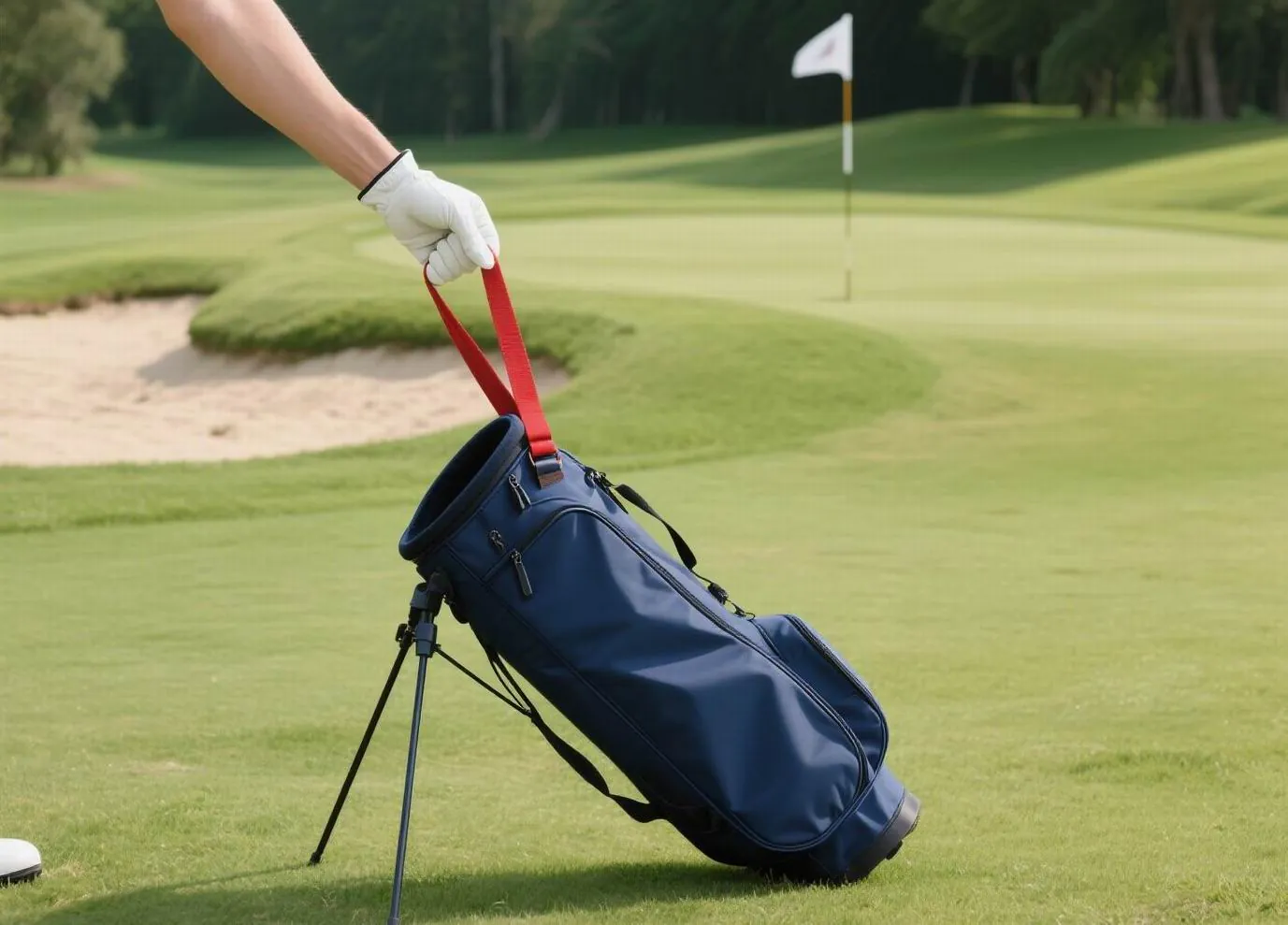
Golf bag compartment design is the deliberate layout of dividers, pockets and specialized storage that gives every club and every item a logical, reachable home - and good design is what turns a simple bag into an efficient, protective part of your round. The best compartment layouts separate clubs, shield valuables, keep frequently used gear at hand and secure heavier or wet items low in the bag. This guide breaks down how compartments are designed, the key decisions behind each layout, and how a manufacturer like QUANZHOU JUNYUAN BAGS (founded 2014, founder active in the industry since 2004) engineers them for the 200+ brands we serve across more than 100 countries.
What Compartment Design Really Means
Compartment design is the organisation of a golf bag around how a player actually reaches for gear through a round, and it is decided on the pattern table rather than added as an afterthought. Every pocket, sleeve and divider has a job: the divider system protects clubs and speeds selection, the valuables pocket secures a phone and wallet and today needs room for modern devices, the cooler sleeve keeps drinks cold, and the range of additional pockets stores tees, balls, gloves and raingear where they can be reached quickly. Where each sits, how deep it is, and how it opens determines whether the player stays organised or ends up rooting for a tee in the rain. A bag whose compartments are placed around a real round, not just fitted around whatever fabric was left over, is what separates a considered design from a generic shell.
Compartment design is the sum of everything inside the bag that holds and organises gear: the divider system at the top, the pockets on the surface, the internal sleeves and liners, and the base structure that keeps everything stable. A well-considered design anticipates how a golfer actually reaches for a club, a ball, a rangefinder and a drink during a round, and places each item where the hand naturally goes.
Good compartment design is not simply about having many pockets. It is about the right pockets in the right places, with the right capacity, closures and protection. A bag with fifteen shallow pockets can feel worse than one with eight well-placed compartments, because organisation is about logic and reach, not raw count. That logic is what separates a truly useful bag from one that just looks technical.
Design also shapes weight distribution, protection and durability. Where the heavier items ride, how clubs are separated, and how wet or sharp objects are contained all follow from the compartment plan. When all of these are considered together, the bag feels balanced on your back, protects your investment and stays fast to use round after round. Exploring these principles in the context of the divider choice is what our 14-way vs 5-way divider guide does in depth.
The Divider System: The Heart of the Layout
The divider system is the foundation on which all other compartments build. It organises the club set at the top of the bag, and its configuration determines how much protection and order your clubs enjoy for their whole ride. The two dominant layouts are the 5-way and the 14-way, and both are available with full-length or partial dividers.
A 5-way top splits the opening into five broad sections, grouping woods, long irons, mid irons, short irons and wedges. It is lighter, faster to use and more flexible, which is why walkers love it. A 14-way top gives every club its own slot for maximum organization and protection, which is why riders and players with pristine-condition priorities prefer it. Choosing between them depends on how much weight you will carry and how much protection you demand.
Beyond the count, divider length matters most. Full-length dividers run from the top to the base, keeping clubs separate for their entire journey so they never tangle or knock near the bottom. Partial dividers save weight but leave the lower half open to chatter and wear. At the factory we treat full-length dividers as the standard for quality, because the protection they give is what players feel on the first round and every round after.
Core Compartments and Their Jobs
A well-rounded bag carries a core set of compartments, each with a specific job. The ball compartment is a spacious, elastic-topped pocket that holds a dozen or more balls and lets you grab one mid-round without fumbling. The valuables pocket is low, padded and often moisture-proof or lockable, keeping wallet, keys and phone dry and secure. The apparel or rain pocket is large and often ventilated, storing a rain jacket or cold-weather layer until you need it.
The cooler or water bottle sleeve keeps drinks and snacks at hand and cold, often with a drainage point. A range finder or gadget pocket is padded and fleece-lined to protect electronics. A tee and accessory pocket holds tees, markers, divot tools and small odds and ends. And a dedicated putter well or slot gives the highest-use club a predictable home. Together these cover the standard contents of almost every golfer's bag.
The arrangement of these pockets follows a simple rule: frequently used and lightweight items go high and forward, heavy and rarely used items go low and central. This keeps the bag balanced and keeps your hands moving to the same reliable places all round. Matching the pocket map to your own gear is the subject of our golf bag pocket organization guide.
Specialized Storage: Beyond the Basics
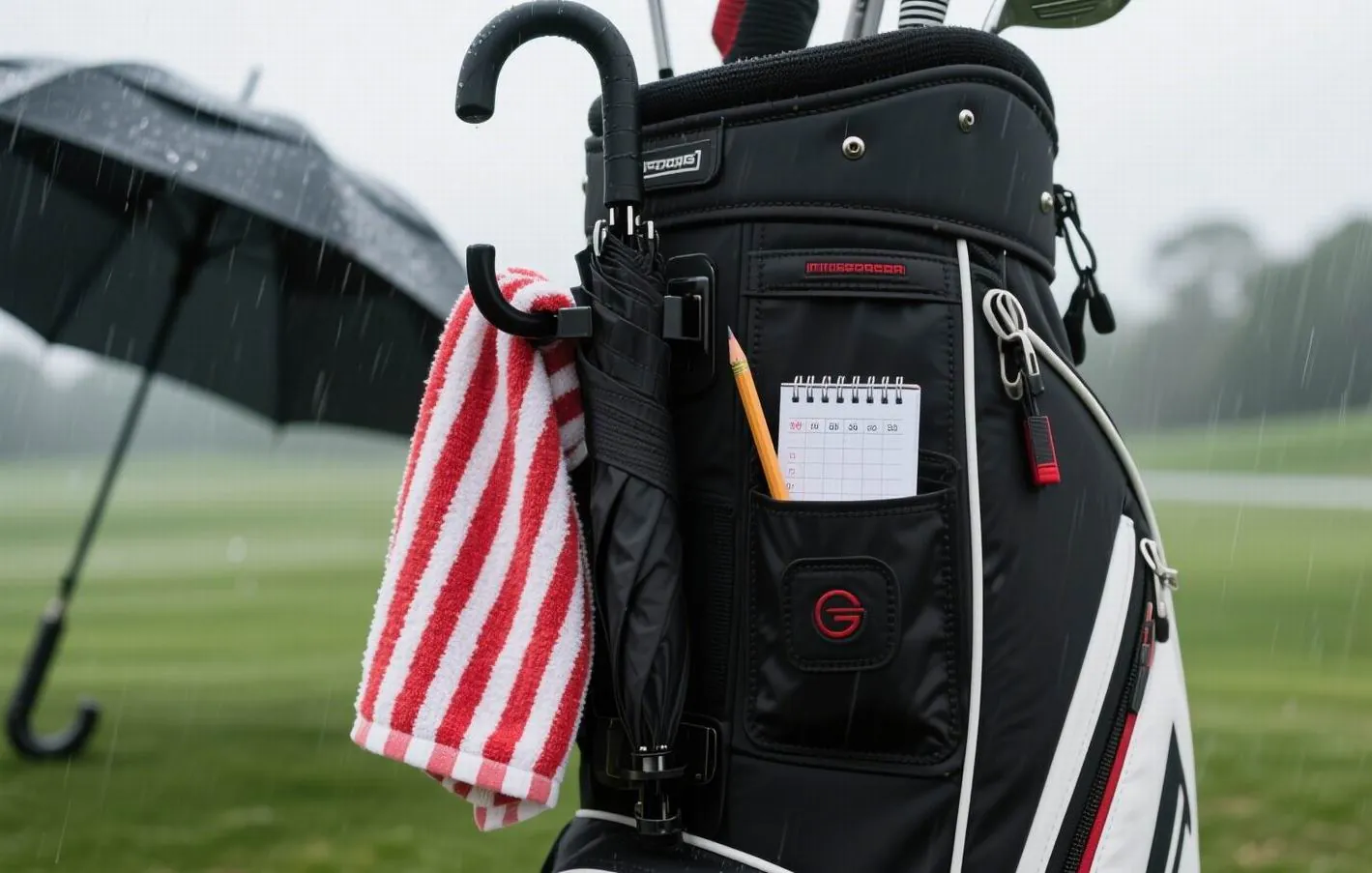
Modern compartment design adds specialist storage that goes well beyond a basic pocket. An umbrella holder is a reinforced sleeve with a drain that keeps an umbrella secure and lets water escape. A towel ring or magnetic clip keeps your towel at hand for clean grips. A glove pocket is ventilated so gloves dry between holes, and a scorecard holder gives pens and markers a tight home without crumpling your card.
Insulated compartments and cooler zones are increasingly standard, keeping drinks cold for a full round and protecting a packed lunch on longer days. Padded electronics pockets add shock protection for range finders and phones, and reinforced base plates protect the lowest zone where gear lands hardest. Each specialist compartment exists to solve one recurring problem, and together they reduce the clutter that slows a round.
Valuables protection deserves special emphasis in warm climates. A low, moisture-proof valuables pocket keeps electronics and papers dry even when the rest of the bag is damp, and some designs add a lockable zipper for tournament or travel security. Making this a thoughtful compartment, rather than an afterthought, is a hallmark of a well-designed bag and one buyers increasingly look for.
| Compartment | Job | Ideal Placement |
|---|---|---|
| Ball pocket | Hold a dozen balls, quick grab | Forward face, high |
| Valuables pocket | Dry, secure, often lockable | Low, central |
| Apparel / rain pocket | Store layers, ventilated | Large, side or back |
| Cooler or bottle sleeve | Keep drinks cold, drain | Side, reachable |
| Gadget pocket | Protect range finder, phone | Top, forward, padded |
| Tee and accessory pocket | Tees, markers, small items | Forward, high} |
Compartment Materials: Balancing Durability and Weight
The materials used in compartments directly trade durability against weight. Ripstop nylon is lightweight, water-resistant and tear-resistant, ideal for general pockets and ball storage. Ballistic nylon is extremely durable and abrasion-resistant, best for the base, dividers and high-wear zones. Polyester is quick-drying, colourfast and affordable, and works well for bottle sleeves and general storage.
Coated or laminated fabrics shed water and are ideal for rain, apparel and valuables compartments, though they add a little stiffness. Fleece or padded linings protect electronics and phone screens, and thermoformed plastic gives structural rigidity to hard cases and electronics zones. The best designs assign the right material to each compartment's job instead of using one material everywhere.
Weight is the hidden cost in materials. A bag that uses heavy materials in every pocket will be noticeably heavier to carry, so good compartment design matches durability to the demands of each zone and uses lighter materials where possible. This is why at the factory we weigh material choices against carrying mode, so a bag for a walking golfer is engineered to a very different budget than one built to sit on a cart.
Designing by Bag Type
Different bag types demand different compartment designs. Stand bags optimized for carrying concentrate weight low and central, carry five to nine pockets chosen for access and portability, and use full-length dividers to protect clubs on the shoulder. Cart bags, which ride on a trolley, can grow to eight to twelve pockets including large apparel compartments and angled forward faces for seat-side access.
Tour or staff bags prioritize structure and maximum organization, with 14-way full-length dividers and ten or more specialized pockets for a full tournament setup. Sunday and minimalist bags are the opposite: just a few carefully chosen compartments for a light, fast carry. Matching the compartment plan to the bag type is what makes each design useful rather than merely feature-filled.
The key is to avoid over-engineering. A minimalist bag with eighteen pockets defeats its whole purpose, while a tour bag with three pockets leaves a pro scrambling. When the compartment design matches the intended use, every pocket earns its place and nothing is surplus weight. For a closer look at what different bag families carry, our compartment design and golf bag types guide pair well together.
How Factory Design Enables Better Compartments
The difference between an ordinary compartment layout and a great one is often decided at the factory. At QUANZHOU JUNYUAN BAGS (founded 2014, founder active since 2004), our affiliated factory runs 7 production lines with 126 sewing machines and a team of 137 employees to a monthly capacity of roughly 200,000 bags. We engineer the divider, pocket placement and base as one system, so the compartments do not just exist, they work together.
Designing compartments for manufacturability matters as much as designing for the player. A pocket that looks good on a sketch needs seams, liners and closures that hold up in production and in use, and placement that does not compromise the bag's balance. Because we build the whole bag rather than assembling parts, we can validate that every compartment is reachable, durable and correctly reinforced before the first sample is shipped.
For brands, this means customization is genuinely possible. Divider count, pocket placement, sizing and materials can all be tuned to a target market or player group, to a standard 200-piece MOQ (100 for test orders), with sampling in 10-20 days and bulk delivery in 45-60 days. Our quality is backed by SGS certification confirmed in March 2026 at our 4,950 m² affiliated factory, and we serve 200+ brands across more than 100 countries.
Common Compartment Design Mistakes
A handful of repeated mistakes undermine otherwise good compartment layouts. Prioritising pocket count over placement leaves useful items hard to reach and rare items taking the best spots. Ignoring weight distribution makes a loaded bag awkward on the shoulder or unstable in the cart. And choosing materials for looks rather than durability means high-wear zones fail first.
Another common error is inconsistent closures. Mixing zipper types and closure strengths across pockets makes them foul at different rates and complicates maintenance. And overlooking the drain and ventilation of wet compartments traps moisture against gear, which over time causes mildew and corrosion. A design that anticipates water and ventilation at each compartment is meaningfully more durable.
Finally, bags are often designed without enough flexibility for the season. A compartment plan that works in dry months may have no useful place for a rain shell or a heavier layer. Allowing one adaptable compartment or an expandable pocket solves this so the same bag stays comfortable and organised all year.
Organization Tips That Unlock the Design
Even the best compartment design needs good use to reward you. Arrange clubs by type and use so the ones you touch most sit closest to hand. Distribute weight so heavy items ride low and central rather than on one side. Keep frequently used essentials in the quick-access forward pockets and reserve deep apparel compartments for things you rarely touch mid-round.
Declutter regularly. Most bags quietly accumulate old tees, wrappers, dead markers and stale balls that take up space that could serve a real purpose. Empty and reset the bag every few rounds, and it will stay fast and useful rather than slowly becoming a jumble. A light, current bag is also kinder to your shoulder and to the structure itself.
Use small organisers inside large compartments. Pouches, dividers and liners let a single apparel pocket carry several categories without everything sliding together. Combined with the reach-zone method, this inside-out organisation makes the most of whatever compartment design your bag has. For the full system, see our golf bag organization pro tips and storage and organization systems.
Maintaining Compartments for a Long Life
Compartment design only keeps paying off if the compartments are maintained. Empty pockets after each round to prevent moisture and odour buildup, and wipe interiors clean with a damp cloth and mild soap, especially after rainy rounds. This simple reset takes minutes and prevents the slow damage that shortens a bag's life the most.
Keep zippers clean and lightly lubricated so they glide rather than grind, and check straps, handles and the base plate for wear. Inspect compartments seasonally for tears, loose stitching or failing dividers, and fix small issues before they spread. A well-maintained bag remains organised and looks new for years, which is why care matters as much as the initial design.
When not in use, store the bag upright in a cool, dry place and avoid overstuffing pockets so the compartment structure is not compressed out of shape. Full-length dividers depend on the structure staying true, so gentle storage preserves the exact geometry that makes the design work. For the complete care routine, our golf bag maintenance care guide covers it in full.
Custom Compartment Layouts for Your Brand
For brands, the compartment layout is one of the most powerful differentiators you can specify, because it is what buyers feel every time they use the bag. You can choose the divider count - a 5-way for a lightweight walking line or a 14-way full-length for a premium riding line - and pair it with pocket placements matched to how your market reaches for gear. You can size the valuables pocket for a modern phone, deepen the cooler sleeve for full-size bottles, and add the specialist pockets your target players need.
Because QUANZHOU JUNYUAN BAGS makes the whole bag rather than assembling parts, we can tune every compartment to your specification in one coherent design. Standard production runs at a 200-piece MOQ (100 pieces for test orders), with sampling in 10-20 days and bulk delivery in 45-60 days, and we build across 7 production lines with 126 sewing machines and 137 employees to a monthly capacity of roughly 200,000 bags for our 200+ brand partners. When you define the compartment map up front, the prototype already reflects the layout your customers will use, which shortens iteration and gets a better product to market faster.
A practical method for specifying compartments is to draw the five most common items your players carry and place each one on the bag where the hand naturally goes. That simple exercise aligns the pocket map with real use and resolves most design debate before a single sketch. From there the factory refines closures, capacity and protection for each zone, and the result is a bag that feels intuitive on the first round because it was designed around how it is actually used. For the wider accessory picture that pairs with these compartments, our essential accessories guide and complete accessories guide are excellent companions. Before production, our team also validates the compartment pattern against your market's typical load-out, so the pockets you specify genuinely hold what players carry - a step that turns a generic bag into a tailored product and is one of the reasons brands across more than 100 countries trust us with their compartment design and pocket layouts, from first sample to full production.
Conclusion
Golf bag compartment design is the deliberate, engineered layout of dividers and pockets that gives every item a logical, reachable, protected home. The best designs balance organization, protection, weight and access, and they are built as one system - not a bag with pockets bolted on. Start with the divider, place the core compartments by reach and balance, choose the right materials for each job, and maintain the result.
When the compartment plan is matched to how you actually play, the bag becomes a fast, balanced, dependable extension of your game. We engineer these layouts at QUANZHOU JUNYUAN BAGS with that discipline for brands across 100+ countries, and we can tailor them to your market on any order. To take your setup further, pair this guide with our essential accessories guide and complete accessories guide.
Sources
Frequently Asked Questions
- How many compartments should a golf bag have?
- A well-rounded golf bag typically has 6 to 10 compartments: one for balls, one for valuables, one for apparel or rain gear, a cooler or water bottle sleeve, a range finder or phone pocket, a tee and accessory pocket, and a dedicated club divider system. The right count balances access, weight and protection.
- What is a full-length divider in a golf bag?
- A full-length divider runs from the top of the bag all the way to the base, separating clubs for their entire height so they cannot tangle, knock or snag near the bottom. Full-length dividers give the strongest club protection and are standard on premium and pro-grade lines.
- Which pockets should be easy to reach?
- The pockets you touch most - balls, tees, range finder, towel and water - belong near the top or on the forward face of the bag. Valuables should be low, secure and moisture-proof. Rarely used items like apparel and rain gear belong in larger, deeper compartments.
- Can I customize golf bag compartments for my brand?
- Yes. A factory like QUANZHOU JUNYUAN BAGS can engineer divider counts, pocket placement and specialized storage to your specification, with standard 200-piece MOQ (100 for test orders), sampling in 10-20 days and bulk delivery in 45-60 days.
- What materials are best for golf bag compartments?
- Ripstop and ballistic nylon are best for durability in high-wear areas, coated or laminated fabrics shed water well, and fleece or padded linings protect phones and range finders. Compartment materials should balance weight, water resistance and abrasion durability.