Custom golf bag personalisation services in 2025 span monogramming, tonal and contrast embroidery, full custom colourway development, badge systems, smart storage engineering and co-designed private-label manufacturing — delivered as a managed OEM/ODM service that locks colour standards, verifies batch tolerance and keeps brand consistency across repeat orders. This guide breaks down the full service catalogue, the psychology and economics behind each service, how pricing and MOQ work, and the exact step-by-step workflow to commission a personalised golf bag programme that arrives reliably.
Finding the right customisation service is about more than picking a logo supplier. The golf bag is a large, durable, visible, repeatedly photographed object, so the quality, durability and consistency of its personalisation directly determine the value of the bag — and of the brand or identity it carries. In 2025 the professional service landscape is mature: individual players, clubs, academies, corporate sponsors and retailers can all access a coherent set of customisation services, provided they choose a partner with the production discipline to deliver reliably. This guide maps those services so you can brief, budget and execute with confidence.
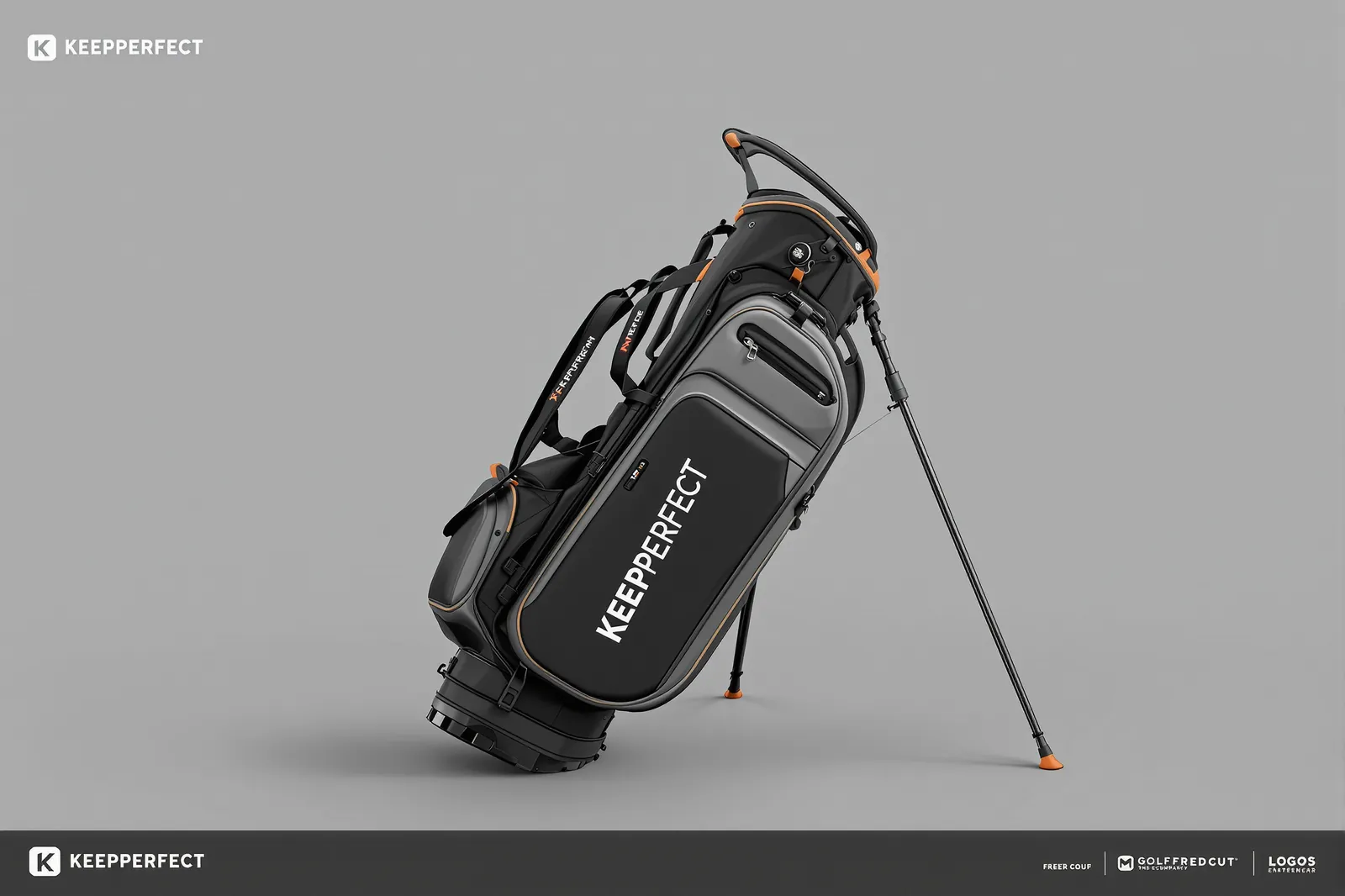
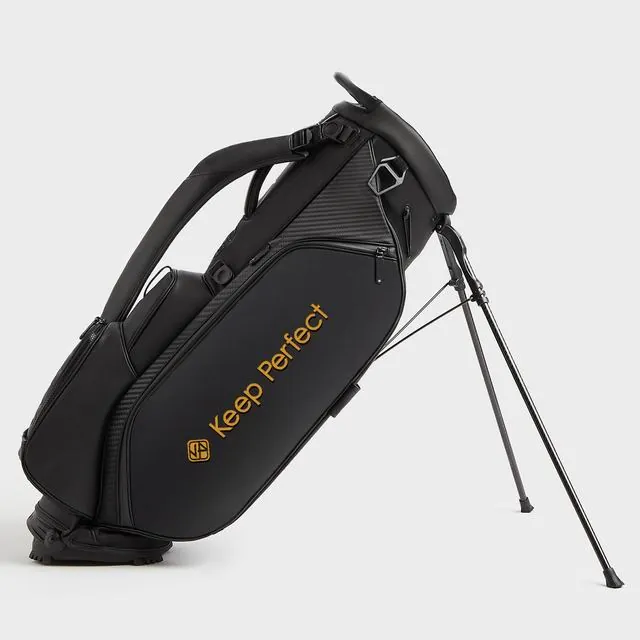
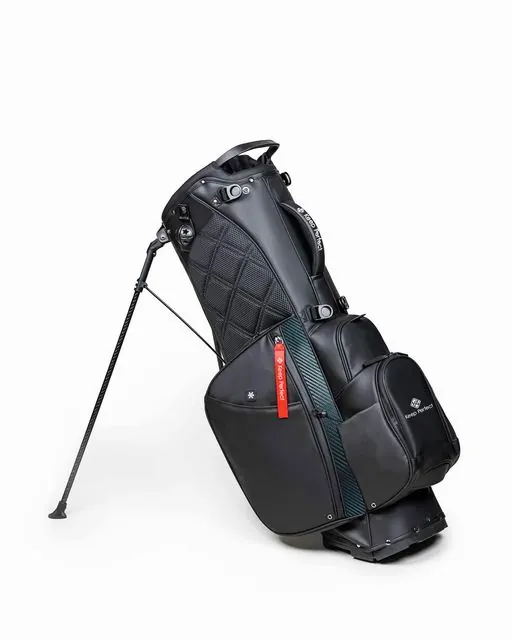
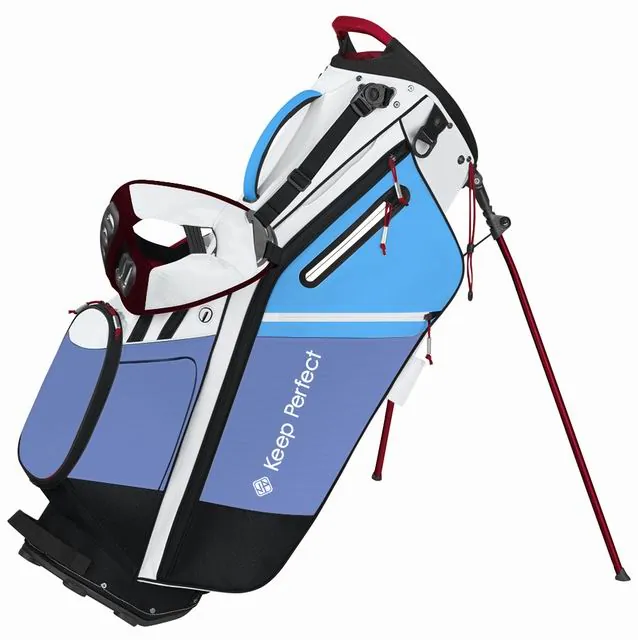
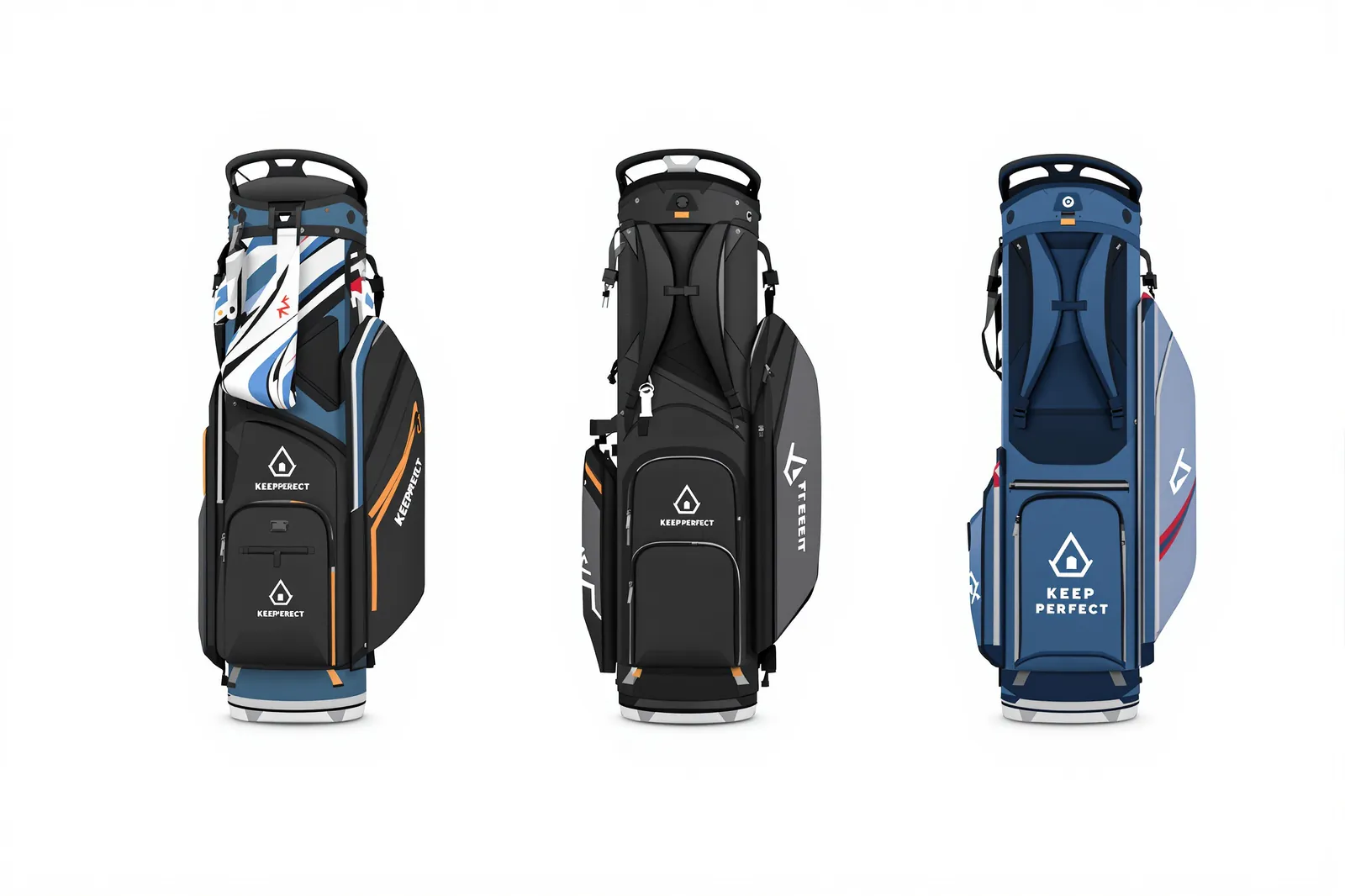
Professional golf bag personalisation service displaying a custom branded colourway
The 2025 Customisation Service Landscape
The modern customisation service catalogue has moved well beyond "put our logo on it". A serious buyer now assembles personalisation from a menu of coordinated services, each adding a layer of identity or function. The core services are monogramming and personal initials, tonal and contrast embroidery, full custom colourway development, interchangeable badge and patch systems, smart and storage-focused engineering, and full co-design of private-label and team ranges. These are combined, not used in isolation, to create a coherent, brand-carrying bag.
Identity Services
Monograms, names, tonal and contrast embroidery, custom colourways and patch systems — the visual identity layers that make a bag unmistakably yours or your brand's.
Engineering Services
Pocket architecture, divider systems, storage for specific gear and smart, tech-ready elements — the functional personalisation that makes a bag designed for one owner.
The two service families are complementary. A premium private label combines identity layers (tonal logo, custom colourway) with engineering layers (configured storage) to produce a bag that is both distinct and genuinely personal. Below we detail each service and when to use it.
Service Catalogue and Pricing Logic
| Service | What You Get | Relative Cost | Lead Time Driver |
|---|---|---|---|
| Monogramming | Embroidered initials or names | Low–mid | Embroidery setup |
| Logo Embroidery | Tonal or contrast stitched logo | Mid | Digitising |
| Custom Colourway | Full colour system, colour standard | Mid–high | Dye matching |
| Badge System | Interchangeable identity badges | Mid | Hardware + placement |
| Smart Storage | Configured pockets/dividers, tech-ready | High | Pattern engineering |
| Co-design Private Label | Managed range, sampling, QC, refresh | Highest scope | Full development cycle |
Use this table to budget realistically. The relative cost is per unit and scales down with volume, and the lead-time driver tells you where the calendar risk sits. The most common source of delay is custom colourway dye matching and pattern engineering, which is why these should be briefed earliest.
Monogramming and Personalisation Services
Monogramming is the emotional core of personal bag services. Embroidery of initials or a name instantly transforms a manufactured bag into a personal keepsake and is the default choice for gifts, corporate presents and the player who wants their bag unmistakably theirs. It pairs naturally with both tonal and contrast stitching and, done to the right proportion against the pocket, adds a bespoke, premium feel with minimal added cost.
The professional service adds real value in placement and engineering. A service provider advises on the correct monogram size and position for each bag type, ensures the embroidery tension and stabiliser are tuned so the fabric doesn't pucker, and matches thread to the colourway. Without these adjustments, even simple monogramming can look amateur when the fabric distorts.
For teams and academies, name-monogramming every bag turns the range into a living roster and strengthens belonging, a service detail that corporate and club buyers increasingly request. The result is a bag with both a brand and an individual on it, carrying two layers of meaning across every round.
Tonal and Contrast Embroidery Services
Embroidery is the premium backbone of customisation, and the 2025 service choice is tonal versus contrast. Tonal embroidery stitches in a barely-distinct shade to create a texture-defined logo that reads as luxury and resists fading and cracking; contrast embroidery uses a distinct colour for a bold, sporty, high-visibility look. The right choice depends on the brand psychology a buyer is trying to project.
Professional embroidery services add value through digitising, thread selection and machine tuning. Digital thread is mapped to the source logo, stitch density is calibrated for the fabric, and tension is adjusted so the design lays flat without puckering. These are the details that separate a clean, premium mark from a puckered one, and they justify using an experienced service provider. Detailed guidance is in our custom logo and embroidery guide.
Because embroidery is thread woven into the fabric, it outlasts every printed technique and is the production-safest form of personalisation. Providers with validated embroidery QC deliver the highest consistent quality, which is why logos should always go through a digitising-and-approval step before bulk.
Full Custom Colourway Development Service
The most commercially significant customisation service is full custom colourway development: designing base, trim, hardware, piping and logo as one system against a colour-matching standard, rather than placing a logo on a stock bag. This is the defining feature of a genuine private label and provides a shelf identity that is difficult to copy and photographs well.
The service applies golf bag colour psychology, described in our colour psychology guide, to choose tones that serve the audience: calm green for sustainability-led lines, navy and black for corporate authority, expressive accents for e-commerce visibility and heritage tones for prestige clubs. The psychology is converted into a spec the factory can reproduce.
The durable part is the colour-matching standard. The provider matches a physical reference, verifies it in inspection and keeps the tolerance across batches. This is the single most important service feature to verify, because colour mismatch is the most common reason bespoke bags are rejected or returned.
Badge and Patch System Services
Badge and patch services solve the refresh-and-reuse problem for clubs, academies and event organisers. The provider engineers a standardised bag base with an interchangeable badge or patch mounting — reinforced panels, secure attachment and tonal frames — so identity can be changed quickly and cheaply without rebuilding the bag. This suits membership programmes, annual tournaments and multi-sponsor events.
The engineering quality of the mounting is what separates a professional system from DIY. Badges must be stable enough not to flap in play, secure enough not to loosen, yet replaceable enough to refresh. A service provider tunes the attachment, panel reinforcement and placement to each bag type so the badge system integrates elegantly rather than sitting awkwardly on the fabric.
The economics are strong: a club stocks one base SKU, personalises at point of allocation and refreshes identity by swapping badges, cutting dead-stock and cooling inventory costs while still delivering personalised kit. Sponsors gain a repeatable asset refreshed each season.
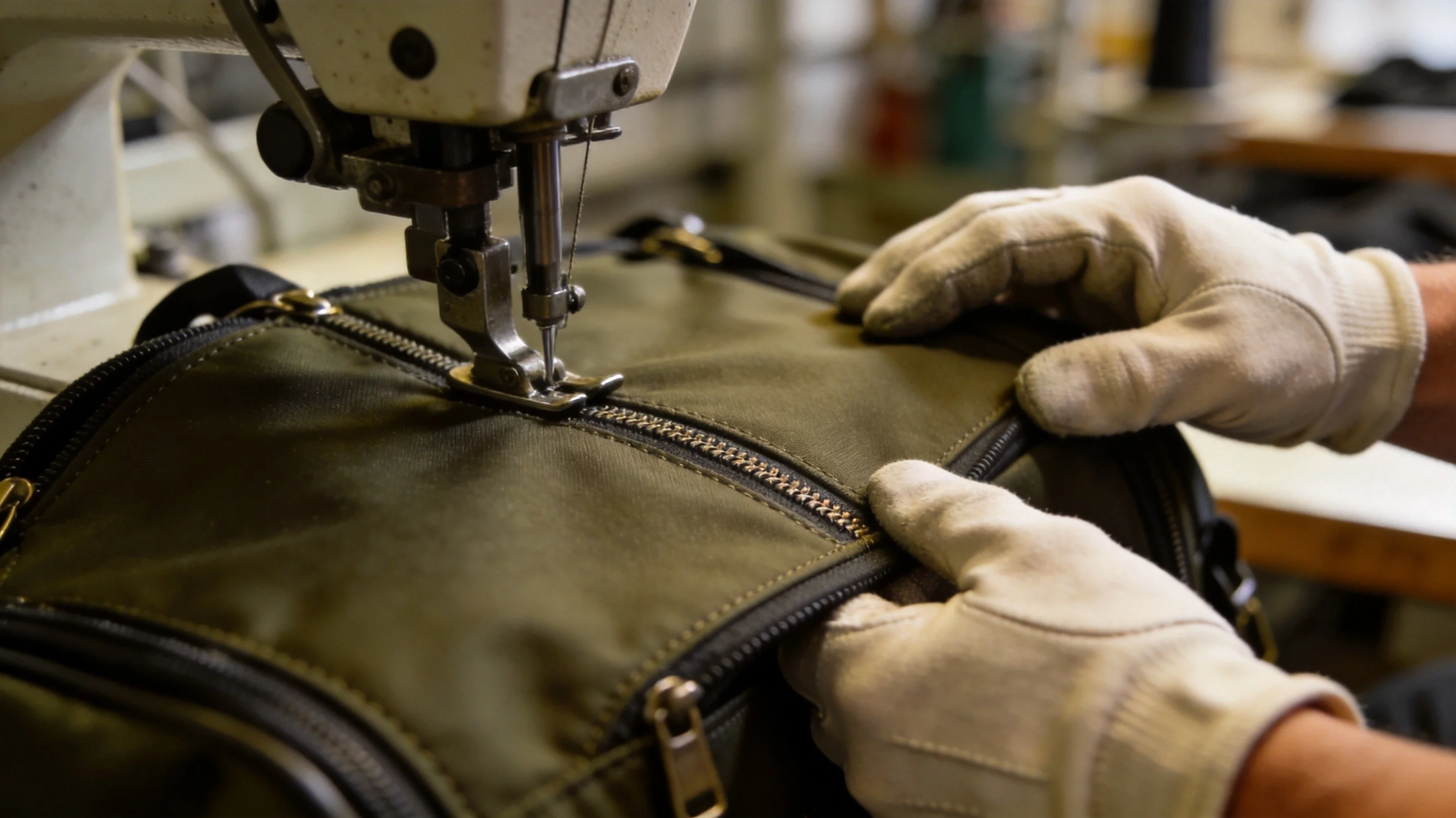
Golf bag customization services delivered in a disciplined factory environment
Smart and Technical Storage Services
Functional personalisation — configuring the bag to an owner's actual gear — is the fastest-growing engineering service. Dedicated labelled pockets for rangefinders, devices and power banks, plus RFID or NFC-capable elements, make a bag designed for one person. This structural customisation is as meaningful as a logo and strongly differentiating for a brand.
The service hinges on fixing pocket sets and dividers at the pattern stage, because retrofitting storage after tooling is costly. A provider that co-designs the architecture early produces a genuinely bespoke, not merely decorated, product that sells on function as much as identity. Organisation and divider principles are covered in our storage and organisation guide.
Structurally personalised bags also future-proof the owner: labelled capacity designed at development accommodates evolving gear without a replacement purchase, reinforcing the readiness and durability modern buyers value. For a brand this is a durable differentiator that generic stock cannot match.
Co-Design and Private-Label Manufacturing Services
The most commercially important 2025 service is co-design and private-label manufacturing: a managed, recurring programme in which the factory handles pattern engineering, sampling, seasonal colour refresh and QC while the brand owns the identity. Retailers, distributors, academies and golf brands use it to turn personalisation into a repeatable revenue stream rather than a one-off cost.
Co-design improves economics because one pattern block serves a multi-colour range across segments, colourways refresh seasonally instead of re-tooling, and repeat MOQ keeps unit cost competitive. The result is a bespoke identity at stock-like efficiency. The full pathway is covered in our private-label golf bag guide.
The service also builds lasting supplier relationships: a co-designed range creates a product DNA no competitor can copy, recurring order patterns and pricing power, which is why the partner relationship in co-design is the true asset. Choosing a provider you can trust across seasons is the foundation of the whole programme.
Pricing, MOQ and Lead Times
Realistic planning requires understanding the cost and scheduling of customisation services. A standard OEM/ODM programme runs at a 200-piece MOQ per design, with test orders from 100 pieces. Sampling takes approximately 10–20 days, and bulk production 45–60 days depending on material and finishing complexity. These figures let a brand plan a seasonal calendar with confidence.
QUANZHOU JUNYUAN BAGS (service@junyuanbags.com, +86 17750020688) delivers these services across golf bags and related categories. With industry experience since 2004 and the company founded in 2014, it operates through an affiliated factory of approximately 4,950 m² staffed by roughly 137 people across seven production lines and 126 sewing stations, with monthly output near 200,000 pieces serving over 200 brands in more than 100 countries, and was SGS-reviewed in March 2026.
Pricing scales with volume, and the realistic path to a competitive per-unit cost is committing to a repeatable programme rather than one-off orders. A provider that co-designs your storage architecture and colour standard rewards that commitment with consistency and efficiency across seasons. The full timeline from inquiry to delivery is in our customization process guide.
Choosing the Right Customisation Service Provider
The provider you choose decides the difference between a profitable bespoke range and one eroded by colour mismatch or embroidery defects. Verify three things before committing. First, colour capability: can the provider show you a colour-matching standard and a batch-tolerance record? Second, embroidery quality: does it digitise logos, tune stitch density and validate against a sample before bulk? Third, engineering depth: can it co-design storage and pocket architecture, not just decorate?
The provider should also be able to manage the whole workflow under one roof — sampling, colour standard, production and QC — because coordination across multiple vendors is where customisation projects typically leak cost and quality. A single accountable partner with disciplined QC is dramatically more reliable than assembling services from several suppliers.
Finally, confirm the provider has the scale and track record your programme needs, and that it can demonstrate consistency across the years of repeat orders a private label implies. A partner that locks your colour standard and keeps it across seasons is protecting the entire bespoke identity you paid to build.
Choosing the Right Service Partner
The personalisation service a brand can actually offer is bounded by its manufacturing partner's capabilities. A factory that handles monogramming, full colourway development and structural change under one quality system lets a brand promise a coherent, brand-carrying programme rather than a patchwork of separate vendors. This is why service selection and supplier selection are the same decision in 2025's custom golf bag market.
QUANZHOU JUNYUAN BAGS (service@junyuanbags.com, +86 17750020688) delivers this service catalogue across golf bags. With industry experience since 2004 and the company founded in 2014, it operates through an affiliated factory of approximately 4,950 m² staffed by roughly 137 people across seven production lines and 126 sewing stations, with monthly output near 200,000 pieces serving over 200 brands in more than 100 countries, and was SGS-reviewed in March 2026. A service programme runs at a 200-piece MOQ (test orders from 100), sampling in 10–20 days and bulk production in 45–60 days.
The right partner combines technical range with disciplined delivery. It should prove its colour and logo standards, its sampling speed and its QC records before you commit, and it should treat the first sample as the contract every bulk unit must match. Choosing a partner fluent across the full service catalogue is what lets a brand deliver personalisation services that competitors cannot easily replicate.
Working With a Customisation Consultant
Approach customisation development systematically: state the motivation and audience, then the specific identity elements you want — the colourway, the embroidery or logo technique and placement — and the function elements, the pocket set, dividers and hardware. Keep the scope realistic against a 200-piece MOQ and a 45–60 day bulk window, and rely on the factory's sampling to validate the manufacturable execution of each choice.
The consultant's role is to turn motivation into a specification and then protect it through sampling and QC. The brand contributes the identity and the promise; the factory contributes the pattern, colour and construction discipline. When both sides are clear about who owns what, the 2025 service catalogue delivers a personalisation outcome that is consistent, on-schedule and worth the margin it commands.
Service agility matters as much as the catalogue. In 2025 the market rewards partners that can move a concept from brief to approved sample comfortably inside the 10–20 day sample window, that can re-prototype quickly when a colour or logo proof needs adjustment, and that can scale from a 100-piece test order to a full 200-piece and beyond without rebriefing. This responsiveness is what separates a service partner from a mere supplier, and it protects the speed on which modern brand launches depend.
Finally, the best service relationship is collaborative, not transactional. A partner that flags a costly or fragile design choice early, recommends a more manufacturable material or finish, and proposes a colour or construction refinement that survives bulk is adding value far beyond simple order-taking. That co-design contribution — applied through pattern, sampling and QC — is the practical core of the customisation services a brand should expect in 2025.
Evaluation of a service partner should be evidence-based. Ask for a process walkthrough of a comparable previous custom programme, request sample photography of colour and embroidery work, and pressure-test the QC documentation before committing an order. These checks replace reputation with proof and confirm the partner can actually deliver the monogramming, colourway, structure and QC the service catalogue promises.
Frequently Asked Questions
- What customisation services are available in 2025?
- The service catalogue spans monogramming, tonal and contrast embroidery, full custom colourway development, badge and patch systems, smart storage engineering and co-designed private-label manufacturing — combined into a coherent, brand-carrying programme.
- How much does golf bag personalisation cost?
- Cost scales with service and volume. Monograms and embroidery are low-to-mid cost, custom colourways mid-to-high, and smart storage or full private-label co-design highest in scope. Per-unit cost falls as volume rises, so a repeatable programme is the most economical route.
- What are the typical MOQ and lead times?
- A standard programme runs at a 200-piece MOQ per design, with test orders from 100. Sampling takes about 10–20 days and bulk production 45–60 days. Custom colourway dye matching and pattern engineering are the two main lead-time drivers.
- Is tonal or contrast embroidery better?
- Tonal embroidery suits premium, understated brands and resists fading best; contrast embroidery delivers bold, sporty, high-visibility identity. Both outlast printed techniques. Choose by the brand psychology you want to project.
- Can I get storage and smart features personalised, not just the logo?
- Yes. Pocket sets, dividers and tech-ready elements can be configured to your gear at the pattern stage, making the bag structurally personal. This is a growing service and should be planned early because retrofitting storage after tooling is costly.
- How do I keep consistency across repeat orders?
- Lock an approved physical sample and colour/embroidery standard, and ensure the provider maintains it with documented batch tolerance through QC. QUANZHOU JUNYUAN BAGS runs this discipline across golf bags at 200-piece MOQ with 100-piece test orders.
Conclusion
Custom golf bag personalisation services in 2025 are a mature, coherent catalogue — from monograms and embroidery to full colourways, badge systems, smart storage and co-designed private labels. Each service answers a different identity or functional need, and the buyers who succeed combine services into a designed system rather than ordering a single logo.
The lasting value of any personalisation service depends on production discipline: locked colour standards, verified embroidery, documented batch tolerance and one accountable partner. Choose a provider with that discipline and your customised golf bag becomes a durable, proud identity asset across every round and every repeat order. To brief your programme, contact QUANZHOU JUNYUAN BAGS at service@junyuanbags.com or +86 17750020688.
Author & Manufacturing Note
QUANZHOU JUNYUAN BAGS — OEM/ODM golf bag manufacturer. Industry experience since 2004; company founded 2014; affiliated factory approx. 4,950 m²; seven production lines, 126 sewing stations, ~137 staff, monthly output ~200,000 pieces; serving 200+ brands across 100+ countries; SGS-reviewed March 2026. Standard OEM MOQ 200 pieces (test orders from 100), sampling 10–20 days, bulk production 45–60 days.
Contact: service@junyuanbags.com · WhatsApp/Phone +86 17750020688