14-Way vs 5-Way Golf Bag Dividers: Which Top Is Right for You?
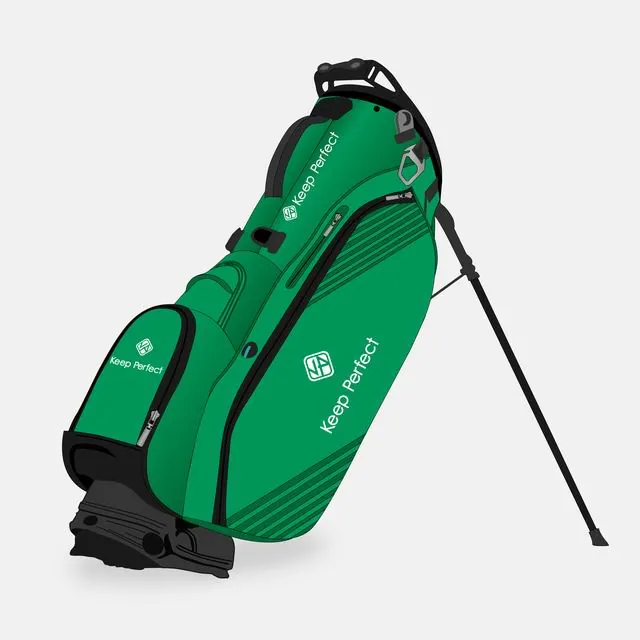
A 14-way divider golf bag gives every club its own dedicated full-length slot for maximum organization and club protection, while a 5-way top groups clubs into five open sections for lighter weight, faster access and less grip snag. The choice between them is not about which is objectively better, but which matches how you travel the course. This guide compares the two systems across organization, protection, weight, speed and durability, and explains how we build both options at our affiliated factory, QUANZHOU JUNYUAN BAGS (founded 2014, founder active in the industry since 2004). We serve more than 200 brands in over 100 countries, so the divider systems we describe here are the same ones we engineer for retail and professional lines alike.
What a Divider System Actually Does
A divider system is the skeleton at the top of your bag that organizes the club set. It separates the 14 clubs you carry into individual slots or grouped sections so they do not tangle, knock and snag every time you reach for one. Despite being one of the least visible parts of a golf bag, the divider top shapes pace of play, club condition and day-to-day satisfaction more than almost any other feature.
The two dominant configurations are the 5-way and the 14-way. A 5-way top is the classic layout: it splits the bag opening into five broad sections, typically grouping woods, long irons, mid irons, short irons and wedges so a putter can ride in a dedicated well. A 14-way top refines this further, giving a dedicated slot to each of the thirteen or fourteen clubs so every one has its own channel running toward the base. Within both families you will find full-length or partial dividers, and that single difference changes the feel of the bag dramatically.
Understanding what the divider does is the foundation for every decision in this guide. When you know that a 14-way protects and organizes but adds weight, and that a 5-way is lighter and faster but protects less, you can map those trade-offs onto your own playing habits rather than following a generic recommendation.
The 14-Way Divider Case: Maximum Organization and Protection
The 14-way top is built for the golfer who prizes pristine organization and club protection above all else. Because every club has its own slot, you always know exactly where each one lives, a quick glance tells you immediately if a club is missing, and the slots keep finishes and shafts from knocking together during transport and in the cart.
The protection advantage is strongest with full-length dividers that run the entire depth of the bag. Full-length channels isolate clubs from the base to the top, so grips do not tangle at the bottom and shafts do not rub against each other in the bag's deepest area. This protects both the finish of your irons and the condition of your grips, which are the two parts of a club most exposed to bag-induced wear.
The trade-offs are real. Fourteen dividers require more material, which adds a measurable amount of weight and bulk. Because the sections are narrower, a jumbo or oversized putter grip may not reach the bottom of its slot comfortably, and pulling a club in a hurry can occasionally cause a grip to catch on a divider edge if the dividers are not full-length. These are the reasons the 14-way is most common among cart users and riders, who rarely carry the extra weight on their shoulders.
The 5-Way Divider Case: Lighter, Faster, More Flexible
The 5-way top is the classic choice of the walking golfer and anyone who values speed and low weight. With five open sections instead of fourteen narrow ones, there is more room to pull and replace clubs quickly, fewer edges for grips to snag on, and several hundred grams less material to carry on your shoulder all round.
Flexibility is a hidden benefit of the open 5-way layout. Because the sections are broad, you can easily carry an extra club or two, slide a rangefinder into a gap, or move clubs around quickly to suit the next shot. For players who carry a training aid, a second putter or a quirky club mix, this adaptability is genuinely valuable.
The cost is club protection. In an open section, clubs clatter together as you walk and ride, producing the familiar club chatter that dings finishes and can wear grips. Grips can also tangle at the bottom of the bag, making a single club hard to pull out quickly. And because many clubs share a section, spotting a missing club is not as immediate as it is on a 14-way. None of these are deal-breakers for most walkers, but they are the honest trade-off you accept for lightness and speed.
| Factor | 14-Way Divider | 5-Way Divider |
|---|---|---|
| Club organization | Individual slots, full inventory at a glance | Five grouped sections |
| Club protection | Excellent with full-length dividers | Moderate; chatter and tangle possible |
| Weight | Heavier, more material | Lighter, less material |
| Speed of access | Fast with full-length; can snag | Very fast, minimal snagging |
| Best for | Cart and rider golfers, full sets | Walking golfers, varied club mixes |
| Spotting a missing club | Immediate | Requires a glance into each section |
Full-Length vs Partial Dividers: The Real Differentiator
Inside both the 5-way and 14-way families, the single biggest quality variable is whether the dividers run the full length of the bag or stop partway down. Full-length dividers extend from the top all the way to the base, separating clubs for their entire journey. They provide the strongest protection against tangling, snagging and shaft contact, and they are the standard we build on pro-grade and premium lines.
Partial dividers, which end perhaps halfway down the bag, are cheaper to produce and lighter, but they leave the lower half of the bag open so clubs can collide at the bottom. Over months of use this causes grip and shaft wear where it is hardest to see. If club protection matters to you, insist on full-length dividers regardless of whether you pick 5-way or 14-way, because the length of the divider does more for the feel than the number of sections alone.
A useful mental model is that the divider count controls organization, while divider length controls protection. A 14-way with full-length dividers is the maximum of both; a 5-way with partial dividers is the minimum of both. Between those extremes live the setups most golfers actually buy, so matching the combination to your priorities is the smartest decision you can make.
How Divider Choice Affects Speed of Play
Speed of play is a subtler but very real difference between the two designs. On a 14-way with full-length dividers, each club has a predictable home, so your hand goes to the right slot without thinking, which actually speeds up club selection for players who organize their set consistently. The main risk is grip snag on partial dividers, which can slow you down exactly when you are in a hurry.
On a 5-way, clubs are pulled and replaced fastest because there is no narrow slot to aim for. The open sections also tolerate a slightly messy replacement, which many golfers find genuinely faster across a full round. The trade-off is that with multiple clubs per section you occasionally have to shift a neighbour's club to reach the one you want, so net pace depends on how disciplined your replacement habits are.
Neither system is inherently faster for every player. Riders often feel the 14-way is faster because everything stays in place; walkers often feel the 5-way is faster because hand-to-club access has no friction. The honest answer is that you should test both on the practice ground and judge pace against your own routine before committing.
Weight and Balance: The Walking Golfer's Concern
For any golfer who carries the bag, weight and balance weigh heavily on the divider decision. The extra divider material and reinforcing structure of a 14-way top add several hundred grams compared with a 5-way. Added to a full club set, that difference is noticeable across eighteen holes on your shoulder and in how the bag sits.
Balance matters as much as total weight. A divider system shifts how the club mass is distributed inside the bag, which changes the centre of gravity and how comfortably the bag rides on your back. At the factory we pay close attention to this balance because it is what players experience most, and it is why we recommend matching the divider to the carrying mode rather than buying on looks alone.
If you ride a cart most of the time, the weight penalty of a 14-way is largely irrelevant and the protection reward is worth it. If you walk and carry, every gram and every point of balance counts, which pushes most serious walkers toward a 5-way. Let your travelling style, not fashion, make this decision.
Matching the Divider to Your Playing Style
A practical way to decide is to answer three questions about your game. First, do you ride or walk? Rider golfers benefit most from a 14-way's protection and inventory clarity; walkers usually prefer the lightness and speed of a 5-way. Second, how many clubs do you carry and what is in your set? A full, consistent set suits a 14-way; an eclectic or evolving set suits a 5-way.
Third, how much does pristine equipment condition matter to you? If you take pride in untouched finishes and tight grip wear, the extra protection of a 14-way with full-length dividers is a meaningful payoff. If you replace equipment often or simply accept normal wear, the weight and cost savings of a 5-way are the smarter spend.
There is no universal winner, which is exactly why this decision should be personal. Many golfers keep one of each — a 14-way cart bag for weekend rides and a 5-way stand bag for when they want to walk. Owning both lets you match the bag to the day's plan, which is arguably the most comfortable arrangement of all. For more on how the whole bag is organized around the divider, see our compartment design guide and golf bag pocket organization guide.

Jumbo Grips, Length and the Putter Well
One practical detail that catches many buyers out is the size of the grips relative to the divider slots. Standard grips fit comfortably in both 5-way and 14-way layouts, but jumbo and oversized putter grips can be too thick to sit nicely inside a 14-way slot, which is why many 14-way bags include a larger dedicated putter well toward the back. If you use oversized grips, check the well width before you buy.
Club length also factors in. Taller players and those who extend their shafts need a divider and base design that accommodates the extra length without crowding. At the factory we build divider depth and base spacing to fit full-length shafts cleanly, because a club that does not reach the divider properly is a club that rattles and wears prematurely.
When you specify a divider layout, think about the putter specifically. Whether it sits flat in a dedicated well or upright in a slot changes how often you reach for it and how well it is protected during transit. A well-considered putter home is a small detail with a disproportionately large effect on your comfort over a season.
Divider Materials and Edge Design
The material and edge treatment of the dividers matter as much as the count. Quality dividers are moulded or padded at the top so grips slide smoothly past them, while cheap dividers have a hard, unfinished edge that snags and snips at grips. The feel of the edge is something you can test instantly by running a club in and out, and it is a reliable signal of build quality.
Common divider constructions include moulded plastic, rigid composite and padded foam-topped designs. Moulded plastic is durable and precise but can be harder on grips if not smoothed. Padded tops are gentlest on grips and make club removal silky, at a small weight cost. Composite and hybrid constructions try to balance durability with grip friendliness.
A quality divider edge is the difference between a bag that feels surgical and one that fights you on every club change. It is also one of the cheapest things to verify in person, so do the thirty-second test before you commit: pull every club out and back in, and note whether any grip catches. If it snags in the shop, it will snag on the course every single round.
The Factory View: Engineering 5-Way and 14-Way Tops
Building a divider system that lasts begins with the base structure and stitching, not just the divider itself. At QUANZHOU JUNYUAN BAGS (founded 2014, founder active since 2004), our affiliated factory runs 7 production lines with 126 sewing machines and a team of 137 employees to a monthly capacity of roughly 200,000 bags. Every divider layout is engineered so the top ring, dividers and base work together as one stable unit that does not wobble or fold under a full set of clubs.
We build both 5-way and 14-way tops to a standard 200-piece MOQ (100 for test orders), with sampling in 10-20 days and bulk delivery in 45-60 days. Because we make the whole bag rather than assembling parts, we can tune divider depth, edge padding and putter well width to a brand's exact specifications. Our quality process is backed by SGS certification confirmed in March 2026 at our 4,950 m² affiliated factory, and it is the same discipline we apply whether the order is a retail batch or a professional tour line.
For brands, the choice of divider system is a product-positioning decision. Premium and pro lines tend to carry full-length 14-way or deep 5-way dividers because protection signals quality, while value and junior lines often use lighter partial dividers to hit a price point. Aligning the divider spec with your market positioning is one of the first decisions we make together on a new project, and it quietly shapes the whole bag's character.
Need a Bag Built Around Your Divider Choice?
Engineer the right 5-way or 14-way top for your brand from the first sample. Standard 200-piece MOQ, sampling in 10-20 days and bulk delivery in 45-60 days.
Explore Custom Golf Bags →Common Divider Mistakes to Avoid
The most common divider mistakes are easy to name and worth avoiding. Choosing on looks rather than how you travel means a rider buys a light 5-way or a walker buys a heavy 14-way, and both end up disappointed. Ignoring divider length and buying 14 narrow slots that are only partial means protection the ad copy promised never arrives. And overlooking grip size can leave a jumbo putter grip jammed in a slot too small.
A further mistake is overloading the bag so it exceeds what the divider system can hold comfortably. Overstuffed bags crush dividers out of shape, distort the base and make every club harder to access. Keeping the bag honest about its capacity protects both the divider geometry and the clubs themselves.
Finally, do not overlook the putter well size or the order in which you load clubs. A consistent loading order keeps the set settled and reduces the jostling that wears clubs and grips. These are habits, not hardware, but they multiply the benefit of whatever divider you choose.
Maintaining Dividers, Grips and the Top Ring
A divider system will perform for years with simple care. Keep the divider edges free of built-up dirt and grit, which can accelerate grip wear, and check that the top ring and divider bases have not loosened over time. A loose divider base means the whole organization system wobbles with each club change.
Grips deserve the same attention. Worn or greasy grips snag more on any divider, so keep them clean and replace them before they wear smooth. Similarly, keep the top ring clean and dry, because a damp, dusty ring catches grips and wears the finish faster. A two-minute monthly check of these contact points prevents the most common divider-related failures.
If you store the bag for a season, empty it of clubs and store it upright so the divider structure is not compressed out of shape. This gentle habit preserves the exact geometry that makes full-length dividers work, so your organization stays as good on the first round of next season as it was on the last.
When to Upgrade and When to Keep What You Have
Knowing when to change divider systems is as useful as knowing which one to pick. Upgrade from a 5-way to a 14-way if you have just taken up riding most rounds and find yourself wanting every club at a glance, or if you are building a premium set you want to protect. Move to a 5-way if you are walking more, carrying the bag further, or finding the 14-way's weight a real burden on your shoulder.
Keep what you have when the bag still balances comfortably, the dividers are full-length or meeting your protection needs, and you have no recurring snag or tangle frustration. Many golfers upgrade bags regularly but barely change how they organise, so the real win is aligning the divider with the current reality of how you play.
A note for buyers upgrading an existing bag versus commissioning a new one: rather than replacing a whole bag to change dividers, it is often more economical to start a fresh specification when you next reorder, so the divider, base and pocket map are designed together. That is where a factory relationship pays off. See our custom solutions and OEM/ODM services pages for how we streamline that process.
Conclusion
Choosing between a 14-way and a 5-way divider comes down to how you travel the course and how much you value club protection. The 14-way gives maximum organization and protection for riders and full sets; the 5-way gives lighter weight and faster access for walkers and flexible club mixes. Divider length matters more than count alone, so wherever you land, prefer full-length dividers that protect clubs for their whole journey.
Match the divider to your playing style, test the edges for grip snag, keep the bag honestly loaded, and maintain the contact points. When the divider, base and pockets are engineered as one unit by a factory that understands them, the bag becomes a quiet, dependable extension of your game. We build both systems at QUANZHOU JUNYUAN BAGS with that same discipline, for brands across 100+ countries. For the fuller picture, see our essential accessories guide and complete accessories guide.
Sources
Frequently Asked Questions
- What is the difference between a 14-way and a 5-way golf bag divider?
- A 14-way top gives each club its own full-length slot for maximum organization and club protection. A 5-way top groups clubs into five open sections, is lighter and faster to pull and replace clubs, and is preferred by many walkers who carry the bag.
- Is a 14-way divider better for club protection?
- Yes, especially with full-length dividers that run the entire depth of the bag. Individual slots separate every club so irons do not knock against each other or tangle at the base, reducing chatter and finish wear while making it easy to spot a missing club.
- Why would a golfer choose a 5-way divider over a 14-way?
- A 5-way top is lighter, less likely to catch grips when you pull a club, more flexible for carrying extra clubs, and faster to use. It is the classic choice for walking golfers who prioritize low weight and quick access over per-club organization.
- Do full-length dividers matter for grip snag?
- Yes. Full-length dividers that extend to the bottom of the bag keep grips separate and prevent them catching on divider edges, so clubs slide in and out cleanly. Partial dividers that end partway down are the main source of grip snag and club tangle.
- Can a custom golf bag factory build a 14-way or 5-way top to my specification?
- Yes. A factory like QUANZHOU JUNYUAN BAGS can engineer either divider layout to your club set, with standard 200-piece MOQ (100 for test orders), sampling in 10-20 days and bulk delivery in 45-60 days.