The golf bag industry is in the middle of its most innovation-driven decade: renewable participation data from The R&A shows 112.2 million golfers worldwide, while market research from Grand View Research and Mordor Intelligence counts a roughly USD 1.2-1.3 billion bag market growing toward USD 2 billion-plus by 2030. Innovations now cluster around four themes — ultra-lightweight construction, all-weather protection, smart organization and genuine sustainability — and each is backed by measurable consumer demand rather than marketing noise. As an OEM/ODM golf bag manufacturer serving 200+ brands across more than 100 countries, we evaluate these innovations daily for buildability, and this guide explains which trends are real, which are still fringe, and how to bring the proven ones into a custom bag line.
Innovation claims are easy to collect and hard to verify. The disciplined approach is to distinguish innovations that change the product's core value — weight, durability, organization, weather survival — from features that merely add cost. Everything in this guide is assessed through that buildable lens, and where we reference industry data we cite public sources so you can verify for yourself.
Why Innovation Momentum Is High Right Now
Two forces are driving an unusually fast product-development cycle. First, participation growth — juniors up 6% in a year, women now roughly a third of adult golfers per The R&A — is pressuring brands to build for demographics that did not drive design a decade ago. Second, a mature brick-and-mortar market with an accelerating online channel rewards differentiated, spec-verifiable products; consumers compare features across screens more than ever. The combination means a well-engineered innovation can earn both premium pricing and distribution shelf-space, which is why the category is moving so quickly.
Innovation is moving because the buyer has changed. A larger, more diverse, more online-savvy population of golfers compares products with spec tables and reviews before ever holding a bag, which forces every brand to make measurable improvements rather than rely on shelf position. Participation growth, especially among juniors and women, also pulls in buyers who never were served well by a one-size-fits-all format, so brands that innovate across weight, size and weather now reach a wider, arguably more valuable audience.
Ultra-Lightweight Construction as the Dominant Theme
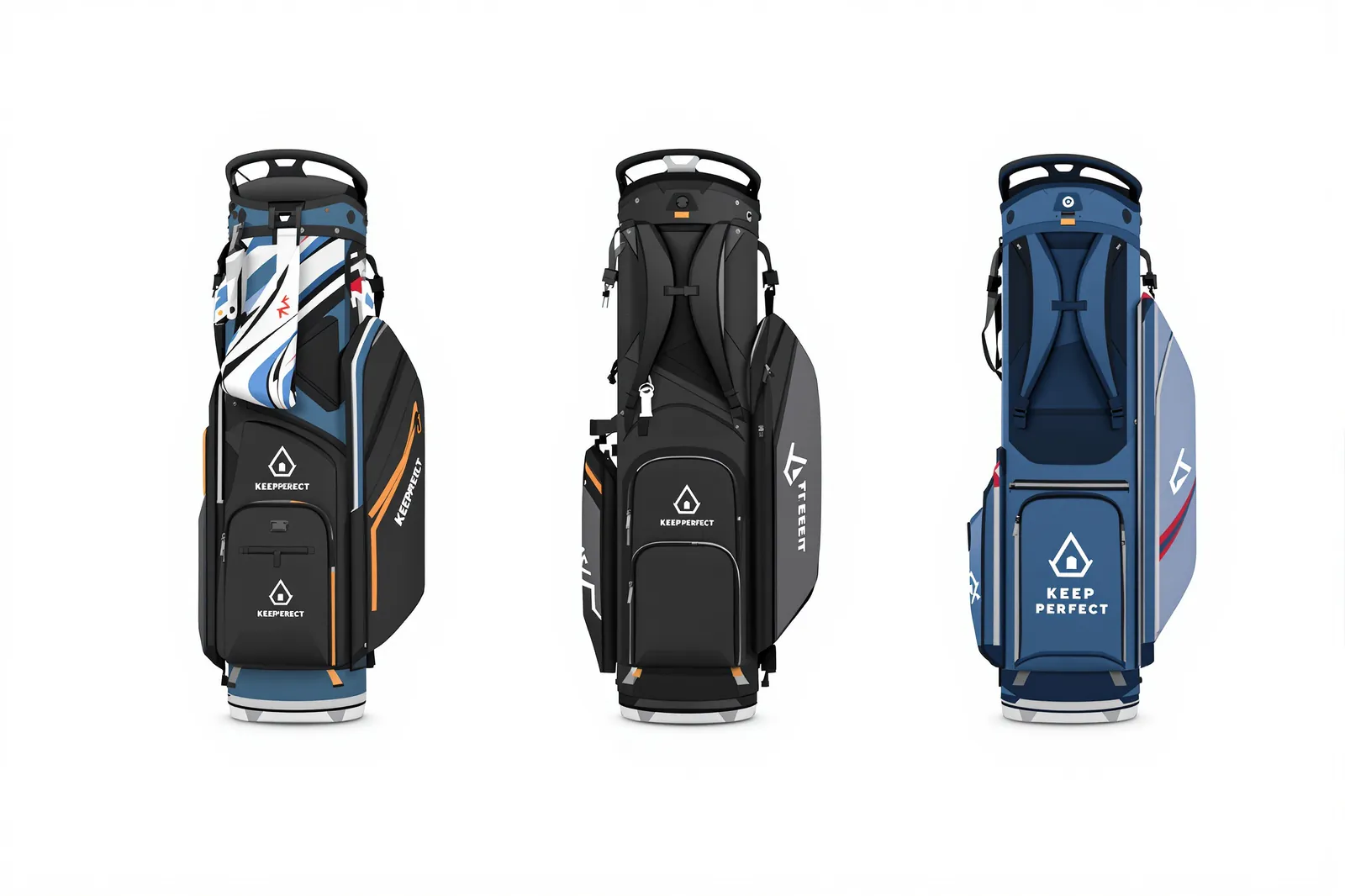
If one engineering theme defines the current era, it is weight. Walking golfers — the core of the largest bag segment — increasingly reject heavy carry loads, and the market has responded with light frames, high-strength nylon, carbon-fiber accents and engineered laminates. Mordor Intelligence reports nylon alone holds roughly 47% of the material market, prized for its strength-to-weight ratio, and lightweight stand bags under roughly five pounds are now mainstream. Weight reduction is no longer a premium nicety; it is a baseline expectation that demands real engineering discipline to hold structural integrity.
Lightweight is a systems achievement, not a single cheat. A bag that weighs less while still protecting clubs and surviving seasons combines low-density but durable shell fabrics, a frame that drops grams without losing torsional stability, lightweight buckles and webbing, and straps that shed weight without sacrificing comfort. Each subsystem shaves a little, and the cumulative story is what publishes on the product page. That is why production partners gate every material on test data and iterate weight per model rather than claiming a universal number.
Weight reduction is no longer a single-lever promise. Leading factories combine low-density but durable shell fabrics, redesigned frame geometry that drops grams without sacrificing stability, and modular hardware that trims metal. Each component contributes a measurable saving, and the best products publish itemized weights so buyers can compare honestly. Done well, lightweight becomes a documented technical story, not a marketing slogan.
For a factory, lightweight construction is a process capability as much as a design choice. It means selecting higher-grade fabrics with equivalent abrasion resistance, engineering rigid backpanels that do not flex, balancing the base so the bag stands without tipping, and testing straps so reduction never compromises comfort. Skipping those verification steps produces a bag that is light on paper but fails in the field — precisely what a quality-first partner must avoid.
All-Weather and Waterproof Protection
Weather resistance has crossed from discretionary feature into expected baseline, especially in cart, travel and stand bags sold in wet climates. Coated and laminated waterproof fabrics, sealed zippers, taped seams and integrated rain hoods are now common specifications. Research indicates waterproof variants represent a meaningful slice of global demand, strongest in regions with high annual rainfall. For buyers the practical consequence is a spec decision: choose between water-resistant (daily protection) and fully waterproof (sealed construction) based on target climate and price point, and verify claim-to-build consistency during sampling.
Waterproofing has become a proof game, which is healthy for buyers. A rating means little without the construction behind it — the laminated or coated shell, the sealed zippers and the taped seam line — so the credible claim is the one documented by a test, not the one painted on a label. In the wet-climate and travel tiers, that documentation converts weather-belt buyers and prevents the rental of soaked bags from turning into negative reviews that follow a line for seasons.
Waterproofing is becoming baseline engineering rather than a flagship extra. The spec trinity is the same at every price: coated or laminated shell fabrics, sealed zippers and taped seams. Where brands and factories differ is the discipline of actually testing ingress and publishing the rating. In wet-climate markets — and for travel, where bags meet rain and airline baggage holds — a documented waterproofing story converts buyers and, just as importantly, suppresses returns and the negative reviews that follow a soaked set of clubs.
Our waterproof and weather-protection guide covers the technical detail, including why seam taping and zipper selection matter as much as the outer fabric. The key industry signal is that weather performance is now a transparent, testable attribute — not a marketing label — and factories should be able to document their construction for each spec.
Smart Organization and Modular Systems
Organization has evolved from pocket count to engineered systems. Fourteen-way full-length dividers protect head-to-grip clubs and remain the most requested organizer feature. Beyond dividers, the latest generation adds modular and convertible features: interchangeable accessories, dedicated valuables pockets, insulated hydration sleeves, and tool pockets with grommets for charging cables. Market research highlights that a large share of premium bags now ship with more than ten storage compartments, reflecting demand for deliberate, accessible organization.
From an innovation standpoint, modular systems are powerful because they extend a single bag's utility without a full redesign — a brand can expand accessories gradually and keep the core SBU stable. Our compartment design guide lays out how pocket architecture translates to manufacturing tolerance and durability.
Smart and Tech-Enabled Features

A fast-emerging premium niche integrates digital and tech-enabled features: GPS and device tracking, phone pockets with cable routing, integrated power-bank sleeves and, in select lines, charging capability. Research frames smart features as present in a small share of premium products but growing as digital-native players expect connectivity in everything they carry. The innovation is real, but its commercial value depends heavily on buildability and battery/electronics constraints.
The smart feature is only as good as its worst failure. A pocket that lets water or dust in, a cable route that snags or a panel that frays can define the whole product's reputation, especially in a premium tier with data-literate buyers. Smart-ready design built on tested components and sealed entry points minimizes that risk while still delivering modern utility. Spend on the reliability of the smart bits before the novelty of them.
Smart features earn their place on reliability first and flash second. The durable direction is smart-ready architecture — weather-sealed device pockets, padded sleeves and cable routing — that works with the golfer's own GPS and accessories rather than betting the bag's reputation on fragile embedded electronics. For a factory, that architecture is far more buildable and returns far less; for a buyer, it delivers modern utility without the failure modes that sink premium-fail products.
For factories, the practical path is to design "smart-ready" structure — clean, weather-sealed device pockets, cable grommets, balanced weight — that supports accessories without fragile embedded electronics. We examine what is genuinely manufacturable in our smart bag technology guide, and we remain measured about speculative features that add cost faster than perceived value.
Ergonomics and Comfort Engineering
Comfort is where innovation and participation trends converge. Women's and junior lines need proportionally narrower straps and reduced base weight; walking golfers need dual-strap systems that distribute load across shoulders. Market research notes more than half of consumers prioritize padded, ergonomic strap systems, and multi-material backpanels with breathable channels are increasingly standard. Ergonomic innovation is subtle but decisive for reorders — a bag that carries well is a bag that gets recommended.
Ergonomics is also a measurable engineering discipline: strap geometry, padding density, base balance and torso-fit adjustments are specifiable attributes. We cover the technical side in our ergonomics and comfort guide, and we recommend buyers request strap-load documentation rather than relying on subjective claims.
| Innovation Theme | Consumer Signal | Buildable Key | Maturity |
|---|---|---|---|
| Ultra-lightweight | Walking golfers, junior/women's lines | High-grade nylon, rigid frame | Mainstream |
| All-weather protection | Wet-climate demand | Laminates, sealed zips, taped seams | Expected baseline |
| Smart organization | 14-way dividers, modular pockets | Pocket architecture + tolerance | Mainstream |
| Tech/smart-enabled | GPS, charging, device tracking | Weather-sealed device pockets | Premium niche |
| Ergonomics | Padded dual straps, load balance | Strap geometry + backpanel | Mainstream |
| Sustainability | Recycled content, lower packaging | Recycled nylon/polyester | Fast-rising |
Sustainability as Engineering, Not Slogan
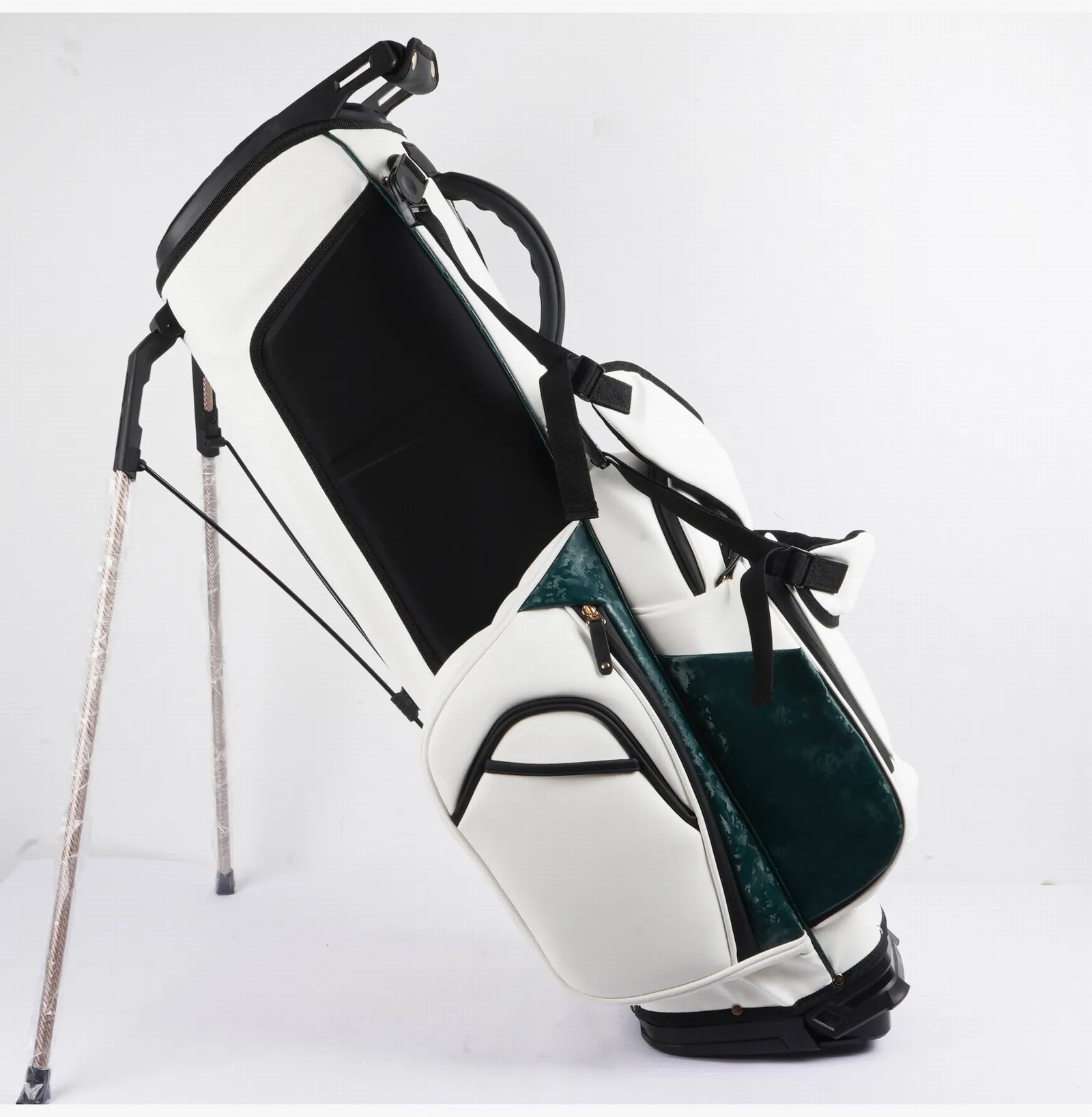
Sustainability has become a genuine material and manufacturing innovation. Major brands are treating recycled nylon and recycled polyester as performance materials, not compromises, and roughly a fifth of new-product material content can now come from recycled sources in some lines. Reduced packaging, lower-carbon production and verifiable sourcing claims are becoming procurement criteria, especially for European and corporate buyers. The innovation here is process discipline: recycling fibers requires consistent sourcing and quality control to match virgin-material performance.
Recycled materials have real trade-offs — strength, abrasion resistance and price — so a credible sustainability story is an engineering one: choose recycled fabrics that pass the same load and weather tests, source traceably, document claims and back them with certificates. Buyers increasingly treat verified environmental performance as a spec item, which means the factory that measures it honestly wins.
We offer recycled-nylon and recycled-polyester paths that match the structural durability of virgin materials, and our sustainable manufacturing guide explains how to make eco-credible claims that survive scrutiny. The rule for buyers: specify recycled or certified content in the sampling spec, because that is the only point at which cost and claims can both be controlled.
Materials Science Advances
Underpinning many innovations is materials science. Engineers are balancing high-tenacity nylon, engineered laminates, carbon-fiber reinforcement and TPU-coated fabrics to hit weight, durability and weather targets simultaneously. The same category is exploring nanohydrophobic and self-cleaning coatings that reinforce waterproofing without adding fabric weight. For a buyer, materials literacy pays off because it directly informs value — a marginally more expensive engineered fabric can materially extend lifespan and reduce warranty returns.
Materials advance the line faster than any feature headline. High-density nylon and polyester weaves, laminated waterproof membranes, breathable liners and recycled-reinforced fabrics together determine weight, strength and weather survival. Because these choices are visible and comparable — grams per square meter, abrasion rating, dying fastness — they are also the honest spec buyers and reviewers hold you to. Treating materials as an engineering library with documented test data for each option is what separates a design studio from a factory partner who brings real innovation to the table.
The quiet engine of innovation is materials. High-count nylons and polyesters, laminated waterproof layers, breathable liners and recycled-reinforced fabrics together determine weight, durability and weather survival. A factory that treats materials as an engineering library — and can show documented test data for each option — gives a brand far more latitude than one restricted to off-the-shelf cloth.
We deconstruct the practical side of material selection in our material technology overview, including how to compare fabrics on data rather than looks.
Sustainability-Driven Brand Strategy
The joining of sustainability with premiumization is one of the strongest industry signals. Consumers increasingly see eco-positioning and quality as compatible rather than trade-offs, and flagships use recycled content as a differentiator. For private-label brands, this is accessible: a factory with verified recycled-material capability lets a smaller brand credibly enter the sustainable-premium space without building its own supply chain. It is one of the clearest openings for new competition in a market otherwise dominated by established names.
Sustainability becomes durable strategy when it is treated as engineering discipline rather than a headline. Verified recycled content, audited production and honest certificates compound into buyer trust and qualify a brand for corporate and European channels that no longer accept vague claims. The quietest version is often the strongest: a factory that measures and documents what it does wins the orders that marketing shorthand never lands, and the proof is in traceable materials and printed certificates rather than slogans.
Sustainability is now a differentiation a buyer can actually demonstrate. Verified recycled content, audited production and reduced packaging are provable claims, and greenwashing is increasingly challenged. The strongest strategy is to make sustainability a quiet engineering discipline — recycled materials that pass the same load and weather tests, traceable sourcing and honest certificates — rather than an advertising campaign. Buyers and corporate accounts increasingly treat it as a due-diligence box, so a factory that documents it wins the orders that marketing alone cannot.
Which Innovations Matter for Your Line
Not every innovation belongs in every program. A practical prioritization: start with the mainstream, spec-verifiable upgrades — lightweight frames with verified weight, waterproof construction with documented seams and zips, and comprehensive divider/pocket organization — because these directly drive reorders and can be proven in sampling. Layer in ergonomic strap systems, which have strong payback on comfort and thus loyalty. Introduce smart- or tech-enabled features only where the build is clean and the price point supports it. Choose recycled materials where your target market demands credible sustainability claims. This staged approach matches measured consumer demand with realistic manufacturing economics.
When deciding what to build, weight every feature against the evidence it can show. A lighter carry bag, a documented waterproofing class and honest divider and material specs are innovations that publish well and test true; a feature with no verifiable difference only adds cost and risk. Shipping a tight, proven set of improvements ready for comparison is the most profitable way to innovate, because online comparisons convert a demonstrable edge faster than an undemonstrated claim.
A disciplined rule concentrates the line: spend on what the buyer verifies, starve what they ignore. Verify categories are the ones with online spec tables and test data — weight, waterproofing class, divider count, strap comfort and material grade. Fragile electronics and untried materials that only inflate price and return risk fail that test. Feature innovation should be additive and demonstrable, rarely novel for its own sake.
Not all innovation is worth the cost and risk. Prioritize what your buyer actually notices and will verify: lighter carry weight for walkers, waterproofing for wet climates, organization depth for cart players, comfortable straps for everyone. Be cautious with fragile electronics and unproven materials that drive price without converting. A tight, verifiable innovation set usually outsells a broad, unproven one.
If you are planning a full custom line, our customization trends guide and production workflow guide will help you translate these innovations into a manufacturable, on-spec program.
Commercial Planning Around Innovation
Innovation only pays when it is commercialized cleanly. Budget time for sampling iterations — realistically 10-20 days — and multiple rounds to verify weight, waterproofing and fit. Confirm 45-60 days of production and a MOQ per model that matches your channel. Communicate the features you verify so your own buyers can sell them as facts rather than claims. Where an innovation is genuinely new, consider launching on a single hero SKU first, gathering field feedback, then expanding — this de-risks the inventory and lets you refine before committing volume.
Commercial discipline turns innovation into profit. Launch one hero feature per season, make it measurable and demonstrable, protect margin with a careful spec, and let sell-through and reviews steer the next iteration. Stage launches around participation peaks and buying seasons, and keep a proven value core to anchor revenue while new features gather evidence. This cadence compounds reputation, controls risk and prevents the common failure of betting the whole line on one unproven feature.
Innovation should be staged, not dumped. Launch one hero feature a season that is measurable and demonstrable, protect margin with a careful spec, and let sell-through and reviews refine the next iteration. Align new feature launches with participation peaks and buying seasons, and keep a proven value core to anchor revenue. This cadence builds reputation and de-risks every subsequent category entry.
Frequently Asked Questions
- What is driving golf bag innovation right now?
- Rising, more diverse participation — juniors up 6% and women about a third of adults per The R&A — plus a spec-comparing online channel push brands toward differentiable, verifiable features in weight, weather, organization, ergonomics, smart tech and sustainability.
- Is waterproofing now a standard requirement?
- Weather resistance has become an expected baseline in cart, travel and stand bags for wet climates, with coated/ laminated fabrics, sealed zippers and taped seams now common specifications rather than premium extras.
- Are smart golf bags worth developing?
- Smart features are a growing premium differentiator, but value depends on buildability. A practical path is designing weather-sealed, smart-ready pockets that support GPS and charging accessories without fragile embedded electronics.
- How can a private-label brand adopt sustainability?
- Specify recycled nylon or polyester during sampling so cost and claims can both be controlled. A factory with verified recycled-material capability lets a smaller brand credibly enter sustainable-premium territory without building its own supply chain.
- Which innovations should I prioritize for a new line?
- Lead with verifiable mainstream upgrades — lightweight frames, documented waterproofing and comprehensive organization — layer in ergonomic straps, then add smart or recycled features where your market and price point support them.