Golf Bag Manufacturing Quality Control Processes 2025
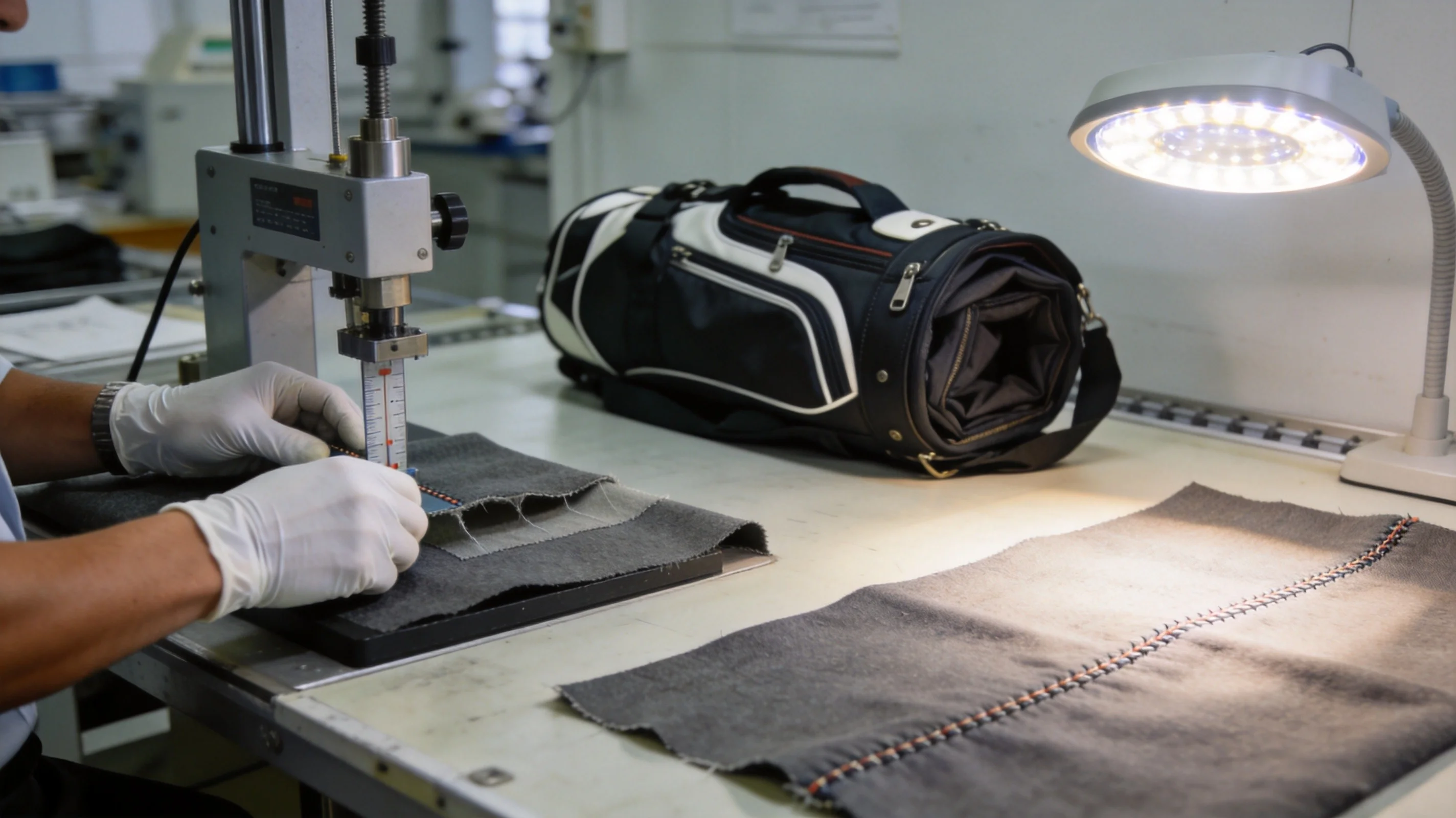
By 2025 golf bag quality control has become a digitally recorded, data-driven process: every order is inspected through incoming-material checks, in-process station checks, finished-goods validation against the sample and an AQL-based pre-shipment sample, with results logged, defects categorised and root causes corrected — an approach our ISO 9001:2015 certified facility follows, backed by SGS and Alibaba verification passed in March 2026. This guide explains the modern QC processes and how to use them as a buyer.
From Reactive to Proactive Quality Control
Traditional quality control was largely reactive: produce, then inspect, then fix what was broken. The most expensive version of this catches defects only at final inspection, forcing rework or even scrapping already-decorated bags. The shift of recent years — accelerated by 2025 — is toward proactive, process-embedded quality management where inspection happens at each production stage and defects are prevented rather than merely found.
This change is possible because production has become more structured and instrumented. With defined stations, documented operations and digital records, a factory can see where defects arise, why they arise and how often, then adjust the process to remove the cause. The result is not just fewer defects but better predictability — the quality a buyer can actually plan around.
Digital Inspection Records and Traceability
The single biggest change in 2025 QC is that inspection records are digital and traceable. Each order carries its own inspection history: which lots of material were accepted, which cutting and sewing checks passed, which finishes were verified, and what the pre-shipment sample found. This traceability lets a buyer or auditor reconstruct the full quality story of any batch after the fact.
Digital records also enable root-cause analysis. If a particular defect rate climbs, the factory can correlate it with a material lot, a shift or a machine and act on the true cause rather than patching symptoms. For a buyer this is transformative: instead of being told "quality is fine," you can be shown the recorded checks for your actual order. This is the standard of transparency our quality standards guide frames as essential in a modern supplier.
The 2025 QC Process, Gate by Gate
A complete 2025 QC process runs as a chain of gates, each catching a different class of defect at the cheapest point to address it. Understanding the sequence lets you hold a factory accountable at every step rather than waiting for an end-of-line surprise.
| QC Gate | Scope | 2025 Practice |
|---|---|---|
| Incoming material | Fabric, hardware, zippers | Digitally logged lot checks |
| Cutting | Panel accuracy, flaws | Sample + defect tagging |
| Sewing | Seams, assembly, hardware | Station-level interval checks |
| Finished goods | Dimensions, decoration, function | Vs approved sample, photo records |
| Pre-shipment | Representative batch | AQL plan + third-party optional |
AQL Sampling as the Objective Standard
At the heart of modern pre-shipment inspection sits the AQL (Acceptable Quality Limit) method. Under AQL, a statistically determined number of units is drawn from the lot and inspected against defined criteria. The lot is accepted if the number of defects found stays within the allowed limit, and rejected if it exceeds it. Defects are separately rated as critical, major or minor.
AQL matters because it replaces subjective judgment with an agreed, reproducible rule. Buyer and factory agree the plan before production, so there is a shared definition of "passing quality" rather than a dispute at the container. A common contract is AQL 2.5 for major defects and AQL 4.0 for minor, with critical defects cause for immediate rejection. Third-party firms such as SGS execute this on-site, independently sampling and measuring against the agreed criteria.
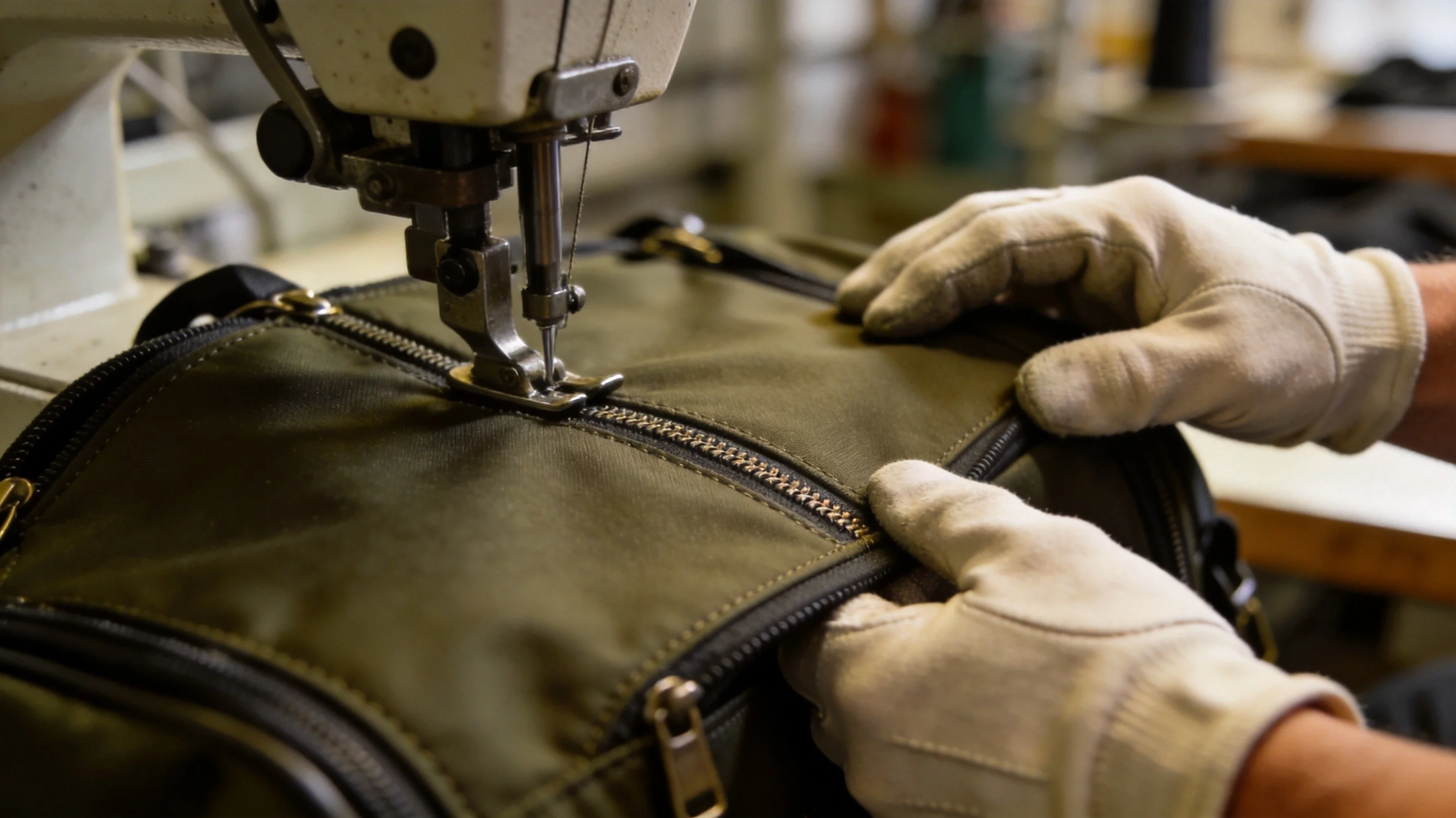
Factory Audits as Proof of Capability
No process sits apart from the facility that runs it, which is why independent factory audits are a defining feature of 2025 sourcing. An audit such as an SGS or Alibaba verification inspects the actual facility — its production capacity, equipment, workforce, safety and QC systems — and issues a report a buyer can read before committing. This turns trust into evidence.
Our own facility passed SGS and Alibaba factory verification in March 2026. Combined with ISO 9001 quality management and BSCI social compliance certification, this gives prospective clients an independently documented basis for partnering — the kind of verification that matters far more than a sales page. Audits effectively package a factory's quality capability for remote buyers who cannot fly in and inspect every line.
Defect Data, Root Cause and Continuous Improvement
The forward-looking difference in 2025 QC is continuous improvement driven by defect data. Modern factories record the types and locations of defects found, aggregate them across orders and analyse the patterns. A recurring seam issue may trace to a machine tension setting; a hardware failure to a supplier batch; a decoration problem to a colour calibration drift.
Acting on this analysis is what separates a genuinely managed facility from one that merely inspects. Because defect data is captured digitally and linked to causes, corrective actions can be proven effective over subsequent orders. For a repeat buyer this compounds into steadily improving quality and shrinking problem rates — one of the strongest arguments for building a long-term OEM/ODM partnership with a data-driven factory.
Function and Performance Testing in Modern QC
Visual inspection cannot verify that a bag will perform under use, so modern QC adds function and performance testing. Zippers are cycled, stand mechanisms are extended and locked repeatedly, straps and handles are pull-tested under load, and heavy-weight bags are loaded and carried to confirm base and anchoring integrity. For waterproof lines, water resistance is tested against the product's rating claim.
Defining the right tests for your product is part of the QC agreement. A tour staff bag, a lightweight carry and a waterproof cart bag each stress different components, so the test battery should reflect intended use. Putting these tests in writing protects both parties and prevents the gap between "looks good in the photo" and "survives a season of use."
Partner With an Audit-Verified Factory
ISO 9001 and BSCI certified, SGS and Alibaba verified in March 2026, with digital QC records and open AQL inspection on every order. Contact us to review our processes and reports.
Review Our QC Process →How Capacity Underwrites Modern QC
Quality inspection costs labour and management time, so genuine QC infrastructure scales with capacity. A facility running 7 production lines and 126 sewing machines with 137 employees can staff inspectors at every gate without sacrificing its 200,000-unit monthly output. Under-resourced workshops may skip stations or rush checks precisely because they lack the staffing.
For buyers this is a practical screen: ask how inspection is staffed and whether QC records for recent orders are available to review. A factory that can document checks per line, per day, per order is demonstrating the infrastructure for consistent quality — the quiet but decisive reason capacity and QC belong together in supplier evaluation.
Setting Your Own Quality Standards
Modern QC only works when you set the standard you want met. Define measurable criteria: fabric weights, seam construction, hardware grades, decoration placement and function-test requirements. Then agree an AQL plan and require the factory to document compliance per order. Your approved sample sets the visual benchmark; your written spec sets the measurable one.
Getting this right up front prevents most of the disputes that arise later. Our quality standards guide provides a configurable list of the exact criteria to define for a golf bag, so you and your factory are agreeing on the same standard from the first order rather than discovering a mismatch at inspection.
Conclusion
2025 quality control in golf bag manufacturing is proactive, digital and data-driven. It embeds inspection at every stage, records results for traceability, uses AQL as an objective acceptance standard and treats audits as evidence rather than marketing. For a buyer, the payoff is a factory whose quality you can verify and predict — and a product line that arrives as designed, order after order. Choosing a certified, audited partner with open QC is the highest-leverage sourcing decision you can make.
Traceability as a 2025 Quality Cornerstone
Traceability has become a core feature of 2025 quality control in golf bag manufacturing. In a modern programme, each order accumulates a complete, auditable history: which material lots were accepted and from which suppliers, when each production stage ran, which inspections were performed and what they found, which operator or line handled the work, and what the final AQL sample concluded. No link in the chain is left to memory or guesswork.
This traceability transforms quality disputes and quality management alike. If a concern arises after shipment, the factory can trace the affected batch to its material lot and production run and investigate the actual cause, rather than issuing generic reassurances. If a defect rate climbs, the factory can correlate it with a material source, a shift or a machine and act on the true cause. Traceability turns quality from a set of isolated events into a coherent, explainable system.
For the buyer, traceability is confidence you can hold in your hand. The ability to request and receive the recorded quality history of your own order is the practical meaning of a modern, transparent factory relationship. It is also the mechanism that makes continuous improvement — the defining ambition of 2025 quality — achievable rather than aspirational, because improvement requires knowing precisely what happened and why.
The Role of Technology in Modern QC
Technology is accelerating quality control in 2025 without replacing the human judgment at its core. Digital inspection apps replace paper checklists, making results immediate, standardised and impossible to lose. Photo records attached to inspection data capture the visual reality of a check. Automated data capture from equipment feeds quality and maintenance analytics, catching machine drift before it becomes a defect pattern.
Technology also enables the scale of modern QC. A facility producing 200,000 units a month across several lines generates enormous inspection volume; digital tools manage it cleanly and make the aggregated analysis possible. The human supervisor remains essential — technology supports the decision, it does not make it — but it makes the decision faster and better informed.
When evaluating a 2025 supplier, asking about inspection technology is a meaningful question. A factory that captures inspection data digitally and can reproduce it is demonstrating a modern, credible QC framework; one that relies on memory and paper is behind. Technology is not quality itself, but it is the infrastructure that makes consistent, documented quality achievable at today's production volumes.
Continuous Improvement as the End Goal
The true end goal of 2025 golf bag quality control is not merely to catch defects — it is to eliminate them through continuous improvement. Modern QC captures defect data, analyses patterns, identifies root causes and implements corrective actions that make those defects less likely to recur. This closed loop is what separates a factory that gets gradually better from one that repeats the same problems order after order.
Continuous improvement compounds for the buyer. Each successive order benefits from the lessons of the last, so defect rates trend down, consistency trends up and the working relationship becomes progressively smoother. This is one of the most persuasive arguments for building a long-term OEM/ODM partnership with a data-driven factory rather than shopping each order to the lowest quote.
At our facility, this improvement cycle runs under ISO 9001, reinforced by independent audit. The result is not just manufactured quality but managed quality — a system that documents, analyses and improves itself. For a buyer planning repeat production, this institutionalised improvement is among the most valuable qualities a factory can offer, and it is the quiet payoff of choosing a data-driven 2025 partner.
Bridging Quality and Delivery Performance
In the 2025 process, quality control and on-time delivery are connected. A quality programme that catches defects early — at cutting, in-process and finished-goods rather than only at pre-shipment — avoids the rework that ripples delay through the schedule. Rework is the enemy of both quality and delivery: it consumes the production time that was reserved for the next stage and pushes the order toward the far end of its 45-60 day window.
This is why effective QC is itself a delivery tool. A disciplined inspection regime keeps defects from propagating and rework from multiplying, so orders move through the workflow on schedule and arrive as promised. Conversely, a weak QC regime is frequently the hidden cause of late delivery as much as of poor quality, because it lets small failures compound into large delays downstream.
For a buyer planning a seasonal launch, this link matters directly. Choosing a factory whose quality process runs smoothly is choosing a factory whose delivery dates are realistic, because the two are produced by the same discipline. The reliable timelines described in our production timeline guide are achievable precisely because nothing in the process is being constantly re-done to hide quality gaps. Good quality and good delivery are two faces of one well-run system.
Building a Partnership on Verified Quality
The ultimate purpose of modern quality control is to make an order verifiable end to end, turning a transaction into a relationship a buyer can build on. When every stage is documented, every claim is supported by evidence and third-party audit confirms the facility's reality, quality stops being a hope and becomes a verifiable record that grows more valuable with each order.
That record is what our facility offers: ISO 9001 and BSCI certified, verified by SGS and Alibaba in March 2026, with documented per-order QC and open third-party inspection. For a buyer it means quality you can audit, improve and rely on across many seasons. Building a long-term manufacturing partnership on verified quality is how brands move from one-off transactions to dependable, compounding supply — and it is the quiet reward of choosing a data-driven, transparent factory as a partner rather than a supplier.
Documentation and Traceability in QC
Modern quality control processes are incomplete without documentation and traceability. Every lot should have records that trace its materials, inspections and decisions, so that a defect can be traced back to its source and corrected rather than repeated. This paper trail is what turns a process from a claimed practice into a verifiable, auditable system.
Documentation begins at the incoming-material gate, where test certificates and inspection records are logged, and continues through each cutting and sewing gate with passed/failed and rework records. Finished-goods inspection records and the final AQL report complete the chain. When a problem surfaces later, these records show precisely where and when it entered, enabling a targeted fix.
Working within an ISO 9001-style documented system, our facility maintains this traceability on every order so that quality control is subject to verification rather than belief. For a buyer, the visibility of documentation is itself a confidence signal: a factory that can produce complete, coherent records for a previous order demonstrates a genuine, functioning process. Traceability is the difference between quality you trust and quality you hope for.
Getting Started With a Qualified Partner
The most practical way to turn this groundwork into a reliable product is to engage a factory with verifiable credentials, proven output and transparent process. A qualified facility founded in 2014, staffed by a team whose founder entered the industry in 2004, brings more than twenty years of hands-on knowledge to every programme. That experience shows in faster sampling, fewer defects and sound advice at each decision point.
At our facility in China, seven production lines and 126 sewing machines support a 137-person team producing about 200,000 golf bags a month for 200+ brands sold to 100+ countries. Backed by SGS factory audits and BSCI-aligned practices, we combine real capacity with documented quality control, so you can validate us before committing. Whether you begin with a 100-piece test order or move straight to a full production run, the milestones you have read here are the milestones we apply to your order.
To start, bring a detailed specification and an honest sense of your volume and deadline, and we will map the stages, timings and costs for your exact programme. With direct contact to our export team, service@junyuanbags.com or +86 17750020688, you can begin a conversation that moves quickly into a structured plan. The process and standards described above are not theory; they are the operating reality you are welcome to verify before your first container ships.
How Buyers Verify a Factory's QC Process
Because quality control processes decide what you receive, it is worth knowing how to verify that a factory's process is real rather than promotional. The first signal is documentation: ask for inspection records, material certificates and a sample AQL report from a previous order. A factory operating a genuine documented system can produce these readily; one operating on claim cannot.
The second signal is independence. Confirm that inspectors are separate from production rather than operators checking their own output, and consider whether the factory welcomes independent third-party inspection. A facility that invites SGS or another firm to audit its production — as our China facility does — demonstrates that its process withstands outside scrutiny rather than depending on internal assertion.
The third signal is infrastructure. Inquire about the testing equipment, the training of inspectors and how rework is tracked. Visiting, auditing or commissioning a third-party inspection completes the picture. Between documentation, independence and infrastructure, you can verify that the quality control described in an article or a brochure is actually the process shipped with your order. These checks turn quality control from a marketing phrase into a verifiable commitment.
Our Factory Profile and How It Shapes This Standard
The standards and timings described here reflect how we actually operate. QUANZHOU JUNYUAN BAGS runs a 4,950 sqm
factory as an affiliated production partner, a facility founded in 2014 by a founder who entered the golf bag industry in 2004 — more than twenty years of hands-on manufacturing experience. It operates seven production lines with 126 sewing machines and a team of 137 employees, producing on the order of 200,000 golf bags per month for more than 200 brands in over 100 countries.
For custom and OEM/ODM work, our standard MOQ is 200 pieces, with a lower 100-piece test order available to validate a design before scaling. Prototype sampling runs 10-20 days, and bulk production runs 45-60 days, giving you a realistic, verifiable window rather than an optimistic promise. Our quality and compliance record is independently confirmed: the factory has completed SGS factory audits and its management system is documented under the ISO 9001 framework.
Questions on how these numbers apply to your product are welcome. Our export team is reachable at service@junyuanbags.com or +86 17750020688, and you can explore the services we offer through our OEM/ODM services and process guide pages. Wherever an order begins, these are the concrete operating figures behind every bag we build.
Sources
Frequently Asked Questions
- How has golf bag quality control changed for 2025?
- QC is now digitally recorded and data-driven, with per-order inspection logs, defect root-cause analysis and independent audits as standard proof of capability.
- What does a 2025 golf bag QC process include?
- Incoming material checks, in-process inspections, finished-goods validation, function testing and an AQL pre-shipment sample, all documented per order.
- What is an AQL inspection and why does it matter?
- A statistical plan where a sample of the lot is inspected and accepted or rejected by defect count, giving an objective agreed standard before shipment.
- Are third-party factory audits worth it for golf bags?
- Yes. Audits like SGS or Alibaba independently confirm facilities and capability. Ours passed in March 2026, providing evidenced trust.
- How do I set my own golf bag quality standards?
- Define measurable criteria, agree an AQL plan, and require documented compliance per order so you and the factory share one standard.