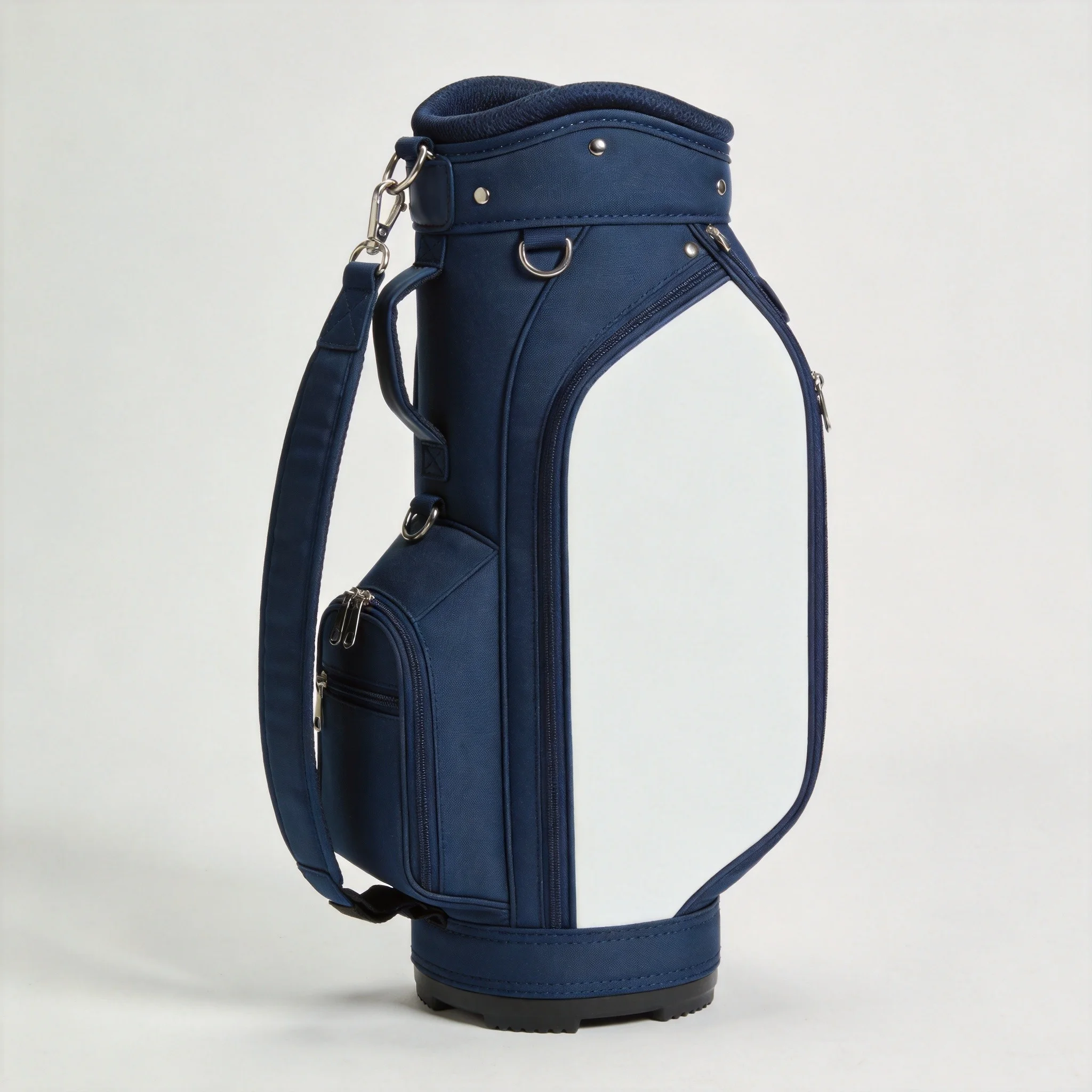
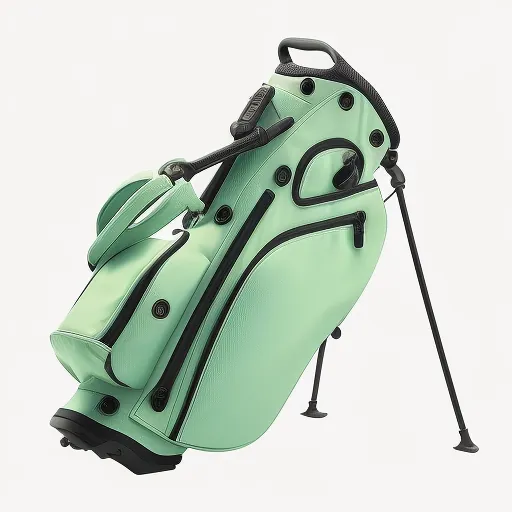
Golf bag material technology has advanced rapidly around engineered technical fabrics, laminated films and lightweight structural composites — and the key is that a single bag now combines several different fabrics, each selected and joined for a specific performance role. A modern stand or cart bag may use ripstop nylon for the body, TPU-laminated polyester for wet zones, ballistic nylon at wear points, and carbon-fibre or aluminium reinforcements in the stand frame. Understanding how these materials are chosen, weighted and joined lets OEM buyers specify a bag that meets a real price and performance warrant rather than paying for brand markup.
This article explains the material technologies that matter in 2025 and 2026: base fabric constructions, laminates and coatings, frame materials, lining and organizational systems, and the quality checks that verify a fabric really performs as specified. It is written for procurement managers, brand owners and distributors negotiating OEM and ODM production with a luggage and bag factory such as QUANZHOU JUNYUAN BAGS, which operates seven production lines and around 200,000 units of monthly output.
1. Why Material Choice Matters More Than Branding
The physical performance of a golf bag — how long it lasts, how well it stands, how waterproof it is, how it carries — is decided almost entirely at the material and construction stage. A legendary logo does not make a seam waterproof, and a heavy coating will not stop a frame from flexing. For OEM buyers, this is good news: the same material bill of materials can be reproduced at a fraction of the price of a leading brand when ordered directly from a manufacturing partner with comparable workmanship.
Material spend is typically the largest single cost component in a golf bag, frequently exceeding 55% of the landed factory cost when hardware and zippers are included. Fabric selection therefore controls both the quality ceiling and the price floor. Selecting the right base fabric and coating upfront avoids expensive production-stage corrections and returns.
Beyond cost, material selection determines the environmental profile of the product. Recycled nylon and polyester, PFC-free water-repellent treatments and solution-dyed yarns are becoming baseline expectations for export programmes into the EU and for large retail programmes, affecting spec sheets, certification paperwork and market positioning.
2. Understanding Denier, Fabric Construction and GSM
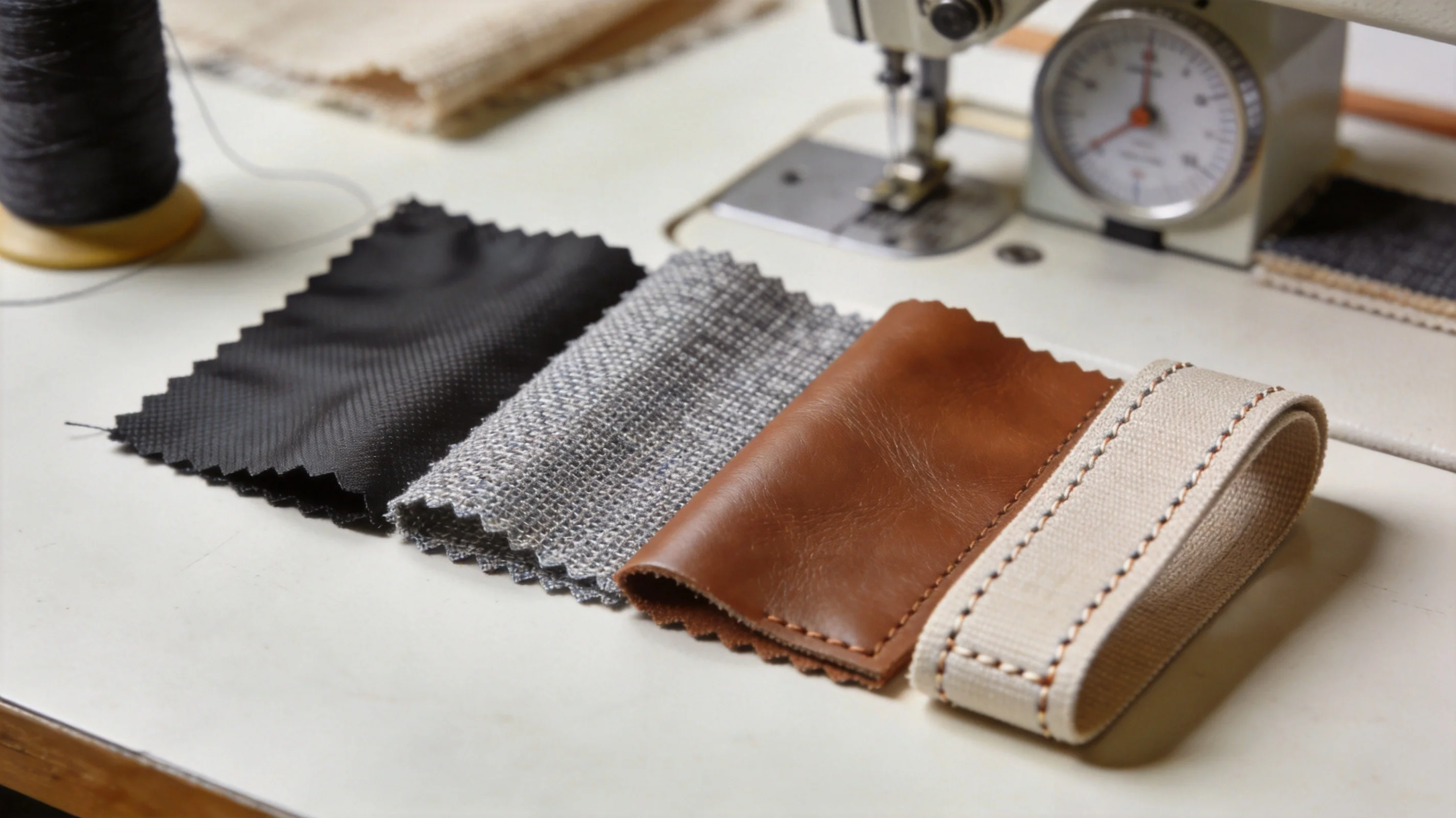
Three numbers dominate any golf bag material specification: denier (D), the fabric construction and weight expressed in grams per square metre (GSM). Denier describes the thickness of individual yarn filaments — 210D is fine and light, while 1680D ballistic is heavy and abrasion-resistant. Lighter 210D and 300D fabrics keep a bag under 3 kg, while 1680D constructions add weight and durability for tour-style or cart bags.
Construction matters as much as denier. Ripstop weaves reinforce a grid pattern so a tear stops at the reinforcement point, which is why premium ultralight bags use ripstop nylon rather than plain woven nylon. Plain weaves are smoother and cheaper for non-critical panels, while twill weaves offer better drape and a premium hand feel.
| Fabric | Typical Denier | Weight Feel | Best Use |
|---|---|---|---|
| Ripstop Nylon | 210D–420D | Very light | Ultralight stand bags, body panels |
| Polyester | 300D–600D | Light–medium | Mid-range body, colour stability |
| Cordura-style Nylon | 600D–1000D | Medium–heavy | Pocket faces, wear zones |
| Ballistic Nylon | 840D–1680D | Heavy | Tour/cart bags, bottom reinforcement |
GSM binds the whole system together: it is the actual weight of a square metre of finished fabric, and it determines both feel and cost. Two bags can both claim "nylon" yet differ enormously if one uses a 210D 120 GSM body and the other a 420D 250 GSM body. When you compare quotes, always compare the full spec — fibre, construction, denier, GSM and coating — not just the brand of the fabric mill.
For lightweight walking bags, the target is to hold body panels between 120 and 180 GSM, keeping the empty bag in the 1.8 to 2.6 kg range. For cart bags that rarely get carried, OEM brands typically accept 250 to 350 GSM shells for a more premium, structured feel and longer service life.
3. Laminates, Films and Waterproof Constructions
True waterproofing is achieved not by a topical spray but by lamination — bonding a waterproof film to the fabric so the shell itself stops water, rather than relying on seam treatment alone. The two dominant systems are PU (polyurethane) and TPU (thermoplastic polyurethane) lamination. A laminated fabric has a water column rating expressed in millimetres; a rating of 10,000 mm or higher means the fabric resists a 10-metre column of water and is genuinely waterproof for golf use, while 3,000–5,000 mm bags resist light rain but will not survive steady downpours.
TPU laminates are increasingly preferred over PU for golf because they remain flexible at low temperatures, resist hydrolysis (breakdown in humid heat) and stay durable after years of folding and flexing. PU is cheaper and fine for many climates but can stiffen and crack over time in very hot, humid export regions.
The most important detail is seam sealing. A waterproof shell is only as good as its seams: sewn seams puncture the film and leak unless sealed with tape or sealed construction. Genuinely waterproof golf bags use taped or welded seams and a one-piece bottom or a drainable bottom grommet so any water entering is expelled rather than pooling inside.
For more detail on how wet protection is engineered and verified, see our guide to waterproof and weather protection technology and the wider comparison in best waterproof materials for all types of golf bags.
4. Durable Water Repellent Treatments and Coatings
On top of, or instead of, lamination, many bags carry a durable water repellent (DWR) coating that makes water bead and roll off the surface. Traditional DWR chemistry leaned on fluorocarbons (C8 and C6), but sustainability legislation has pushed the industry toward PFC-free formulations. When evaluating suppliers, ask explicitly whether the DWR is fluorocarbon-free and whether it has been tested to a recognised standard.
DWR is not waterproofing; it is beading and stain resistance. It needs re-application over the life of a bag because washing, friction and UV degrade it, which is why many bags ship with a small bottle of refresh treatment. Distinguish clearly between a purely coated bag and a laminated bag when reading marketing copy: a coated 300D bag is weather-resistant, not necessarily fully waterproof.
Coating weight matters too. A heavier PU coating yields a stiffer, more opaque fabric; a lighter coating keeps drape and reduces weight. For balance, premium manufacturers select a medium coating weight and rely on the base denier for structure, avoiding the stiff, shiny "tarpaulin" feel that plagues cheap coated bags.
5. Frame and Stand Materials: Aluminium vs Composite
The stand frame is one of the heaviest, most stressed components of a walking golf bag. Traditional steel frames are nearly extinct at the premium end because of weight; modern frames use aluminium alloy legs or advanced polymer composites. Aluminium offers an excellent stiffness-to-weight ratio at moderate cost and is the workhorse of the industry. Carbon-fibre-reinforced frames are lighter still and used by brands where absolute minimum weight is the selling point, but they carry a significant cost premium and can be more brittle under point impact.
The most important engineering point is not the raw material alone but the hinge, leg-lock and deployment mechanism. A bag is judged on whether the stand deploys smoothly, locks firmly and does not wobble or collapse. Repeated open-and-close testing — typically thousands of cycles — is what separates a durable frame from one that fails within months.
Frame weight also shifts balance. A well-balanced ultralight bag positions the heavier frame components low and close to the wearer's back, so the same total weight feels far more comfortable. Always weigh a bag fully and then check balance on a loaded basis rather than judging the empty bag alone.
6. Lining, Dividers and Organisational Fabrics
Inside the bag, linings and dividers protect equipment and improve organisation. A 14-way full-length divider system is now standard at the premium end because it separates each club, preventing grip noise and club wear during cart or car transport. Dividers are built from rigid plastic cores wrapped in fabric, and their full-length height — running from the top cuff down toward the bottom — is what actually keeps clubs separate.
Padded valuables pockets often use a soft fleece or neoprene lining to protect phones and watches, while apparel pockets use a breathable or mesh lining so stored clothing does not trap moisture. Cooler pockets use an insulated foil-backed lining to hold temperature. Mapping the right lining to each pocket is part of good OEM design work.
Organisation is a decisive purchasing factor, which is why many golfers select a bag for its pocket layout. If pocket architecture is your priority, review our analysis in golf bag storage and organization systems.
7. Hardware: Zippers, Buckles and Connectors
Hardware is the single most common failure point in a golf bag after years of use, and it is governed as much by finish as by metal type. Zippers should be smooth-running, with waterproof or at least water-resistant zips on valuables and electronics pockets. YKK-brand zippers are the industry benchmark, but the chain width, slider finish and whether the zip is protected by a storm flap all matter as much as the brand.
Plastic hardware (buckles, clips, stand anchors) should be made from glass-filled nylon or a similar high-impact polymer rated to survive cold-weather brittleness and high-load repeated use. Cheap hardware cracks in cold weather or snaps under load, and it is notoriously hard to fix in the field. Specify buckles with a minimum breaking load and insist on drop-test and tensile-test data from the factory.
Leather or synthetic-leather trim is used for premium golf bags around handle wraps, piping and logos. The material choice here affects aesthetics and price far more than function, and it matters for brand positioning more than for technical performance.
8. Sustainability in Material Selection
Recycled materials are no longer niche. Recycled polyester (rPET) made from post-consumer bottles and recycled nylon are both widely available and, at comparable deniers, can perform close to virgin materials. Solution-dyed yarns reduce water use because the colour is introduced during fibre production rather than by garment dyeing. PFC-free DWR formulations remove a class of persistent environmental pollutants from the product.
For buyers targeting the EU or large sustainability programmes, the material story is now part of the spec. Documentation — recyclability claims, chemical compliance (such as REACH), and physical test reports — must accompany the product. A factory that can demonstrate certified recycled inputs is materially more attractive to modern retail programmes than one that merely paints its samples green.
See our review of eco-friendly and sustainable materials for the full environmental trade-offs, and how recycled content interacts with price and durability.
9. Material Technology Trends for 2026
The clearest trend is the combination of lamination and recycled inputs into a single "all-weather sustainable" shell. Brands are also moving to lighter, more breathable chassis constructions, replacing heavier coated polyester with lighter laminated nylon at equal or better water performance. There is growing interest in bio-based PU and plant-derived TPU films as the chemical industry scales alternatives to petroleum-based polyurethane.
A second trend is smart integration, where material selection must accommodate electronic components — GPS mounts, charging ports and tracking chips — without compromising weather sealing or weight. This forces new sealing strategies around ports and is covered in our analysis of smart golf bag technology features.
Finally, customisation and short production runs push factories toward modular material libraries, where a wide range of standard fabrics and colours are kept in stock so small-order customisations do not require huge minimums. This aligns with the manufacturing flexibility needed to serve 200+ brands with varying volumes.
10. Verifying Material Quality Before Production
Material claims must be verified, not trusted. Insist on physical test data: fabric weight (GSM and denier verified by weighing), water column test results for laminates, abrasion resistance (commonly reported per the Martindale or Taber method), tear strength, colour fastness to light and washing, and zipper-cycle testing. A reputable manufacturer such as QUANZHOU JUNYUAN BAGS provides these reports QUANZHOU JUNYUAN BAGS, established in 2014, brings over twenty years of industry experience — its founder entered the golf bag trade in 2004 — to material engineering. as standard and, where a third-party seal is required, arranges inspection such as the SGS check completed in March 2026.
Sampling is the most reliable verification. Order a production-matching sample — not an idealised showroom sample — and test it exactly as you would in the field: load it, carry it, drench it, fold it and inspect the seams. A 10–20 day sampling period is the industry norm, and a small test order from 100 pieces lets you validate real production before committing to standard MOQ volumes of 200 pieces.
Set quality acceptance thresholds in writing before production, including acceptable rates for seam defects, colour variance and hardware failure, so that the final inspection and any rework obligations are unambiguous.
11. Cost Drivers and How to Optimise Them
Material is where most golf bag cost savings are found, but also where quality is most easily eroded. Cutting denier blindly lowers cost and weight but can cause premature wear. The smarter lever is to differentiate: use a lighter body fabric where abrasion risk is low, and concentrate heavy abrasion-resistant fabric only on the pockets, bottom and contact panels where wear actually occurs.
Standardising across your range can also lower per-unit cost, because a factory that cuts and sews from a shared material library procures larger volumes at better prices. Combining colours and trims from one catalogue reduces setup and waste compared with fully bespoke specs.
Do not forget freight weight. A fabric change that saves 300 g per bag reduces container weight and, for air freight, can produce meaningful logistics savings across high volume. The total cost of ownership — not just unit cost — is what a serious buyer optimises.
12. Specifying a Bag with Your OEM Partner
To specify effectively, document the full material map: outer shell (fibre, construction, denier, GSM, coating/lamination and DWR), linings per pocket type, frame material and mechanism, hardware brand and rating, and colour/trim requirements. Attach performance targets so the factory can propose compliant materials rather than guessing.
Ask the factory to recommend material variants at three price points so you can decide where to trade durability against cost. Because material spend dominates the bill, getting this decision right is the highest-leverage step in the entire OEM process.
13. Material Specification Checklist for OEM Buyers
Use a written material map so nothing is left to interpretation. Record the outer shell fibre, construction, denier, GSM and coating/lamination; the lining system per pocket; the frame material and stand mechanism; hardware brand and rating; and the DWR formulation including whether it is PFC-free. Attach exact performance targets — minimum water column for waterproof claims, abrasion cycles, tear strength and zipper cycles — so the factory selects compliant materials rather than substituting cheaper equivalents after quotation.
Require a production-matching sample, not a showroom sample, and test it loaded, carried and soaked exactly as a real round would demand. Confirm the MOQ structure (standard 200 pieces, test orders from 100 pieces), set sampling expectations at 10–20 days, production at 45–60 days, and pin down the acceptance/rejection thresholds for seam, colour and hardware defects before the order. This discipline is what separates a successful private-label rollout from a costly specification mismatch.
Frequently Asked Questions
- Which material makes a golf bag genuinely waterproof?
- A laminated shell with a sealed film and taped construction — a TPU or PU laminate rated at 10,000 mm water column or higher, with sealed or taped seams — is genuinely waterproof. A DWR-coated fabric alone repels light rain but is not waterproof.
- What is the difference between 210D and 1680D nylon?
- 210D nylon is lighter and finer, used for ultralight bodies; 1680D ballistic-style nylon is heavier and far more abrasion-resistant, used for tour and cart bags or wear zones. Higher denier generally means more durability but more weight.
- Is recycled polyester as durable as virgin polyester in golf bags?
- At equivalent denier and construction, quality recycled polyester (rPET) performs close to virgin material for most golf bag applications, though virgin yarns may hold an edge in certain high-abrasion uses. Certification matters, so request test data.
- Why are TPU laminates preferred over PU for premium waterproof bags?
- TPU stays flexible at low temperatures and resists hydrolysis in humid heat, so it remains durable longer in the field. PU is cheaper but can stiffen and crack over time in hot, humid export climates.
- How important are branded zippers such as YKK?
- Brand is less important than the correct chain width, waterproof/storm-flap treatment and smooth operation, but established-brand zippers offer consistent quality control. Specify the rating and require zipper-cycle test data regardless of brand.
- What physical tests should I request before mass production?
- Request fabric weight verification, water-column test for laminates, abrasion resistance, tear strength, colour fastness and zipper-cycle testing, plus a production-matching sample and, if needed, third-party inspection such as SGS.
Material technology decides both the quality ceiling and the price floor of your golf bag. By specifying engineered technical fabrics, laminates, frame materials and verified hardware, an OEM buyer can reproduce premium-level performance at a fraction of the brand price.
For OEM and ODM material specification support, please contact QUANZHOU JUNYUAN BAGS via email at service@junyuanbags.com or by phone/WhatsApp at +86 17750020688. With seven production lines, 126 sewing machines and monthly output of around 200,000 pieces, the team is equipped to guide you from material selection to production.
Related reading: golf bag material science innovations and the evolution of golf bag materials.
Whatever your target price point, the underlying physics is the same: engineer the fabric, the frame and the seams first, then let branding follow. A bag specified around verified material performance will retain its structure, stand and water resistance long after a cheaper alternative has worn, faded or leaked — and that durability is what builds repeat customers and defensible margins in competitive overseas markets.