Golf Bag Organization Pro Tips: Pocket Map & Club Layout
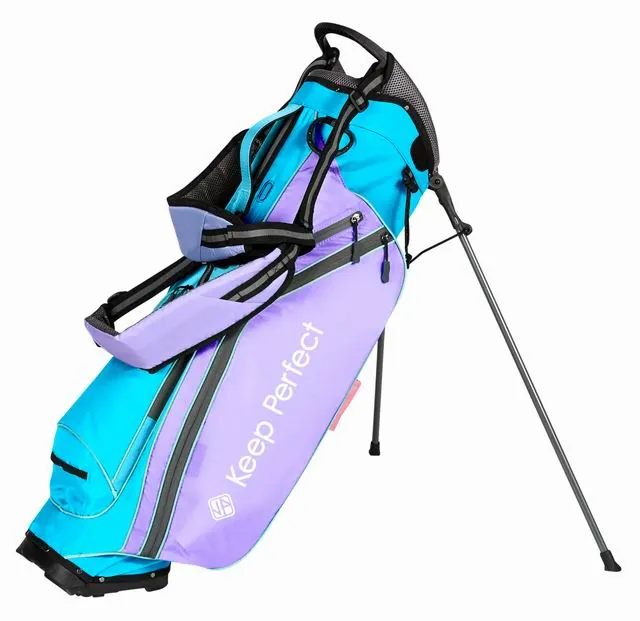
A well-organized golf bag cuts roughly one minute or more off every shot-taking routine, prevents club-head chatter that shortens the life of graphite shafts, and keeps every item reachable without breaking your rhythm — and the foundation of that organization is decided as much in the factory as on the course. Modern cart bags and stand bags arrive with 14-way full-length dividers and six to ten mapped pockets, so the task comes down to a repeatable system: arrange clubs by type in dedicated slots, zone pockets by how often you reach into them, keep heavy items low for balance, and reset the bag on a light weekly schedule. This guide walks through each step professionals use, with data you can verify and apply to any bag.
Start With a Clean, Divided Base
Every organization routine worth the name begins with the structure of the bag itself. Most premium cart and stand bags have a divider top that runs four, six, eight or fourteen channels down toward the bag's base. The single most effective organizational upgrade you can make is to use those channels as they were designed: one club per slot, arranged in a logical order you can reproduce without thinking.
When your bag has full-length dividers, give each club its own channel. This one habit stops grips tangling each trip, eliminates the clatter of club heads knocking together, and lets you grab the right club on the first reach. Group by club type from the top of the bag down: driver and fairway woods, hybrids, long irons, mid irons, wedges, and finally the putter in its dedicated well where one is provided. Keeping the most important clubs at the top of an easy-access channel means less fumbling when the round speeds up.
On bags without full-length dividers — typically lighter 5-way or 4-way designs — you cannot give every club its own slot, but you can still impose order. Slot long clubs in one compartment, short irons and wedges in another, and use an integrated putter tube or well so your most-used club cannot slide around. The principle is the same whether you organize a fourteen-slot tour bag or a compact Sunday bag: define a place for everything and put it there every single round.
Why Organization Actually Speeds Up Play
The payoff of a tidy bag is measurable in both pace of play and equipment wear. Every time you pause to search for a misplaced ball, a dropped tee or a wedged range finder, the hole slows down and your concentration breaks. Golfers who organize their bag report reaching the right club or accessory on the first try, which removes the hesitation that compounds over an eighteen-hole round.
Beyond pace, an organized bag protects the bag itself and what it carries. Clubs that rest in their own full-length channels do not scrape against one another during cart rides and car trips, preserving shafts and finishes. Zippers and pockets that are emptied and wiped regularly last longer because grit does not accumulate in the channels and seams. In short, organization is not just a neatness preference — it is a maintenance and performance habit with effects you can feel across a whole season.
Professionals treat the bag like a cockpit: everything has a home, and the home never changes. That consistency is what separates a system from a pile. When you know your tee pocket is the small one on the upper left and your gloves live in the mid pocket on the right, you stop looking and start playing.
Map Pockets to How You Actually Play
Pocket mapping is the art of matching the bag's compartments to your real habits, and it matters more than the total number of pockets. A bag with eight perfectly placed pockets beats one with fifteen that are awkwardly arranged. The rule is simple: the more often you touch an item, the easier it must be to reach.
Reserve the smallest, quickest pocket for balls and tees — these are the items you reach every hole. Use a mid-size pocket for gloves and a range finder, positioned so it opens toward your dominant hand and stays reachable mid-round. Keep the largest apparel pocket for rain gear and extra layers, since you touch those only when the weather turns. Finally, dedicate a moisture-proof valuables pocket to keys, wallet and phone so they stay dry in morning dew and light rain, and return them to the same pocket every round without exception.
A useful mental model is to think in zones of frequency. High-frequency items (balls, tees, rangefinder, glove, drink) sit in fast, easy-access pockets near the top. Medium-frequency items (extra gloves, divot tools, snacks) sit one layer deeper. Low-frequency items (rain gear, extra apparel, spare socks, spare batteries) sit in the deep, harder-to-reach storage. When your bag's zoning mirrors your usage frequency, you never fight the bag, and the hours of saved rummaging add up quickly across a season.
| Item | Recommended Pocket Zone | Access Frequency | Why it matters |
|---|---|---|---|
| Balls & tees | Smallest, quickest pocket | Every hole | Fastest, most-used items |
| Gloves & range finder | Mid pocket, dominant hand side | Frequent | Reach mid-round without hunting |
| Valuables | Moisture-proof, lined pocket | Low | Protect phone, wallet, keys |
| Rain gear & layers | Largest apparel pocket | Weather only | Deep, hard-to-reach storage |
| Snacks & drink | Insulated cooler pocket | Frequent | Cold storage on course |
Lighten and Balance the Load
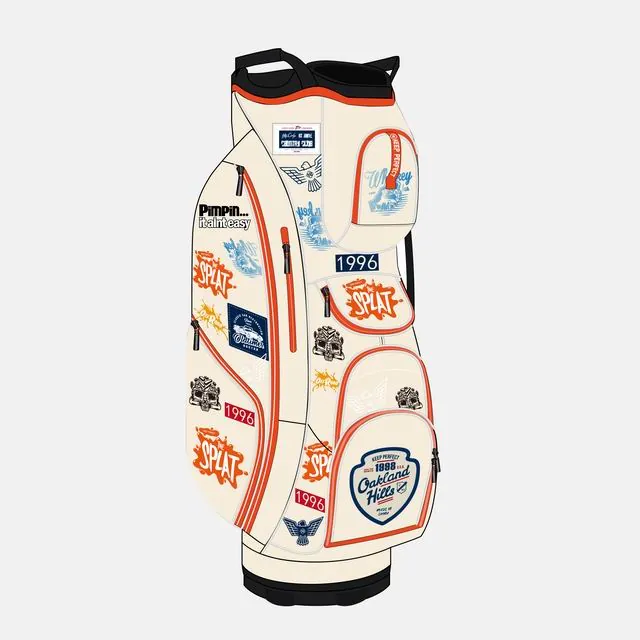
Carry only what you use in a round. That single decision commonly drops the bag's weight by two to three pounds, which over eighteen holes translates directly to less shoulder and back strain when you walk. Most golfers discover they carry a surprising amount of dead weight — extra balls they will never hit, souvenirs, old receipts, an extra rain jacket during a dry spell.
Once the load is lean, balance matters as much as weight. When carrying, keep heavy items — the spare sleeve of balls, a full water bottle — low in the bag body rather than in a top pocket. Heavy weight high in the bag shifts the centre of gravity upward and strains the shoulder and lower back. On a cart bag, heavy items can sit a little higher because the bag is not carried, but keeping the base stable still helps it sit level on the cart platform.
For a Sunday bag the rule is even stricter. These carry-only bags are built for short rounds and light loads, so cap yours at the essentials: a handful of balls, a few tees, a glove and light layering. If you find yourself packing more, you are using the wrong bag for the job, and the extra weight will punish you by the back nine. Our golf bag types guide helps you match bag style to how you actually play.
Protect Clubs and Accessories
Organization is also protection. Use protective club covers for woods and hybrids to prevent chatter scratches when clubs shift during transport, and never leave graphite shafts resting against metal or against each other without a divider between them. The full-length divider channels are your first line of defence, and covers are the second.
Slot a lightweight rain cover in the same pocket as your rain layer so bad weather does not catch you unprepared. Rain covers that attach to the bag's exterior and enclose the club heads are a small, cheap accessory that protects both clubs and bag fabric from moisture and grit. Check that the cover has a secure clip point so it does not blow off in wind on a cart ride.
Finally, discard broken tees and refill balls between rounds so clutter does not accumulate in deep pockets. Small consumables have a way of multiplying and turning a tidy bag into a messy one by mid-season. A quick sweep of the tee and ball pockets after every few rounds keeps the accessibility that made you organize in the first place.
Arranging Clubs by Type: A 14-Way Playbook
If your bag offers a 14-way full-length divider, you have the premium tool for club protection and order. The classic arrangement runs from the top, rear slot forward and down: driver and fairway woods along the back rows, hybrids tucked beside them, then the longer irons (4-6) and shorter irons (7-9), with pitching and sand wedges up front and the putter in its own dedicated well at the top edge for fastest access.
Matching the 14-way layout is also the most requested specification from serious players and pros, which is why tour and premium bags default to it. It protects expensive graphite shafts and finishes better than lower divider counts because each club has its own channel reaching the bag's bottom, so nothing leans and nothing rattles. For a detailed breakdown of divider choices, our article on 14-way versus 5-way dividers compares the two directly.
Not everyone needs fourteen channels. A 5-way top groups clubs into five compartments, trading some individual protection for lighter weight and faster multi-club grabbing, which many regular riders prefer. The key is to match the divider count to how much club protection you value and how quickly you like to grab clubs. Both systems reward a consistent club order; only the granularity differs.
The Weekly Reset Routine
Consistency comes from a routine, and a five-to-ten minute weekly reset is the simplest way to keep a bag organized all season. Set aside a short window each week, and work through a fixed sequence: empty and wipe out every pocket, pull old balls and receipts and broken tees, refill the ball and tee stock, re-slot clubs by type, and check that zippers and divider channels are clear of grit.
Players who organize two or three times a week — essentially after every couple of rounds — report the bag carries more evenly and the clubs stay quieter, because nothing is ever allowed to build up into a mess. The reset also catches small problems early: a stiff zipper, a frayed strap anchor, a torn seam, a broken tee lodged in a channel. Fixing these at the weekly check costs minutes; ignoring them costs a damaged club or a ruined round.
Make the reset predictable and it becomes automatic. Keep a small organizer or pouch for the basics so restocking is quick, and store the bag fully supported — on a stand or lying flat — rather than hanging from a handle, so the base and dividers keep their shape. Between deep seasons, extend the reset into a full seasonal clean, which our golf bag maintenance guide covers in depth.
Organizing for Cart Play vs. Carrying
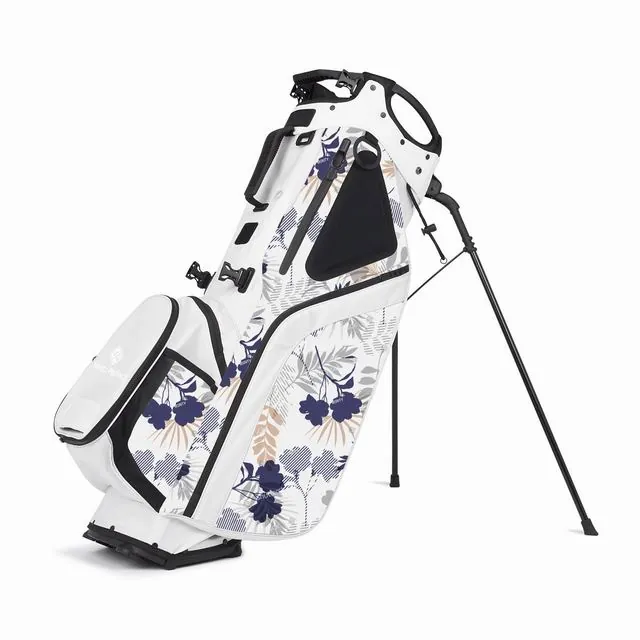
How you bring the bag to the course changes how you should organize it. On a cart, the bag sits tilted toward you, so pockets that face the player and are near the top become the priority. Arrange your high-frequency items — tees, rangefinder, gloves, drink — in the front-facing, easy-reach pockets, and push rarely-used apparel and rain gear to the rear or deeper pockets.
When you walk and carry, balance and attachment matter more than reach. Heavy items go low, the bag sits centred on your back, and you should secure loose accessories so nothing dangles or shifts your weight mid-stride. Cart riders get to be relaxed about weight; walkers must be disciplined about it. Matching your organization to your transport method is what turns a good bag into the right bag for your round.
For golfers who do a mix of both, keep the pocket zones consistent between the two setups so your system travels with you. The only change should be where the heavy items sit, not where your tees and balls live. That consistency is what keeps you fast whether you ride a cart or walk the fairways.
Accessories That Support Organization
A few well-chosen accessories make organization substantially easier. Putter tubes keep the most-used club secured and upright. Bag organisers and small internal pouches stop small items like balls, tees, coins and markers from sinking into deep pockets and rattling. Smart pocket dividers turn one large pocket into several, so loose items stay separated instead of merging into a jumble.
Rain covers, cart hooks and bag straps are functional accessories that also keep your system intact: a hook keeps your rangefinder and towel within reach on a cart, and a secure strap keeps the bag anchored so pockets stay where you put them. When buying accessories, check that they are compatible with your bag's mounting points and pocket layout rather than buying generic items that fight your system.
If you are sourcing accessories at volume — for a retail line, a club, or a private label — our golf accessories range shows how the pieces integrate with bag hardware, and our team can advise on building an accessory bundle that matches your bag's exact layout.
Factory Design That Makes Organization Easier
Here is the insight from the manufacturing side: a bag is easiest to organize when organization is designed in from the start. Full-length dividers that actually reach the bag's bottom, pockets with clear messaging and purpose-built zones, moisture-proof lining for valuables, and reinforced bases that keep the bag's shape under a full load — these are features a factory builds into a mould, not things a player can retrofit later.
If you are sourcing bags for a brand or a reseller, the organization features you choose at the factory determine how easy the final buyer's life is. Specify the divider count, the pocket map, the interior lining and the hardware placement up front, and approve a sample that proves the layout before volume production. A bag that organizes well sells itself, because repeat buyers come back for a bag that keeps their gear tidy and their round fast.
Our custom OEM/ODM services handle these decisions with you — from the divider structure to the exact pocket zones — and our OEM/ODM process guide walks through how a bag goes from specification to sample to production with organization built in.
Common Organization Mistakes to Avoid
Most organization failures are avoidable, and they follow a few recurring patterns. Overloading is the most common: packing a bag so full that dividers and pocket seams struggle, clubs rub together, and the bag becomes heavy and hard to manage. The fix is ruthless editing of what actually comes along.
Relying on bags without any organizing system is another classic mistake. A bag with no pockets at all forces everything into one space, and gear tumbles into a jumble that costs you time every hole. If you own such a bag, at minimum add a small organizer pouch to create structure inside the main compartment.
Finally, assume that a high divider count automatically protects clubs — it does not if the dividers are shallow or flex under load. True full-length dividers that run to the bag's base are what protect clubs, so verify the construction rather than trusting the number. For stand and cart setups alike, see our golf bag storage and organization guide for more ways to keep gear protected between rounds.
Note also the difference between organization and storage: organization is how you arrange gear for a round, while storage is how you keep the bag between rounds — dry, fully supported and free of dust and pests. Good storage habits extend the life of an organized bag, so empty food and moisture-prone items before lay-up and store the bag supported rather than hanging it from a handle.
Checking Your System: A Pre-Round Routine
A thirty-second pre-round check locks your system in place before you step to the first tee. Quickly confirm clubs are in their designated slots and full-length channels, that balls and tees are stocked and reachable, that the rangefinder and glove are where they should be, that valuables are in the lined pocket, and that the bag is not overloaded with dead weight.
This is also the moment to catch the kind of overpacking that creeps in mid-season. If the bag feels noticeably heavier or a pocket is bulging, now is the time to edit, not later. A thirty-second check is the cheapest insurance against a round derailed by a missing glove or a lost ball.
Rotate this check into your standard pre-game ritual and it becomes second nature. Pair it with a light weekly reset and a solid storage plan, and you have the complete organization system professionals rely on — a system that protects your clubs, speeds your play and keeps your bag performing season after season.
Conclusion
A well-organized golf bag is built twice: once at the factory, with full-length dividers, purpose-built pockets and balanced construction, and once by you, with a consistent club order, frequency-mapped pockets and a lean, balanced load. Start with the structure your bag provides, map every pocket to how you actually play, keep heavy items low, protect clubs and accessories, and reset the whole system on a light weekly schedule.
Match the divider count and pocket zones to your game, keep a repeatable routine, and store the bag well between rounds. Do that, and the bag stops being something you fight and becomes a quiet partner that keeps your round fast, your clubs protected and your head in the game. If you are weighing which bag style fits your routine before you buy, our golf bag types guide is the place to start, and our products page shows how these organization features come together in practice.
Sources
Frequently Asked Questions
- How should clubs be arranged in a 14-way golf bag?
- Give each club its own full-length slot and group by type from the top: woods, hybrids, long irons, mid irons, wedges and putter, keeping the putter in its dedicated well for fastest access.
- How can I reduce the weight of my golf bag?
- Remove unused items, which commonly saves 2-3 lbs, and keep heavy items like extra balls and a full bottle low in the bag body when carrying to keep the centre of gravity low.
- Which pocket should hold my valuables on the course?
- Use a moisture-proof, lined valuables pocket for keys, wallet and phone, and always return them to the same pocket every round so they stay dry and findable.
- How do you keep a Sunday bag organized?
- Cap it at the essentials — a handful of balls, tees, a glove and light layering — and use small internal organisers so nothing rattles or sinks to the bottom of the carry bag.
- How often should I reset my golf bag?
- Do a five-to-ten minute weekly reset: empty pockets, discard broken tees and old receipts, refill balls and re-slot clubs by type to keep the system predictable.
- Does the divider count affect how I organize clubs?
- Yes. A 14-way full-length divider gives every club its own slot for maximum protection, while a 4 or 5-way top groups clubs for faster grabbing but lets them lean together lower in the bag.