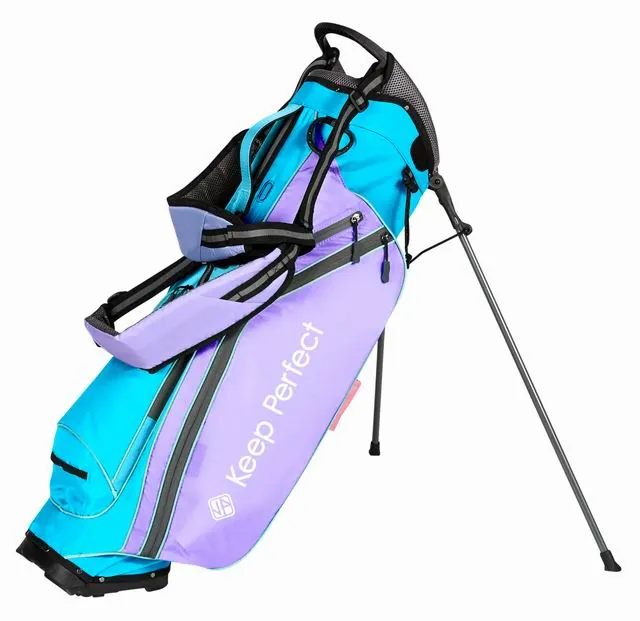
A rain cover is the lightest, most affordable first line of protection for a golf bag, and its effectiveness depends less on the brand of cover than on four verifiable factors: the waterproof character of the fabric, the sealing of seams, the fit across your specific bag, and the fastening system that keeps it in place. On a cart or stand bag, a well-fitted waterproof cover keeps grips, club heads and apparel dry without adding meaningful weight or blocking access to clubs. This guide explains how rain covers work, what materials genuinely repel water, how to size and fit one correctly, and how to know when a fully waterproof bag is the better investment.
Rain covers are bought both by individual golfers and by OEM brands that ship them as an accessory or a bundled bonus with a bag. Understanding the technical specification of a cover — fabric, lamination, seam sealing, sizing and closure — lets a brand source a cover that actually protects, and lets a golfer choose one that fits. This article also walks through care routines that keep a cover performing and the decision logic between a cover and a full waterproof bag.
1. When a Rain Cover Is the Right Choice
For most players, a dedicated rain cover is the lighter and cheaper route to weather protection without replacing the whole bag. A high-quality cover adds only a few ounces, fits over the existing bag, and can be removed in seconds when the sun returns. It works by forming a hood over the top of the bag, protecting the club grips, heads and the top pockets from descending rain.
Full waterproof bags make sense for golfers who play frequently in wet, unpredictable climates, but many courses only see occasional showers. For those players, covering a standard bag with a quality hood delivers equal protection at a fraction of the cost, and it does not change the weight or balance of the bag they already prefer. A cover is therefore the pragmatic default, with the full-bag upgrade reserved for true wet-climate regulars.
There is no conflict between the two approaches; many experienced players carry a cover as insurance on a favourite lightweight bag rather than switching permanently to a heavier waterproof build.
2. Materials That Actually Repel Water
Look for a cover made from waterproof nylon or a bonded PU- or TPU-coated fabric with sealed or taped seams. The fabric needs a genuine water barrier — ideally a lamination rather than a simple coating — so water does not soak through the weave. Coated fabrics repel light rain but laminated fabrics provide a true barrier, and a laminated cover with a high water column rating performs best in steady downpours.
Seam sealing matters more than the outer fabric alone. A cover is assembled from multiple panels, and every stitch line is a potential leak unless the seams are taped or sealed. 100% PU or TPU lamination stops water before it reaches zippers and stitch lines, which is why laminated, seam-taped covers outperform cheaper single-layer coated products on wet days.
Check that the material stays flexible in cooler temperatures. Some cheap covers stiffen in the cold, making them hard to fit and prone to cracking. A good cover uses a flexible laminate that remains pliable across the operating temperature range you expect to encounter.
3. Fit and Sizing: Why One Size Does Not Fit All
A cover that is too small splits at the zipper or will not close over a full set of clubs; one that is too large flaps in the wind and lets water pool in the folds. Sizing is therefore the most common cause of poor cover performance. Measure your bag height and top circumference against the cover's stated dimensions before ordering, and account for a bag loaded with a full set of 14 clubs.
| Bag Type | Typical Height | Recommended Cover Fit | Key Fitting Notes |
|---|---|---|---|
| Compact/Sunday bag | 34–36 in | Fitted compact cover | Avoid oversized covers that pool |
| Stand bag | 36–38 in | Standard cover | Check stand leg clearance opening |
| Cart bag | 36–38 in | Wide cart cover | Allow for wider pocket profile |
| Staff/Tour bag | 38–40 in | Large oversized cover | Needs deeper hood for 14 clubs |
When you cannot weigh or measure the bag in person, buy a slightly oversized cover and use its cinch system to tighten the excess rather than gambling on a cover that is under-sized and will not close. An elasticized bottom and quick-clip anchors hold the cover snugly against the bag, while a strap or buckle fastens it to the cart rail in windy conditions.
4. Fastening and Wind Security
Fit is only half the equation; how the cover is held on determines whether it stays put. Elasticized bottom closures keep the lower edge tight against the bag, and quick-clip anchors attach to handles and cart points so the cover cannot slide off. Cart-mounted covers often add a buckle or strap that locks to the cart rail, which is essential on exposed links courses where wind is a constant factor.
A good cover also preserves access. A 4-way or 5-way opening design, or a top that opens in sections, lets you reach clubs with the cover in place, which matters when rain starts mid-round and you still need to change clubs frequently. Compare this against a full slip-over hood that must be removed entirely to retrieve a driver.
For travel, a separate hard or soft travel cover with a water-resistant shell offers far stronger protection than a rain cover alone, since it guards against knocks and handling as well as weather. Use a rain hood for course play and a proper travel cover for transit; they serve different purposes.
5. Caring for Your Rain Cover
A rain cover is a simple product but it still needs a little maintenance to keep performing. Rinse mud, sand and grass from the fabric after use and allow it to dry fully before storing, because damp storage promotes mildew and can degrade the lamination over time. Fold or hang it loosely rather than crushing it under other gear, which can crease and fatigue the film.
Re-proof the cover when water starts beading less readily. For PU- or TPU-coated covers, apply an approved seam sealer and a refresh DWR treatment so the surface keeps shedding water. Check the zippers seasonally — a stuck zipper is the most common cause of a cover failing exactly when it rains, and a jammed closure can let water pour in right at the vulnerable line.
6. Signs a Full Waterproof Bag Is the Better Call
A rain cover protects clubs on occasional wet days, but frequent, prolonged rain exposes its limits. Rain can work around the hood, damp enters through unsealed pockets, and the bag's own construction — standard zippers, unsealed seams and no drain — gradually lets moisture in around the protected zone. For players who walk or ride in frequent, unpredictable rain, a fully waterproof bag with a sealed shell, waterproof zippers, taped seams and a drainable bottom is the dependable system.
Course marshals, resort staff, caddies and wet-climate golfers fall into this category. For them a rain cover becomes a backup rather than the primary system. The upgrade from a covered standard bag to a genuine waterproof bag also improves storage hygiene, because a fully drainable, sealed design stops interior mildew before it starts. The cost difference buys durability and convenience those players value every time they play.
See waterproof and weather protection technology to understand the full sealed-bag engineering, and how waterproof bags perform in heavy rain for real-world expectations.
7. Buying a Rain Cover for OEM or Accessory Programmes
For brands, rain covers are an attractive accessory: low cost, light freight, easy to sell alongside a bag, and a natural upsell in wet-geared markets. When sourcing, specify the same rigour you would for a bag — waterproof laminated fabric, sealed seams, a stated water column rating and zipper quality — and ask for a sample to test the fit against your own bag models.
Colour-matching the cover to your bag or adding a logo is straightforward on a single-panel hood and gives a branded, premium impression at minimal cost. Because covers have a short production cycle, they fit neatly into replenishment and promotional programmes. Work with a manufacturer that can supply covers in the same material palette and quality as your main bag line, as QUANZHOU JUNYUAN BAGS does across its product range.
A factory that makes both bags and covers can also advise on fit for your specific model dimensions, removing the size-matching guesswork that causes most customer dissatisfaction with covers.
7B. Different Cover Styles and When to Use Them
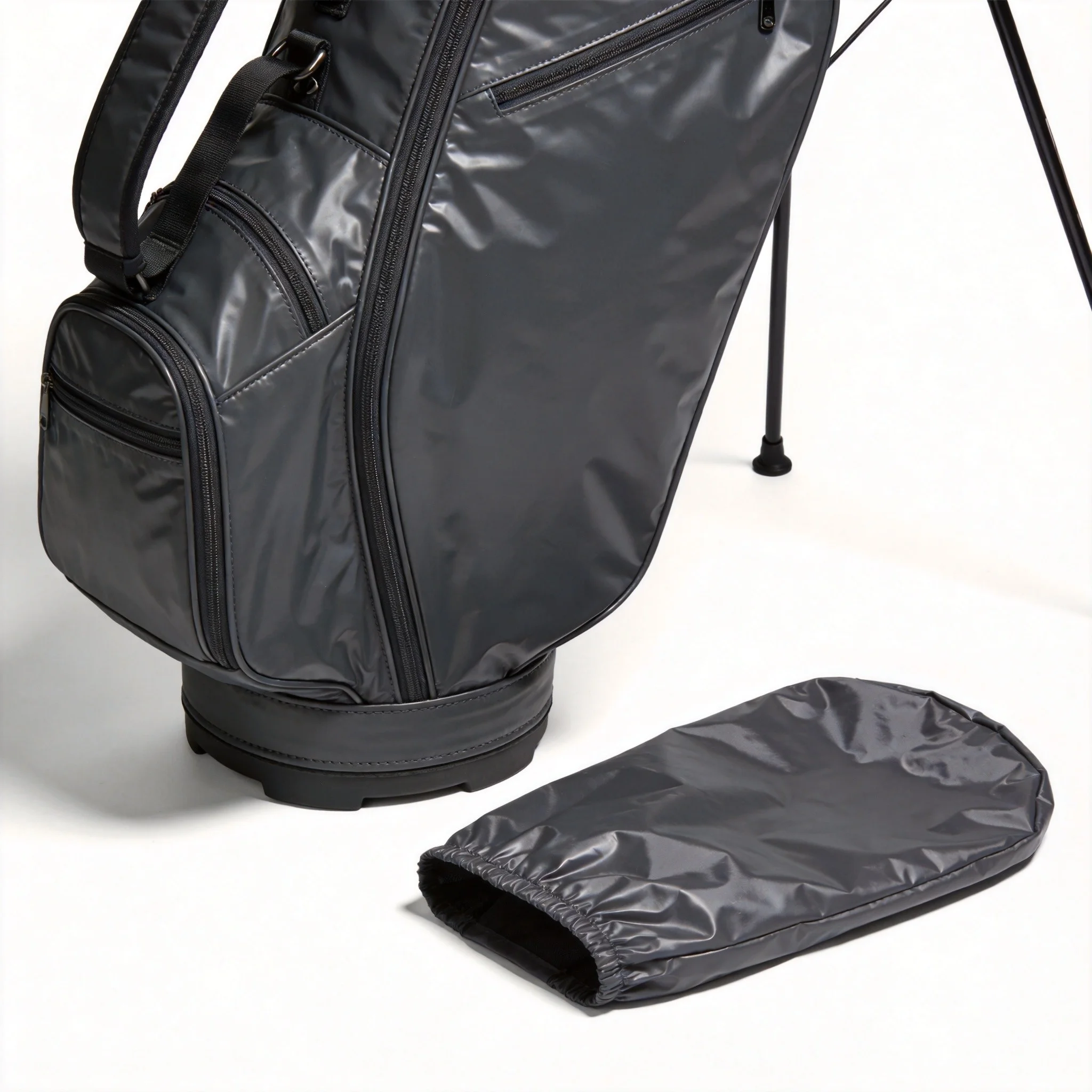
Not all rain covers are the same shape, and the right style depends on how you carry your bag. The full slip-over hood is the most common: it fits over the entire top of the bag and zips or cinches at the base of the club heads, offering the most complete protection of the grips and the top row of pockets. This is the best choice when a sudden shower catches you and you want maximum coverage over a full set.
A partial or half cover protects the club heads and neck of the bag while leaving the lower pockets and base exposed. It is lighter and quicker to deploy, useful in light rain or for players who only worry about the clubs themselves. For cart bags, some covers are designed to fit over the bag while it remains secured to the cart, with cut-outs or straps that reach the cart rail. These offer convenience because you can cover the bag without unclipping it.
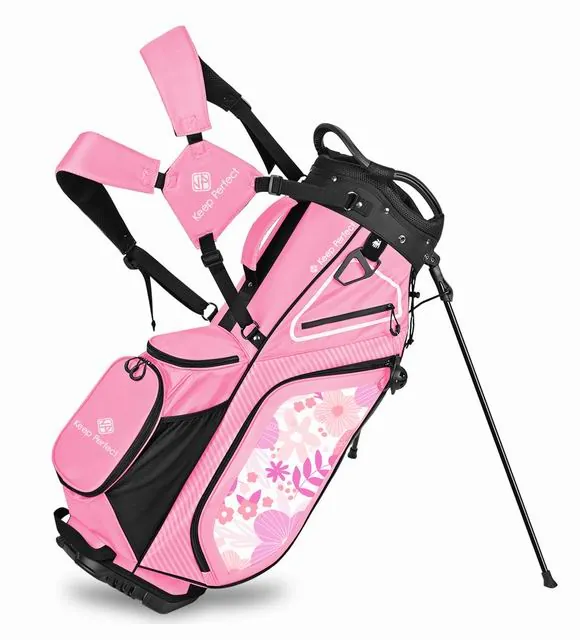
Finally, integrated hoods built into a stand or cart bag unfold from a dedicated pocket and are always on hand. They rarely match the protection of a dedicated waterproof cover, but they offer zero-friction convenience for the player who wants basic protection always available. Weigh whether you prioritise maximum coverage, quick deployment or zero extra items when choosing between these styles.
7C. Cover Durability and Replacement Signals
A quality rain cover should last several seasons, but it is a consumable item that will need replacing in time. Watch for these signs that a cover is past its job: water no longer beads on the surface; the fabric feels stiff, tacky or cracked; seams split or tape lifts; zippers jam; and fastening anchors stretch so the cover no longer holds tight. Any of these means water can get to your clubs, and repair is rarely worth it compared with a replacement.
To extend life, avoid leaving a cover stretched over a fully loaded bag for weeks at a time, which fatigues the elastic and film. Store it unclipped and loosely folded when not in use, keep it out of direct UV when possible, and refresh the DWR and seam sealer at the start of each wet season. With sensible care a laminated, seam-sealed cover typically outlasts a cheaper coated single-layer product by a wide margin, which is why the upfront material investment pays back.
8. Rain Cover vs Waterproof Bag: Cost and Use Trade-Off
The decision is ultimately about use frequency and cost. A good cover costs a small fraction of a waterproof bag upgrade, adds negligible weight, and suits players who encounter occasional rain. A genuinely waterproof bag costs more and weighs more, but delivers sealed all-weather protection for the frequent rain player. Put simply: a cover protects the club heads and grips in the hood; a waterproof bag protects the entire bag, every pocket and the full storage depth.
Many golfers combine the two strategies by buying a quality semi-weather-resistant stand bag for everyday use and carrying a hood for the rare downpour. This keeps daily performance, weight and cost low while preserving emergency protection. Only the dedicated wet-climate player or course professional reliably needs the full waterproof warrant on every round.
9. Verifying Rain Cover Quality and Standards
Because a cover is a small, inexpensive item, it is easy to assume quality is a given. In practice the difference between a cover that keeps clubs dry and one that soaks them is exactly the technical detail a buyer can verify. Ask the manufacturer for the water column rating of the laminated fabric, confirm that seams are taped or sealed, and check the closure hardware — the zipper, elastic and clips — for resistance to repeated use.
Useful reference points include the IEC 60529 IPX water-ingress ratings for the cover's protection level and the ISO 811 hydrostatic-head test for the fabric water column, the same standards applied to fully waterproof golf bags. Requesting this documentation keeps the sourcing consistent with your bag programme and avoids the trap of a cover that looks identical to a premium one but quietly leaks at every seam.
Ordering a sample and fitting it to the actual bag model you sell is the most reliable verification, and it is simple because covers are quick to produce. A test of a few units across your bag range, combined with zipper-cycle and seam inspection data, turns the cover purchase from a guess into a specification you can stand behind in your own marketing.
10. Bundling and Promotional Uses of Rain Covers
Rain covers are an unusually versatile promotional item. Because they are compact, light and inexpensive, they make strong free-bonus incentives for bag purchases in wet-geared regions, and they can be printed or colour-matched easily for retail display and golf-club pro-shop programmes. A cover that matches the bag's brand colours reinforces the product line and adds perceived value out of proportion to its cost.
For corporate and tournament events, branded covers double as useful giveaways that golfers honestly use, rather than disposable trinkets. Their short production cycle means they can be replenished or refreshed between seasons without large inventory commitments. Working with a manufacturer that supplies both bags and covers, such as QUANZHOU JUNYUAN BAGS, keeps these programmes QUANZHOU JUNYUAN BAGS, founded in 2014, has over twenty years of combined industry experience (founder started in 2004) in covers and bag production. aligned in material, colour and quality, simplifies logistics and reduces the number of suppliers a brand must manage.
Sourcing a Rain Cover That Actually Fits and Seals
The most common rain-cover failure is not the fabric; it is a one-size-fits-all cut that leaves club heads exposed. When you source covers for a brand or personal stock, match the cover to the bag's opening circumference and the divider-top shape, not to a vague "stand bag" label. Look for a water-repellent coated nylon or PVC shell, sealed or taped seams, an elastic or cinch hem that grips below the collar, and a vented opening so trapped moisture can escape and the cover does not bag against wet clubs. A quality cover also folds into an attached pocket so it does not get left behind. For matching packs, many OEM factories produce covers in the same fabric and colour as your golf bag range, which lifts perceived quality across the line at minimal added cost.
Frequently Asked Questions
- Does a rain cover protect clubs as well as a waterproof bag?
- A well-fitted rain cover protects grips and club heads effectively in the hood area on occasional wet days. Frequent wet-climate players usually prefer a fully waterproof bag with sealed seams and a drainable bottom, which protects the entire bag and every pocket rather than just the top.
- What material should a rain cover use?
- Waterproof nylon or a bonded PU- or TPU-coated fabric with sealed or taped seams. Lamination and seam sealing stop water reaching zippers and stitch lines, which is what actually keeps the bag dry.
- How do I make sure a rain cover fits my bag?
- Measure your bag height and top circumference against the cover's stated dimensions before ordering. Choose an elasticized bottom and anchor clips so the cover stays tight across the bag, and tighten any excess with the cinch system if slightly oversized.
- Can I leave the rain cover on while swinging?
- No. Lift or open the hood before each shot so you have full freedom of movement and open access. Covers are for protection while the bag is on the cart or on the ground, not during play.
- How do I stop a rain cover flapping in strong wind?
- Use a cover with elasticized bottom, quick-clip anchors and a cart strap or buckle so it is secured to the cart rail. Choose the correct size so excess fabric does not act like a sail.
- Do all covers block access to clubs equally?
- No. Check for a 4-way or 5-way opening, or a top that opens in sections, so you can reach clubs with the hood in place. A full slip-over hood must be removed to retrieve a driver, which is inconvenient mid-round.
- Should I buy a rain cover or a waterproof travel cover?
- A rain hood is for course play; a hard or soft travel cover is for transit and offers stronger protection against knocks, handling and weather. Buy both if you travel with your clubs.
- Can I machine-wash a rain cover?
- Hand-wash with mild detergent and rinse thoroughly, then dry fully before storing. Machine washing can crack the coating and damage seam sealing. Re-apply a refresh DWR and seam sealer as beading fades.
A rain cover is a simple, high-value addition that protects the equipment golfers care about most when the weather turns. By choosing a laminated, seam-sealed cover, sizing it to the bag and fitting it securely, any golfer can stay dry without investing in a heavier fully sealed bag — or keep a hood as a backup on a favourite lightweight bag.
To source or specify rain covers and waterproof golf bags, contact QUANZHOU JUNYUAN BAGS at service@junyuanbags.com or +86 17750020688. The manufacturer operates seven production lines, employs a team of 137 and produces around 200,000 pieces per month, supporting standard MOQ of 200 pieces and test orders from 100.
Related reading: golf bag weather protection, how to maintain a waterproof coating and the waterproof golf bags ultimate guide.
The practical takeaway is simple: protection should be matched to exposure, not to marketing. A golfer who faces a few rain-lashed rounds a year gets excellent value from a laminated, seam-sealed, properly fitted rain cover, and can keep that bag light and affordable. A golfer who plays all season in a wet climate, or a professional whose equipment is their livelihood, is better served by a fully sealed waterproof bag. Locate yourself on that spectrum, verify the cover you choose with the standards and checks described here, care for it between seasons, and you will keep your equipment dry without overbuying protection you rarely need.