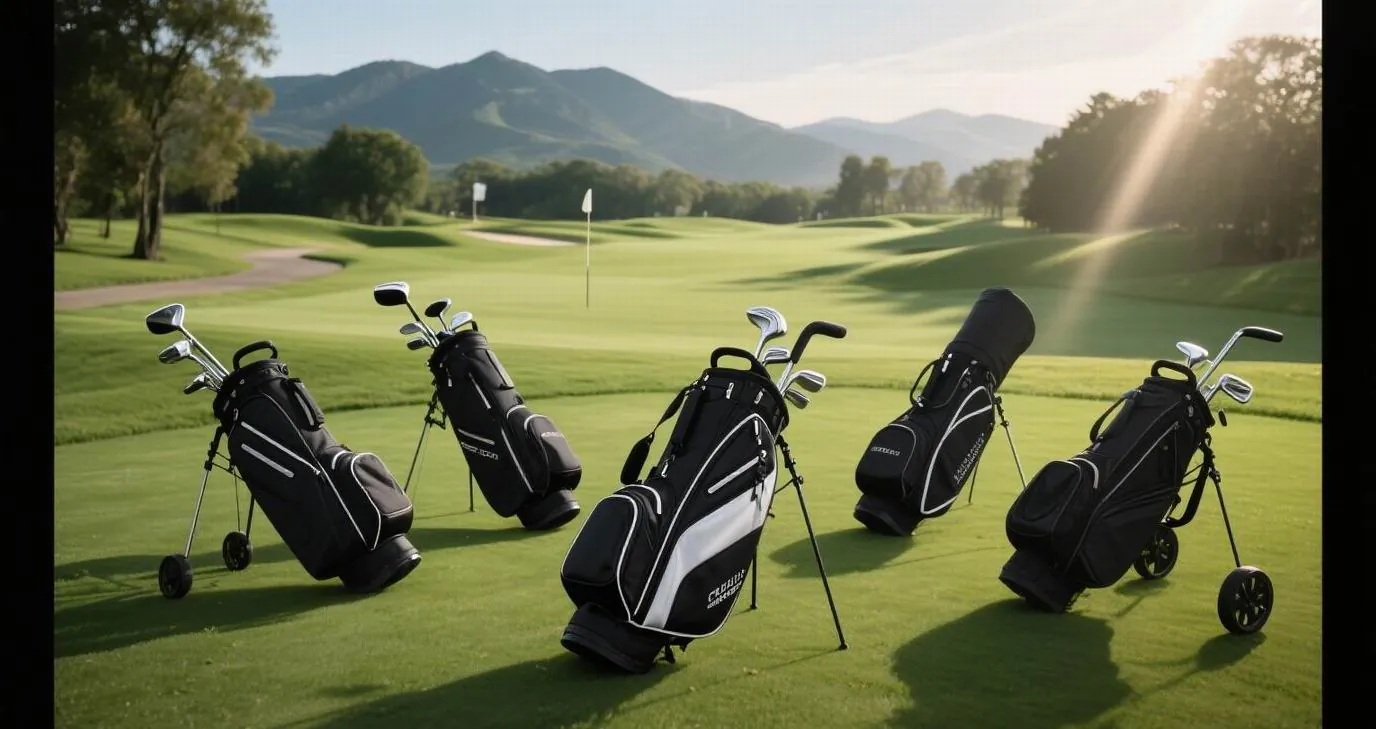
Technology is the single biggest differentiator in a golf bag market that Grand View Research projects to roughly USD 2.3 billion by 2030 and that Mordor Intelligence sizes near USD 1.25 billion in 2025. The highest-leverage technologies are not the most futuristic ones: advanced fabric engineering, waterproof lamination, precision pocket architecture and ergonomic load systems deliver measurable value today, while GPS, tracking and device-integration are the fastest-growing premiums from a small base. As an OEM/ODM golf bag factory shipping to 200+ brands across more than 100 countries, we assess every technology by one test — can it be built reliably, verified in sampling and delivered on cost? This guide applies that test across the full technology stack of the modern golf bag.
Technology in golf bags is too often discussed as a list of futuristic gadgets. The reality is that the most commercially valuable technology is quiet and structural: it makes a bag lighter, dryer, more organized, better balanced and easier to carry. This guide grades the entire stack — materials, construction, organization systems, ergonomics and smart features — for buildability and payback.
Materials Science: Where Margin and Performance Meet

Materials science is the foundation of every golf bag technology story. High-tenacity nylon dominates the market at roughly 47% per Mordor, prized for strength-to-weight, while polyester rises faster and engineered laminates unlock all-weather performance. Carbon-fiber accents reduce weight at structural points. Recycled synthetics are crossing from niche into mainstream as major brands treat them as performance materials. The engineering challenge is balancing these properties against cost and processability — a marginal fabric upgrade can materially extend lifespan and cut warranty returns.
Material selection is where the product's story and its cost intersect. Higher-count weaves feel and perform like more; laminated membranes deliver real weather; recycled grades satisfy sustainability buyers. Because both hand-feel and price land at the fabric decision, a factory that maintains a broad, tested material library gives a brand maximum freedom to hit weight, weather and price in one shell. Buyers should request the test charts behind each material and choose on documented data rather than a swatch in hand.
Materials are where most performance margin is won or lost. Higher-count nylons and polyesters, laminated waterproof layers and recycled-reinforced composites each change weight, feel and longevity. The marketable advantage is a documented specs sheet: tensile strength, abrasion resistance, weather rating and grams per square meter. Buyers should be as demanding of material test data as of any headline technology.
Buyers who learn to read material data — denier, tensile strength, abrasion, hydrostatic head — gain real negotiating leverage because they can compare on substance rather than appearance. We explain how to evaluate fabrics in our material technology overview.
Waterproof and Weather Engineering
Weather technology has matured into a specifiable engineering discipline. Coated and laminated fabrics, TPU films, sealed zippers and taped seams now deliver waterproof construction that is expected in cart, travel and stand bags for wet climates. The next advance is breathable lamination — repelling water while venting moisture so clubs and apparel stay dry. Ingress testing methods, from rain-jet simulation to sustained submersion, convert waterproofing from a claim into a verifiable attribute.
The honest measure of weather engineering is the ingress test, not the marketing adjective. Sealed seams, water-rated zippers, coated or laminated shell fabrics and a taped seam line separate genuine protection from 'water-resistant' phrasing. In wet-climate and travel demand, documented waterproofing both converts buyers and suppresses the returns and review damage that follow a soaked set of clubs. It is one of the few investments that pays in both top-line conversion and bottom-line retention.
Weather engineering is the discipline of sealed seams, water-rated zippers, coated or laminated shell fabrics and tested ingress protection. It elevates weather survival from a feature to a verified specification. Because wet-climate demand is consistent and structural, a brand that documents real ingress testing — rather than marketing 'water-resistant' — earns durable trust and fewer returns.
For a buyer, this means the difference between "water-resistant marketing language" and documented construction. We detail the technical requirements in our weather-protection guide, and recommend every spec include stated seam, zipper and lamination construction that sampling must validate.
Precision Organization and Pocket Architecture
Organization technology is about precision as much as capacity. Fourteen-way full-length dividers protect clubs through a shot cycle, while the pocket architecture separates clubs, balls, apparel, valuables and hydration into intentional zones. High-end bags now commonly ship with more than ten storage compartments. The technology here is structural: rigid backpanels that keep divider openings aligned, tapered pockets that don't sag, and accessible closures that survive thousands of cycles. Precision pocket engineering directly affects both usability and durability, and it is where mass-market bags most visibly cut corners.
Organization is engineering at human scale. A full-length, fully divided top keeps graphite and grips safe; insulated and valuables compartments keep the wrong things separated; and pocket placement that works on cart and carry reduces mid-round friction. These are tolerance-checked attributes that survive the stress of a season. Spec them precisely rather than accepting a generic template, because on the course, organization is the feature a golfer feels most.
Organization is the most felt technology on the course. Full-length 14-way dividers protect graphite and grip wear, insulated and valuables compartments separate what should never touch, and deliberate pocket placement keeps essentials within reach on cart or carry. These are measurable attributes a factory can hold to tight tolerances, and they drive daily satisfaction more than any headline gadget. Buyers should spec divider count and layout precisely rather than accept a generic template.
We break down how pocket architecture translates to manufacturing tolerance in our compartment design — a read worth the time for anyone outsourcing a premium line.
Ergonomic Load Systems and Lightweight Frames
Comfort technology is where weight reduction and ergonomics converge. Dual-strap systems with contoured padding distribute load across both shoulders, while multi-material backpanels with breathable channels reduce heat and chafing. Base geometry is engineered so a bag stands stable whether loaded with clubs or standing alone on a cart. More than half of consumers prioritize padded, ergonomic strap systems per market research, making this a decisive reorder factor. The engineering is precise — strap geometry, padding density, balance point and torso-fit adjustments are all specifiable.
Comfort is engineered load distribution. Dual-strap systems that spread weight across both shoulders with breathable padding, plus balanced base geometry, determine how a bag feels on the eighth hole — not the first. Paired with a lightweight frame, they serve the fast-growing walking and junior cohorts. The testable spec is both strap-cycle durability and weight; a comfortable, light, verified bag earns repeat buyers and fewer returns.
Our ergonomics and comfort guide sets out the strap and frame specifications a buyer should request. Walking golfers are the largest segment, so comfort technology has outsized commercial weight.
Smart, Connected and Tech-Enabled Features
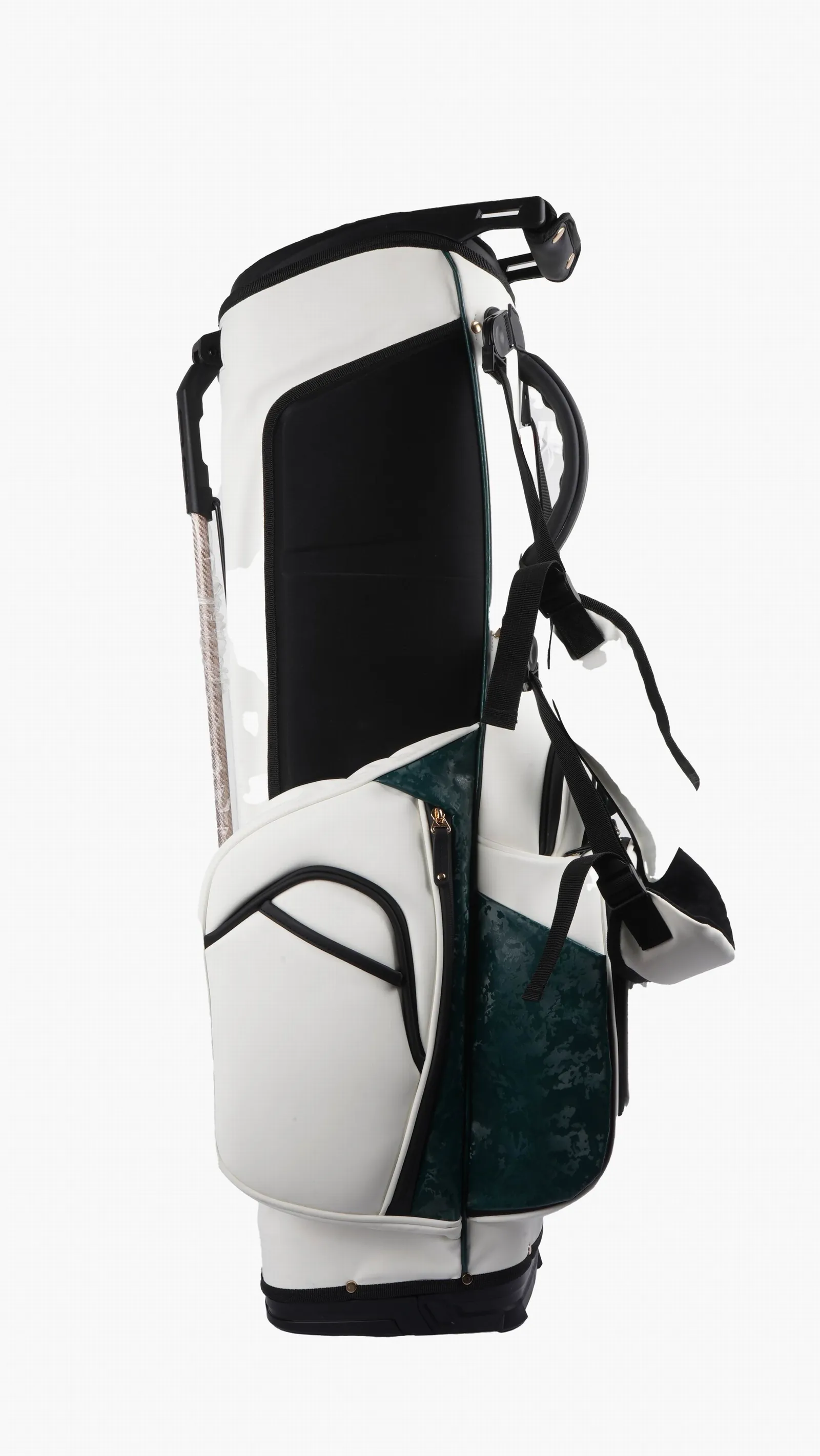
The fastest-growing premium technology is smart connectivity. GPS tracking, phone pockets with cable routing, power-bank sleeves and, in flagships, embedded charging define the leading edge. Research frames smart features as a growing niche within premium, driven by digital-native players who expect connectivity in everything they carry. The buildable path is "smart-ready" architecture: weather-sealed device pockets, clean cable grommets, balanced weight and integrateable power storage — without fragile embedded electronics that drive cost and failure rates.
Feature cost is a discipline, not a formality. Every smart component adds unit cost, weight and a chance to fail, and all three erode margin if the market will not pay or the returns climb. The disciplined method is to price the risks alongside the benefits, scale features only after sampling proves reliability at volume, and reserve genuinely experimental electronics for a controlled flagship rather than the whole range. That keeps innovation exciting without making it reckless.
The test of a smart feature is whether it survives real use, which is why reliability governs the category. Weather-sealed device pockets, padded sleeves and cable routing meet golfers where they already are — their own GPS and portable charging — with low failure and return risk. Fully embedded electronics, by contrast, carry thermal, ingress and repairability risk that can sink a premium-fail. Choose the smart-tier design your price and return tolerance support, and validate it fully during sampling.
The smart tier should be judged by reliability first. Fully embedded electronics add cost, weight and return risk, while smart-ready design — weather-sealed device pockets, padded sleeves, cable routing and touch-friendly access — delivers modern value with far less risk. Choose the architecture your price point and return tolerance support, and validate thermal and ingress behavior during sampling.
We evaluate which smart features are genuinely manufacturable in our smart bag technology guide. The honest position, from a factory standpoint, is that reliability beats novelty in this segment.
| Technology Layer | Core Function | Buildability | Payback |
|---|---|---|---|
| Materials science | Strength, weight, durability | High | High |
| Waterproof engineering | All-weather survival | High | High |
| Pocket architecture | Organization, durability | High | High |
| Ergonomic load systems | Comfort, balance | Medium-high | High (reorders) |
| Smart / connected | GPS, charging, tracking | Medium | Premium niche |
| Sustainability traceability | Recycled content, sourcing proof | Medium | Rising baseline |
Quality Control and Testing as Technology
Modern quality control is itself a technology investment. Load testing, seam-pull verification, strap-stress cycling, zipper-cycle and abrasion testing, plus ingress checks, convert promises into documented performance. A factory that invests in testing infrastructure can stand behind weight, waterproof and durability claims; one that doesn't leaves buyers exposed to returns and reputational damage. Testing depth is now one of the clearest differentiators between a capable OEM and a jobber.
In a technology-rich bag, QC is the guardrail that keeps promises true. Load, seam-pull, strap-cycle, zipper-cycle and abrasion testing catch the single-fault failures that otherwise define a product's reputation, and the data they generate becomes trustworthy content for product pages and sales material. For a factory, a documented testing culture is as marketable as a headline feature, because it lets a buyer ship with confidence and a brand sell with proof.
In technically rich bags, testing is the technology that earns trust. Load, seam-pull, strap-cycle, zipper-cycle and abrasion tests turn aesthetic claims into documented performance and catch the single-fault failures that define a product's reputation. The data these tests generate also feeds product pages and buyer confidence, making a testing culture a genuine commercial asset. A factory that shows you its test histories is almost always more predictable than one that promises speed on a spec sheet.
In technically rich bags, quality control is itself core technology. Load, seam-pull, strap-cycle, zipper-cycle and abrasion testing turn aesthetic claims into documented performance and protect against the returns that destroy margins. The data these tests generate also feeds product pages and buyer trust, making a testing culture a genuine commercial asset, not a cost center.
Our quality control and testing standards piece details the checks a spec sheet should reference. It is the most direct way a buyer can de-risk an otherwise attractive price.
Manufacturing Process Technology
Behind the product is process technology: automated cutting, precision sewing, programmable embroidery and RFID or barcode tracking through the line. These investments improve consistency, reduce defect rates and shorten reliable lead times. For a buyer, process capability matters because it determines whether complex, multi-feature bags can be produced at scale without quality drift — the exact scenario future technology-rich bags will demand.
Process sophistication determines whether complex designs are deliverable. Precision cutting, automated pocket placement, controlled lamination and consistent hardware torque all affect quality at volume. A factory that documents process parameters and inspection checkpoints is a far safer partner for multi-feature bags than one that relies on skilled assembly alone, because consistency is what protects reputation at scale.
We walk through what a modern production line should demonstrate in our production workflow guide, and we recommend touring or auditing these process areas before awarding volume.
Why Technology-Rich Bags Matter to Participation Growth
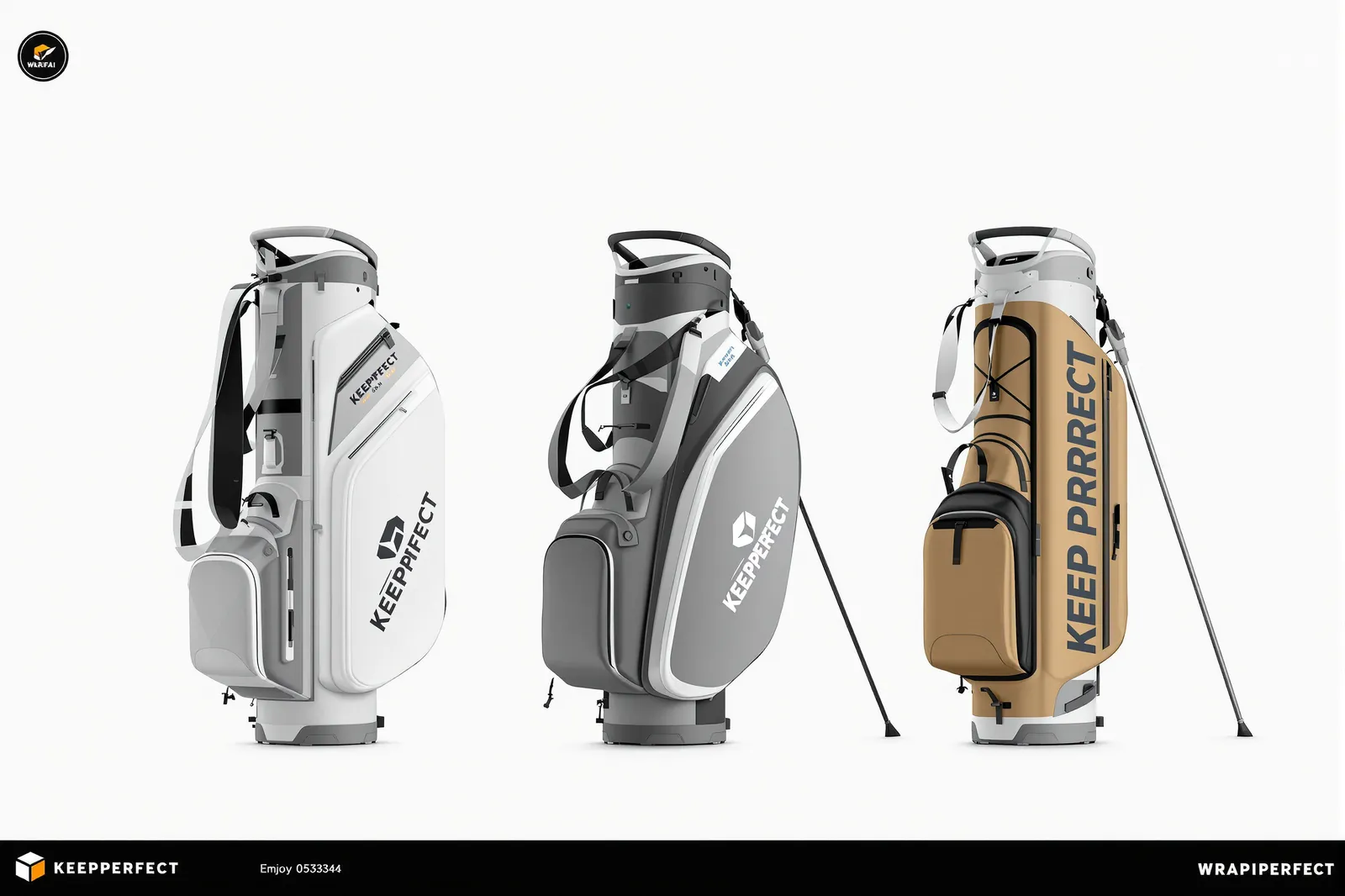
Technology adoption is accelerating because the golfer base is broadening. Juniors and women now form the fastest-growing cohorts per The R&A, and these players want bags that are lighter, better balanced, more weather-secure and easier to organize. Off-course and simulator golf engages over 68 million people, pressing demand for versatile, tech-sensible bags that fit casual and semi-competitive settings. Technology that serves wider participation — not elite tour play — captures the largest and most stable demand pool.
The fastest-growing golfers — juniors, women and off-course and simulator players — value technology that removes friction: bags that are lighter, better organized, weather-secure and comfortable. Serving these cohorts with reliable, buildable technology widens the funnel, and as they graduate through the range they carry their positive experience into upgrades. Technology here is less about novelty and more about serving a broader, newer audience well.
Deciding Which Technologies to Spec
The disciplined decision framework for a brand is to grade each candidate technology on three axes: consumer pull, buildable reliability and margin contribution. Weight, weather and organization score high on all three — spec them early and verify in sampling. Ergonomics earns strong payback on loyalty — invest in strap and frame documentation. Smart features earn premium margins but demand reliability discipline — adopt smart-ready structure first. Sustainability is becoming a procurement baseline — document it early. This staging matches measured demand to realistic factory economics.
Spec discipline also means knowing what to defer. It is often better to omit an unproven feature than to risk the reputation of an otherwise sound line, because a single failing component can dominate every review. The disciplined choice is to ship only what sampling validates and to treat every unauthorized shortcut as a return risk. Over time, a brand built on consistently honest, verified specs earns a premium that no single feature could buy.
Technology choices also have a market-timing dimension. Lead with the buildable, verifiable features the whole line can carry, and reserve experimental electronics for a controlled flagship whose lower volume contains the risk. Watch how buyers and reviews respond before scaling any feature broadly. This staged approach lets a brand ship innovation confidently and correct course cheaply, which is the difference between a technology program and a gamble.
Spec discipline separates real differentiation from feature clutter. The questions that resolve every decision are simple: does it measurably improve weight, weather, organization or comfort, and can the factory prove it in sampling? Features that answer both keep the line honest and comparable; features that answer neither are better cut, because in an online shopping universe an unverifiable feature is not an asset. This two-question screen keeps innovation pointed at the buyer's verified priorities.
Spec disciplined sets of technology tied to verified buyer value. Ask what each feature does for weight, weather, organization, comfort or reliability — and be willing to drop what cannot be measured or defended in sampling. A short list of technologies proven in test and expressed in honest specs will outperform a long list of undemonstrated claims every season.
Working With a Technically Capable Factory
None of this works without a partner who can execute. When you source, screen for documented capabilities across materials, waterproofing, precision construction, ergonomic engineering, smart-ready structure and sustainability traceability — plus strong quality-control depth and reliable scheduling. These are the attributes that make a future-proof line actually deliverable. For a deeper look, our import guide and advanced customization guide cover the practical partner-selection and specification workflow.
The partner that keeps you out of trouble is the one with documented process: cutting tolerances, controlled lamination, consistent hardware torque and inspection checkpoints at key stages. For multi-feature, technology-rich bags, that process discipline is what protects your reputation at scale, because a one-off skilled master can nail a sample but only a controlled process can repeat it a thousand times. Qualify partners on sample turnaround, defect rates and on-time delivery as much as on price.
Reliability Engineering in Tech-Rich Bags
Reliability is the unglamorous bottleneck that separates premium from problem. In any multi-feature bag, the chain is only as strong as its weakest component: one failing zipper, seam or charging port can define the whole product's reputation. Reliability engineering means hardening every touchpoint — tested zipper cycles, sealed entry points, shielded electronics, robust straps — and qualifying each with data. It also means designing for service: replaceable panels or pockets extend lifespan and reduce waste. In a market where data-rich buyers research before buying, a single cluster of reliability complaints can undo years of positioning, while a documented reliability story becomes a durable and defensible competitive moat.
The Economics of Technology Adoption
Adoption economics should drive which technologies you actually launch. Compare each feature against added unit cost, added return risk and the price the market will pay: a capacitor that lifts a flood of returns cancels its own margin. Conversely, a technology that demonstrably reduces returns or commands a transparent premium earns its place. The disciplined method is to price risks, not just benefits, and to scale features only after sampling proves reliability at volume. In practice this means most brands should lead with buildable, verifiable technologies and reserve costly embedded electronics for a controlled flagship rather than the whole line.
Frequently Asked Questions
- What is the most commercially valuable golf bag technology?
- The structural technologies — lightweight material engineering, waterproof construction, precision organization and ergonomic load systems — deliver the most value because they drive weight, durability, weather survival and reorders, and are all verifiable in sampling.
- Are smart GPS and charging features worth adopting?
- Adopt "smart-ready" architecture — weather-sealed device pockets and cable routing — which supports GPS and charging reliably without fragile embedded electronics. Fully embedded electronics remain a premium niche where reliability is the deciding factor.
- How should I verify waterproof claims?
- Require documented construction in the spec — laminated or coated fabric, sealed zippers, taped seams — and validate with ingress testing during sampling, rather than relying on marketing language.
- Why does quality control matter for technology-rich bags?
- Complex, multi-feature bags concentrate risk. Testing depth — load, seam-pull, strap-cycle, zipper-cycle and abrasion checks — converts weight, waterproof and durability claims into documented performance and protects against returns.
- How does participation growth affect technology priorities?
- With juniors and women the fastest-growing golfers and off-course play expanding, demand favors technology that serves broader play — lighter, better-organized, weather-secure, comfortable bags — over elite-only features.