Golf Bag Transport: Get Your Clubs There in One Piece
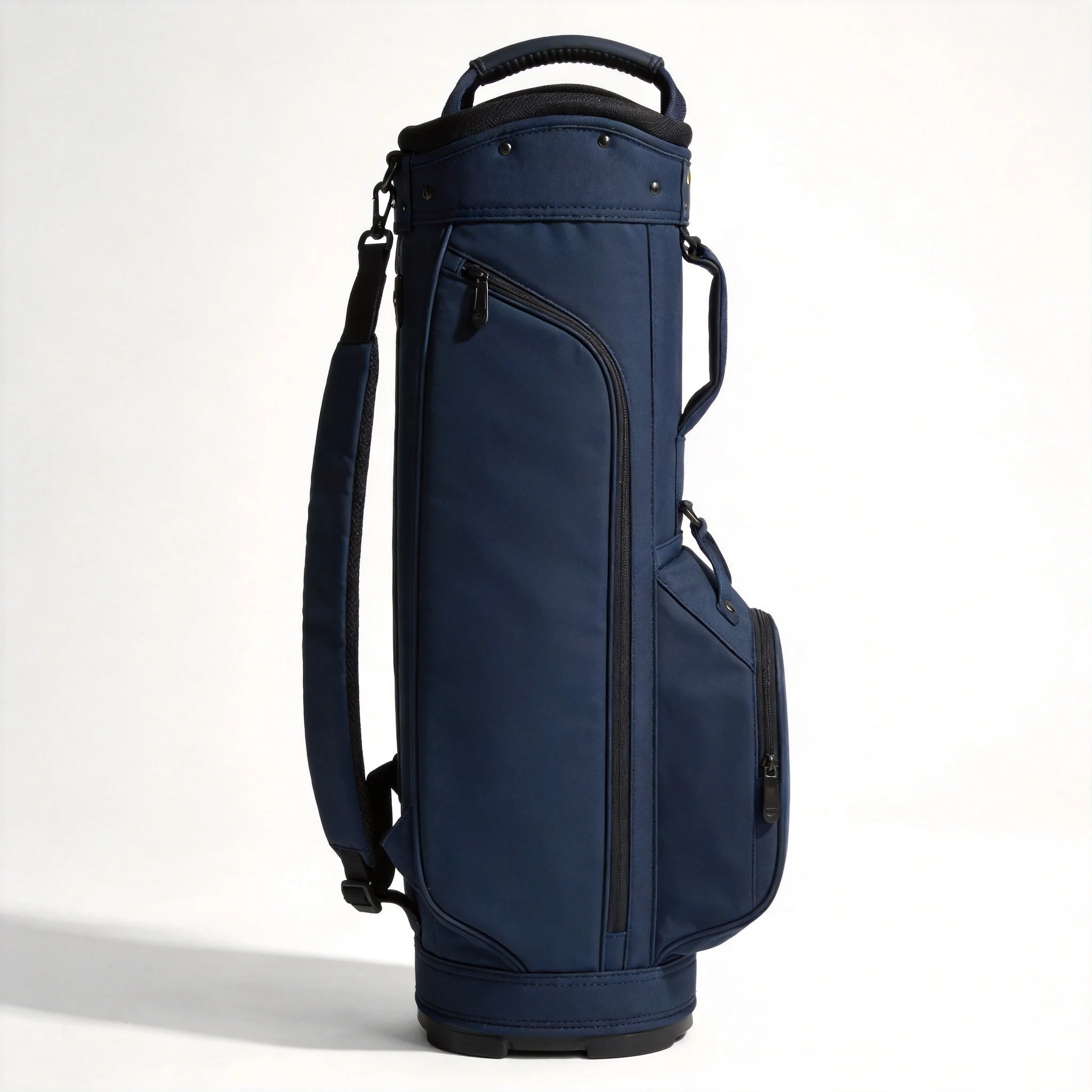
Getting golf clubs from A to B in one piece works best when you plan the whole journey as one system: a correctly sized hard or hybrid travel case, clubs packed with heads inverted and a spine bar across the top, an airline weight profile under 23-50 lb depending on carrier, and — for long or fragile legs — a shipping or ship-ahead option instead of the baggage hold. Handling damage is concentrated in the two or three transfer points of a trip, not in the miles flown, which is why a bag that survives the car, train, boat and two airports is the real test. This guide covers the full door-to-door journey, the rules that apply at each leg, the insurance reality, and what a factory should build into a transport-ready bag.
Most golfers optimise only the airline leg and then are surprised when the damage happens on the ground — in the taxi boot, on the shuttle, across the ferry, or in a hotel luggage room. Transport is a chain, and a chain is only as strong as its weakest leg. The practical approach below treats the travel case, the packing method, the routing and the tracking as one engineered system, borrowing the same thinking a good factory applies when it tests a bag for the real world rather than for a brochure.
Why Transport Is a Chain, Not a Single Flight
A round trip that involves a flight is rarely only a flight. Typically it is: home door to car boot, car to terminal curb, curb to check-in trolley, trolley to scale, hold to aircraft, aircraft to destination carousel, carousel to shuttle, shuttle to hotel, and a return reverse. Each handover is a point where the case can be dropped, stacked or crushed. The most common source of cracked tips and bent shafts is not the aircraft hold but the brutal transfer between handling trolleys and belts, compressed under stacks of other checked luggage.
Once you see transport as a chain, the buying decision changes: you do not want the heaviest case that protects perfectly in the hold if it makes the car and shuttle legs unbearable, nor the lightest cover that saves your back but leaves clubs exposed in the carousel. The right case balances the whole journey, which is why a moderately reinforced hybrid or soft-and-spine design often beats an extreme at either end. The hard vs soft comparison lays out that balance in detail.
The Airport Journey, Step by Step
Map the airport in advance to protect the case at each transfer. Tighten every external zip, close and lock the case well before the queue, and keep the weight under the carousel label. At check-in, choose a scale-friendly weight and be ready to repack shoes into your carry-on at the desk rather than argue. Put a durable luggage tag on the case AND on the bag inside it, because cases are separated from contents during inspection and the inner tag is what reunites them.
At the carousel, wait for your case rather than spotting one that merely looks similar — identical black hard cases are the top source of lost golf clubs at reclaim. Photograph the case open and closed with the tag visible before you hand it over, and move quickly to the airline's baggage office if it does not appear within a reasonable window. Every step described here is expanded in the air-travel protection guide, which takes the same journey from the facility angle.

Airline Rules, Distilled to What Matters
The airline leg has a handful of rules that decide everything. First, IATA's recommended practice that clubs longer than about 3 ft (91 cm) are exempt from the 62-in (157 cm) linear-size limit, which is why golf bags are accepted as ordinary checked items nearly everywhere. Second, the weight cap — typically 50 lb (23 kg) in US economy and 23 kg in most others — is the number that actually bites a packed hard case. Third, the fee: a first checked bag, a flat sports fee, or a fold-into-the-allowance model depending on the airline and class. Fourth, hazardous-goods limits: some carriers restrict loose lithium batteries in club accessories and insist smart trolleys be carried differently.
| Transport mode | Typical rule | Main risk | Protection answer |
|---|---|---|---|
| Aircraft checked hold | Length exemption over 3 ft | Drop and stacking | Hard or spined case, heads inverted |
| Car / rental | Boot clearance and strapping | Pinching and sliding | Kerb wheels, secure tie-downs |
| Shuttle / taxi | Boot and roof-rack limits | Squeezed flat | Compact case profile |
| Train / ferry | Luggage zones and weight tickets | Slide and crush under racks | Locked, tied, upright |
| Ship-ahead parcel | Courier dimensions and customs | Transit shocks and delays | Fragile label, double-box |
The practical takeaway is to check the current policy at booking and again close to departure, because weight ceilings and fees changed through 2025. Buy a small travel scale and weigh the packed case as a routine, not an afterthought. For a region-by-region view of how carriers treat clubs, the size requirements overview is the reference table to keep in your phone.
International Transport: Shipping, Freight and Customs
For long-haul or event travel, shipping clubs ahead by courier or using a golf-specific ship-ahead service often protects them better than the hold and frees your baggage allowance for apparel. The trade-offs are cost, timing and customs. Domestic parcel shipment inside one country is straightforward — book 7-14 days ahead, pack in a double corrugated carton around the travel case, and mark it fragile. Cross-border shipment adds a customs declaration: clubs are personal sporting equipment, but duties, VAT and temporary import rules vary by country, and some circuits advise a Carnet or an ATA document for high-value sets.
Ships-ahead makes sense for a two-week trip to a fixed resort, a tournament, or a golf holiday with a hotel that keeps a luggage room. It is rarely worth it for a weekend hop. Read the carrier's insurance and maximum-declared-value terms, because a parcel travels under courier liability that may be far below replacement value. For the compliance side of bringing goods across borders in reverse, the guide to importing golf bags and EU compliance and the international-trade export notes cover the rules in more practical depth.
Ground Legs: Car, Taxi, Train and Boat
The ground legs are where most cases first get their scuffs and dents. In a car or rental, lay the case on its widest flat side, space the clubs clear of the suspension hump, and strap the case down so it cannot slide under hard braking. In taxis and shuttle vans, confirm boot clearance before you load; a 39-47 in hard case does not fit every saloon boot, and drivers have refuse loads that crush bags propped against spare wheels. On trains and ferries, keep the case upright and locked so it cannot slide under racks and pinch the lock against the frame.
These are exactly the scenarios a factory tests when it validates kerb-wheel strength, handle torque and base-plate rigidity rather than just shell thickness. A case that survives the dry-run of rolling a loaded 40 lb bag over a kerb twenty times and pivoting it into a boot is a case you barely think about on the ground, which is the whole point.
Protection Systems Built for Every Leg
Layered protection pays off on a multi-leg trip. Under the travel case, a fitted club-bag cover keeps the stand-bag zips shut and the legs tidy and stops the bag's own pockets from abrading on car batteries and boot edges. Around the club heads, a head-cover bundle or stretchable sleeve plus a spine bar keeps the most fragile points cushioned. On the outside, a high-visibility tag and a coloured strap not only identify the case but give handlers a hand hold that avoids the lock.
The three layers — bag cover, spine-and-head sleeve, and outer case — distribute the force so that the cheap parts (the sleeve, the strap) take damage first and the expensive parts (shafts, heads, the travel case hinge) survive. Keeping spares of the cheap parts in the case means a scuffed sleeve is a two-minute swap, not a ruined trip. Our complete packing guide shows the full layering sequence with the 12 steps.
Packing for the Multi-Leg Trip
A multi-leg journey needs a packing method that survives repacking. Pack once, properly, and then resist touching it: each reopen at a hotel or ferry adds a chance to leave the spine bar out or re-zip a compartment loosely. The professional sequence is heads removed or inverted, sleeves fitted, spine bar placed over the shafts, club-bag zip secured, case zips closed front to back, lock with a TSA lock, and an inner tag plus an outer tag both with the destination and phone number.
Use the dead space for low-risk bulk like shoes and soft items that double as padding, and keep the delicate rangefinder and valuables in your carry-on, not in the checked bag. Weigh the closed case before each leg whenever a different carrier is involved, because a weight that was fine on the way out may exceed a tighter budget on the way home. Free water-bottle bags and cargo nets in cars are also worth tucking in for pickups you did not anticipate.
Weight and Balance Across the Whole Journey
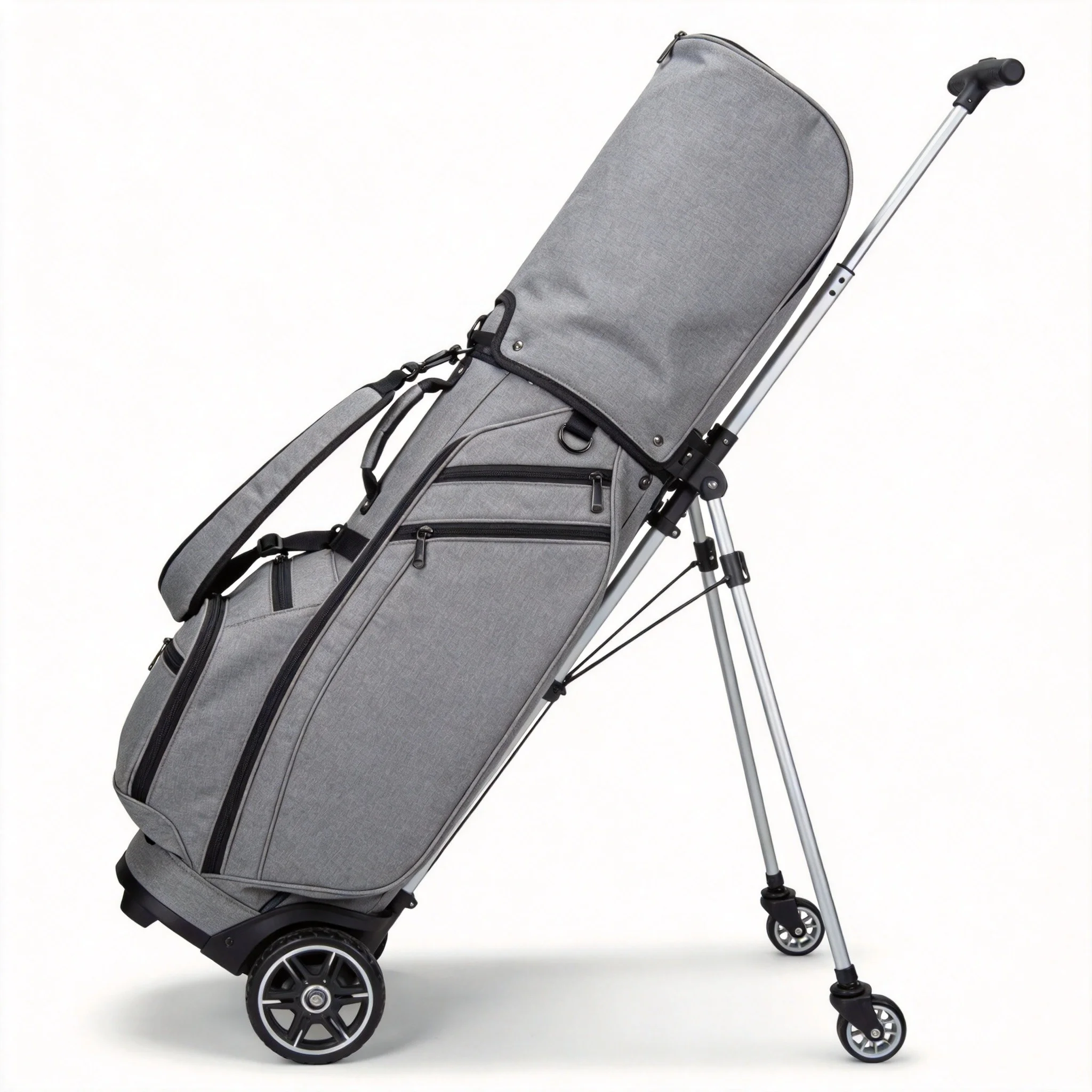
Weight is the constraint that repeats on every leg, and it compounds. The empty case weight is half the story; the packed weight is what the airline scale sees, what the taxi driver heaves, and what your shoulders feel on a train platform. A well-planned case keeps the centre of gravity low and balanced by putting the heaviest clubs (driver, woods) at the bottom of the bag and shoes at the base of the case, so the case does not tip when you set it on two wheels.
A useful discipline is to set a personal packed-weight ceiling even when the airline allows more, because 45 lb in a hard case across a ferry, train and shuttle is genuinely exhausting. Pack heavy items in your soft carry-on where possible, and remember that the airline counts total checked weight, not just the golf bag, against non-piece allowances. The weight and portability notes in the wider guide range cover the numbers behind a comfortably carried set.
Tracking Your Bag Through Every Leg
A Bluetooth tracker inside the case changes the transport equation. Slip a battery tag into an internal pocket and the phone tells you whether the case is on the plane, on the carousel, or stuck at a transfer even when the airline's own tracking is vague. Airlines increasingly issue bag-tag references that pair with apps, but an independent tracker covers the ground legs the airline never reports on — the shuttle, the taxi and the hotel rack. Replace the tracker battery each season and disable it for flights where loose lithium batteries are restricted or carry it separately per the airline rules.
Tracking does not prevent damage, but it does let you act fast: a case that has not moved in four hours at a hub is worth reporting early, and early reporting is what usually recovers a lost bag. Keep the tracker's serial and the case photos in a note that survives a phone switch. This is the same traceability mindset a factory applies to a batch, and the smart-technology features in the innovation guides reflect how the industry is converging on it.
What Insurance Covers and What It Does Not
Baggage liability and club insurance are different things, and the gap is where owners lose money. Airline checked-baggage liability is capped at a modest per-kilogram amount — usually far below the replacement value of a premium set — and covers the suitcase, not necessarily the individual golf clubs at their market value. A home contents policy or a dedicated sports-equipment rider is the usual answer for full replacement value, and some travel cards add baggage cover on top. Read the "valuables" exclusion: many policies refuse high-value items inside checked luggage.
Before a trip, photograph the set and keep the receipts. When damage happens, a clear photo of the case and clubs plus the boarding stub settles a claim faster than a verbal account. For frequent flyers the cost of a rider is trivial against the replacement of two or three shafts, and the shipping route, if used, carries its own declared-value cover that you should confirm at booking. The insurance chapter of the transport guide in the broader library expands the claim procedure.
Ship-Ahead and Resort Transport
For fixed-destination trips, ship-ahead is often the best protection-to-hassle ratio. You pack the travel case once, hand it to a courier, and it meets you at the resort or clubhouse days later — no carousel, no transfers, no taxi boot. Pick a vendor with insurance and a stated safe-arrival guarantee, book at least a week ahead, and label the case with the resort name and arrival date. Many courses have a recommended luggage-forwarding partner and a designated room.
The downside is timing and cost: if the parcel is delayed, you may play the first round on hire clubs, and cross-border shipments add customs friction. Ship-ahead pays for itself on a two-week trip with valuable clubs; it is wasted on a weekend. Matching price and protection to the trip length is the same judgement as choosing hard versus soft, and the value analysis in the cost guide helps you find your own threshold.
How a Factory Builds a Transport-Ready Bag
A transport-ready bag is engineered, not decorated. A good maker starts with the material that resists cold-crack and abrasion, adds a heat-sealed water-resistant liner, then reinforces the four load points — base plate, spine, wheels and closure — before addressing pockets and branding. It tests wheel roll under a realistic 40-45 lb load, hinge torque to thousands of cycles, seam sealing against water, and a drop test from a height that mimics a carousel transfer, and it keeps a documented record a buyer can audit. Our affiliated 4,950 m² facility, established in 2014 with 20 years of golf expertise since 2004, runs seven production lines (126 sewing machines, 137 staff) and 200,000 bags a month for 200+ brands across 100+ countries, certified by an SGS audit in March 2026. Sampling runs 10-20 days and bulk 45-60 days at a 200-piece MOQ (100 for test orders).
Retailers and brands sourcing transport cases should ask for the wheel-load and drop-test report, the zipper cycle rating, the cold-crack behaviour of the shell, and the insurer's declared value. The custom OEM golf travel bags sourcing guide and the impact-resistance standards reference give the concrete checklist to run before you sign a batch, connecting factory capability to your exact airline and route mix.
A practical door-to-door routine keeps the travel day calm: confirm the airline's current weight cap at booking and again 72 hours out, weigh the packed case with a travel scale, fit a fresh tracking-tag battery, photograph the case with its tags, and keep the spine bar, sleeves and a spare strap where you can reach them. On the morning of the flight, close the outer zips front to back, lock with the TSA lock, and attach both an outer and an inner destination tag. On arrival, wait for your own case at the correct carousel, keep the photo evidence ready, and check for dents or scuffs before you leave the reclaim area. This routine absorbs about ten minutes and prevents the vast majority of the small, avoidable failures that turn a good trip into a frustrating one.
The same discipline scales to a brand sourcing for a market: the factory holds every case to weight ceilings, engineered wheel and seam evidence, and a traceable test record buyers can audit, mirroring the care a traveller applies per trip. When every case in a range ships with a documented test record, a retailer sells certainty rather than a box, which is exactly the positioning described in the retail custom travel bag guide.
Conclusion
Transporting a golf bag well is not about one heroic case or one packing trick: it is about treating the whole journey — car, airport, hold, shuttle, boat and hotel rack — as a single system with weight, protection and tracking managed at every handover. Choose a case that balances protection with the ground legs you actually do, pack with the fragile points first and padding last, keep the packed weight on a scale, track the case across every leg, and insure the true replacement value. When you source the equipment rather than shop for it, hold the factory to real drop, wheel and seam evidence. Do all of that and the clubs arrive looking exactly as they left — one piece, ready for the first tee.
Sources
Frequently Asked Questions
- How should I protect my golf bag during air travel?
- Pack with the club heads removed or inverted, place a spine protection bar over the shafts, secure all zips and pad the dead space, then close the case and lock it with a TSA-approved lock so it survives transfers and inspection.
- What is the airline weight limit for a golf bag?
- Most economy allowances cap a checked golf bag at about 50 lb (23 kg) on full-service carriers and 20-23 kg on low-cost and some international routes. Weight, not length, is the limit that usually bites, so weigh the packed case.
- Should I ship my golf clubs ahead instead of checking them?
- Ship-ahead protects clubs best for long or fixed-destination trips — no carousel, no transfers — but adds cost and customs time. It is right for a two-week resort stay with valuable clubs, rarely worth it for a weekend hop.
- Do airlines treat golf bags as oversized luggage?
- Under IATA recommended practice, clubs longer than about 3 ft (91 cm) are exempt from standard linear-size limits, so a golf bag is treated as a normal checked item. Confirm the weight cap and fee at booking.
- Is a Bluetooth tracker worth putting in a travel bag?
- Yes. A tracker covers the ground legs an airline never reports on, lets you act early if a case is stuck at a transfer, and materially improves the chance of recovering a delayed bag.
- Does standard airline liability cover the full value of my clubs?
- No. Airline checked-baggage liability is capped far below the replacement value of a premium set. Use a home contents rider or dedicated sports-equipment policy for full cover, and photograph the set before flying.
- What is the most fragile part of the clubs in transit?
- The driver and wood heads are the single most fragile points, followed by the ferrules and shaft tips. Inverting the heads and cushioning the top of the bag are the two steps that prevent most cracked-tip damage.