How a Golf Travel Bag Protects Clubs During Air Travel

A golf travel bag protects clubs during air travel through four layered defences: a padded or stiffened top that shields club heads, cushioned dividers that stop clubs colliding, a reinforced base and sides that resist the scuffs of handling, and a robust zip, handle and wheel system that keeps the bag closed and controllable from check-in to carousel. Protection is not one feature - it is the sum of construction, materials and how you pack, and a bag that gets all four right reliably delivers fourteen clubs in the same condition they left the course. This guide, from QUANZHOU JUNYUAN BAGS, explains the engineering behind protected air travel. Our founder entered the trade in 2004 and the company was established in 2014; we build on an affiliated 4,950 m² main factory across seven production lines and 126 sewing machines."
The Enemy: What a Travel Bag Actually Faces
To understand how a travel bag protects, you have to understand what it protects against. Between leaving the clubhouse and reaching the destination, a checked golf bag is pushed onto conveyor belts, loaded into containers, stacked with other luggage, slid across carousels and sometimes dropped from height. It faces abrasion against rough surfaces, compression under heavy loads, vibration through transit, and impact on hard edges - all while containing fragile graphite shafts, delicate grips and expensive club heads.
The most vulnerable part is the club head - it is the widest point, the part that takes a direct knock, and the most expensive to replace. Graphite shafts are second: they are strong along their length but brittle across a tight radius, so a lateral crush or a hard point-load can crack or snap them. Grips are softer and mark easily. Protection therefore concentrates on the heads and on preventing the shafts from flexing or being crushed against anything hard.
Handling reality also matters. No amount of engineering removes every risk from an airline system that moves millions of bags, but the best bags reduce the severity and frequency of damage dramatically. The honest goal of a travel bag is to make routine damage - the scuffs, scrapes and light knocks of ordinary handling - harmless, and to turn the rare heavy blow from a cracked head into a cushioned shock. Protection is about odds, and good construction changes the odds.
QUANZHOU JUNYUAN BAGS builds golf travel bags on an affiliated 4,950-square-metre main factory that entered the industry when our founder started in 2004 and was established as a company in 2014. The facility runs seven production lines with 126 sewing machines and a team of 137 staff, supporting a monthly capacity of up to 200,000 units for more than 200 brands across 100+ countries. Sampling typically takes 10–20 days and bulk production 45–60 days, with a standard MOQ of 200 pieces and 100 for test orders. The factory was independently audited by SGS in March 2026. Contact service@junyuanbags.com or +86 17750020688.
The Padded Head: The First and Most Important Layer
The single most important protective element is the top of the bag that covers the club heads. Whether it is a padded, plush-lined hood on a soft bag, a rigid injection-moulded top on a hard case, or a foam-stiffened shell, this section absorbs the impact that would otherwise reach the heads when the bag is dropped or stacked on its end. Getting this layer right is non-negotiable for safe air travel.
In a soft bag, the head area typically layers a stiff outer panel, a dense impact-absorbing foam, and a plush inner lining that cushions and grips the heads so they do not rattle against each other. Some designs add an internal frame or stiffener that holds the top in shape, preventing the padding from even being compressed flat. The combined effect is to spread a point impact across a wide area and turn a hard knock into a gentle press.
Hard cases go further with a rigid shell that physically will not be crushed at the head. A moulded hard top deflects the force rather than absorbing it, which is why hard cases protect heads so well on the roughest routes. Whether soft or hard, the principle is the same - isolate the heads from impact - and the strength of the top is the strongest single predictor of how well a bag protects.
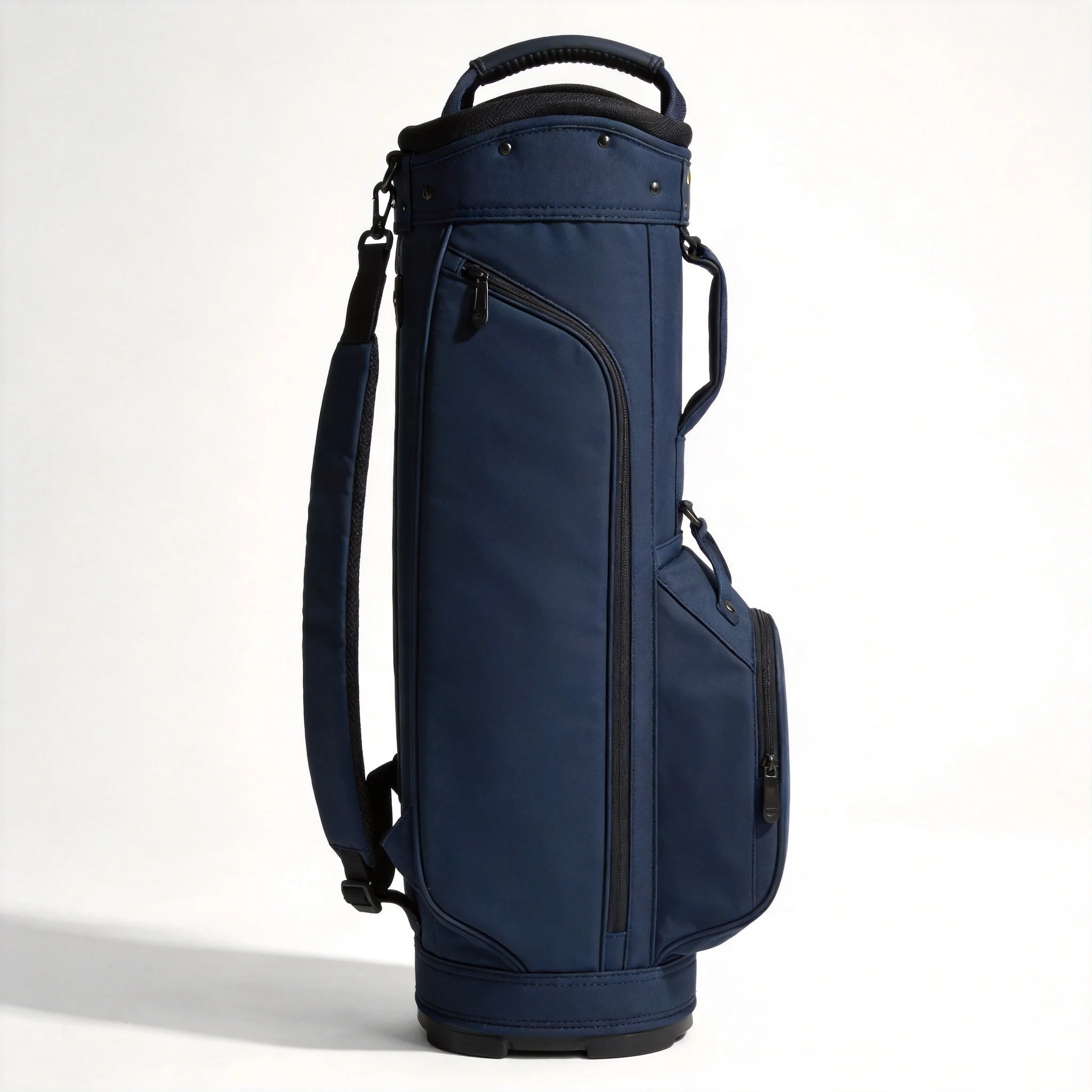
Head Defence
A padding and stiffener stack absorbs impact around the vulnerable heads.

Rigid Top
A moulded hard shell physically deflects head impact on rough routes.
Internal Layout: Dividers, Cushioning and Shaft Control
Inside the bag, the layout determines whether clubs stay protected from each other. Full-length dividers separate the clubs so heads do not collide and grips do not tangle; padded dividers add a cushioning layer at the top over the heads; and soft compartments hold the shafts in place so they do not flex sideways under load. A well-designed interior is as important as the padded top, because club-on-club contact is one of the most common causes of cosmetic and even structural damage.
Shaft control deserves its own mention. Graphite shafts are strong axially but break under a sharp lateral load or a tight-radius flex. A good travel bag keeps the shafts reasonably vertical and supported, so a load pressed onto the top of the bag is carried by the bag's structure rather than bending the shafts. Some designs add a compression pad or foam wall that holds the ensemble snug, reducing cavity movement and shaft flex.
Careful packing multiplies the interior's value. Protecting the heads further - by placing a towel or protective item around the most vulnerable driver and woods - and distributing weight so clubs sit upright and balanced prevents the jostling that even good dividers cannot fully stop. The bag's interior design and the traveller's packing technique work together; the best interior rewards sensible packing.
Reinforced Base and Sides: Surviving the Scuffs
The base and lower sides are the parts of a travel bag that make contact with everything - the ground, the conveyor, other luggage. On wheels? The base of an un-wheeled bag takes the scuffs when set down; a wheeled bag's lower frame and wheels carry the load, but the sides still shield the club shafts from knocks. A reinforced base - a stiffened or double-thickness panel with a water-resistant or abrasion-resistant foot - protects both the bag and its contents.
Wheeled travel bags bring the load and the protection together. A robust wheel system lets the bag roll smoothly over tiles, kerbs and carousel transitions rather than being dragged, which spares the shafts from being shaken. The base still needs reinforcement so the lower structure, and the shafts above it, are not damaged if the bag is dropped on its end or bottom. Base and wheels are designed as a system in our travel-wheels product line.
Side reinforcement handles the lateral knock that does the most damage to shafts. A stiffened side panel or a reinforced perimeter frame stops a suitcase being dropped against the bag from collapsing the side toward the shafts. On a soft bag this usually means a dense panel or an internal frame; on a hard case the rigid shell does the job completely. The more the side resists penetration and deflection, the safer the shafts it contains.
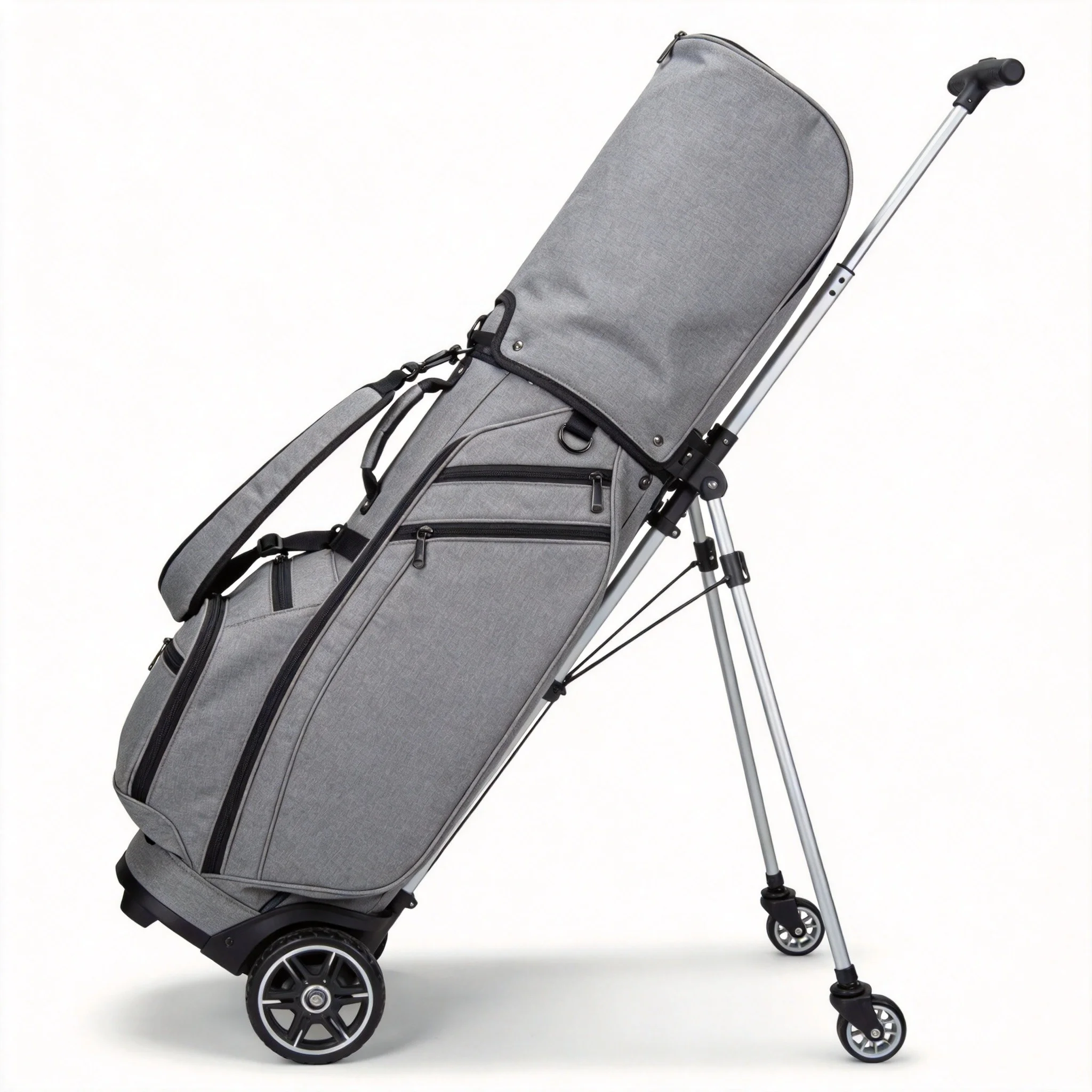
Base & Wheels
A reinforced base and robust wheel system carry and protect the bag from check-in to carousel.
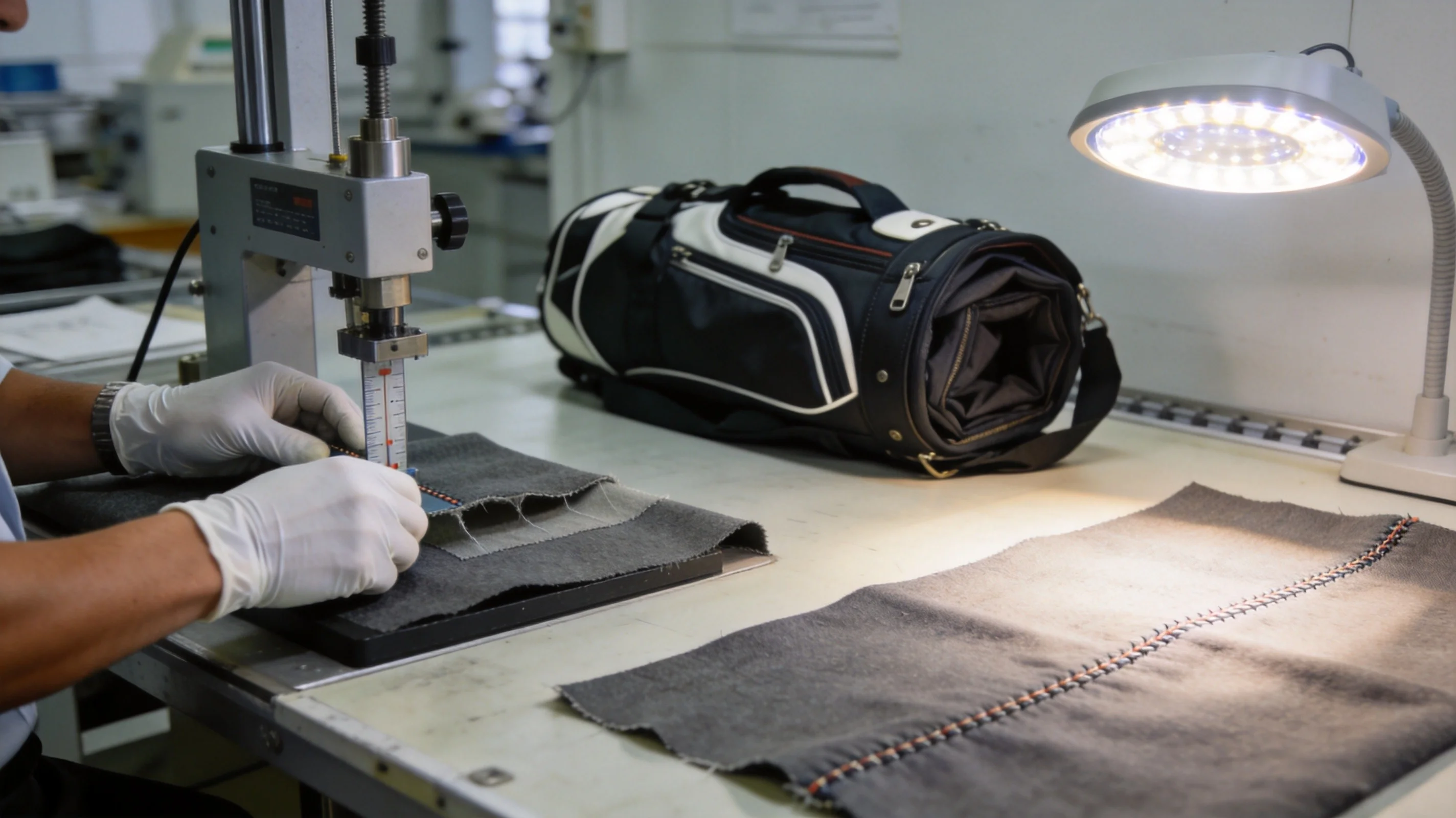
Tested Hardware
Documented inspection checks the base, wheels, zips and seams that take the wear of air travel.
Zips, Handles and Locks: Keeping It Closed and Controlled
A bag that opens or tears in transit offers no protection at all, which is why the closures are an overlooked but critical element. Heavy-gauge zips with a water- and dust-resistant finish keep the bag sealed and the contents contained, and a strong zip line prevents a blow to the closure from bursting the bag open. Reinforced stitching around the zips and handles stops the most stressed seams from pulling under load.
Handles carry a loaded bag, and a weak or poorly anchored handle is a real risk. The main carry handle should be wide, padded and anchored into the bag's frame or reinforcement, not sewn to a single layer of fabric. Multiple handles - top, side and lower - give safe, balanced lifting options. Locks let the traveller secure the closure against accidental opening and, for hard cases, often allow TSA-approved locking for added security and peace of mind.
Airline handling is rough on hardware, so the mechanical parts have to be over-specified. A heavy-gauge zip should run freely for years, a handle should lift a fully loaded bag without strain, and a lock should engage reliably. These are exactly the components our quality-control process tests at every stage. When the closure system holds and the handles are trustworthy, the bag stays closed and controllable - and the clubs stay protected.
How to Pack to Maximise Protection
Packing is the multiplier that turns good construction into actual protection. Start with the club heads: place protection around the most vulnerable driver and woods, and ensure the padded top or hood sits securely over them. Keep the clubs upright and reasonably tight so they do not slide and knock. Then distribute the remaining weight - shoes, balls, accessories - low and central so the bag is balanced, easy to lift and rolls without tipping.
Weight and balance directly affect protection. An evenly loaded bag is more stable, less likely to tip onto one end, and less likely to shift the clubs into contact during transit. A bag that is overfull strains the zips and panels; one that is underfull lets contents rattle. The sweet spot is a snug, balanced load - heavy items guarded at the base, fragile items cushioned at the top - kept within a sensible total weight.
Our packing guide walks through the technique in detail. The practical rules - protect the heads, keep clubs vertical, balance the weight, keep the bag within limits, close and lock it properly - are simple, but they compound the bag's engineering. A well-packed bag in a good travel case is the closest thing to guaranteed safe delivery that air travel offers, and it is worth the few minutes it takes every trip.
Packed for Flight
Protecting heads, balancing weight and keeping the bag within limits completes the protection the construction begins.
Soft vs Hard: Which Protects Better in the Air
The soft-versus-hard protection question is really about how much crush resistance you need versus how much weight and cost you accept. A well-built soft bag with a stiffened top, dense padding and reinforced sides protects well on normal handling and is lighter, cheaper and easier to store. A hard case protects best against the rare crushing blow, at the cost of weight, bulk and price. Neither is universally better; each suits a different travel pattern.
For expensive, difficult-to-replace clubs on high-touch or long-haul routes, the hard case is usually justified - the extra weight is a modest price for the strongest available defence. For a standard set on routine flights, a good soft or wheeled-soft bag delivers strong protection while keeping weight and fees in check, and is more likely to be used regularly. Matching the shell to club value and travel reality is the reliable method.
Some travellers combine both, exactly as the product lines intend: a soft or wheeled-soft bag for most trips and a hard case deployed only for the journeys that demand maximum protection. Our hard-shell versus soft comparison examines the trade-offs in full. Whichever shell you choose, the protective layers described here - padded head, cushioned interior, reinforced base and sides, robust closures - are what actually safeguard the clubs.
Verifying That a Bag Will Protect: Testing and Standards
Protection claims should be backed by evidence, and that evidence comes from testing and standards. Look for a bag whose construction is verified: impact resistance of the shell, fabric strength and abrasion resistance, zip cycle ratings, and reinforcement at load-bearing seams. Documented quality-control inspection at each production stage - materials, sewing, assembly, finish - is the internal discipline that turns a good design into a reliable product.
Independent verification adds confidence you can trust. Our factory passed an SGS audit in March 2026, and material and test methods from bodies such as ASTM International underpin the fabric and durability expectations of serious travel gear. When a manufacturer can point to concrete test evidence rather than vague claims, the protection specification becomes something you can rely on in the field.
In practice, verify what you can before buying: ask for the empty weight, the materials, the padding structure and the quality process, and inspect a physical sample or a documented example. A travel bag is a safety product for your clubs, and it deserves the same verification you would give any equipment you trust with something valuable. Honest, test-backed specifications are the difference between a claim and a protection guarantee.
Protecting Clubs Across Every Journey
Air travel is the hardest test a golf bag faces, but the protective principles apply on every journey. On a road trip, the same padded head, cushioned interior and reinforced base shield the clubs from car-boot knocks and sharp luggage. In storage, the reinforced structure keeps the bag's shape and protects the clubs from dust, sunlight and moisture. A bag built for air travel quietly protects across all its uses.
Consistency is the reward of good design. The traveller who uses the same protective bag, packs it the same protective way, and trusts the same verified construction develops a reliable routine - and the clubs arrive intact every time. That reliability is what a well-engineered travel bag buys: not a single heroic rescue, but a dependable performance on trip after trip.
Ultimately, protection is a system built of many layers - padded head, cushioning, reinforced base and sides, robust closures, and careful packing - all working together. No single feature makes a bag protective; the whole does. When you buy a travel bag from a manufacturer that engineers and verifies those layers as a system, you get the closest thing to a guarantee that your clubs will cross the miles the same way they left.
Protection You Can Verify and Trust
Claims about protection should be backed by evidence, which is why documented quality control and independent verification matter. Look for construction that specifies materials, padding and the reinforcement at load-bearing seams, so you can judge how the protective layers will perform in the field. The most trustworthy bag is one whose specification and processes are transparent, letting you compare it honestly against alternatives and trust the protection you are buying.
Independent verification adds a layer of confidence you cannot get from a brochure. Our affiliated factory passed an SGS audit in March 2026, and recognised material and impact test methods such as those from ASTM underpin the durability and shock-absorption expectations of serious travel gear. When a manufacturer can point to concrete test evidence rather than vague language, the protection description becomes something you can rely on across the miles airlines put between you and the course.
In practice, verify what you can before you buy: ask for the empty weight, the materials, the padding structure and the quality process, and inspect a physical sample or a documented example where possible. A travel bag is a safety product for your clubs, and it deserves the same verification you would give any equipment trusted with something valuable. Honest, test-backed specifications are the difference between a claim and a protection guarantee you can depend on.
Protection Layers in a Golf Travel Bag
This table summarises the protective layers of a good golf travel bag and what each one prevents.
| Layer | What It Protects | How It Works |
|---|---|---|
| Padded / stiffened head | Club heads | Absorbs or deflects impact at the top |
| Cushioned dividers | Heads & grips | Stops club-on-club contact |
| Interior shaft control | Graphite shafts | Keeps shafts vertical, reduces flex |
| Reinforced base & sides | Shafts & structure | Resists scuffs and lateral knocks |
| Robust zips / handles / locks | The whole load | Keeps bag closed and controllable |
| Balanced packing | All the above | Multiplies every protective layer |
Protection is the sum of these layers plus how you pack. A bag that performs on all of them reliably protects clubs across every journey.
Fly With Clubs You Can Trust on Arrival.
Choose a golf travel bag engineered with a padded head, cushioned interior, reinforced base and robust closures - verified by documented QC and SGS-verified facilities. Explore travel protection options.
See Travel Protection Options →Frequently Asked Questions
- What is the most important protection feature in a travel bag?
- The padded or stiffened top that covers the club heads is the most important single layer, because the heads are the most vulnerable and costly part.
- Can a soft bag protect my clubs on flights?
- Yes - a well-built soft bag with a stiffened top, dense padding and reinforced sides protects well on normal airline handling.
- Do I need to pack the clubs in a protective way?
- Yes - packing multiples the protection: protect the heads, keep clubs vertical, balance weight and keep the bag within limits.
- Are hard cases better for flying?
- Hard cases protect best against crushing on high-touch routes but weigh more; match the shell to club value and travel pattern.
- How do I know a bag will really protect?
- Look for documented quality control, independent verification (ours is an SGS audit of March 2026) and honest weight/materials specifications.
- How often should I check a travel bag?
- Inspect zips, wheels, base, seams and padding after each trip and repair minor issues early so protection stays intact.
Sources
- USGA — golf equipment and protection references supporting bag design guidance.
- ASTM International — material and impact test methods informing protection expectations.
- SGS — independent factory verification supporting manufacturing quality claims.
- IATA Baggage — checked-baggage handling context informing protective design.
Related Reading
Explore more of our expert guidance on golf travel bags and manufacturing to plan the right product for your next trip or program:
- Travel covers for golf clubs and equipment — protection lines that shield clubs across every journey.
- Hard case travel protection — rigid-shell protection for the roughest routes.
- Hard-shell vs soft-shell compared — which shell type protects best on which kind of travel.
- Golf bag quality standards guide — the QC and verification that back protective claims.
- How to pack a travel bag — maximise protection with correct packing technique.
- Factory-direct wholesale — economical sourcing of protective travel bags.