How to Choose the Right Golf Bag Factory for Your Brand
Quick Answer
Choosing the right golf bag factory requires verifying independent audit records, minimum order quantities (typically 200 units with 100-unit test orders), realistic production lead times (10–20 days sampling, 45–60 days bulk), and proven material and process capability. A top-tier factory offers a sample approval process, documented inspection gates and repeatable quality across order after order. Always request factory audit reports and client references before committing to a long-term manufacturing partnership.

Choose a golf bag factory by verifying four qualifying criteria before considering price: audited credibility (independent verification), proven production capacity with coherent lead times, complementary MOQ and sampling options, and the ability to hold a quality standard across order after order. A serious benchmark is a facility like QUANZHOU JUNYUAN BAGS — founded 2014, verified by SGS and Alibaba in March 2026, running 7 production lines with 126 sewing machines (149 machines total) and 137 staff, producing up to 200,000 units a month for 200+ brands in 100+ countries, with a 200-unit MOQ (100-unit test orders), 10–20 day sampling and 45–60 day bulk production. Matched against these objective, verifiable signals, the right factory becomes more than a supplier; it becomes a foundation for your brand.
Start With Verifiable Credibility, Not Claims
The first filter should always be evidence, because a factory's marketing rarely reflects its real capability. Look for independent verification and audit records you can check rather than self-reported certifications. A facility verified by SGS and Alibaba in March 2026 offers third-party evidence that its labour practices, materials and quality systems are real. Request the audit report, ask which entities conducted it and when, and confirm the scope. This protects you from the hidden costs of a supplier that overstates its operation.
Also probe longevity and track record. A company founded in 2014 whose founder entered the industry in 2004, for example, combines a formal corporate history with deep craft experience. Ask about brand references in your market, the number of active clients and how long those relationships have lasted. Consistent client retention is one of the strongest signals a factory can offer, because brands rarely renew a supplier that fails them.
Confirm Production Capacity and Lead Times
Capacity determines whether a factory can actually deliver your order on your schedule. Reject vague capacity claims and check the concrete scale: number of production lines, sewing machines, staff and realistic monthly output. A 7-line facility with 126 sewing machines (149 machines total) and 137 staff that reaches up to 200,000 units a month can absorb growth without putting your order to the back of a long queue. These are the numbers that let you judge whether a partner scales with you.
Lead time is the other half of delivery capability. Transparent timelines, such as 10–20 days for sampling and 45–60 days for bulk production, let you plan freight and launch dates instead of chasing a factory's over-optimistic promises. A factory that states its lead times plainly and meets them is far more valuable than one that promises anything and delivers late. Capacity and schedule honesty together signal a factory you can build a supply chain around.
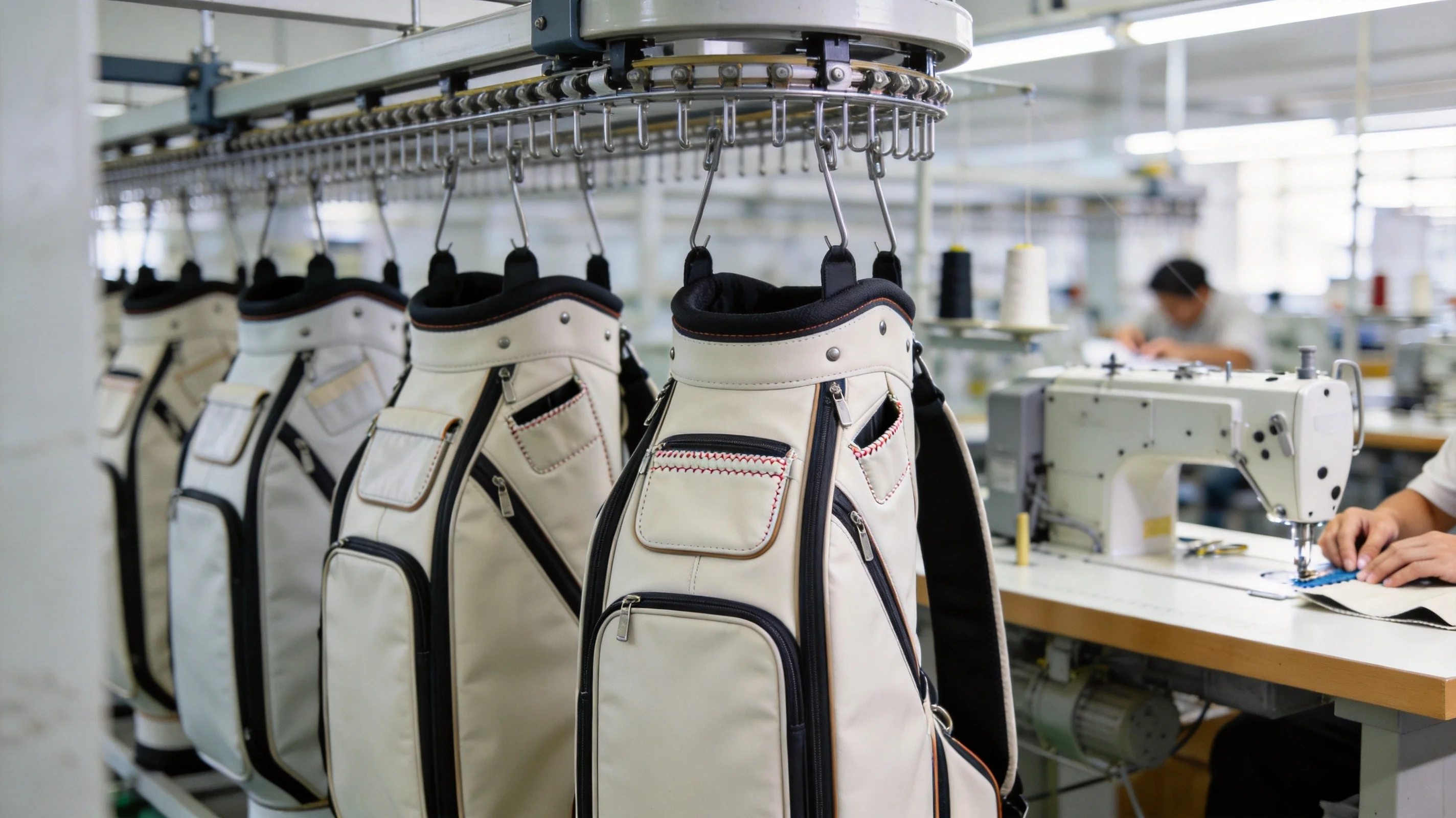
Real Production Lines
Seven lines with 126 sewing machines deliver the capacity and repeatability a growing brand needs.
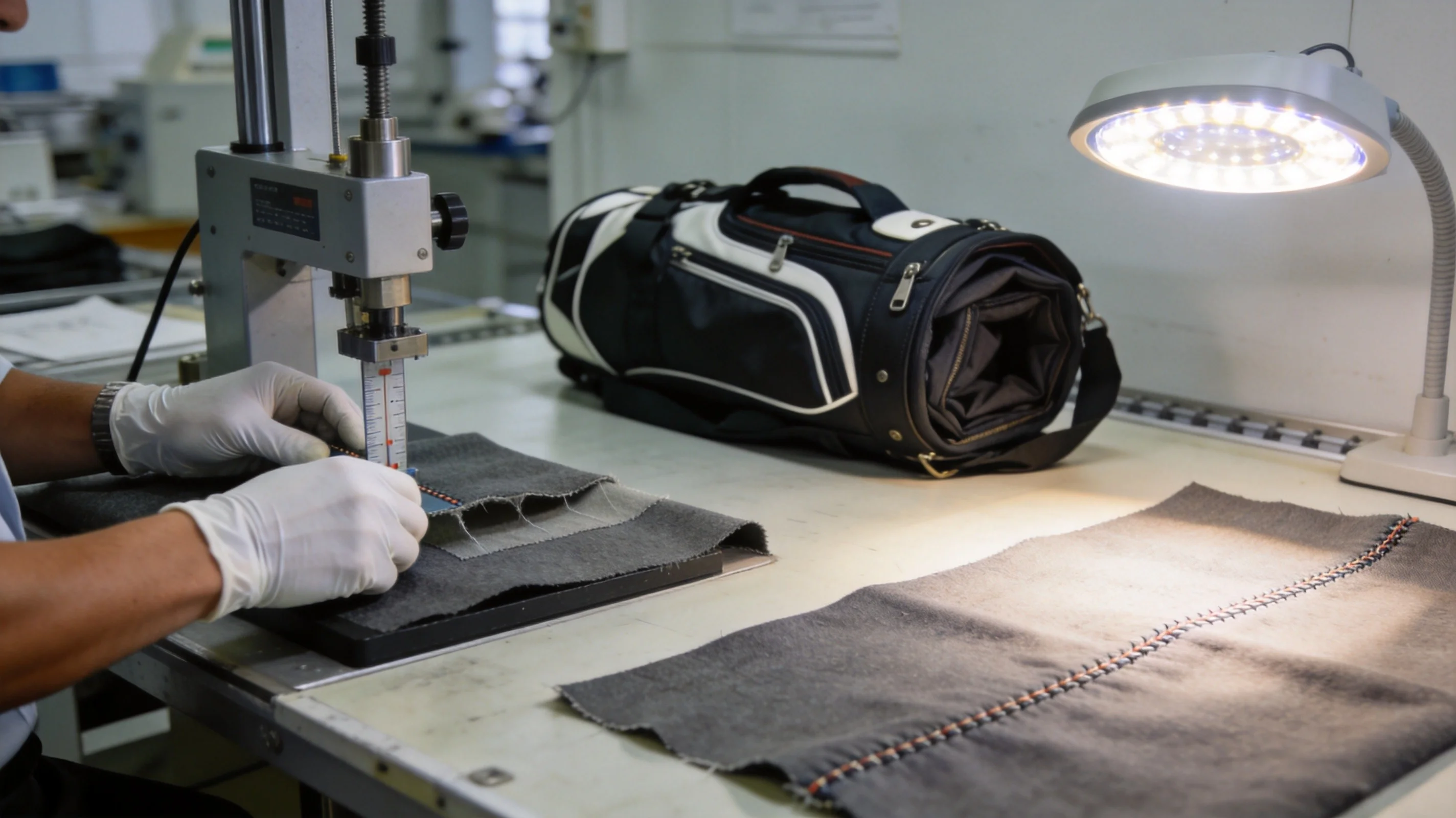
Quality Control Gates
Agree on inspection points and rejection tolerance so every batch matches the approved sample.
Factory Qualification Scorecard
| Criterion | What to Check | Why It Matters |
|---|---|---|
| Verification & audits | SGS / Alibaba reports, dates | Confirms labour, materials and process claims |
| Capacity | Lines, machines, staff, monthly output | Shows ability to deliver at your volume |
| Lead times | Sampling and bulk timelines | Enables planning and realistic scheduling |
| MOQ & sampling | Unit minimums, test orders | Determines flexibility for a new brand |
| Quality systems | Inspection stages, tolerance | Protects your brand's consistency |
Score each candidate against these five rows. A factory that passes verification, capacity, lead time, MOQ and quality systems is worth progressing to sampling; one that fails on verification or quality should be set aside regardless of price. This scorecard turns a subjective choice into a defensible, repeatable process that protects your investment over the long term.
MOQ and Sampling Flexibility for New Brands
For an emerging brand, rigid minimums can be a barrier. Find a factory whose MOQ and sampling options match your stage. An accessible structure — such as a 200-unit standard MOQ with 100-unit test orders and 10–20 day sampling — lets you validate product and demand before committing large capital. This staging de-risks your first launch, as explained in our private-label guide, and gives you room to iterate on colours and branding cheaply.
Sampling is the best proof of a factory's quality, so treat the sampling phase as your live test. A factory that executes a precise, on-spec sample in the promised window is demonstrating the process control you need at scale. If the first sample disappoints, assess how the factory corrects it: clean, documented revisions indicate a partner worth keeping, while excuses and drifting standards reveal risk.
Evaluating Factories? Compare Against Clear Criteria.
Review verified capacity, lead times and MOQ before you commit. Our Quanzhou, Fujian facility is independently verified and offers 100-unit test orders and 10–20 day sampling to help brands qualify with evidence.
Qualify Our Factory →Assess Quality Systems, Not Just a Sample
A great sample means little if the factory cannot reproduce it. Dig into the quality-control design: how many inspection stages exist per unit, where they occur (incoming material, sewing, finishing, packing), and what the rejection and rework tolerance is. A factory that can name its testing routine is pricing its true cost; one that cannot is likely optimistic and will reveal the gap later. Ask for the documented standard that ties bulk production back to the approved sample.
Consistency is the real asset a quality system protects, especially in private label or OEM where your name is on every bag. Verify the factory's equipment and maintenance, its staff training, and how it handles defects. Independent credentials like SGS and Alibaba verification in March 2026 add external confirmation that the system is exercised, not just documented. Choose a partner whose quality discipline matches the reputation you want to build.
Match the Factory's Specialisation to Your Products
Different factories specialise differently, so align capability with your product plan. If your line is dominated by stand bags, cart bags and travel covers, a factory with strong production across those categories serves you better than one focused elsewhere. Review the factory's typical output, its existing brand partners and the product types it builds daily. A broad production base also lets you consolidate several SKUs with one supplier, simplifying management and strengthening your pricing position.
Consider whether you need OEM (produce to your spec) or ODM (the factory develops the design). Choosing a factory that offers both, as your product strategy evolves, gives you flexibility without re-sourcing. Our OEM/ODM services page and the process guide walk through these options, while the products pages show the range a capable factory produces. Match specialisation to today's line and future ambition.
Think Long Term: Capacity Headroom and Partnership
A good factory choice looks beyond the first order to whether the partnership scales. Confirm the factory has headroom in its 7 production lines to absorb your growth, and whether combining bag types in a container order improves your unit economics. Ask about process, payment terms and how the factory handles peak season. A partner with clear production slots and honest scheduling is one you can build a multi-year program on, not just a single purchase.
Long-term fit also rests on communication and alignment. A factory that responds clearly, documents decisions and holds its commitments reduces the coordination cost that eats margin in scattered sourcing. Our own 200+ brand relationships, spanning more than 100 countries, are built on exactly this dependability. When you find a factory that verifies, delivers, and communicates, you have found the foundation your brand can grow on.
Related Guides to Read Next
Use our structured resources to sharpen your selection. The manufacturer selection guide gives a fuller evaluation framework, the quality standards guide details what to inspect, and the bag types guide helps match products to suppliers. Explore options on the OEM/ODM services and factory-direct pages, and compare buying channels in our private-label launch guide.
Common Factory-Selection Mistakes to Avoid
The most expensive mistakes happen before an order is placed. Choosing a factory on price alone ignores verification and quality, which surface later as defects and delays. Believing self-reported capabilities without audit evidence leaves your brand exposed. Overlooking lead-time reality breaks your launch schedule. And ignoring MOQ flexibility blocks a new brand from starting lean. Each is avoidable when you filter with evidence.
The reliable approach sequences the decision: verify credibility, confirm capacity and lead time, test with a sample, inspect quality systems, match specialisation, and plan for the long term. When you select a factory on objective, verifiable signals rather than on price and promises, you build a supply chain resilient enough to support your brand's growth season after season.
How to Verify a Factory Remotely
Not every brand can visit a factory in person, but you can still verify a facility rigorously from a distance. Start with independent verification and audit reports, such as SGS and Alibaba assessments completed in March 2026, and review the scope and date so you know the evidence is current. Ask for the audit summary, check the documented capacities and certifications, and confirm the legal entity, its founding date and its trade references. Documented, third-party evidence is the foundation of any credible remote assessment.
Live video walkthroughs add another layer of confidence. Request a virtual tour of the facility covering the cutting, sewing, finishing and packing areas, and ask to see specific production lines and equipment counts — for example, the 7 lines and 126 sewing machines at our Quanzhou operation. Notice the organisation of the workspace, the condition of machinery and how staff work, because these visible details often reveal a lot about process discipline that reports cannot fully capture. A factory willing to show real operations on camera is usually confident in its standards.
Complement the tour with practical checks online: review the range on the products and services pages, request references or sample orders, and speak directly with the account team about capabilities and lead times. Consistency between what you see on screen, what documents state and what the team communicates is the strongest remote signal of a dependable partner. Combining independent audits, live walkthroughs and direct dialogue lets you qualify a factory with confidence even before a physical visit.
Red Flags and Pitfalls in Factory Selection
Recognising warning signs early protects your investment and your schedule. Treat unsupported capacity claims with suspicion if a factory cannot show the lines, machines and headcount behind them, because capacity without evidence is just marketing. Be wary of a supplier that refuses audits or cannot produce verification documents, and cautious of prices that are dramatically below peers for an identical specification, since that gap usually reflects materials or process compromises that surface later. These signals rarely resolve in your favour.
Over-optimistic lead times are another common trap. A factory that promises faster than realistic timelines, without demonstrating the staffing and ordering to back it, is more likely to slip than one that states honest windows such as 10–20 days for sampling and 45–60 days for bulk. Similarly, be alert to vague specifications or a reluctance to fix details in writing, because ambiguity in quotes and contracts becomes conflict during production. Professional partners document precisely.
Finally, gauge whether the factory communicates like a long-term partner or a one-off seller. Slow, evasive or inconsistent responses during evaluation are poor omens for the coordination bulk orders demand. Trust your structured scorecard over enthusiasm: if a candidate fails on verification, capacity evidence or communication, move on even if the price is tempting. A disciplined selection process filters out the agencies and inflated claims that so often derail sourcing programs.
Why Specialisation and Alignment Matter
Factories vary in what they truly master, and matching their specialisation to your product is a strategic advantage. A facility whose production runs concentrate on golf bags — stand bags, cart bags and travel covers — can usually offer stronger process knowledge, smoother reorders and better troubleshooting than a generalist making unrelated goods. When the factory is that close to the product category, it predicts material behaviour, anticipates construction challenges and delivers consistent results across your entire line.
Alignment also extends to how you work together. If your strategy is OEM, you need disciplined execution of your existing designs; if you plan factory-developed designs or private-label ranges, you need a partner with design and ODM confidence. Confirming that the factory offers the engagement you need — OEM, ODM, private label or a combination — avoids re-sourcing as your strategy evolves. Reviewing our OEM/ODM services and wholesale pages helps you match the engagement model to your roadmap.
Finally, align on values such as ethical production and consistent quality, because partners who share them negotiate and resolve issues constructively over the long term. A factory verified for responsible working practices and able to keep every bulk run to your approved sample is worth more across three years than a marginally cheaper supplier that drifts. Choosing a specialist whose values and capabilities align with your brand is how you convert a one-off supplier into a strategic advantage.
Comparing Quotes on Identical Specifications
Price comparisons mislead when the specifications differ, so the discipline of comparing like for like is central to choosing a factory well. Fix one written specification — the same bag type, dimensions, fabric, hardware, branding and packaging — and send it to each candidate so every quote responds to the identical brief. When you compare identical specs, the differences in price genuinely reflect each factory's efficiency, margin and materials, rather than hidden changes in quality or scope. This erases the false savings that look attractive at first glance.
Ask each factory to decompose its quote into the cost drivers you care about: material, labour, any tooling, packaging and logistics. This transparency lets you see where a low quote is genuinely efficient and where it has quietly cut a standard you need, such as a stronger fabric or better hardware. A factory that itemises its pricing also demonstrates the cost awareness that makes it a better negotiating partner over the long term. Our wholesale pricing guide gives you the cost-driver frame to interrogate each quote confidently.
Beyond the unit number, weigh the full package: sampling fees and lead times, MOQ flexibility, inspection terms and shipping. A slightly higher factory price with faster sampling, no tooling surprise and lower freight can easily beat a cheaper quote once landed cost is totalled. Building your comparison on identical specs and complete cost transparency, not just the headline unit price, is what selects a factory that protects your margin across the whole engagement rather than only on paper.
A Checklist for the Final Decision
When you are ready to decide, run a final checklist that turns everything into one clear verdict. Confirm the factory is independently verified, with current documentation you have reviewed, and that its founding and experience give you confidence in longevity. Validate capacities against your volume, lead times against your launch, and MOQ and sampling flexibility against your stage and risk appetite. Re-read your scorecard, compare identical-spec quotes, and confirm the quality systems and inspection gates are agreed in writing before you commit.
Add the relationship factors to the technical ones. Confirm the account team communicates clearly, documents decisions and responds reliably, because this determines how smooth bulk production and future orders will be. Verify the engagement model matches your strategy — OEM, ODM or private label — and that the factory can offer the products and quality standard you need across your line. When the objective and relationship signals both pass, you have a sound basis to proceed with confidence.
Finally, protect the decision with the right start: fix the spec, run sampling within the promised window, and use a 100-unit test order to confirm the factory reproduces the approved sample at scale before you commit the MOQ. A decision reached by checklist, then proven in practice through a test order, is significantly more likely to become the reliable, long-term partnership your brand needs. Choose with evidence, start lean and verify early, and the right factory becomes a genuine foundation for your brand. The questions below cover the points Importers ask us most often when they are shortlisting a golf bag supplier for the first time.
It is worth seeing how the checklist reads against an actual shortlist, and QUANZHOU JUNYUAN BAGS is a useful reference point because its profile matches the credentials this guide keeps returning to. The company operates a 4,950 m² affiliated manufacturing facility with 7 production lines, 126 sewing machines and 137 staff, verified by SGS in March 2026, and founder experience dating to 2004 with a company founded in 2014. It works across OEM, ODM and private-label models with a conventional MOQ of 200 pcs and a 100 pcs test order, sampling in 10-20 days and bulk production in 45-60 days, supporting more than 200 brands in 100+ countries. When you check a supplier's annual volume, floor layout, stitching capacity and third-party reports against a profile like this, the differences between genuinely capable factories and resellers become visible much faster.
Once a factory clears the core due diligence, the detail that separates a workable partnership from a strained one is usually operational: how the sampling loop is structured, how quality gates are inserted between packing stages, and how the factory documents what it agreed. Many buyer teams focus only on price and MOQ and then discover later that the factory cannot hold a tolerance across a season of repeat orders. Rolling the audit findings into an agreed sampling plan, a written quality standard and a transparent approval loop — exactly the sequence described in our golf bag quality standards guide — turns a good shortlist into a repeatable supply chain. Shortlist on evidence, then lock the process in writing before the first bulk order is ever placed.
Frequently Asked Questions
- What are the most important criteria when choosing a golf bag factory?
- Verify credibility (audits and references), confirm capacity and lead times, check MOQ and sampling flexibility, and inspect the quality system — before comparing price.
- How can I verify a factory's claims?
- Request independent audit reports, such as SGS and Alibaba verification, and ask for brand references and client-retention history in your market.
- What capacity should a serious factory have?
- A meaningful benchmark is a 7-line facility with around 126 sewing machines and realistic monthly output, so your order can scale without extended queues.
- What lead times should I expect?
- At QUANZHOU JUNYUAN BAGS, sampling runs 10–20 days and bulk production 45–60 days, giving you a clear basis for planning freight and launch.
- What is a reasonable MOQ for a new brand?
- An accessible start is a 200-unit standard MOQ with 100-unit test orders, letting you validate quality and demand before committing large capital.
- Should I prioritise OEM or ODM capability?
- Choose a factory offering both so you can produce to your spec now and scale into factory-developed designs later without re-sourcing.
Sources
- SGS — independent auditing and factory verification services used to validate supplier claims.
- Alibaba — supplier verification platform and independent assessment of trading factories.
- ISO — international quality-management standards informing factory quality systems.
- USGA — golf equipment standards referenced for product credibility.