How Waterproof Golf Bags Perform in Heavy Rain
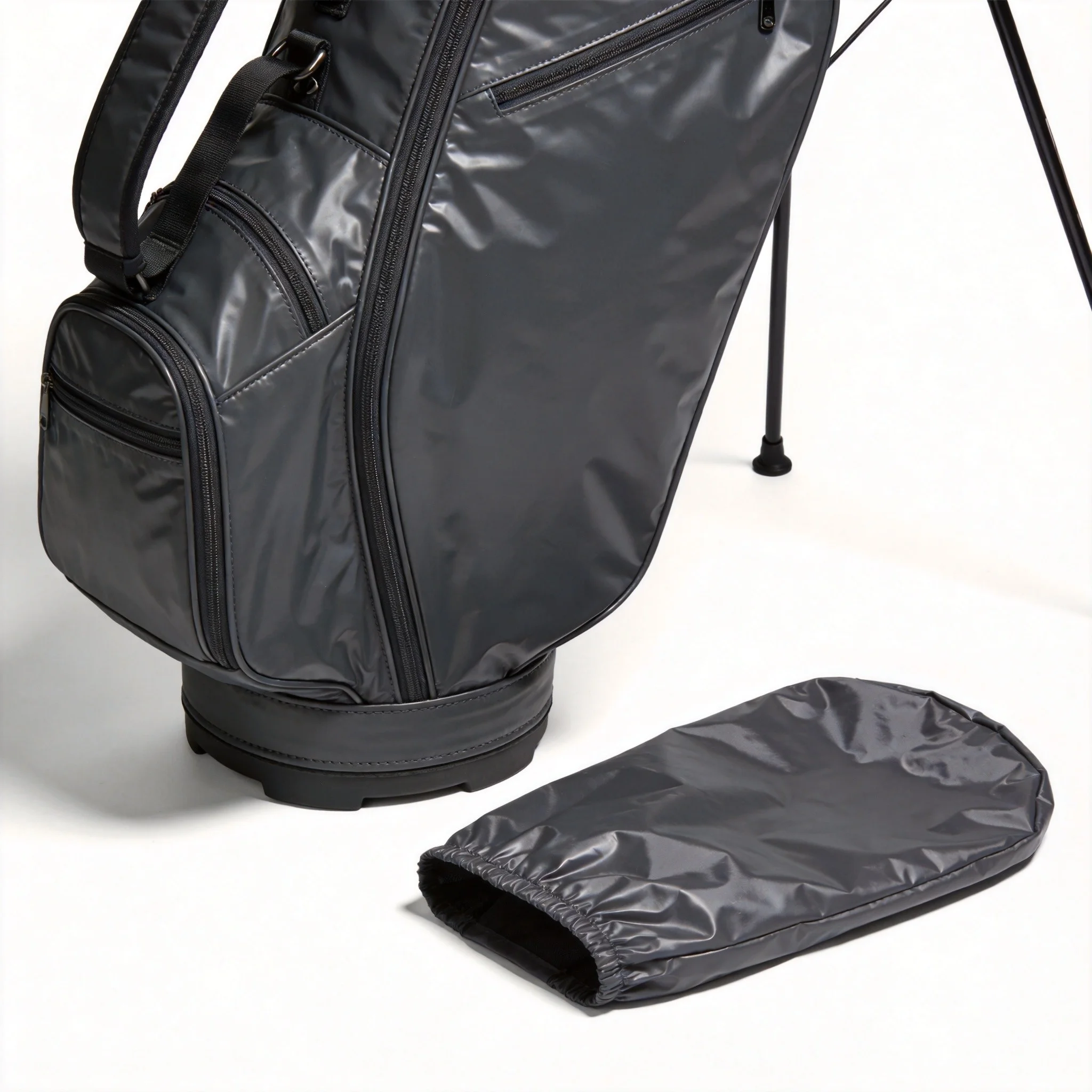
A genuine waterproof golf bag keeps clubs dry through a full round in heavy rain when its laminated shell, seamless sealed seams and weather-sealed zippers form a continuous barrier—typically holding a rating of IPX4 or better, which covers splashing and steady driving rain—and this holds for the duration of the round as long as the bag is properly closed and maintained. Here is how real waterproof bags behave in a downpour, from the factory that builds and tests them.
What "Waterproof" Means in Heavy Rain
The word "waterproof" gets used loosely, so heavy rain is exactly where the difference between genuine and nominal protection shows. A water-resistant bag sheds light rain and splashes but soaks through under sustained or heavy rain. A genuinely waterproof bag, by contrast, uses a laminated shell—a PU or TPU film bonded to the fabric—which physically blocks water, and seals the seams and zippers so there are no entry points. In heavy rain, the laminated barrier is what keeps the interior dry, while the surface repellent simply helps water shed and keeps the bag easier to handle.
Because the barrier is continuous, a genuine waterproof bag performs in sustained downpours, not just in a passing shower. The distinction matters to every golfer in a rainy region: a bag that only resists a light drizzle will fail the moment rain settles in, while a genuinely sealed one keeps clubs dry round after round. That is the first and most important fact about how waterproof bags behave in heavy rain—the construction has to be real, and the seams and zippers have to match it.
IPX Ratings: What the Numbers Really Tell You
The IPX (Ingress Protection) scale gives a useful, verifiable measure of how a bag handles water. IPX4 is the entry point for genuine weather protection, handling splashing from all directions, which matches most rain falling on a bag during play. IPX5 resists low-pressure water jets, and IPX6 resists powerful jets. For rain on a golf course—driving showers and water landing on the shell—IPX4 to IPX5 is the realistic, honest target, because it means the shell resists the water that an airborne bag actually faces.
Roughly, IPX4 suits play in steady rain and puddles; IPX5 adds confidence against direct spray from sprinklers, cart washing or more intense weather. Higher ratings still protect the interior, but they describe water under higher pressure than normal rainfall, so they are not necessarily worth paying extra for on a typical course. When a factory states a waterproof bag's performance, quoting verified IPX levels grounds the claim in a standard rather than marketing. This is why specification against a recognised scale such as IPX is a reliable way to compare how a bag will really behave in heavy rain.
The Three Points That Must Seal: Shell, Seams and Zippers
Heavy rain finds every way in, so a waterproof bag is only as strong as its three seal points. The shell must be a continuous laminated barrier with no open holes or thin spots. The seams must be sealed—welded, taped or otherwise closed so stitching holes do not become channels for water. The zippers must be weather-sealed, whether through coated zipper teeth, a sealed zip flap or a dry-seal closure, because a conventional zipper track is the classic leak point in heavy rain. A bag that is strong in one of these but weak in another will leak at exactly the weak point, not evenly.
This is why a genuinely waterproof bag is engineered as a system. The shell, seams and zippers are specified together and verified together, because water does not respect a strong shell if the zipper track lets it in, nor sealed zippers if a seam is left open. The most honest waterproof bags are built around these three sealed points simultaneously and tested for exactly that. Our quality standards guide details how shell, seams and closures are inspected and verified from the factory side.
How Performance Is Tested Under Heavy Rain
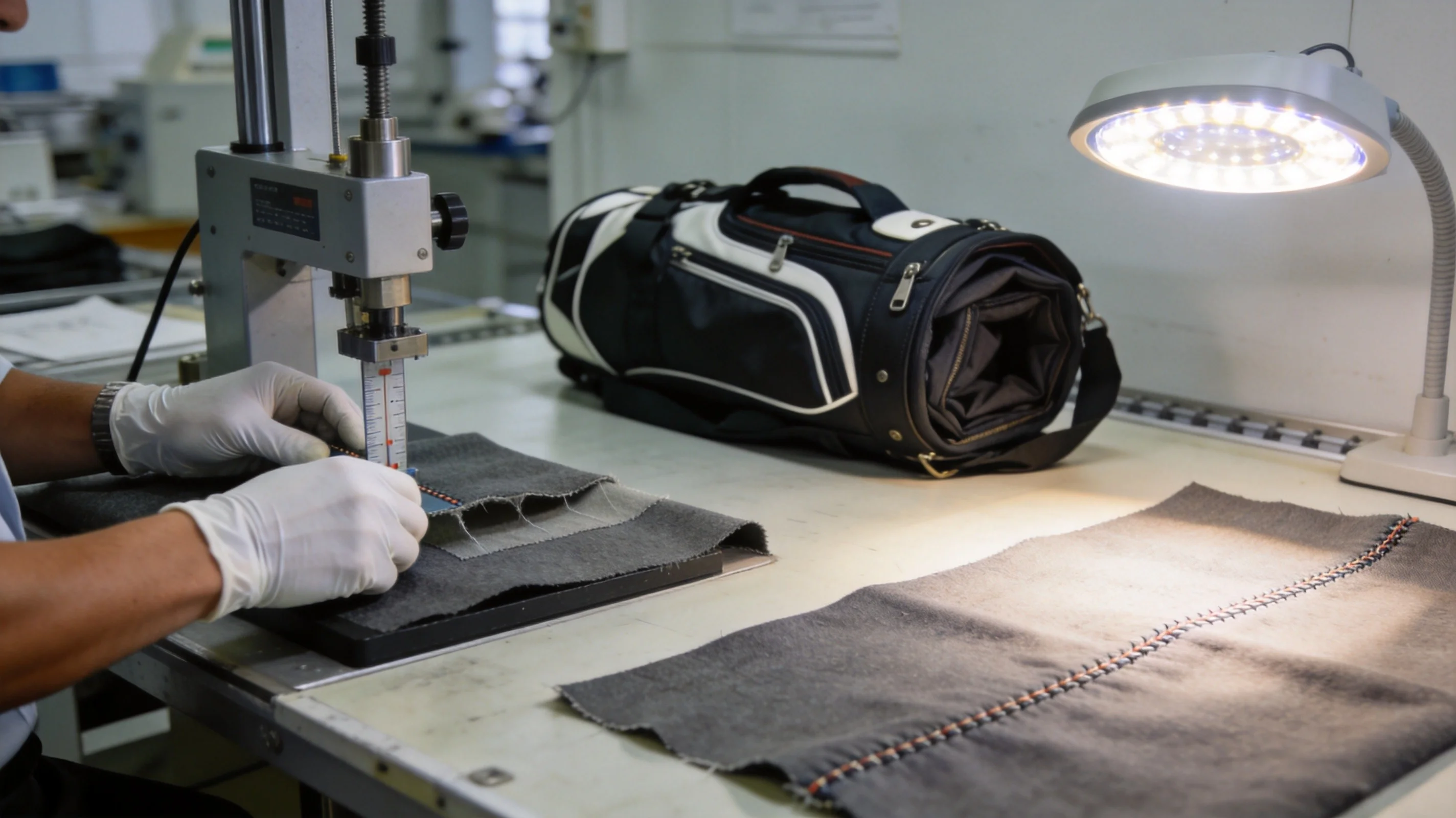
Real heavy-rain performance is verified by testing, not claimed. Factories test waterproof bags with water column and hose-spray methods under controlled pressure, and quality programs have them independently verified by laboratories such as SGS. A water column test measures how much water pressure the shell can resist; a spray test simulates sustained shower and splash conditions, then inspects whether shell, seams and zippers remain sealed. Well-made waterproof bags are engineered to pass these under continuous exposure, not just a quick splash.
Independent verification matters because it removes the temptation to overstate. When the same bag passes an SGS or equivalent spray and water-column test across multiple samples, its claim to hold up in heavy rain has a measurable basis rather than a marketing one. For the golfer this is reassuring: a tested bag will behave as promised in a real storm. For a brand sourcing waterproof bags, independent testing is the reliable way to avoid the returns that come from selling a bag that fails on the first wet course. You can read more on verifying waterproof performance in our complete waterproof golf bag guide.
| Water resistance level | IPX rating | Heavy rain behaviour |
|---|---|---|
| Water-resistant | None / splash | Sheds light rain; soaks in steady downpour |
| Basic waterproof | IPX4 | Dry in splashes and steady rain if sealed |
| Robust waterproof | IPX5 | Resists spray and heavier sustained rain |
| High-pressure | IPX6+ | Handles powerful jets; exceeds normal rain needs |
Zippers, Hoods and Closures in a Downpour
In heavy rain the areas around closures behave differently from the main shell. A sealed zipper kept closed is the strongest form, but an open or partially closed zipper is a deliberate entry point for water, no matter how good the shell. Many waterproof bags therefore pair protected zippers with a rain hood, which covers the club openings and keeps water off the top of the bag where clubs enter and leave. Using the hood in a downpour and closing the zippers completely are the two habits that most improve real wet performance.
The top of the bag is the part most exposed to rain striking directly downward, so a good waterproof bag protects it in more than one way. A secure lid or drawstring top, a well-designed pocket layout that drains, and a rain hood all act together with the sealed zippers. In a downpour it is not enough for the shell to be sealed if the top is left open or a zipper half-open. The complete system—shell, seams, zippers and cover—works as one, and it works best when the golfer closes every entry point for the storm.
Heavy Rain and the Bag's Motions: Carts, Shoulders and Ground
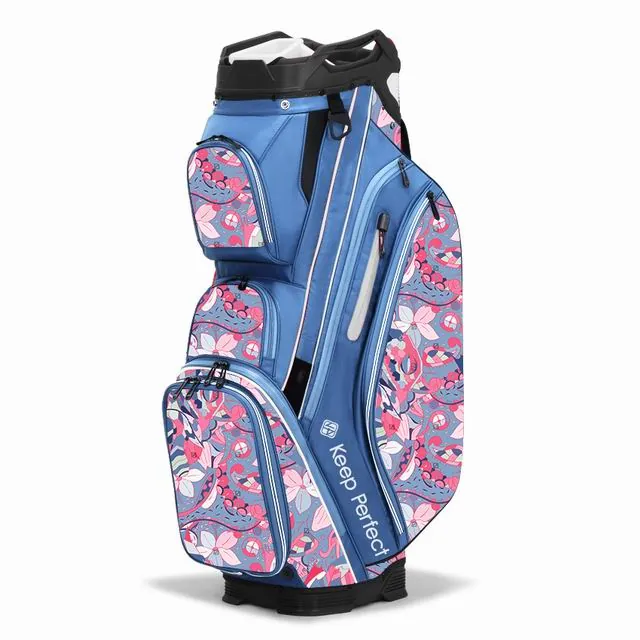
Heavy rain adds physical stress to the bag, not just water. When a bag rides on a cart through rain, it is jostled at speed, and water is thrown at the shell from the wheels and wet ground. When carried on the shoulders, the bag is repeatedly set down in puddles and sloped ground, testing the base and the lower seams. A genuinely waterproof bag is built to handle these conditions: the base is often reinforced and the lower sealed seams given extra attention, so performance holds in real course conditions rather than in a static test.
This is where factory attention to the base and lower panel pays off in a storm. Water pools in the lowest point, and the bag's base takes the full soak of puddles and wet ground, so the base seal has to be as strong as the main shell. Similarly, the areas where straps attach and where the bag rubs the cart endure wear that can stress seals over time. A bag that seals well in a lab but has a weak base will still let damp reach the interior on a genuinely wet day, so verified performance has to extend to the whole bag, not just the flat panels.
Maintaining Rain-Bag Performance Over the Years
Heavy-rain performance is not only a matter of how the bag is built; it is also a matter of how it is kept. A waterproof bag that has worn its surface repellent still has its laminated barrier, but a bag whose zippers are gritty, whose seams have been stressed or whose finish is degraded performs poorly in a storm. Cleaning gently, drying fully and re-treating the surface finish keeps the bag performing; keeping zippers clean and seams intact maintains the seal. We cover the full care routine in our dedicated guide to maintaining waterproof coating on golf bags.
The simplest truth is that sustained performance in heavy rain depends on both honest construction and steady maintenance. A genuinely waterproof bag, built around a laminated shell, sealed seams and weather-sealed zippers, and kept properly, will hold in heavy rain for the full 5 to 10 years of its life. Neglect either the build or the upkeep and heavy rain will eventually find a way in. For a golfer in a rainy region, that combination of good construction and respectful care is what turns a waterproof claim into dependable year-after-year dry equipment.
For Brands: Honest Rain-Performance Claims Sell More
For brands and retailers, honesty about how a bag performs in heavy rain is a genuine selling advantage. A waterproof bag whose claim is verified against a recognised standard, whose three seal points are explained, and whose limitations—for example, not submerging the bag—are stated clearly, earns more trust than a bag that overclaims and then fails. Customers who buy a waterproof bag for a rainy course are buying exactly this reliability, so a verified claim is the product itself. Accurate performance literature reduces returns and builds the reputation that a waterproof line survives on.
A brand that sources genuinely waterproof bags and communicates the real mechanics—IPX levels, sealed seams, protected zippers, maintenance guidance—positions itself as a knowledgeable, dependable partner rather than another seller of the word "waterproof." For sourcing, the manufacturing standard is what makes the difference, and our quality standards guide explains how to specify and verify that standard. In a market where heavy rain is routine, clear and honest waterproof performance claims are a durable competitive edge.
Built and Tested for Heavy Rain
Laminated shells, sealed seams and protected zippers, verified against recognised standards. The waterproof build your rainy-climate customers can trust.
Speak to the Factory →How Different Bag Types Behave in Heavy Rain
Heavy rain tests each bag style differently, so the right choice depends on how the golfer plays. A waterproof cart bag, designed to ride on a cart, protects the majority of the shell and can make the most of a reinforced, heavily sealed lower panel—its main concern is the top and club area, often shielded by a hood. A waterproof stand bag, carried on the shoulders and set down in the wet, faces splash at the base and needs a sealed base and lower seams just as much as the rest of the shell. A travel or staff style bag, built to protect clubs through transport as well as weather, typically brings the most extensive protection but is heavier to carry.
Each type holds up well in heavy rain when genuinely waterproof, but the weak points differ. For the stand bag it is the base and lower seams; for the cart bag it is the top openings and the lower panel facing splash from the cart wheels; for a travel bag it is the zippers and the closure keeping the whole head dry. A golfer who carries a waterproof bag by hand through a storm relies on a sealed base, while a cart user relies on the rain hood over the top. Choosing the right waterproof construction for how the bag is used is therefore as important as the IPX number itself, because every type is only as dry as its weakest seal in heavy rain.
Where Heavy Rain Wins: Common Failure Points
Understanding where waterproof bags fail in heavy rain helps you avoid those failures, whether you are buying or sourcing. The most common leak point is the zipper track, especially on pockets opened and closed during play; a half-closed or worn zipper lets water in no matter how strong the shell. The second is unsealed stitching and seams, usually around the base and strap attachments where stress is highest. The third is the top opening itself, which driving rain strikes directly. These are exactly the points a genuinely waterproof bag seals deliberately, and exactly where a budget "waterproof" bag leaks first.
The pattern is consistent: heavy rain always finds the least sealed point first. A bag with excellent shell fabric but ordinary zippers fails at the zipper; a bag with good zippers but an unsealed base pools damp inside after a day on wet ground. Treating the three seal points—shell, seams and zippers—plus the climbing-knife stress of strap points and the base, is what separates a bag that survives a real storm from one that leaks at the seams when pressure is on. For brands, this is why a comprehensive waterproof standard, not just a fabric choice, is the guarantee worth paying for.
The Real Cost of Genuine Heavy-Rain Protection
A genuinely waterproof golf bag costs more to build than a water-resistant one, and the difference is concentrated in materials and sealing. A laminated shell fabric is more expensive than a coated or plain fabric; sealed or taped seams add labour; weather-sealed zippers and rain covers add component cost. These layers are what make the bag actually function in heavy rain. The honest view is that genuine waterproofing has a real price premium, and paying it is the responsible choice for a golfer in a rainy region, because the cost of a leaking bag—soaked grips and gloves, a ruined afternoon—quickly exceeds the saved premium.
For a golfer who rarely plays in the wet, a water-resistant bag may be entirely adequate and more economical. For anyone who plays through a wet season or in a rainy region, the premium for genuine waterproofing is an investment in dependability. The same logic applies at factory level: specifying a real waterproof standard costs more but reduces returns, warranty work and reputation damage from bags that fail on the first wet course. Value, then, is not the lowest price but the price that matches how the bag really gets used in heavy rain, which is why honest specification and honest pricing tend to win in the long run for both the buyer and the seller.
Heavy Rain and Bag Longevity
Heavy rain does more than challenge a bag's dry performance in the moment; it also shapes how long the bag lasts. A genuinely waterproof bag protects its own interior and structure from moisture, which keeps linings, dividers and hardware sound for years, whereas a bag that lets water in repeatedly develops odours, mould and gradually degrading internal materials. Because the laminated shell protects the whole structure, a waterproof bag that is maintained tends to outlive a water-resistant one that has been repeatedly soaked, even when both are used in the same wet climate.
This makes genuine waterproofing a longevity investment, not just a weather convenience. The same sealed seams and protected zippers that keep clubs dry also protect the bag's own structure from the moisture that would otherwise age it. Combined with the maintenance habits for a waterproof finish, a genuinely waterproof bag comfortably reaches its full 5 to 10 year service life in a rainy climate. For a golfer, buying genuine waterproofing therefore buys both dry equipment today and a longer-lasting bag tomorrow; for a brand, it is the construction choice that defines a dependable, long-lived product.
Heavy Rain in Different Regions and Seasons
Heavy rain is not the same everywhere, and the level of waterproof performance needed scales with where and when a golfer plays. In a monsoon or tropical wet season, rain is intense and persistent, so the bag needs real downpour capability and frequent maintenance, and the top and rain hood become central. In a temperate climate with occasional heavy showers, a reliable IPX4 standard covers most rounds. In a dry climate with rare storms, the bag faces less constant water but more sun and heat, so protecting the coating from UV matters more than chasing the highest IPX level.
The practical point is to match the waterproof standard to the actual rainy reality of the region. There is little benefit in paying for IPX6-rated hardware in a climate that sees a few light showers a year, while under-provisioning a monsoon-region golfer sets up a predictable failure. A golfer who understands their own rainy reality buys the right level of protection; a brand that sources for specific wet markets fits the waterproof specification to the region. Either way, honest performance in heavy rain comes from matching the build to the weather the bag will genuinely face.
Conclusion
A genuine waterproof golf bag performs reliably in heavy rain because it is built around three seal points—a laminated shell, sealed seams and weather-sealed zippers—that act together as a continuous barrier, backed by an honest IPX rating such as IPX4 or IPX5. In a real downpour, keeping the zippers closed, using the rain hood and maintaining the bag's finish and seals keep it performing year after year. For golfer and brand alike, the lesson is the same: waterproof performance in heavy rain is not a label, it is verified construction combined with respectful care.
Sources
Frequently Asked Questions
- Will a waterproof golf bag keep my clubs dry in heavy rain?
- Yes, a genuine waterproof bag keeps clubs dry through steady heavy rain when its laminated shell, sealed seams and weather-sealed zippers are kept closed; full submersion exceeds what these guards are designed for.
- What does IPX rating mean on a waterproof golf bag?
- IPX4 handles splashing from all directions, IPX5 resists low-pressure jets and IPX6 resists powerful jets; IPX4 to IPX5 is the realistic target for golf-course rain.
- Are the zippers on a waterproof golf bag truly waterproof?
- Quality bags use coated or water-resistant zippers, often with sealed zip flaps or dry-seal closures, because the track is the typical leak point; keep zips closed for maximum protection.
- How long does a waterproof golf bag stay dry in a downpour?
- A well-sealed bag stays dry for the full round even in prolonged rain, as the laminated shell and sealed seams form a continuous barrier; durability depends on zipper and seam quality and maintenance.
- How are waterproof golf bags tested for heavy rain?
- Quality bags are tested by water column and hose-spray methods under controlled pressure, and often verified by independent labs such as SGS, checking shell, seams and zippers stay sealed.