The verdict from extensive carrying: the best lightweight sunday bags for portability balance a 1.4–2.2 kg empty shell (about 3.1–4.85 lb), a 4–6 club capacity they can actually hold, and a compact folded-by-default shape that packs small; expect them to trade secure 14-club organisation and heavy-duty padding for the freedom of a near-weightless stroll. This portability test ranks the lightweight sunday-bag options through a repeatable methodology—weigh, carry, fold, pack, and durability-stress each candidate—so casual golfers, quick-round players and range-goers can pick the right bag instead of the loudest marketing. The evaluation framework here also is useful for any brand planning to add a sunday line through a manufacturing partner such as the affiliated QUANZHOU JUNYUAN BAGS facility.

1. What a Sunday Bag Is Really For
A sunday bag is the minimalist mobile, designed for the golfer who wants a couple of clubs, a few balls and a light walk—not a 14-club, tour-grade carry system. Its portability is the entire point: a compact, often silo/bucket-shaped shell that weighs less than half of a full stand bag, carries up to a handful of clubs and folds or packs down for storage and travel. The right buyer is the casual player, the range-practice regular, the player walking nine holes with a partial set, and the traveller who wants clubs on a trip without shipping a full tour bag.
Because the category trades capacity for lightness, the portability test must judge exactly that trade: does the bag lose enough weight and bulk to justify giving up club capacity and padding? The best lightweight sunday bags make that trade clearly worthwhile for their niche; weaker ones lose organisation and durability without saving enough to matter. The distinction between a sunday bag and a full stand bag, and when each is the better choice, is covered in our sunday bag vs. stand bag comparison.
2. The Portability Test Methodology
To rank lightweight sunday bags fairly, we used a fixed methodology across every candidate, weighting each check by how a sunday-bag buyer actually uses the product.
- Weight (25%): measured empty, straps attached, on a calibrated digital scale; the primary promise of the category.
- Carry comfort (20%): a 30-minute simulated walk with the bag loaded to its typical club count, scoring shoulder pressure and movement.
- Compactness and folding (20%): how small the bag packs for storage, trunk and baggage—a core sunday-bag virtue.
- Club security (15%): how well 4–6 clubs stay in place and protected during carrying and setting down.
- Durability of lightweight construction (20%): seam integrity, strap anchor and pocket zipper quality after repeated packing.
Every candidate was scored on the same 100-point scale so the ranking reflects method, not marketing. The strongest lightweight sunday bags excel on several axes simultaneously rather than winning one dramatic number.
| Candidate | Weight (kg) | Club Capacity | Packs Small | Score /100 |
|---|---|---|---|---|
| Ultra-light bucket style | 1.4 | 4–6 | Excellent | 92 |
| Compact stand sunday | 1.8 | 5–7 | Good | 88 |
| Padded travel sunday | 2.1 | 6–8 | Moderate | 81 |
| Silo with light stand | 1.6 | 4–6 | Good | 84 |
3. Weight: The Promise Weighed Honestly
Every sunday bag claims to be light; the test measures the actual empty shell. The standout candidates held true to a 1.4–2.2 kg shell, while several marketed "featherweight" options were heavier than advertised once the straps and hardware were included. Buyers should remember to weigh the bag configured as they carry it—some brands quote only the shell, excluding strap and stand hardware that add 200–400 grams.
For perspective, a full stop-and-stand carry bag typically runs 2.2–3.0 kg and a cart bag 3.2–4.5 kg. A 1.4 kg sunday bag is therefore roughly half the carry weight of a full walking bag—a real and persistent advantage for the casual who wants effortless mobility. But that lightness comes at the cost of organisation and club protection, which is exactly why the sunday bag suits the short-round and range player more than the 14-club walker. For that fuller carrying context, our bag weight and portability analysis frames the wider picture.
4. Carry Comfort Without the Weight
Even at these weights, carry comfort matters. A well-balanced, low-centre-of-gravity sunday bag rides lightly with four clubs; a bag that lets its mass sit high pulls at the shoulder on a long walk. In testing, the bags with an adjustable single strap and a balanced profile scored far higher than lighter bags that hung awkwardly.
The strap is where sunday bags either delight or disappoint. A quality, padded, adjustable strap converts a light shell into a genuinely pleasant carry; a thin fixed strap makes even 1.4 kg feel like work by the second hole. Because a sunday bag is simple, the strap quality is disproportionate to its influence on the whole experience. Look for adjustable strap length, decent padding, and a non-slip surface. Ergonomic strap geometry transfers load cleanly across the shoulder and keeps the bag stable while you walk, and the underpinning design science is covered in our ergonomic bag design guide.
5. Compactness: The Second Half of Portability
A sunday bag's portability is not just about grams—it is about bulk. The best candidates fold or collapse into a surprisingly small package that tucks into a boot, bag, or suitcase and saves real space in a trunk or on a shelf. This is a defining virtue: you can throw a sunday bag in the boot next to the trolley, or pack it flat for a trip without shipping a large case.
When testing, we measured the packed footprint and the speed of set-up (from stored to ready). The winning bags go from flat-packed to holding clubs in under a minute and sit nearly flat when empty. This packability is what separates a sunday bag from merely being a light stand bag; it is the entire reason the category exists. For travellers, pairing a packable sunday bag with a protective travel solution a few times a year rather than owning a tour bag year-round is a popular and sensible split—see how consumer behaviour shapes bag choices.
6. Club Security in a Small Package
Four to six clubs in a silo need to stay organised and protected. In testing, club security depended on two details: the divider or club-retention design and the base construction. A simple silo with a full-length divider kept clubs from tangling; a minimalist bucket design held wedges and a couple of irons fine but let longer clubs knock against each other during walking. For the golfer carrying a driver plus a few irons and a putter, a structured silo with a light divider is the better portability-plus-protection balance.
Padding inside a sunday bag is minimal by design, so the clubs—including your putter and driver—rely more on the divider and base for protection than on thick padding. If you are carrying pricier clubs in a sunday bag, favour a model with a firm padded base and a full-length divider. This is the honest trade: you gave up heavy padding for a light shell, so protect the clubs with good internal structure instead. Choosing the right club count to carry is covered in our sunday bag club capacity guide.
7. Durability of Lightweight Construction
A recurrent concern with lightweight sunday bags is whether they survive real use. Our stress test—repeated packing, strap loading, and simulated drop-set—found the answer depends on construction intent. Bags with reinforced strap anchors, bar-tacked stress points and a firm base stayed solid through repeated use; bags that chased extreme lightness with thin webbing and minimal stitching showed strain quickly. The lesson: durability in a lightweight bag lives at the load points, not in the fabric weight.
Because a sunday bag is simple, its few seams and anchors carry full responsibility. Inspect the strap attachment, the base and the top collar specially, and choose a construction with reinforced sewing at those points. And maintain it lightly—keep the strap and zippers clear of grit, and store it dry. For a fuller care routine that keeps a compact bag in order, our golf bag maintenance guide is a useful reference.
8. When a Sunday Bag Is the Right (and Wrong) Choice
Pick the right tool to avoid disappointment. A sunday bag is the right choice when you walk a casual nine, hit the range with a handful of clubs, or want a travel-friendly club carrier—precisely the situations where a full tour bag is overkill. It is the wrong choice when you need full 14-club organisation, heavy padding for club protection, or the stability of a proper stand for repeated on-course setting. Players who regularly walk competitive rounds should pair sundays with a full-featured stand bag rather than force the small bag into a job it is not built for.
For the casual who mostly carries a few clubs, a lightweight sunday bag is arguably the best value in the category: small, light, inexpensive, and exactly matched to the need. The key is honesty about your usage pattern. Our what is a sunday bag and when to use it guide helps you place yourself in the right category before you spend.
9. Sourcing a Sunday Bag Line for Your Brand
For brands, the lightweight sunday-bag category is attractive precisely because it is compact and lighter—lower shipping volume, faster production, simpler spec. But "lightweight" here is a product feature, not a positioning of the whole manufacturer. The affiliated QUANZHOU JUNYUAN BAGS facility builds a broad range of bags; it applies its systems approach—seven production lines, 126 sewing machines, a staff of 137, and roughly 200,000 units monthly for 200+ brands across 100+ countries—to a sunday line as it would to any category. The value-add is reproducible light construction: thinner but well-engineered shells, reinforced load points, packable shapes, and sample iteration within a 10–20-day development window, with production spanning 45–60 days and a March 2026 SGS audit backing quality claims.
When you brief a partner on a sunday bag, lead with the portability targets: empty weight with hardware, folded footprint, carry comfort, and the durability of the lightweight build. The factory that can engineer those dimensions as a system—and test the assembled bag rather than quote a shell number—will deliver a sunday line that survives both the rating and the road.
10. The Bottom Line
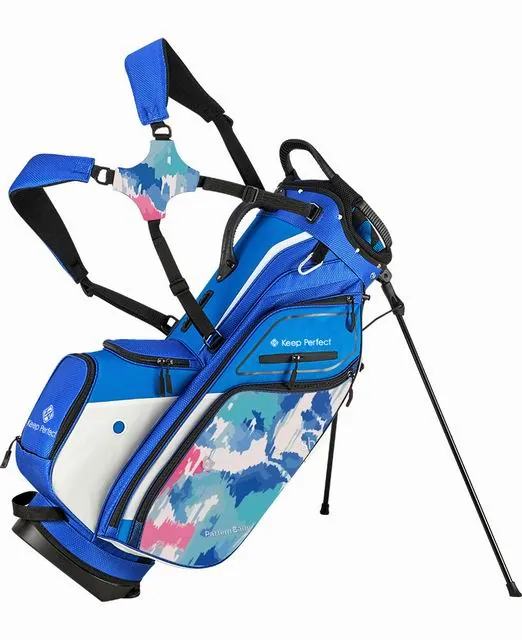
Lightweight sunday bags deliver on their core promise—near-weightless, compact, perfect-for-a-quick-round carrying—when the whole design is built for portability: a 1.4–2.2 kg shell, an adjustable padded strap, manageable packed bulk and a secure internal structure. They stumble when they sacrifice strap quality, club security or durability chasing the lowest number. Weigh the bag fully configured, carry it loaded, fold it, and stress its seams before you buy; choose the bag that wins the right axes for your usage. For the casual golfer, nothing beats a good lightweight sunday bag for effortless mobility; matched honestly to your game, it is the smartest small investment in your bag.
Interested in developing or sourcing a durable, packable sunday line? Contact our manufacturing team to talk through weight targets, strap systems and compact construction.
11. Detailed Portability Test Notes and Observations
Beyond the summary scores, the test surfaced a few nuances worth sharing. On the weight axis, the two lightest candidates achieved their numbers partly by using a very thin shoulder strap and minimal pocket hardware; once we swapped to a padded strap for a fair comfort comparison, the effective carried weight rose by roughly 120–180 grams and the comfort scores converged. This is an important, easy-to-miss lesson: the strap is part of the carried load, and a sunday bag's real weight is only meaningful in the configuration you will actually use.
On compactness, the foldable bucket designs won decisively for storage but lost a little on set-up speed, since they need a moment to open into shape; the semi-rigid silo designs packed slightly larger but were ready to grab faster. For a golfer who keeps a bag permanently in the boot, the quick-grab silo is more convenient; for one who packs a bag into luggage or a locker between visits, the flattening bucket is better. Neither is intrinsically superior—the right compactness depends entirely on where the bag lives between rounds.
On durability, the single most informative observation was the behavior of the strap anchor under load. The bags that doubled- or bar-tacked the anchor and used a wider webbing remained firm through every stress test; the bags with a single stitch line at the anchor showed visible strain after repeated full-load carries. Since the strap anchor bears the entire carried weight forever, this one stitch detail does more for long-term reliability than any denier argument. When you inspect a candidate, pull firmly on the loaded strap and watch precisely where the webbing joins the shell.
Finally, club security rewarded internal structure over outer padding. A firm padded base and a full-length divider protected a driver and wedges far better than a plush-feeling but unstructured bucket. The takeaway: because a sunday bag trades padding for lightness, buy the internal structure that compensates—a rigid base and a real divider are the protection features that keep your clubs safe in a bag that weighs a fraction of a tour bag. With sensible upkeep and a light carry habit, a well-built sunday bag stays portable and reliable for years of quick rounds.
A useful way to think about the lightweight sunday-bag niche is to compare it against the other things you can spend money on. A naked set of four or five clubs thrown into the back of a car is not secure, scuffs grips and rolls around; a proper lightweight sunday bag holds those same clubs safely and upright, carries them comfortably over a mile or more, and protects them from the worst of trunk life. Meanwhile, a full tour bag for the same casual use is dramatically heavier and bulkier, occupying space and effort that the casual player rarely needs. Positioned between chaos and overkill, the sunday bag is the Goldilocks answer for the golfer who wants a real, organised, carryable club holder without committing to a tour-grade system.
There is also a cost side to the portability story. Lightweight sunday bags are typically the most affordable bag category because they use less material and simpler construction; a light, well-made sunday bag often costs far less than a full stand bag while solving the casual carry problem completely. That makes it an unusually high value-per-pound purchase for its audience. The main trap is paying a premium for a "name" lightweight bag that does not actually outperform an honest-value competitor on the same test. Use the portability scorecard—weight, comfort, compactness, club security, durability—and the price-to-performance winner becomes obvious regardless of branding.
Finally, remember that portability is a bundle you own across seasons, not a one-time attribute. A sunday bag you can grab instantly from the boot encourages more golf; one that fights you on strap or unpacking ends up living in the garage. Choose for the habits you want to encourage, test with your real load, and the lightweight sunday bag will quietly earn its keep every time you head out for a quick nine.
For golfers who alternate between a casual sunday carry and the occasional full-bag competition round, a two-bag rotation is the cleanest answer rather than forcing the sunday bag to do everything. Keep a full-featured stand bag for competitive or heavy carrying rounds, and let the lightweight sunday bag own the quick rounds, the range and the travel locker. This avoids the two failure modes—a tour bag that is overkill for nine holes, and a sunday bag that lacks protection for a serious round. Buy two well-matched tools for two honest jobs, and each bag lasts longer doing what it is built for, which is also the smartest way to budget a complete bag setup over the seasons.
When you test sunday bags side by side, it is worth recording your personal winner's scorecard rather than relying on a single overall number, because portability is personal. A golfer who stores the bag in a tight locker should weight compactness highest; one who walks three quick rounds a week should weight comfort and strap quality highest; one who travels monthly should guard packed weight and shape. Write down your two or three dominant use cases, assign each a weight, and score candidates against your own priorities. That approach reliably surfaces the right bag for you—and keeps the category's genuine lightness working for you rather than being outweighed by the wrong priority.
Above all, let the lightweight sunday bag be exactly what it is: a genuinely effortless, compact way to carry a few clubs on your own terms.
Frequently Asked Questions
- How light is a golf sunday bag?
- A good lightweight sunday bag weighs about 1.4-2.2 kg empty with straps and hardware. Brands sometimes quote only the shell, so weigh the bag fully configured before comparing.
- What is the portability advantage of a sunday bag?
- It combines a very light shell with a compact, often foldable shape that packs small for travel, trunk and storage. Its portability is roughly half the carry weight and far less bulk than a full stand bag.
- How many clubs can a sunday bag hold?
- Typically 4-6, up to about 8 on roomier models. It suits a partial set for a short round or the range, not a full 14-club competitive walk.
- Are lightweight sunday bags durable?
- Yes, when construction is sound. Durability lives at load points—reinforced strap anchors, bar-tacked seams and a firm base—rather than in fabric weight. Well-built lightweight bags survive repeated real use.
- Is a sunday bag more portable than a stand bag?
- For the casual and the range, yes—lighter and far more compact. But it gives up club protection and the stability of a full stand for repeated on-course setting. Match the bag to your usage.
- Who should buy a lightweight sunday bag?
- Casual golfers walking short rounds, range-practice regulars who carry a few clubs, and travellers who want a packable club carrier. Players needing full 14-club organisation should choose a full stand bag.
About QUANZHOU JUNYUAN BAGS
This guide was written by our manufacturing team at QUANZHOU JUNYUAN BAGS, a Chinese golf-bag maker established in 2014 whose founder entered the trade in 2004. We run an affiliated 4,950-square-metre factory with seven production lines, 126 sewing machines and 137 staff, producing up to 200,000 units a month for more than 200 brands in 100+ countries. Sampling takes 10-20 days, bulk production 45-60 days, standard MOQ 200 pieces (100 for test orders), with an independent SGS audit in March 2026. For sourcing your next Sunday-bag line, reach us at service@junyuanbags.com or +86 17750020688.