Portable Golf Ice Bag Design for Easy Cart Mounting
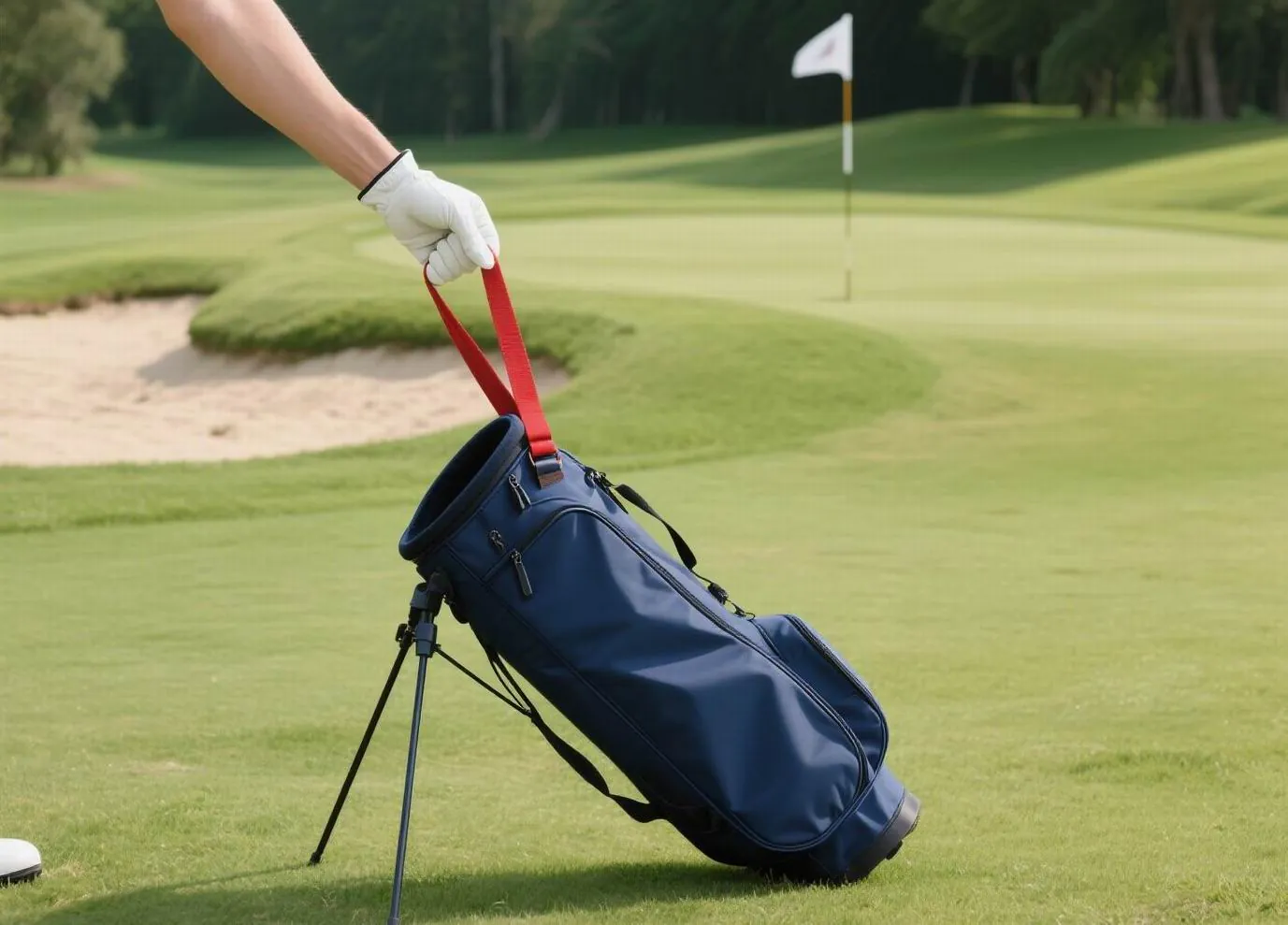
Easy cart mounting begins with five design decisions: a slim horizontal profile, a rigid or semi-rigid base for stability, robust grab-handle and strap points, a quick-release mounting system, and a closure that stays sealed while the cart moves. A portable golf ice bag designed for carts clips to the front rack, straps to the side frame, or sits securely in the beverage well without shifting, rolling loose or spilling over eighteen holes. This guide — from QUANZHOU JUNYUAN BAGS, founded 2014 with a founder in the trade since 2004 and production for 200+ brands across 100+ countries — breaks down the build elements that turn a cooler into a reliable cart companion.
Few frustrations sour a round faster than a cooler that slides off the front of the cart, bangs against the frame every bump, or forces a driver to cradle it between the knees. The mounting experience is decided at the drawing board, not on the course. When a cooler is engineered for the cart — rather than added as an afterthought to a generic duffel — it disappears into the round, holding cold drinks steady and within reach without any fuss. The sections below cover the specific design levers a factory controls.
Slim Horizontal Profile: The Mounting Prerequisite
The most cart-friendly coolers are shaped like a shallow saddle rather than a tall duffel. A slim, low-profile, horizontally oriented bag sits far more naturally on a cart's front rack or beverage well, where height is limited and a tall bag blocks the driver's view of the ball. A wide, flat footprint spreads the cold contents low and stable, roughly matching the natural anchor geometry of a cart, so the bag wants to sit where you place it.
This shape also keeps the centre of gravity low, which directly reduces tipping and shifting on uneven terrain. A tall, top-heavy cooler rocks and slides; a low, wide one holds its line. When a factory designs a cart-mount bag, the width-to-height ratio is a primary decision, and getting it right is what lets the bag mount without a wrestling match. The ice bag size guide helps you match that profile to real capacity needs.
Rigid Base and Stable Footing
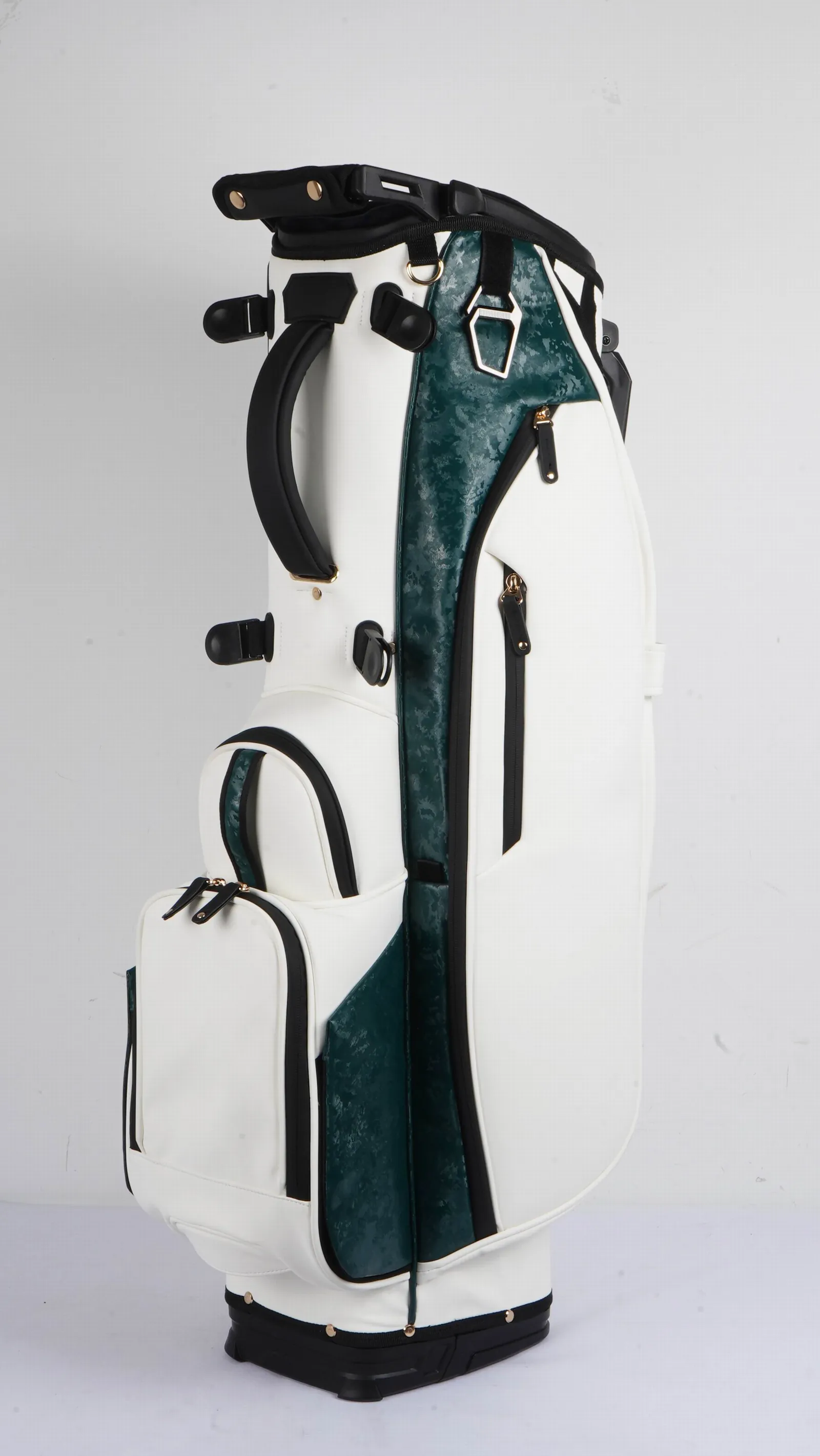
A loaded cooler full of cold drinks and ice is surprisingly heavy, and on a moving cart that weight has to sit on something that will not sag, tip or flex. A rigid or semi-rigid base board inside the bag gives a flat, load-bearing floor so the full weight spreads evenly instead of bulging through a soft fabric bottom. That firm footing is what keeps the bag planted on the rack rather than leaning into a wheel well.
Where the base meets the mounting point matters too. If the bag will strap to a frame, the base should have a reinforced channel or loop that the strap can pass through cleanly; if it sits in a beverage well, the base should match the well's footprint so the bag locks in without rocking. A well-designed rigid base turns an otherwise awkward, lumpy load into a stable unit that mounts and holds as one piece.
Grab Handles: Built for Lifting a Cold Load
Every time a golfer lifts a loaded cooler — into the car, onto the cart, off at the end — the handles carry the full weight of cold drinks. A cart-mount cooler therefore needs robust, well-padded carry handles with strong reinforced stitching, not thin decorative loops that strain and tear under a six-pack of ice-cold cans. A top handle for one-handed lifting and side handles for a two-person carry give flexibility for every move on and off the cart.
Handle placement should align with the bag's balance point so the load does not swing or torque while being lifted onto the frame. Weak, poorly placed handles are a common failure on cheap coolers, and they turn what should be an easy mount into a two-handed struggle. Specifying heavy-duty webbing, reinforced anchor points and correct balance is exactly the kind of detail a serious factory builds in. The durable golf cooler guide covers handle and construction strength in more depth.
Straps and Mounting Systems
How the bag actually attaches to the cart is the heart of easy mounting. Two main approaches dominate: quick-release strap systems that wrap around a frame rail or front bar and cinch tight, and rigid clip or hook mounts that drop onto a rack lip or handlebar bracket. Quick-release straps are the most flexible because they adapt to differently shaped cart frames, while clips offer the fastest on-off for carts with a standard front bar.
For a strap system, the length should be adjustable, the buckles should bite firmly without slipping under vibration, and there should be enough strap to wrap a variety of frame sizes. For a clip system, the mount shape must match the cart's anchor. Some designs include both — strap hooks for the frame plus a slot that the beverage-well notch captures. Whatever the mechanism, it should let one golfer mount and release the bag in seconds with cold hands, because fumbling with a flimsy clip on the first tee is how bags get dropped. Our cooler capacity and insulation guide complements the fit-and-attach discussion.
Sealed Closure That Survives the Bumps
A bag that opens while the cart is moving undoes the whole point of mounting it. The closure must stay snug and sealed under vibration and cornering, so closed drinks do not tumble out and cold does not escape. A full-width zipper that runs smoothly, or a flip-top lid that clicks shut securely, is the practical choice, backed by a good seal that keeps cold in and condensation from dripping onto the cart's electronics or upholstery.
Because a cart cooler is opened frequently mid-round, the closure should also be easy to use one-handed — a golfer driving slowly should be able to unzip, grab a can and reseal without stopping. That combination of secure enclosure and effortless access is a design refinement that distinguishes a bag built for cart use from a generic cooler. Sealing and leak-proofing are covered more fully in the cooler construction features guide.
| Design Element | Why It Aids Cart Mounting | Best Practice |
|---|---|---|
| Profile | Low, wide shape fits racks and wells | Prioritise width over height |
| Base | Rigid floor distributes cold-load weight | Reinforced base board, flat footing |
| Handles | Robust points lift a heavy cold load | Padded webbing, balanced placement |
| Strap/Clip | Secures to frame or rack anchor | Adjustable, one-handed, vibration-proof |
| Closure | Keeps contents sealed on bumps | Snug zipper or clickable lid |
Weight and Balance in Motion
As the bag fills with cold drinks and ice, its weight climbs quickly, and how that weight is distributed decides how it behaves on the cart. The heavy insulation and contents should sit low, keeping the centre of gravity down so the bag does not swing or tip around corners. A bag that balances upright when loaded will mount and travel far better than one whose weight rides high and wants to fall over.
Balance also matters for the mounting straps: an uneven load pulls harder on one side of the strap and can shift the whole bag gradually toward the edge of the rack. Designing the load to sit centred over the base, and recommending the heavier items be packed low, keeps the cooler stable through brake-in, reverse and tight turns. Understanding and designing for this in-motion physics is a real differentiator for a cart-mount product.
Size Range and Laddering for Mounts
Not every cart is the same, so a flexible range of sizes helps golfers find the mount that fits. Small personal coolers, around 6-9 litres, suit beverage-well placement or a strap to the canopy support. Mid-size units, about 10-15 litres, work on the front rack for a single golfer's full-round supply, while larger 20+ litre models fit the front seat or rack of a golf cart shared by two players. Providing clear size options lets each golfer match the bag to their cart's anchor geometry and their hydration load.
Laddering the range also lets courses and retailers equip walkers, riders and doubles appropriately. A bag that mounts easily at the right size is a bag that actually gets used every round, whereas a mismatched size that wobbles or blocks the view gets left at home. The size guide and the ice bag vs cooler guide help you map capacity to cart and group needs.
Walkers and Push-Cart Mounting
Cart mounting is not only for motorised carts. Many golfers walk with push carts, and the same mounting logic applies: a slim, low-profile cooler with a rigid base and secure strap system mounts easily to a push cart's lower frame or front basket, keeping drinks off the golfer's back and in easy reach. A bag designed with push-cart straps and a low centre of gravity turns a walked round into a comfortable, well-hydrated one.
For walkers, weight discipline matters even more because the golfer is the engine. A compact cooler that mounts close to the cart frame, rather than a heavy bag swinging on a shoulder, keeps the round light and balanced. Designing with walkers in mind broadens the bag's usability and makes the same portable design serve two very different ways of playing.
Anti-Slip, Anti-Rattle Details
The small details separate a bag that mounts beautifully from one that rattles and grinds across a fairway. Non-slip or rubberised contact patches on the base and sides grip the rack or frame so the bag does not slide on steep or bumpy terrain. Silent, friction-reducing buckles and no-looseness strap webbing stop persistent rattling that distracts a golfer between shots. A touch of grip and a well-tuned fit remove the last sources of movement and noise.
On the build side, these details also protect the surface they touch — a base pad stops the rack from scratching the bag and the bag from scratching the cart's finish. Durable coated hardware stands up to sun, rain and repeated mounting. When you compare cart-mount coolers, the quiet, firmly-planted one is the one whose little details were thought through at the factory.
Spec a Cooler That Mounts Like It Belongs
Tell us your cart types and capacity needs and we will recommend the profile, base, straps and closure to hold cold drinks steady through the round. Test orders from 100 pieces validate the fit before you scale.
Request a Bulk Quote →Cold Retention Meeting Mounting Convenience
Good mounting design must not compromise cold performance. The very features that make a cooler easy to mount — the slim profile, the rigid base, the quick-release straps — have to coexist with the insulation that keeps drinks cold for the 8-12 hour window golfers expect. A well-designed cart cooler builds the insulation into a shape that still mounts well, and positions straps so they do not crush or compress the insulated walls, which would shorten cold retention.
Keeping these requirements together is where experienced factories earn their keep. A poorly coordinated design might produce a bag that fits the cart but leaks cold, or retents well but fights the mount. Engineering the profile, base, closure and insulation as one coherent system is what delivers a cooler that both mounts easily and holds cold all round. Our cold retention guide and insulation materials guide detail how both goals are met together.
Materials and Weather Resistance for the Course
A cart-mount cooler lives in the open: full sun at the turn, light rain on a coastal course, dusty cart paths and the occasional knock against a tree. The shell material therefore matters as much as the mounting hardware. A PVC or TPU-coated outer shell resists moisture, wipes clean easily and stands up to abrasion, while strong, weatherproof zippers and coated webbing prevent the rusting and stiffening that sun and humidity cause in cheaper hardware.
Because the bag is strapped to the cart, it also takes vibrational wear that a shoulder bag never sees — the constant jostling of the ride. Reinforced seams, bar-tacked stress points and durable coated zippers extend service life where mounting meets routine motion. A cart cooler that looks good on the first fairway should still look good at the end of the season, and that durability is designed in through material and seam choices. The durable cooler construction guide and cooler care guide cover materials and upkeep for course use.
Customising the Mount for Fleets and Brands
For golf courses, resorts and brands that equip a whole fleet or resell a cooler line, the mount can be tailored as part of the bag's identity. A dedicated quick-release bracket sized to that club's own carts, or strap hardware in the brand's finish and logo-toned webbing, turns a commodity cooler into a fleet-ready, on-brand product. Because the mounting architecture is set at the factory, making it match a specific cart fleet removes guesswork on the course.
At the standard 200-piece MOQ per design, with a 100-piece test tier, this kind of fleet customisation is practical: the test tier validates the bracket fit on your actual carts, and the full run ships with hardware that slots straight on. Courses that specify their own mount find their guest coolers stay in place, look consistent and last — which is why our course and resort cooler guide and ice bag manufacturing standards guide walk fleets through the specification.

Testing a Cart Mount in Real Conditions
Designing for a cart on paper is one thing; proving the mount holds through a real round is another. A well-tested mounting system is load-tested with a full cold load and checked for strap slippage, base sag and closure security over bumpy terrain. Before scaling a fleet or a branded line, it is worth validating the fit against the actual carts the bag will ride on, including checking the width, anchor height and whether the bag clears the steering wheel and view line.
The 100-piece test tier exists exactly for this. Order samples, mount them on the course carts, drive the full eighteen on the roughest fairway, and confirm the bag stays put, opens one-handed and holds cold. That real-world validation turns a good-looking design into a dependable product, and it is far cheaper to fix a strap or base during the test stage than after a full production run. The cold drinks on course guide and the cart mount design guide close the loop between design intent and course reality.
Choosing a Mount for the Way You Play
The right mount depends on how a golfer actually plays, and a good range offers options rather than forcing a single compromise. Regular riders who share a cart with a partner want a mid-to-large unit that straps to the front rack and balances between two seats; solo walkers on push carts prefer a compact cooler that fixes low to the frame and stays out of the swing. Beverage-well enthusiasts want a size that drops straight into the built-in well and locks without straps.
What all of them have in common is the request that the mount be secure and effortless within their style. A golfer who has had a cooler slip off the front will value a clip or strap that visibly locks in; a walker will value a low, light mount they barely notice for eighteen holes. When you design or buy a cart cooler, choose the mount that matches the dominant play style — it is the difference between a bag that gets used every round and one that gets left behind. Our all-day cooler guide and corporate events cooler guide expand on matching coolers to how and where they travel.
Frequently Asked Questions
- What makes a golf cooler bag easy to mount on a cart?
- A slim horizontal profile, a rigid or semi-rigid base, robust grab-handle and strap points, and a quick-release mounting system. These let the bag sit on the front rack, side frame or beverage well without shifting through the round.
- Where do golfers attach an ice bag on a golf cart?
- Most attach to the front of the cart, strapped to the frame or resting on the front rack, with some sizes designed for the beverage well or strapped to the side canopy support. The bag's shape and strap lengths must suit the anchor point.
- Should a cart cooler have a rigid base?
- Yes. A rigid or semi-rigid base keeps a loaded cooler stable and stops it sagging or tipping on the rack, which is important for a bag designed to hold a heavy cold load steadily.
- Are quick-release straps better than clips?
- Both work. Quick-release straps adapt to differently shaped cart frames and are the most flexible; clips offer the fastest on-off where carts have a standard front bar. Many good designs offer either or both.
- Does a cart-mount cooler still keep drinks cold?
- Yes, if the insulation is preserved in the design. Straps and base should not crush the insulated walls, and the bag should hold the 8-12 hour cold window while also mounting cleanly.
- What size cooler suits a golf cart?
- A 6-9 litre personal cooler suits the beverage well; about 10-15 litres suits the front rack for one golfer; roughly 20+ litres fits a cart shared by two players. Match size to your cart anchor and hydration load.
- How heavy can a cart-mount cooler get?
- Fully loaded with drinks and ice, a mid-size cooler can realistically reach 8-12 kg. That is exactly why a rigid base, robust handles and balanced low centre of gravity are essential to mounting and travelling safely.
- Can a cart cooler block the driver's view?
- Yes, if it is too tall. That is why a slim low-profile shape matters — it keeps the bag low enough on the rack to stay below the sightline while remaining within easy reach of the seat.
Easy cart mounting is a design achievement, not an accident. With a slim low profile, a rigid stable base, robust handles, a quick-release strap or clip system and a sealed closure, a portable golf ice bag mounts to a golf cart in seconds and stays put, full of cold drinks, for all eighteen holes. Choose those elements carefully at the factory stage and the bag will complement the round rather than complicate it.
To source a cart-mount cooler engineered around your cart types and capacity, contact QUANZHOU JUNYUAN BAGS at contact, service@junyuanbags.com, or WhatsApp +86 17750020688. Start from our golf cooler bags range or the custom solutions page.