Premium Golf Staff Bag Features for Professional Golfers
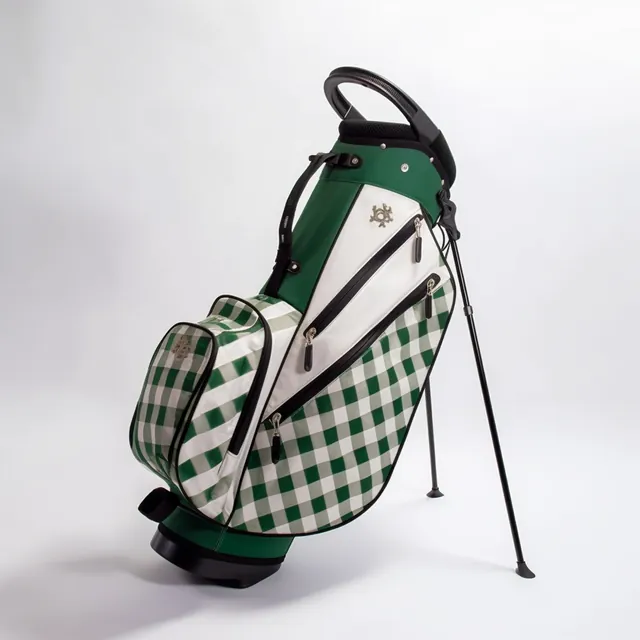
Premium golf staff bags are built to a higher standard on four fronts: a 14-way full-length divider system that keeps a 14-club set fully separated and tangle-free, a construction specification (heavy-duty fabrics, reinforced 1680D or laminated shells, steel-stiffened bases) rated for daily tour and coaching use, a pocket architecture that carries an entire round’s worth of apparel and gear, and a branding surface engineered to present a professional identity and sponsor logos cleanly. These features are not luxuries — on a tour or at a busy academy a staff bag is handled every single day, loaded and unloaded repeatedly, and stood on hard ground, so it must survive treatment that destroys a budget bag. This guide, written by QUANZHOU JUNYUAN BAGS, breaks down exactly what makes a premium staff bag worth the investment and how an affiliated factory with seven production lines and 126 sewing machines builds one consistently.
What Makes a Bag “Premium” in Tournament Terms
A premium staff bag is easiest to define by what it survives. A tour-level bag is unzipped, emptied and re-stacked dozens of times a week; it is stood on concrete and turf; it is lashed to carts and pushed through clubhouses; it carries the full wardrobe of a professional — a big set of clubs, rain gear, several gloves, balls, drinks and valuables — and it has to hold up for a full season or more. The premium price buys the engineering that makes a three-season life realistic rather than a three-month one.
The premium category is also a spec statement. It uses heavier, more abrasion-resistant face fabrics, thicker and better-taped seams, corrosion-resistant zips and buckles, aluminium or steel frame elements, and a base built to stand straight and rigid on hard ground. These are measurable differences you can see in a specification sheet, not just feel in a shop. When a brand orders a private-label staff bag, the specification — fabric denier, seam treatment, divider layout, hardware grade — is exactly what defines “premium” in the brief.
For a coach or a pro whose bag carries their name, the premium build is also a professional-investment decision. The bag is a work tool and a billboard at once; it must perform and it must look right standing next to a staff bag that cost several times as much. Building to an honest premium spec is how a lesser-known brand or academy can present a genuinely professional impression.
The Full-Size Staff Bag Profile
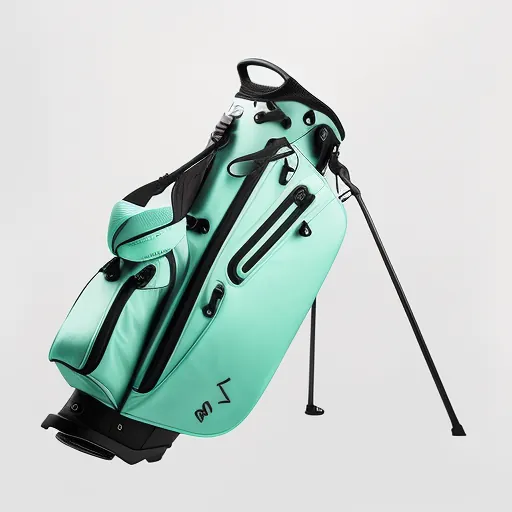
Built for Pro Duty
A staff bag is judged on durable materials, organised pockets and a silhouette that reads as professional at the bag drop.
A classic staff bag is large by design. A full-size tour staff bag typically measures in the region of 14 to 15 inches across the top, stands roughly 34 to 38 inches tall and weighs anywhere from 6 to 13 pounds empty depending on the build. That size is deliberate: it creates the generous divider mouth that keeps 14 clubs fully separated, and it provides the surface area a tour bag needs for big pockets and a large branding panel.
The trade-off is portability. Staff bags are not designed to be walked 18 holes on the back — they ride on carts, trolleys or in the hands of a caddie. That is why the premium build concentrates on rigid structure and protection rather than shaving grams. A premium staff bag should stand rock-stable, keep its shape when full and empty, and carry a full set without the top distorting. A well-engineered steel-stiffened base and reinforced top ring deliver exactly that stability.
Because staff bags live on carts, the profile also includes thoughtful cart integration: a wide, padded carry handle over the top, secure cart-strap passthroughs at the base, and a base that grips a cart tray without sliding. Our golf bag sizing guide covers the dimensional logic in more detail, and our staff bag vs cart bag guide compares the two workhorses of the professional game head to head.
14-Way Dividers and Club Organisation
The single most important organisational feature of a premium staff bag is the full-length divider system. A 14-way top gives each of the 14 clubs its own slot, running the full depth of the bag, so heads never touch and grips never snag when a club is pulled or replaced. This is non-negotiable for a professional who needs instant access to a specific club on every shot.
Beyond raw slot count, the quality of the divider system is in the material and the rails. Cushioned, fabric-covered dividers protect shafts from rattle; solid rails keep the top from flexing under load; and a putter well with a dedicated slot keeps the most-used club easy to grab. A premium bag also manages longer clubs — driver and woods — with reinforced sections so the top does not bow outward over a season.
Organisation extends to every pocket. The best staff bags assign each piece of gear a home: a large main apparel pocket for a rain jacket, layered clothing and towels; a lined valuables pocket with a secure zipper; an insulated pocket or cooler sleeve for drinks; a ball pocket sized for a box; multiple glove pockets; and smaller sleeves for a rangefinder, snacks and scorekeeping. When every item has a place, a round runs faster and nothing gets left behind. A thoughtful pocket plan is what keeps a fully loaded bag working efficiently during a round.
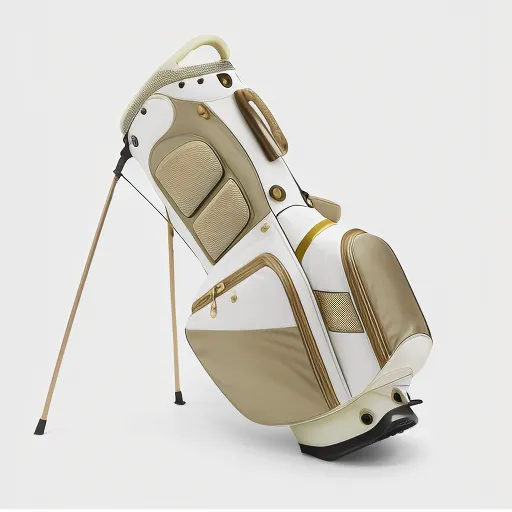
Dividers Built for a Full Set
A full-length 14-way top keeps every club separate for instant, tangle-free access round after round.
Materials and Construction That Survive the Season
Premium staff bags separate themselves on raw material specification. Typical premium face fabrics run to 1680D nylon or equivalent heavy polyester in a structured weave, with the underside of high-wear zones — the base, the top ring and the leading edge against cart rails — reinforced with extra layers or ballistics-grade material. This is the spec that resists scuffs on concrete and tears at load-bearing points.
Stitching and seams matter as much as fabric. Multi-needle, bar-tacked stitching at stress points — strap anchors, handle roots, pocket corners — is what actually prevents a bag from coming apart where it is gripped hardest. Bound, heat-sealed or taped seams keep edges clean and block moisture at the seams. These are the details that make the difference between a bag that looks new after a season and one that looks beaten after a month.
Hardware completes the picture. Corrosion-resistant zippers with strong, rubberised pulls, robust D-rings and buckles, and a solid base all contribute to a bag that operates smoothly and stays rigid. The fabric and material logic here follows the same principles as premium construction across the range — our golf bag materials guide details the fabric families and when each is the right call.
Pockets, Storage and the Professional’s Wardrobe
Wardrobe-sized pockets only earn their space if the professional can reach them without unloading the bag. Organising by frequency of use, with daily essentials in the outermost fast-access pockets and rarely touched spares deeper in, is what turns a large capacity into genuinely useful storage rather than extra weight.
A professional or a serious coach travels with more than clubs. A premium staff bag’s pocket architecture is designed for a full working kit: layered outerwear and rain gear, a spare shirt, several types of glove, a dozen or more balls, drinks and a thermos, towels, a rangefinder, phone, wallet and keys. Getting all of that organised into reachable, protected storage is a core premium feature.
High-utility staff bags add a large insulated pocket for cold drinks, a stash pocket for quick snacks and scorecard sleeves, and waterproof or water-resistant zips on the pockets that matter most. A top-access ball pocket keeps the most-grabbed item easy to reach. The best layouts put the highest-use pockets where a standing golfer or a caddie can get to them without lifting or crouching.
Valuables protection matters too. A lined, zipped valuables pocket with a rain-resistant closure keeps phone and wallet secure away from the ground. For coaches who carry devices and training aids, padded sleeves prevent rattle and damage. When the pocket plan is right, loading is minutes, and nothing is lost mid-round.
Rain and Weather Protection on a Premium Build
Professional and academy golf happens in all weather, and a premium staff bag is expected to protect its contents through it. The first line of defence is the shell — a DWR-finished, tight-weave premium fabric sheds showers, and taped or well-lapped seams keep moisture from creeping through stitching. The second line is the closures: water-resistant zips on the main and valuables pockets stop the worst of it.
The final line is the rain hood. A tour-grade hood covers the club heads and the top of the bag, deploys quickly in a sudden shower, and secures firmly so it does not blow off in wind. When a player is mid-round and the sky opens, a bag that keeps clubs reasonably dry is a bag that earns its premium price. Our waterproof golf bag guide compares the full spectrum from water-repellent to fully waterproof construction so a buyer can match protection to how much wet-weather play the bag will see.
Straps, Carry and Cart Integration
Though staff bags ride on carts, they are still carried — from the car to the pro shop, from storage to the cart bay, through a clubhouse and up and down stairs. A premium staff bag makes that carry comfortable with a generously padded, ergonomically shaped top handle and, on many models, a stowable dual-strap system for shorter carries. The handle must be anchored to a reinforced frame so it does not pull loose under a loaded bag.
Cart integration is where a staff bag is tested hardest. A secure cart-strap passthrough at the base keeps the bag lashed tight on cart and trolley without the strap crushing contents, and a rigid base keeps the bag planted on the tray. On push and electric carts, the bag must not slide or twist mid-round. Our cart bag guide for tournament play covers how the professional gear behaves on a cart in detail.
A well-balanced premium bag also rides on the shoulder more gracefully when needed. The balance point honouring the full set, the adjustable straps, and padding at the right height all reduce the strain of even a short carry. These refinements are the difference between carrying a burden and carrying a tool.
Branding and the Tour Identity Surface
For a professional, coach or team, the staff bag is a personal billboard. Its large front panel is the primary branding surface, designed to carry a name, a logo or a sponsor mark legibly from a distance. Premium staff bags are engineered with that surface in mind — smooth, printable faces, reinforced panels that do not distort under print or embroidery, and placement options that keep the identity visible when the bag is standing.
Customisation quality separates a professional impression from a homemade one. At QUANZHOU JUNYUAN BAGS we support full Pantone matching, so a team crest or brand colour appears on the bag exactly as it does on apparel. Embroidery gives a premium, dimensional crest that resists wear; screen print or heat-transfer handles large full-colour graphics. A physical sample is approved before any bulk run so the colour, placement and construction are exact.
For tour players, teams and academies, our custom staff bag page walks through building a sponsor-ready identity. Whether a single pro’s bag or a fleet for an academy, a coherent branding system — same logo, same colour logic across bags and apparel — reads as one deliberate identity, which is exactly the professional signal a staff bag is meant to send.
Staff Bag vs Cart Bag: Choosing the Right Professional Tool
Pro-level golfers and coaches face a genuine choice between a staff bag and a cart bag, and the right answer depends on how the kit is used. A full-size staff bag presents the strongest professional image, carries the most gear and is the tour-standard form factor, but it is large and heavy to move off a cart. A cart bag packs much of the same organisational benefit into a lighter, easier-to-handle package that is still cart-first.
The table below summarises the practical decision. A coach who moves a bag between academy ranges and carts often finds a premium cart bag the better daily tool, while reserving a staff bag for events and photo moments. A touring professional or a club presenting a flagship identity will want the full staff bag. Matching the bag to the actual workflow is what makes the premium purchase earn its keep.
Sourcing a Premium Staff Bag: MOQ, Sampling and Quality
Ordering a quality staff bag — whether branded or private-label — is a specification exercise. Start with the construction spec: fabric denier, divider layout, closure grade, base and frame type. Then define the branding: Pantone colours, crest placement, print or embroidery. A physical sample confirms both before any bulk investment, and that sample is the moment to test the bag loaded, not just empty.
Lead times and order sizes are predictable when planned. Sampling typically runs 10–20 days and bulk production 45–60 days from a confirmed sample. A standard MOQ of 200 pieces gets the most economical factory-direct pricing, with 100 available for test or pilot runs. Because we manufacture on our affiliated floor rather than resell, the buyer pays for construction and branding rather than a trader’s markup.
Quality control is applied consistently across the run — fabric tests, seam integrity, zipper cycling, divider retention and finish checks — and the affiliated factory was independently audited by SGS in March 2026. Our quality standards guide details the checks a serious buyer should expect, and our manufacturer selection guide lists the questions that separate a real manufacturer from a middleman before you commit.
QUANZHOU JUNYUAN BAGS supplies golf bags from an affiliated 4,950-square-metre main factory whose founder entered the industry in 2004 and which was established as a company in 2014. The facility runs seven production lines with 126 sewing machines and a team of 137 staff, supporting a monthly capacity of up to 200,000 units for more than 200 brands across 100+ countries. Sampling typically takes 10-20 days and bulk production 45-60 days, with a standard MOQ of 200 pieces and 100 for test orders. The factory was independently audited by SGS in March 2026. Contact service@junyuanbags.com or +86 17750020688.
Avoiding the Common Premium Staff Bag Pitfalls
The most common mistake is buying on looks rather than spec. A beautifully styled bag with thin fabric and single-stitched seams looks premium in the shop and fails in season two. Read the specification, not just the colour. The second mistake is ignoring the divider system — a false 14-way top that does not run full length offers no real protection and lets grips tangle. The third is underestimating the bag’s weight and bulk against how it will actually be moved.
For buyers, the final pitfall is rushing an order and missing the season. Because sampling and bulk runs take time, a spring launch needs the brief locked in months ahead. Planning, a confirmed sample, and a documented spec are the difference between a premium staff bag program that elevates a brand and one that lands late and disappoints.
Quick Comparison: Staff Bag vs Cart Bag for Professional Use
Professionals and coaches often weigh a full staff bag against a premium cart bag. This table compares the deciding factors.
| Factor | Full-Size Staff Bag | Premium Cart Bag |
|---|---|---|
| On-course image | Strongest, tour-standard impression | Professional but lower-profile |
| Storage capacity | Maximum pockets and gear space | High, well-organised but slightly less |
| Portability | Heavy; cart or caddie only | Lighter; easier to move between carts |
| Cart behaviour | Excellent on carts with rigid base | Excellent; often purpose-designed for carts |
| Best for | Tour, events, flagships, coaches | Daily academy and cart-first use |
Match the bag to the workflow. Tour and flagship identities favour the full staff bag; daily coaching and cart-first routines often favour a lightweight premium cart bag. Specs in these tables are for comparable premium builds.
Build a Premium Staff Bag for Your Brand.
Source a tournament-grade staff bag with full 14-way dividers, heavy-duty construction and Pantone-matched branding. Physical sampling, MOQ 200 (100 for test orders), and SGS-audited manufacturing.
Start Your Staff Bag Brief →Frequently Asked Questions
- What most defines a premium golf staff bag?
- The measurable construction spec — heavy-duty fabrics such as 1680D, reinforced multi-needle stitching, taped seams, corrosion-resistant hardware and a rigid base — plus a true full-length 14-way divider system.
- How heavy is a premium staff bag?
- A full-size tour staff bag typically weighs roughly 6-13 lb empty depending on build; it is designed to ride on carts rather than be walked.
- Is a staff bag better than a cart bag for a coach?
- A touring pro or flagship identity usually wants a full staff bag; a coach moving a bag between ranges and carts often finds a premium cart bag the better daily tool.
- What customisation is available on premium staff bags?
- Full Pantone colour matching, embroidery for crests, screen print or heat-transfer for large graphics, and custom monoograms on the front panel, approved on a physical sample first.
- What is the MOQ and lead time for custom staff bags?
- A standard MOQ is 200 pieces with 100 for test orders; sampling runs 10-20 days and bulk production 45-60 days from a confirmed sample.
- Why do premium staff bags cost more?
- The price buys heavier fabrics, reinforced construction, more durable hardware and a rigid frame — the engineering that lets a bag survive daily tour and coaching use for seasons.
Related Reading
- Staff Bag vs Cart Bag Guide — Compare the two workhorses of the professional game.
- Golf Bag Sizing & Fit Guide — Dimensional logic behind a full-size build.
- Waterproof Golf Bags Guide — Protection levels from water-repellent to fully waterproof.
- Best Golf Cart Bags for Tournament Play — How professional gear behaves on a cart.
- Custom Staff Bags for Tour Players — Building a sponsor-ready identity.
- Manufacturer Selection Guide — Questions that reveal real quality control.
- Quality Standards Guide — The checks a serious buyer should expect.
Sources
- PGA Tour — the working standard for tournament equipment, illustrating how staff bags are used on tour.
- PGA of America — coaching and professional standards relevant to coach-level bag use.
- USGA — equipment-conformance and rule references supporting sound club and bag specification.
- SGS — independent factory verification supporting the manufacturing claims in this guide.