Professional Golf Bag Accessory Systems: Upgrade & Integrate Like a Pro
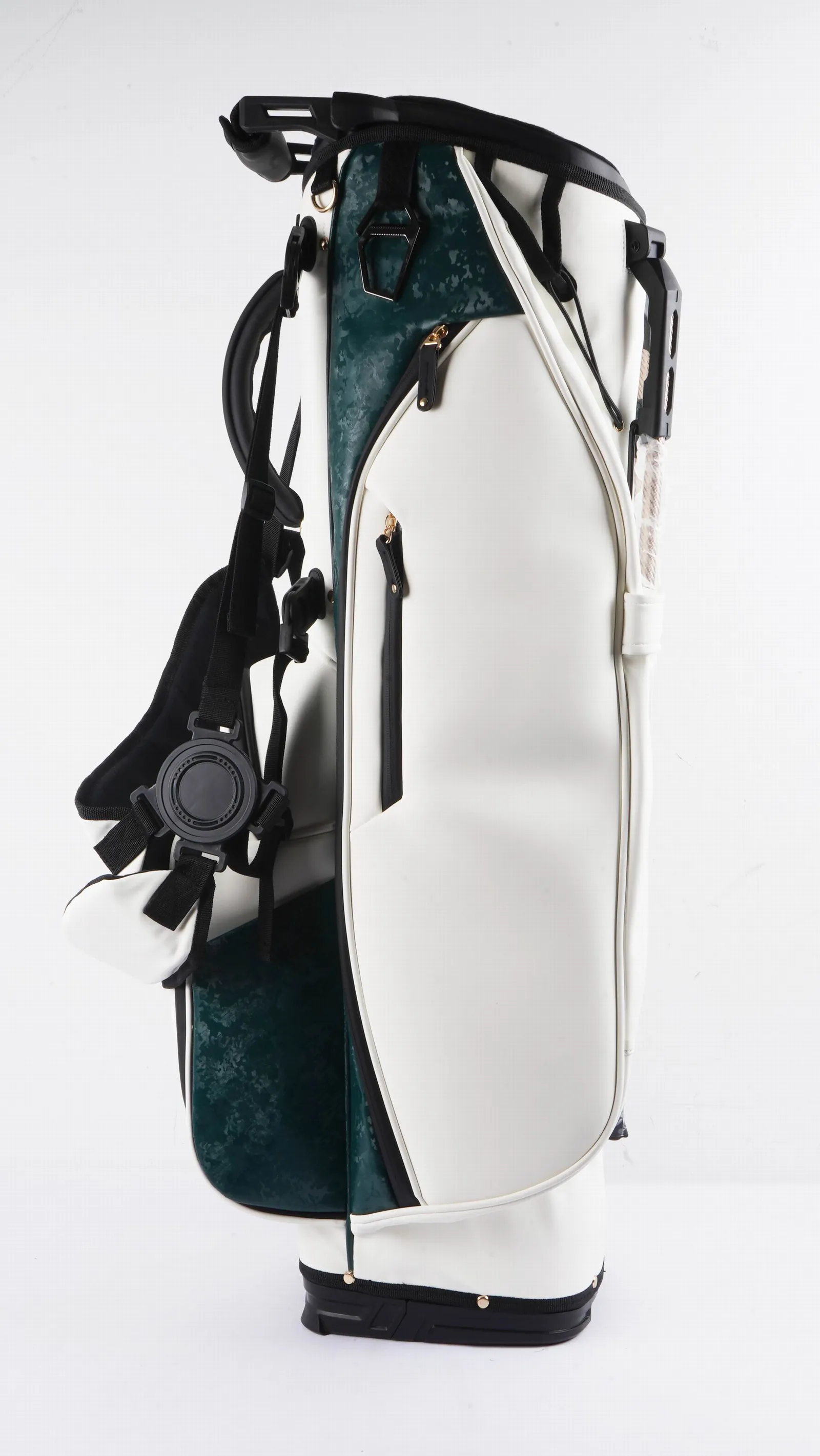
What separates a professional golf bag setup from an average one is not the number of accessories but the integration — pros build one coordinated system where the divider, pocket map, mounts, organizers, cooler and tech pocket all work together, so every accessory has a fixed home, stays light and balanced, and is reachable in seconds. This guide walks through professional accessory systems, the components that matter, how to integrate them on your own bag, and how to build a pro-grade setup that works on any budget.
What Makes an Accessory System Professional
The word "professional" describes outcome, not price. A professional accessory system is organised, protected and fast. Organised means every item has a permanent home and the pocket map is logical. Protected means clubs are separated, valuables are secure and dry, and the bag and accessories survive the season. Fast means the items you reach most are at hand without searching.
The distinguishing trait is integration. Professionals do not treat accessories as a pile of separate parts; they build one system where mounts, organizers and tech pockets work with the bag's design. This integration is what lets a pro play a full tournament without once digging for a tee or a towel, and it is the model for anyone who wants a bag that simply works.
Finally, professionalism means discipline — adopting accessories because they earn their place, not because they are new. A pro kit is lean by design, and every piece has been proven by use. That filter is the first step toward a professional-grade setup of your own.
The Core Components of a Pro System
A professional accessory system is built from a small set of core components. The base is a bag with a well-designed divider system, a logical pocket map and solid mount points. On that base you add mounts — a rangefinder mount, a towel ring, a tee holder, a putter tube. Then organisers and pouches that stop small items from sinking, and finally the situational pieces like an insulated cooler, a rain cover and a tech pocket.
What distinguishes the pro version of these is that they integrate with the bag rather than fighting it. Reinforced mounting loops built into the bag accept the clips; a lined valuables pocket secures the phone; a feed-through hole handles charging cable. When the components are designed as a system, nothing dangles, nothing is lost, and nothing interferes with club access.
The order of build matters: get the base bag right first, then add mounts, then organisers, then situational gear. Trying to do it the other way around often produces a bag full of parts that never integrates.
| Component | Role in the System | Integration Key | Pro Priority |
|---|---|---|---|
| Divider system | Separates clubs, clean top | Full-length sections | High |
| Pocket map | Gives every item a home | Logical, moisture-proof values | High |
| Mounts | Range finder, towel, tee, putter | Reinforced loops | High |
| Organizers | Pouches, liners, dividers | Match pocket dimensions | Medium |
| Cooler / tech | Cold drinks, charging | Built-in, safe compartments | Situational |
| Care items | Towel, rain cover, brush | Fixed, dry placements | High |
Choosing the Right Base Bag
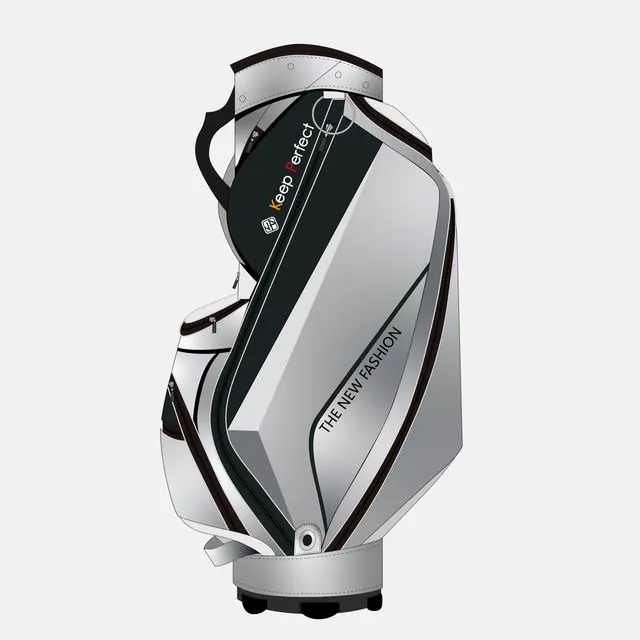
Every accessory system is only as good as the bag it is built on. Start with the divider system: a full-length or high-count sectional divider keeps clubs separated, protects finishes and provides a clean top for organising the slots. Add a dedicated putter slot so your most-used club is secure and fast to reach. For the pocket map, confirm there is a moisture-proof pockets pocket, a large enough balls compartment and convenient reach points for the towel and rangefinder.
Check the mount points too — reinforced loops, magnetic points and compression straps are where clips and mounts attach. A bag built with these in place accepts a professional accessory system far more cleanly than one that needs modification. A compatible bag is the difference between a system that integrates and a bag of improvisation.
For a complete guide to choosing this base across the major types, our choosing the right golf bag guide and cart bag size guide are strong starting points, and our products show bags built to hold a pro system from the start.
Building a Balanced, Lightweight Setup
Weight and balance are where pro systems are won or lost. A bag that is heavy or unbalanced is uncomfortable to carry and slower to use, no matter how well organised. Keep the setup lean: adopt only the accessories you use, position heavy items low and central in the bag, and place mounts so the bag still sits level on a stand or a leg frame. For walkers every ounce counts, so favour light mounts and organisers.
A practical rule is to weigh the bag before and after you finalise the accessory set, and set a ceiling you are comfortable carrying. If the system is overloaded, cut the least-used pieces rather than trying to carry everything. A balanced bag is a bag you use consistently, and consistent use is what makes an accessory system genuinely professional.
Remember that riders have more room, but even riders benefit from a clean, balanced setup that keeps everything reachable from the cart seat without tangling or crowding. Design the system for how you play — walking or riding — and it will feel right.
Organizing for Speed: The Pro Pocket Map
A professional pocket map is designed for speed. The principle is simple: the most-used items live in the most-reachable pockets, and everything has one fixed home. Balls go in one compartment near the bottom; tees and markers in a small, always-reachable pocket; the rangefinder beside the reach point or on a mount; valuables in a moisture-proof pocket; the towel on a ring; rain gear in a dedicated, accessible pocket.
Speed also comes from avoiding over-organising. Too many pouches create a maze where even the essentials are hard to find. Keep the map simple — one job per pocket, no cross-shopping — and reserve the top area for club access. When every reach is the same every round, you stop thinking about where things are and focus on the game.
For the full zone-by-zone walkthrough, our how to organize golf bag pockets guide maps the professional arrangement in detail and accessories organization tips adds the finishing touches.
Speed also depends on minimising the number of physical actions each reach requires. If a towel needs two clips to detach, or a rangefinder is buried behind a divider, that is a slow system by design. Prefer access that is one motion: a towel on a single ring, tees in a one-pull holder, the rangefinder on a mount that cradles it. Small as these choices are, they multiply across a round and are the difference between a bag you navigate and one you operate instinctively. When reaching becomes a single, unthinking motion, the pro system has done its job.

Protecting Gear Like a Professional
Protection is a professional non-negotiable. A good divider system keeps clubs from chattering, club covers shield woods and a putter tube protects the putter. A rain cover defends the whole bag and its contents in a downpour, and a dry, moisture-proof pockets pocket keeps your devices and valuables safe. These protections are the quiet reason pro gear lasts tournament after tournament.
Also protect the system itself. Use reinforced mount points as designed rather than stressing improvised attachments, check straps and zippers for wear, and dry everything fully after wet rounds. A professionally protected accessory system is one that keeps performing across a lifetime of rounds, saving the cost of replacing gear.
Pair this with the wider care routine in our golf bag maintenance guide so the whole system — bag and accessories — stays in top condition through the seasons.
Integrating Tech Into a Pro System
Modern pro systems integrate technology cleanly. A mount keeps a rangefinder at hand-level; a dedicated electronics pocket with a feed-through hole lets a phone charge from a pocketed power bank while staying usable; fire-resistant battery compartments and weather-sealed ports protect safety. Integrated tech turns the bag into a reliable mobile station rather than a tangle of cables.
The integration principle applies here as elsewhere: the tech pocket should be one clear zone in the pocket map, with a fixed cable route and a moisture-safe lining. Do not let a single gadget stop being organised. When the tech components fit the bag's design, they become as fast and reliable as any other part of the system.
Match the tech to your habits — GPS, shot-tracking or music — and adopt it only if it supports a behaviour you actually have. A pro system is complete without a gadget it never used, so integration means choosing tech that earns its place just like any other accessory.
Building a Pro System on Any Budget
Professional results do not require premium prices. Start by choosing a bag with the right divider, pocket map and mount points at whatever price fits, then build the accessory layer deliberately. Add a towel ring, a tee holder and a rangefinder mount first — these are inexpensive and deliver outsized speed. Then add organisers, care items and situational gear as you confirm you use them.
The discipline of building in stages costs less and performs better than buying a full premium system at once. Every accessory earns its place by use, and a lean, well-organised budget bag consistently beats an expensive bag full of unused parts. Judge the system by speed, protection and weight, not by the price tag.
For retailers and brands sourcing a pro-grade line, coordinate the bag and its accessory system at the factory so the pieces integrate and sell as a coherent package. See our accessories, wholesale and custom OEM/ODM options for building a coordinated pro system at scale.
Common Pro System Mistakes and Fixes
Even experienced players fall into a few avoidable traps. The biggest is over-accessorising — adding mounts, coolers, tech and pouches until the bag is heavy, crowded and slow, which defeats the entire point of a professional system. The cure is the five-round test: anything unused in five rounds leaves the bag. A lean system run properly beats a loaded system run poorly.
A second mistake is ignoring balance, especially for walkers. A system that is front-heavy or top-heavy is uncomfortable and tiring to carry, and it can make the bag tip on a stand. Redistribute weight lows and central, and place the heavy coolers and batteries near the bottom. A balanced bag is one you can walk with for eighteen holes without resentment.
A third mistake is buying components without compatibility. Mounts, organisers and tech pockets that do not fit the bag's dimensions or mount points get forced into place and eventually fail. Check fit before buying, favour integrated designs, and return anything that does not sit cleanly rather than improvising a lasting fix.
Professional Systems for Tour and Competitive Play
When the standard is tournament-level performance, the accessory system becomes even more deliberate. Consistency is the priority on tournament day: the pocket map must be identical round after round so the player never searches under pressure. Everything is laid out the night before, consumables are checked and restocked, valuables are secured in one pouch, and the towel and rangefinder are mounted exactly where they always are.
On the competitive bag, protection is emphasised — full-length dividers and a putter slot keep fourteen clubs perfect, a rain cover defends against a sudden downpour, and a moisture-proof pocket protects a scorecard, phone and keys. Speed matters most in practice and warm-up, where quick access to tees, gloves and balls keeps the routine sharp and on schedule.
This level of integration is precisely why competitive players value a bag engineered as a system. When the full environment around the club performs without a second thought, the player's focus stays on the shot. For a deeper look at the tournament-grade base itself, our cart bags for tournaments guide shows how the base bag supports a pro system.
Maintaining the System Like a Pro
A professional accessory system is maintained, not just assembled. Between rounds, wipe clubs and grips, let everything dry fully, remove the valuables and rangefinder to safe storage, and restock consumables like balls, tees and towels. Weekly, inspect straps, zippers and mount points for wear and tighten anything loose. Seasonally, deep clean the bag and do a full kit review, swapping seasonal gear and retiring unused pieces.
This consistent care keeps the system reliable and light. When you treat the accessory system as a single piece of equipment to be maintained, rather than a box of independent parts, it performs consistently for years. For the full routine, our storage organization systems and maintenance care guide keep everything in order.
Finally, revisit the system with fresh eyes at each season change. Drop what you did not use, add what the coming season demands, and keep the pocket map fixed so the bag stays as fast on round fifty as it was on round one.
The Retail and Brand View: Systems as Product
For retailers and brands, a professional accessory system is not just a play improvement — it is a coherent product offer. A bag paired with the mounts, organisers, cooler and tech pocket that complete it is a stronger, higher-margin package than a bag alone, and it guides customers toward a complete experience rather than a fragmented purchase. Coordinated systems also build repeat business as consumables renew and accessories expand.
To make a system sell, the pieces must integrate cleanly: matching hardware, mounting points and branding across the bag and its accessories, and quality control that keeps every component consistent. Working with a factory that produces both the bag and the accessory line together, as we do through our accessories and custom OEM/ODM services, ensures the fit and finish are uniform and the whole concept is credible.
Sell the outcome, not the parts. Position the system as "a ready bag," "pro-level organisation" or "cold, charged and organised all round," and the customer understands the value instantly. When a product is presented as an integrated system, it commands a premium and satisfies in a way that a pile of independent accessories rarely does — the same principle a player applies, scaled up to merchandise strategy.
Consider also how a system line differentiates the brand itself. In a catalogue full of bags, a coordinated bag-and-accessory ecosystem stands out, raises perceived quality and gives sales teams a story to tell. It turns commodity pricing pressure into value pricing, which is why the most successful golf brands present their bags as part of a lifestyle system rather than as standalone products.
Why an Engineered Base Bag Is the Foundation of a Pro System
Every professional accessory system is only as sound as the bag it is built on. A bag with a stable base, balanced weight distribution and a divider system that protects each club is what makes the layers of mounts, organisers and tech add-ons useful instead of fragile. Choosing the right base up front is the single highest-leverage decision in the whole system, and it is the part most golfers rush past. Take time to match the base bag to how you travel on course, how many clubs you carry and where you need your hands to reach.
At QUANZHOU JUNYUAN BAGS (founded 2014, founder active since 2004), our affiliated factory builds the base bag to be the reliable hub of an accessory system, across 7 production lines with 126 sewing machines and 137 employees to a monthly capacity of roughly 200,000 pieces. We serve more than 200 brands across 100+ countries, with a standard MOQ of 200 pieces (100 for test orders), sampling in 10-20 days and bulk delivery in 45-60 days, and SGS certification confirmed in March 2026 at our 4,950 m² affiliated factory. Because the bag and its accessories are engineered together, the finished system behaves as one coherent, balanced unit rather than a stack of parts.
A professional system is ultimately about making repeatable the small decisions that win a round: the club is always in its slot, the rangefinder is always in hand, the valuables are always secure. When the bag supports that reliability, the accessories stop being extras and become part of the game itself. To deepen this thinking, read our 2025 attachment systems guide and our complete accessories guide.
Conclusion
A professional golf bag accessory system is an integrated, organised, protected and fast setup — built on the right base bag, layered with compatible mounts and organisers, balanced in weight, and maintained consistently. The professional approach is not about owning more; it is about making every piece work together and earn its place.
Start with the bag, build in order, apply the five-round test, and protect both gear and the system itself. Whether you play once a week or source products for a brand, a pro-grade accessory system turns the bag into a quiet extension of the game. For the next steps, our complete accessories guide and product range are ready to help you build it.
Sources
Frequently Asked Questions
- What is a professional golf bag accessory system?
- An integrated setup where mounts, organizers, coolers and tech pockets work with the bag's design so accessories stay organized, protected and within reach.
- What accessories do professional golfers carry?
- Balls, tees, multiple gloves, a rangefinder or GPS, ball markers, towels, a rain cover, club covers and a valuables pocket—organized for fast, reliable access.
- How do I create an integrated accessory system?
- Choose a bag with the right divider, pocket map and mount points, then add compatible mounts and organizers so every accessory has a fixed home.
- Are pro accessory systems worth the cost?
- For serious players yes—integrated systems protect gear, save time and prevent the weight and clutter of improvisation. Judge by use, not price.
- What is the best divider system for accessories?
- A full-length or high-count sectional divider with a putter slot keeps clubs separated and leaves a clean, organized top.
- Can I build an accessory system on a budget?
- Yes. Build in stages, give each item a fixed pocket, and add mounts and organizers as you confirm you use them. A lean budget bag outperforms an overloaded premium one.