Smart Golf Bag Technology & Digital Innovation
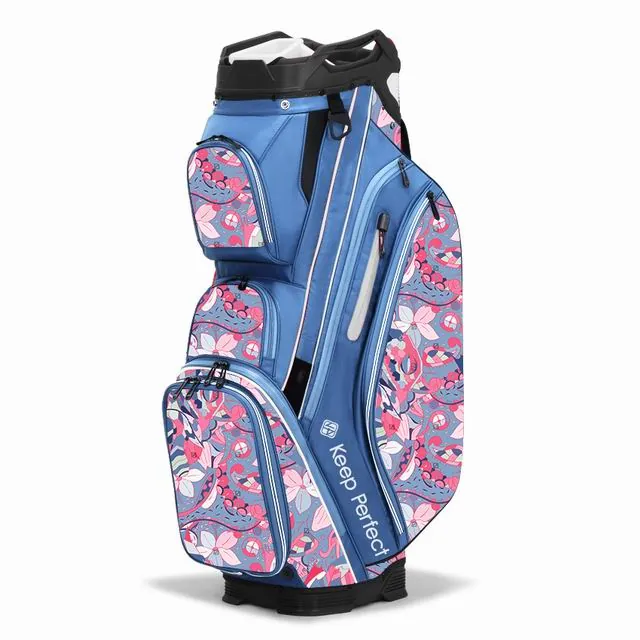
Digital innovation in golf bags is real but sober: the gains come from integrating mature, publicly available technologies — GPS positioning, Bluetooth connectivity, RFID club and item tracking, weighing and inventory sensors, and USB or wireless charging — into a conventionally well-built shell, and the honest expectation is that these features improve logistics (distances, loss prevention, carry weight, device power) rather than your skill; the deciding factor is not how many features a bag lists but how well each is integrated, sealed and powered so it still works in rain, heat and year after year of hard use. This guide explains, from the factory standpoint of a golf bag manufacturer in Quanzhou, China, what the digital layer actually adds, what to trust, and how to buy a connected bag that outperforms its spec sheet.
What "Digital Innovation" Really Adds to a Bag
When a golf bag is described as digital or smart, it usually means the shell carries electronics that sense, track, connect or power. Each of these maps to a stakeholder's real need: golfers want course distances, the ability to find a misplaced bag and charged devices; club managers and coaches want accurate inventories and consistent equipment; brands want a differentiated product that justifies a higher price. Digital innovation, done well, quietly serves all three without turning the bag into a gadget that has to be managed.
The useful way to evaluate any smart bag is to separate the electronics from the bag. If the shell is weak, badly sealed or cheaply built, the electronics inside are wasted. If the electronics are reliable and the shell is strong, you have a genuinely better product. Keep that priority fixed and digital features stop being marketing noise and become a controllable set of decisions about which of them help the way you actually play.
Sensors and the Data They Produce
The data foundation of a smart bag comes from sensors. Weighing load cells in the handle or base measure carry weight and estimate the number of clubs, giving walkers feedback to pack toward a target weight and giving coaches a quick confirmation that a loaned set is complete. Accelerometers and ambient sensors can log rounds and climate conditions. The value of this data is that it turns vague impressions — the bag feels heavy, something might be missing — into numbers you can act on.
The limitation is calibration and precision. Load cells drift and readings are influenced by how the bag is placed and how weight is distributed, so the data is best used as a reliable indicator rather than precision measurement. Good software smooths the noise and presents trends — is the bag getting heavier over the season? are clubs consistently missing after a particular course? — which is far more useful than a single imperfect number. Sensor data earns its place when it informs a packing or inventory habit, not when it is presented as a gadget.
GPS and Course Intelligence
GPS is the most established digital addition to golf hardware, and in a bag it does two jobs. First, it delivers course intelligence: with multi-constellation receivers, a bag-integrated or paired device returns yardages to greens and hazards with typical consumer accuracy of a few metres, which most golfers find genuinely useful. Second, it locates the bag itself on a map view, so a bag left at the 14th green can be found easily. For senior golfers and walkers in particular, this combination reduces anxiety and wasted searching.
Course intelligence has honest limits. GPS depends on clear sky view, so dense tree canopy and enclosed spaces degrade it, and continuous tracking drains small batteries, which is why most designs broadcast position on intervals or on demand rather than continuously. Treat GPS as a complement to your own awareness, not a replacement for it. When it confirms distances and finds your bag, it has paid for itself many times over a season, and when the conditions hide the sky, a good app still gives you the last reliable position rather than nothing at all.

Building a Connected Golf Bag
A connected bag pairs with a phone, usually over Bluetooth Low Energy, which keeps power draw low. Once paired, the companion app becomes the dashboard: bag location, battery state, club inventory if the bag has sensors, and firmware updates for the onboard electronics. Bluetooth's short range, typically under 100 metres in open air, complements GPS by confirming the bag is near, while GPS finds it over a wide area. Pulling both together gives a golfer both reassurance and course context.
The connectivity design matters for the user experience. The best bags make connectivity optional so the bag works perfectly even if the app is never opened, and they keep the pairing and status readable without a steep setup curve. The worst treat the app as a mandatory gate, adding friction to a game that is supposed to relax you. If a bag's core value depends on an app login and an always-on link, question whether the electronics are serving you or selling you, and whether the extra setup will still feel worth it a season from now when the novelty has worn off.
Power That Lasts the Round
Every smart feature needs power, and that power serves two roles: running the bag's own sensors and radios, and charging the golfer's own devices. Integrated power banks are typically rated from 5,000 to 20,000 mAh, letting them top up a phone or rangefinder many times over a long round. Wired USB ports are simple and dependable; wireless charging is cleaner but more expensive and slightly less efficient. Either way, being able to charge on the course removes a real point of friction many golfers hit.
The discipline is battery awareness. A bag that needs daily charging becomes a chore, so check how large the battery is, whether it is visible or removable, and how easily it is serviced or replaced. A good power design keeps the module user-serviceable so the bag does not become disposable when a cell ages, and it shows charge level clearly so you are never caught with a dead pack at the first tee. For players who finish rounds with a drained phone, integrated charging is among the most defensible smart additions; for everyone else it is a convenience that should not dominate the buying decision.
| Digital feature | Primary benefit | Typical limitation | Who benefits most |
|---|---|---|---|
| GPS positioning | Distances + bag location | Weak under tree canopy / indoors; drains battery | Walkers, seniors, courses |
| Bluetooth connectivity | Pairs phone, shares status | Short range, app dependency | App users, club managers |
| Weighing / inventory sensors | Carry weight + club count | Needs calibration, indicator-level | Walkers, academies, rental sets |
| RFID club tracking | Confirm set is complete | Confirm at the bag, not field location | Premium sets, travel, security |
| USB / wireless charging | Charge phones and rangefinders | Adds weight and cost; must be recharged | Long rounds, travel, riders |
Protecting a Premium Set with Smart Inventory
RFID inventory is one of the most concrete ways digital technology protects a golfer's budget. A passive RFID tag on each club or accessory is read by the bag or a portable scanner, confirming within seconds whether all 14 clubs are present after a round, a lesson, or an airline flight. Because passive tags cost little and need no battery, this technology adds modest hardware and is comparatively reliable, making it a sensible addition for anyone with an expensive set.
The realistic scope is confirmation at the bag: RFID verifies present-or-not at the collection point, and it cannot by itself give real-time location of a club left on the fairway. Paired with GPS bag location and Bluetooth proximity, a golfer gets a strong loss-prevention layer — the bag is found on a map, and its complete set is confirmed before driving off. For travelers and players with premium clubs, this combination turns three separate worries into checkable facts.
Apps, Data and the User Experience
The companion app is where a smart bag's digital value is actually experienced. A well-designed app makes loaded data digestible: one glance shows battery level, bag location, club count and perhaps trends in carry weight across rounds. It updates firmware cleanly and, most importantly, it fades into the background so the golfer spends time golfing rather than configuring gear. This is the difference between software that supports the game and software that interrupts it.
The risk is over-reliance on digital channels. If the app stops being supported, or the cloud behind it is retired, app-dependent features can die even though the bag shell is fine. The pragmatic approach is to treat the app as an enhancement and the core features — GPS, RFID, charging — as functions that work locally and offline. Choose brands that design for a long service life, and keep your purchase value attached to the physical bag, not to a piece of software you do not control.
Reliability in Rain, Heat and Daily Handling
Electronics inside a golf bag face conditions designed to kill them: heavy rain, humid mornings, enclosed trunks that bake in summer heat, and the rough handling of carts and travel. Dependable digital bags answer this with sealed charging ports, electronics housed behind waterproof laminated fabric, and battery modules rated for water and impact. The honest shorthand is the IPX rating — check it, and check how the port is protected, rather than assuming a bag is protected because its shell looks weatherproof.
The reliability verdict is that any electronics add failure points a mechanical bag does not have. This is not an argument against smart features, but it is an argument for buying from a manufacturer that tests integration against these stresses and makes the electronics replaceable or serviceable. Computing and electronics compartments that are sealed yet accessible are the engineering mark of a smart bag built to survive years in a trunk, not a single season of showcase use.

Privacy and Data Ownership
A connected bag generates personal data — location history, club inventory, rounds played — and where that data goes matters. Reputable manufacturers associate data with your own account and keep it on their own device or servers, using it only to deliver the features you asked for. Before buying a connected bag, read the privacy policy to see whether location and usage data are stored, retained, shared with partners or sold, and confirm what controls you have over deleting it.
The safe purchase rule is to prefer features that do not require a cloud at all. GPS and RFID work fine locally, so a bag that only sends data to a paired phone avoids most privacy surface. Features that demand cloud accounts for basic operation deserve extra scrutiny. Treat location and inventory data as personal information you expect a manufacturer to protect, and make the privacy posture part of the product evaluation, not an afterthought.
A Factory View of What Works
From inside a golf bag factory, the honest verdict is that the differentiating work is integration and reliability, not the novelty of the chip. A smart bag earns its price when the electronics are tested, the ports are sealed, the battery is placed where it does not crush clubs or shift under load, and the power system is serviceable. The same feature done carelessly — a cheap tracker bolted to an ordinary bag — adds weight and cost while delivering little real protection or insight.
This is why the base construction determines the whole outcome. The affiliated factory behind this guide runs a 4,950 m² facility in Quanzhou with seven production lines, 126 sewing machines and 137 staff, at a monthly capacity of 200,000 units, and it treats digital integration as an extension of disciplined sewing and weather-sealing rather than as a separate gadget business. When buyer and factory both insist the bag stays excellent beneath the technology, the result is a product whose digital layer is an asset, not a gimmick. For the foundations of durable construction, see our golf bag material innovation guide.
Matching Digital Value to Your Play
The best smart bag is the one whose features match your actual rounds, not the one with the longest spec list. A walker who wants course distances and a lighter carry will value GPS and a weighing feature over a huge battery. A golfer with a premium set traveling frequently will value RFID inventory and broader loss tracking. A player who only finishes rounds with a dead phone will value charging above all. A club or academy managing many sets will value inventory and consistency features across its fleet.
It also pays to match the electronics to the bag type so weight and cost stay proportionate. Carry bags keep electronics lean; cart and staff bags can accommodate larger batteries, readers and richer power. Our golf bag types guide details how these categories differ in what they can sensibly carry. Buy the bag type that fits your play first, then add the few digital functions that genuinely help, and you avoid both overpaying for a heavy gadget and under-equipping a bag that will be worked hard.
Where Digital Smart Bags Are Heading
The direction of smart bags follows the broader electronics curve: components get smaller, lower-power and better sealed every couple of years, which steadily reduces the weight and cost penalty of integration. GPS and radios are becoming more energy-efficient, sensors more accurate, and charging is standardizing toward broader wireless support. The bigger change is interoperability: expect future smart bags to talk cleanly to the distance apps, rangefinders and wearables a golfer already owns, instead of locking into one closed ecosystem.
What stays constant is that a smart bag is first a golf bag. Durable shells, weather sealing, club protection and comfortable carry remain the foundations any electronics simply build on. Golfers who keep that priority straight get the most value; manufacturers who keep the bag excellent beneath the technology build products that keep working. To read more about the connected-data and power side of this trend, our wireless charging and power management article, alongside the broader outlook in our future golf technology trends piece, cover the specifics in depth.
A Digital Bag Built on a Durable Shell
GPS, sensors, RFID and charging integrated into a properly made, weather-sealed golf bag. Custom options for brands adding technology to their line.
Explore Smart Custom Bags →The Practical Buying Decision
When you weigh a connected bag against a conventional one, the decision should turn on whether the digital layer solves a real, recurring problem for you. If you routinely struggle to find your bag, misplace clubs, finish rounds with a dead phone, or want dependable distances, the smart features earn a share of the higher price. If those are non-issues and you mostly need a strong carrier, the money is better spent on a high-quality conventional build of the same construction quality.
For brands sourcing connected bags at volume, the discipline goes further, because a mis-specified batch becomes expensive returns and warranty calls. Confirm the electronics are genuinely integrated, the ingress and battery ratings are real, and the quality-control process covers both the mechanical build and the electronic module so the base bag does not degrade around the tech. Our quality standards guide sets out the inspections a responsible factory should run. Whether you are buying one bag for yourself or a thousand for a brand, the winning approach is identical: choose a durable, well-sealed shell first, and treat the digital layer as a measured enhancement that must prove its value.
Conclusion
Digital innovation in golf bags is genuine and measurable, but its value is logistics rather than magic: GPS distances and loss prevention, sensor-driven carry-weight and inventory insight, and dependable on-course charging — all delivered by mature, publicly available technology integrated into a well-built shell. The feature list never tells the whole story; integration, sealing and battery serviceability do. Buy the bag for its construction, add only the digital functions that match your rounds, verify the ratings and the privacy posture, and a smart bag becomes a durable, worthwhile upgrade to your kit instead of a short-lived novelty.
Sources
Frequently Asked Questions
- What digital features can a golf bag realistically include?
- GPS positioning, Bluetooth connectivity, RFID club and item tracking, weighing and inventory sensors, and USB or wireless charging, all integrated into a durable, weather-sealed shell.
- Do golf bag sensors and GPS actually improve the game?
- They improve logistics — distances, loss prevention, carry weight, device power — not skill. They will not teach you to swing better.
- How is data from a smart golf bag stored and shared?
- Reputable makers keep location and inventory data on your own account and their own device. Check the privacy policy before buying to confirm it is not shared or sold.
- What weather protection should a smart golf bag have?
- A stated IPX rating, sealed charging ports and electronics housed behind waterproof fabric. Even then, electronics add failure points, so reliability engineering matters.
- Why do smart golf bags cost and weigh more?
- GPS modules, radios, batteries and wiring add measurable weight and manufacturing cost, usually from a few hundred grams to over a kilogram and a clear price premium.
- What happens to smart features when the app or cloud is discontinued?
- App and cloud-dependent features can stop when support ends, so prefer features that work offline, like GPS and RFID at the bag, and treat the app as a convenience.
- Is a smart bag worth it for a casual golfer?
- Only with a specific need like protecting a costly set or getting reliable distances. Otherwise a conventionally built, quality bag is the better value.