Smart Golf Bags: Technology & Innovation Guide
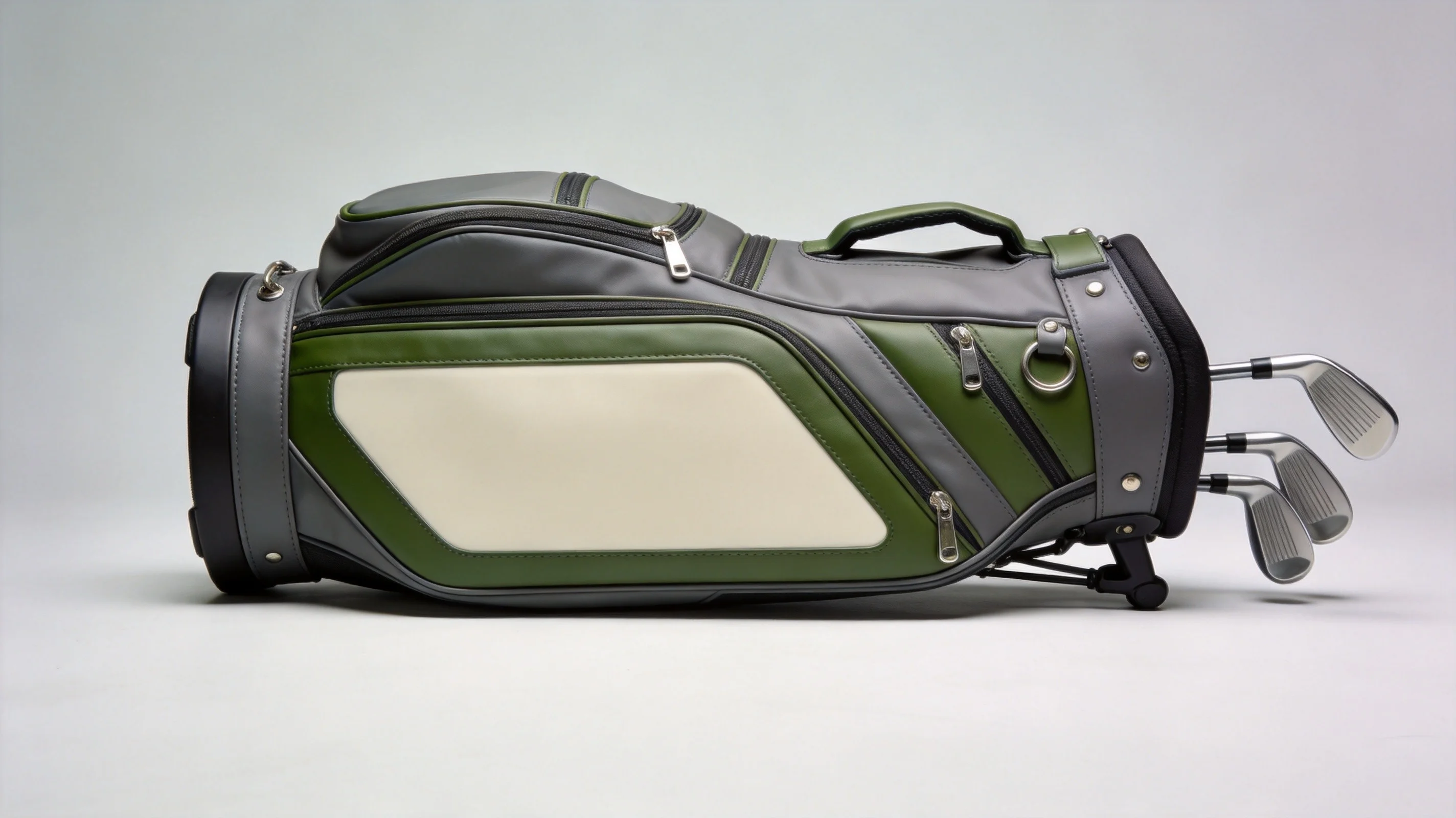
A smart golf bag is a conventional, well-built golf bag with onboard electronics layered in — GPS positioning, Bluetooth or mobile connectivity, RFID item tracking, weighing/inventory sensors and USB or wireless charging — and the honest truth is that these features add real but bounded value: GPS and connectivity help golfers locate the bag and get course distances, RFID protects a premium set from loss, weighing sensors help golfers pack to a target carry weight, and charging keeps phones and rangefinders alive; none of them improve your swing. This guide explains, from the standpoint of a golf bag manufacturer in Quanzhou, China, what each technology actually does, what is genuinely reliable versus merely marketed, and how to choose a connected bag that earns its higher price.
What Actually Makes a Golf Bag "Smart"
The word smart is thrown around loosely. In the industry, a bag earns the label when it embeds electronics that sense, track, connect or power — not merely when it has extra pockets. The core technologies found inside real connected bags are GPS receivers for positioning, Bluetooth or low-power radios for pairing with a phone, RFID tags or readers for item identification, weighing load cells for club-count or bag-weight measurement, and batteries with charging ports for powering your own devices.
Each of these is a mature, publicly available technology that has been adapted into golf hardware. None of them is magic, and none of them requires exotic custom silicon. The engineering challenge, and the reason quality varies, is integration: keeping the electronics small, sealed, weather-protected and powered, inside a bag that still carries clubs and survives years of use. That is why the same feature can feel excellent in one bag and useless in another, and why the build quality of the surrounding bag matters as much as the chip inside it.
GPS Tracking and Course Navigation
GPS is one of the most established smart golf features. Modern receivers use multiple satellite constellations — GPS, GLONASS, Galileo, BeiDou — to compute position, and a well-integrated golf device typically reports course distances to a few metres. On a golf course this translates to accurate yardages to greens and hazards, and at the bag level it powers a map view that shows exactly where the bag is if you leave it by the 14th green and wander off.
The limits are worth knowing. GPS relies on a clear view of the sky: under heavy tree canopy, in cart parks with tall buildings, or indoors it degrades sharply, so a GPS bag should not be your only anti-loss strategy. Battery is the other constraint — continuous GPS tracking drains small cells quickly, so most bags and trackers use interval broadcasts or on-demand location rather than a firehose of positions. For distances and loss protection over a round, a good GPS module is genuinely useful; for anything more, expectations should be modest.

Bluetooth and Mobile App Connectivity
Bluetooth Low Energy is the workhorse of smart bags because it sips power and pairs quickly with phones. A connected bag uses it to link to a companion app, where the golfer can see bag location, battery level, club inventory if the bag has sensors, and firmware updates for the onboard electronics. Bluetooth range is short — typically under 100 metres in open air and much less through walls — so it complements GPS rather than replacing it: GPS finds the bag nationally, Bluetooth confirms it is near.
Connectivity adds genuine convenience for golfers who already use distance apps and rangefinders. The app becomes the single place where bag data, distances and device status live. But connectivity also raises the maintenance surface: apps need updates, radios need pairing, and a bag that "requires an app" can feel like a device to manage rather than a bag to use. The best designs make connectivity optional, so the bag still works perfectly if you never open the app at all.
RFID and Tracking Valuable Equipment
RFID (radio-frequency identification) is widely used across retail, logistics and asset tracking, and it has found a natural home in golf for inventorying a club set. A passive RFID tag on each club or accessory can be read by a reader in the bag or a portable scanner, so the golfer knows instantly whether all 14 clubs are present after a round or a travel flight. For someone with an expensive set, this is one of the more defensible smart features because it protects a genuinely costly asset.
The realistic value is loss-prevention: an RFID bag or sleeve that inventories clubs catches a forgotten wedge before you drive away from the range, and item tags help confirm nothing was left at the last hole. Because passive tags need no battery and cost little, this technology adds modest hardware and is comparatively reliable. The trade-off is that you must tag your clubs, and the reader only works when the clubs are near it — so it confirms presence at the bag rather than track location of a misplaced club in the field.
Weighing and Inventory Sensors
Load-cell sensors embedded in a bag handle or base can report two useful things: the total carry weight and an estimate of how many clubs are in the bag. For walkers, knowing the real weight before setting out helps manage fatigue and confirms the bag is packed efficiently for a target carrying weight. For coaches and clubs, an inventory count helps manage loaned or rental sets and confirm nothing is missing between players.
The honest limitation is accuracy and calibration. Load cells drift and need periodic recalibration, and weight readings are influenced by how the bag is set down and how gear is distributed across pockets. A weighing feature is best treated as a helpful indicator rather than a precision instrument — good enough to tell you the bag got heavy, not necessarily precise to the gram. As an input to packing decisions and club checks, it is genuinely useful; as a scientific measurement, expectations should be realistic.
| Technology | What it does | Realistic accuracy / range | Best use case |
|---|---|---|---|
| GPS receiver | Position and course distances | ~3-5 m outdoors; weak under cover | Yardages, locating a lost bag |
| Bluetooth Low Energy | Pairs phone, shares status | <100 m open air | Nearby confirmation, app data |
| RFID tags + reader | Inventory clubs and accessories | Works at the bag / scanner range | Protecting a premium club set |
| Weight load cells | Carry weight and club count | Indicator-level; drifts over time | Packing to a target weight |
| USB / wireless charging | Powers phones and devices | Rated by battery capacity | Long rounds away from power |
Powering the Bag and Your Devices
Most smart bags carry a rechargeable battery used for two purposes: powering the bag's own sensors and radios, and charging the golfer's phone, rangefinder or earbuds. Power banks integrated into a pocket are rated like any portable charger — commonly 5,000 to 20,000 mAh — and can top up a phone many times. Wireless charging keeps the connection clean and avoids exposed ports, while a wired USB port is simpler and cheaper.
Integrated charging is one of the more popular smart features because it solves a daily point of friction: running out of phone battery mid-round. The drawbacks are weight, cost and the need to remember to charge the bag itself, which is a behaviour change many golfers forget. A well-designed bag keeps the battery removable or makes its level visible, so you are not caught with electronics dead when you most need them. If you routinely play long rounds, this feature earns its place; otherwise it can be skipped.
Reliability in Rain, Heat and Daily Use
Electronics in a golf bag face a hostile environment: rain, humidity, direct summer sun, trunk heat and rough handling. Quality smart bags seal charging ports behind flaps or rated covers, house electronics behind waterproof fabric, and specify battery housings that resist water and impact. Ingress protection ratings, usually in the IPX scale, are the honest shorthand — look for a stated water-resistance class rather than vague claims.
The realistic verdict is that any electronics add failure points a purely mechanical bag does not have. This is not a reason to avoid smart features, but it is a reason to buy from a manufacturer that seals and tests integration, and to check the IPX rating, how the port is protected and whether the electronics unit is replaceable or serviceable. For a bag that will live in trunks and carts for years, reliability engineering matters more than the feature list.

Data, Privacy, and the Service Life of Electronics
A connected bag collects and may transmit data — location history, club inventory, rounds played — through a companion app. This raises two questions worth asking before buying. First, who owns the data, and where is it stored? Reputable makers link data to the account of the golfer and keep it associated with their own device, not sold into a marketplace. Second, what is the support life of the electronics? Apps and firmware go stale, and a bag whose smart features depend on a discontinued cloud service can stop being smart long before the shell wears out.
The practical guidance is to prefer features that work locally and offline where possible — GPS and RFID can function without a cloud — and to treat app-dependent features as conveniences rather than core purchases. Set your expectations so that the bag remains fully usable as a golf bag even if the electronics age gracefully alongside it. This is the mindset that keeps a smart bag a good purchase for the long term rather than a short-lived gadget.
A Factory View: What Is Real Versus Marketing
From the factory floor, the most important distinction is between electronics that are genuinely integrated into the bag and decorative tech added for a price point. A real smart bag has tested electronics, sealed integration, sensible battery placement and a serviceable power system. A marketing-first bag may bolt on a cheap tracker and call it smart while the underlying construction is ordinary. Because smart features add weight and cost, buyers should ask precisely what is inside, how it is sealed and what happens when the battery dies. The inspection should cover not just that the antenna works but that a season of rain, trunk heat and cart straps will not compromise it.
The underlying bag quality determines how long any smart feature stays usable. A bag with weak stitching, poor weather sealing or a fragile base will fail around its electronics regardless of the chip inside. This is why our affiliated factory treats smart integration as an extension of disciplined bag manufacturing — the 4,950 m² facility in Quanzhou runs seven production lines with 126 sewing machines and 137 staff at a monthly capacity of 200,000 units, giving any electronic module a properly built, durable shell to live in. For a broader view of what a well-built bag should deliver before you add tech, see our guide to golf bag material innovation.
Matching Smart Features to Your Play
Not every smart feature belongs on every bag, and the best choices match technology to how and where you actually play. Frequent walkers and senior golfers benefit most from GPS distances and bag locators, because keeping track of position matters more when covering the course on foot. Golfers with expensive sets gain the most from RFID inventory, protecting a costly collection of clubs. Players who routinely play long rounds or travel value integrated charging most, because phone and rangefinder battery becomes a real constraint. Riders and club managers value inventory and weight sensing for managing shared sets.
Understanding the bag types that pair with each feature also helps: smart carry bags keep electronics light, while cart and staff bags can accommodate larger batteries and readers. Our full breakdown of golf bag types explains how carry, cart, staff and travel bags differ in how much weight and tech they can sensibly carry. Matching feature to bag type prevents overbuying a heavy smart bag for casual walking rounds, or under-equipping a bag that will be hauled on carts every day.
Choosing the Right Smart Golf Bag: A Practical Checklist
Rather than buying on the word smart, work through a small checklist. Confirm the electronics are actually integrated and tested, not decorative. Verify the IPX water-resistance rating and how the charging port is protected. Check the stated weight the electronics add, and whether it suits a carry bag. Confirm how the battery is powered and replaced or serviced. Check whether the core features — GPS, RFID — work offline without a cloud. And, above all, evaluate the base bag build quality, because the best electronics in a fragile shell are wasted.
For brands sourcing connected bags at volume, the added discipline is verifying that electronics integration does not compromise the durability or weather-sealing of the base bag, and that quality control covers both the mechanical build and the electronic module. Our quality standards guide details the inspections a responsible factory applies. Sourcing from a partner that understands both sewing and electronics is what turns a gimmick into a dependable product for your customers.
The Future of Smart Golf Bags
The trajectory of smart golf bags follows broader consumer-electronics trends: smaller, better-sealed, longer-battery components that make integration lighter and more reliable every few years. Expect GPS and connectivity to become lower-power, weighing and inventory sensing to improve in accuracy, and charging to standardize as wireless power gains wider device support. Shared data standards will likely let a smart bag talk cleanly to the distance apps, rangefinders and wearable devices a golfer already owns, rather than forcing them all into one closed ecosystem.
What will not change is that a smart bag is first a golf bag. The durable shell, weather sealing, club protection and comfortable carry remain the foundations that any electronics only enhance. Golfers who keep that priority straight will get the most from their investment, and manufacturers who keep the bag excellent beneath the tech will build products that last. For more on where the whole category is heading, our future golf bag technology trends article covers the outlook in depth.
Smart Features Built Into a Properly Made Bag
Electronics that track, connect and power — integrated into a well-built, weather-sealed shell that lasts. Custom options for brands adding tech to their golf line.
Explore Smart Custom Bags →Every smart feature also adds cost and weight, and the honest value question is whether it improves your specific rounds enough to justify it. A GPS module, RFID reader, batteries and wiring can add hundreds of grams to well over a kilogram and meaningfully raise the price. For a rider who never lifts the bag, that weight is nearly irrelevant, so heavier, richer tech is an easy choice. For a walker, every gram shows up in fatigue, so the smart feature set should be lean and deliberately chosen. Ask what each function buys in convenience, protection or insight across the years you will own the bag, then set that beside its weight and cost. When a feature protects a valuable set or solves a real point of friction, it earns its place; when it merely adds bulk and price for technology you rarely use, it is an easy trade to skip.
Conclusion
Smart golf bags bring mature, publicly available technologies — GPS, Bluetooth, RFID, weighing sensors and charging — into the equipment golfers carry, and they add genuine but bounded value: safer location of the bag, protected club sets, easier packing to a carry weight and powered devices on the course. None of it improves your swing, and all of it depends on being built into a durable, weather-sealed shell that will reliably outlast the electronics. Buy the bag for its construction, add technology for the specific ways it helps your play, verify the ratings and service life, and a smart bag becomes a sensible increase in both cost and convenience rather than a shiny gimmick.
Sources
Frequently Asked Questions
- What actually makes a golf bag smart?
- Onboard electronics that sense, track, connect or power — GPS positioning, Bluetooth connectivity, RFID item tracking, weighing sensors and USB or wireless charging — integrated into a conventional golf bag.
- Does GPS tracking work reliably in a golf bag?
- Consumer GPS receivers achieve roughly 3-5 metre accuracy outdoors across multiple satellite constellations, enough for course distances and bag location, but they weaken under tree canopy and indoors.
- How long do smart golf bag batteries last?
- Charging power banks are typically rated 5,000 to 20,000 mAh, powering many phone charges, while GPS and connectivity modules run on smaller cells that need recharging every several rounds.
- Is smart golf bag technology reliable in rain and heat?
- Good designs seal ports and electronics behind rated, often IPX, housings, but electronics still add failure points, so buyers should verify the water-resistance rating and how ports are protected.
- Can a smart golf bag track where my bag is left on the course?
- Yes. Bluetooth beacons report the bag's last known position to a phone app at short range, while GPS tags give wider-area location, both helping locate a forgotten or moved bag.
- Are smart features worth the higher price?
- It depends on your rounds. GPS, RFID and charging solve specific, real points of friction, but if you only need a carrier, a conventional quality bag is the better value.
- Does adding electronics make a golf bag heavier?
- Yes — GPS modules, batteries and wiring can add a few hundred grams to over a kilogram, so smart features are more common on cart and staff bags than on light carry bags.