The Ultimate Pre-Round Golf Bag Checklist
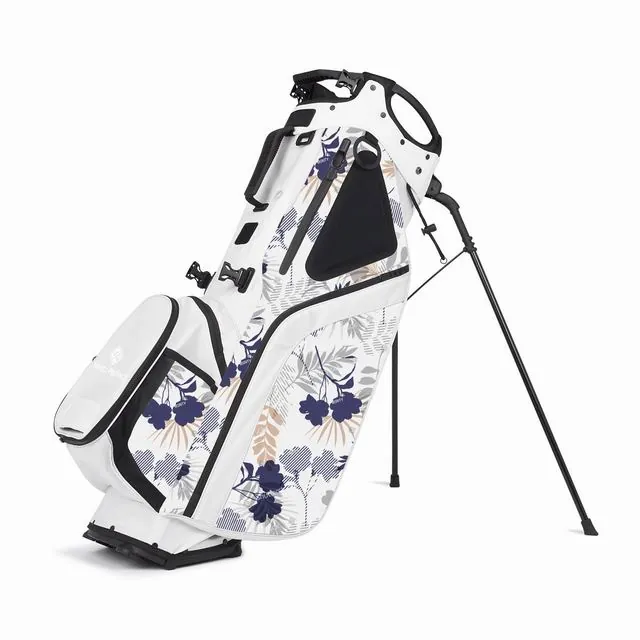
A complete pre-round golf bag checklist covers five buckets — clubs (14, clean, correctly ordered), essentials (balls, tees, glove, marker, ball mark repair tool), valuables and paperwork, weather gear (outer layer, towel, sun and rain protection), and accessories (rangefinder, drinks for the pace of play) — verified in a fixed sequence so nothing is forgotten before you leave the car park. The ritual takes three to five minutes once you have a repeatable list, and it is the difference between a calm tee time and a scramble back to the clubhouse for the glove you left behind. This guide, published by QUANZHOU JUNYUAN BAGS, builds a checklist for every bag type and playing style.
Why a Checklist Beats Memory Every Time
Even experienced players lose track under the pressure of a group tee time, and that is precisely where a written list earns its keep. The few seconds it takes to scan the list are cheaper than the minutes lost hunting for a missing glove at the tenth, so keeping the routine short and visual is what makes it stick.
Human memory fails precisely under the pressure of a tee time. Whether it is a 7am competition start, a spring social round or a quick nine after work, the bag is packed in a hurry and something gets left behind — usually the thing you need most, like a glove, a rangefinder or the rain layer that an unpredictable sky demands. A checklist removes the guesswork by turning packing from a memory exercise into a mechanical pass.
Professionals and their caddies use checklists not because they forget, but because a checklist guarantees the same standard every single time. The same logic works for amateur golfers: a fixed sequence, repeated until it is muscle memory, catches the near-misses that memory alone allows. Even a short list that you run before every round eliminates the vast majority of forgotten-gear moments.
The checklist that follows is intentionally structured to be run in order — starting with the clubs themselves, moving through essentials and valuables, then weather and accessories. Follow it in sequence and nothing falls through the cracks.
Checklist 1: The Clubs — Fourteen, Clean, Ordered
The bag starts with the set itself. Confirm you have the fourteen clubs you intend to play — the maximum allowed under the rules — and that the set actually matches your plan for the day, especially if you have swapped a club in or out since the last round. Walk the set once, checking each grip and face.
Once the set is confirmed, check that the clubs are clean and dry. A wet or mud-caked face costs distance and spin, and grips worn smooth rob you of control in damp conditions. A quick wipe of the faces and a glance at the grips before you load the bag takes seconds and pays off all round.
Finally, confirm the clubs are ordered correctly in the bag — longest to shortest, so your hand knows where every club is. A scramble at the first tee because the driver is buried under the wedges is an avoidable start. Our packing guide covers the exact order in detail.
Checklist 2: The Essentials — Balls, Tees, Glove, Marker
The glove is easy to forget precisely because it is small and lives in a fast-access pocket, but a cold or worn glove quietly costs shots across a whole round. Slip the spare ball marker into the same slot as the glove so the pair is never separated, and keep a spare tee in the same slot as well so the fastest essentials are always in one reach.
The essentials are the non-negotiable kit of any round. Start with balls: enough for the round — a full ball pocket is wise for most players, with at least a spare sleeve in reserve in the bag or car. Then tees in the tee pocket, placed where the hand reaches without thinking, and a few different lengths if the course demands.
Add the glove (with at least one spare in the glove pocket for wet or sweaty conditions), a ball marker and a ball mark repair tool, and a divot tool if you carry one. These are the items that, when absent, interrupt a round — so they get a deliberate check every time. A pen for the scorecard lives in the same small pocket, accounted for in the same pass.
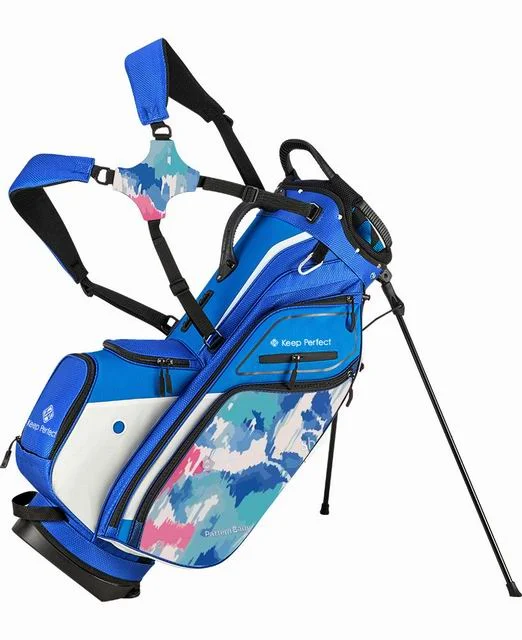
The Essentials Pocket
Essentials live in the fast-access pocket so the round never stalls looking for a ball or tee.
Checklist 3: Valuables and the Scorecard Kit
The valuables pocket holds the items you want safe, dry and reachable once — phone, wallet, keys, and anything you do not want rattling in a main pocket. Use the lined valuables pocket if the bag has one; it is built for exactly this. Confirm the zipper works and the pocket is not overstuffed to the point it strains the seam.
To the same pocket or a close neighbour goes the scorecard kit — scorecard (or the club’s app loaded and charged), a pen, and the yardage book or course notes if you use them. If you track stats or distances, confirm the device is charged and your glove or phone has the app open before you leave the car.
Charging the rangefinder and phone the night before is half the battle; the morning pass simply confirms they are in the bag, on, and in the right pocket. Our golf bag organisation guide lays out a full pocket map for the whole kit.
Checklist 4: Weather Gear — Sun, Rain and Temperature
Weather is the variable most players overlook until it arrives. Run a weather pass before packing: check the forecast, then pack accordingly. A rain layer and a towel belong in the main apparel pocket of any bag — the cheapest insurance against an afternoon shower. In sun, add sunscreen, a cap or visor and sunglasses and keep them reachable.
For temperature, pack a spare layer — a light jumper or windproof for a cool morning that warms up, or removable layers for a warm start that cools late. High-turnover items go in the deep apparel pocket; the fast-access pockets stay reserved for the stuff you reach every hole.
For consistently wet regions, a waterproof or weather-resistant build changes the standard. Our weather strategies guide covers the full seasonal and forecast playbook for keeping a bag and its contents dry.
Checklist 5: Accessories and Drinks
The final checklist bucket is the extras that make a round comfortable and efficient. This includes the rangefinder or GPS device, a drink — a bottle of water for the round plus electrolytes if it is hot — and a small snack for energy on the back nine. An insulated pocket keeps drinks cool and deserves to be packed rather than left empty.
Add anything specific to the day: a spare pair of socks for wet courses, a lightweight flask, an umbrella for coastal venues, or the towel you use to clean clubs and grips. If you play competitively, confirm the bag and clubs comply with any event restrictions on equipment before you load the car, not at the first tee.
This is also the moment to check that heavy items live at the bottom of the bag so it stays balanced when carried and stable on a cart.
Running the Sequence in Three Minutes
For groups that play more than once a week, the checklist also doubles as a simple post-round inventory. When each player empties and re-packs in the same order, stray balls and lost tees surface immediately and get returned before the group leaves the car park, which saves the classic ‘it should be in my bag’ hunt at the first tee next time.
Rehearsing the routine once before a busy weekend is enough to lock it in. New players often find the first few rounds slower because they are still checking each pocket by feel; after a handful of rounds the sequence becomes nearly automatic. The real pay-off is consistency: because the same five buckets are always touched in the same order, nothing gets left behind on the days when the round actually matters.
Pocket memory is the quiet advantage of a repeated routine. When the same marker, glove and tee locations never move, your hands go to the right place without you thinking about it, which is exactly what you want under time pressure. Encourage everyone in your group to keep their own layout stable and the whole start stays calm even on crowded mornings.
There is a difference between a checklist that feels like administration and one that feels like protection. Frame yours around protection — protecting your clubs, your valuables and your energy — rather than around ticking boxes. That framing keeps it relevant round after round and stops it from becoming a chore you skip when you are in a hurry.
The five buckets run fast once they are habit. The full pass — clubs, essentials, valuables, weather, accessories — takes about three minutes, and most of it is mental confirmation rather than action because the pockets are already assigned. The point is to run the sequence every time, not just when you have time.
Speed comes from the fixed pocket map: because every item has a home, checking it is a glance into a pocket rather than a rummage through the whole bag. If you find yourself checking the same items repeatedly, the organisation is failing — tighten the map. Weight and balance follow automatically when the map is respected.
For teams, academies and events, the same checklist scales up: a standardised list shared with every player guarantees nobody arrives at the start line missing a glove or a ball. Our stand bag vs cart bag guide helps teams match the right bag to how players actually carry or ride.
The Weekly Prep That Keeps the List Honest
A ten-minute weekly reset prevents the checklist from drifting. Empty pockets, shake out sand and debris, wipe the grips, and test the zips while the bag is empty. Clubs that come out for cleaning go back in the same slot, so the layout you rely on during a round never quietly changes underneath you. Once that habit is in place, the daily checklist almost runs itself.
A pre-round checklist works best on top of a maintained bag. Once a week — or after any wet or muddy round — unpack the whole bag, brush the debris from base and dividers, wipe the pockets and let everything dry open. This sit-down maintenance keeps the pockets functional and the zippers smooth, so the fast three-minute morning pass is always honest.
It also catches the slow problems: a fraying strap, a stiff zipper, a weakening spot where the bag wears against the cart. Catching these early is cheaper and safer than discovering them mid-season. A maintained bag, like a maintained set of clubs, simply performs.
Our bag care guide and seasonal storage guide cover the full maintenance and off-season routine that keeps both bag and checklist reliable.
Checklists for Retailers, Teams and Events
For retailers, coaches and event organisers, a printed or shared pre-round checklist is a genuine service tool. It helps buyers think about what a bag needs to hold — and why divided, well-pocketed, weather-ready bags sell. A posted checklist in the pro shop framing packs the product conversation around utility, which is exactly the angle a quality bag wins on.
For brands sourcing custom bags, the checklist doubles as a spec sheet: it identifies the pockets, dividers and features your customers actually use, so your design brief reflects real need rather than guesswork. Our golf bag types guide and quality standards guide help you assess which builds carry a checklist-ready layout.
A Checklist for Every Kind of Player

Lean and Balanced
A walker's low centre of gravity and one-job pockets keep the round comfortable from first tee to last green.
No two players carry the same kit, and the checklist should flex around your game. A walker edges toward lean: minimal extras, a single drink, a light bag. A rider can afford fuller storage and extra layers. A beginner needs more forgiveness on the essentials; a seasoned competitor cares about rangefinder, course notes and compliance. Let the five buckets guide you, then tune the contents to your style.
The underlying principle holds regardless: a fixed sequence, run every time, backed by a bag whose pockets and dividers make organisation automatic. That is the calm, prepared start to every round — and it is achievable for any golfer, on any course, with any bag.
QUANZHOU JUNYUAN BAGS supplies golf bags from an affiliated 4,950-square-metre main factory whose founder entered the industry in 2004 and which was established as a company in 2014. The facility runs seven production lines with 126 sewing machines and a team of 137 staff, supporting a monthly capacity of up to 200,000 units for more than 200 brands across 100+ countries. Sampling typically takes 10-20 days and bulk production 45-60 days, with a standard MOQ of 200 pieces and 100 for test orders. The factory was independently audited by SGS in March 2026. Contact service@junyuanbags.com or +86 17750020688.
The Competition, Event and Bag-Type Checklist
A competition or club event raises the stakes of a pre-round checklist because the consequences of a missing item are public and competitive. For tournament play, confirm the fourteen-club limit, verify any event restrictions on equipment or apparel, and bring the course-relevant extras — a rangefinder confirmed to be allowed, spare gloves for a sweaty final, and enough balls for a round that may not end at the last green. The same five-bucket list runs, but each item earns a stricter confirmation.
Teams and academies benefit most from standardising the checklist because it scales across many players at once. A shared printed or digital list handed out at the start means nobody arrives at the first tee missing a glove or a ball, and it turns a chaotic group start into a calm, uniform one. For event organisers it doubles as a convenient base for a welcome pack, listing exactly what the venue expects each player to carry.
The checklist flexes around the bag you carry. A walker with a light stand bag packs lean to protect the lower back and a low centre of gravity — a single drink, minimal layers, and only the essentials in fast-access pockets. A rider with a cart bag can afford a fuller kit, more layers and bigger supplies because the cart carries the load. A staff bag user, often a pro or coach, carries the most complete kit — the full apparel set, valuables, and the day’s specials — and relies on a well-mapped main pocket.
The principle stays the same across types: run the five buckets, weight the bottom, keep essentials fast-access, and keep valuables sealed. What changes is how much the bag type can hold and how you balance it. Matching the checklist to your bag type is what turns a generic list into a genuinely useful routine for your game.
Quick Reference: The Five-Bucket Pre-Round Checklist
Run these five buckets in order before every round. Each line is a confirm-and-go item.
| Bucket | What to Confirm | Pocket Location | Notes |
|---|---|---|---|
| Clubs | 14 clubs, clean faces, ordered longest to shortest | Dividers / bag body | Max 14 under the rules |
| Essentials | Balls, tees, glove, spare glove, marker, repair tool | Fast-access pockets | Full ball pocket for most players |
| Valuables & score | Phone, wallet, keys, scorecard, pen, device charged | Lined valuables pocket | Keep dry and zipped |
| Weather gear | Rain layer, towel, sun protection, spare layer | Main apparel pocket | Match to the forecast |
| Accessories | Rangefinder, drink, snack, day-specific extras | Assigned pockets | Heavy items bottom for balance |
Print or screenshot the list, run it the same way every round, and the car-park scramble becomes a thing of the past.
Built to Be Ready at the First Tee.
Source stand, cart and staff bags with the dividers and pocket maps a checklist-ready round demands. MOQ 200, sampling 10-20 days, bulk 45-60 days.
Explore Golf Bag Types →Frequently Asked Questions
- Why do I keep forgetting something before a round?
- You are relying on memory under time pressure. A fixed five-bucket checklist — clubs, essentials, valuables, weather, accessories — run in the same order every round removes almost all forgotten-gear moments.
- What are the absolute essentials for every round?
- Balls, tees, a glove with a spare, a ball marker and repair tool, and your scorecard kit — plus weather gear and a rangefinder if you use one.
- Which pockets get the essentials?
- Essentials go in the fast-access pockets near the top; rain gear and spare layers go deeper in the main apparel pocket; valuables go in the lined zipped pocket.
- How long should a pre-round check take?
- Three to five minutes once the pocket map is fixed, because each check is a glance into an assigned pocket rather than a rummage.
- Do I need the same checklist every time?
- Yes. Running the same sequence every round builds it into habit and guarantees the same standard, exactly as caddies run their lists.
- Should teams and events use checklists?
- Yes. A standardised shared list guarantees no player arrives at the start missing gear, and doubles as a good spec sheet for custom bag design.
Related Reading
- Golf Bag Organization Pro Tips — A full pocket map for the whole kit.
- How to Pack Your Golf Bag — Exact club order and weight distribution.
- Weather Strategies Guide — The seasonal and forecast playbook.
- Stand Bag vs Cart Bag — Help match the bag to carry or ride.
- Golf Bag Care Guide — Maintaining the bag the checklist depends on.
- Seasonal Storage Guide — The off-season routine.
- Golf Bag Types Guide — Which builds carry a checklist-ready layout.
Sources
- USGA — rules references covering the fourteen-club limit and equipment practice.
- R&A — rules and equipment guidance consistent with this checklist.
- PGA Tour — illustrates how professionals and caddies run standardised preparation.
- SGS — independent verification supporting the bag quality claims in this guide.