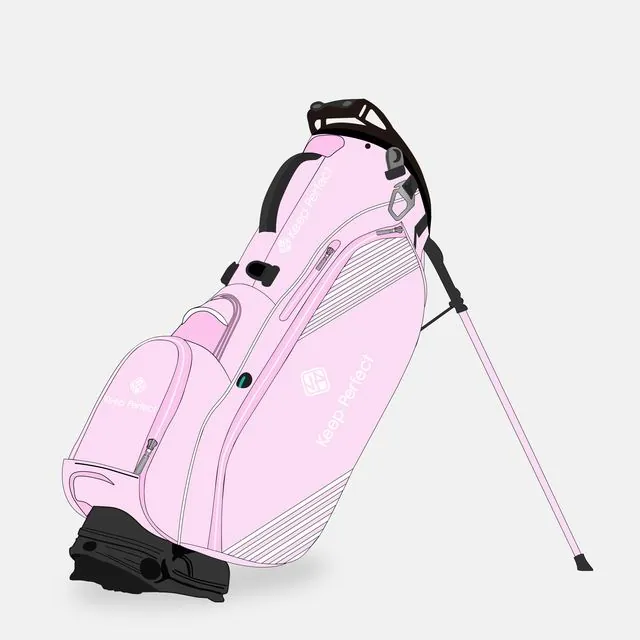
The waterproof golf bag has moved from a niche niche product to an engineering-led category defined by TPU lamination, welded seams, hydrophobic treatments and tested IPX ratings — and the 2025 innovations that matter are the ones a buyer can verify, not just the ones a brochure claims. Demand for genuinely waterproof bags has climbed as golfers increasingly play all year, in all weather, and in exposed links and coastal markets. This article surveys the material, construction and design innovations of 2025, explains what each actually does, and gives OEM buyers and golfers a way to evaluate claims against physical evidence.
Waterproofing is now advanced enough that the difference between products has shifted from whether they repel water to how much they weigh, how breathable they are, how long the construction lasts and how honestly the rating is verified. The trends below reflect that maturity. Understanding them lets a brand position a product that competes on verified performance and lets a golfer pick a bag that truly protects the clubs and electronics they carry.
1. TPU and PU Lamination: The Foundation Technology
Thermoplastic polyurethane (TPU) and polyurethane (PU) lamination have become the foundation of modern waterproof golf bag construction because they bond a waterproof film to the outer fabric rather than relying on a surface coating that can wear off or crack. In a laminated shell the film is fused to the fabric under heat and pressure, creating a continuous barrier that stays flexible, resists tearing and maintains its seal season after season, whereas a simple DWR coating only repels water for a limited time before it must be reapplied. The choice between TPU and PU comes down to the balance the product needs: TPU tends to be more durable and more expensive, while PU is a broadly effective, more economical alternative for the main shell. Either way, lamination is the technology that moved waterproof bags from a niche promise to a dependable, specifiable category in 2025.
The standout material trend is the widespread adoption of TPU (thermoplastic polyurethane) lamination as the waterproof film of choice, replacing cheaper polyurethane coatings on premium bags. A TPU film is bonded to the fabric so the shell itself is the water barrier, rather than relying on a surface coating. TPU resists hydrolysis — breakdown in humid heat — and stays flexible in low temperatures, which is why it is preferred for bags exported to hot, humid and cold markets alike.
PU coating remains common at lower price points and performs acceptably in drier climates, but it can stiffen and crack over time. When comparing products, look at which technology is used and ask for the water column rating of the finished shell. Premium 2025 builds pair TPU lamination with a 10,000 mm or higher water column, verified by the ISO 811 hydrostatic-head test, so the shell's claim is measurable rather than assumed.
2. Welded and Seam-Sealed Construction
Construction innovation in 2025 centres on eliminating the seam as a leak point. Sewn seams pierce the waterproof film, so brands have moved to taped seams and, increasingly, RF-welded joints that join panels without needle holes. Welded construction offers the strongest water barrier because there is no stitch line to leak, and it also removes the thread that can wick water into the interior.
Welded seams are harder to produce and repair, which raises cost, so many mid-range products compromise with seam-taped construction over a strong laminated shell. Either method, used consistently, delivers a genuinely waterproof bag; the difference is in durability and repair-ability. Ask your factory to specify the seam-sealing method and to include a seam water test in the inspection so the claimed protection is demonstrable.
3. Hydrophobic Treatments and Self-Cleaning Surfaces
Beyond lamination, hydrophobic treatments make water bead and roll off the surface, keeping mud and rain from soaking into the face fabric and reducing weight gain when wet. The 2025 generation of DWR uses PFC-free formulations in line with sustainability regulation, so a genuinely premium waterproof bag no longer relies on persistent fluorochemicals.
Self-cleaning and easy-clean surfaces reduce maintenance and keep a bag looking new, which matters for retail presentation and long-term ownership. When you review a spec, separate the laminated barrier that provides the actual waterproofing from the hydrophobic surface treatment that improves beading and cleanliness; both are valuable, but only the laminate delivers true waterproofness.
4. Waterproof, Weather-Sealed and Bonded Zippers
Zippers remain the practical weak point of any waterproof bag, and 2025 has brought meaningful advances in two directions. The first is true waterproof zippers that use a gasket or coated tape to block water, tested to a defined ingress level, now common on electronics and valuables pockets. The second, used across the product, is water-resistant zippers protected by bonded storm flaps that shed water before it reaches the closure.
Magnetic and one-hand closure systems have also improved, letting a golfer seal and open pockets quickly while gloved or holding clubs. Regardless of the mechanism, the closure's rating must be tested, not assumed, and it should be matched to the compartment's job — a truly waterproof zip on the rangefinder pocket, a weather-sealed zip elsewhere protected by a flap.
5. Intelligent Drainage and Breathable Venting
One of the clearest 2025 design innovations is the combination of active drainage with controlled ventilation. Drainage channels and grommets at the base let any water that enters escape rather than pool, while breathable panels and aeration ports allow trapped moisture to evaporate, so a bag stored after a wet round dries faster and resists mildew.
This two-way design — keeping rain out while letting internal humidity out — marks real progress over first-generation waterproof bags that sealed completely and trapped condensation inside. The result is a bag that is both dry in the rain and hygienic in storage. When specifying, ask how the drainage and ventilation are balanced so the drainable construction does not undermine the main compartments' sealing.
6. Testing and Certification Advances for 2025
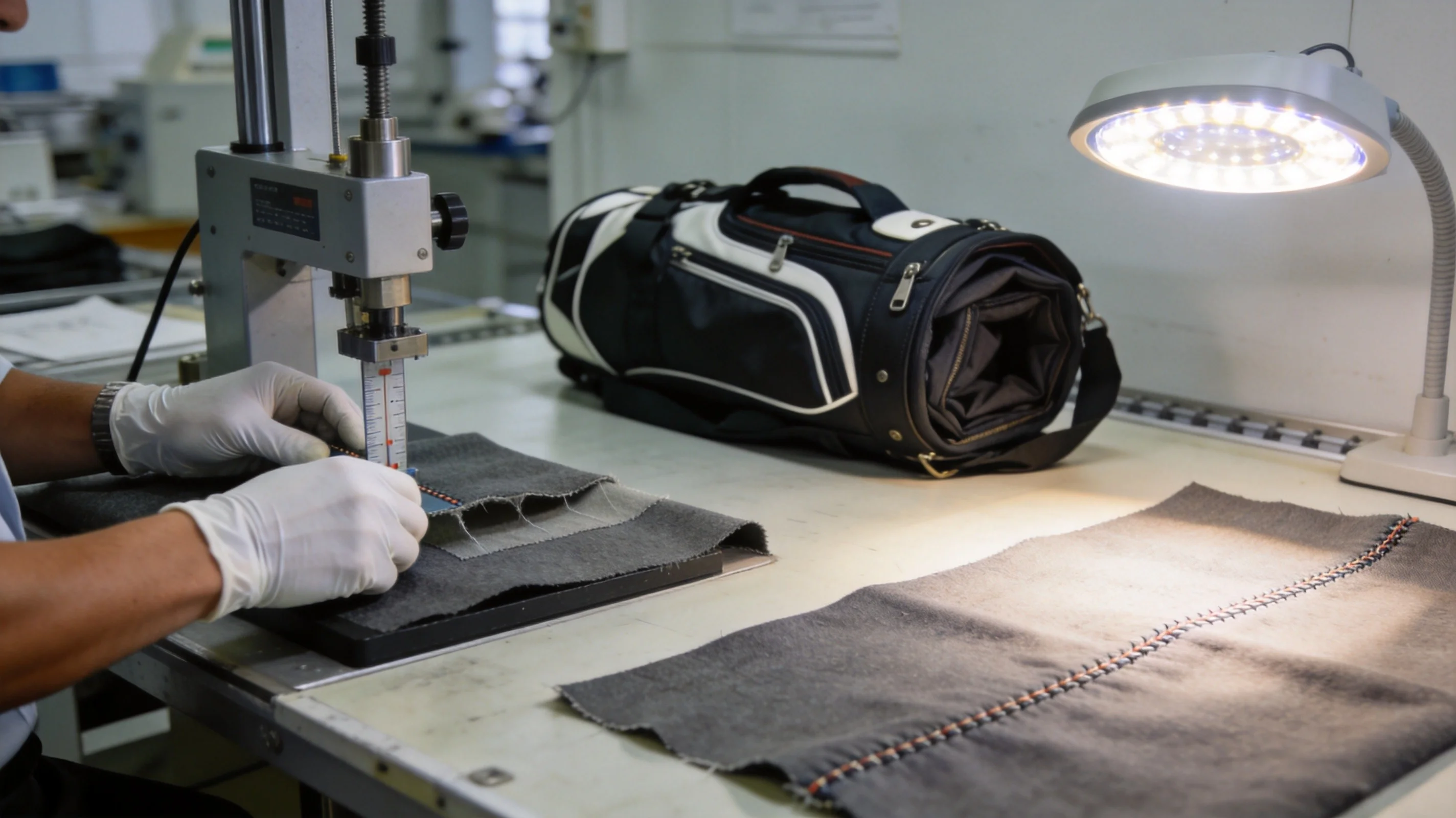
Verification is the heart of the 2025 story. Premium waterproof bags are now tested to defined standards: the ISO 811 water column test for the fabric, the IEC 60529 IPX rating for the whole bag and for sealed pockets, and zipper-cycle testing for the closures. Independent bodies such as SGS witness tests and issue certificates, and an SGS inspection completed in March 2026 at QUANZHOU JUNYUAN BAGS re-validated quality con QUANZHOU JUNYUAN BAGS, established in 2014, holds over twenty years of waterproofing expertise, its founder having entered the industry in 2004.trols on seams, hardware and fabric performance.
| Test | Standard / Method | What It Proves | Expected Premium Level |
|---|---|---|---|
| Fabric water column | ISO 811 (hydrostatic head) | Fabric resists a water column before leaking | 10,000 mm and above |
| Ingress protection | IEC 60529 (IPX) | Whole bag / pocket resists water ingress | IPX6–IPX7 bag, IPX8 pocket |
| Zipper cycle | Repeated open-close testing | Closure survives wear and keeps seal | Thousands of cycles |
| Cold / humidity conditioning | Environmental chamber | Lamination and film survive extremes | −20°C to +60°C, high RH |
These tests mean a compliant label is now backed by an audit trail. For an OEM buyer, insisting on written test reports against these standards turns the specification into a contract document and dramatically lowers the risk of field failure.
7. Materials and Weight: The 2025 Balance
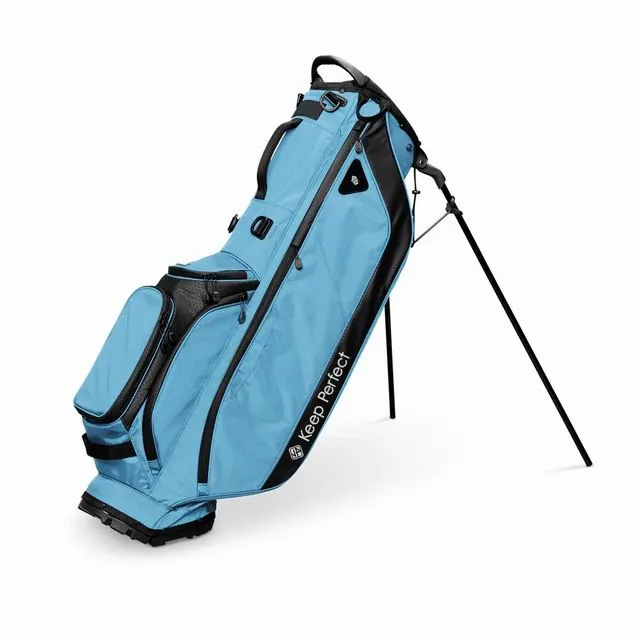
Manufacturers have learned that a waterproof bag need not be a heavy one. The 2025 trend is lightweight laminated shells of 120 to 220 GSM that combine real waterproofing with carrying comfort, enabling a waterproof walking bag to stay near 2.5 kg rather than edging toward the heavy cart-bag territory of earlier generations. This matters because the market's demand for weight-conscious, walker-friendly gear now extends to wet-climate programmes.
The balance is achieved by using lamination for the water barrier instead of heavy coatings, by concentrating sealed layers only where needed, and by using a drainable, quick-dry construction rather than sealing every panel airtight. The result is a bag that protects in the rain without punishing the player on the fairway. See lightweight golf bags for walkers for the weight side of the equation.
8. Smart Features and Electronics in Waterproof Bags
As smart bags add GPS, charging and tracking electronics, waterproofing these compartments has become a headline 2025 requirement. The innovation is sealed, ported electronics compartments that keep the battery and charging system dry while the rest of the bag drains normally. This demands careful sealing around every port and cable entry, which is a genuinely new engineering challenge.
When buying or specifying a smart waterproof bag, ask specifically how the electronics compartment is sealed, whether it is independently IPX-rated, and how a port or cable feed-through is weatherproofed. A bag can carry a strong overall claim while its electronics pocket leaks, so verify the detail rather than assuming it. For more, read smart golf bag technology features.
9. Sustainability in Waterproof Construction
2025 waterproof products increasingly pair lamination with recycled inputs and PFC-free chemistry. Recycled nylon and polyester can perform close to virgin material at matched denier, and TPU films can be produced with a lower environmental footprint. The combination of recycled base fabric and a durable laminated barrier gives a product that is both high-performance and defensible on sustainability grounds, which EU and large retail programmes increasingly demand.
Documentation matters as much as the material: recyclability claims, REACH compliance and physical test reports accompany the product through the supply chain. A factory able to demonstrate certified recycled inputs and PFC-free treatments — as the modern manufacturing base in China's Fujian province does — is significantly more attractive to sustainability-driven buyers. See eco-friendly and sustainable materials for the full trade-offs.
10. Care, Maintenance and the Future of the Category
Modern waterproof bags are durable but not care-free. Hand-wash with mild detergent, rinse thoroughly, re-apply a PFC-free DWR refresh as beading fades, and store fully dry to protect the lamination and seam tape. Check zippers and drain grommets seasonally. With this care, a premium waterproof bag can hold its protection across years of use, which is precisely why the upfront material investment pays back over the product's life.
Looking ahead, researchers are exploring self-healing films, embedded moisture sensing and further weight reduction, but the commercially proven innovations of 2025 are the laminated shell, welded or taped seams, properly sealed closures and verified IPX testing described here. A brand that adopts these and documents them with third-party reports is positioned to lead the wet-gear segment with honest, defensible performance.
10B. Avoiding Greenwashing and Overclaiming
With waterproofing now central to marketing, the risk of overclaiming is real and commercially dangerous. A product described simply as "waterproof" that achieves only IPX4 against splashing will fail customers in steady rain, generating returns, negative reviews and chargebacks that far outweigh any short-term sales gain. Equally, a bag marketed as "sustainable" because of a single recycled panel while the rest is virgin oil-based material invites scrutiny.
The discipline for both is the same: claim only what is tested, specify the level and standard, and keep the evidence file accessible. Say "waterproof to IPX7 for the electronics pocket, IPX6 for the bag, with 20,000 mm laminated fabric" rather than "fully waterproof bag". Say "recycled recycled content certified to X percent" rather than "eco bag". Honest, specific claims are not only safer legally and commercially; they differentiate a trustworthy brand in a crowded, sceptical market.
10C. Comparison Check: Laminated vs Coated vs Water-Resistant
To evaluate any 2025 waterproof bag, classify it first. A laminated bag has a bonded film making the shell a true water barrier measured in millimetres of water column; this is the basis of genuine waterproofness. A coated bag has a surface layer that repels light rain but is not a reliable barrier and can crack. A water-resistant bag relies on a DWR treatment or weave density and is splash-proof only.
Ask for the classification in writing and the numbers that prove it. If a supplier cannot state the water column, the sealing method and the zipper and IPX rating, treat the claim as marketing rather than spec. Comparing products this way removes the confusion that marketing language creates and puts the decision back on measurable engineering, which is exactly where durable purchasing decisions belong.
11. Choosing the Right Waterproof Build for Your Market
The single most useful decision a buyer makes is matching the waterproof specification to the climate and usage of the target market, because over-speccing adds cost and weight that buyers may not value, while under-speccing produces returns. In the UK, Ireland and northern Europe, steady cool rain favours a fully laminated, seam-taped shell with good low-temperature flexibility and a drainable bottom. In Southeast Asia and the tropics, TPU lamination and quick-dry linings matter most because heat and humidity drive hydrolysis and mildew.
Desert and links players value dust-tight closures and UV-stabilised fabric over raw water resistance. Analyse the weather data for your key markets and let it drive the spec: a bag that is simply "the most waterproof available" is rarely the best commercial choice. Instead, target the construction that protects the equipment your customers actually carry under the conditions they actually play.
12. Budgeting and Cost Optimisation
Waterproofing is one of the clearest places where cost discipline and engineering meet. The most expensive elements — welded seams, true waterproof zippers and the heaviest laminates — should be reserved for the compartments and features whose failure would cause the most harm, chiefly the electronics and valuables pockets and the main club compartment. The remaining shell can carry a lighter lamination with a drainable, quick-dry construction that still performs well at lower cost.
By concentrating the premium protection where it is needed, a brand can deliver a genuinely waterproof product at a competitive price. Standardising materials across a range also improves factory purchasing power and reduces set-up waste. Work with your manufacturing partner to map each cost driver to a performance benefit so you can communicate honestly to the customer exactly what the premium buys.
13. Working With a Manufacturing Partner
A partner that manufactures both waterproof bags and their testing programmes makes sourcing far simpler, because the material, sealing and verification decisions are made together rather than across separate suppliers. The manufacturing capacity typical of a premium export partner — seven production lines, 126 sewing machines and a team of 137 delivering monthly output around 200,000 pieces — supports both the seam-sealing precision and the volume required for a full waterproof range.
Agree on the written specification, the MOQ structure and the verification plan before production starts, and use the sampling phase to validate both the product and its test package. A third-party inspection before shipment closes the loop, so the delivered goods match the certified sample. This disciplined workflow is how a waterproof golf bag moves from a well-marketed idea to a repeatable, inspectable, warrantable product.
Frequently Asked Questions
- What is the biggest 2025 innovation in waterproof golf bags?
- The shift to TPU lamination and welded or seam-taped construction, giving a genuinely waterproof shell measured at 10,000 mm or higher, combined with tested IPX ratings on the closures and a drainable, breathable design.
- Is TPU always better than PU for waterproofing?
- Generally yes for durability: TPU resists hydrolysis and stays flexible at low temperatures, so it lasts longer in hot, humid and cold climates. PU is cheaper and adequate in drier conditions but can crack and stiffen over time.
- Does a waterproof bag have to be heavy?
- No. 2025 builds use lightweight laminated shells of 120–220 GSM to keep waterproof walking bags near 2.5 kg, balancing real protection with carrying comfort.
- How do I verify a claimed IPX rating?
- Ask for the written test report specifying the IEC 60529 method, the level achieved, the sample details and conditioner, ideally issued or witnessed by an independent body such as SGS. Confirm whether the rating applies to the whole bag or a specific pocket.
- Can a waterproof bag also be breathable?
- Yes. Modern designs combine a laminated barrier with drainage channels and venting panels so internal moisture can escape and the bag dries faster, preventing mildew without letting rain in.
- Should I buy a laminated bag if I only face light rain?
- A laminated bag is worth it if you want genuine protection and long service. If you only face infrequent light rain, a good cover or a water-resistant bag may suffice at lower cost — but the laminated construction is far more durable and avoids the risk of a mid-round leak.
- Are smart electronics pockets in waterproof bags reliable?
- They are reliable only if the port and cable feed-through are specifically sealed and independently rated. Ask about the electronics compartment's sealing and IPX level rather than assuming it matches the bag's headline claim.
Waterproof golf bag technology in 2025 is defined by verifiable engineering — TPU lamination, welded or taped seams, hydrophobic treatments, sealed closures and independent testing to ISO 811 and IEC 60529. These innovations give real protection against the elements while holding weight down and improving storage hygiene, and they let honest brands compete on measured performance.
To specify or source a waterproof golf bag with verified technology, contact QUANZHOU JUNYUAN BAGS at service@junyuanbags.com or +86 17750020688. The manufacturer runs seven production lines, employs 137 staff and produces roughly 200,000 pieces a month, with standard MOQ of 200 pieces and test orders from 100.
Related reading: waterproof golf bag testing and IPX ratings, waterproof and weather protection technology and how to test waterproof quality.
The 2025 waterproof golf bag is no longer a heavy, stiff compromise but a genuinely engineered product that layers TPU lamination, seam sealing, tight closures and smart drainage over a lightweight, breathable chassis. Between welded seams on the most critical joints, magnetic and bonded closures on electronics pockets, PFC-free hydrophobic surfaces and verified IPX and water-column performance, the technology now protects equipment in ways that could only be approximated a few years ago. The decisive factor, though, is honesty: the brands that win this category are the ones that publish test reports, state precise ratings, and back their claims with third-party inspection rather than relying on vague superlatives.
Whether you are a golfer upgrading for a wet-season bag or a brand building a waterproof range for export, use the standards and verification steps outlined here as your checklist. Confirm the shell's water column, the seam and closure ratings, the drainage and ventilation design, and the independent test evidence. With QUANZHOU JUNYUAN BAGS able to support standard MOQ of 200 pieces and test orders from 100, with sampling in 10–20 days and production in 45–60 days behind an SGS-verified quality programme, there is practical, verifiable support available to take a waterproof product from specification to shipment.