What Makes a Golf Cart Bag Ideal for Golf Course Use?
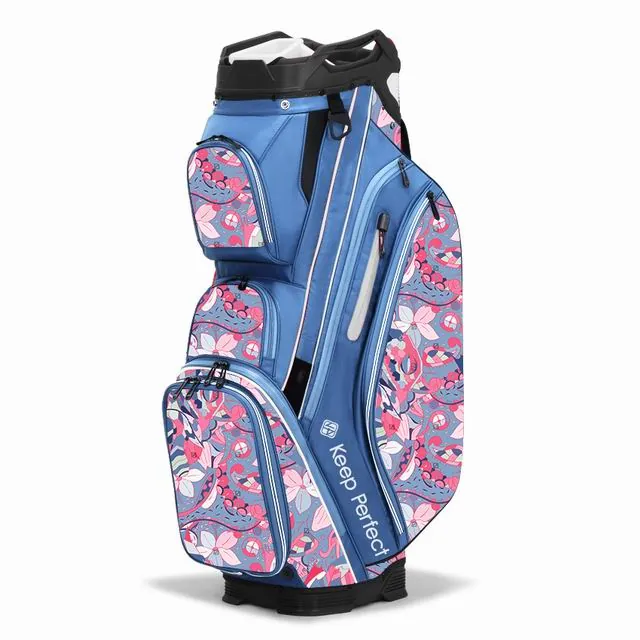
A golf cart bag is ideal for course use when it combines a wide, stable base that seats firmly on the rack; a full-length 14-way dividers top that protects every club; a durable, weather-treated shell that survives daily mounts; and enough organized pockets for a round — because a good cart bag stays put, protects your clubs and keeps everything within reach all day. The bag that does all three makes the difference between a smooth ride and a frustrating one: a bag that slides at every slope, tangles your clubs or forces you to dig for a tee is a bag fighting its own job. This guide, produced with the QUANZHOU JUNYUAN BAGS factory in Quanzhou (founded 2014; founder in the golf bag industry since 2004), breaks down the design features that make a cart bag genuinely ideal for everyday course use, and what to look for when buying or commissioning one.
On most courses in most regions, carts are a routine part of the game — players ride, bags ride with them, and both spend all day on the rack across slopes, braking and rough ground. A purpose-built cart bag is engineered for exactly that life: it is not a stand bag with harder flesh, but a bag designed around the reality that it sits rather than rides on a shoulder. Understanding what that design difference delivers is the fastest way to pick a cart bag you will actually enjoy and to specify a fleet or retail line that performs.
A Stable Base Is the Foundation
The single trait that marks a course-worthy cart bag is a wide, flat, non-slip base. A cart bag spends its whole day on a rack that is vibrating, braking, leaning on slopes and swinging through corners, and a bag that cannot sit still on that rack is a liability. A wide base plate spreads the bag's weight so it seats evenly instead of rocking on one edge, and a non-slip or molded bottom grips the rack so the whole bag stays put rather than walking sideways.
This is also what makes the bag easy to secure. A flat base that fully engages the rack, combined with the cart's bottom and top straps, holds the bag steady for a full round. If you are setting a bag up correctly on a cart, the base seating comes first — the full sequence is in our cart bag securing guide. A stable-base cart bag turns that two-strap job into a thirty-second non-event.
Full-Length Dividers Protect Your Clubs
Club protection is where a cart bag earns its keep. A full-length 14-way dividers top gives every club its own slot from grip to head, which does two things that matter enormously on a cart. First, it stops clubs banging heads, clicking together and tangling shafts and grips when the cart bumps, brakes or corners; second, it organizes the set so the club you want is easy to find and pull without a fishing expedition.
For serious players and for clubs that carry a mix of full sets, the 14-way layout is a genuine advantage, and many course-use players treat it as non-negotiable. Even a 5-way or well-structured divider top is better than an open top for protection, but the 14-way is the standard on purpose-built cart bags because it eliminates club-on-club contact almost entirely. Choosing a bag that protects your clubs on the cart is covered separately in our club protection guide.
A Durable, Weather-Treated Shell
A course-use cart bag is mounted, strapped, hauled and exposed to weather day in, day out, so the shell must handle it. The standard is a tough fabric like 600D to 840D polyester chosen for tear strength and abrasion resistance, frequently backed with a coating for water resistance so morning dew, light rain or a wet rack does not immediately soak through. Reinforced base and strap zones add strength exactly where mounting stresses concentrates.
Weather treatment matters on a course because carts are often parked in the open and rain can start mid-round. A bag that shrugs off drizzle keeps clubs and gear dry, and weather-treated shells are noticeably more durable over a season than untreated fabric. If full rain protection matters for your course conditions, the waterproof choices in our waterproof golf bag guide go a step further, but part of the daily protection comes from these recurring features.
Pockets that Organize the Whole Round
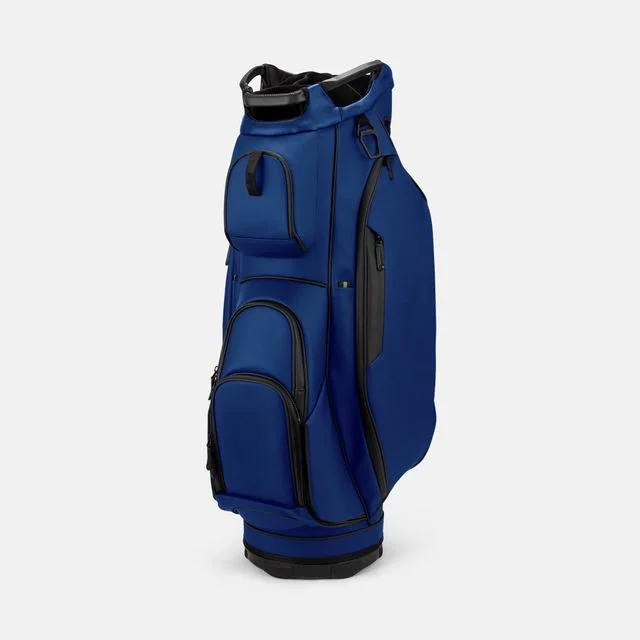
Because a rider does not carry the bag, there is no weight penalty to equipping it well, and a good cart bag uses that freedom with a well-planned pocket layout. A typical course-use cart bag has a large main pocket for clothes and rain gear, a cooler or insulated pocket for drinks, a valuables pocket for phone and wallet, a range of accessory pockets for balls, tees, rangefinder and gloves, and a quick-access pocket for the things you reach for most.
Organization is what makes the pocket count useful rather than decorative. Pockets placed so you can reach them from the side of the bag without unloading it, and clearly used for the gear that belongs there, add real convenience to a day of golf. The compartment tips shared across modern golf bags in our cart bag size and organization guide apply directly here.
Cart-Strap Compatibility and Handling
An ideal course bag works with the carts it will actually ride on. Cart-strap compatibility means there is a clean, clear strap zone on the lower shell where the cart's bottom and top straps can sit without being distorted by awkward pockets or hard-molded lumps, and usually a sturdy top grab handle so the bag lifts on and off easily. These are factory design decisions, and they are exactly why a purpose-built cart bag feels more stable than a general bag pressed into cart service.
Fine, if your course uses both electric and manual carts, a cart-compatible bag designed to straddle both is the most versatile choice, and knowing which of your carts it must fit helps you pick. Push-cart compatibility for those who sometimes prefer to walk behind a trolley is covered in our push cart compatibility guide.
Cart Bag Course-Use Features at a Glance
| Feature | Why It Matters for Course Use | What to Confirm |
|---|---|---|
| Base | Stable seating on the rack | Wide, flat, non-slip |
| Dividers top | Club protection & organization | Full-length 14-way / 5-way |
| Shell | Durability & weather resistance | 600D-840D, coated |
| Pockets | Full-round organization | Valuables, cooler, accessory |
| Strapping | Clean strap zones, easy mount | Grab handle, strap-compatible |
| Capacity | Full set plus gear | 14 clubs, generous pockets |
General guidance for a course-ready cart bag; exact features should be confirmed against your carts and usage with the factory or retailer.
Weighing a Cart Bag Against a Stand Bag
For some golfers the question of an ideal course bag is really stand vs cart. If you ride, the cart bag is the natural choice for the reasons above: stability, capacity, protection and easy sealing. If you carry most rounds, a stand bag is lighter and more comfortable, even if it mounts less solidly on the rare cart day. For riders and for courses with mandatory carts, the cart bag has no real rival.
The decision logic, including the waterproof angle, is laid out fully in our stand bag vs cart bag comparison. The short version for course use: riders want a cart bag, walkers want a stand bag, and anyone riding more than walking will appreciate what a purpose-built cart bag does all day.
Buying or Commissioning the Right Course Bag
Whether you are buying one bag for yourself or commissioning a fleet for a resort, club or retail line, the spec list is the same: a stable base, a full-length dividers top, a durable weather-treated shell, organized pockets and clean cart-strap handling. For a hire or course fleet, lean on durability and easy cleaning because the bag will be mounted hundreds of times a season. For a personal bag, match features to how you actually play.
We build course-ready cart bags at QUANZHOU JUNYUAN BAGS, from standard designs to custom colors and branding. The standard MOQ is 200 pieces per design and colorway with test orders from 100 pieces, sampling in about 10-20 days and bulk production in about 45-60 days. For a custom program, visit our custom solutions page or read our resort and club cart bag guide.
Factory Verdict on the Ideal Course Cart Bag
An ideal course cart bag is the sum of solid fundamentals: a stable base, full-length dividers, a durable weather-treated shell, well-planned pockets and clean strap zoning. When those five are right, the bag stays put, protects your clubs and keeps your gear organized for an entire day of golf, and it holds up to years of course life. That is a bag your users will notice, even if only by how little they think about it.
Behind every bag we build sits an affiliated Quanzhou factory founded in 2014 — 7 production lines, 126 sewing machines, 137 staff and roughly 200,000-piece monthly capacity — serving 200+ brands across 100+ countries and passing a third-party SGS factory audit in March 2026. To spec course-ready cart bags, contact our team, service@junyuanbags.com, or call +86 17750020688.
How Course-Use Cart Bags Differ by Region
An ideal cart bag in North America, where carts are standard on many courses, may look heavier and fuller-featured than one in Europe, where walking is more common and a bag doubles as a push-trolley companion. Knowing your region is part of defining "ideal for course use." In cart-heavy regions, riders want maximum capacity and stability; in walking regions, a lighter, weather-treated cart-compatible bag that also rides a trolley serves better.
Regional weather shapes the shell too — a bag for a reliably dry course can be lighter, while a bag for a rainy region should be weather-treated or fully waterproof. A course or retailer planning a fleet should match the bag spec to its own climate and cart policy rather than importing a generic product. Market and climate considerations for exporting bags are covered in our global market guide.
Fleet and Hire Considerations for Courses
For a course that rents or supplies bags, "ideal" changes emphasis: durability, easy cleaning and easy repair win over individual comfort because the bag is mounted hundreds of times a season by different players. A hire fleet wants the toughest shell, the most damage-resistant base, corrosion-resistant hardware and a spec that is easy to keep clean between uses. Good color and clear branding still matter because the bags advertise the course.
A hire fleet also benefits from a standardised spec that makes straps, zippers and dividers consistent to maintain, and from ordering volumes that get factory-direct pricing. If you run a resort or club fleet, our resort and club cart bag guide covers the durability and branding priorities that matter on a hire floor.
Matching the Bag to Your Carts
A course-use cart bag should match the carts it rides on. If your course uses fleet carts with a particular rack geometry, confirm the bag's base and strap zones line up so it mounts and removes easily every time. If you have a mix of electric and push carts, a bag designed to straddle both is the most flexible. Confirm the bag's dimensions clear the cart's rack and that its strap points are where the cart's straps sit.
Getting this detail right at the factory — as part of a custom spec rather than hoping a generic bag fits — removes the daily friction of bags that never seat quite right. When you commission a fleet, it is worth sharing your cart model with the factory so the base and strap design can be tuned. The compatibility mechanics for push and ride carts are examined in our cart compatibility guide.
Color, Style and Course Branding
On a course, a cart bag does double duty as branding. A resort or country club that prints its crest or name on the cart bags turns every round into a small advertisement for the venue, and the bag's color and panel design feed that identity. For a retail brand, the bag's styling sells it on a shop floor, so colorways that photograph well and on-brand pockets and trim matter as much as the technical build.
Because decoration and colour are factory design decisions even on a course-use bag, they belong in the spec from the start: choose the front panel, the print or embroidery position and the colourway so the finished bag both plays well and presents your identity. The design and branding workflow for custom golf bags is explained in our bag customization guide.
Handling and Ergonomic Comfort in the Cart
Beyond the rack, a course-use cart bag should be easy to live with once it is on the cart. A sturdy top grab handle that lifts the bag on and off without strain, pockets positioned so the things you reach for most are accessible from the side, and an organized interior that does not force a hunt all contribute to a day that flows. On a course you mount and remove the bag several times a round, so good handling is not a luxury.
Ergonomic comfort also covers how the bag rides: a centre-balance that keeps it stable, strap zones that do not distort the shell, and a shape that does not crowd the cart seat or block access. When riders notice a bag at all, it is usually because it is awkward; a well-designed course bag is forgettable in the best way. The design and handling principles behind a bag that disappears into the round are discussed in our ergonomic golf bag design guide.
Keeping a Course Bag Looking New
A course-use cart bag works hard and shows its age in a few predictable places: the base from hundreds of mounts, the strap zones from friction, and the shell from sun and weather. A little routine keeps it looking new: wipe the base free of grit before storage, keep the strap lines clean, and store it out of prolonged direct sun when not in use. Weather-treated shells resist staining and fading better than untreated fabric, which is one reason they are worth the small premium for daily use.
Clean and minor repairs — replacing a tired zipper slider, re-stitching a loose seam, tightening hardware — extend a cart bag's life well past what most players expect. For a fleet, a light maintenance schedule dramatically improves how the racks of hire bags look and last. Our professional bag maintenance guide and the durability practices in extending cart bag life cover this in depth.
Sustainability and Long-Term Value
Modern course-use cart bags are increasingly judged on sustainability as well as performance. Choose a bag built from durable, repairable parts that last rather than one designed to be replaced, and prefer materials with recycled content where your program values it. A bag that survives years of daily course use is inherently more sustainable than one replaced every season, and a fleet spec that favours durability cuts waste and cost together over its life.
For brands and courses positioning on responsibility, recycled fabrics and verified production standards add a credible story alongside the technical build. If sustainability matters to your program, recycled material options and the eco-certifications worth checking are covered in our sustainable manufacturing guide.
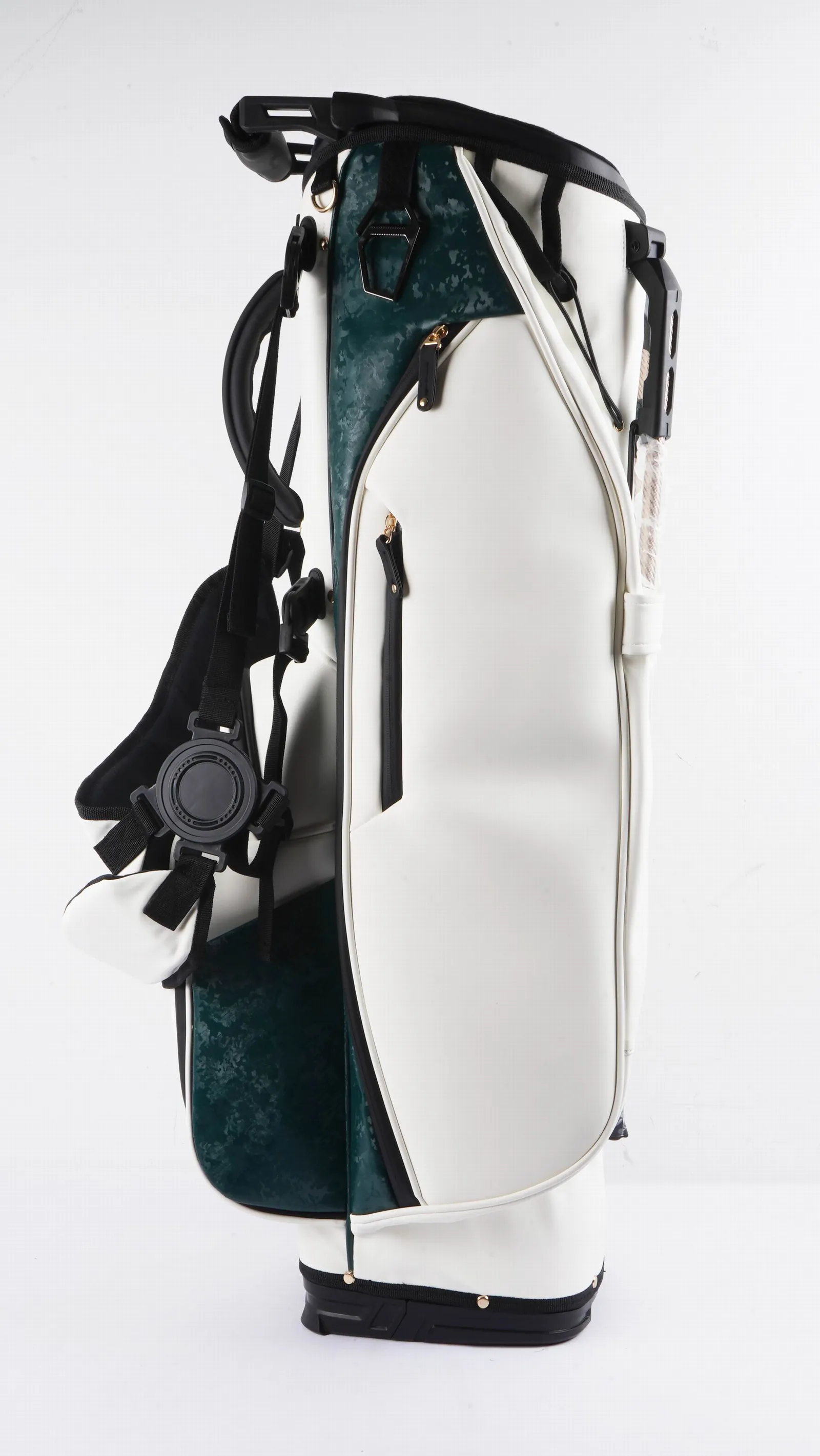
Anatomy of a Course-Use Cart Bag
Building the Best Spec for a Course Fleet
When a course or resort builds a cart bag spec, the priorities run differently than an individual buyer's. Start with durability under daily, heavy use: the toughest shell, the most damage-resistant base and corrosion-resistant hardware. Then add ease of cleaning so bags look fresh between rounds, and a standardised spec that keeps maintenance simple across the fleet. Branding and colorways come next because the bags represent the venue. Finally, tune the base and strap design to the course's actual carts.
Because these decisions are made at the factory, a course fleet benefits from commissioning its spec rather than buying off-the-shelf. The factory can build the base, strap and durable shell around your carts, then run the fleet at a volume that earns factory-direct pricing. The process and volume considerations for a fleet program are covered in our resort and club custom bag guide.
Frequently Asked Questions
- What size is a standard golf cart bag for course use?
- A standard cart bag holds a full set of 14 clubs and is sized to sit on a cart rack, typically wider and taller than a stand bag. It is designed to stay mounted all round rather than to be carried.
- Are full-length dividers worth it in a cart bag?
- Yes. Full-length 14-way dividers keep every club in its own slot from grip to head, which protects shafts and heads when the cart bounces and stops the tangle and chatter clubs suffer in open-top bags.
- Why is a wide flat base important on a cart bag?
- A wide, flat, non-slip base seats the bag evenly on the rack and stops it sliding or tipping at corners and on slopes. It is the anchor of a secure mount and a reason course operators favor purpose-built cart bags.
- Can a cart bag be used on a push cart too?
- Yes, most cart bags fit push trolleys, though a bag designed for riding is heavier than a walker wants. For players who sometimes push, choose a slightly lighter cart bag and confirm strap compatibility.
- What makes a cart bag durable for everyday course use?
- A tough outer shell (commonly 600D to 840D polyester), reinforced base and strap zones, quality zippers and weather-treated fabrics. Good construction and QC keep a course-use bag looking new for years.
- What is the MOQ for custom cart bags for resorts and clubs?
- Standard MOQ is 200 pieces per design and colorway, with test orders from 100 pieces. Sampling takes 10-20 days and bulk production about 45-60 days.
Looking for a Reliable Golf Bag Partner?
Whether you need standard or custom waterproof golf bags built to your spec, our team can help. Test orders from 100 pieces, sampling in 10-20 days, bulk production in 45-60 days.
Request a Bulk Quote →