Why Coaches See Staff Bags as an Asset, Not an Expense
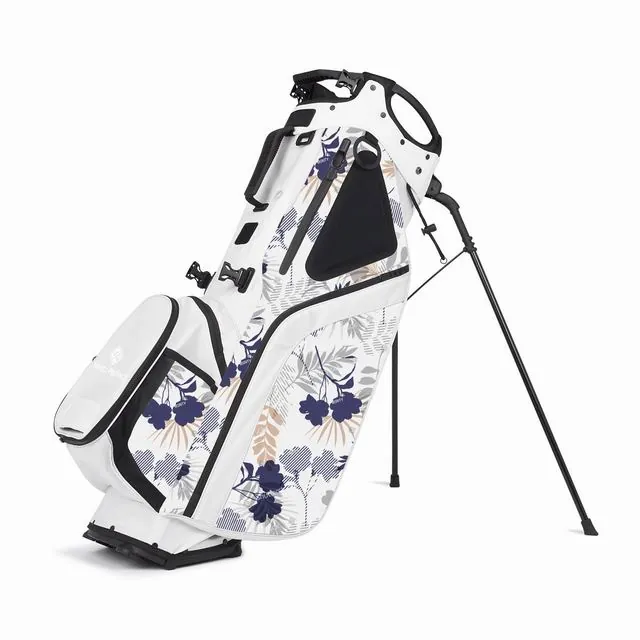
Golf academies invest in custom staff bags because the staff bag is simultaneously a coaching workstation, a high-visibility branding surface, a staff-retention perk and a sponsorable asset – one durable item that delivers marketing, identity and multi-season value far beyond its purchase price. Before looking at how to buy them well, it is worth understanding why academies keep choosing staff bags at all, given that a larger bag costs more than a standard one. To a head professional the staff bag is simultaneously four different assets. It is an on-course workstation that keeps every tool and teaching aid within reach while coaching on the range or the first tee. It is a branding surface that makes the academy visible to every golfer who walks past, in photographs and on any pitch or flight that gets filmed. It is a perk that keeps coaching staff assigned to one facility and loyal to one programme. And because it is a durable, higher-value item, it doubles as a sponsorship slot that a local brand can buy into. Seen this way, the staff bag is less a purchase than an investment in visibility and retention.
Once the bag is understood as an asset, the right instinct is quality and consistency rather than the cheapest option. A bag that frays or whose branding peels inside six months does negative marketing every single day it sits on the range. That is why academies specify well and then protect the pattern across the whole fleet — a consistent, crisp set of staff bags is one of the most cost-effective brand encounters an academy can buy, and it weakens the moment the bags become patchy.
The Volume Strategy That Keeps Cost Down and Brand Up
For a single academy, stocking maybe eight to twenty staff bags, volume pricing is less about squeezing each bag and more about stabilising the programme across seasons. Ordering one consistent fleet rather than topping up piecemeal achieves three things: a uniform look, a single pattern to manage replacements against, and a platform for renewing a percentage each year so the fleet never ages all at once. Because staff bags are structural and heavily branded, we recommend budgeting to refresh a share of the fleet annually rather than replacing the whole set when it looks tired, which is dramatically less disruptive to both cash flow and the academy image.
On the factory side the economics are sympathetic to academies: with our 200-piece standard MOQ and a 100-piece test order option, a programme of a few dozen bags can be sampled and then grown season by season without a huge first commitment. Lead times for sampling run 10-20 days, with bulk production 45-60 days, which fits a summer or school-year planning calendar comfortably. The wholesale pricing guide lays out these numbers so an academy can forecast its staff-bag budget as a recurring annual line item rather than a painful one-off. For the cost drivers in detail, our cost factors guide and the wholesale staff bags for teams and academies overview break down what moves the unit price.
Choosing a Bag Construction That Earns Its Place in the Fleet
Not every staff bag deserves a place on your range forever, and durability is where a cheap choice bankrupts a budget twice over. Specify a heavy nylon or polyester shell that resists the abrasion of carts, cleats and baggage, full-length dividers so a full set of clubs stays separated and protected during lessons and travel, and a rigid moulded base that keeps its shape under the added load of coaching gear. Reinforced stress points at the handle, the strap anchors and the top collar are where the extra years of life are actually stitched in, and they are the difference between a fleet that lasts four seasons and one that looks tired after two.
The construction standards matter even more for staff bags than for personal bags, because a staff bag lives a hard, public life: it is moved constantly, loaded heavily, photographed and handled by many people. Running the quality checklist from our tournament-grade durability standards guide against a sample before you commit is the cheapest insurance you can buy, and it is the same discipline you would apply to any branded fleet that represents your facility in front of members every day.
Designing a Fleet Look That Coaches and Players Both Recognise
Because a staff bag is a public object, appearance is a functional requirement, not decoration. Plan a panel layout with a large, clean brand zone on the main panel — typically the academy logo in a high-contrast colour, at a size that stays legible across a fairway — and keep secondary pockets quiet so the branding does not get visually crowded. Choose a colourway that matches the academy kit or stands out on the course in good and bad weather alike, and place the coach name or role on the personal panel of each bag so every staff member owns their kit.
The premium printing and embroidery options available on custom bags — set out in our logo and embroidery overview — let an academy fix the brand zone on the pattern and then repeat it exactly across the fleet. That repeatability is the whole point: one approved pattern, reproduced consistently, is what makes a range full of staff bags read as one deliberate programme rather than a collection of leftovers.
A Sample-Ready Buying Framework for Academies
To move from intention to a fleet without second-guessing, use a straightforward sequence. First, fix the four requirements in writing: how many bags, the construction grade, the brand zones and the deadline. Second, request a sample at the test-order tier, 100 pieces or fewer, and run the durability and branding checks in person of the proposed build. Third, confirm the pattern against the whole academy kit, order the fleet at the standard 200-piece tier, and plan the annual refresh percentage. Fourth, reserve service on the backend, because the best staff-bag programme is the one that keeps its replacements available in the same quality and pattern for seasons to come.
Why Golf Academies Invest in Custom Staff Bags: The Business Case Beyond Branding
A golf academy, team or programme that equips its staff and players with custom staff bags is not buying a golf accessory — it is buying a credible, repeatable brand presence, an organisational identity and a professional first impression that pays for itself across a decade of seasons. The investment is simple to justify: a staff bag is a tall, unmissable, photographed object that carries an academy's name and colours everywhere a team travels, and unlike a website impression it cannot be scrolled past. For academies that compete for students, sponsors and tournament invitations, the staff bag is one of the highest-return items of branding equipment on and off the curriculum.
The Staff Bag as a Mobile Brand Asset
Think of a custom staff bag as a three-foot-tall billboard with a functional core. In a tournament environment, bags line up behind players and are captured in every official photograph and broadcast frame; the academy's logo is exposed to thousands of viewers per event. Over a season of tournaments, friendlies and camp sessions, that repeated visual exposure delivers impressions a flyer or social post cannot match, because it appears inside the professional context where the academy wants to be seen. The cost per impression of a bag that lasts several seasons is genuinely tiny.
Brand exposure is only half the value — the other half is consistency. A matched set of staff bags says the academy runs itself like a professional organisation, with uniforms discipline and attention to detail. Conversely, a coach or representative turning up with an unbranded, mismatched bag undercuts the very image the academy is building. When parents and juniors see a tidy, branded setup, they read competence and seriousness into the whole programme, which directly supports enrolment and sponsorship conversations.
Durability and the Multi-Season Return on Investment
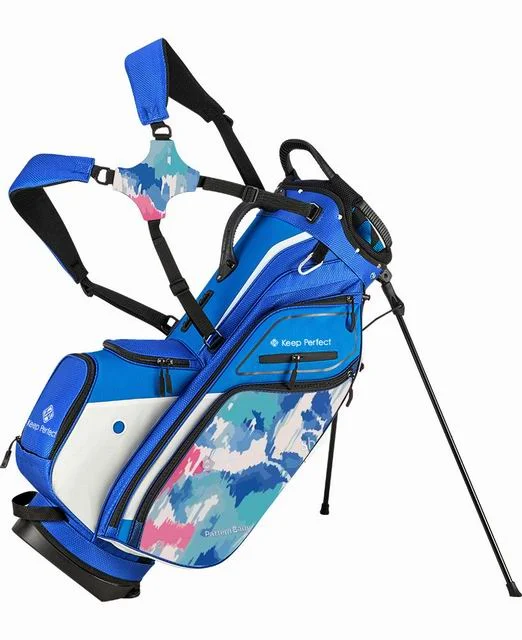
A staff bag is bought for the long run, so the economics depend on build quality. A well-made staff bag with a reinforced base, robust zips and durable fabric survives years of tournament travel, and at that lifespan its effective annual cost is small. A cheap bag that tears, comes unstitched at the base or loses a zipper within a season becomes a recurring expense and a negative brand signal. Factories that construct staff bags for teams treat the base and stress points as the priority because they know tournament trestles and van boots are unforgiving.
For an academy budgeting across seasons, the honest advice is to buy fewer, higher-quality bags and rotate them. Because staff bags are mounted rather than carried, weight is not a constraint, so the design can spend material on exactly the durability that stretches the investment. An academy that buys ten durable custom bags once and maintains them gets more value — and a cleaner brand image — than one that buys cheap bags every season.
Committee of One: How Academies Use Bags to Build Identity
Beyond brand, custom staff bags build a sense of identity and belonging that is hard to put a price on. Matching bags give players and staff a tangible marker of being part of the programme: the same colours, the same logo, the same kit. For juniors especially, receiving a bag with the academy's badge can be a point of pride and a reason to stay engaged. Coaches, too, present a unified front, which matters at open days, press events and when meeting prospective students and their families.
This organisational value is distinct from advertising. Where advertising rents attention, a staff bag reinforces identity from within — every practice session, every road trip, every photo. Academies that understand this use the bag as a deliberate piece of team infrastructure, designed once and used for years, rather than a promotional afterthought. In that sense the custom staff bag quietly does the same work as a kit sponsor's branding, but for the academy's own cause.
What Makes a Staff Bag Suit an Academy Programme
| Feature | Why an academy needs it | What to ask the factory |
|---|---|---|
| Large logo/brand panel | Maximises mobile brand exposure | Panel size and embroidery / print area |
| Team colours / accents | Unified identity across players & staff | Colour matching and trims |
| Reinforced base | Survives tournament trestles & travel | Moulded base, bar-tack stress points |
| 14-way dividers | Protects players/coaches club sets | Full-length divider type |
| Capacity (tall silhouette) | Presence & room for a full set | Structural height and pocket depth |
| MOQ and sampling | Cost-effective for academies | 200 pcs standard, 100 pcs test order |
Match what you need against what the factory can prove. A logo panel and colours are cosmetic; the reinforced base, dividers and zipper hardware are structural, and they decide whether the bag survives its multi-season purpose. When you specify, put the brand panel and colourway requirements alongside the durability spec in the same brief, so the factory balances free customisation (branding) against the parts that must not be compromised (build).
Cost, MOQ and Timing for an Academy Order
For an academy, the practical questions are cost per bag, the minimum order and the lead time. The standard MOQ for custom bag production is 200 pieces, with test orders from 100 pieces — practical for an academy that equips a full squad and coaching team and rotates spares. Sampling takes 10-20 days and bulk production 45-60 days, so an academy planning for a season should budget the calendar accordingly and order early enough to have bags on hand for the first tournament. The wholesale pricing guide breaks down exactly what drives unit cost, from fabric spec to embroidery.
Tier the programme: a flagship set of premium staff bags for the first team and head coaches (where the brand panel and durability are worth maximum spend), with more economical options for wider squads. That mirrors how professional programmes manage kit budgets and keeps the flagship impression strong while controlling total spend.
Working With a Factory That Understands Team Orders
Academy orders are small relative to retail programmes, so the right partner is a factory comfortable with lower-volume, higher-specification work and willing to prove quality on a sample first. Insist on a pre-production sample against the exact logo and colourway, and ask the factory to document the build — fabric spec, base construction and zipper hardware. A factory audited by SGS (our affiliated factory passed in March 2026) can provide third-party evidence that the bags are built to a verifiable standard, which matters if the programme wants a legitimately durable product.
For academies comparing options, the guide to staff bag versus cart bag differences and the custom bag OEM/ODM services overview explain how to frame a staff bag brief. If you are deciding between stock and fully custom, the custom bags for teams and schools guide walks through the decision. Whatever route you take, specify the durability standards as firmly as the branding — a staff bag's whole value to an academy rests on both.
There is also a practical operational angle academies should weigh: the staff bag is an on-course and range-side workstation for coaches. During a teaching session a coach reaches for demo clubs, training aids, a rangefinder, balls and teaching tools dozens of times, and a well-organised staff bag puts all of it within arm's reach on the range or first tee. This is a utilitarian argument for the staff bag that sits alongside the branding one, and it is often what makes the difference for a head professional who coaches daily rather than playing daily. The way the pocket architecture supports this daily use is detailed in our staff bag compartments guide, which shows where valuables, tools and coaching gear can each live and how a coach lays out a range session efficiently.
For academies that field several squads, a common question is whether every group needs a premium staff bag or whether the investment should be tiered. The proven model mirrors professional kit management: protect a flagship set for the first team and head coaches, where the brand panel is photographed most and durability takes the hardest use, and use more economical options for wider development groups. The flagship set carries the academy's identity; the wider squads still look uniform and professional. That tiering protects the image the academy most wants to project while keeping total spend under control, and it extends the effective life of the premium fleet because those bags are handled in the most visible context.
Finally, think about how the investment is measured, because a staff-bag programme is best judged across seasons, not purchases. Track the fleet's condition, how often replacements are needed, and how the bags photograph at the events that matter. A durable, consistently branded set that photographs well season after season has a measurable payback in enrolment inquiries, sponsor interest and the professional impression the academy leaves at tournaments. That is the return the initial decision should be anchored to, and it is why the choice of build quality and brand design up front matters so much. For the coaching-side perspective and how staff bags support day-to-day instruction, our staff bags for coaches and managers guide rounds out the picture, including the way a matched fleet lightens daily handling for a busy coaching staff.
Conclusion
A golf academy invests in custom staff bags because they are the highest-return, longest-lived brand asset a programme can own: unmissable at every tournament, internally unifying for players and coaches, and multi-season durable when built properly. The business case is branding plus identity plus durability economics, and it only holds if the base, dividers and zipper hardware are engineered to survive year-round mounted use. Specify branding and build in the same brief, buy a quality set and maintain it, and the staff bag quietly promotes the academy for many seasons — with the logo doing the talking every time a team steps onto a range. Our affiliated factory builds exactly this kind of staff bag for teams and academies, and we can prove the quality on a sample before you commit.
For academies the message is simple and worth restating: the staff bag is not a passing accessory but the single largest, most durable and most visible branded object a programme owns, and the decision to invest in it well – with quality construction, a repeatable brand zone and a simple maintenance plan – is one of the smartest marketing and retention decisions an academy can make. A standard MOQ of 200 pieces with 100-piece test orders, sampling in 10-20 days and bulk production in 45-60 days make the programme practical to start and easy to grow season by season, so there is little reason to postpone a decision that pays back in visibility, identity and multi-season durability.
Sources
Frequently Asked Questions
- Why do golf academies need custom staff bags?
- They are a durable, mobile brand asset: unmissable at tournaments, unifying for players and coaches, and cheaper per impression than almost any other form of promotion.
- What is the minimum order for custom staff bags for an academy?
- The standard MOQ is 200 pieces, with test orders from 100 pieces accepted, which is practical for a squad plus coaching team with spares.
- How long does a custom staff bag order take?
- Sampling takes about 10-20 days and bulk production 45-60 days, so order well ahead of the first tournament of the season.
- How many dividers should a staff bag have?
- A full-length 14-way divider is the best for protecting players' and coaches' club sets, keeping each shaft separate to the bottom.
- Are custom staff bags worth the cost for a small academy?
- Yes, when bought in quality: a durable bag lasts several seasons while a cheap one fails within one. Buy a smaller quality set and maintain it rather than replacing cheap bags every year.