Why Golf Retailers Sell Custom Travel Bags to Customers
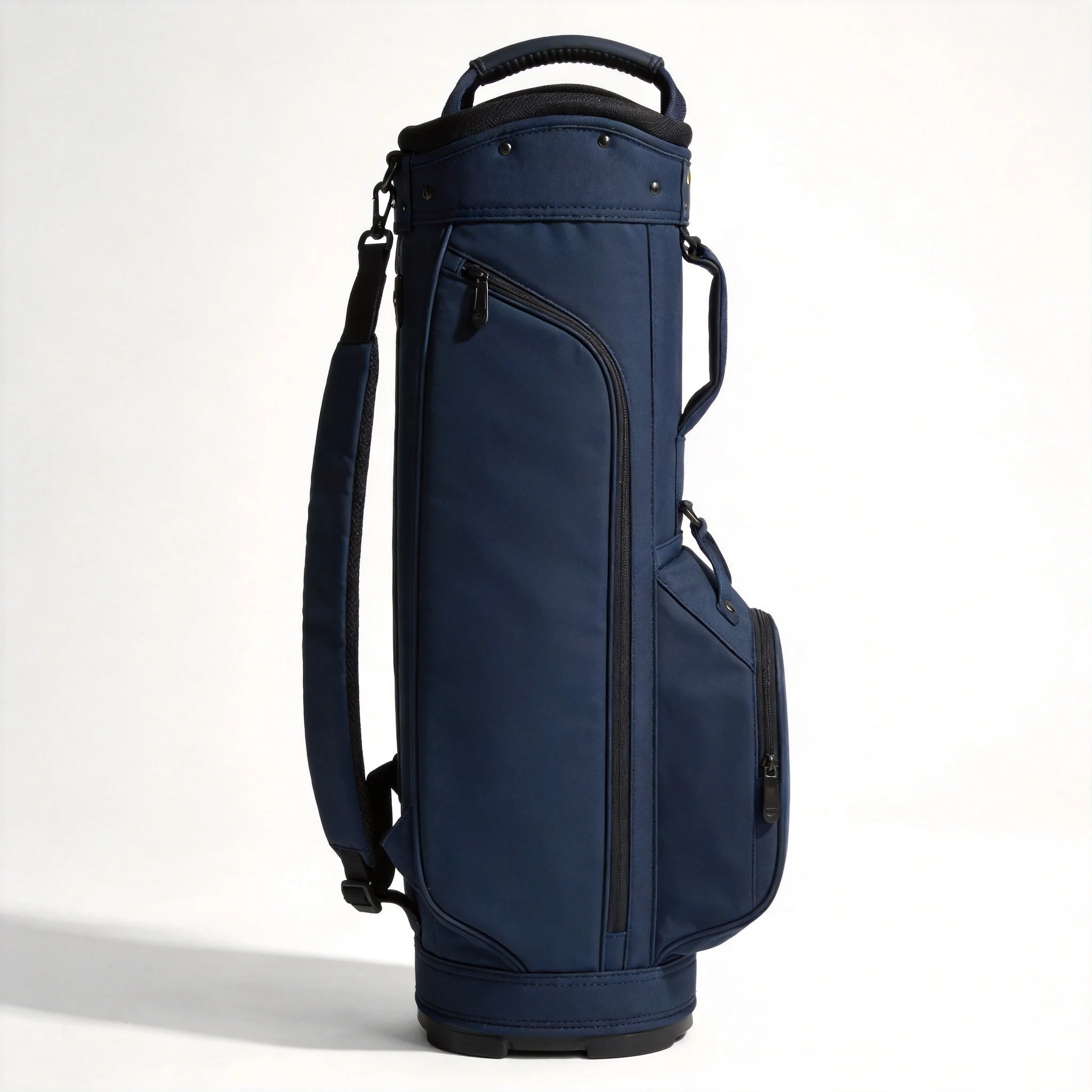
Golf retailers sell custom travel bags because they solve the customer's most urgent problem — arriving at a distant course with intact clubs — while converting a retailer-branded product into a higher margin, a traffic driver, and a walking billboard that advertises the shop for years. A travel bag is the last big accessory a golfer buys before leaving, so it turns urgent need into confident, full-price sales, and it is small enough to tier by budget, yet protective enough to be worth the buy-in. With a factory-direct custom line at a 200-piece MOQ, a pro shop can mark a branded travel bag well above its generic margin and win repeat business from travellers who remember the shop that kept their gear safe.
Retailers who dismiss travel bags as a low-ticket add-on miss one of the most reliable category margins in golf retail. The customer is pre-sold by necessity, the product is bulky enough to feel high-value but not so bulky it cannot be demoed, and the branding outlives every other item the shop sells. This guide makes the business case in numbers, shows how to tier and bundle to capture every buyer, and lays out the sourcing checks that keep a custom line profitable rather than a quality risk.
The Problem That Sells the Product
A custom travel bag is sold before the customer reaches the checkout, because it answers a problem every travelling golfer knows. Clubs are expensive, airlines are rough on checked luggage, and a dented shaft or cracked head turns a holiday round into a loss. The retailer who frames the sale around protecting that investment, rather than just moving a unit, is selling a quiet kind of insurance the customer genuinely wants. The personalisation layer then does the closing work: a bag that carries the customer's name and a club's colours moves from a commodity purchase to an extension of the golfer's identity. For a pro shop this turns a discrete travel product into a conversation starter that returns to the store on every trip, and for a course it makes the bag a mobile advertisement that keeps working long after the sale.
A travel bag sells itself because the need is urgent and specific: the customer is leaving for a round that matters, and their clubs are the single most expensive and fragile thing they will check. They are not browsing for a luxury item; they are shopping to avoid a cracked tip on a $1,500 set. That urgency converts at a far higher rate than category browsing, and it means the sale is about reassurance — protection, fit with their bag and airline, insurance — far more than about price discounting. A retailer who frames it as solving the travel problem rather than selling a product routinely meets a customer who arrived ready to buy.
Custom branding strengthens that story: a travel case with the pro shop's logo and a quality story the customer can verify ties the reassurance to the shop itself. This is the same problem-solving logic behind custom staff-bag demand, where a genuine need — not vanity — drives the purchase, and it is why the custom travel category converts so reliably.
Margin Math and the Retail Business Case
The margin story is the strongest argument a buyer can take to the owner. A generic open-market travel bag retails with thin manufacturer-level margins and price-comparison pressure. A private-label custom travel bag, sourced at factory-direct cost and priced at the shop's own retail, carries a materially higher gross margin, and because the item is bulky and heavy, customers rarely cross-shop it online the way they do a driver. The brand panel also removes the customer's ability to find the identical unbranded model elsewhere, defusing the "I'll get it cheaper online" objection.
| Tier | Retail (typical) | Sourced cost share | Use |
|---|---|---|---|
| Entry branded cover | $90-140 | Modest margin | Casual flyer, gift |
| Mid hybrid case | $180-260 | Strong margin | Mixed frequency |
| Premium hard case | $320-480 | Leader margins | Frequent, long-haul |
Running the numbers at a realistic traded share shows a branded mid hybrid case clearing considerably more than the same for-nominal sale, and the item re-sells every season as travel patterns return. For the full arithmetic on what a custom range can return, the MOQ and pricing guide lays out landed cost, duty, freight and mark-up in a worked example the buyer can adapt to the travel category.
Traffic, Footfall and the Walk-In Opportunity
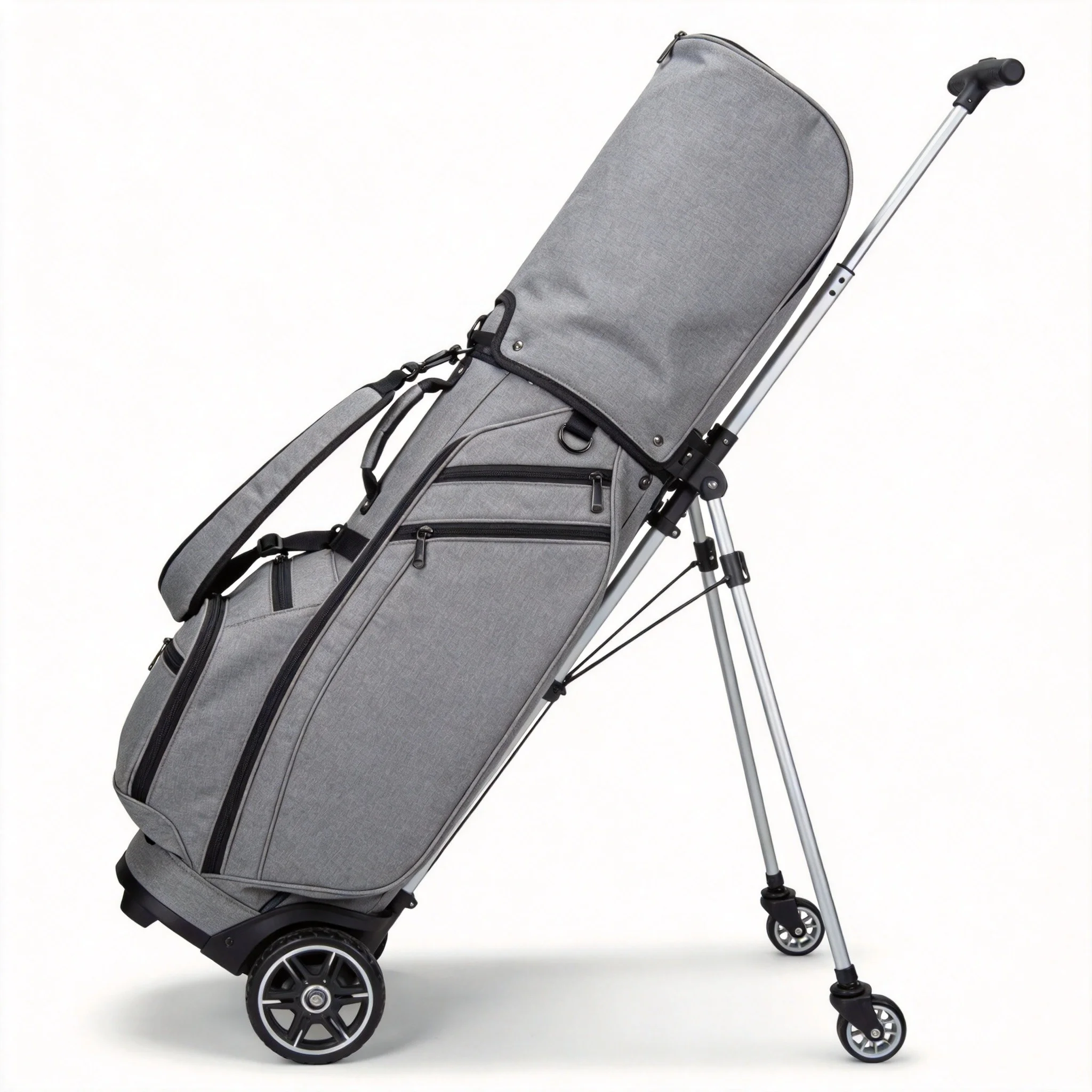
Travel bags are a footfall product. Customers rarely search for a travel case online before a trip; they remember they need one on the way to the airport, or they visit the pro shop for a fitting and leave with a travel system they had not planned to buy. Placing a demo case near the fitting room, at the register or by the door turns natural traffic into add-on sales, and the visual of a bulky, wheeled case is impossible to miss in a way a shaft or glove never is. It is the highest-visibility accessory in the store per square foot of shelf.
The demo is also the sale: let a customer load their own bag into a trade-open case and wheel it to the register, and the objection to the price evaporates as they feel the protection and convenience. The same hands-on approach converts across the range — a player who wheels their own clubs into a case a few times becomes an owner, which is why the wholesale travel-bag range recommends a demo unit in every store.
The Walking Billboard: Brand and Repeat Business
A branded travel bag is the longest-lived advertisement a pro shop owns. It travels the world, sits in airline reclaims, carousels and course car parks, and is seen by precisely the people the shop wants — golfers and travellers — for a decade. Unlike a branded cap or towel that is replaced in a season, a travel case is kept and reused, so the logo accrues impressions for years at a one-time production cost. Every frequent flyer carrying the shop's mark is a mobile billboard on the very routes the shop's other customers travel.
Overlapping that is repeat business: the customer who trusts the shop to keep their gear safe returns for shafts, gloves and the next bag, and tells travelling friends about the shop that stocked it. A custom travel programme therefore buys brand equity and lifetime value, not just a single item. The same reasoning underpins branded staff-bag visibility, and it is why shops that treat custom travel as a relationship product rather than a one-off SKU out-perform those that price it like a commodity.
Tiering the Range for Different Buyers
One SKU cannot serve a pro shop's real audience, so the winning retailers tier. An entry branded cover captures the casual flyer and the gift buyer; a mid hybrid case serves the mixed-frequency golfer who wants real protection without an unwieldy hard shell; and a premium hard case targets the frequent, long-haul traveller who will pay for maximum protection. Tiering also steadies cash flow, because the entry tier sells in volume while the premium tier carries the margin, and it widens the demo conversation to fit budgets rather than pushing one price point.
Tiering makes sourcing simpler too, because one factory relationship produces all three tiers from the same line and lets the shop mix quantities to season and cash flow. Retailers who build a three-tier ladder effectively convert a customer who walks in for a cheap cover into a premium-hard-case owner over a year or two of trust. The structure of a well-priced three-tier custom range is worked through in the custom pricing factors guide.
Bundling and the Pro-Shop Upsell
A travel bag is the natural anchor of a high-value bundle. Pair it with matching accessories — a padded head-cover bundle, a spine protection bar, a shoe-bag, a tracker pocket, a logo cap or towel — and the retailer raises the average ticket while giving the customer a complete travel system the general market cannot price-match, because the bundle is own-brand. Bundling also moves slow stock: attach a slower-selling accessory to a travel case in demand and it leaves the shelf.
The upsell is conversational rather than pushy: "you are protecting a premium set; add the head sleeve for the driver and you have a complete kit." The golf bag accessories guide lists the items that round out a travel bundle, so the pro-shop team can assemble a package that is genuinely worth more than the parts and keep the customer at the shop rather than back online.
Custom Adds Value Over Generic Stock
The customer self-resolves the "why not generic" question when the item is own-brand: it fits their airline, is sized to their bag, carries a verification the shop stands behind, and cannot be found cheaper elsewhere because it does not exist elsewhere. Custom specification lets a shop round out real needs generic stock ignores — a taller interior for a 14-way bag, a specific wheel size, a lock that meets their most-travelled airline's TSA rule — and that fit is what justifies full price. A customer paying full price for a custom case that fits is happier and more loyal than one who saved money on a generic case that did not fit.
Custom also future-proofs inventory: a shop that stocks a branded mid and premium case senses travel demand better than one chasing a race to the bottom on unbranded boxes, because the margin and the branding both reward selling quality over discounting. Retailers migrating from generic to custom protection typically report both higher gross margin per unit and a measurably better conversion from a demo, which is the combination this whole argument rests on.
Protecting Retailer Reputation With Quality Control
A custom travel programme only helps if the product performs, because a broken case stamps the shop's name on the failure. That is why the sourcing checks matter as much as the branding: confirm the supplier publishes drop-test and wheel-load evidence, uses a TSA-approved lock and a durable zipper with a high cycle rating, seals the seam against water, and cold-cracks the shell properly. A shop should ask for the batch sample's test record before production and spot-check the first delivery, and should walk one unit through its own demo loop of loading and wheeling before committing a larger order.
Quality control also protects the referral channel: a travel customer who has a good trip tells friends, and a damaged set does reputational harm out of proportion to the unit's cost. The acceptance checklist behind factory quality control and the impact-resistance standards reference give a retailer the exact questions to run with any maker before a custom line is locked in.
Sourcing and the Factory Partnership
The economics work best as a direct factory partnership rather than through a middleman. We simplify custom sourcing through an affiliated 4,950 m² factory — producing golf equipment since 2004 and established as a company in 2014 — that runs seven production lines, 126 sewing machines and 137 staff, making 200,000 bags a month for 200+ brands across 100+ countries, and passed an SGS audit in March 2026. For travel cases it validates shell thickness, wheel loads, hinge torque, zipper cycles, seam sealing and lock fit before a batch ships. Sampling runs 10-20 days and bulk production 45-60 days at a 200-piece MOQ (100 for test orders), letting a retailer proof a range with a test batch before committing.
Go further into the sourcing workflow with the custom OEM golf travel bags guide and the sample-before-bulk process in the sample request guide. Between them they cover the brief, the artwork approval, the physical sample, the batch QA and the freight decision that turn a custom programme from an idea into a stocked shelf.

Stocking, Inventory and Seasonality
Travel bags are seasonal, and smart inventory planning captures the spikes. Demand clusters before spring and autumn breaks, school holidays, major tournaments and national golf holidays, so place the first stocking order early — around 45-60 days of lead time — and top up the tier that sells rather than carrying a tail of slow premium stock. A test order at 100 pieces clears the artwork and QA quickly, and the 200-piece tiering order keeps freight economical while the mix of tiers is adjusted to season.
Hold a demonstration unit permanently and reserve at least one of each tier for immediate delivery, because travellers buy under deadline and fast fulfillment wins when the customer is leaving tomorrow. Beyond ordering, log which tier sells and to whom, so next season's mix better fits the footfall; the stock-and-order rhythm in the retail travel-bag range mirrors the practical cadence a pro shop actually runs.
Advice That Converts and Retains
The team's framing is what converts. Train staff to ask "how do you travel with your clubs?" and to listen for the route and frequency before recommending a tier, to demo the case with the customer's own bag and to answer the two questions that close the sale — "will it fit my airline" and "will it protect my set" — with the case and the IATA exemption in hand. Advise customers to pack with heads inverted and a spine bar, and to weigh the packed case; be the shop that makes their travel smooth and they will not only buy the case but return for everything else.
Retention follows competence: send a check-in note after the trip, offer a free strap or head sleeve with a second visit, and use the case itself as a reason to re-list the shop on a customer's racket. Advice-led retail converts travel from a transaction into ongoing trust, which is the durable moat a custom programme builds that no online discount can match. The packing guide is the exact script a well-trained counter can hand over with every custom case sold.
The Bricks-and-Mortar Advantage and the Service Seal
A travel bag is one of the few accessories where the physical shop is structurally better than online. The customer can load their own bag into the case, wheel it to the trolley and feel the protection, and the expert behind the counter answers the airline-question that a search box cannot. That combination of fitting, advice and immediate ownership is why travel cases convert better in-store than nearly any other golf item, and it is the strongest argument a retailer has against the online rival: the product is bulky enough to reward touch, and the trust it builds is the shop's to bank. A traveller buying at the counter gains certainty about fit, airline rules and packing that a spec sheet cannot convey, and that certainty is worth more than a small online saving.
Adding a service seal strengthens it: a shop that stands behind the case with a recorded test certificate, a free strap swap or a travel check-in turns a transaction into an ongoing relationship. Every branded case that travels well is proof the shop is a place to rely on, which feeds the wider store loyalty that a generic online order can never replicate. The offline advantage and the service seal together convert a commodity purchase into the single most trustable accessory a pro shop can sell.
Conclusion
Golf retailers should sell custom travel bags because the need is urgent, the margin is strong, the branding advertises the shop for years, and the demo converts with the customer's own clubs in hand. Tier the range by buyer, bundle to lift the ticket, hold a demo unit, protect your reputation with real QA evidence, and source direct from a factory that can validate the drop, wheel, seam and lock at a workable MOQ. Do that and the travel category stops being a low-ticket afterthought and becomes one of the most dependable gross-margin and traffic products in the store — and a walking billboard that keeps selling after the customer has flown home.
Sources
Frequently Asked Questions
- Why are custom travel bags profitable for a golf retailer?
- The customer is pre-sold by an urgent need to protect expensive clubs, the item is too bulky to cross-shop easily, and the shop sets the price on its own brand. A factory-direct custom line carries materially higher gross margin than generic stock and defuses online price matching.
- What tiers should a pro shop stock?
- An entry branded cover for casual flyers and gifts, a mid hybrid case for mixed-frequency golfers, and a premium hard case for frequent long-haul travellers. Tiering widens the sale to every budget and steadies cash flow.
- How does a custom travel bag advertise the shop?
- It is a branded item that travels the world, sits in carousels and course car parks for years, and is seen by exactly the golfers the shop wants — a set serving as a mobile billboard long after the sale.
- What quality checks protect retailer reputation?
- Verify drop-test and wheel-load evidence, a TSA-approved lock, a durable high-cycle zipper, seam sealing against water and cold-crack of the shell. Spot-check the batch sample and walk one unit through your own demo before a large order.
- How should a retailer plan travel-bag inventory?
- Order early to season — around 45-60 days of lead time — keep a demo unit permanently, hold at least one case of each tier for immediate delivery, and log which tier sells so next season's mix fits footfall.
- How do bundles lift the travel-bag ticket?
- Pair the case with a head-cover bundle, spine bar, shoe-bag and tracker pocket to build an own-brand travel system no one else can price-match, while moving slow stock off the shelf in the same sale.
- Why source custom travel bags direct from a factory?
- Direct sourcing removes the middleman, gives a controllable MOQ, and lets the shop spec wheel, lock and seam to its market while a quality factory validates the tests before a batch ships. Sampling, QA and freight make a test batch economical first.