Benefits of Waterproof Golf Bags for Long-Term Use

A genuinely waterproof golf bag pays for itself over long-term use: by keeping grips, clubheads and valuables dry, sealed fabric, sealed seams and sealed zippers prevent rust, grip degradation and mildew that shorten both the bag and your entire set's life, giving a quality waterproof build a realistic 5-10 year service life versus the faster deterioration of a water-resistant bag used in the same wet conditions. This guide explains, from the factory floor where waterproof bags are built, exactly how waterproofing extends usable life and why it is one of the smartest long-term investments in golf equipment.
What Long-Term Use Really Demands from a Golf Bag
Most golfers think of a bag as a simple carrier, but over years of use a bag becomes structural infrastructure for your clubs and accessories. It is the thing that takes the weather, the trunk heat, the cart strap, the folded carry and the constant loading and unloading of clubs and bottles on every round. A bag that is only expected to survive a single season can get away with lightweight fabric and simple stitching. A bag expected to last through five or ten seasons must be engineered for that duty from the first panel cut.
The demands of long-term use are concrete. The bag must hold its shape so dividers keep clubs from tangling. It must resist abrasion where it rubs the cart and the ground. It must keep straps attached under heavy loads. And critically, it must keep moisture away from what it holds, because moisture is the single biggest accelerator of wear in the whole golf ecosystem. Waterproof construction addresses this last, and hardest, requirement directly, which is why it is increasingly the benchmark for bags built to last.
How Waterproofing Extends Bag Life: The Reality
When water gets in, it does not just make a round uncomfortable. Reached repeatedly, moisture causes several compounding problems. It rusts and corrodes steel shafts and clubheads. It degrades grip rubber, making grips harden, slip and crack. It lets mildew and mould develop inside pockets and on fabric. And the same trapped moisture attacks the bag's own seams and zippers, so the bag itself deteriorates from the inside out. Every one of these failures is accelerated by water ingress and slowed, or entirely prevented, by a genuine waterproof seal.
A bag built with the three-pillar waterproof construction fends off all of this. Its laminated fabric resists the damp environments — morning dew, fog, wet cart, rain — that slowly break down ordinary nylon. Its sealed seams stop water from wicking through the thread line. Its sealed zippers keep the pockets, the most vulnerable storage on any bag, dry. The result is a bag that wears out on its own schedule of physical abrasion rather than being killed early by moisture damage. That is the practical difference between a lifespan of a few years and one of five to ten.
| Feature | Water-resistant bag | Waterproof bag |
|---|---|---|
| Shell fabric | Standard nylon / polyester | PU / TPU laminated |
| Seams | Unsealed stitching | Taped / welded sealed |
| Zippers | Standard exposed | Sealed / baffled |
| Moisture ingress | Reaches interior | Blocked at all entry points |
| Realistic lifespan in wet use | 3-5 years, faster interior decay | 5-10 years with care |
The Three-Pillar Construction That Makes It Last
Waterproofing for longevity is not one feature; it is a coordinated system of three independent protections, and a bag only earns the word waterproof when all three are present. The fabric is the first line of defence, a laminated shell that physically blocks water. The seams are the second, because every stitch pierces the fabric and creates a leak path unless it is taped or welded shut. The zippers are the third, because standard zipper tracks let water through, so waterproof bags use sealed, baffled or protected zipper systems. Understanding these three allows you to evaluate any waterproof claim with confidence.
The three pillars matter for lifespan precisely because a bag with only one or two will leak somewhere, and the leak will sit hidden inside — rusting shafts, moulding grips, degrading the lining — doing damage you only discover later. A bag with the full three-pillar build has eliminated every predictable water entry path, so the interior stays dry season after season. This is why, when a bag is described as waterproof, the honest question is always the same: are the fabric, seams and zippers all protected, or is only one of the three?
Material Choice and the Cost-per-Use Equation
Long-term value is best thought of as cost per round. A premium waterproof bag might cost more upfront, but spread across hundreds of protected rounds in a wet climate it typically works out cheaper than repeatedly replacing cheaper bags or, worse, damaging an expensive set. For a comprehensive comparison of every material option and how each holds up over years, see our complete golf bag materials guide.
The key is that corrosion and grip damage are expensive to fix. A single damaged steel shaft or a set of prematurely worn grips can cost more than the price difference between a water-resistant and a waterproof bag. When you frame the decision as protecting a high-value asset across many seasons, the waterproof build stops looking like an extra expense and starts looking like insurance that pays for itself the first time it saves your equipment in heavy rain.
Sealed Zippers, Seams and Hardware That Stand the Test of Time
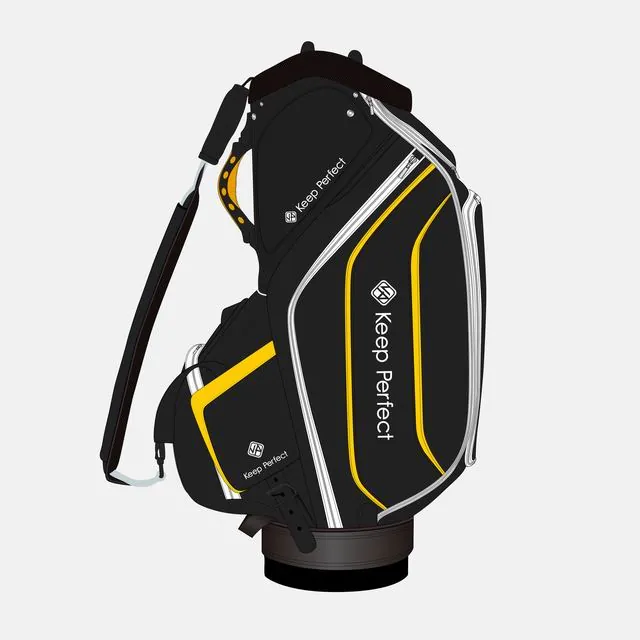
Beyond the fabric, the components that fail first on a golf bag over years are the moving parts: zippers, straps, buckles and the base. In a waterproof bag these are specified tougher because the whole point is that moisture should not reach them. Sealed zippers are reinforced so they both resist water and handle heavy repeated use without the teeth wearing or the pull breaking. Seams are taped and welded, which not only blocks water but binds the structure more firmly, preventing panel separation over time. Hardware like the base and strap anchors is fixed with reinforced stitching and pressure-resistant cleats so the bag keeps its form under load.
The base deserves special mention for longevity. It is the part that takes the most abuse, sitting on wet ground, gravel and cart floors. A waterproof bag typically pairs a sealed base construction with durable, often rubberised, material that resists both water and abrasion. Protecting this high-wear zone is directly responsible for much of the extended lifespan that waterproof construction delivers.
Care Routines That Keep the Seal Working for Years
A waterproof bag earns its longer life only if the seal is maintained. The routines are simple but consistent. After any wet round, dry the bag fully and store it unzipped, because trapped interior moisture is what degrades laminate and encourages mildew. Keep zippers clean and lightly lubricated, since grit compromises both function and the weather seal. Avoid harsh solvents and aggressive abrasion that strip coatings. And periodically re-apply a fabric waterproofing treatment to refresh water repellency as the factory DWR wears off. For the complete step-by-step routine, visit our guide to maintaining waterproof coatings.
Neglect is the enemy of the seal. A bag that is zipped up wet, stored in a damp garage and cleaned with strong chemicals will lose its waterproofing far sooner than its construction would suggest. Treated well, however, a quality waterproof bag easily reaches the 5-10 year mark, with its protection staying dependable across the whole span.
Waterproofing Across Different Bag Types
Long-term benefits apply across all bag types, but the priority placement differs. A carry or stand bag, held in the hands and walked through rain, needs reliable water shedding and sealed zippers on the pockets you reach constantly, while its proportion tolerates a lighter build. A cart bag rides low, exposed to puddles and spray, so it benefits from stronger waterproofing and better sealing at the base. A travel bag faces transport as well as weather, so its waterproofing pairs with durable materials built for handling and shipping. Matching the waterproofing level to the bag type keeps weight and cost proportionate to the protection you actually need.
Your climate also shapes how much waterproofing is worth buying. A golfer in a humid subtropical or consistently wet region leans on waterproofing every single week and is the clearest case for the long-term investment. A golfer in an arid region may only need occasional protection, where a water-resistant bag with a rain hood is the more balanced choice. When type and climate are aligned with the waterproofing level, you neither overpay for weight you do not need nor under-buy protection that a wet season will punish.
Why Factory Build Quality Determines the Lifespan
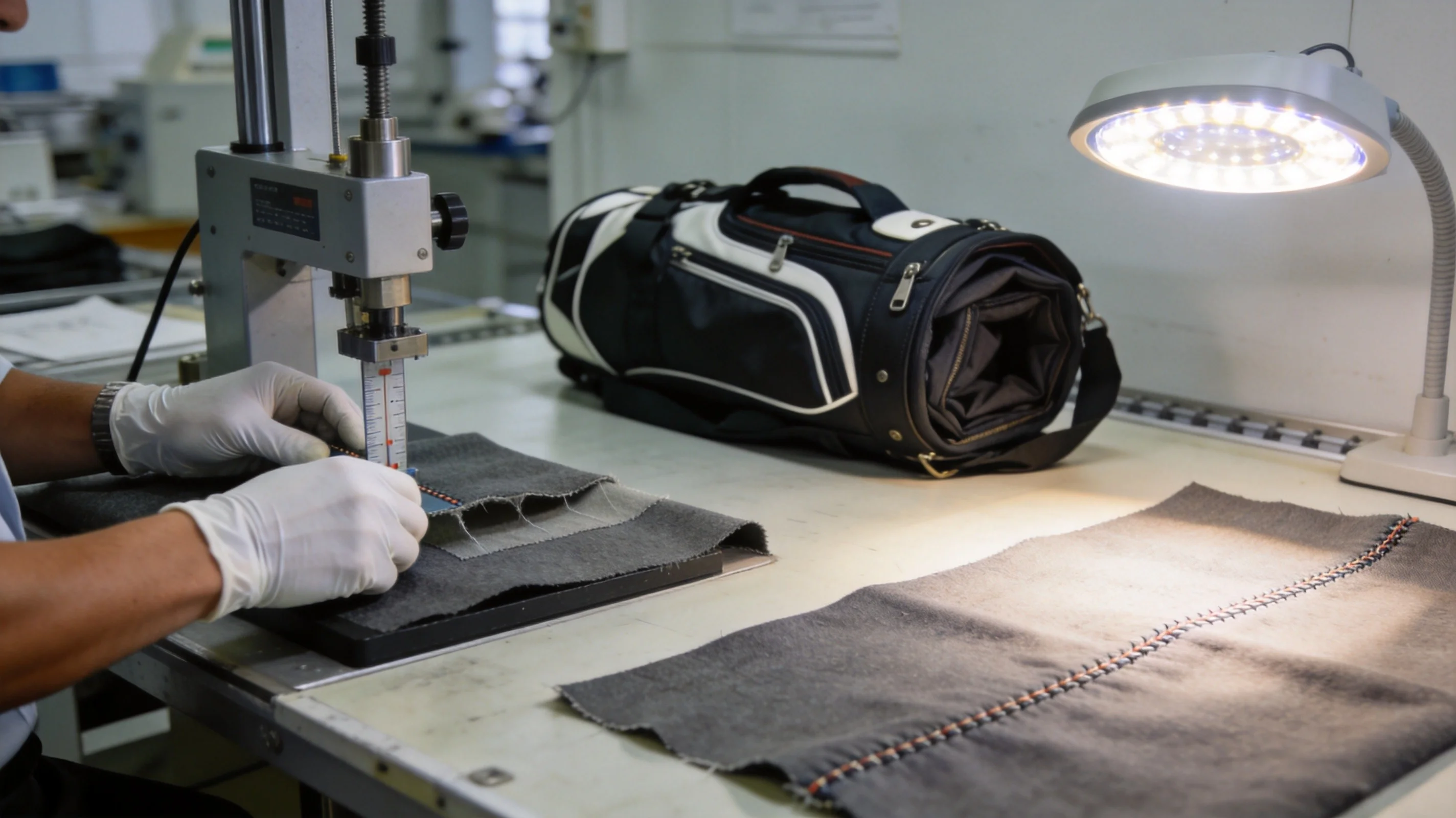
A waterproof specification is only as good as the build that executes it. The difference between a waterproof bag that lasts five years and one that fails in eighteen months is almost always in how the laminate is bonded and how the seams are sealed during production. Inconsistent heat, poor tape adhesion and skipped seam reinforcement produce bags that look right on the outside but leak under sustained water. Because long-term users rely on real protection, choosing a builder with disciplined, inspected waterproof production matters as much as the material specification itself.
Our affiliated factory is built around exactly that discipline. The 4,950 m² facility in Quanzhou runs seven production lines with 126 sewing machines and a team of 137 staff, supporting a monthly production capacity of 200,000 units. The founder entered the golf bag trade in 2004 and the operation was formally established in 2014, accumulating more than two decades of focused experience in waterproof and weather-protection construction. Each batch is subject to SGS factory inspection, last verified in March 2026, providing a verifiable quality backstop for brands sourcing long-life waterproof bags.
That background matters when your brand or your own equipment depends on a bag sealing properly for years. Consistent factory control keeps the three-pillar construction reliable at volume, which is precisely what long-term durability promises.
Sourcing Long-Life Waterproof Bags for Brands
For retailers and brands, the long-term value of waterproofing becomes a sourcing decision rather than a personal purchase. A waterproof line that genuinely lasts protects your brand from returns, complaints and warranty claims that a mislabelled product generates. The discipline is to specify the three-pillar construction in writing, inspect physical samples per colourway, and run a basic water test before committing to volume. A colourway that looks identical can perform differently if material sourcing drifts, so verifying each one catches problems at the sample stage. We own this process for brands sourcing through our OEM/ODM services, with standard runs at a 200-piece minimum and 100-piece test orders supported.
The inspection standards that keep a waterproof line dependable over time are laid out in our quality standards guide. When a factory can demonstrate the construction on a real sample and stand behind the result, you are sourcing from a capable partner rather than gambling on a brochure. That verified reliability is the commercial face of long-term waterproof durability.
Balancing Weight, Price and Protection
No waterproof bag is free of trade-offs, and being honest about them is part of a good decision. Full waterproofing layers up material and construction, adding a little weight and a higher price. Whether that is worth it depends on how much you value dry equipment and how long you intend to keep the bag. A rider who never lifts the bag can accept more weight for stronger protection. A walker must guard against turning the bag into a burden, and may prefer a lighter waterproof laminate. Matching the trade-off to your use is the difference between buying well and overbuying.
Framing it as a value proposition keeps the decision grounded. Ask what the extra weight and price buy in real protection and peace of mind over the years you will own the bag, and compare that against the cost of a damp round or a damaged set. When a waterproof build genuinely protects a valuable kit across a rainy season, the trade is easy to justify. When it merely adds bulk for weather you rarely see, it is an easy trade to skip. Matching cost to the risk you actually face is the definition of buying a waterproof bag for the long term.
Building a Waterproof Bag That Lasts a Decade
Laminated fabric, sealed seams and baffled zippers — engineered and inspected so your equipment stays dry season after season. Custom options for brands that promise longevity.
Explore Waterproof Custom →Waterproof Maintenance Across Different Climates
Long-term waterproof performance is not a fixed property; it is a relationship between the bag's seal and the environment it lives in. In a tropical humid climate, where moisture is present even without rain, the priorities are aggressive drying after every round and ventilation in storage, because humidity alone will eventually test the laminate. In a cool temperate climate, the main threats are rain and cold storage, so drying and protecting the bag from damp garages matters most. In a hot, dry climate, UV exposure and heat become the enemies, and the rule flips to shielding the bag from prolonged direct sun rather than worrying about rainfall.
Adapting your care to the climate is the difference between a waterproof bag that reaches its full lifespan and one that fails early despite being well built. The same sealed construction performs differently whether it meets daily humidity, seasonal storms or relentless sun. Being deliberate about the specific environmental stress you face, and adjusting the maintenance routine to counter it, is the mature way to protect your investment over many years.
Signs a Waterproof Bag Is Losing Its Seal
A waterproof bag rarely fails all at once. More often the seal degrades gradually, and the early signs are easy to miss if you are not looking. Dampness inside a pocket after rain is the first red flag, followed by water beading less on the shell, zippers that feel gritty or grind, and fabric that looks or feels stiffer in patches where the laminate has weakened. Catching these early lets you re-treat or repair before water reaches your clubs, which is exactly the protection long-term owners want.
Learning to read these signals turns waterproofing from a hope into a managed asset. A routine check — run a hand under the bag after a wet round, feel every pocket, inspect the zipper tracks — takes a minute and reveals the health of the seal. When the signs appear, re-applying a fabric waterproofing treatment, cleaning and lubricating the zippers, and drying the bag thoroughly often restores effective protection and extends the working life further. Early intervention is the practical secret of a bag that truly lasts.
At a certain point, however, a worthwhile distinction must be drawn between maintenance and replacement. If the laminate has delaminated, the seams have visibly opened, or a zipper has broken, treatments cannot fix structural failure. There comes a moment when investing a little more to replace the bag is the smarter long-term decision than repeatedly patching a failing seal. Being able to make that call, rather than clinging to a worn-out bag past its useful life, is the essence of good long-term management of any waterproof investment.
The Sustainability Case for Buying Once, Buying Well
Longevity is also a sustainability story. A bag built to last five to ten years keeps itself out of landfill for far longer than a cheaper bag that is replaced every few seasons. Every extra year of usable life reduces the raw materials, energy and transport needed to manufacture and ship a replacement, which makes genuine durability quietly one of the more effective environmental choices a golfer can make. For brands this is increasingly a positioning advantage: a waterproof line that arguably lasts twice as long gives eco-conscious retailers a credible, honest durability message.
The math supports the point. Across a decade, a durable waterproof bag may replace two or three budget bags, cutting material waste and shipping footprint meaningfully over that span. This is why the buying once, buying well principle is now part of responsible equipment selection. Invest in a bag that is engineered and maintained to last, and you simultaneously protect your equipment, your budget and the environment — three returns on a single, well-made waterproof purchase.
Conclusion
There is a strong case that waterproofing is the single most valuable long-term feature a golf bag can carry. It protects your clubs, grips and valuables from corrosion and mildew, it stops moisture from degrading the bag itself, and it spreads its cost across a service life of five to ten years rather than the faster decay of a water-resistant bag. Verified through the three-pillar construction, matched to your climate and maintained with simple care, a waterproof bag quietly safeguards your equipment through every wet season you play.
Sources
Frequently Asked Questions
- How long does a waterproof golf bag last compared to a regular one?
- With proper care a genuine waterproof bag lasts 5-10 years, while a water-resistant bag in wet use decays faster as moisture reaches seams, zippers and base, accelerating mildew and corrosion.
- Does waterproofing add significant weight to a golf bag?
- PU and TPU laminates add modest weight, often well under 0.5 kg versus standard nylon, in exchange for meaningful protection and a longer usable life.
- What actually makes a golf bag waterproof?
- Waterproof laminated fabric, sealed (taped or welded) seams, and sealed or baffled zippers. Missing any one leaves the bag water-resistant only.
- Is a waterproof bag worth it if I rarely play in the rain?
- In humid or dewy climates waterproofing still protects against moisture without heavy rain; in arid regions a water-resistant bag with a rain hood is usually the better balance.
- How do I get the longest life out of a waterproof golf bag?
- Dry fully after wet rounds, store unzipped, keep zippers clean and lightly lubricated, avoid harsh solvents, and re-apply a fabric waterproofing treatment occasionally.
- Does waterproofing protect the clubs or only the bag?
- Both. Dry grips, heads and valuables prevent rust, grip deterioration and mildew, which is why the higher upfront cost of a waterproof bag pays for itself over many seasons.