Best Sunday Golf Bags 2025: The Factory Guide to Lightweight Pencil Bags
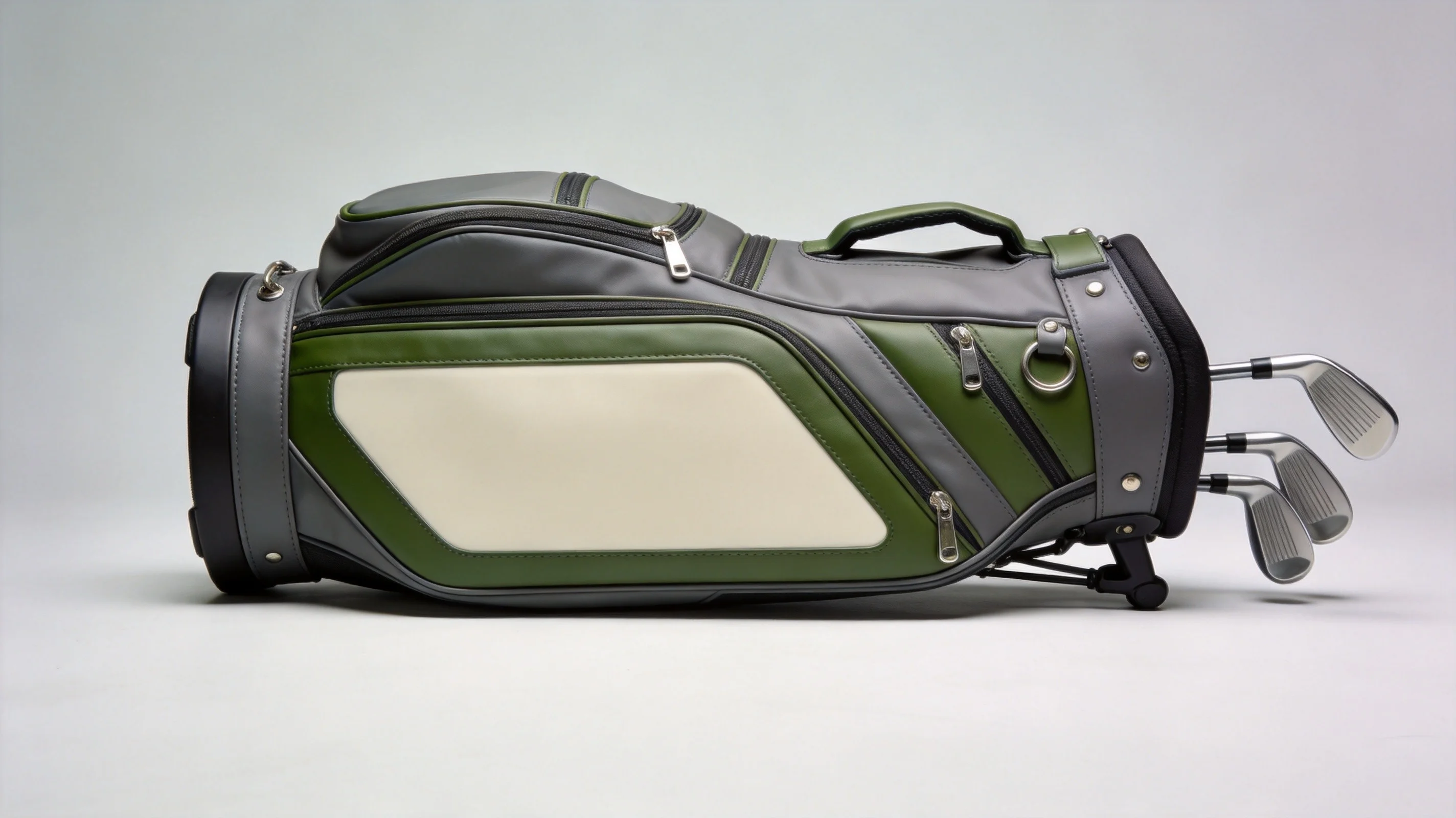
The best Sunday golf bags of 2025 are lightweight pencil-style bags that hold 6-8 clubs, weigh under 3 pounds, carry comfortably for nine or eighteen holes, and still organize a rangefinder, balls, tees and valuables. A Sunday bag strips golf back to its essentials: a small set of clubs, a comfortable carry strap, and nothing you do not need. This guide, written from the factory floor of QUANZHOU JUNYUAN BAGS (an affiliated golf bag factory founded in 2014, serving 200+ brands across 100+ countries), explains what separates a genuinely good Sunday bag from a toy, which specifications matter, and how to source them for personal play or a branded program.
What Defines the Best Sunday Golf Bag in 2025
A Sunday bag — also called a pencil bag or lightweight half-set bag — is the smallest and lightest category of golf carry bag. Its core job is to carry a pared-down set of clubs for a casual round, a par-3 or executive course, the driving range, or a quick nine after work. The design philosophy is minimalism: fewer clubs, less weight, more freedom to walk. That is precisely what has made the category surge in popularity, because more golfers are walking the course again and want to carry less.
The best Sunday bags in 2025 share a consistent set of traits. They keep the empty weight low, typically between 1.5 and 3 pounds. They hold enough clubs — usually 6 to 8 — without letting them rattle. They offer at least a couple of thoughtfully placed pockets for essentials such as balls, tees, a glove, a rangefinder and a water bottle. And they carry comfortably, with a padded or ergonomically designed shoulder strap rather than a bare sling. Getting these fundamentals right is what a good factory sweats over, because a Sunday bag lives and dies by how pleasant it is to actually carry.
When we receive a large-volume order for Sunday bags from a retail brand or pro shop, the buyer almost always has a realistic picture of what the bag must do on course. They ask about club capacity, weight target, pocket count, strap comfort, base durability and decoration area. Those six questions map directly onto what a walking golfer experiences. For a full breakdown of what counts as a Sunday bag and when to use it, see our guide to what a Sunday bag is and when to use it.
How Many Clubs Fit in a Sunday Bag
Club capacity is the single biggest design constraint on a Sunday bag. Because the bag is deliberately narrow and light, it cannot accept a full fourteen-club set the way a stand bag or cart bag can. The practical sweet spot is 6 to 8 clubs, and a well-designed Sunday bag maximizes usability within that limit. A typical half-set might include a driver or 3-wood, a 5-iron, a 7-iron, a 9-iron, a pitching wedge and a putter — six clubs that cover nearly every shot a casual round demands.
The top of the bag, in particular, matters. A simple single-opening or two-way top keeps clubs from twisting, while a slightly segmented 4-way or 5-way top separates the woods from the irons and gives the putter a defined position. Because the bag is narrower, full-length dividers are more important than in a wide bag: they stop the shafts from crossing and tangling, so retrieving a club is fast and frustration-free. Shafts that cross in a narrow opening are the most common annoyance with cheap Sunday bags, and it is exactly what full-length dividers solve.
For golfers who frequently play with seven or eight clubs rather than a strict half-set, a 4-way top offers the best compromise between weight and organization. If you tend to strip your set down to five clubs for a quick range session, a simpler single divider keeps weight minimal. Our breakdown of ideal club capacity for Sunday bags walks through the exact set combinations that work best.
Weight and Portability: The Numbers That Matter
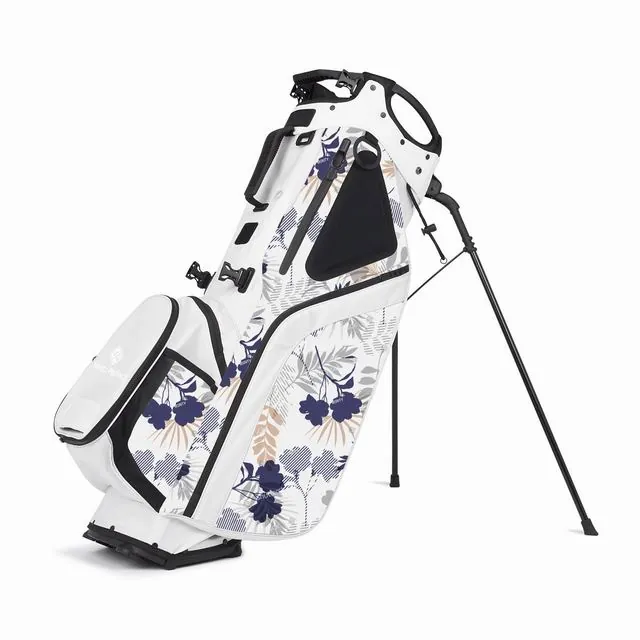
Weight is the defining spec of a Sunday bag. A full staff bag can weigh 5 to 8 pounds empty; a cart bag is often 4 to 6. A Sunday bag should come in at 1.5 to 3 pounds, and the best models sit right at the bottom of that range. How much does that weight saving really matter? A golfer carries a loaded bag for four or five hours over 18 holes, and every pound on the shoulders compounds with every step. Going from a 5.5-pound stand bag to a 2.2-pound Sunday bag can save three pounds of constant load — a meaningful difference in fatigue by the back nine.
But light does not mean flimsy. The best modern Sunday bags reach low weight through smart material selection rather than by cutting structure away. High-tenacity nylon and light denier polyesters keep the shell light while the base and lower panels remain reinforced, because the base takes the abuse when you set the bag down. The strap system is a place where weight is often optimized and comfort added at the same time: a well-padded contour strap distributes load across the shoulder, and a shade lighter hardware package avoids the bulk of full-size buckles.
The other half of portability is how the bag carries when loaded. A balanced bag keeps the club weight centered low and close to your body, so it does not swing or torque on your shoulder. A poorly balanced Sunday bag — too much storage high up, or a top that flares wide — tips and chafes. That is why a factory prototype session focuses as much on how the loaded bag hangs as on how it sews. Our portability test of lightweight Sunday bags lays out the criteria we use to judge a light bag fairly.
Key Features to Evaluate Before You Buy
Because a Sunday bag is small, every feature earns its place or it comes off. The features that matter most in 2025 models are the carry strap, the stand (optional), the pockets, and the hardware. The carry strap is arguably the most important: a narrow, unpadded strap will dig into your shoulder by the third hole, while a padded, contoured strap turns a four-hour carry into a comfortable one. Many of the best options also include a secondary strap mount or a trolley ring so the same bag can ride a push cart for those flatter, faster nine-hole rounds.
A built-in stand divides the category. Classic pencil bags were sling bags with no legs, meant to lean against a tree or wall. The modern trend — led by models like the popular Loma-style bag — adds a lightweight integrated stand so the bag stands on its own in the fairway. For walking golfers who set the bag down constantly, a stand is a genuine quality-of-life upgrade: you no longer bend to lay the bag flat or hunt for a place to lean it. The trade-off is roughly a few ounces of added weight and slightly more structure, so minimalists who only hit the range may still prefer a legless sling.
Pocket count on a Sunday bag is deliberately small — usually two to three. The useful ones are: a ball and tee pocket at easy reach, a valuables pocket with a soft lining for phone, keys and range finder, and on many modern models an insulated drink pouch large enough for a bottle or can. That drink pouch is a difference-maker in hot climates, and it is one of the reasons insulated Sunday bags are climbing in popularity alongside the broader insulated golf cooler category. When we review our premium Sunday bag feature checklist, these are the first items on it.
Sunday Bag vs Stand Bag vs Cart Bag
It helps to position the Sunday bag against the two bags most golfers already own. A stand bag is a full golf bag with built-in legs that carries fourteen clubs, with generous storage, and is designed to be carried for a full round. A cart bag is optimized to ride a riding cart or push cart, with no legs and maximum storage and club density. A Sunday bag is the third option: the lightest carry, the smallest set, and the least storage, aimed squarely at the golfer who wants a walking-first experience without the weight.
The right choice depends on how you actually play. If you walk a full course with a full set, a stand bag is right. If you ride, or push a cart with a full bag, a cart bag makes sense. If you walk a short course, play par-3 and executive layouts, hit the range, or simply want to dial your golf back to the essentials, a Sunday bag is the best fit. Many golfers now own two bags — a full stand bag for serious rounds and a Sunday bag for the majority of casual outings. The Sunday bag vs stand bag comparison settles which is more practical for common situations.
Best Sunday Bag Configurations Compared
| Configuration | Club Capacity | Weight (empty) | Stand | Best For |
|---|---|---|---|---|
| Classic sling / pencil bag | 5-6 clubs | 1.2-2.0 lbs | No | Range, minimal carry, stripped sets |
| Modern stand Sunday bag | 6-8 clubs | 2.0-2.8 lbs | Yes | Walking par-3, executive, casual 9 holes |
| Insulated / cooler Sunday bag | 6-7 clubs | 2.2-3.0 lbs | Optional | Hot climates, longer beverage needs |
Weights reflect representative factory specifications for lightweight Sunday bag builds.
Materials and Build Quality in a Light Bag
Because a Sunday bag is carried against your back and set down in grass and gravel, material choice directly controls both weight and lifespan. The shell is usually a 600D to 840D polyester or a high-tenacity nylon, which is light enough to carry easily and tough enough to shrug off a season of brambles and cart straps. Going thinner than about 600D saves a little weight but risks early tearing at stress points; going much heavier defeats the purpose. A good factory balances the denier to hit a weight target while keeping the base and lower panels the strongest parts of the bag.
The base is where construction quality shows first. When you set a Sunday bag down dozens of times a round, the bottom takes the brunt. A reinforced base pan, heavier bottom panels and skid-protection details keep the bag from wearing through or folding under the load of the clubs. Likewise the top ring: even though the opening is small, it must hold its shape so dividers and club organization do not loosen. Hardware — zippers, D-rings, strap clips — should be rust-resistant, because a light bag that gets rained on is still used daily.
On the manufacturing side, we are careful not to treat "lightweight" as a gimmick. The best Sunday bags are light because the engineering is deliberate, not because corners were cut. That means the seams that carry load are bar-tacked and reinforced, the strap anchor points are oversized, and the material is right for the job. For a deeper look at the fabric and construction choices behind a durable light bag, our materials guide covers the full spectrum from entry to professional grade.
Weather Protection for a Light Sunday Bag
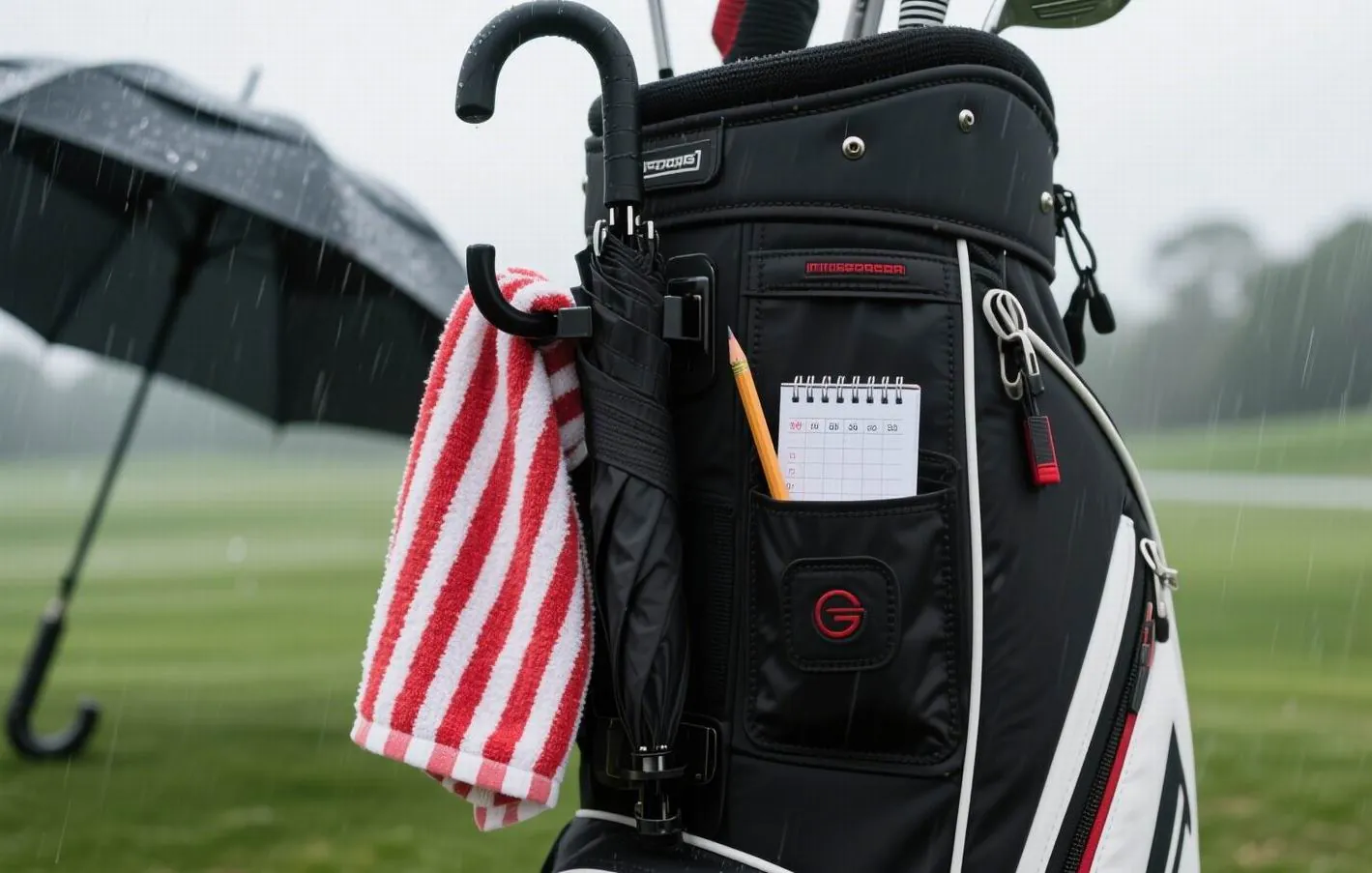
Sunday golfers walk in whatever the afternoon brings, so weather resistance matters more than the minimal construction suggests. Most Sunday bags are water-repellent out of the box: a PU or DWR-coated shell sheds a light shower and keeps your gear dry for a passing drizzle. For golfers in genuinely wet climates, a fully waterproof build with a laminated membrane and sealed seams is available, protecting clubs and the valuables pocket through heavier rain.
A small detail that punches above its weight is the rain hood over the club opening. Because a Sunday bag's clubs are exposed at the top and there is less bulk to shelter them, a detachable or built-in rain cover keeps the grips dry between shots and on the walk between holes. If you play in the Pacific Northwest, the UK or anywhere with afternoon thunderstorms, a waterproof-leaning Sunday bag is worth the small weight premium. We recommend choosing the weather level by your climate — water-repellent for dry, waterproof for wet — and our waterproof golf bag selection guidance can help dial that in.
What to Pack for a Nine or Eighteen
The charm of a Sunday bag is the discipline it enforces. With only one or two pockets and a half-set of clubs, you are forced to think about what you actually need. A sensible packing list for a par-3 or casual nine: your six clubs, six to eight balls, a few tees, your pitch-mark repair tool, a marker, a glove, sunscreen, and a water bottle. That is genuinely everything most casual rounds require, and it frees you from dragging five pounds of "just in case" gear.
For an 18-hole walk with a Sunday bag, add a small snack and a layer for changing weather, both of which tuck into a larger side pocket on models that offer one. Because space is tight, the smart move is to carry the minimum and refill at the turn. This is where the insulated side pocket earns its keep: a cold drink in hot weather is a genuine morale booster on the back nine. Our efficient Sunday bag packing guide lays out the exact load-out that keeps a light bag light.
Matching a Sunday Bag to Your Style of Play
Not every Sunday bag is right for every player, and the match comes down to the kind of golf you play. A committed range regular may want the lightest possible sling with almost no pockets, because the bag never leaves the practice bays. A club golfer who plays a short executive course every week usually wants the modern stand version with a drink pouch and a valuables pocket. A course that hosts twilight leagues often stocks branded insulated Sunday bags that members can buy as a keepsake and use all summer.
Juniors and beginners are a fast-growing audience for the category, because a light bag with a small set is far less intimidating and far more comfortable than a full stand bag they struggle to lift. For juniors, a properly sized, low-weight Sunday bag encourages walking the game early. For beginners, the built-in minimalism teaches course management with a manageable set rather than an overwhelming fourteen clubs. The premium Sunday bag checklist helps you filter features by the exact player you are buying for.
The Versatile Pencil Bag for Par-3 and Executive Courses
Par-3 and executive courses are the natural home of the Sunday bag. These shorter layouts rarely require a full set, and their pace rewards golfers who can move quickly on foot with only what they need. A pencil bag shines here precisely because it is fast to grab, light to carry and easy to stow afterward. Many players keep a Sunday bag permanently in the car or at the club so a quick round after work or on a weekend morning is always available without loading a full bag.
For storage and travel, the Sunday bag's small footprint is a quiet superpower. It fits in a locker, the trunk of a compact car, or a travel cover alongside other gear with no fuss. Because it packs down to almost nothing, it is the easiest bag to bring on a golf trip as a backup or as the main bag for a resort short course. That travel and storage convenience is a growing reason people add one to the rotation, and our Sunday bag storage and travel advantages guide spells out the practical upside.
Custom and Branded Sunday Bags for Programs
For pro shops, courses, academies and corporate events, the Sunday bag is an underrated promotional product. Its compact size and large front panel make it a great branding surface, and because golfers carry it on their shoulder in full view, the logo travels with them across eighteen holes. Custom Sunday bags work for twilight leagues, junior programs, corporate giveaways and course merchandise, and they are economical to produce in volume because they use less material than a full-size bag.
Ordering custom Sunday bags follows the same factory-direct economics as other golf bags. The standard terms we quote are a 200-piece MOQ per design and colorway, with 100-piece test orders for new programs, sampling in 10-20 days and bulk production in 45-60 days. Because the bag is small, the decoration workhorse is screen print or embroidery on the front panel, and the light weight of the canvas makes branding contribute a smaller share of the cost than on a staff bag. For teams and retail programs that want a full family of matching bags — Sunday, stand, cart and travel — bundling through one program keeps branding consistent the way our custom Sunday bag promotions guide describes.
Quality Control and Factory Assurance for Sunday Bags
Even a simple Sunday bag depends on quality control at the seams. Because the bag is used against the body and set down repeatedly, the critical inspection points are the strap anchors, the base, the zippers and the divider alignment. At QUANZHOU JUNYUAN BAGS we validate every Sunday bag lot for strap pull strength, base rigidity, zipper-cycle durability, divider alignment and the bar-tack integrity at every stress point. A light bag that fails at the strap mount is worse than no bag at all, so these checks are non-negotiable.
Our affiliated factory is equipped with 7 production lines, 126 sewing machines and 137 staff, with an output of around 200,000 pieces per month, and in March 2026 the facility passed an independent SGS factory inspection that verifies capability and process discipline. That audit gives retail buyers and program managers third-party confirmation that the lightweight bags they order are made to a consistent, inspectable standard rather than cobbled together. When buyers evaluate a factory for low-MOQ Sunday bag programs, we recommend asking exactly the QA questions our quality control testing guide lays out.
Caring for a Light Sunday Bag
A Sunday bag sees a lot of grass, dust and the occasional drizzle, and a short regular routine keeps it in shape. Knock or wipe dirt off the base and lower panels after each round, because sand works into seams and zippers and is the leading cause of early wear on a light bag. If the bag gets damp or is caught in rain, dry it fully before storing to protect the coating and hardware. Refreshing the DWR water-repellency on the shell once a season restores its rain-shedding ability.
Keep the small pockets tidy and check the zippers and strap hardware occasionally; light bags have small hardware that can work loose if overstuffed. Avoid leaving the bag loaded with heavy clubs in a hot car for long stretches, which stresses the straps and coating. With modest care, a well-made Sunday bag lasts for years of casual use. For a fuller protocol covering cleaning, hardware and off-season storage, the golf bag maintenance guidance covers the steps that keep any bag presentable and functional.
Seven Buying Rules for a Sunday Bag
- Chase the weight target: look for 1.5-3 pounds empty; the lower the better for walking comfort.
- Match club capacity to your course: 6-8 clubs covers par-3, executive and casual rounds.
- Prioritize the carry strap: a padded, contoured strap is the difference between comfort and chafing.
- Decide on a stand: integrated legs help walkers, while range-only minimalists can skip them for weight.
- Use the drink pouch: an insulated bottle pocket is a real asset in warm weather.
- Reinforce the base: a durable base pan and bottom panels outlast repeated set-downs.
- Set a weather level: water-repellent for dry, waterproof for wet climates.
Frequently Asked Questions
- How many clubs fit in a Sunday bag?
- A Sunday bag typically holds 6-8 clubs, usually a driver or 3-wood, a few irons, one wedge and a putter, which is enough for a par-3, executive or casual round.
- How much do Sunday golf bags weigh?
- Most Sunday bags weigh 1.5-3 pounds, making them the lightest golf bag type and ideal for walkers who want to carry a half-set comfortably.
- What is the difference between a Sunday bag and a stand bag?
- A Sunday bag is a lighter, lower-capacity pencil-style bag for 6-8 clubs; a stand bag is a full golf bag with built-in legs that carries 14 clubs. Sunday bags suit short rounds; stand bags suit full rounds.
- Are Sunday bags suitable for beginners and juniors?
- Yes. Their light weight and forced minimalism help beginners and juniors focus on a small set and walk the course without carrying a heavy full bag.
- Can I custom-order Sunday bags with my logo?
- Yes. Standard MOQ is 200 pieces per design and colorway with 100-piece test orders, sampling in 10-20 days and bulk production in 45-60 days.
- Are Sunday bags waterproof?
- Standard Sunday bags are water-repellent. For rainy climates a fully waterproof build with a laminated membrane, sealed seams and a rain hood is available.
- Do Sunday bags come with a stand?
- Classic pencil bags have no legs, but modern models increasingly include a lightweight integrated stand so the bag stands on its own in the fairway. Minimalists can choose a legless version to save weight.
Factory Verdict on the 2025 Sunday Bag
From the production floor, the best Sunday golf bags of 2025 balance four things: low weight, a well-designed club top, comfortable carrying, and a compact set of genuinely useful pockets. The category has moved past simple slings toward modern, engineered light bags that can carry a half-set all day without fatigue — and that has made Sunday bags a smart add-on for both individual golfers and branded retail programs.
QUANZHOU JUNYUAN BAGS has produced lightweight and Sunday-style golf bags since its founder entered the industry in 2004 and the affiliated factory was founded in 2014, backed by a 200,000-piece monthly capacity across 7 production lines. Whether you want one light bag for your own casual rounds or a branded set for a pro shop or junior program, reach us at contact, service@junyuanbags.com, or WhatsApp +86 17750020688.
Looking for a Reliable Manufacturing Partner?
From lightweight Sunday bags to stand, cart and travel bags, our affiliated factory builds professional-grade products factory-direct. Test orders from 100 pieces, sampling 10-20 days, bulk in 45-60 days.
Request a Bulk Quote →