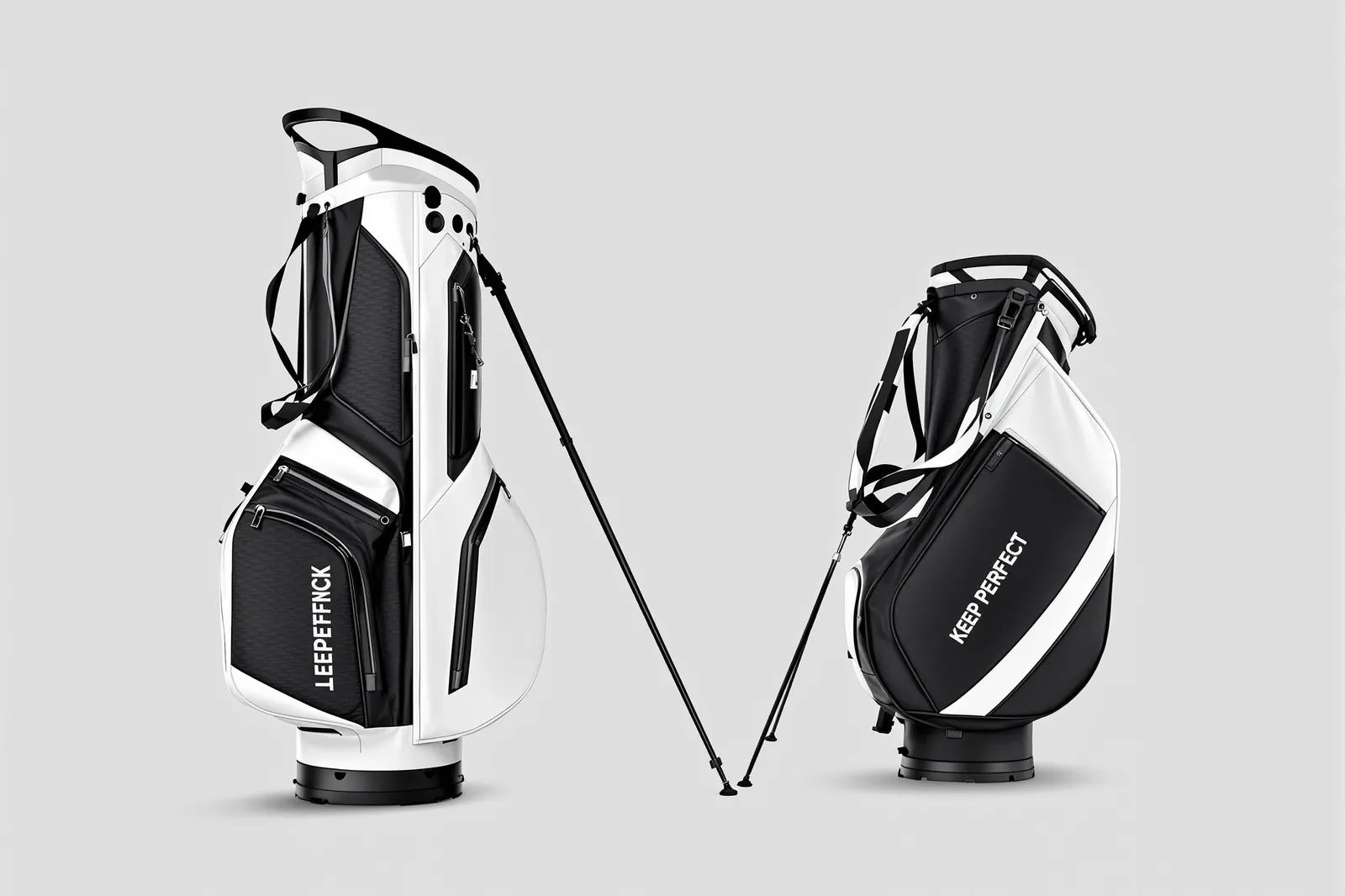
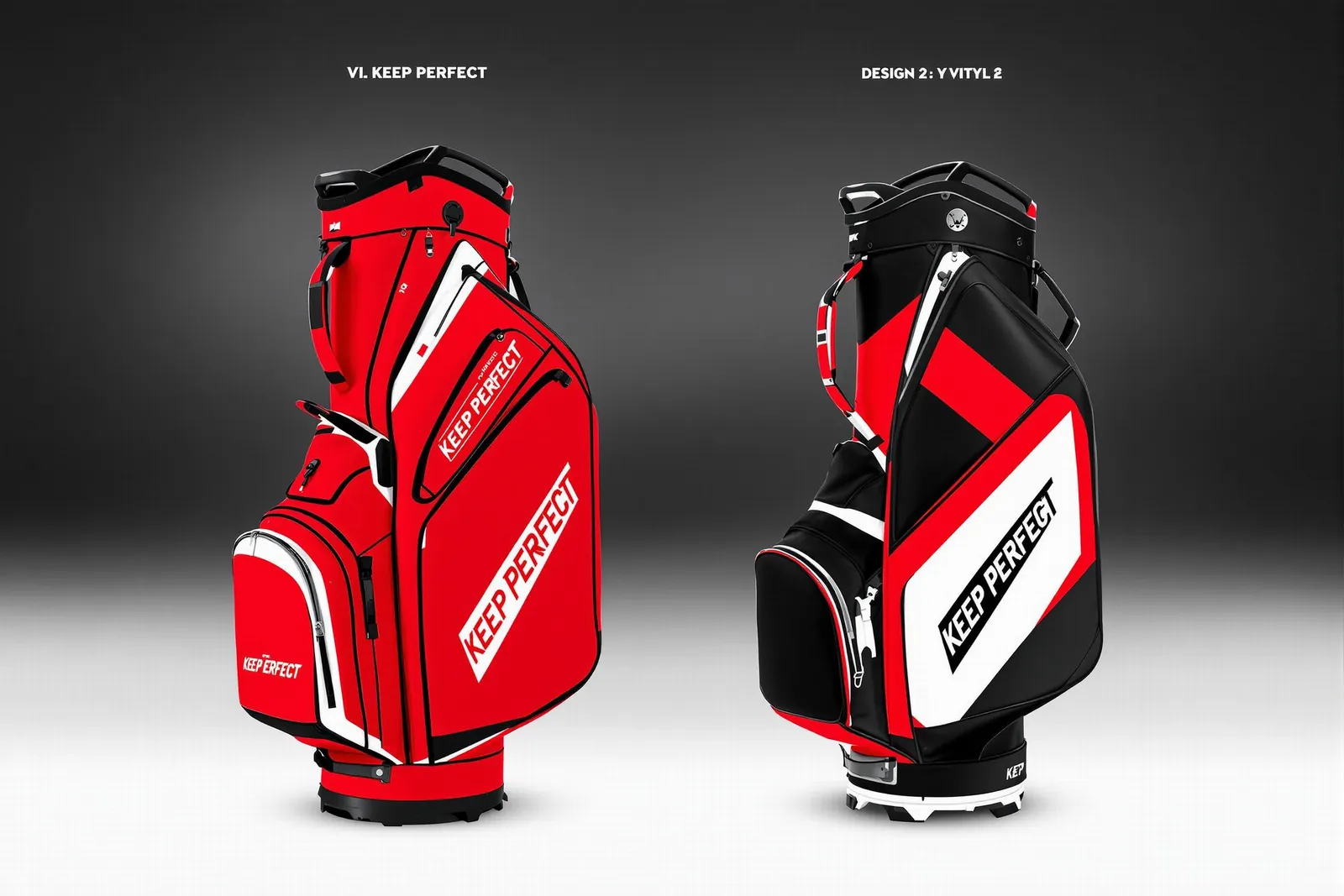
Custom Branding for Golf Bags: Making Your Mark
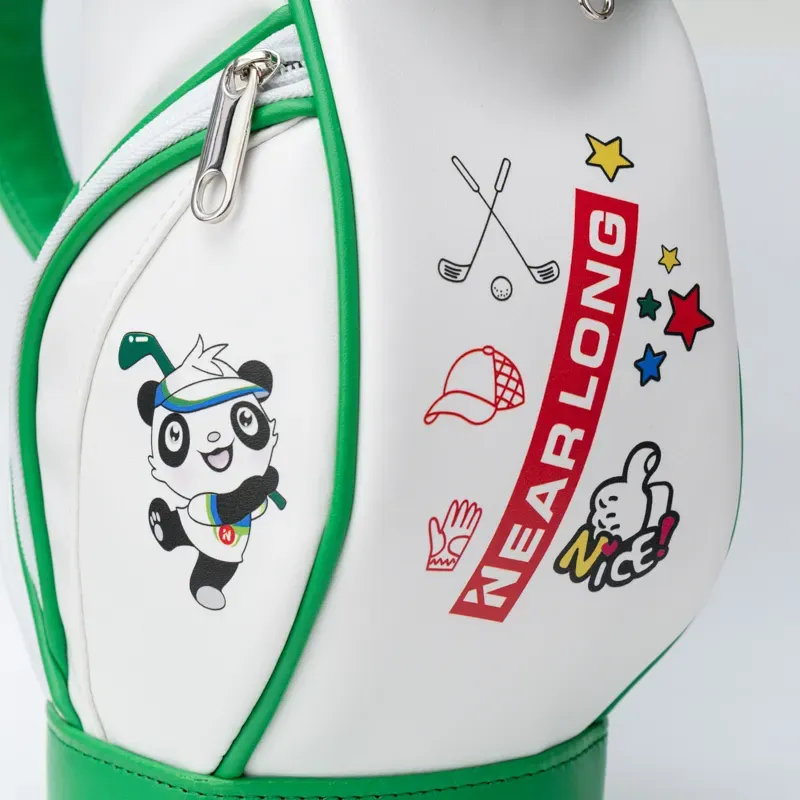
Custom branding for a golf bag works best as a small, repeatable system — a primary logo, a secondary mark, a signature colour, one technique matched to the fabric, and coordinated packaging — because consistency across every bag is what the recipient and the market remember. At QUANZHOU JUNYUAN BAGS, a Quanzhou-based custom golf bag manufacturer founded in 2014 with a founder who entered the bag-making industry in 2004, we have turned brand marks into durable, on-spec product for more than 200 brands across 100+ countries. This guide shows you how to build that branding system, choose the right placement and technique, control colour, protect consistency across seasons, and roll it out across a product line.
Branding a golf bag is not a single decoration decision — it is a system of decisions that must stay coordinated from one product to the next. A golf bag is a large, highly visible, long-lived object, so the mark you put on it runs for years. Getting the system right means the bag looks like it belongs to your brand the moment someone sees it at 20 feet, and it stays legible after years of use. This article walks through the strategic framework — the marks, the colours, the methods, and the packaging — that turns a golf bag into a moving brand asset rather than a one-off print.
Building a Branding System on the Bag
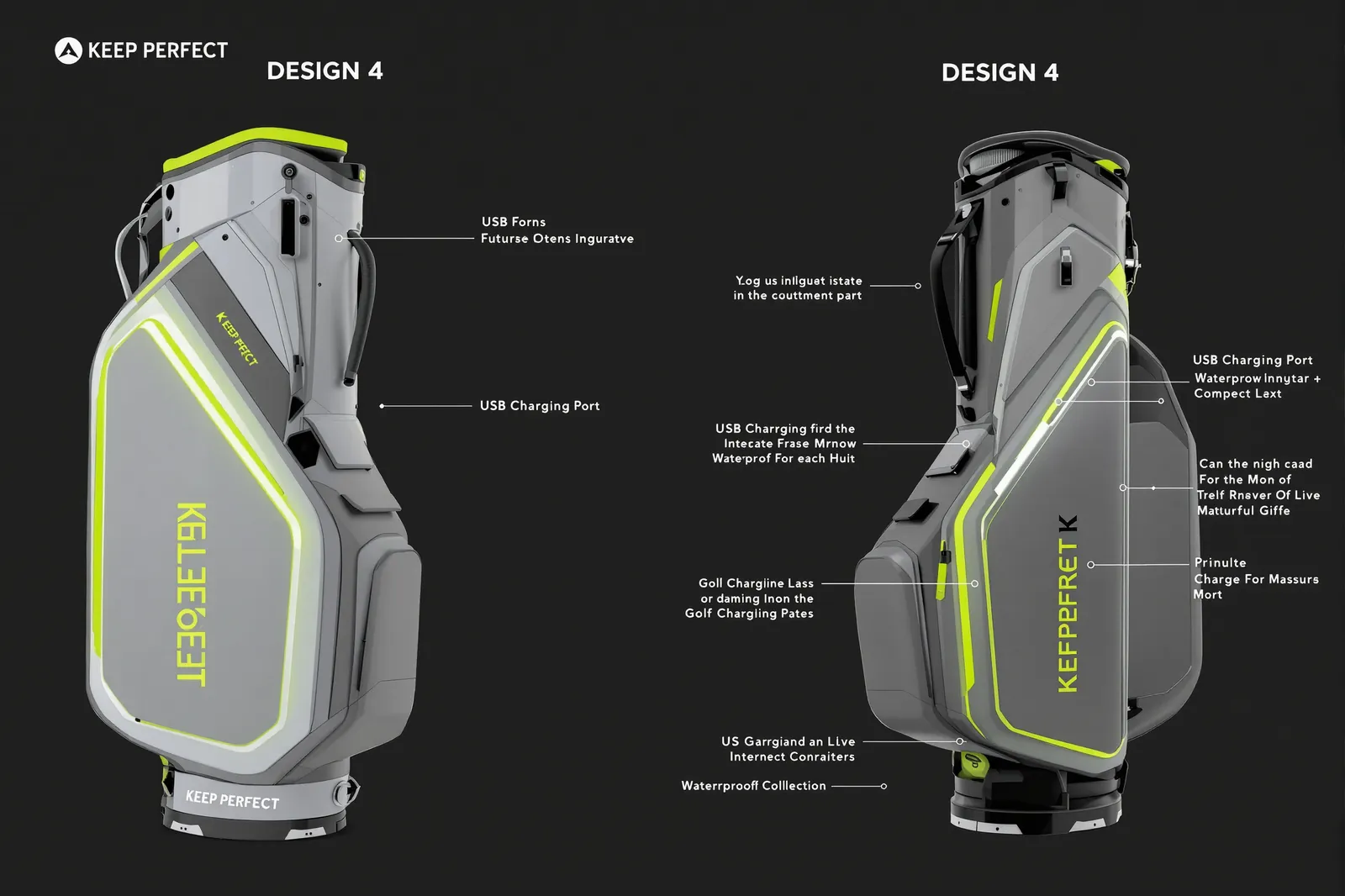
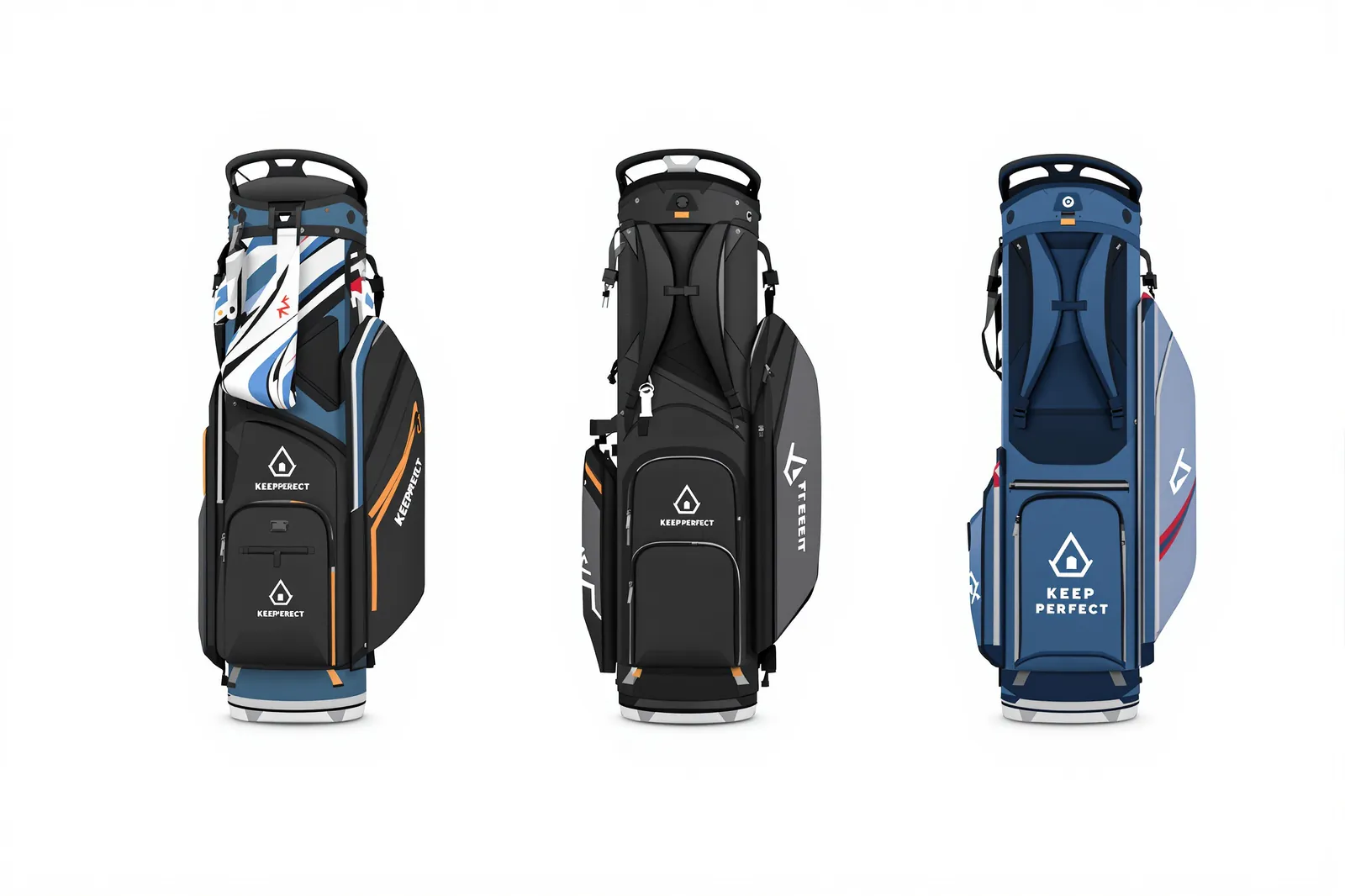
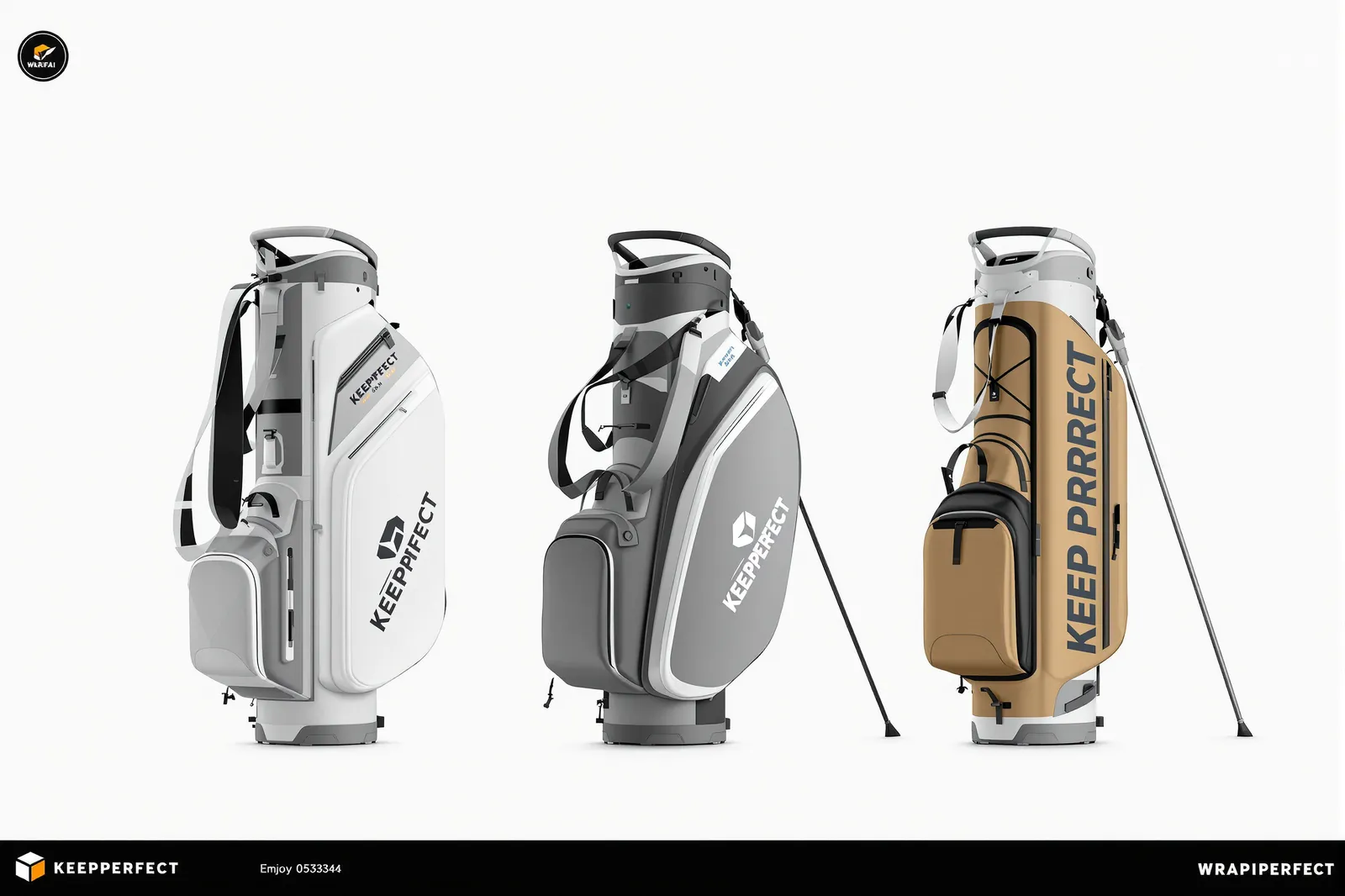
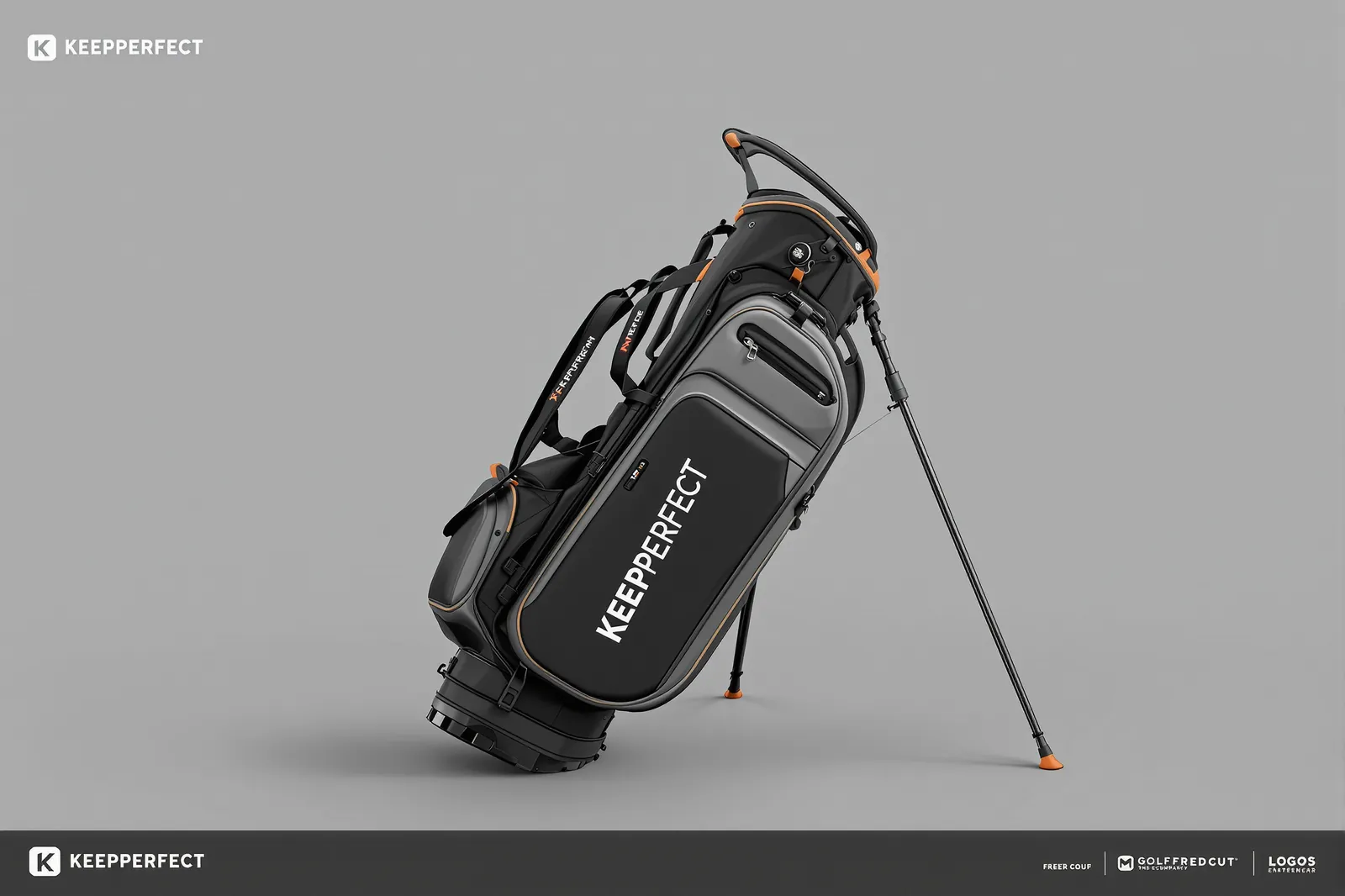
A clear brand system on a bag usually combines a small set of elements. The primary logo carries the brand identity and sits on the most visible panel at chest height. The secondary mark — a monogram, a wordmark, or a tonal repeat — reinforces the primary without competing. A signature colour ties the bag to the broader brand, appearing on the base trim, the piping, the zipper pulls, or an accent panel. Finally, a consistent technique (embroidery, sublimation, or print) is chosen to match the fabric and repeated across the fleet. When all four repeat on every bag, a line of different bag models still reads as one coherent brand.
Why does a system matter more than a single striking logo? Because a brand is recognised by repetition. A golfer who sees the same primary mark, the same accent colour, and the same placement across a cart bag, a stand bag, and a travel bag starts to associate those cues with your brand. If each bag were decorated differently, the line would look like a random assortment instead of a collection. Consistency is the cheapest thing that makes a brand look established, which is why the best factories formalise it in a placement and layout sheet from the start.
The Placement Sheet: Where the Marks Go
A placement or layout sheet is a single document that fixes every mark's position, size, and technique on the bag. A typical sheet for a stand or cart bag maps the primary logo to the upper side panel at chest height, a secondary mark to the lower panel or the base, a tonal mark to the front pocket, and a woven or printed label inside. For a staff bag, the large side panels become the hero canvas and usually carry the biggest mark. Mapping every position in one sheet guarantees the fleet is uniform and gives the factory an unambiguous instruction to work from.
A good placement sheet also captures the specifications: file format and resolution, colour references, stitch or print density, and any size limits. Because it is a live document, it should be shared early with the factory and locked at sampling. This is precisely the discipline we recommend in our deeper guide to the golf bag customization process. With a signed placement sheet, there is no ambiguity when the line produces two dozen different bags — each one inherits the same system.
The Signature Colour and How to Use It
A signature colour is a powerful, low-cost brand cue. By repeating one colour in the bag's trimming — a coloured piping, a base band, accent zipper pulls, or a coloured lining — you tie otherwise different bag types together and reinforce the brand at every glance. The signature colour should derive from your brand palette and be applied consistently, not arbitrarily. A brand whose identity is a deep green might use it on the straps, the base, and the closure pulls across the whole line; a brand known for a bright accent might carry it on the zipper pulls and a single accent panel.
The practical rule is restraint: choose one or two signature placements and repeat them exactly, rather than flooding the bag with colour. Overuse of a signature colour makes the line look loud, while a disciplined accent makes it look designed. Because colour is specified in Pantone and matched on physical swatches during sampling, the same signature colour appears identically on every model and every reorder if the factory logs the formula. This is where the system earns its keep year after year.
| Branding Technique | Durability | Colour Range | Best For |
|---|---|---|---|
| Embroidery | Excellent | Limited thread palette | Primary crest, names, low-colour marks |
| Sublimation | Excellent | Full panel, full colour | Bold wrapped designs on polyester shells |
| Heat-transfer print | Good | Full colour | Economical multi-colour logos |
| Woven label | Excellent | Low colour | Inside branding, small marks |
Choosing among these is part of the brand system rather than a single decision: many bags combine a sublimated panel with an embroidered primary mark and a woven inside label. A table like this also doubles as the specification sheet the factory uses to quote and produce the branding consistently.

Matching the Technique to the Material
The branding technique must match the shell fabric or the mark will fail early. Embroidery suits dense nylon and 1680D panels and handles small, low-colour crests with excellent durability. Screen and heat-transfer printing are economical full-colour options on smooth polyester. Sublimation bonds full-panel colour directly into polyester fibres, so it never peels and supports unlimited colour and gradients. Woven labels handle small inside marks with longevity. The bag type influences the canvas — cart and staff bags give large flat panels good for screen or sublimation, while stand bags' curved shoulders often suit embroidery.
The overriding principle is to place durable, textured marks where the bag flexes and scrapes, and put high-detail, full-colour work where the panel is smooth and stable. A well-designed program often mixes techniques — a durable embroidered crest on the main panel, a full-colour sublimated or printed secondary panel. We explain the full technique-and-fabric matching in custom logo printing and embroidery for all golf bag types. When the material is matched to the method during sampling, the brand mark outlives the season.
Colour Control Across the Brand Line
Colour drift is the quiet killer of brand consistency. Because embroidery thread, printed ink, and dyed fabric each render a Pantone reference slightly differently, a brand that does not control colour at every step will see its green turn teal on one run and emerald on the next. The fix is rigorous Pantone matching against physical swatches on the actual production material, approved under consistent lighting, and logged by the factory. Every model and reorder should be measured against the same approved swatch, not against a screen.
Brands that ship globally should also consider that colours can shift across dye lots and fabric batches. Ordering a reorder against the original batch code and approved swatch prevents visible mismatch between an old fleet and a new one. This level of discipline turns colour from a risk into a genuine brand asset, and it is a core reason to produce a full cohesive line at one factory with one set of standards. Our quality approach is covered in golf bag manufacturing quality control.
Packaging as Part of the Brand System
The brand does not stop at the bag — it continues into the box the customer opens. Coordinated packaging — a printed logo box, a branded drawstring cover, an embroidered patch inside, or a branded hang-tag — elevates the unboxing and reinforces the marks on the bag itself. For retail and gift programs, the unboxing moment is when brand commitment is felt most strongly, and consistent packaging ties the product to the brand promise. Even a simple branded hang-tag with the logo, colour, and care instructions extends the system.
Packaging also affects cost and freight, so it should be designed into the program, not bolted on. A fitted logo cover adds protection for travel bags; a printed rigid box suits retail or gifting; a minimal poly bag suits bulk distribution. Because packaging is specified in the same placement-and-layout mentality, it repeats the signature colour and the primary logo, closing the loop between the bag and its delivery. Our breakdown of where packaging sits in the order lifecycle is in packaging and shipping for bulk golf bag orders.
Rolling Out a Cohesive Product Line
Once the system is defined, a brand can scale it across the entire line. A golf brand often launches a cart bag, a stand bag, a staff bag, and a travel bag under one naming and visual code. With the placement sheet, the signature colour, and the technique locked, every model inherits the same branding system even though the canvases differ. This is how a multi-model line reads as one brand instead of four unrelated products, and it is how retailers and consumers recognise a collection at a glance.
Rolling out a full line also rationalises sourcing: producing the whole line at one factory with one material library and one QC standard keeps colour, logo, and quality consistent across models and makes reorders predictable. It also qualifies for volume pricing and simplifies logistics. If you are planning a full branded collection, our guide to designing a full golf bag collection maps the process from architecture to launch.
Sampling, MOQ and Protecting the System
A branding system is only as good as its enforcement in production, and the enforcement point is the physical sample. At QUANZHOU JUNYUAN BAGS, sample development takes 10–20 days, and you approve a production-matched sample before bulk. Our standard MOQ is 200 pcs per design, with a 100-pc pilot available to validate the branding on a small batch. Bulk production runs 45–60 days. The approved sample becomes the master reference that keeps every subsequent run true to the system.
Protecting the system also means testing. Confirm adhesion, abrasion, and colourfastness of the mark on production fabric, and verify chemical compliance for US or EU markets, requesting the test reports. Because the brand mark is permanent, any of these failures becomes a fleet-wide brand injury. A small screening investment in sampling prevents it. Our step-by-step order and approval gates are laid out in the bulk golf bag order process, and pricing levers in custom golf bag cost factors.
Sustainability and the Modern Brand
Modern brands increasingly want their mark on a responsible product. Recycled polyester shells, water-based inks, reduced packaging, and removable branding allow a brand to keep its system while lowering environmental impact. A sustainable golf bag signals forward-thinking values to customers and partners, and it extends product life when branding can be removed for reuse or donation. If sustainability is part of the brand story, specify these options at the brief so the material library and inks are chosen correctly from the start. More options are in eco-friendly golf bag manufacturing.
Frequently Asked Questions
- What makes a golf bag branding system effective?
- Repeatable elements — a primary logo, a secondary mark, a signature colour, one technique matched to the fabric, and coordinated packaging — applied consistently across every bag. Consistency is what the market remembers.
- How do I choose between embroidery and printing for my brand?
- Use embroidery for small, low-colour, durable crests on nylon or 1680D. Use screen or heat-transfer printing for full-colour marks on smooth polyester, and sublimation for full-panel all-over colour that cannot peel.
- How do I keep my brand colour consistent?
- Supply Pantone references and approve a physical swatch on the actual fabric. The factory logs the thread and ink formulas and matches every model and reorder to the approved swatch.
- What is the minimum order for a consistently branded line?
- The standard MOQ is 200 pcs per design, with a 100-pc pilot available to validate branding first. Sampling takes 10–20 days and bulk production 45–60 days.
- Can I brand multiple bag models as one cohesive line?
- Yes. A placement sheet, a signature colour, and a matched technique let different bag models share one visual code, so the line reads as a single brand. Producing it at one factory keeps it consistent.
- Do you support sustainable branding?
- Yes. Recycled polyester, water-based inks, reduced packaging, and removable branding are available. Our affiliated factory has passed an SGS audit (2026) and documents the compliance markets require.
Brand Voice and Name Placement
Beyond the logo, a bag carries words — the brand name, a tagline, or a program name — and those words deserve the same placement discipline as the mark. The brand name often sits as a wordmark on the lower panel or the front, complementing a logo on the upper panel, while a tagline can appear on the rain hood or a woven label. Keep the type consistent with the brand's voice: a bold, condensed wordmark reads sporty, while a refined serif reads premium. The key is never to crowd the primary logo; give each text element its own zone from the placement sheet so the bag reads cleanly at a glance.
Word placement also affects legibility at a distance. A name on the large side panel of a cart bag is visible from across the parking lot; a name buried in a busy pocket pattern is lost. Choose the font size against the actual panel dimensions and confirm it on the sample. Because words are set in type, they must be specified exactly — font, spacing, casing — and locked with the factory to prevent a mismatch between the design and the final product. Our artwork and placement guidance in the golf bag customization process covers how to brief text placement cleanly.
The Unboxing Moment and Retail Display
For many customers and gift recipients, the brand is judged at the unboxing. A bag that arrives in a plain wrapper undercuts the premium of the branded product inside; a bag that opens from a coordinated, printed box with a branded drawstring cover or a quality hang-tag reinforces the whole experience. Retail display matters too: a brand's logo, colour, and packaging standards together at the point of sale help the bag stand out on a crowded shelf and communicate quality before the shopper unzips a pocket. Because these touchpoints are part of the brand system, we specify packaging at the same time as the bag, not after.
Coordinated packaging has a practical benefit as well: it can double as protection in transit, reduce damage claims, and carry important care and compliance information. A printed logo box or fitted cover designed in the brand's signature colour continues the story after the bag is sold. Whether you are selling retail, gifting executives, or distributing to a team, the unboxing is where brand commitment is felt. Our packaging and shipping for bulk golf bag orders guide details the options and how they integrate with freight and cost.
Common Branding Mistakes and How to Avoid Them
Most branding failures on custom bags follow a few predictable patterns. Supplying low-resolution or intricately detailed artwork that turns to mush at legible size is the most common; the fix is vector files and a simplified embroidery version. Another is trusting a screen for colour instead of a Pantone swatch on the actual fabric, which produces a visible hue shift in bulk. A third is overloading the bag with competing logo placements and text so nothing reads clearly. A fourth is skipping the physical sample and discovering the logo is too small, poorly placed, or unreadable only after the fleet ships. Each mistake is preventable with disciplined artwork, a placement sheet, Pantone swatches, and an approved sample.
There is also a strategic mistake: treating decoration as an afterthought budget. When the logo is permanent, cheaping the technique to save a little per unit risks a mark that peels or dulls and quietly damages the brand for years. Budgeting the master logo zones properly, and choosing durable techniques where the bag flexes, is cheaper than a repair or a reputation fix. Our custom golf bag pricing factors and quality control guides give the checks that catch these errors before bulk production begins.
Keeping a Brand System Coherent Across Models
A brand that offers both a cart bag and a stand bag, or a junior line and a tour line, must keep the logo and colour system coherent across every model or the brand fragments. The practical way is a single master brand system — one logo file package, one placement logic, one colour palette, one decoration technique hierarchy — applied consistently to every product. The cart bag's large panel carries the hero version; the smaller junior bag carries the same mark, not a different one; the inside of every bag carries the same woven label. Repetition builds recognition, and recognition is what a custom brand is actually trying to own.
Consistency pays off in manufacturing as well. When every model draws on the same colour formulas, logo files, and placement rules, the factory prints or embroiders it the same way every time, and reorders match without re-specification. It also simplifies your catalogue and your marketing, because one honest system describes the whole range. Our guide to designing a full golf bag collection and to starting a private-label golf bag line walk through building and rolling out that coherent system.
About the Author
This guide was prepared by the production and sourcing team at QUANZHOU JUNYUAN BAGS, a custom golf bag manufacturer in Quanzhou, China. Our factory was founded in 2014, and our founder entered the bag-making industry in 2004, giving the team 20+ years of hands-on experience. We operate 7 production lines with 126 sewing machines and 137 staff, with a monthly output of about 200,000 units, serving 200+ brands across 100+ countries. For project-specific advice, email service@junyuanbags.com or call/WhatsApp +86 17750020688.
Sources & Further Reading
- USGA Equipment Rules — official golf equipment standards referenced for bag construction and compatibility.
- ISO 9001 Quality Management — the quality standard behind our factory's management system.
- BSCI Social Compliance — the social-compliance scheme referenced for responsible manufacturing.
- SGS Factory Audit — third-party audit completed at our affiliated factory in 2026.
- WIPO Trademarks — intellectual-property guidance for protecting your brand marks.