Eco-Friendly Golf Bags: The Rise of Sustainable Materials

Sustainable golf bags are no longer a niche — recycled polyester (rPET) from post-consumer bottles is now the standard eco option for shells and linings, with 200-piece custom MOQs, 100-piece test orders, sampling in 10-20 days and bulk production in 45-60 days from a factory that completed a 2026 SGS audit.
The golf industry, long associated with immaculate green fairways, has been criticised for the environmental impact of manufacturing, packaging and travel. Golf bags — among the most visible accessories on the course — have become a natural focus for greener product strategy. For a brand or retailer, the question is no longer whether sustainable bags can perform, but how to source them credibly, at sensible MOQs and without sacrificing durability or waterproof performance.
This guide is written from the factory floor of QUANZHOU JUNYUAN BAGS, a Chinese golf bag manufacturer founded in 2014 (our founder entered the golf bag industry in 2004). We explain the materials that actually matter, the certificates that substantiate eco claims, and the practical procurement steps — material selection, decoration, quality control and lead times — so you can launch a genuinely sustainable bag line with confidence.
The Green Revolution in Golf Bag Materials
Golf has historically leaned on synthetic-heavy materials — polyester, nylon and PU coatings — chosen for lightness, strength and weather resistance. The sustainability shift does not abandon those performance needs; it improves how the base materials are made and where they come from. Recycled yarns, cleaner chemistry and better waste management are arriving in standard production rather than one-off, premium-only lines. Because a golf bag carries clubs, rain covers, bottles and valuables for years, durability is an environmental factor in its own right. A bag that holds up season after season delays replacement, so sustainable sourcing is paired with the same stress, abrasion and waterproof testing applied to conventional bags. This is why our factory tests sustainable fabrics to the same standards as any other shell material. Manufacturers serve global markets — QUANZHOU JUNYUAN BAGS supplies 200+ brands across 100+ countries from an affiliated factory with 7 production lines, 126 sewing machines and 137 staff, at a capacity of about 200,000 pieces per month. That scale lets sustainable programs sit inside the same efficient supply chain, keeping eco options affordable at factory-direct prices. You can see the wider context in our golf bag materials guide.Recycled Polyester: The Leading Sustainable Material
Recycled polyester (often called rPET) is produced by processing post-consumer plastic bottles and other polyester waste into new yarn. Compared with virgin polyester, making rPET typically uses less energy and less water, and diverts plastic from landfill — the two reasons it is the backbone of most eco golf bag programs. For golf bags, rPET is most useful in a high-denier weave such as 1680D or 1200D, where its abrasion and tear performance is very close to virgin polyester. It is also used in linings, binding and 600D internal panels. Because recycled yarn is now a mainstream commodity, it is available in the same colors and finishes as virgin fabric, which matters for brand colorway matching. Recycled content must be substantiated. The standard route is a supply-chain certificate such as the Global Recycled Standard (GRS) or Recycled Claim Standard (RCS) run by Textile Exchange, which audits recycled content from the mill through to product. When we quote a recycled shell, we can explain exactly which standard applies and what documentation travels with the order. For a deeper look at how bag materials are compared, see our custom golf bag material comparison.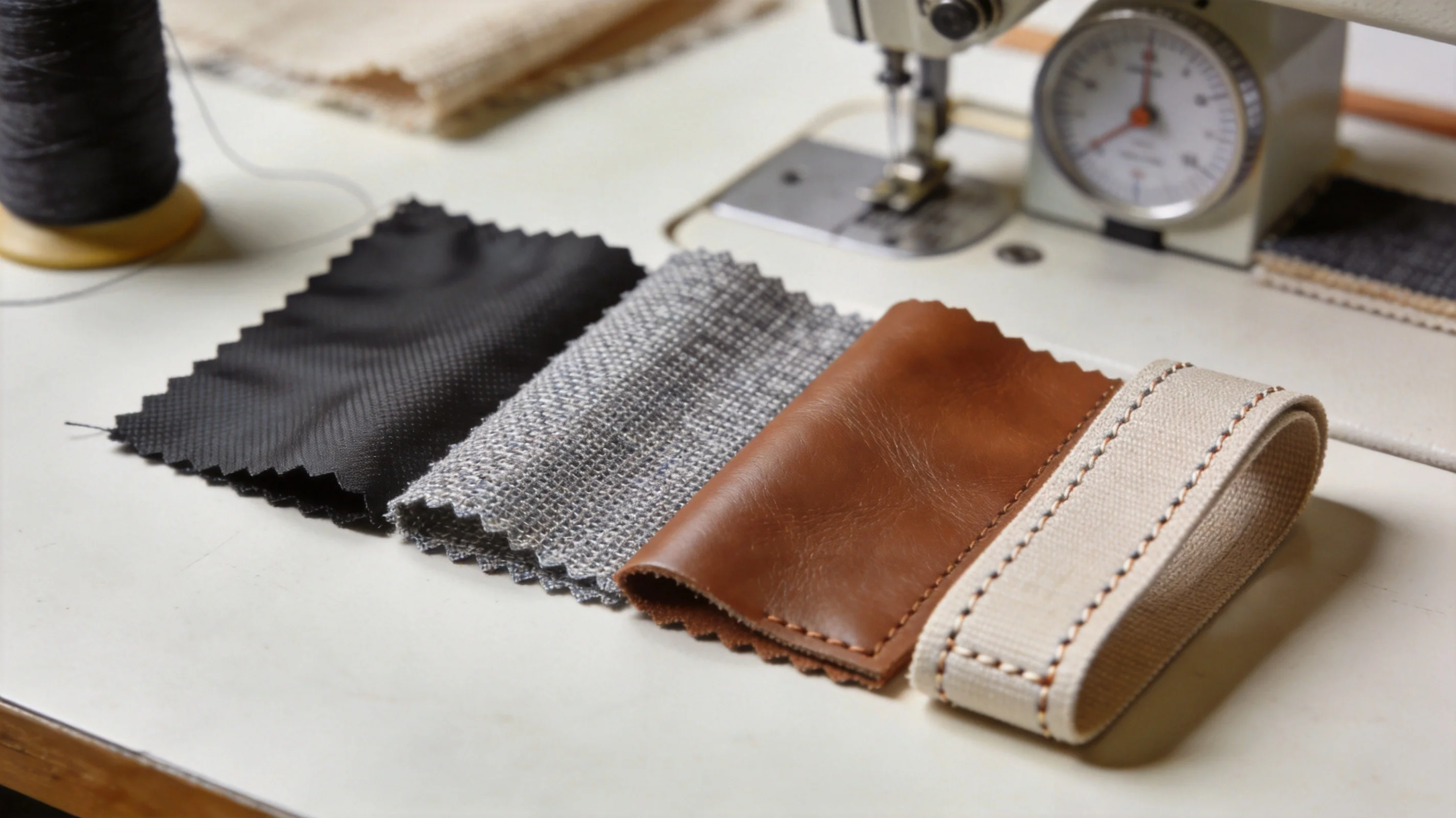
Organic Cotton and Natural Fibers
Organic cotton is grown without synthetic pesticides and fertilizers and without genetically modified seed, in accordance with standards such as the Global Organic Textile Standard (GOTS). It works well for inner linings, soft-touch panels, accents and bag interiors where a natural, breathable feel is desirable. Because cotton is not naturally waterproof, an all-organic outer shell is less common for a golf bag. The practical approach is to use organic cotton for linings and trims while keeping the weather-facing shell in coated recycled polyester, or to combine organic cotton drawers and pocket linings with a protective shell. This balances the natural-fiber story with the durability golfers expect. GOTS also carries social criteria, so choosing GOTS-certified organic cotton supports both environmental and ethical production. Alongside recycled polyester, organic cotton gives brands a second, verifiable sustainability lever. Brands that want a premium natural finish can pair organic linings with recycled shells — a combination covered in more detail in our eco-friendly bag materials guide.Bio-Based and Renewable Materials
Beyond recycling, manufacturers are exploring bio-based and renewable feedstocks: polymers derived from corn or sugarcane, bamboo and fast-growing plants for accents, and mushroom- or mycelium-based components for trim and structure. These drop-in and bio-based materials are most practical today as accents, liners and trims rather than as fully waterproof outer shells. Where a shell uses plant-derived polymer, it is usually blended with recycled or virgin polyester so the bag keeps its strength. Fully bio-based waterproof golf bag shells remain a research-stage niche rather than a mass-market option. For buyers, the honest position is that bio-based components can complement — not yet fully replace — recycled polyester in the shell. When a supplier markets bio-based bags, ask for the specific material, its percentage and any certificate, and compare it against the durability you need. Our eco-friendly design guide explains how these materials fit into a coherent sustainable build.Cleaner Chemistry: bluesign and OEKO-TEX
'Eco-friendly' is about more than recycled fibers; it is also about what chemicals are used to process and finish the fabric. Two tools matter here. bluesign® is a system that audits the whole textile supply chain to eliminate harmful substances and manage resources responsibly, while OEKO-TEX® Standard 100 is a product-level test that screens finished fabrics and components for harmful substances. In a golf bag factory, cleaner chemistry shows up in the dyes, coatings, prints and trims. Greener choices include water-based inks instead of solvent-based plastisols, reduced-chemical PU and TPU coatings, and hardware that meets restricted-substance limits. Ask the factory whether its fabrics carry bluesign or OEKO-TEX data and request the test reports. These are objective, comparable signals that a product is clean to handle and safe for golfers. For the full picture of which certificates to ask any supplier for, read our golf bag factory certifications guide.
Eco-Friendly Decoration and Branding Options
Sustainability extends to how a bag is branded and finished. Water-based screen inks now match the durability of solvent-based inks on most polyester fields, and they avoid chemical solvents in the print shop. Water-based PU transfers and heat-sealed patches are also greener alternatives to some plastisol options. Decoration placement also matters for footprint. A single dominant, well-planned logo zone uses less ink and thread than several scattered marks and reads more clearly at a distance. Embroidery and woven labels remain compatible with recycled fabrics and can be produced with recycled or natural thread options. Finally, packaging is a large, often-overlooked lever. Recycled and recyclable polybags, fewer plastic inserts and lighter cartons reduce the material that leaves the factory with every bag. Brands can request reduced packaging as part of a custom program. Our golf bag branding guide walks through decoration compatibility with sustainable shells.Durability as a Sustainability Strategy
A durable bag is a sustainable bag. If a golf bag survives years of weekly play, it postpones the environmental cost of a replacement — manufacturing, shipping and materials. For this reason, sustainable sourcing at our factory is paired with rigorous testing: stress on straps and handles, abrasion on shell corners, tear strength, zipper cycle counts and waterproof checks on coated fabrics. Recycled polyester, for instance, is not inherently weaker than virgin polyester at the same denier, so a GRS-certified 1680D shell can carry the same load and resist the same wear as a conventional one. Brands should ask for the actual test data behind a durability claim rather than relying on marketing wording. Good quality control also reduces waste inside the factory. Consistent tension settings, careful marker nesting and checking before shipping lower rejection and rework, which is both economical and environmental. Our quality control guide explains the checks behind a durable, sustainable bag.Packaging and Logistics Footprint
Packaging is the quiet contributor to a golf bag's footprint. Each carton, polybag and insert travels with the bag across borders, so trimming it compounds the benefit. Practical measures include recycled-content cartons, recyclable polybags, removal of unnecessary fillers and more efficient carton packing that ships more bags per container. Logistics choices extend further: consolidated shipment, choosing sea over air where time allows, and an affiliated factory model that reduces the number of hand-offs between supplier and buyer. QUANZHOU JUNYUAN BAGS' affiliated factory and in-house production keep the chain short and auditable, which supports both traceability and cost. Because sustainably sourced materials usually depart from the same ports and schedules as conventional ones, choosing eco materials does not inherently lengthen shipping. The main lead-time variable is certified fabric ordering. Our supply chain management guide covers procurement planning in more depth.Factory-Level Sustainability and Social Audits
A credible eco line is backed by how the factory is run, not just what fabric is in the bag. Facility-level checks typically cover working conditions, safety, environmental management and labor practices. A common benchmark is a social-compliance audit by an independent body such as SGS. QUANZHOU JUNYUAN BAGS completed a 2026 SGS factory audit, giving buyers third-party assurance on working conditions and compliance as part of a sustainable sourcing decision. Audit reports are evidence-based and comparable, so they are more reliable than general environmental marketing claims. Pairing factory audits with material certificates (GRS, GOTS, bluesign, OEKO-TEX) gives a buyer a full chain: the raw material is certified, the chemistry is clean, and the facility meets labor and environmental expectations. For a clearer idea of what a finished eco bag still must pass, our quality standards guide lists the headline checks.Consumer Demand and Market Direction
Consumer pressure is real and rising. Surveys repeatedly show that a majority of golfers and consumers are willing to pay a modest premium for more sustainable products, and that they increasingly check recycled content, certificates and brand environmental values before buying. These preferences are strongest among younger players and are spreading across the market. For B2B buyers, this translates into a commercial argument: offering an eco-friendly line helps retailers and pro shops position against competitors, and helps brands answer corporate sustainability questionnaires that now appear in tenders and retailer onboarding. Because eco options can be added to a standard 200-piece MOQ (with 100-piece test orders), a brand can pilot a sustainable version of an existing style before committing to full scale — a low-risk way to test demand. To see where the wider bag market is heading, our global golf bag market analysis offers context.Conclusion: The Future of Sustainable Golf Bags
The future of golf bag sustainability is a continuum rather than a single material. Brands will mix recycled polyester for the shell, organic cotton for linings, bio-based trims, water-based decoration and reduced packaging, all verified by certificates and factory audits. This is not a sacrifice in performance — clean and recycled materials already meet the durability and waterproof needs of active golfers. At QUANZHOU JUNYUAN BAGS, sustainability sits inside practical procurement: 200-piece MOQs, 100-piece test orders, sampling in 10-20 days and bulk production in 45-60 days, from an affiliated 2014-founded factory backed by a 2026 SGS audit. We quote direct and ship to North America, Europe, Japan and beyond at service@junyuanbags.com or +86 17750020688. Whether you are a brand launching a first eco line or a retailer adding a certified option, the same logic applies: define your claim, verify it with certificates, and work with a factory whose materials, MOQ and lead times are stated plainly. The green revolution in golf is well underway, and the winning bag is the one that is both sustainable and genuinely built to last.How to Avoid the Common Eco-Material Pitfalls
Most mistakes in sustainable sourcing come from claims without evidence. A brand may proudly show a 'recycled' label that no certificate supports, or choose an organic fabric that is unsuited to an outdoor shell. Both are avoidable when materials are chosen by role and verified by document. A second pitfall is treating sustainability as a single-material story. Buying a recycled shell while finishing it with solvent-heavy inks and bulky packaging undercuts the claim. The credible bag addresses fabric, chemistry, decoration, trims, packaging and durability as one coherent system. Finally, avoid lead-time surprises. Certified or specially ordered sustainable fabrics can add procurement time. Flagging the sustainable spec early — ideally at the inquiry stage — lets the factory plan around it so sampling still hits the 10-20 day window and bulk production stays within 45-60 days. Working with a partner that manages this timeline, like QUANZHOU JUNYUAN BAGS, keeps the eco switch low-risk.Verification, Samples and Quality Control for Eco Lines
An eco golf bag deserves the same quality control as a conventional one, plus checks that document its sustainability. In addition to standard stress, abrasion, tear and waterproof tests, a sustainable line should carry its certificates: the recycled-content certificate, the chemistry data and the facility audit. Sampling is the moment that verification comes alive. Request a sample built with the exact eco bill of materials, examine the fabric hand, color and decoration, and ask for the supporting documents that accompany that specific lot. This is where subtle issues — color difference across recycled lots, coating adhesion on recycled fabric — surface early. Testing does not stop at the sample. In production, the factory holds the same standards for the sustainable line: consistent dye lots, verified recycled content, and the restricted-substance compliance that chemistry certificates assert. Our quality control guide outlines the full battery of checks a responsible eco line undergoes.The Real Cost Story of Sustainable Materials
It is worth being precise about the cost of sustainable materials, because the perception often outruns the reality. Recycled polyester is now priced close to virgin because rPET supply is large and stable; GOTS organic cotton and certified trims add more, but the increases are usually modest at factory-direct prices. Cost depends heavily on order structure. A 200-piece MOQ with a 100-piece test order spreads certification and setup efficiently; smaller runs bear more of that overhead per unit. Consolidating a sustainable line with other production in one order also spreads shipping and reduces per-bag logistics cost. In budget terms, the value extends beyond the unit price. A verified eco claim earns retailer listings, answers corporate sustainability questionnaires, and supports premium positioning. Brands that treat certificates as part of the product, not an afterthought, convert a small material premium into a measurable commercial return.Sourcing Partners Who Handle Sustainability Properly
Not every factory treats sustainability as a standard capability. Some quote it as a premium side-project with long waits; others integrate recycled fabrics, cleaner chemistry and audit into ordinary operations. The difference shows up in price, lead time and documentation quality. When you shortlist partners, ask how they source certified fabrics, whether they hold current material certificates, and how they back claims with a facility audit. A factory that assembles the documents by default — without you chasing them — is the one that will protect your brand during retailer questioning. QUANZHOU JUNYUAN BAGS approaches sustainability as a normal part of quoting: recycled shells, organic linings and clean chemistry are specified like any material, priced transparently, and documented with certificates and a 2026 SGS audit. That normalization is exactly what makes eco sourcing feel routine rather than risky.Reading the Numbers Behind Eco Claims
The numbers behind eco claims deserve a hard look. A statement like '50% recycled polyester' should be tied to a certificate and a consistent basis — is it 50% of shell weight, or of the whole bag including hardware and zippers? Ask for the calculation basis so the number means what you think it does. Durability numbers deserve the same discipline. A 'waterproof' claim is only meaningful with the coating specification and the test method behind it. Abrasion and tear figures should carry the fabric construction and denier so a 200-piece run at the factory reproduces the tested performance. Precision protects both buyer and supplier. When a claim carries its evidence and its basis, it survives inspection; when it floats without one, it hurts whoever repeats it. Reading numbers carefully is the practical edge in sustainable sourcing, reinforced throughout our materials guide.Scaling from a Pilot to a Full Sustainable Line
A common, sensible pattern is to pilot sustainability before scaling it. Order a 100-piece test run of an existing best-seller converted to a recycled shell and organic lining, validate performance, decoration and customer response, then roll it into the full product range at the standard 200-piece MOQ. The pilot teaches what certificates to display, which claims customers respond to, and whether the eco version sells at the planned price. It also builds the documentation file that larger orders and retailer questionnaires will demand. Scaling is straightforward once the pilot works, because the eco bill of materials is already specified and tested. QUANZHOU JUNYUAN BAGS supports the whole ladder from 100-piece pilot to full-range production, keeping sampling in 10-20 days and bulk in 45-60 days throughout.Outlook: Where Sustainable Golf Bag Materials Are Heading
The direction of travel is clear: recycled content will keep rising, blends will thin as recycled yarns improve, bio-based components will move from trim toward structure, and chemistry will get cleaner and better documented. Each step makes sustainability cheaper, stronger and easier to verify. Regulation will accelerate this. As major markets tighten requirements for textile content tracing and restricted substances, certified recycled and organic inputs become not just desirable but necessary for compliant export. The factories ready for this will win the compliant orders. Brands that adopt verified eco materials now are positioning ahead of both consumer demand and regulation. The materials roadmap is moving steadily, and a factory with 7 lines, 126 machines and quarterly sustainability capability is well placed to move with it.Sustainable Golf Bag Material & Certification Comparison
| Material / Claim | Best Use in Bag | Verification | Durability Note |
|---|---|---|---|
| Recycled Polyester (rPET) | Shells, linings, binding, 600D-1680D | GRS / RCS | Comparable to virgin at same denier |
| Organic Cotton | Linings, trims, soft-touch panels | GOTS | Natural feel; needs shell for weather |
| Bio-based Polymer | Trims, buckles, some linings | Supplier material data | Usually blended for strength |
| Cleaner Chemistry | Dyes, coatings, water-based inks | bluesign / OEKO-TEX Standard 100 | Safety & restricted substances |
| Recycled Trims/Hardware | Zipper tape, some mouldings | GRS / RCS | Function preserved |
| Factory Compliance | Whole facility | SGS social-compliance audit | Labor & environment assurance |
Looking for a Reliable Sustainable Manufacturing Partner?
Whether you need rPET shells, GOTS organic linings, recycled trims or cleaner chemistry, our team can bring a verified sustainable golf bag to life at factory-direct pricing. Test orders from 100 pieces, sampling in 10-20 days, bulk production in 45-60 days, backed by a 2026 SGS audit.
Request a Sustainable Bulk Quote →Frequently Asked Questions
- What is the most common sustainable material in golf bags?
- Recycled polyester (rPET) from post-consumer bottles is the most widely used sustainable fabric in golf bag shells and linings, offering durability close to virgin polyester with a lower environmental footprint.
- Does recycled polyester for a golf bag need a certificate?
- A credible claim needs third-party traceability. The Global Recycled Standard (GRS) or Recycled Claim Standard (RCS) from Textile Exchange is the usual way to verify recycled content in a bag.
- Is organic cotton a good shell fabric for golf bags?
- Organic cotton works well for inner linings, accents and soft-touch panels, but for a water-resistant outer shell it is usually coated or combined with synthetic fibres for durability.
- What does OEKO-TEX Standard 100 test in a golf bag?
- It is a product-level test that screens fabrics, zippers, hardware and findings for harmful substances, so it can be applied to components and finished bags.
- Are eco-friendly golf bags more expensive?
- Verified sustainable materials can add a modest cost premium, but batch optimisation, MOQs from 200 pieces (test from 100) and thin sourcing usually keep the increase small at factory-direct prices.
- How do I verify a factory's sustainability claims?
- Ask for certificates, material test reports and a facility-level audit such as a 2026 SGS social-compliance audit, and confirm whether the mill or supplier is certified.