Choosing the Right Golf Bag: Stand, Cart, Sunday or Tour
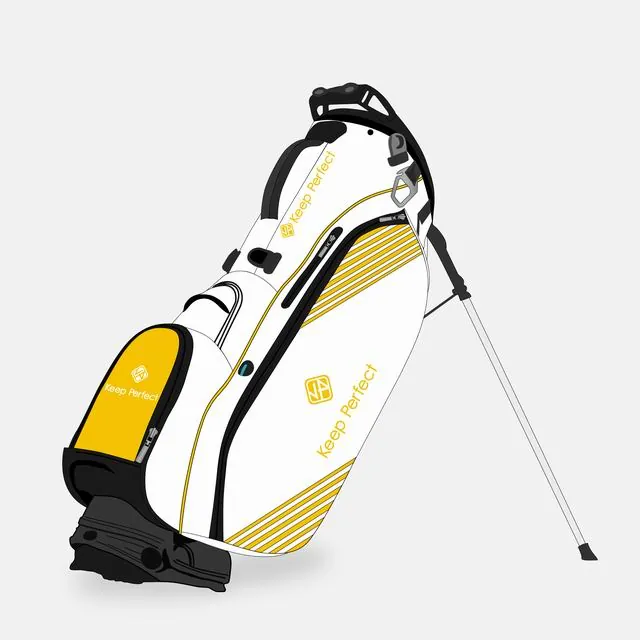
Choose your golf bag by matching it to how you actually play: buy a stand bag if you walk most rounds and want portability and on-course convenience, a cart bag if you usually ride and want maximum storage, a lightweight Sunday bag for quick nine-hole rounds and the range, and a tour bag only if you need pro-level capacity for a very full set and lots of gear. This decision follows the three variables that matter most - how you transport the bag, how many clubs you carry, and how much storage you need - not the badge on the front. At our affiliated factory, QUANZHOU JUNYUAN BAGS (founded 2014, our founder active in the industry since 2004), we build all of these types for 200+ brands across more than 100 countries, and this guide reflects how we advise buyers to match bag type to play style.
The Three Questions That Decide Your Bag
Before considering brand, style or colour, answer three practical questions. First, do you mostly walk or mostly ride? This is the biggest single factor, because it decides between a carry bag and a cart bag. Second, how many clubs do you actually carry? A full set of 14 needs a full-size bag; a minimal set is fine in a lighter model. Third, how much storage do you need for balls, layers, rain gear, drinks and valuables?
Answering these three questions narrows the field dramatically and points you to one clear type of bag. Everything else - the brand, the colour, the specific features - is a refinement on top of that core decision. Golfers who skip the basics and buy on looks often end up with a bag that does not match how they actually play, so it is worth thinking through the three questions first.
The good news is that once you have the right type, the market is full of well-made options, so you can focus your energy on features within the right category rather than hunting for a mythical all-rounder.
Stand Bags: For the Player Who Walks
A stand bag is built for walking. It has a folding leg mechanism and a padded back panel, so you can set it down anywhere and stand it upright, and carry it comfortably across the whole round. The shoulder straps are typically dual and padded, and the bag keeps its shape without a cart to lean against. For the player who walks most rounds, a stand bag is the natural primary choice.
Stand bags are lighter than cart bags and designed to be carried, so portability and balance are priorities. Modern stand bags still offer a good range of pockets and full-length dividers, so walking players do not sacrifice organisation for portability. The trade-off is that a stand bag usually carries less total storage than a cart bag, which matters if you need to haul a lot of gear.
Walking is one of the healthiest ways to play golf and a stand bag makes it comfortable, so if walking is your game, this is your bag. For detail on the mechanics that matter in a carry bag, see our how stand bags improve posture guide.
Cart Bags: For the Player Who Rides
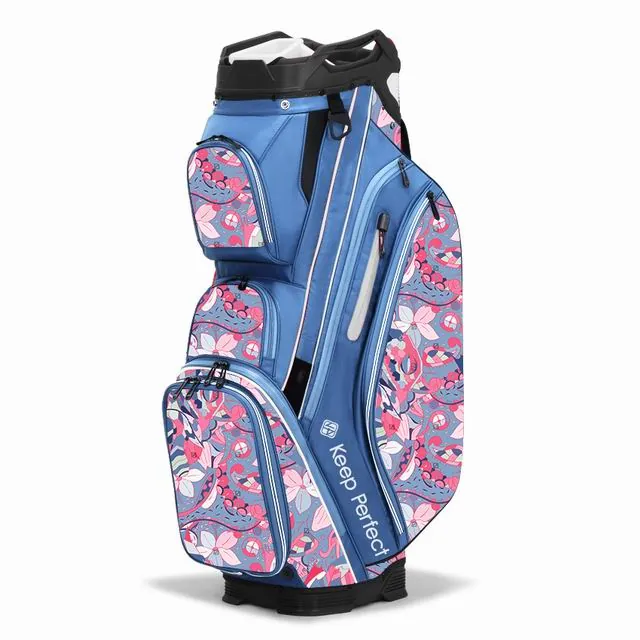
A cart bag is built for riding. It is designed to sit securely on a powered or pull cart, usually has more storage than a stand bag, and is heavier because you do not need to carry it. Cart bags often feature 14-way full-length dividers for maximum club protection and a generous pocket layout for all-day gear, drinks and layers.
Because the cart carries the weight, a cart bag can prioritise convenience and capacity over portability. That means more pockets, roomier storage, and the peace of mind that every club sits in its own slot. For the majority of recreational golfers who ride, a cart bag is the simplest, most comfortable and most convenient choice.
If you alternate between walking and riding, consider a cart-compatible stand bag that does both well, or keep both types and switch by how you play each day. Our stand bag versus cart bag comparison goes deeper on when each fits best.
Sunday Bags: Light and Quick for Short Rounds
A Sunday bag (sometimes called a pencil, junior or six-way bag) is the minimalist option, designed to carry just a handful of clubs for a quick nine, a casual round or the practice range. It is very light, compact and easy to carry, and it suits the player who wants to move quickly without hauling the weight of a full bag.
The trade-off is capacity: a Sunday bag holds far fewer clubs and much less storage, so it is not the right primary bag for a player who regularly carries a full 14-club set or lots of gear. But as a second bag for short, casual golf, travel or the range, it is one of the most convenient purchases a golfer can make.
For the golfer with a full-size bag at home, adding a Sunday bag for quick midweek nines and practice is a genuinely useful upgrade. For more, including how to use one efficiently, see our Sunday bag guide.
Tour (Staff) Bags: Pro-Level Capacity
A tour bag, also called a staff bag, is the largest type, built for professional or very serious players who carry a full complement of gear. It holds a full 14-club set with generous room to spare, carries the widest range of pockets for layers, snacks, drinks and equipment, and projects a premium, professional look. It is most often seen on tour and around clubhouses.
The trade-off is weight and bulk. A tour bag is the heaviest and largest type because it is not meant to be carried around the course - it normally rides on a cart or caddy buggy. For the everyday golfer, the extra capacity rarely earns its way against the weight, so tour bags are usually chosen for occasions, sponsorship, or clubhouse presentation rather than daily recreation.
If you need professional-level capacity or want that presentation, a tour bag is right. For most recreational play, a stand or cart bag gives the same club protection with much less weight. For those occasions when the full presentation matters, a tour bag is a strong choice.
Weight, Dividers and Pockets: The Features That Matter
Within the right bag type, three feature decisions matter most: weight, dividers and pockets. Weight is critical if you carry - a lighter bag is dramatically easier over eighteen holes, so walkers should weight portability heavily. Dividers control club protection and speed - full-length dividers and 14-way tops give every club its own slot, ideal on a cart bag. Pockets set how organised you can stay.
Balance the features against your needs rather than maxing every one. A walker who never carries a full set does not need the heaviest pocket layout, and a rider who wants simplicity does not need the maximally organised system. Match the feature priorities to how and where you play, and the bag will reward you every round.
For guidance on capacity and fitting the bag to your set, see our golf bag sizing and fit guide, and for dividers specifically our divider comparison.
| Bag Type | Best For | Club Capacity | Trade-off |
|---|---|---|---|
| Stand bag | Walking most rounds | Full 14 | Less storage than cart bag |
| Cart bag | Riding most rounds | Full 14 | Heavier, not for carrying |
| Sunday bag | Quick nines, range, travel | 6-10 | Very little storage |
| Tour / staff bag | Pro-level capacity, presentation | 14 + spare | Heaviest and largest |
Matching the Bag to Your Play Style in Detail
Beyond the four core types, match the bag precisely to how you play. If you walk and like to keep things minimal, a lightweight stand bag with less capacity suits you. If you walk and carry everything, a fuller-featured stand bag with more pockets is better. If you ride recreationally, a sensible cart bag covers you comfortably; if you ride in tournaments, a 14-way cart bag keeps every club protected.
Consider also the season and course. In warm months you carry more hydration and sun protection; in cool months more layers and rain gear. A bag with the right pocket count keeps you organised through all of it. Think about how often you travel too - if you fly with your clubs, a stand or cart bag that fits a travel cover saves hassle. For travel guidance see our golf bag travel and airline guide.
Common Mistakes When Choosing a Golf Bag
The most common mistake is buying on looks or brand rather than matching the bag to how you play. A beautiful cart bag does not help a committed walker, and a light Sunday bag cannot hold a full tournament set. A second common error is underestimating storage needs, so a golfer ends up constantly running out of room. A third is ignoring weight, which hurts walkers over long rounds.
Avoid these by answering the three questions first - transport, club count, storage - and letting the answer pick the bag common rate your needs against the handful of types. Once you have the right type and the right feature priorities, you can compare brands with confidence, knowing you are choosing within the correct category.
Budget and Value: What to Spend on a Bag
A golf bag is a long-term purchase, so value matters as much as price. A well-made bag with quality materials, robust zippers, a solid base and good padding can last 5-10 years with care, which spreads the cost of even a mid-to-premium bag across hundreds of rounds. Cheaper bags may look similar but often wear faster in zippers, seams and base, costing more over time.
Focus on the durability features that genuinely last, and buy a bag that matches your use so you do not overpay for capacity you will never use or underpay for a bag that cannot do the job. The right value is a well-built bag of the correct type at a fair price, not simply the cheapest or the most expensive. For more on price, our wholesale and pricing guide explains how build drives cost.
Why the Manufacturer Matters
Behind the brand, the manufacturer determines how well the bag is actually built. Consistent quality, robust materials and reliable construction come from the factory, and this is where the difference between a bag that lasts and one that does not is really decided. Working with a dependable manufacturing partner is the difference for both brands and buyers.
At our affiliated factory we build all four bag types across 7 production lines with 126 sewing machines and a team of 137 employees, to a monthly capacity of around 200,000 pieces, and every order passes a documented quality-control stage. That consistency, plus the fact we have passed an SGS factory audit in March 2026, is what gives brands confidence in the bags we produce. For how a factory builds lasting bags, see our quality standards guide and our OEM/ODM process guide.
Need the Right Bag for Your Brand or Your Game?
Choose the correct bag type and have it built to your specification. Standard 200-piece MOQ (test orders from 100 pieces), quality-assured production, sampling in 10-20 days and bulk delivery in 45-60 days. All orders are run through an SGS-audited affiliated factory in Quanzhou.
Explore Custom Golf Bags →Conclusion
Choosing the right golf bag is simple once you match it to how you actually play. Walk most rounds and get a stand bag; ride and choose a cart bag; play short rounds or hit the range and add a lightweight Sunday bag; need pro-level capacity and get a tour bag. Weigh transport, club count and storage first, then choose the specific features and value within the right type. A well-matched bag makes the game easier and more enjoyable every time you play.
Sources
Styles and Preferences Beyond Function
With the right type and features chosen, style and preference are the enjoyable final layer. Colours, materials and the overall look should suit the player and the culture they play in, because a golfer is more likely to look after a bag they like and carry it proudly. For a brand, aligning the visual style with the target audience is part of the product.
What matters is that style never overrides function. Choose the right type and features first, then let style personalise it. A bag that works well and looks good is the ideal combination, and it is achievable at every level of the market with the right manufacturing partner.
Assessing a Bag Before You Commit
Once you have settled on the type, take the time to assess a specific bag before buying it. Weight the bag empty and imagine it loaded, check the divider system and whether it keeps clubs separate all the way down, assess the pocket layout against how you play, and try the straps for comfort where possible. A short hands-on check with a realistic set tells you far more than a spec sheet alone.
For riders, confirm the bag sits securely on your trolley; for walkers, check the balance with a few steps carrying it. These small checks confirm that the bag you chose in principle works in practice. When the type, features and fit all line up, you have made a sound long-term choice that will reward you every round.
It can help to think of a golf bag as a long-term partner that you will use for many rounds and possibly several years, which makes the choice worth a little care. A bag that is comfortable, right-sized and well-built becomes something you rely on without thinking, while a poor choice is a recurring source of minor irritation. Given that a good bag can serve you for five to ten years with care, spending the time to match it to your play is time very well spent, and it pays back in comfort and reliability across hundreds of rounds.
The seasonal element also bears mentioning: a bag chosen with the full year in mind - with enough pocket flexibility for summer hydration and winter layers, and a design that wears well through heat and damp - serves you across every course and every season. When the choice accounts for the whole range of how you play, the bag earns its place as trusted equipment rather than something you replace in frustration.
It is also worth remembering that the "right" bag can change over time as your game and habits evolve. A beginner may start with a versatile mid-range stand bag and later add a cart bag if they begin riding, or an ultra-light model if they take up walking seriously. Reviewing your bag periodically against how you now play keeps your equipment aligned with your game rather than stuck in the past.
Most golfers settle into a pattern that suits them and keep it for years, which is exactly right if the bag still fits. The goal is not to chase the latest model but to ensure that for how you actually play, your bag is still the best tool for the job. Periodic review combined with an initial sound choice keeps you equipped well over the long term.
Frequently Asked Questions
- What is the most important factor when choosing a golf bag?
- Match the bag type to how you actually play: whether you mostly walk or ride, how many clubs you carry, and how many pockets and how much storage you need. A bag that fits your transport, club count and storage needs will serve you best, regardless of brand or style.
- Should I get a stand bag or a cart bag?
- Choose a stand bag if you walk most of your rounds and value portability, keeping the bag upright anywhere on the course. Choose a cart bag if you usually ride and want maximum storage and convenience on a cart. A cart-compatible stand bag bridges both if you alternate between walking and riding.
- Is a Sunday bag worth buying?
- A Sunday bag is a great value addition if you often play quick nine-hole rounds, visit the practice range, or travel light. It holds fewer clubs and little storage, so it suits casual and short play. For a full set and all-day rounds, a stand or cart bag is the better primary choice.
- How many clubs should my golf bag hold?
- Most golfers want a bag that holds a full set of 14 clubs plus a couple extra slots for convenience. If you rarely carry a full set, a bag that holds 10-12 clubs keeps things lighter. Match capacity to the set you actually carry - carrying 14 clubs in a 6-club Sunday bag does not work.
- Does a more expensive golf bag last longer?
- Not automatically, but better construction and quality materials generally do last longer. Look for reinforced stress points, robust zippers, a solid base and quality padding rather than assuming price equals durability. A well-made bag with proper care lasts 5-10 years.
- Should I choose a golf bag by brand or by features?
- Match the bag to your play style and needs first, then compare brands that build the type you want. Features - divider style, pocket layout, weight, comfort - matter far more than the logo. Several brands compete on the same features, so pick the construction and value rather than the brand alone.
- How heavy should a golf bag be?
- A carry or stand bag should be easy to carry comfortably when loaded, and lighter is better if you walk long distances. A typical stand bag weighs around 1.5 to 2.5 kg before clubs. A cart bag can be heavier since you do not carry it. Choose weight to match how you transport the bag.
- Can one golf bag work for both carrying and using a cart?
- Yes. A cart-compatible stand bag is designed to be carried with legs but also sit securely on a cart with cart attachments. This is the most flexible choice for golfers who alternate between walking and riding. Pure cart bags and pure carry bags are more specialised to one use.