Custom Golf Cart Bags for Golf Resorts and Country Clubs
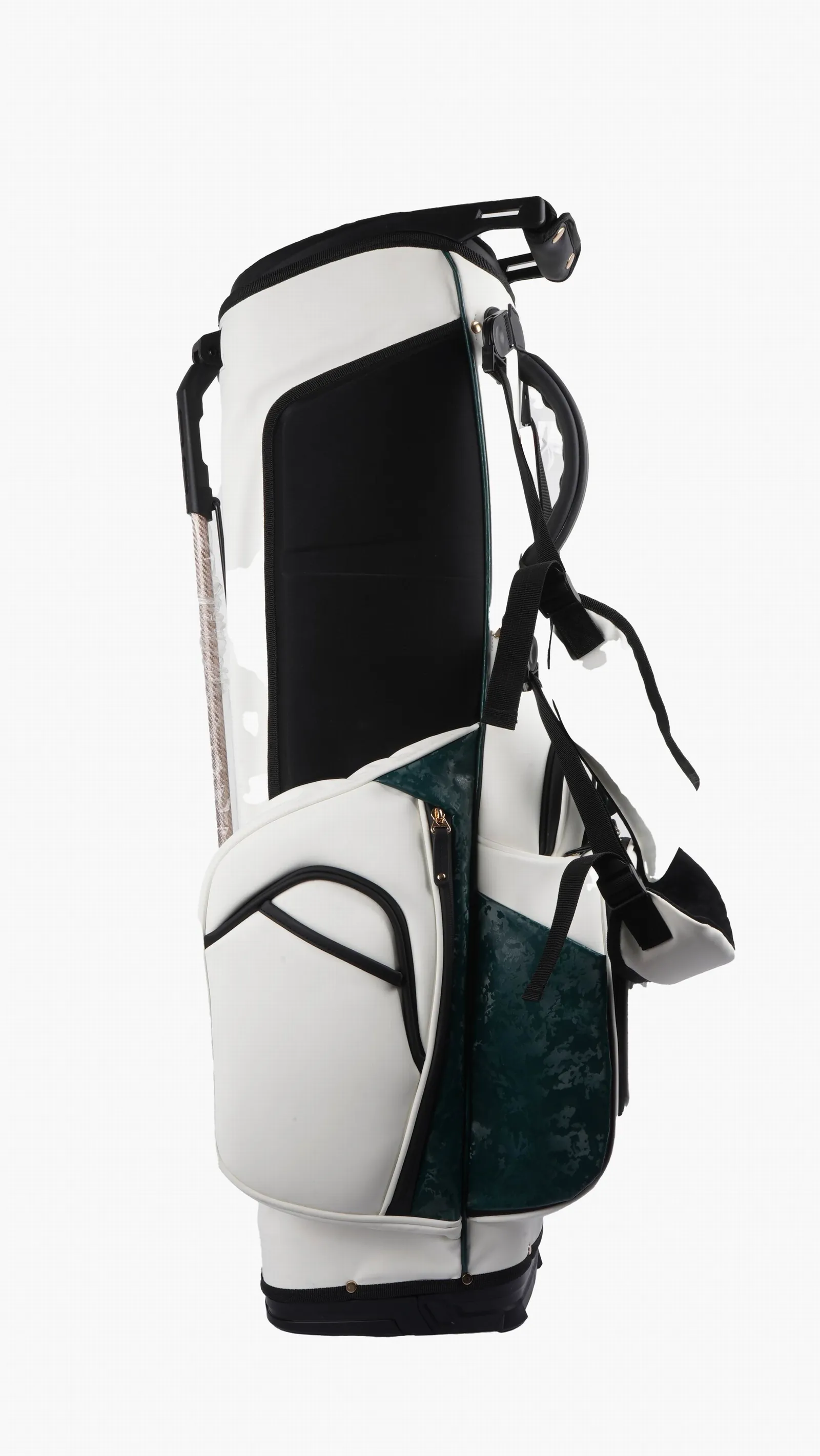
A custom cart bag program pays for itself in two ways at resorts and country clubs: it protects rental and member equipment from damage, and it turns the most visible clubhouse asset into a branded marketing surface that guests photograph and remember. Based on production experience at QUANZHOU JUNYUAN BAGS (founded 2014, founder in the trade since 2004), which has built fleet quantities of cart bags for course operators and club groups across more than 100 countries and 200+ brand partners, a well-specced rental cart bag lasts multiple seasons and lifts both guest satisfaction and on-site retail revenue. This guide lays out the business case, the specification that survives daily rental abuse, the branding strategy and the procurement path for resort and country-club buyers.
Resorts and country clubs occupy a special purchasing position. Unlike a consumer buying one bag, a club buys in fleet quantities, expects years of service from every unit, and measures the purchase partly by experience quality rather than price alone. A cart bag is the single most visible piece of reusable equipment a guest touches all round, sitting beside them on the cart, photographed at the first tee and carried in front of the clubhouse. That visibility is why custom branding on cart bags is one of the highest-value, lowest-cost marketing investments a course can make — and why getting the specification wrong is also one of the most expensive mistakes, because a fleet of failing bags damages guest experience at scale.
The Business Case for a Custom Cart Bag Program
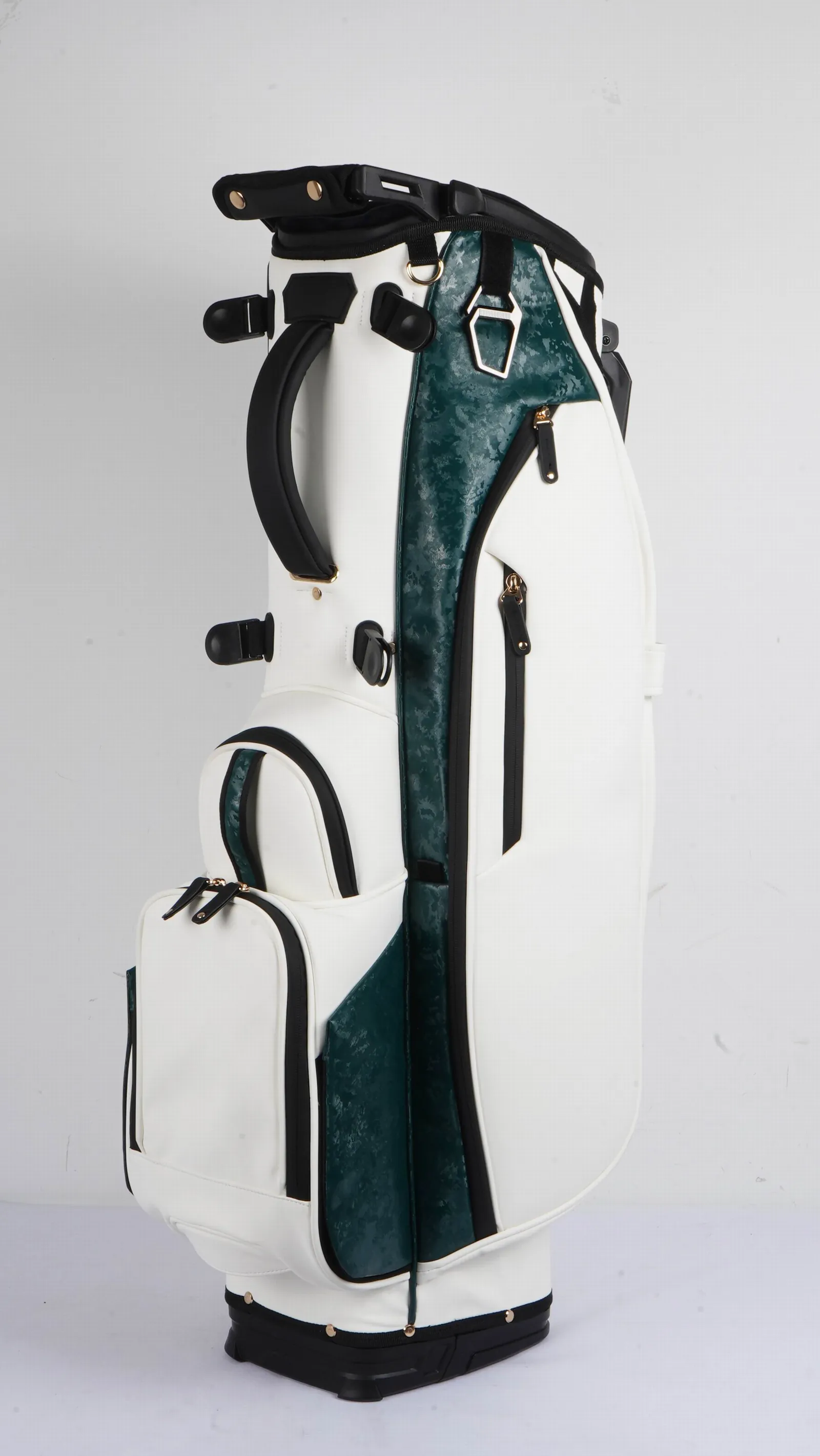
Three revenue and cost levers justify the investment. First, guest experience and perception: a coordinated set of branded bags immediately reads as a professional, premium operation, supporting higher green fees and stronger reviews. Second, protection of rental clubs and guest clubs: a full-length divider and molded base stop club chatter and sliding, reducing damage claims and replacement costs. Third, retail and rental revenue: clubs commonly sell or rent the same bag design in the pro shop, converting a fleet asset into a sales line.
The math works because the bag does double duty. Every round it spends on the cart it is simultaneously protecting equipment and advertising the club to every player and caddie who sees it. Over a season, a branded fleet of a few hundred bags is seen by tens of thousands of on-course impressions, an audience that already matches the club's exact target customer. Measured as cost per impression, custom cart bag branding is extraordinarily efficient compared with almost any other hospitality marketing channel, which is why leading clubs renew these programs season after season.
There is an intangibles dimension too: staff morale and operational pride. When a clubhouse team unloads a freshly delivered fleet of crisp, coordinated, logoed bags before opening week, it raises the whole operation's sense of standards. Caddies and marshals handle the branded equipment with more care, guests comment on it, and the bag becomes part of the club's visual identity in the same way a well-kept fairway or a clean clubhouse does. That consistency of experience is precisely what repeat guests and premium members pay for, and it costs nothing extra once the fleet decision is made. It also standardizes the rental handover: because every bag is identical and of known quality, the clubhouse can train staff once on how to check, wipe and stage the fleet without per-unit surprises.
Specifying a Bag That Survives Daily Rental Use
Rental cart bags face a brutal workload: dozens of rounds per unit per week, unknown users, wet towels, cargo shorts keys, spilled drinks and constant strapping and unstrapping. A resort bag must therefore spec up on durability even more than a retail bag. Start with a fabric of at least 840D nylon, ideally with a TPU or PVC waterproof coating, because coastal resorts and wet-climate courses put dewy towels and sudden showers directly against the shell every day.
The full-length divider system matters even more in rental because the members and guests using club equipment are the least likely to handle clubs gently. A true full-length 14-way divider isolates each shaft and prevents the chatter and grip-tangling that frustrate players and damage rental sets. Pair it with a rigid molded HDPE base that locks into the cart tray, so the bag does not slide on gradients, and a web-reinforced padded handle that survives hundreds of lifts by people who will not be gentle with it.
Easy-Clean and Hygiene Considerations
Hospitality venues must think about cleanability in a way consumers rarely do. In coastal and tropical settings, salt spray, sunscreen, insect repellent and sweat all end up on the shell and the straps. A coated, wipe-clean shell is a major operational advantage: staff can hose or wipe a fleet down between guests instead of laundering or replacing bags. Dark, coated fabrics hide stains better than pale uncoated weaves, and an internal removable sand-sleeve or straightforward pocket linings make maintenance faster.
Longevity in a rental environment also depends on hardware. Coil zippers with taped backing outlast bare metal zippers on a salt-air course, and anti-corrosion buckles prevent the "frozen buckle" failures that leave guests fiddling at the cart. Specify these at the design stage—retrofitting corrosion resistance after a season is far more expensive than specifying it from the first run. For a deeper look at the materials that endure, our golf bag materials guide compares coated and uncoated shells, zipper grades and hardware.
Branding: Turning the Fleet Into Your Best Billboard
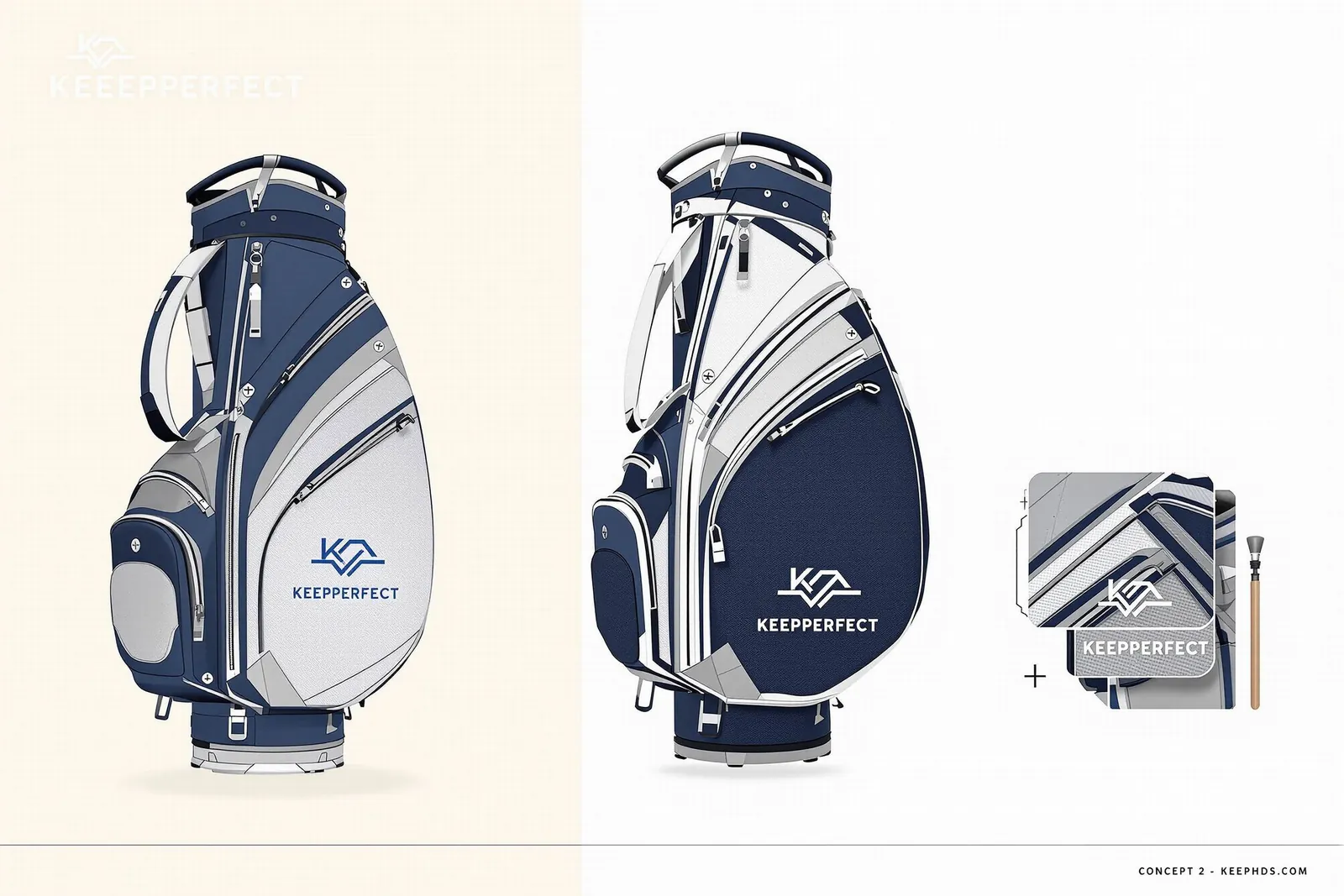
The cart bag is a walking billboard at eye level. A well-designed bag carries the club crest or resort monogram prominently, uses club colors across the trim and pocket accents, and positions the brand so it faces the camera when guests take photos on the first tee and at the 18th green. Placement strategy matters: the main logo should sit on the front-facing panel as seen from the cart seat and the tee photo angle, with smaller marks on the rear apparel pocket and accessory pockets for repeat exposure.
Decoration technology gives clubs flexibility. Embroidery delivers a premium, durable finish ideal for crests and monograms, while heat-transfer and screen printing suit bold, full-bleed graphics and gradient artwork at lower per-unit cost. Many clubs combine an embroidered crest with a screen-printed clubhouse scene or slogan. Because artwork is developed once and reused across renewals, the second and third year of a program become progressively cheaper in setup terms. Define one logo-use standard, lock the artwork early and reuse it—the discipline that keeps decoration cost predictable.
Fleet Planning: How Many Bags Do You Need?
Fleet sizing balances cart inventory against utilization and spares. A useful formula is to equip a quantity roughly equal to the number of rental carts in simultaneous peak use, plus a 10-15% spare buffer for cleaning rotation, repair and warranty turnover. A resort running a 60-cart fleet with high summer occupancy might therefore order 70-80 bags, while a private country club with 30 carts and quiet seasons might hold 35-40 with a smaller buffer.
Because the MOQ is central to economics, club buyers should also think across properties. A hospitality group operating several courses or sibling clubs can consolidate orders—same artwork family, same spec—into a single bulk run to unlock the lowest per-unit cost and a single freight shipment. This is a standard pattern we see among group operators, and it turns the fleet purchase from an expense into an efficiently consolidated program. Our OEM/ODM process guide walks how to consolidate multi-venue orders.
Durability and Maintenance Scheduling
Plan replacement and maintenance on a seasonal cycle rather than waiting for failure. With spec-grade fabric and hardware, a rental cart bag should deliver several seasons of service, but high-volume daily courses should inspect handles, bases, zippers and seams quarterly, rotating the worst units to low-traffic use and retiring anything with a frayed strap before it fails in view of a guest. Scheduling maintenance protects both the bag and the guest experience.
Our bulk production window of 45-60 days and sampling phase of 10-20 days gives club buyers a realistic runway to refresh a fleet before high season. Ordering off-season—when the course is quiet—lets you replace a worn fleet without service interruption, at the same time the factory's calendar has spare capacity to run your spec without conflict. Off-season buying is a quiet but meaningful lever for resort buyers who time it well.
Waterproof Options for Wet and Coastal Settings
Coastal resorts, tropical destinations and spring-autumn courses in rainy regions benefit strongly from a waterproof specification. A TPU-coated shell with seam-sealed taped seams and a waterproof, lockable valuables pocket protects phones, keys and wallets from sea spray and downpours, and shields rental clubs from wet towel condensation inside the bag. The incremental material cost of waterproofing is modest relative to the damage it prevents and the guest goodwill it preserves.
For courses deciding between a fully waterproof bag and a water-resistant one, the trade-off is weight and cost against guaranteed dry performance. A fully seam-sealed, TPU-coated unit is the right call for open, exposed coastal links or tropical venues; a water-resistant coated shell with a waterproof valuables pocket is the economical choice for temperate inland courses. Matching the spec to your actual climate avoids paying for capacity you will rarely use. See the quality standards guide for how waterproofing is tested against IP and water-column ratings.
Winter Plan
Fleet refresh is a two-part calendar: order 45-60 days ahead and off-season to avoid peak-season conflict, and time the arrival before the first high-occupancy weekend so every cart launches the season with a clean, branded bag.
Member Sales and Retail Extension
Many clubs extend the rental fleet into a retail product by offering the same branded bag in the pro shop for members to buy. This works because guests who enjoyed the branded experience want to own it, and members appreciate gear that matches club identity. Pricing the retail bag a step above the fleet cost—with premium fabric or personalization—turns a capital purchase into a returning revenue line. Some clubs also offer member-specific embroidery of name or monogram, which raises perceived value and margin.
When extending into retail, pay attention to the display. A neat wall or stand of branded bags in club colors at the pro shop entrance does marketing work all day long, often prompting the same question: "Can I buy one of these?" Park the bags where they are visible but protected from sun fade, and let staff use them as a talking point about club pride and the coming season. Tying the retail release to a member event or a tournament week concentrates sales and creates content for the club's social channels. Some clubs even use the bags as tournament prizes or as a welcome gift for new full members, converting the fleet program into a membership and retention tool.
To make this work, order the retail and fleet variants together so the artwork, colors and tooling are shared, and reserve a modest quantity for the pro shop rather than committing to a large unknown. Retail extension is an easy win because it leverages inventory and branding you already paid for. It is also a natural conversation starter for members, reinforcing the sense of club pride that retention depends on.
Working With an OEM Factory on a Fleet Program
The right partner scales a fleet program into a repeatable annual exercise. QUANZHOU JUNYUAN BAGS runs 7 production lines with 126 sewing machines and 137 staff across a 4,950 m² main facility and a dedicated affiliated factory, building about 200,000 golf bags monthly and shipped to 100+ countries. An independent SGS factory audit in March 2026 verified our process controls. With an MOQ of 200 pcs (test order 100 pcs), sampling in 10-20 days and bulk in 45-60 days, the economics suit course operators consolidating fleets for multiple venues.
When selecting a factory, verify the same way you would verify a club supplier: audit capability statements with independent checks, inspect a physical sample loaded with clubs and mounted on a real cart, and confirm the quality-control stages that guard a fleet of hundreds. The cost of a poorly specced fleet is multiplied by scale, so verification before tooling is non-negotiable. For the checklist of what to verify with any partner, review our factory selection guide.
For many clubs, sustainability is becoming a deciding factor. Guests increasingly ask about environmental practices, and a fleet purchase is a visible place to lead. Factories offer two practical levers: recycled-polyester shells made from post-consumer bottles, and a repairable design philosophy—pockets and straps that can be replaced rather than discarding a whole bag when one zipper fails. A repairable cart bag extends fleet life, reduces replacement frequency and positions the club as environmentally responsible, all without sacrificing durability. Because the same specification is repeated across hundreds of units, specifying recycled content or replaceable components at the design stage is cheap and scales across the whole fleet.
Handling Members Who Bring Their Own Bags
Not every guest rides with club equipment. Private country clubs in particular host many members who arrive with their own high-value sets, and those members are sensitive to how the cart bag holds their clubs. A full-length divider and a padded top-ring collar protect even a member's own bag from rattle during the round, which matters because a scratch or a scuff on a favourite driver is the kind of small annoyance that surfaces in a membership survey. For mixed fleets, the same durable, protective spec serves both rental and member-owned sets, so you do not need to maintain two standards.
Bags used by members who bring their own clubs should also ride level on the cart so a well-balanced set does not lean. That is a function of the rigid, symmetric base and an even divider layout, exactly the specification a good rental fleet already uses. The unifying insight is that resort and club buyers are best served by over-specifying the protective core—divider, base, handle—because it protects both the clubs you own and the clubs your guests bring, and it is the single most expensive part to get wrong at fleet scale.
A Five-Step Path to Your Fleet Program
Step one, define the fleet size, climate needs and brand guidelines. Step two, lock a specification sheet covering fabric, dividers, base, handle, waterproofing and pockets. Step three, order 1-2 samples and test them for 2-3 rounds on your actual carts. Step four, submit artwork and confirm decoration placement and colors. Step five, schedule production and delivery around your off-season, and plan the annual maintenance and replacement cycle. Following these steps keeps the program simple, testable and repeatable.
The cruelty of fleet economics is that size magnifies both success and failure. A great specification across 70 bags makes the same facility look better for years; a poor one multiplies a single bad experience across every cart on the course simultaneously. That asymmetry is why the sample-and-verify stage is the most valuable 15 minutes of the entire program. Load a sample to a full set, mount it on the exact cart model you operate, drive it over a bumpy service road and inspect the divider and base afterward. If the sample holds, you have every reason to trust the same construction across a fleet; if it shows weakness, you have just saved yourself from ordering 70 copies of a mistake. For a wider view of how cart bags fit into a club's full equipment strategy, our golf bag types guide and the cart bag product overview round out the decision framework. Working through custom solutions gives your club a tailored path from artwork to a delivered, branded fleet.
Whether you are a single 18-hole country club refreshing 35 bags or a resort group standardizing fleets across ten venues, a custom cart bag program is one of the few investments that improves guest experience, protects equipment and markets the brand in a single purchase. Start with a clear spec, verify by sample and choose a factory you trust with a fleet.
| Program Step | Typical Lead / Quantity | Success Factor |
|---|---|---|
| Defining spec & fleet size | 1-2 weeks | Align to climate and cart count |
| Sampling | 10-20 days | Test 2-3 rounds on real carts |
| MOQ & order | 200 pcs (test 100) | Consolidate multi-venue for scale |
| Bulk production | 45-60 days | Time to off-season delivery |
| Maintenance cycle | Quarterly/fleet | Rotate worn units; retire safely |
Frequently Asked Questions
- Why should a golf resort invest in custom cart bags?
- They deliver a branded, consistent guest experience, protect rental equipment, and create retail and rental revenue while turning the clubhouse asset into a marketing surface.
- What features should a resort rental cart bag have?
- Durable 840D-plus fabrics, a full-length divider, an anti-slip molded base, easy-clean surfaces, a lockable valuables pocket and robust zippers built for dozens of rounds per season.
- What is the MOQ for branded resort cart bags?
- Standard MOQ of 200 pcs per design, with a test-order MOQ of 100 pcs. Sampling takes 10-20 days; bulk production 45-60 days.
- Can resort cart bags be waterproof?
- Yes. TPU-coated shells, seam-sealed zippers and a waterproof valuables pocket shield clubs and gear from spray and rain at modest added cost.
- How long do custom resort cart bags last?
- With spec-grade materials, several seasons of heavy rental use before replacement, depending on daily volume and maintenance.
- Can our club logo be embroidered or printed on the bags?
- Yes, via embroidery, heat-transfer or screen printing, matched to club colors and crests with multiple placements. Contact service@junyuanbags.com.
Sources
- PGA – Golf Resort and Club Operations Resources
- Golf Digest – Golf Bag Durability and Equipment Guidance
- Golf Course Industry – Facility Operations and Equipment Management
- MyGolfSpy – Independent Golf Equipment Testing
Content director: QUANZHOU JUNYUAN BAGS. For fleet program quotes, contact service@junyuanbags.com or +86 17750020688.