Difference Between OEM and ODM Golf Bag Services
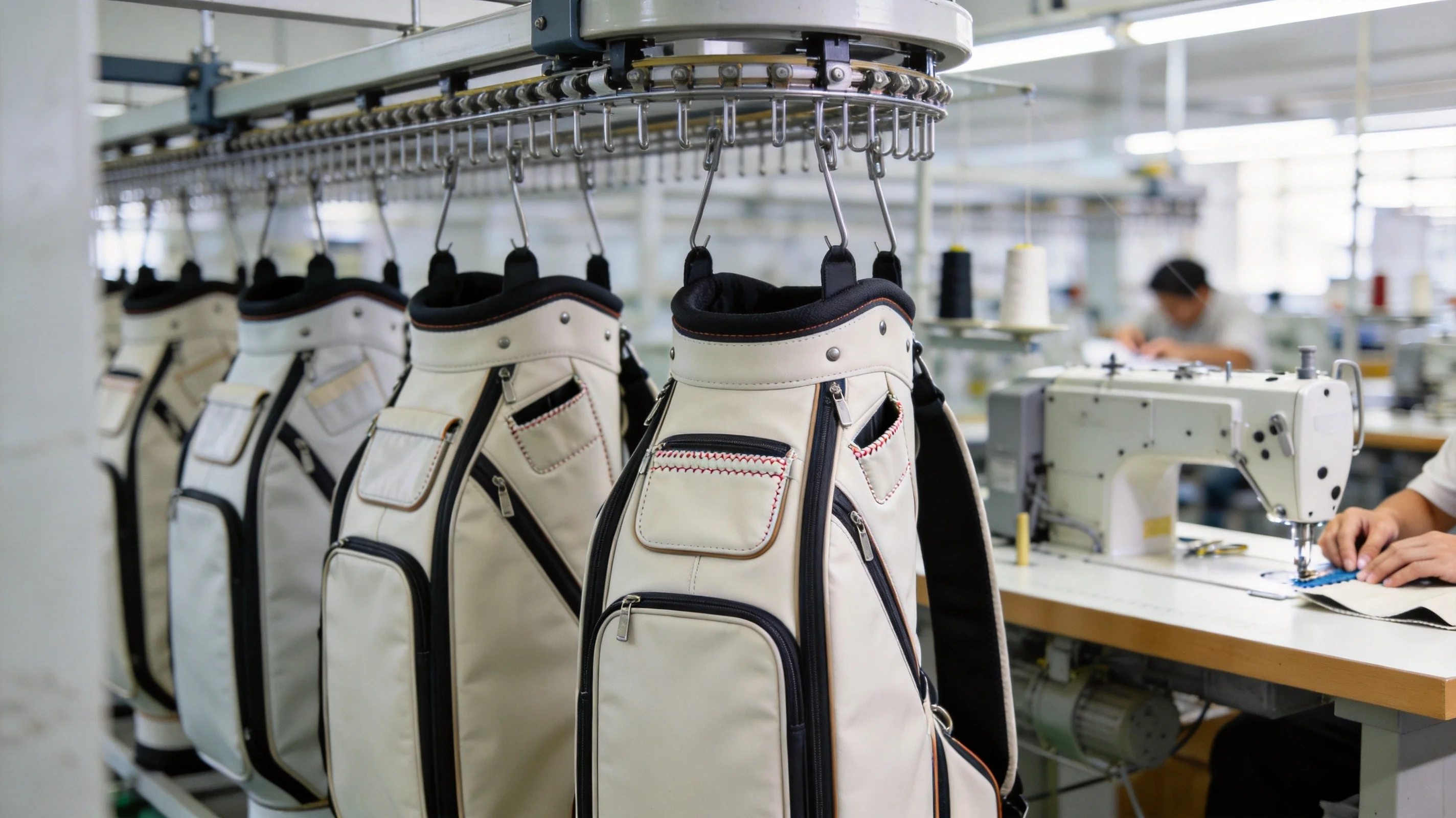
OEM golf bag service means you provide the complete design and specification and the factory produces to your exact requirements, giving you full intellectual-property control; ODM means the factory owns and develops the base design and you customise branding, colours and options — a difference that most directly shapes who controls the design, the MOQ (standard 200 pieces, 100-piece test), the sampling (10-20 days) and bulk lead time (45-60 days) you can expect. This guide clarifies the two models and how to choose.
Defining OEM Golf Bag Manufacturing
OEM (Original Equipment Manufacturing) in golf bags places the design responsibility squarely with the buyer. You bring the exact design, patterns or detailed specification, and the factory executes it, producing bags to your precise requirements with your branding. You control the design, own the intellectual property, and the factory is effectively your production arm executing your blueprint.
OEM suits established brands protecting a distinctive identity, or projects where the design is truly proprietary. Because you supply the specification, you carry the development risk and the responsibility for manufacturability. The payoff is control: your product, your design, your IP, produced volume after volume without the factory owning any design equity in it.
Defining ODM Golf Bag Manufacturing
ODM (Original Design Manufacturing) inverts the relationship on design. The factory has already developed proven base designs — a tested cart bag, stand bag, staff bag or travel cover — and you select one and adapt it with your colours, logos, pocket tweaks and options. The factory owns the base design; your custom branding and customisations are yours.
ODM is the natural starting point for new entrants, clubs, academies and retailers who want speed and lower risk without a design department. Because the base design is already tested for production soundness, defect risk and cost, ODM is a far safer bridge into custom manufacturing. As your brand matures, you can migrate toward full OEM control. We walk through both journeys in our OEM/ODM process guide.
The Decisive Differences, Compared
The core difference is design ownership, and from that one distinction everything else flows. OEM gives you full design control and IP ownership but carries development responsibility; ODM gives you speed and lower risk from a proven design but the base design belongs to the factory. The trade-off is control versus convenience.
Cost and timelines differ mainly in development. ODM skips much of the design and sampling iteration because the base is tested, so you may reach production faster; OEM, with bespoke design, spends more time in the 10-20 day sampling and revision loop. Both then run the same bulk timeline of 45-60 days. Understanding this lets you price and schedule realistically for either model.
OEM vs ODM at a Glance
The practical differences are clearest side by side.
| Factor | OEM | ODM |
|---|---|---|
| Design ownership | Buyer (full IP) | Factory (base design) |
| Who designs | Buyer / brief | Factory's proven base |
| Development risk | Buyer | Lower (tested) |
| Speed to production | Slower sampling loop | Generally faster |
| Best for | Established brands | New entrants, clubs, retail |
| Bulk lead time | 45-60 days | 45-60 days |
MOQ and Cost in Both Models
Contrary to a common assumption, MOQ is not a fixed feature of OEM or ODM — it belongs to the design and colourway. Our standard is 200 pieces per design in either model, with a 100-piece test order to validate a new market before committing. Each additional design or colourway carries its own MOQ, so consolidating variants is the fastest way to hold unit cost down.
Costs differ at the development stage. OEM carries design, pattern and possibly tooling costs borne by the buyer (or shared); ODM typically avoids those because the base exists, so per-unit prototypes are cheaper and faster. For a full walkthrough of how costs and MOQ interact across both models, our wholesale pricing guide models the numbers.
Timelines: Sampling and Production
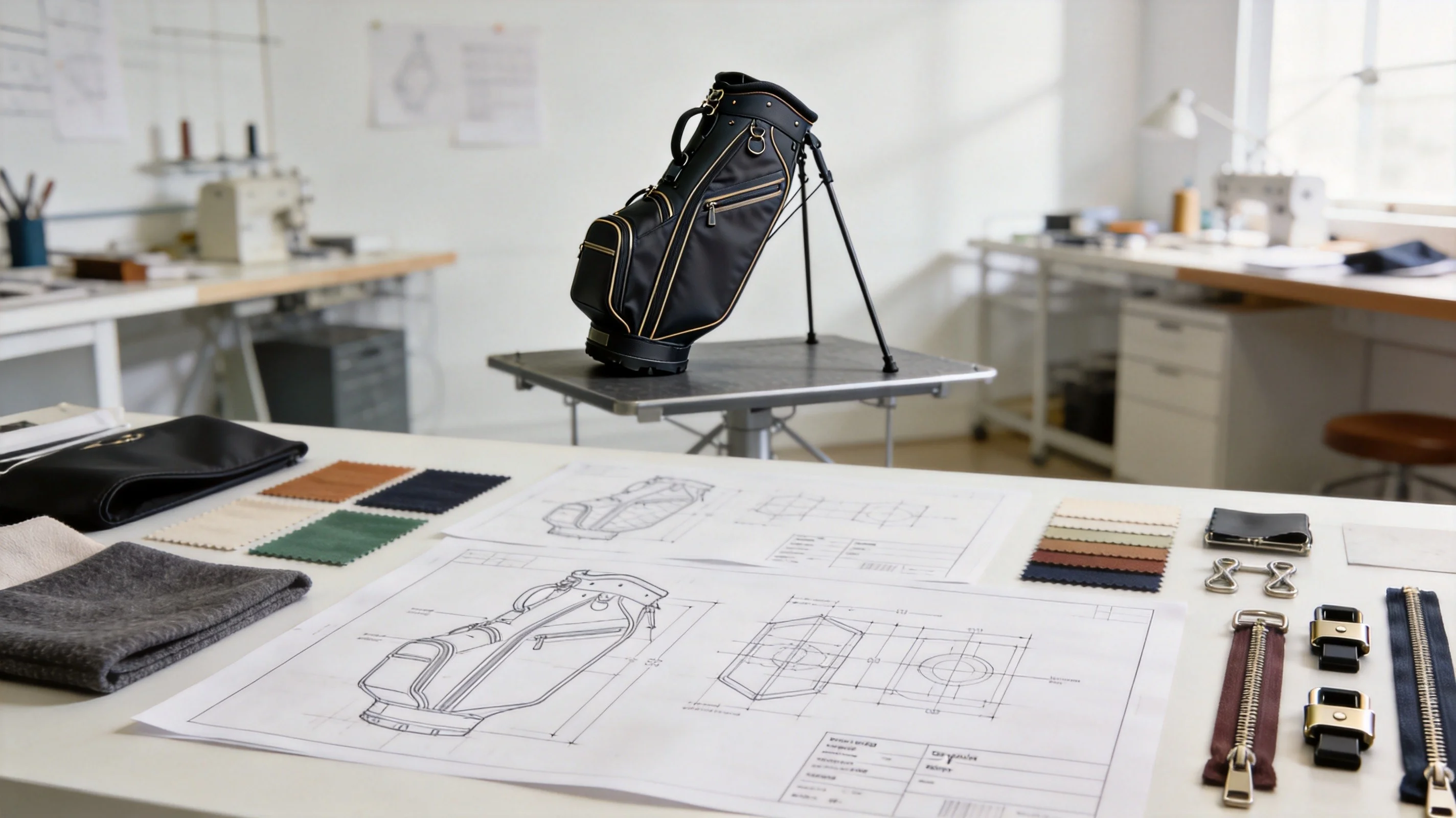
Sampling is the stage where OEM and ODM most visibly differ in pace. An OEM bespoke design typically requires 10-20 days for the first physical prototype, plus a revision round of about a week when changes are needed. An ODM programme, built on a tested base, can often move faster through the first sample because fewer unknowns remain.
Both converge at bulk production: 45-60 days after sample approval, before freight. Panning a total of 70-90 days from kickoff to delivery is realistic for either model. Adding a 15% buffer protects seasonal launches, where revisions and freight are hardest to predict, in both OEM and ODM engagements.
Intellectual Property and Design Ownership
Design ownership is the commercial heart of the OEM/ODM distinction. In OEM, you own the design and its IP outright; the factory produces to your proprietary specification. In ODM, the base design is the factory's IP, and your custom branding, colours and any bespoke elements you add to that base belong to you.
Whichever model you choose, protect your distinctive branding and artwork contractually. Confirm confidentiality, exclusivity of your branding and any tooling used, and restrictions on reusing your custom elements for other clients. Our factory treats client IP with clear internal controls, and our OEM/ODM services page outlines the safeguards in place. Getting ownership in writing before production avoids the worst disputes downstream.
Quality Control in Both Models
Quality control runs identically whether you choose OEM or ODM — the standards of the factory, not the service model, govern it. Incoming material checks, in-process inspection, finished-goods validation against the approved sample and AQL pre-shipment sampling protect both. The approved sample, in either model, is the benchmark every production unit is held to.
Our facility applies ISO 9001 documented QC across all programmes and passed SGS and Alibaba verification in March 2026. The quality standards guide sets out the measurable criteria to define for your order, whichever model you use. Consistency is engineered the same way — the choice of OEM or ODM changes who designs, not how well the factory builds.
OEM or ODM — Which Fits Your Brand?
A 200-piece MOQ, 100-piece test order, 10-20 day sampling and 45-60 day bulk production support both models. Tell us your goals and we'll recommend the right path.
Discuss Your Programme →Which Model Should You Choose?
Choose OEM when you have a proprietary design to protect, an in-house design capability, or a distinctive identity that must not be diluted. It is the model for a brand that treats its bag design as a defensible asset. Choose ODM when you are entering the market, expanding a product line, or want a proven, low-risk bridge into custom manufacturing with factory-owned design.
The pragmatic path for many brands is to start with ODM on a proven base, validate the market with a 100-piece test order and consolidate designs to hold MOQ and cost, then migrate to OEM as the brand's design ownership matures. Because we serve both models extensively across 200+ brands in 100+ countries, we can support you at either stage and help chart the transition.
Conclusion
The difference between OEM and ODM golf bag services is fundamentally about who owns the design. OEM hands you full design control and IP at the cost of development responsibility; ODM trades the base-design ownership to the factory for speed and lower risk. Both run on a 200-piece MOQ, 100-piece tests, 10-20 day sampling and 45-60 day bulk production from an ISO 9001, BSCI certified, audited factory. Choose based on your design assets and stage — and if you are unsure, a proven ODM start is almost always the safer first step.
OEM and ODM in Different Customer Scenarios
The right model often depends less on abstract preference than on who you are and what you are trying to accomplish. A retailer entering golf accessories benefits enormously from ODM: a proven staff or cart bag base, rebranded and tailored with their colours, reaching the shelf in months rather than after a long bespoke development. Speed and proven safety are exactly what such a customer needs.
An established brand with a signature look and a design team, by contrast, is usually better served by OEM, because its product identity depends on proprietary construction and detailing that only full design control can protect. An academy or club wanting branded practice or team bags often finds ODM the right bridge, quickly producing good-quality bags with their identity without maintaining any design department.
Because we serve 200+ brands in 100+ countries, we see this full spectrum daily and advise on the fit. The key is honesty with yourself about whether you have the design resources and the IP to exploit OEM's control, or whether ODM's speed and lower risk better serve your stage. Many customers begin with ODM to establish the line, then migrate to OEM as design ownership matures — a path that uses each model at the point it fits best.
Blending OEM and ODM in One Programme
It is not always an either-or choice; a single programme can blend the two models. Many factories, including ours, offer what is effectively a hybrid: an ODM base design that you customise substantially, or an OEM design that reuses some proven structural elements. This pragmatic blending lets a buyer protect the distinctive elements that matter while leveraging the factory's proven engineering for the rest.
Blending is attractive because it balances the trade-offs. You keep the design ownership over your signature features — the branding, the layout, the construction details that define your product — while the factory's tested base removes the risk and development cost from the structural foundation. The result is a product that is truly yours in the ways that matter, produced with lower risk and faster development than pure OEM.
A capable factory will discuss this hybrid honestly rather than forcing a label on you. Our OEM/ODM services are designed to flex between and blend the models so your programme is shaped around your product and stage, not around a rigid classification. The distinction between OEM and ODM is a starting point; the best outcome is a structure tailored to your actual needs.
Hidden Costs and True Cost of Ownership
Comparing OEM and ODM fairly means looking beyond the unit price to the total cost of ownership. OEM carries design, pattern and possibly tooling costs that the buyer bears or shares, plus the development iterations of bespoke sampling. ODM largely avoids these because the base exists, so its true cost is usually lower to reach the same point — though you carry the implicit cost of design equity belonging to the factory.
Over time the pictures shift. An OEM design you own and can evolve yourself may build long-term value that outweighs its higher setup; an ODM base you repeatedly buy may accumulate, in value returned to the factory, a design you eventually wish you controlled. The honest calculation weighs setup cost now against design ownership and evolution later.
Our wholesale pricing guide models these trade-offs so you can compare OEM, ODM and hybrid on total cost rather than sticker price. The right choice is not the cheapest unit today; it is the structure that best balances quick cost, ongoing margin and the strategic value of design control over your product's life. That is the true cost of ownership.
Choosing Between OEM and ODM With the Factory
The most productive way to choose between OEM and ODM is to work through the decision with the factory itself, armed with clear information about your goals. A good factory can assess your design resources, your market position and your volume, and recommend the model — or the blend — that best matches. This advisory role is part of what a mature wholesale partner provides, because it is in no one's interest to push a buyer into a model that will struggle.
The right questions to bring are practical: do you have complete design documentation to hand over? Is your product identity dependent on proprietary construction or details? Are you planning one SKU or a growing line? What is your tolerance for development cost and risk? And how quickly do you need to be in market? The answers steer strongly toward OEM, ODM or a hybrid.
Because we engage with brands at every stage of maturity, we recommend honestly rather than reflexively. Where a buyer clearly needs speed and proven safety, we lead them toward ODM and the 100-piece test-order route; where a buyer holds a proprietary design worth protecting, we support the full OEM process. The decision is ultimately yours, but it is best made with the factory's real knowledge of its own capabilities and your situation on the table.
Cases That Clearly Favor ODM Over OEM
Certain situations make ODM the clearly stronger choice, and recognising them avoids the unnecessary cost and risk of OEM where they do not apply. If you are new to custom manufacturing, a first-time importer, or launching without an established design team, the proven, factory-owned base of ODM removes the development risk that bespoke OEM would place squarely on you at the worst possible moment.
Speed is another clear signal. If you must reach a market window — a season, a tournament, a product launch — ODM's faster first sample and fewer iterations protect that date far better than a bespoke programme. And if your goal is a solid, well-made bag under your branding rather than a unique structural innovation, ODM delivers the reliability at a lower total cost with the base design already tested for production.
ODM is also the sensible entry point to a relationship. A 100-piece test on an ODM base validates the factory, the materials and the market with minimal exposure, and the confidence it builds naturally opens the door to full OEM as your brand matures. Starting where the risk is lowest is rarely a mistake, and ODM is engineered for exactly that kind of safe first step.
Cases That Clearly Favor OEM Over ODM
Conversely, certain situations clearly favor OEM, and choosing it there is the right strategic call rather than a risky one. If you have a distinctive, proprietary design whose construction or details are the heart of your product identity, only OEM gives you the full control and IP ownership that lets you protect and evolve it. A unique bag is your market advantage, and OEM keeps that advantage yours.
OEM also fits when you have design capability — an in-house designer or a clear, complete brief you can execute — and want to scale a line that diverges from any factory's base. It suits brands planning multiple original SKUs that share proprietary construction, where the development investment in the first is amortised across the family. And it rewards buyers who want to talk to their market through genuinely bespoke products.
Finally, OEM is favored when long-term asset building matters. Each proprietary design you own becomes brand equity you can develop, license or defend. If your business model treats design as a core asset rather than a sourcing convenience, OEM's ownership is directly aligned with your strategy. The higher setup pays off through control, evolution and value that accumulate across the product's life.
The Brand's Role in Quality and Reliability
Whichever model you choose, the brand's role in quality and reliability is the same: to set clear expectations and hold the partnership to them. In OEM you drive these directly through your design; in ODM the factory's proven base carries much of the burden, but your specification of colours, branding and finish still defines what is delivered. In both, a clear written agreement is what makes expectations enforceable.
The reliability of the relationship — meeting lead times, responding to queries, standing behind quality — depends on both sides performing to agreement. The most reliable outcomes come from clear contracts that fix scope, standards, timings and responsibilities, combined with a factory committed to transparency. This is professional in both OEM and ODM, and it is the foundation of a repeatable sourcing programme.
At our facility, whether a customer chooses OEM, ODM or a blend, they receive the same documented process, the same quality gates and the same honest communication. The model shapes the design ownership; it does not change the standards to which we build. For a brand, the choice of model buys flexibility, and the factory's consistent performance is what makes that flexibility valuable across the life of your line.
Getting Started With a Qualified Partner
The most practical way to turn this groundwork into a reliable product is to engage a factory with verifiable credentials, proven output and transparent process. A qualified facility founded in 2014, staffed by a team whose founder entered the industry in 2004, brings more than twenty years of hands-on knowledge to every programme. That experience shows in faster sampling, fewer defects and sound advice at each decision point.
At our facility in China, seven production lines and 126 sewing machines support a 137-person team producing about 200,000 golf bags a month for 200+ brands sold to 100+ countries. Backed by SGS factory audits and BSCI-aligned practices, we combine real capacity with documented quality control, so you can validate us before committing. Whether you begin with a 100-piece test order or move straight to a full production run, the milestones you have read here are the milestones we apply to your order.
To start, bring a detailed specification and an honest sense of your volume and deadline, and we will map the stages, timings and costs for your exact programme. With direct contact to our export team, service@junyuanbags.com or +86 17750020688, you can begin a conversation that moves quickly into a structured plan. The process and standards described above are not theory; they are the operating reality you are welcome to verify before your first container ships.
Our Factory Profile and How It Shapes This Story
The figures and workflows discussed above reflect how QUANZHOU JUNYUAN BAGS actually operates. We build golf bags in a 4,950 sqm affiliated production facility, founded in 2014 by a founder who entered the industry in 2004 — more than twenty years of experience. Seven production lines and 126 sewing machines support a 137-person team, producing about 200,000 golf bags per month for more than 200 brands in over 100 countries.
For custom and OEM/ODM work our standard MOQ is 200 pieces, and a 100-piece test order is available to validate a design before scaling. Prototype sampling takes 10-20 days; bulk production runs 45-60 days. These timings are the real operating window, not a best-case estimate. The facility has completed SGS factory audits and runs its management system to the ISO 9001 standard, giving independent weight to the quality and delivery claims in this article.
If you would like these numbers mapped to your own product, our export team is available at service@junyuanbags.com or +86 17750020688. You can also see the practical expression of this capacity on our OEM/ODM services and OEM/ODM process guide pages. Either way, these are the operating facts behind the story this guide tells.
Sources
Frequently Asked Questions
- What is the difference between OEM and ODM golf bag services?
- OEM means you supply the design and the factory produces to it, with full IP control. ODM means the factory owns the base design and you customise it, which is faster and lower-risk.
- Which is better, OEM or ODM for golf bags?
- OEM suits established brands with proprietary designs; ODM suits new entrants, clubs and retailers wanting speed and low risk. Many start ODM and migrate to OEM.
- What is the MOQ for OEM vs ODM golf bags?
- Both run a standard 200-piece MOQ per design, with 100-piece test orders. MOQ is per design/colourway, not per service model.
- What are the lead times for OEM and ODM golf bags?
- Sampling is 10-20 days and bulk production 45-60 days after approval, before freight, for both. ODM may reduce development time since the base is proven.
- Do I own the design in an ODM golf bag programme?
- In ODM the base design is the factory's; your branding, colours and custom additions are yours. In OEM everything including IP is yours. Agree ownership in writing.