Full Guide to Golf Cart Bag Features and Organization
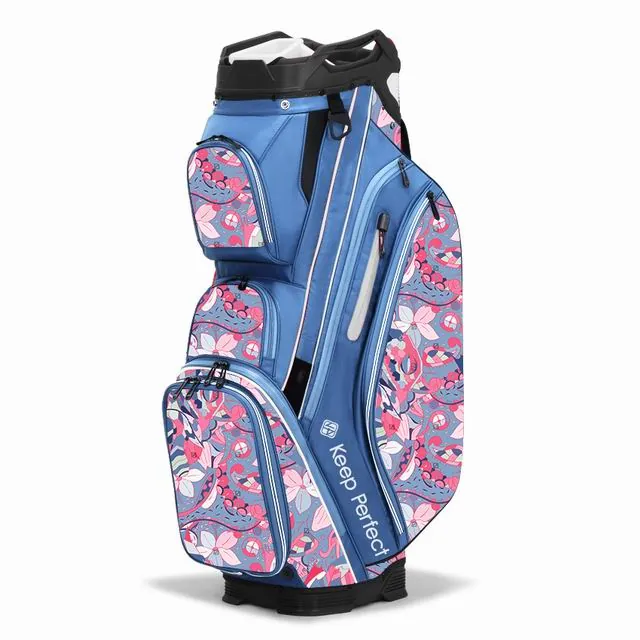
The best golf cart bag for most riders pairs a 14-way full-length divider top with 8-10 thoughtfully placed pockets, a stable flat base and a balanced weight around 2.5-4 kg — because good organization starts at the factory, in how dividers are built to the bottom and how pockets are zoned for reach-through cart access. This guide explains every cart bag feature a smart buyer should understand, based on years of building cart bags for global brands.
Why Cart Bags Are Different from Stand Bags
The case a cart bag makes for itself starts with physics. Because it never needs to fold into a portable shape, a cart bag can be taller, wider at the base and built with more structure than a stand bag, translating directly into more usable pocket space, better club separation and a more stable platform. The trade-off is that a cart bag is heavier and clumsier to carry, which is why it is the right tool specifically for golfers who ride. Choosing a cart bag means choosing organisation and stability over portability, and for riders that is rarely a hard choice.
A cart bag is designed to sit on a moving platform, not on your back, and that one difference rewrites every design priority. Because it never balances on your shoulders, weight is less critical and can be spent on organization and protection. Because it sits tilted forward on a cart, the pocket layout must place frequently used items within reach of the player standing beside the cart.
This realignment is why cart bags carry more pockets, deeper dividers and sturdier bases than stand bags. When you choose, you are trading carryability for organization and capacity — the correct trade for anyone who rides most rounds.
Dividers: The Backbone of Organization
The divider top controls both club protection and ease of access. A 14-way full-length divider gives every club its own channel running all the way to the bottom, preventing club-head chatter that scars graphite shafts and wears finishes. This is the premium standard on tour and premium bags, and the top request from serious players and pros.
Lower divider counts — 4, 6 or 8-way — are lighter and allow slightly faster grabbing of several clubs at once, which casual riders like. But they let clubs lean against each other lower in the bag. For anyone with an expensive set, the full-length 14-way is the honest recommendation. Our guide to cart bags for maximum club protection goes deeper on this trade-off.
| Feature | Casual / Value | Premium / Tour | Why it matters |
|---|---|---|---|
| Divider top | 4/6-way | 14-way full-length | Club protection & order |
| Pocket count | 5-7 | 8-10+ | Carry everything systematically |
| Cooler pocket | Optional | Insulated standard | Cold storage on course |
| Base & feet | Basic flat base | Stable, reinforced, crumb-free | Stability on cart |
| Reach-through pockets | Fewer | Front-facing and sleeve options | Easy access beside cart |
Pocket Architecture and Zoning
Getting the zoning right changes your round more than the total number of pockets. Think of it in terms of frequency of access: the items you reach most — tees, a rangefinder, a quick snack — belong in fast, easy-access pockets near the top; the items you touch rarely — extra apparel, rain gear, a spare glove — can sit deeper; and anything you want protected, like a phone or wallet, deserves a lined, secure valuables pocket. A bag whose zoning mirrors this habit is one you never fight, and the hours of saved fumbling add up quickly across a season.
Pockets are where a cart bag earns its value, and the best designs zone them by function. A large apparel pocket holds outerwear for changing weather. An insulated cooler pocket keeps drinks and snacks cold. A valuables pocket with soft lining protects phone, wallet and keys. Several mid-size accessory pockets handle balls, tees, gloves, range-finder and rain gear. Each item has a home, so nothing rolls to the bottom.
The layout direction matters as much as the count. Because the bag faces you from a cart, front-facing and sleeve-style pockets are far easier to use than pockets squeezed against the bag's back. Well-zoned pockets also speed up your round — you reach the right compartment on the first try instead of rummaging. That efficiency is a measurable part of the cart bag's appeal.
Weight, Balance and the Base
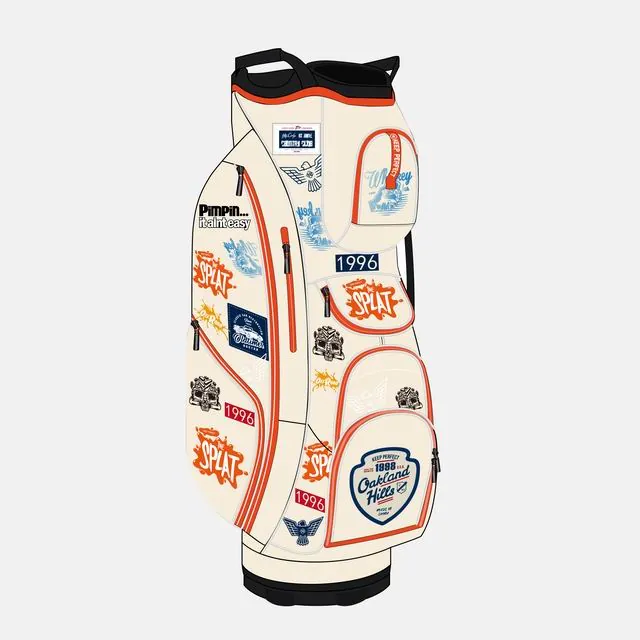
Because a cart bag spends most of its time on a platform rather than a shoulder, weight is less critical than distribution. A heavier but balanced bag that sits rock-steady on the cart is friendlier in the long run than a so-called lighter bag that wobbles because its weight sits badly. The base is the foundation of that stability, so examine how rigid and well made it is — a strong, correctly shaped base that seats level on your cart is the difference between a bag that stays put and one that slides, tips or twists as you play.
Cart bags rarely need to be carried, but you do lift them onto a cart, and a stable, well-balanced bag is easier to load and more secure in transit. Typical models land around 2.5-4 kg depending on materials and features. A reinforced, slightly wider base spreads weight so the bag does not wobble, and a solid base plate prevents sagging that distorts dividers over time.
Balance matters because a top-heavy or unevenly loaded bag tips over on a cart. Reputable factories position the heavier pockets (apparel, cooler) low or centred to keep the centre of gravity stable. When you inspect a bag, set it on a flat surface — if it stands level and stable while fully loaded, the base geometry is sound.
Cart Compatibility and Securing
A good cart bag must actually fit your trolley. Most are engineered to sit flat on both electric and manual carts, with offset handles and a cart-friendly base. But trolley frames differ, so verify the base shape fits your specific model. On carts with strapping, the bag should reach the cart securely without twisting the pockets out of reach.
Securing the bag properly is part of the buying decision. A bag that mounts cleanly loads in seconds and stays put for the whole round; one that fights the frame costs you time on every hole. For practical mounting tips, see how to secure a cart bag on any cart.
Materials, Construction and Durability
Durability is where the quality of a cart bag is truly proven, because a cart bag faces constant scraping against the platform, repeated rough handling and years of daily use. Look for heavier abrasion-resistant fabrics, reinforced stress points at the top and base, dependable zippers that see constant traffic, and a frame that keeps its shape under a full load. These load-bearing details decide whether the bag is still trustworthy in its third season or listing in its first, and they are exactly the details a careful inspection can verify before you commit.
Cart bags ride next to a moving vehicle, so they take abrasion and vibration others do not. Durable nylon and polyester in 1680D or heavier weights resist scuffing and tearing. Zippers must be robust and glide smoothly under constant use, and stress points such as handles and strap anchors need reinforced stitching. These are exactly the details a factory-level inspection verifies.
If you are sourcing cart bags for resale or a private label, insist on documented QC for zippers, seams and base reinforcement. A bag that survives years of cart travel is a brand asset; one that fails early is a returns liability. The inspection checklist in our quality standards guide covers these checks.
Organizing Your Bag for Maximum Efficiency
The best-organised bag is the one that follows a repeatable system so you always know where everything is. Assign your most-used items to the easiest pockets and keep that placement consistent round to round, so reaching for a ball or a tee becomes muscle memory instead of a search. Group small consumables in compartments, protect valuables in the lined pocket, and keep the divider slots arranged so your clubs are easy to identify at a glance. A consistent system keeps your round flowing and keeps your gear in good condition.
Even the best-designed bag underperforms if it is not packed well. Adopt a system: keep the clubs you use most (driver, putter) in designated slots, put valuables in the lined pocket every time, stack extra balls in one pocket and tees in another so restocking is quick. Pre-route your round's consumables — tees, balls, gloves, drink — so you reach each without hunting.
Good habits magnify the bag's design. A consistent packing routine turns organisation from a promise into a fixed part of your pre-round ritual, and it keeps the bag tidy round after round. For a systematic walkthrough, our guide to organizing golf bag pockets pairs naturally with this one.
Caring for Your Cart Bag
Cart bags tolerate hard use but reward basic maintenance. Wipe off dirt and clean zippers periodically, dry the bag after wet or humid rounds, and store it fully supported rather than hanging from a handle so the base keeps its shape. Inspect zippers and stress-point stitching twice a year. These simple habits extend usable life by years and keep pockets and dividers working as designed.
Full cleaning routines are covered in our golf bag maintenance guide.
Choosing the Right Cart Bag: A Buyer's Checklist
Before buying or commissioning a cart bag, lock down five things: your divider count (14-way full-length for protection), the pocket zoning that matches your weekly kit, weight you can lift comfortably, cart compatibility with your trolley, and material weight suited to your climate and frequency. Write these down before comparing models so marketing noise cannot pull you off course.
If you are buying for a retail line or club, also model the cost: features like 14-way dividers and insulated coolers add unit cost, so tier your range from value to premium. Our wholesale pricing guide helps you structure that tiering, and our cart bag range shows how features map to formats, from cart bags to custom options.
A great golf cart bag is organized at the factory, not at the course: full-length dividers, zoned pockets, a stable base and honest materials. Match the divider count to how much club protection you value, choose pockets that match how you actually play, and verify cart compatibility and construction quality before you commit. Do that, and a cart bag quietly improves every round you ride.
How Many Pockets Is Enough?
Pocket count is one of the most quoted cart-bag specifications, but more is not automatically better. What matters is that the pockets match the way you organise your round and are usable from a seated position. A bag with fifteen awkward pockets is worse than one with eight that are perfectly placed, so judge pocket count against your real needs — a rangefinder, balls, tees, gloves, a drink, some apparel, and a secure place for valuables — rather than an impressive-looking total.
The better cart bags zone pockets purposefully: a well-lined valuables pocket near the top, a large apparel or street-clothes pocket for layers and rain gear, insulated coolers for drinks, and smaller, quick-access pockets for tees and balls. When these zones are laid out thoughtfully, you reach everything without leaning or searching, and your round stays fast and tidy. That kind of zoning is worth more than an extra empty pocket in practice.
There is an important practical note for anyone moving from a stand bag to a cart bag: expect a learning curve on weight and fit. A cart bag is larger and heavier than you are used to carrying, but because it rides on the cart rather than your shoulders, that weight works in your favour once it is seated. Spend the first round or two adjusting your reach and how you anchor the bag, and the organisation benefits quickly outweigh the initial unfamiliarity. The months that follow are where a well-chosen cart bag proves its worth.
The Important Debate: Full-Length or Foursome Dividers
The divider configuration inside a cart bag has a real effect on how your clubs behave, and it is worth understanding before you buy. Full-length dividers that run the bag's full depth keep each club in its own slot from top to bottom, preventing the shaft chatter that happens when long clubs cross during movement. Foursome or partially divided bags group clubs but save weight and give more room per slot. Which you prefer depends on how much protection you want for expensive graphite shafts versus the flexibility of faster club access.
For a serious player with a valuable set, full-length dividers are the confident choice, since they directly protect shafts and heads from the movement a cart bag experiences all day. For a more casual set or a golfer who values quick, accessible organisation, a well-designed divider system with fewer slots keeps things simple and light. See to the actual construction and how the dividers are anchored, because a divider that flexes defeats its purpose.
Cart Harmony: Securing the Bag Safely
A cart bag only works well if it stays put on the cart, so the base shape and securing arrangement matter more than they get credit for. Modern cart bags are designed with bases that lock onto standard cart platforms and a strap pass-through or anchor point that holds the bag firmly in position around the round. When the bag is secure, your clubs stay organised and the weight distribution is stable, which makes reaching and replacing clubs easier and safer.
Before choosing, check that the bag's base fits the cart models you actually use, especially if you ride with a push trolley or a powered cart with a specific platform. A slight mismatch can mean a bag that slides or a strap that does not seat properly, which is exactly the kind of daily irritation that turns a fine bag into an annoyance. Confirming fit compatibility is a small step with a big payoff.
Countdown to a Clean Cart Bag
The cleanest cart bag is the one you never let get badly dirty in the first place, so a routine beats a rescue. Wipe spills and muck off after each round while they are fresh, give the pockets a monthly shake-out and vacuum, and do a deeper clean and inspection at the change of seasons. Small free habits prevent the deep stains, odours and zipper failures that eventually force an unnecessary replacement, and they keep the bag presentable and pleasant every time it rides the cart.
Cart bags accumulate dirt, spilled drinks and debris from the cart environment fast, and keeping them clean is straightforward if done consistently. Wipe down the exterior regularly, shake out and vacuum debris from pockets and the base, and clean spills from coolers and valuables pockets promptly before they set. Because a cart bag sits low and collects more dust than a carried bag, a monthly quick clean keeps it looking good and functioning well.
Inspect the base, strap anchors and zippers periodically, since these take the most stress on a cart. Early maintenance of a small zipper or seam problem prevents a larger failure later. For the complete care routine — from cleaning to drying to seasonal storage — our golf bag care guide walks you through it step by step.
For Retailers and Brands: Sourcing a Winning Cart Bag
If you are stocking or sourcing cart bags as a retailer or brand, the features above translate into clear acceptance criteria: a durable, well-securing base, purposeful pocket zoning, a divider system matched to your customer, and quality construction throughout. Cart bags are a high-turnover category because riders are the majority of club golfers, so a range that nails organisation and durability keeps customers returning and recommending.
Sourcing a cart bag with these priorities built in is best done through a factory that understands the category and can put the features into an approved sample before you commit at volume. Working with a manufacturing partner that offers custom programmes — including your own branding and colourways on a proven cart-bag base — is the efficient route to a differentiated range, as explained in our custom bag OEM/ODM services.
Conclusion
A great cart bag is the product of a dozen small design decisions working together: a stable, cart-compatible base, purposeful pocket zoning, a divider system that protects your clubs, rugged materials and reliable organisation. Match the pocket count and dividers to your game, confirm the bag fits your carts, and care for it consistently. Get those elements right and your cart bag will keep your clubs protected, your round organised and your game moving for many seasons. If you are weighing cart bags against every other style before committing, our golf bag types guide lays out the alternatives and the products page shows how these features come together in practice, and you can compare each family on the features that matter most to your game.
Sources
- How many dividers should a golf cart bag have?
- 14-way full-length is the premium standard for the best club protection; 4, 6 or 8-way suits casual players wanting lighter weight and faster access.
- How much should a golf cart bag weigh?
- Typically 2.5-4 kg. Balance and a stable base matter more than raw weight because the bag rides on a cart, not your back.
- What pockets should a cart bag have?
- Apparel, insulated cooler, lined valuables, and accessory pockets for balls, tees, gloves and rain gear — zoned for easy reach beside the cart.
- Are cart bags compatible with push carts?
- Most are designed to sit flat and secure on electric and manual trolleys, but verify the base shape fits your specific cart model.
- Why do pros prefer full-length dividers?
- They separate every club to the bottom, preventing chatter that damages graphite shafts and finishes — the protection serious players want.