Golf Bag Accessories Complete Guide: Essential Add-ons & Upgrades
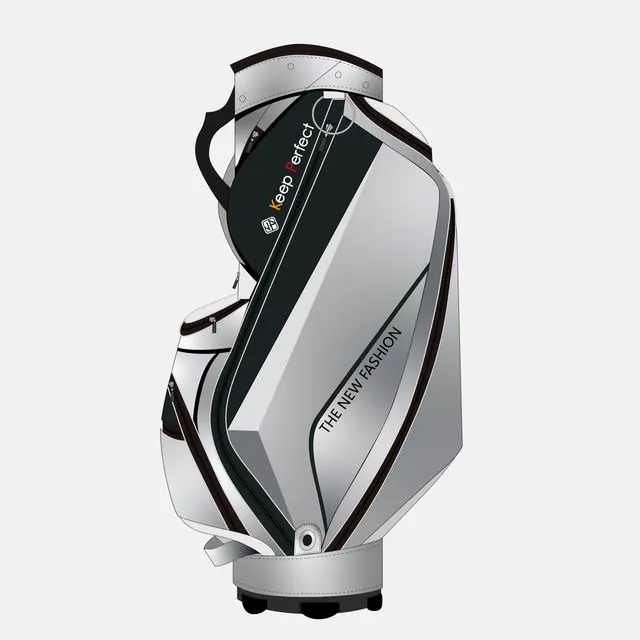
The essential golf bag accessory kit is small and specific — balls, tees, a glove or two, a rangefinder or GPS, a ball marker and divot tool, a towel and a water bottle, secured in a moisture-proof valuables pocket — and adding the right upgrades such as a rangefinder mount, an insulated cooler pocket and a few internal organisers measurably improves speed, comfort and gear protection without adding meaningful weight. This complete guide covers the accessories worth carrying, the upgrades that actually pay off, how to choose compatible items, and how to budget so you buy what you use rather than what the shelf suggests.
Essential Accessories Every Golfer Should Carry
Every round has a baseline kit that no golfer should leave home without. Starting points: at least two sleeves of balls, a pack of tees, one glove (two in humid or rainy climates), a rangefinder or a GPS-enabled device, a ball marker and divot tool, a towel, and a full water bottle. Add a moisture-proof pocket for your phone, wallet and keys.
This is the minimal kit because each item serves play directly — balls and tees are consumed every hole, the rangefinder speeds your distance decisions, the marker and divot tool keep the course tidy and your putts repeatable, and the towel keeps grips and hands dry. Originally, many golfers carry a version of this, but they rarely keep it organized, which is where lost accessories and lost time creep in.
Keep this kit fixed and stocked so you never re-pack from scratch. A light weekly check that balls, tees and a clean towel are in place means you are always game-ready and never paying course-shop prices for items you already own.
Accessories That Improve Reach and Speed
The accessories that most measurably improve your round are the ones that put gear within reach so you stop hunting. A rangefinder or GPS mount keeps your distance device attached to the bag at eye-and-hand level rather than buried in a pocket. A towel ring or magnet clips a towel to the outside where it stays dry and available. A tube-style tee holder keeps a full lease of tees accessible with one pull.
Each of these is small, cheap and has an outsize effect on pace of play. When you reach once instead of rummaging twice, the time savings are measured in seconds, but those seconds compound across eighteen holes and keep you in rhythm. These upgrades are the easiest way to make an existing bag feel faster without replacing it.
When choosing, prioritise items that attach to a fixed clip, magnetic point or secure hook that matches your bag's hardware. An accessory that fits firmly removes friction; one that dangles or falls off adds it. Test the fit before committing and favour brands and ranges designed to integrate with your bag model.
| Accessory | Primary Benefit | Cost / Complexity | Worth It? |
|---|---|---|---|
| Range finder mount | Instant access, no hunting | Low | Yes — top speed upgrade |
| Towel ring / magnet | Dry towel within reach | Very low | Yes, essential |
| Tee holder tube | Tees at one pull | Low | Yes |
| Insulated cooler pocket | Cold drinks all round | Medium | Yes for riders and walkers |
| Bag organizer / pouches | Stops small items sinking | Low | Yes |
| Putter tube | Secure, fast putter access | Low | Yes |
Comfort and Convenience Add-ons
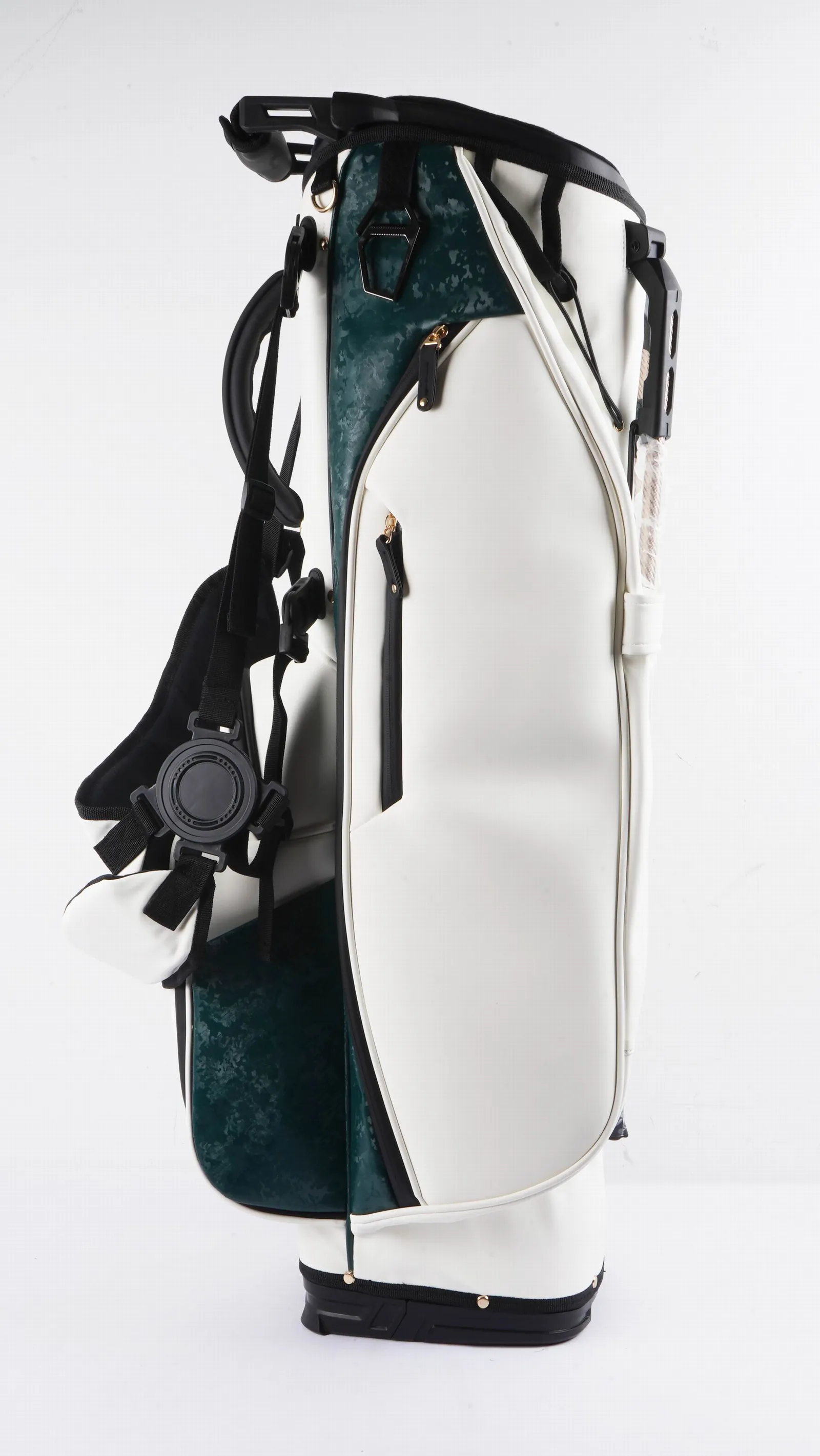
Beyond reach and speed, a few accessories improve comfort and day-long convenience. A well-padded stand bag strap or a strap buffer saves shoulders and back on long walk-and-carry rounds. A rain cover protects both clubs and bag fabric from moisture and grit, keeping everything dry in a downpour. A magnetic or zippered valuables pocket gives your phone, wallet and keys a secure, dry home.
Convenience add-ons also include insulated cooler sleeves or pockets for drinks and snacks, which are a favourite among both riders and walkers. The key is to choose comfort upgrades that do not add significant weight — especially if you carry. A light strap buffer and a compact rain cover make a bigger difference to your round than a heavier gadget that you rarely use.
Comfort upgrades are also the most personal: the exact set that helps you depends on how you play. Walkers prioritise strap and weight comfort; riders prioritise reach and cooling; wet-climate golfers prioritise rain protection. Match the add-ons to your dominant conditions and you get the most comfort per dollar spent.
Organization Accessories and Pouches
Organization is where small accessories earn their keep most visibly. Internal bag organizers, compartment liners and mesh pouches turn one large pocket into several, stopping balls, tees, coins and markers from sinking to the bottom and tangling. Putter tubes keep your most-used club secure. Divider organizers reduce club chatter in bags with compartmentalized tops.
Choose organisers that match your bag's internal dimensions so they lie flat and add structure rather than bulk. A small pouch for tees and markers, a sleeve for the rangefinder, and a secure valuables pocket are enough for most golfers. Over-organizing adds weight and clutter, so keep the collection minimal and purposeful.
For a structured walkthrough of where every accessory belongs, pair this guide with our article on organizing golf bag accessories, which maps each accessory to the right pocket and zone.
Technology and Smart Upgrades
A newer category of golf bag accessories is technology: GPS holders, rangefinder mounts, power banks and cable management pockets for charging devices on the go. Many modern bags now include a dedicated electronics pocket with a reinforced feed-through hole so a phone can charge from a power bank carried in the bag while being used on the cart.
When adding tech accessories, look for fire-resistant battery compartments and weather-sealed ports, which protect both your devices and your safety. Verify that any charging pocket matches your device size and that the cable routing does not crush or pinch. These features turn a bag into a mobile command station without compromising organization.
Tech accessories are genuinely useful for players who rely on GPS, shot-tracking apps and music, but they are optional for everyone else. Add them only if they support a habit you actually have, and keep the electronics pocket organized so cables do not tangle with balls and gloves.
Maintenance and Care Accessories
Care accessories extend the life of both your bag and your gear. A soft brush and mild cleaner keep bag fabric and zippers clean, while grip vice and replacement grips refresh clubs. Club covers and a rain cover protect finishes and clubs from moisture and abrasive dust. A small vacuum or lint brush keeps deep pockets free of grit that wears seams.
Beyond cleaning, a few care items prevent downtime: spare zipper pulls, replacement strap pads and a basic repair kit catch small problems before they become failures. Golfers who care for their bags and accessories report noticeably longer usable life and fewer replacement costs over a season.
Pair your accessory care with a consistent habit — wipe down after wet rounds, dry the bag fully, and do a light seasonal deep clean. Our golf bag maintenance guide walks through a full routine that protects every accessory you add.
Choosing Accessories Compatible With Your Bag
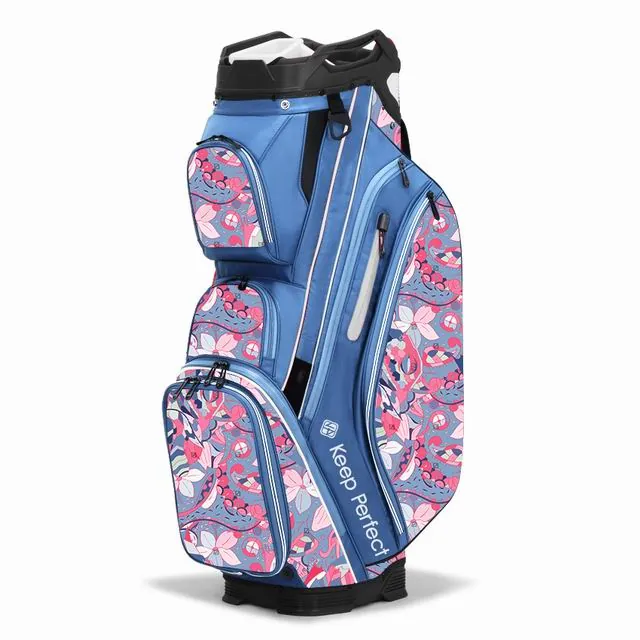
Not all accessories fit every bag, and compatibility matters more than the accessory's features. Before buying, check your bag's mounting points, pocket dimensions and divider type. A rangefinder mount needs a secure clip point; a cooler sleeve needs a pocket deep enough; a towel ring needs a fixed loop or hook. Buying accessories that fight your bag's layout is money wasted.
Match accessories to the bag's hardware and geometry, and favour integrated designs that attach cleanly rather than generic add-ons. For cart bags specifically, this compatibility matters even more because the mount points and strap rigging differ from stand bags — see our guide to cart-bag-compatible accessories for tailored advice.
When buying at volume for a retail line or a club, specify the accessories and mounting points together so they integrate with the bag rather than being sold separately and forgotten. A coordinated bag-and-accessory package is a stronger product that solves the customer's problem outright, and it is how retailers build repeat sales.
Budgeting and Value in Accessories
Accessories are where spend can quietly get out of hand, so set a simple value rule: budget generously for items you use every round and skip anything you use rarely. The essentials — balls, tees, glove, rangefinder, marker, towel — are a modest, fixed cost that never wastes money. Premium add-ons like coolers, mounts and organizers add incrementally and earn their keep only if you use them.
Compare value by cost per round over a season, not by shelf price. A rangefinder mount you use 40 times a year is cheap per use, while a $50 gadget used twice is expensive per use. This lens keeps accessory spending honest and prevents the box drawer filling with impulse buys.
For retailers and brands, value the accessory bundle as part of the product economics. A well-chosen accessory set raises the perceived value of a bag and increases margin at wholesale, but only when the accessories genuinely match the bag. Our wholesale pricing guide helps structure an accessory tiering that sells.
Installation and Setup Tips
Most accessories install in minutes with the right approach. Fixed-clip and magnetic items attach to a dedicated mount point; sleeve-style organizers drop into existing pockets; cooler pockets and holders often secure to a compression strap or dedicated pocket. Read the installation note first to avoid forcing a mount that should attach differently.
After installing any accessory, verify it holds its position under a full bag and a cart ride — the last thing you want is a cooler or rangefinder that works loose mid-round. Tighten clips and straps, and re-check after the first few uses while the fitting settles. A correctly installed accessory feels like part of the bag, not an add-on.
Keep installation simple: if a tool or modification is required to attach something, weigh whether it is worth altering your bag. Most good accessories install without any modification, preserving your bag's structure and warranty. Favour those, and reserve modification for upgrades you are confident about.
Retailer and Brand View: Accessories as Product
For retailers and brands, accessories are a product decision as much as a play decision. A range that integrates organizers, coolers, mounts and care tools with its bags creates an ecosystem customers buy into — and they come back for the pieces. This is also how a brand differentiates, since a coordinated accessory set is harder to copy than a generic bag alone.
When sourcing accessories at volume, coordinate the hardware, mounting points and branding so the pieces match the bag exactly. Work with a factory that can produce both the bag and its accessories consistently, as we do through custom OEM/ODM services, so the quality and fit are uniform across the line. Our accessories range shows how the pieces integrate, and wholesale options let you bundle them profitably.
Approach accessories as part of the product story rather than afterthoughts. A bag plus the accessories that make it complete is a stronger offer, a better customer experience and a steadier revenue stream than a bag sold alone.
Building a Seasonal Accessory Kit
Accessories are not a one-time purchase; the ideal kit shifts with the season, the weather and how you play. In summer heat, an insulated cooler pocket and a larger water capacity become priorities. In wet or cold months, a rain cover, extra towels and dry, secure storage matter most. Building a seasonal accessory kit means keeping the core essentials constant and swapping the situational pieces in and out as conditions change.
Keep a simple two-tier system. Tier one holds the always-carry essentials: balls, tees, gloves, rangefinder, marker, towel and water, organized in the fixed pockets you use every round. Tier two holds situational accessories — rain gear, extra towels, a cooler sleeve, spare gloves for humid days — stored separately and added when the forecast or the season calls for them. This keeps the bag light in dry months and prepared in wet ones without forcing you to carry everything all season.
Review your kits at the change of seasons, and at the start of a new season replace worn items, swap summer gear for winter gear, and drop any accessory you did not use the previous season. A lean, season-matched kit costs less and performs better than a heavy bag that carries everything year-round.
Common Accessory Mistakes to Avoid
The most common accessory mistake is over-purchasing — filling pockets and the wider bag with gadgets that are used twice and then forgotten. This adds weight, clutter and cost. The fix is a usage test: if an accessory has not earned its place in your last five rounds, remove it from the bag. Keep the collection small and purposeful, and judge value by cost per use rather than shelf appeal.
A second mistake is ignoring compatibility. An accessory that does not fit the pocket, mount point or divider type of your bag gets forced into place, works loosely and damages both the accessory and the bag. Check dimensions and mounting before buying, favour integrated designs, and return anything that does not fit cleanly rather than improvising a permanent fix.
A third mistake is neglecting maintenance. Accessories that are never cleaned, cables that tangle, cooling pockets that develop mildew from a left-behind bottle, and towel clips that corrode all fail earlier than they should. A light seasonal clean and dry keeps accessories working and keeps the bag fresh. Finally, do not skip organization — the most expensive accessories are useless if you cannot find them. Pair every accessory purchase with a clear pocket home, and the kit stays fast and reliable.
A Quick Accessory Fit-Check System
Before each season, run every accessory through a simple fit-check so your bag stays lean and reliable. Hold each item in the pocket or mount point you assigned it, and confirm it fits without forcing, stays put under a little shake, and does not pull, rub or interfere with other items. If an accessory only half-fits or is permanently in the way, either find it a better home or drop it from the kit.
The fit-check also covers cables and electronics: confirm the cable routes without pinching, the power bank sits in its moisture-safe pocket, and any charging port is accessible without unpacking the whole bag. Checking before a busy season avoids the mid-round surprises — the rangefinder that slides, the cooler that does not close, the charger that tangle — that turn a good accessory into a nuisance.
Finally, use the fit-check to reassign pockets that have drifted. Over a season, items migrate and pockets accumulate odds and ends. A quick reset to the intentional layout you defined earlier keeps the whole system fast, and it costs nothing but a few minutes twice a year. A bag that fits-checked is a bag you trust on game day.
One more habit pays off: label or note your default layout the first time you set it up, even just in a phone note. When you clean the bag deeply or travel, you can restore the exact arrangement without thinking. Combined with the seasonal fit-check, this tiny bit of documentation makes the difference between a bag that is merely stocked and one that is genuinely engineered for fast, reliable play week after week.
Conclusion
The best golf bag accessory kit stays small and purposeful: the essential carry of balls, tees, gloves, rangefinder, marker and towel, plus a few high-value upgrades like a mount, an insulated cooler and internal organisers that measurably improve reach, comfort and gear protection. Choose accessories that fit your bag's hardware, follow a consistent organization system, budget by use rather than by shelf price, and care for the pieces you add.
Match the kit to how you actually play — walking or riding, wet or dry climate — and skip the gadgets that do not earn their place. Do that, and your accessories become a quiet extension of your game rather than a box of unused parts. For more detail, our accessories and attachments guide and products page are excellent next steps, and our custom services can build your ideal accessory-ready bag from the start.
Sources
Frequently Asked Questions
- What are the essential golf bag accessories?
- Balls and tees, a glove or two, a rangefinder or GPS, a ball marker and divot tool, a towel and a water bottle — plus a moisture-proof valuables pocket for phone, wallet and keys.
- Which golf bag accessories actually improve my round?
- A rangefinder or GPS mount, an insulated cooler pocket, bag organizers or pouches, a putter tube and a rain cover measurably improve speed, comfort and gear protection.
- How much should I budget for golf bag accessories?
- Budget generously for items you use every round and skip rarely used ones. Judge value by cost per round over a season, not by shelf price.
- Can I add a cooler pocket to my existing golf bag?
- Clip-on or magnetic cooler sleeves work on many bags, but an integrated insulated cooler pocket built into the bag is the most reliable — check dimensions and mounting first.
- Are bag organizers worth buying?
- Yes. Small pouches and compartment liners stop balls, tees, coins and markers from sinking and tangling, turning one large pocket into several tidy zones.
- How do I choose accessories compatible with my bag?
- Check your bag's mounting points, pocket dimensions and divider type before buying, and favour accessories that attach to a fixed clip, magnetic point or secure hook.