Choosing between golf bag brands means weighing very different strengths: PING and Sun Mountain lead on lightweight walking-carry engineering, Titleist on tour-credentialed trust, TaylorMade and Callaway on complete-set ecosystem fit, Mizuno on waterfront craft and premium waterproofing, Ogio and Wilson on value and innovation, and Vessel on luxury materials. Market research values the whole category at roughly USD 1.25 billion in 2025 (Mordor Intelligence) and names Titleist (Acushnet), Callaway, TaylorMade, PING, Mizuno, Cobra, Wilson, Sun Mountain and Ogio as the leading players. This comparison breaks the field down by category, price tier, ideal buyer and sourcing fit, so golfers can match a bag to their play style and OEM/wholesale planners can benchmark where a private-label program should position itself.
Brand comparison is only useful when it is disciplined. This guide evaluates the leading names on the dimensions that actually determine satisfaction — carry vs cart suitability, weight, organization, waterproofing, materials, price tier and ideal buyer — and closes by checking each against the sourcing realities of building a comparable private-label line.
How the Leading Brands Split the Market
The leading bag brands each own a recognizable position. Titleist is the trust-and-tour pick, dominant in walking-carry and professional settings. PING and Sun Mountain are the lightweight-engineering specialists, strongest for walkers. TaylorMade and Callaway offer premium bags engineered to complete their club ecosystems. Mizuno is the craft-and-waterproofing house. Ogio and Wilson serve the innovation-and-value middle. Vessel owns the luxury tier. Understanding these positions is the first step to matching a bag to a buyer or to benchmarking a launch line.
The mapping that sorts buyers also sorts a lineup. Since each leader owns a signature strength, a private-label brand can claim a position the giants are not optimizing for — or serve a price band above or below a famous name. Rather than imitate Titleist or Vessel, a private lab can translate the same categories — lightweight, waterproof, ecosystem, value, luxury — into a sharper, faster-to-customize answer for a specific buyer. Understanding the field's division of labor is the first act of competing intelligently within it.
The usefulness of mapping is that it predicts where satisfaction comes from. If you buy Titleist for trust you are rarely disappointed on build; PING and Sun Mountain for weight and stability in walking; TaylorMade or Callaway for how well the bag completes your set; Mizuno for weather and craft; Ogio or Wilson for honest value; Vessel for a status statement. State your priority, find the brand whose signature matches, and the decision becomes a straight line instead of a guessing game.
The leaders divide cleanly by strengths, and that division is useful precisely because it is predictable. Titleist owns tour-trusted build; PING and Sun Mountain own lightweight walking engineering; TaylorMade and Callaway own ecosystem fit; Mizuno owns craft and waterproofing; Ogio and Wilson own value and innovation; Vessel owns luxury. Because most golfers buy from strength on one or two of these, matching a brand's signature strength to the buyer's stated priority reliably leads to satisfaction — and the same mapping is the fastest way to plan a differentiated private-label position.
Because most golfers buy from strength on one or two attributes — lightest carry, best weather security, most trusted name, best materials — a brand's positioning directly predicts who it will satisfy. Matching the positioning to the buyer's priority is the whole game.
Carry and Stand Bags: PING, Sun Mountain, Titleist
For walkers, the decisive attributes are weight, strap comfort and stable standing. PING is engineered from an obsession with the engineering problem of a bag that stands firm loaded — a durable lightweight carry specialist. Sun Mountain effectively created the deluxe lightweight carry format and remains the benchmark for ultralight, comfortable dual-strap walkers. Titleist brings tour-credentialed walking bags with proven build. If carry weight and all-day comfort dominate your priority, these three names lead.
The walking decision matrix is about weight, comfort and stability. PING, Sun Mountain and Titleist dominate, but they split: Sun Mountain for pure ultralight dual-strap comfort, PING for durable lightweight engineering with a stable stand, and Titleist for tour-trusted build over featherweight absolute. Buyers should stack itemized weights and test straps; the sub-five-pound standard defines the premium walking tier, and documented weight is the most honest spec on the page.
Weight data is the honest differentiator: sub-five-pound stand bags now define the premium walking tier, and our weight optimization guide explains how that is engineered at the factory.
Cart Bags: TaylorMade, Callaway, PING

For cart players, organization depth, stable base and easy cart fit win. TaylorMade builds modern, organization-dense cart bags (including the waterproof HydroLite) aligned to its club ecosystem. Callaway offers functional, well-priced cart options for a broad range of players. PING rounds out the premium tier with engineered reliability. Cart bags are the second structural pillar of the market, projected to grow near 5.9% CAGR through 2031 (Mordor), so this is a high-volume, high-competition tier where organization and durability decide reorders.
Cart bags reward the details that adults notice across a season: a fully divided top that protects club grips, insulated and valuables pockets that separate what should never touch, and a base wide and shaped enough to ride level on any cart. Whether from TaylorMade's ecosystem-designed range, Callaway's accessible all-rounders or PING's engineered reliability, the tier rewards exacting divider, base and zipper specs. For manufacturing, these are tolerance-checked attributes best proven in sampling rather than described in catalogs.
Cart bags reward organization and durability more than grams. TaylorMade builds modern, 14-way, fully divided cart bags aligned to its ecosystem; Callaway delivers functional, well-priced options for broad ranges; PING rounds out the tier with engineered reliability. Since cart bags are the second structural market pillar, near 5.9% projected CAGR (Mordor), this tier rewards exacting divider, base and zipper specs that survive daily cart use.
Waterproof Leaders: Mizuno, TaylorMade, Vessel
Weather is a growing expectation, and three brands define the waterproof tier. Mizuno brings genuine waterproof construction to premium cart bags with craft-level build. TaylorMade's HydroLite delivers rated waterproofing for wet climates. Vessel combines luxury materials with waterproof-rated construction, proving premium and protection can coexist. Water resistance has become an expected baseline in high-rainfall regions, and buyers should require documented construction — seams, zippers, rated materials — from any brand or factory claiming ability.
Weather credibility is earned in construction, not marketing. Mizuno's genuine waterproof carts, TaylorMade's HydroLite ratings and Vessel's waterproof-rated luxury shell each demonstrate that real protection requires sealed seams, rated zippers and verified ingress performance. Especially in the cart and travel tiers, choose documented waterproofing over 'water-resistant' phrasing, and verify test data with the same skepticism you apply to weight claims.
We detail exactly what to verify in our weather-protection guide.
| Brand | Signature Strength | Best Category | Price Tier | Ideal Buyer |
|---|---|---|---|---|
| Titleist | Tour-trusted build | Walking / pro | Premium | Trust-first players |
| PING | Lightweight engineering | Stand / carry | Premium | Walking golfers |
| Sun Mountain | Deluxe ultralight carry | Walking bags | Mid-premium | Weight-obsessed walkers |
| TaylorMade | Ecosystem integration | Premium cart | Premium | Complete-set buyers |
| Callaway | Approachable function | All-round cart | Mid-premium | Broad recreation |
| Mizuno | Craft + waterproof | Premium waterproof | Premium | Quality-first golfers |
| Ogio / Wilson | Innovation / value | Stand / all-round | Mid | Value-focus |
| Vessel | Luxury materials | Luxury | Luxury | Status / executive |
Luxury and Premium Materials: Vessel vs Mizuno
At the top of the market, Vessel and Mizuno define the premium-material space from different angles. Vessel is the overt luxury house — premium waterproof materials, napa leatherette, metal hardware and a price point that is itself a brand statement, best for executives and pro-level buyers wanting a statement object. Mizuno is the restraint-and-craft house — refined Japanese materials and waterproof engineering without Vessel's overt luxury markers, best for quality-first golfers who prefer quieter products. Both ride the fastest-growing premium segment, where personalization and the fitting ecosystem drive demand.
The two routes to the premium tiership in how they express quality. A volume-premium bag adds features; a premium-craft or luxury bag refines materials and finish so the product feels worth more than the ordinary. This distinction matters for positioning: buyers choosing luxury are bought by materials and statement, while buyers choosing craft are bought by restraint and longevity. A private-label premium line must decide which message it leads — overt luxury or quiet quality — and engineer to it consistently.
At the top, Vessel and Mizuno define premium from different poles. Vessel is the overt luxury house — premium waterproof materials, napa leatherette, metal hardware and a price point that is itself a statement — ideal for executive and pro buyers wanting a prestige object. Mizuno is the restraint-and-craft house — refined materials and waterproof engineering without overt luxury markers — ideal for quality-first golfers wanting quiet products. Both ride premiumization, the fastest-growing segment.
Value and Innovation: Ogio, Wilson, Callaway
In the value-to-mid tier, Ogio and Wilson compete on innovation and price, and Callaway offers accessible all-round function. These brands serve the mass segment that Mordor reports still holds roughly 59% of market value, and — importantly — they prove that strong value positioning broadens reach. For first-time, juniors, women and casual off-course players, these accessible options convert participation into purchases. Their lesson for manufacturers is that clean, dependable value at scale is a legitimate and large business.
The value tier is not a fallback; it is a deliberate, large, and defensible business. Ogio and Wilson win on smart organization and honest pricing, Callaway on accessible all-round function, together serving the mass segment that still holds most of the market's value. Their playbook — reliable build, user-friendly detail and a price that converts participation into purchase — is the clearest route to volume for an OEM-backed entry line, and it converts the growing junior and first-time cohorts into future upgrades.
The value-to-mid tier is the volume engine and the counter-position play. Ogio and Wilson win on innovation and price, Callaway on accessible all-round function, together capturing the roughly 59% of market value that mass product still holds (Mordor). Their lesson is that clean, dependable value at scale is a large, legitimate business — and that first-time, junior and casual buyers are best converted here before being traded up.
Matching a Brand to Your Play Style

The practical question is not "which brand is best" but "which brand fits your priorities." If lightweight carry is everything, look to PING or Sun Mountain. If tour trust and proven build matter, Titleist leads. If you are completing a TaylorMade or Callaway set, matching ecosystem bags maximizes coherence. If weather is the deciding factor, Mizuno or the HydroLite line wins. If you want a statement product, Vessel is the reference. If you want value, Ogio, Wilson or Callaway deliver. Align the brand's signature strength with your first priority and the choice becomes straightforward.
Matching should be done with data in hand: stack each candidate's documented strength against your first two priorities and let the comparison, not the logo, decide. Because most leaders own exactly one or two signature strengths, listing your priorities first makes the field sort itself. The same two-column discipline, flipped, is exactly how to position a private-label line — decide which two strengths it will own and engineer the whole range to make that pair consistently true.
Brand-matching should resolve onto priorities, not names. Walkers: PING or Sun Mountain for lightweight, Titleist for trust. Cart players: TaylorMade or Callaway for ecosystem fit, PING for reliability. Wet climates: Mizuno, HydroLite or Vessel for real waterproofing. Statement buyers: Vessel. Value-focused: Ogio, Wilson or Callaway. When the brand's one signature strength aligns with your first priority, the choice stops being guesswork.
Brand vs Manufacturer: The Sourcing Reality
For many buyers, the brands above set the benchmark but not the budget. Roughly a fifth of the market is served through private-label participation, and the gap between the premium incumbents and a capable OEM is narrower than brand markups suggest. A factory with strong lightweight engineering, waterproofing, organization architecture and quality control can produce a comparable product at far better volume economics. We examine brand-versus-factory economics in our brand-versus-manufacturer analysis.
Manufacturers exist in a different truth than the brands they supply. Names like Titleist, PING or Vessel invest heavily in marketing and brand equity, but the underlying engineering — lightweight frames, waterproofing, divider precision, QC — is practicably available from serious factories, and roughly a fifth of the market already runs private label. The sourcing reality is that you can match the build spec at a fraction of the price point, and your differentiation should come from target-market fit and customization speed rather than trying to reproduce a hundred-million-dollar brand's storytelling.
The gap between a premium brand and a capable OEM is far narrower than the price gap implies. Roughly a fifth of the market is already private-label supplied, and a factory with strong lightweight, waterproof, organization and QC capability can match premium benchmarks at far better volume economics. Compete on documented spec and faster customization rather than trying to out-market incumbents.
Choosing a Factory Partner to Match the Benchmark
If your strategy is to match a premium benchmark at private-label margins, screen partners on the exact capabilities the leaders use to differentiate: verifiable lightweight construction, documented waterproofing, precision organization tolerances and rigorous testing. Our workflow guide and testing standards guide set out the spec sheet that protects you.
Choosing partners should be a mirror of your positioning. For a walking-led line, verify lightweight frame engineering and strap-cycle testing; for waterproof product, verify ingress testing and seam discipline; for premium, verify material sourcing and finish tolerances; for value, verify process consistency and QC. Every position maps to a specific, auditable capability, and sampling is where claims become evidence. Prequalify on sample turnaround, defect rate and on-time delivery so that the factory is a partner in your benchmark, not just a supplier.
Match the factory to the benchmark you chose. For walking, verify lightweight frame engineering and strap testing. For waterproof, verify ingress testing and seam discipline. For premium, verify material sourcing and finish. For value, verify process consistency and quality control. Every positioning maps to a set of capabilities you must confirm in sampling — the workflow and testing guides lay out the exact checklist.
Building a Private-Label Line Around These Positions
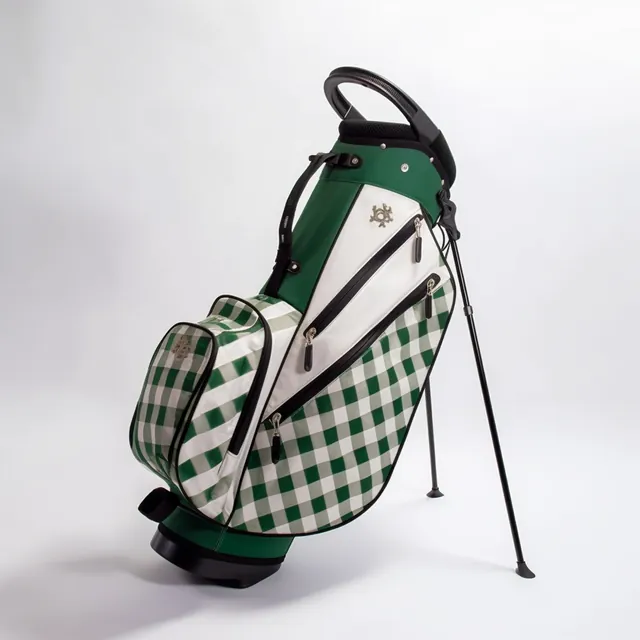
You do not need to out-market the incumbents to succeed; you need to out-position them in a specific, defensible slot. Decide the lead asset — lightest carry, best waterproof, best value, premium materials — and engineer that attribute to an answerable standard. Then build a coherent cross-category story and verify quality in sampling. The participation tailwind — 112.2 million golfers, juniors and women growing fastest, premiumization rising — rewards exactly this disciplined, engineering-first approach. Our customization guide covers launching it.
You do not need to out-market the incumbents; you need to out-position them in one defensible slot and engineer to an answerable standard. Choose the lead asset — lightest carry, best waterproofing, best value, premium materials — express it in verifiable spec, and build the rest of the line to reinforce that one promise. The participation tailwind — 112.2 million golfers, juniors and women growing fastest, premiumization rising — rewards brands that are disciplined about that single strength, because buyers increasingly reward honesty and specificity over breadth and hype.
You do not need to out-market incumbents; out-position them in a specific, defensible slot. Pick the lead asset — lightest carry, best waterproof, best value, premium materials — engineer it to an answerable standard, then build a coherent cross-category story and verify quality in sampling. The participation tailwind (112.2 million golfers, juniors and women growing fastest, premiumization rising) rewards this disciplined, engineering-first approach.
Final Comparative Verdict
There is no single best bag brand because there is no single golfer. The field splits cleanly: PING/Sun Mountain for walking-engineered lightness, Titleist for tour trust, TaylorMade/Callaway for ecosystem fit, Mizuno for craft and waterproofing, Ogio/Wilson for value and innovation, and Vessel for luxury. Match the brand to your priority and you will rarely regret the choice. For manufacturers, the leaders simply prove the formula: own one strength, build it with real engineering, and let quality compound — all of which a serious factory partner can deliver.
Category Shows No Single Winner: A Decision Table View
The honest conclusion of brand comparison is that no single line wins every category — and that is the point. Each leader owns exactly one or two signature strengths, which is why matching matters more than ranking. A disciplined way to buy is to build a decision table: list your first two priorities (say, walking lightness and weather security), score each brand's documented strength against those priorities, and let the table, rather than reputation, decide. The same table, flipped, is an excellent tool for planning a private-label range: choose which two strengths your line will own and engineer the whole range to make that pair consistently true.
Completing the Stack: Matching Bags, Covers and Accessories
No bag is an island; satisfaction depends on the stack around it. A premium cart bag should pair with a matching travel cover, a protective stand, coordinated headwear and accessories that extend its useful life. Selling (or buying) bags as complete systems — rather than one-off products — raises perceived value, reduces damage in transit and drives repurchase. For a brand, building a coherent accessories stack is the fastest margin lever after the bag itself: it turns a single purchase into an ecosystem and a customer into a loyalist across categories.
Frequently Asked Questions
- Which golf bag brand is best for walking golfers?
- PING and Sun Mountain lead on lightweight walking-carry engineering, with sub-five-pound stand bags defining the premium tier. Titleist is the tour-trusted alternative. Choose among these based on weight versus brand-trust priority.
- Which brand makes the most waterproof golf bags?
- Mizuno's premium waterproof cart bags, TaylorMade's HydroLite line and Vessel's waterproof-rated luxury bags are the strongest weather performers. Verify documented construction — seams, zippers and rated materials — regardless of brand claims.
- Should I match my bag to my club brand?
- If you play a full TaylorMade or Callaway set, an ecosystem-matching bag maximizes visual and functional coherence. If not, choose on your first priority: weight, weather, organization, value or materials.
- Can a private-label bag match a premium brand?
- A capable OEM with lightweight engineering, waterproofing, precise organization and strong QC can match premium benchmarks at far better volume economics — roughly a fifth of the market is already private-label supplied.
- How do I choose between the leading brands?
- Align the brand's signature strength with your first priority: PING/Sun Mountain for walking lightness, Titleist for trust, TaylorMade/Callaway for ecosystem fit, Mizuno for craft/waterproofing, Ogio/Wilson for value, and Vessel for luxury.