The stories behind the world's leading golf bag brands — Titleist, PING, TaylorMade, Callaway, Mizuno, Sun Mountain, Ogio and Vessel — are a masterclass in how engineering, family heritage and a single product obsession built an industry now valued at roughly USD 1.25 billion (Mordor Intelligence, 2025). PING began with a backyard prototype built for a better tripod bag; Sun Mountain essentially created the modern deluxe walking stand bag; Vessel showed a premium-material bag could command luxury margins in the fastest-growing segment. For OEM/ODM buyers, these origin stories are not trivia — they reveal the durable principles that separate enduring brands from commodities, and which principles a private-label program can borrow. This guide retells those stories and distills the build-your-brand lessons for the factory-sourcing era.
Every enduring bag brand began as a solution to a specific frustration. Reading those origin stories side by side reveals a striking pattern: the brands that endure are those that solved a real product problem first and a marketing problem second. This guide traces that pattern through the industry's defining names and translates it into practical guidance for anyone building a bag brand today.
PING: The Backyard Prototype That Built a Category
PING's founder, Karsten Solheim, was a General Electric engineer who became obsessed with putting. But the bag story is just as formative: frustrated with top-heavy stands that toppled with clubs loaded, Solheim engineered a stand bag with legs that stayed put even when full — a solution born in the garage and refined through relentless testing. That engineer's mindset — solve the problem precisely, prototype relentlessly, and let performance sell itself — became PING's DNA and shaped carry-bag design industry-wide. PING remains a top-tier name on every market-research roster of leading bag brands.
So many durable brands share PING's starting pattern that it is worth naming the mechanism: a frustrated player, a precise functional fix, and relentless iteration until the prototype is right. Engineers and craftsmen become founders precisely because they measure and refine where marketers would guess. For anyone building a bag today, the practical echo is the same — specify the problem, prototype to a measurable standard, and let the demonstration sell — because engineering-led credibility remains the most transferable asset a brand can start with.
Karsten Solheim's original insight — a stand bag whose legs stay put when fully loaded — is the archetype of engineer-as-founder. It is worth dwelling on because it seeded a durable principle: build the prototype until the function is right, protect the mechanism, and let the demonstration sell itself. PING carried that from garage into a global brand by staying engineering-first and iterating. For any aspiring bag brand the lesson is uncanny: the product that genuinely works is the marketing.
The lesson for OEM buyers is clear: a durable brand begins with a genuine functional edge, engineered properly, not with packaging. When you spec a private-label line, start from a real player problem and solve it with verifiable engineering rather than copying the incumbent.
Sun Mountain: Inventing the Deluxe Carry Bag

Sun Mountain is the house most directly associated with the modern walking bag. It pioneered lightweight carry bags and, through companies like its sister brand, helped codify the deluxe stand-bag format that walking golfers now take for granted — with dual straps that began moving the load from one shoulder to two. Sun Mountain's story is one of focused category creation: rather than chasing every bag type, it owned the carry/walking niche and repeatedly defined its standards.
Sun Mountain's legacy is the format so many walkers now assume exists: a lightweight, dual-strap carrying bag whose set of straps spread the load across both shoulders and whose stand sets down reliably. Owning and codifying that single niche built authority that survives decades. Its enduring lesson for OEM planners is strategic focus — pick one growing player, define its standards with real engineering, and let category leadership compound into margin and mindshare that a generalist cannot match.
Sun Mountain's place in history is that it standardized the format so many walkers now take for granted — the lightweight, dual-strap carrying bag that spreads load across both shoulders and pairs with a reliable stand. By owning a single, growing player, it built authority and margin a generalist struggles to match. Category specialization, done with real engineering, is the message: own one thriving niche, define its standards, and let that authority extend your name.
For planners, Sun Mountain shows that category specialization can be a brand-building engine. Owning a specific, growing player — like walkers, now expanding as participation broadens — builds authority and margins a generalist can't easily match. Our stand-bag buying guide reflects how this category has matured.
Titleist: The Certified-Equipment Tradition
Titleist, the flagship of Acushnet, rose to dominance by linking its equipment to tour excellence and rigorous certification. Its bags — long synonymous with walking-carry tradition and professional trust — became the default choice of golfers who equate the brand with proven performance. Acushnet ranks first in virtually every market-research list of leading bag companies. Titleist's story is about trust built through standardization: players buy Titleist because the brand consistently certifies quality, and the bag inherits that credibility.
Titleist's durability flows from a system, not a product. Its bags inherit the credibility of a brand built on certifiable excellence and tour trust, and that trust transfers across every product it issues. The strategic lesson is that brand equity is portable — a brand that wins one category can carry its credibility into adjacent ones. Complete-set ecosystem thinking is simply the disciplined application of that transferable trust.
The lesson is that brand equity transfers across products. A brand trusted on one product class can carry that trust into bags — which is why complete-set ecosystem building is such a powerful OEM strategy. We explore how brand-to-manufacturer trust transfers in our brand-versus-manufacturer analysis.
TaylorMade: Performance Culture and Ecosystem
TaylorMade built its name on a performance-first, tour-driven culture that reshaped driver and wood technology and extended into bags. Its bag line is engineered to complement its club ecosystem, positioning the bag as part of a complete premium set. TaylorMade's story shows how category innovation momentum — winning on the tour — can be leveraged across adjacent products, and why products that fit an ecosystem outsell standalone offerings. Its modern, organization-dense bags are a benchmark for the premium tier we review in our TaylorMade review.
TaylorMade won on tour-drive performance culture, then channeled that momentum into a premium bag line engineered to complete the club ecosystem. Its lesson is that category innovation — prove yourself in the hardest arena, the tour — is a portable asset for adjacent products, and that fit within a complete set beats standalone selling. Positioning the bag as part of a total premium system lifts perceived value across all of it.
Callaway: Broadening the Game Through Approachability
Callaway's identity is widening golf's appeal — making the game more forgiving and more approachable — and its bags follow a similar inclusive philosophy: versatile designs and user-friendly organization that fit a broad range of golfers. Callaway ranks among the leading bag brands in market research and competes across stand, cart and travel categories with functional, well-priced products. Its story demonstrates that growing the game's accessibility is itself a durable brand strategy in a participation-expanding market.
Callaway's durability as a brand rests on making the game feel more possible, and its bags translate that into user-friendly product: intuitive organization, forgiving build and a price that lowers the barrier to a first purchase. In a market where rookies and off-course players are the growth story, approachability is not a compromise but a strategy with expanding demand behind it. For an OBM-led entry line, it is proof that making the game easier to join is a reliable route to volume and loyalty.
Callaway's arc is making the game more forgiving and inclusive, and its bags extend that philosophy: versatile, user-friendly and reasonably priced products that welcome a broad range of players. Its durability as a brand comes from access, not aspiration — growing participation by lowering barriers. In a market where rookie and off-course players are the growth story, approachability is a durable and expanding strategy.
Mizuno: Heritage, Craft and Restraint
Mizuno brings a century-plus of Japanese craftsmanship to the bag market. Its philosophy — "Nothing feels like a Mizuno" — values precision, feel and longevity over breadth, and its bags reflect that: a tighter, higher-quality line, with premium waterproof cart offerings, built for buyers who prefer fewer, longer-lasting products. Mizuno's story is that heritage and craft are durable brand assets in a market increasingly valuing premium longevity. We detail the positioning in our Mizuno review.
Mizuno's restraint is the least copied, hardest to fake brand asset because it is a commitment to material and build quality that shows in the hand. A smaller, higher-quality line signals confidence and lets engineering depth fund real performance — waterproofing, durability and finish — rather than spreading thin across many cheap variants. In an era of premiumization and quality-over-quantity buying, that position compounds, and it is the template for any brand that wants to be known for craft rather than range.
Mizuno contributes the heritage-and-craft lens: a century-plus of Japanese precision where fewer, better products and an obsession with feel and longevity define the brand. Its restraint reads as quality because it is backed by engineering discipline. In a premiumizing market that increasingly values longevity, heritage and craft are durable, differentiated assets that an OEM can honor through material quality and build integrity.
| Brand | Origin Principle | Durable Lesson | Key Category |
|---|---|---|---|
| PING | Engineer's prototype | Solve a real problem first | Carry / stand |
| Sun Mountain | Category creation | Own a growing niche | Walking bags |
| Titleist | Certified trust | Brand equity transfers | Walking / pro |
| TaylorMade | Performance ecosystem | Fit the complete set | Premium cart |
| Callaway | Approachability | Broaden the game | Versatile all-round |
| Mizuno | Japanese craft heritage | Quality over quantity | Premium waterproof |
| Vessel | Luxury materials | Premium is a feature | Luxury |
| Ogio / Wilson | Innovation & value | Differentiate or offer value | Stand / all-round |
Vessel and the Luxury Tier

Vessel is the newest addition to the durable-brand canon, having rewritten the category's ceiling by proving a bag could command luxury margins on materials and finish. Its story is that premiumization — the fastest-growing segment of the bag market — rewards brands that invest visibly in materials and present with restraint. Vessel demonstrates that at the top of the market, the emotional premium is real and sustainable, a lesson captured in our Vessel review.
Vessel rewrote the category ceiling by proving a bag could be a premium object on materials and finish, tapping the fastest-growing segment. Its story reinforces that at the top of the market price is a feature and emotional premium is real. The luxury lesson transfers to any brand: invest visibly in materials and present with restraint, and the market rewards the statement with genuine margin.
What the Stories Share: The Formula for an Enduring Bag Brand
Distilled, the industry's origin stories share a repeatable formula: first, solve a genuine player problem with real engineering; second, own a positioning that is coherent and defensible; third, let brand equity transfer across a complete product story; fourth, invest where it is visible — materials, craft and quality; and fifth, adapt to participation shifts so the brand stays relevant as the buyer widens. Every enduring name above hit at least three of these pillars; the strongest hit all five. This is the formula any factory-backed private-label or OEM program should reverse-engineer.
The formula holds whether the founder was an engineer inventing a stand mechanism in a garage or a house betting on luxury materials decades later. The sequence that repeats: lead with a genuinely solved player problem, own a coherent position, transfer brand trust across a complete line, invest visibly in materials and finishing, and keep adapting as the playing population widens. Adopting even three of these pillars from a focused position lets a small or private-label brand out-earn its size — which is why the formula matters far beyond the names that originally proved it.
The shared formula resolves into five pillars that any entrant can adopt: solve one genuine player problem with real engineering first; own a coherent, defensible positioning; let brand equity transfer across a complete product story; invest visibly in materials, craft and quality; and adapt to participation shifts so relevance endures as buyers widen. The strongest brands hit all five; copying even three from a focused position is a sound strategy.
How Participation Is Rewriting Brand Opportunities
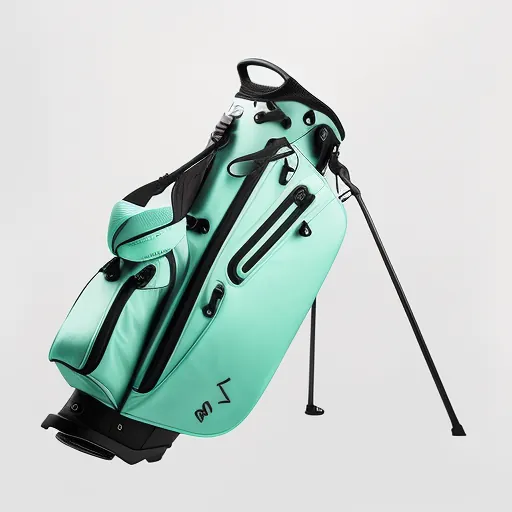
Today's participation landscape — 112.2 million golfers per The R&A, with juniors and women the fastest-growing cohorts and off-course/simulator play expanding beyond on-course numbers — opens room for brands that serve the new, broader buyer. Brands that design for women's geometry, junior scale, lightweight versatility and off-course-friendly formats have a structural tailwind that the industry's legacy pioneers did not enjoy at the same scale. The next great bag brand may well be built on serving these widening segments with the same engineering-first discipline the pioneers modeled.
Participation shifts reward brands that meet the new player where they are. Juniors and women — the fastest-growing cohorts — have needs mass-market ranges historically ignored, from correct junior scale to female-specific geometry and off-course-friendly formats. Because buying is now spec-driven and digital, a new brand serving these segments with honest engineering can earn authority without heritage. The pioneers built once for a narrower, less diverse field; the next brands build for a far wider one, and that is an opening more than a constraint.
The participation tailwind reshapes where new brands can win. Juniors and women are the fastest-growing cohorts, off-course and simulator play engages millions beyond on-course counts, and buying is increasingly spec-driven and digital. Brands that design for women's and junior geometry, lightweight versatility and off-course-friendly formats — with the same engineering-first discipline the pioneers modeled — face far broader, fresher shelves than the legacy giants ever did. The next great bag brand is likely built on this widening funnel.
Bringing These Lessons Into a Custom Program
For an OEM/ODM buyer, the origin stories translate directly into program design: anchor the line on a genuinely solved player problem with verifiable spec; pick a defensible positioning (walking lightweight, premium waterproof, luxury materials, value); build a coherent cross-category story; invest in visible quality and materials; and design for the growing participation segments. A factory with strong engineering, materials sourcing, waterproofing and QC — the capabilities we detail in our workflow guide — can bring those principles to production at realistic volume economics.
Translating the stories into production is straightforward if you keep the pillars in the spec. Anchor on a real player problem you can measure; pick one defensible position such as walking lightweight, premium waterproof, luxury materials or value; build a coherent cross-category story so trust transfers; invest visibly in materials and quality control; and design for the fastest-growing segments. A factory with strong sourcing, engineering and QC — the exact capabilities in our workflow and testing guides — turns those principles into sellable reality at private-label economics.
Bringing the origin lessons into production means translating five pillars into specs: a genuinely solved player problem with verifiable measurement; a defensible position (walking lightweight, premium waterproof, luxury materials or value); a coherent cross-category story; visible investment in materials, QC and finish; and design for the fastest-growing participation segments. A factory with strong engineering, sourcing, waterproofing and testing — the capabilities in our workflow and testing guides — can execute these at realistic volume economics and under a private label that inherits no history.
The Bottom Line for Aspiring Bag Brands
The brands that built this industry did so by being genuinely good at a real product problem first. Stories, marketing and margins followed. If you are building a bag brand with a factory partner, lead with engineering integrity, own a clear position, and let quality compound across seasons. The market's fundamentals — growing participation, premiumization and multi-bag ownership — reward exactly that discipline.
Ogio and Wilson: Innovation at Democratic Price Points
Ogio and Wilson complete the lineup by proving innovation does not require a premium shelf position. Ogio built a reputation for smart, head-turning organization at accessible prices, while Wilson converted iconography and wide distribution into reliable, value-led bags for the broadest audience. Together they demonstrate a durable counter-position: innovation and value can coexist without prestige pricing, capturing the mass segment that still holds the largest share of the market. For an OEM-backed brand that wants volume, this pair is the proof that a well-engineered, well-priced, cleverly organized product wins the middle decisively.
The Modern Reward: Total Product Branding
Every origin story culminates in the same modern reward: a bag is no longer sold alone but as part of a complete, credible product story. The consumer who trusts the brand's clubs, apparel or heritage will extend that trust to its bags, and the consumer who trusts the bag becomes a repeat buyer across categories. This is why total product branding — coherent design, consistent quality and a single promise carried across the range — is the actual endgame of every durable brand. For an entrant, it means the build-out from a single strong product to a coherent, cross-category line is not optional expansion but the natural completion of the brand-building arc these stories teach.
Frequently Asked Questions
- Which brand invented the modern walking stand bag?
- PING began with a backyard stand-bag prototype that solved the toppling problem, and Sun Mountain was central to codifying the deluxe lightweight carry format. Both are considered foundational to modern walking bags.
- What common formula explains durable golf bag brands?
- Solve a genuine player problem with real engineering, own a coherent positioning, let brand equity transfer across a complete product story, invest in visible materials and craft, and adapt to widening participation.
- Why is Vessel a benchmark for the luxury bag tier?
- Vessel proved a bag can command luxury margins on premium materials and finish, aligning with premiumization — the fastest-growing segment of the golf bag market — and showing that at the top tier, price is a feature.
- How can a private-label brand borrow these lessons?
- Anchor on a real player problem with verifiable specs, pick a defensible position, build a coherent cross-category story, invest in visible quality, and design for the fast-growing women's, junior and off-course segments.
- What role does participation growth play in brand-building now?
- With more than 112 million golfers and juniors/women the fastest-growing cohorts, brands that serve these widening segments with engineering-first discipline have a structural tailwind not available to the pioneers at the same scale.