The Golf Bag Customization Process: From Brief to Delivery, Step by Step
The golf bag customization process runs from spec and pattern, through sampling, material confirmation and bulk production, ending in QC and packaging.
The Golf Bag Customization Process
The golf bag customization process is the full production journey from initial concept and brief, through pattern and sample development, colour locking, bulk fabrication and quality control, to delivery — executed as a staged OEM/ODM workflow in which the milestones of sampling (10–20 days) and bulk production (45–60 days) define a repeatable calendar for any brand building a custom golf bag. This guide walks you through every stage in detail, explains the QC gates that protect quality, and gives buyers the exact vocabulary and checkpoints needed to manage a factory like a professional procurement team.
A custom golf bag is the result of a controlled manufacturing sequence, not a single creative jump. Every distinctive colourway, pocket architecture, logo and finish passes through the same core stages: brief, sample, lock, fabricate and inspect. Understanding this sequence demystifies the process, protects you from costly surprises and lets you communicate with the factory in language it already understands. Whether you are an individual designing one statement bag or a buyer commissioning a private-label range, the same disciplined workflow applies — and it is the workflow the professional golf bag market has standardised around.
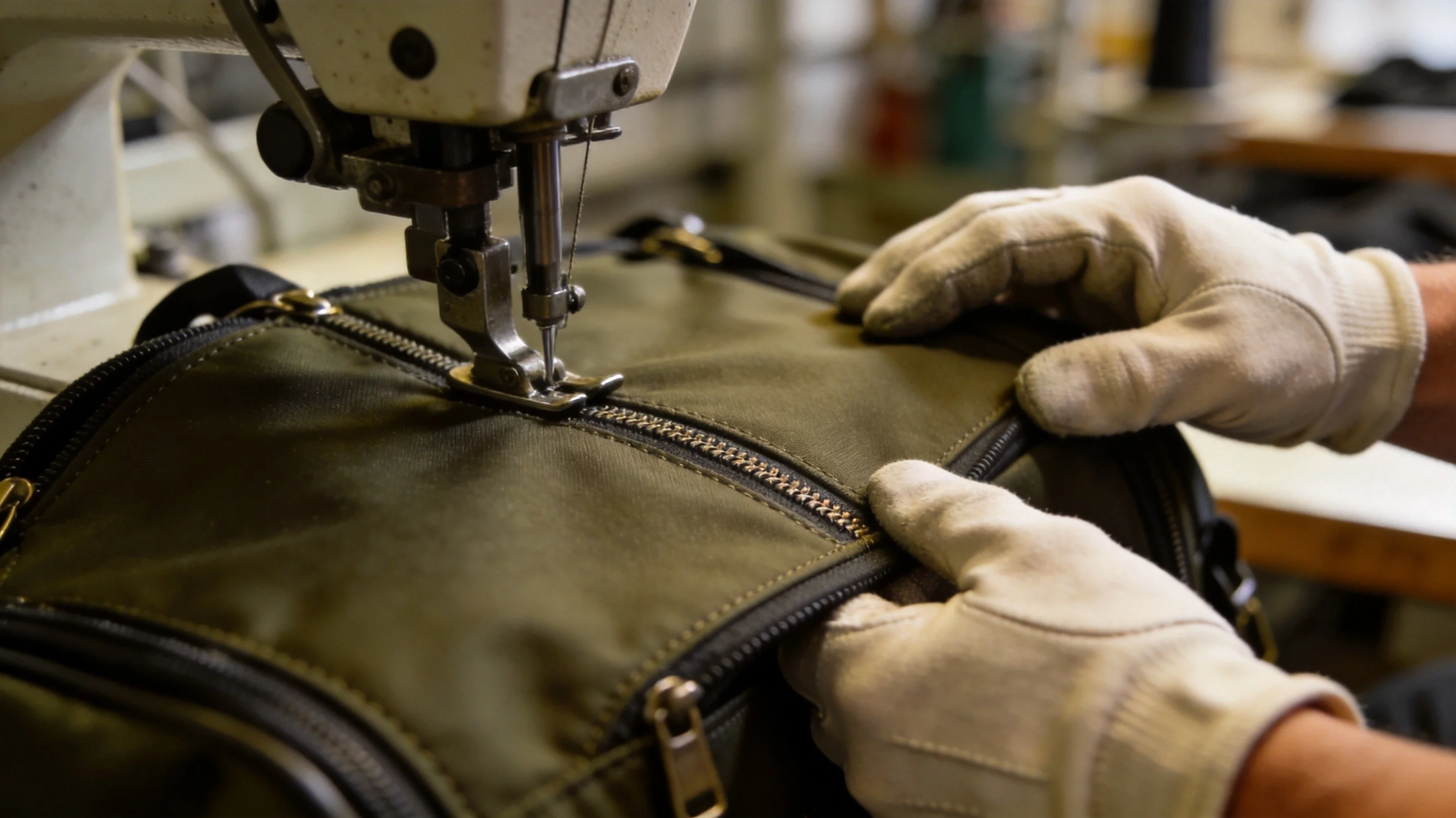
Golf bag customization process from brief through production in the factory
The Customization Process at a Glance
The customization process is best understood as a sequence of approvals rather than a single build, and each approval becomes a written checkpoint that protects the buyer as much as the manufacturer. From the moment the brief is accepted, the milestones are the pattern draft, the physical sample, the locked colour standard, the signed-off production batch and the final pre-shipment inspection. Because every one of these gates fixes a decision before money is spent on later, more expensive stages, a disciplined process quietly converts a bespoke project into a repeatable programme. For a brand ordering again next season, those same locked checkpoints mean the repeat run only refreshes what changed, cutting both sampling time and the risk of a colour or construction drift. This is the routine behind the figures most buyers quote as confidence signals: a standard MOQ of 200 pieces, test orders from 100, sampling in 10-20 days and bulk production in 45-60 days, all running through a factory that documents each stage rather than relying on memory.
| Stage | What Happens | Key Output | Typical Duration |
|---|---|---|---|
| 1. Brief & Concept | Define tone, colourway, features, audience | Design specification | 1–3 days |
| 2. Pattern & Engineering | Convert spec to pattern, tooling, bill of materials | Pattern, BOM | Part of sampling |
| 3. Sampling | Physical sample, colour match, embroidery proof | Approved sample | 10–20 days |
| 4. Colour Lock | Freeze colour standard against tolerance | Colour standard | ± sampling |
| 5. Bulk Production | Fabricate MOQ across cutting, sewing, finishing | Produced units | 45–60 days |
| 6. QC & Delivery | Inspect, pack, ship | Approved goods | Per schedule |
The six stages are the milestones every well-run custom project passes through. The three longest, pattern, sampling and bulk production, determine your calendar, so they should be briefed first and locked early. Everything else scales around them.
Stage 1 — Brief and Concept Development
Every successful custom project begins with a clear, written brief. The brief should state the psychological tone and target audience, the full colourway direction, the feature and pocket set, the logo technique and placement, and the target material and finish. Applying golf bag colour psychology here — described in our colour psychology guide — turns a vague idea into a specification the factory can cost.
An effective brief avoids buzzwords. Instead of "make it fresh", say "calm sage-green base, warm white accents, electric-blue piping, tonal logo on the front pocket". This precision allows the factory to match a colour standard, select substrate and advise on placement before real money is spent on tooling and sampling.
The brief is also where you fix the commercial envelope: MOQ, target price, seasonal date and quantity forecasts. Getting these assumptions on the table early prevents the revisions that push sampling out of your launch window. A disciplined brief is the cheapest insurance in the entire process.
Stage 2 — Pattern and Engineering
Once the brief is accepted, the factory converts the specification into actual engineering: the pattern pieces, the cutting layout, the bill of materials (BOM) and the production tooling. Pocket count, divider systems, strap design and hardware are all placed in this stage, and decisions made here are expensive to reverse later — which is why getting the architecture right early matters so much.
Engineering quality shows in how well the bag holds its shape, how cleanly pockets align and how durably seams are placed. A co-designing factory brings practical expertise here: it will flag design elements that are costly or fragile and suggest manufacturable alternatives that keep the look you want. This is a significant advantage of an ODM relationship over a pure OEM arrangement.
The pattern stage is also where smart storage and divider architecture is locked, as covered in our storage and organisation guide. Because retrofitting dividers or pockets after tooling is costly, acting on storage preference here delivers most of the functional value of the whole project.
Stage 3 — Sampling and Prototyping
Sampling is where the design becomes a tangible object, and it is the most important quality gate in the process. The factory produces a physical sample that demonstrates the pattern, colourway, embroidery or logo, materials and finish. The buyer inspects it, requests changes, and iterates until the sample meets the specification — all before any bulk production begins.
Typical sampling takes about 10–20 days. This window covers pattern preparation, sample sewing, colour-matching and the embroidery or logo proof. Buyers should treat the sample as the contract: it is the reference every bulk unit should match, so inspection should be thorough and every deviation documented.
Embroidery guidance matters at this stage. The logo must be digitised, stitch density tuned for the fabric and a proof approved so tension and puckering are correct before bulk. Our custom logo and embroidery guide explains what to check on an embroidery proof.
Stage 4 — Colour Lock and Standard Setting
Colour is the single most rejected attribute in custom golf bags, which is why the process formalises a colour-lock step. Once the sample's colourway is approved, the factory freezes it as a colour-matching standard — a reference captured against a documented tolerance so every production panel and every repeat order matches within spec.
Solution-dyed polyester and high-fastness pigments hold colour far longer than surface-printed designs, and the colour-lock step verifies the batch tolerance across panels. A buyer who confirms the factory maintains a colour-matching standard with a tolerance record is protecting the entire bespoke identity, as the colour-equity discussion in our colour trends guide explains.
The colour lock also protects future seasons. With the standard captured and documented, a brand can refresh accents or reorder the same colourway with confidence, because the reference travels across years of production. This turns a one-time sample into a reusable brand asset.
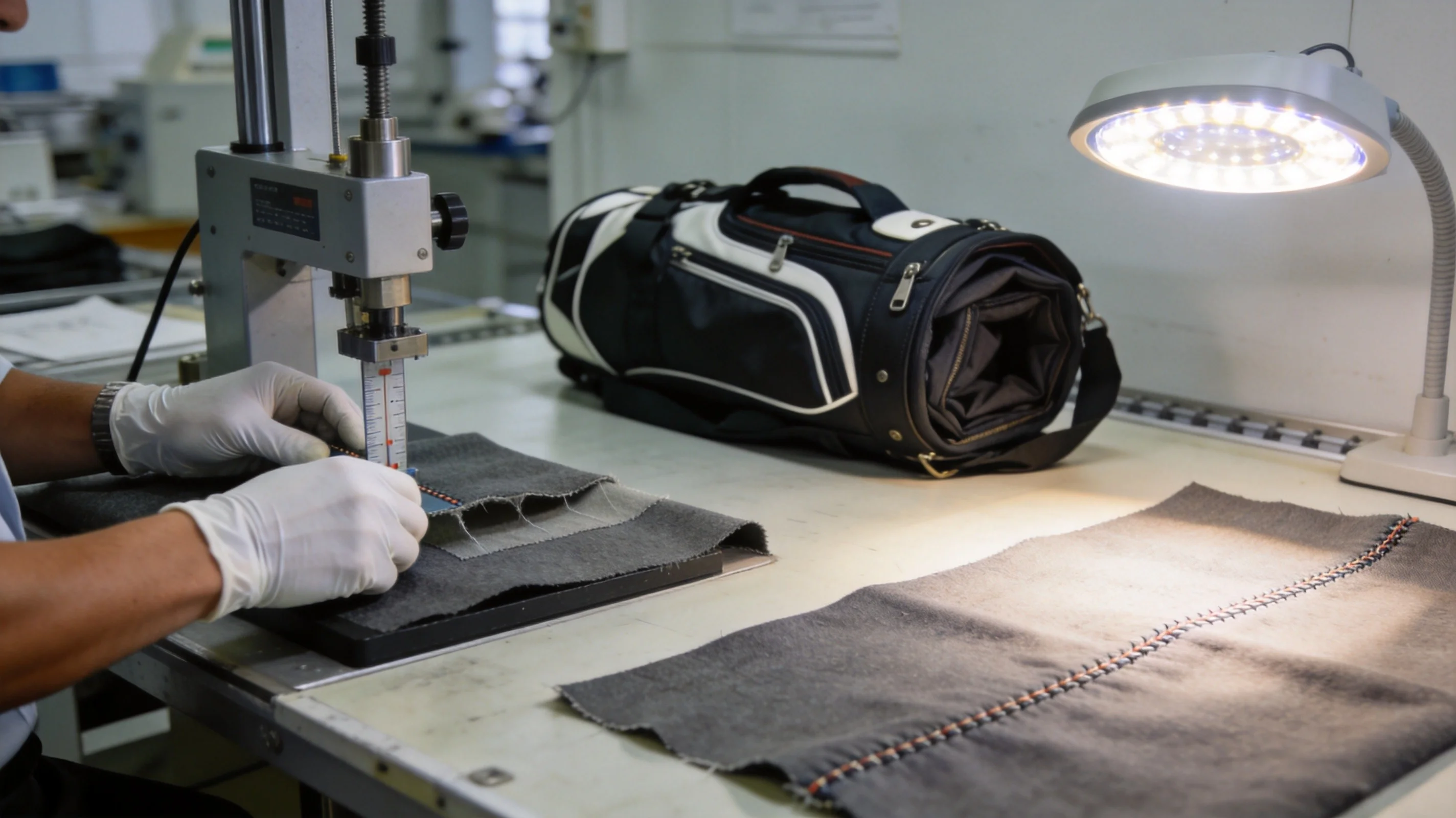
Quality control testing step of the golf bag customization process
Stage 5 — Bulk Production
With the sample approved and the colour standard locked, production begins. Bulk fabrication typically takes 45–60 days and proceeds through the same disciplines shown at sampling: cutting, sewing, assembly and finishing, executed against the locked standard. This is where a factory's production discipline — production lines, machinery and trained staff — directly determines consistency.
A standardized MOQ anchors the economics of this stage. A typical programme runs at a 200-piece MOQ per design, with test orders from 100 pieces. Within this framework the factory keeps per-unit cost competitive while the brand protects margin through differentiation. Detailed sourcing and import considerations are covered in our import guide.
During bulk production, the key management activities are milestone checks against the sample, monitoring the colour standard across batches and confirming the production schedule. A transparent factory reports progress at agreed milestones, so the buyer can adjust without crisis — the difference between a managed project and a reactive one.
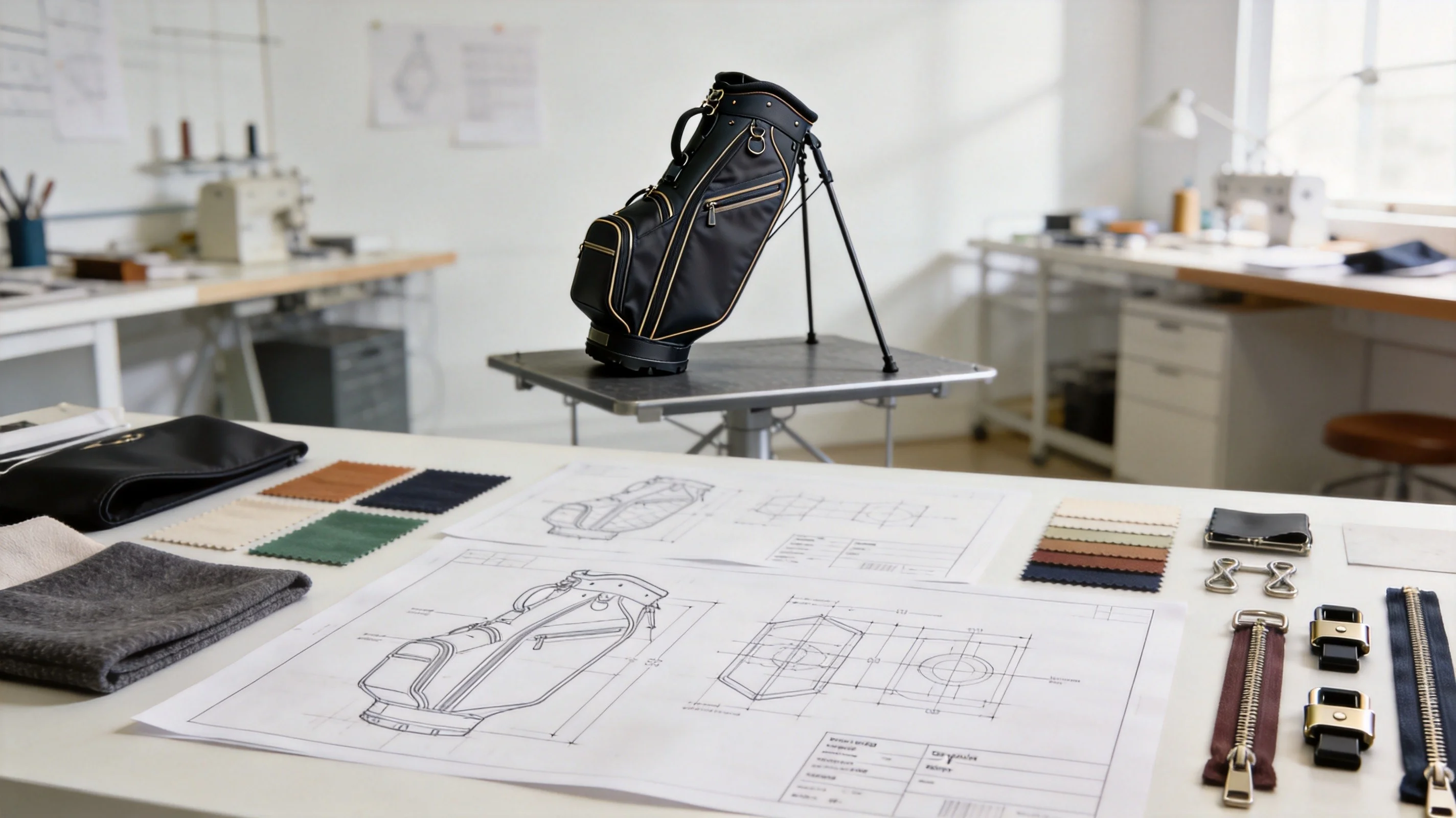
Sampling and prototyping stage of the golf bag customization process
Stage 6 — Quality Control and Delivery
Quality control is the final gate that keeps the process honest. A professional factory inspects against the approved sample and the locked colour standard — checking colour matching, embroidery and logo placement, seam integrity and hardware function, and confirming the finished construction meets specification. This inspection protects both the buyer and the factory by catching defects before goods ship.
The QC standard should also cover packaging and shipping, because a bespoke range arriving damaged or mislabelled erodes the whole investment. Confirm the packaging protects the colourway and logo, and validate the inspection is documented with a tolerance record you can trust and audit. Coordination with freight partners closes the loop on delivery.
After first delivery, the QC record becomes the baseline for consistency across repeat orders. A factory that keeps the documented standard and QC discipline over years of production is protecting the bespoke identity you paid to build, and that reliability is exactly what justifies a long-term partner over a transactional supplier.
Working With a Factory: The Full Sequence
QUANZHOU JUNYUAN BAGS (service@junyuanbags.com, +86 17750020688) executes the complete customization sequence — brief, pattern, sampling, colour lock, bulk and QC — across golf bags and related categories. With industry experience since 2004 and the company founded in 2014, it operates through an affiliated factory of approximately 4,950 m² staffed by roughly 137 people across seven production lines and 126 sewing stations, with monthly output near 200,000 pieces serving over 200 brands in more than 100 countries, and was SGS-reviewed in March 2026.
Working with a single accountable partner through the whole workflow is materially more reliable than assembling the stages from separate vendors, because the sampling, colour standard and QC stay under one quality system. This is why the partner relationship matters as much as the product specification in custom golf bag projects.
The parallel commissioning process — from first inquiry through quoting and sample to production and delivery — is detailed in our order process guide, which complements the manufacturing focus here.
Materials and Hardware Selection in the Process
Materials and hardware are chosen during pattern and engineering and confirmed at sampling, because they drive both cost and character. The outer fabric and finish determine the colourway's durability and the bag's texture; the lining, padding and zippers determine function and feel; and the hardware — buckles, sliders, feet, shoulder-strap mechanisms — determines longevity in daily use. Each choice should be locked against a standard so the second order matches the first.
The material brief is where colour psychology and process meet. Solution-dyed polyester and high-fastness pigments retain their hue under UV far better than surface-printed fabrics, and specifying them at pattern stage protects the entire bespoke colourway. Because material is confirmed with the sample, a buyer who locks substrate and finish at sampling avoids the painful alternative of a bulk batch that fades or cracks into a loss of the brand's identity.
Hardware selection deserves equal discipline. A dual-strap system's sliders, a stand bag's legs or feet, and every zipper should be specified for the load and use the bag will see, and function-tested on the sample. This is what turns a well-patterned bag into a durable product, and it is exactly why hardware is a formal checkpoint inside the customization process rather than a sourcing afterthought.
The Commercial Case for Process Discipline
Following the process faithfully is not bureaucracy — it is margin protection. Locking the colour standard, logo proof and construction sample at sampling converts rework from a late, expensive shock into a cheap, early correction. Because sampling costs a fraction of bulk, every decision moved into the sampling window protects the profitability of the 45–60 day production run. This is the measured, disciplined way a custom programme avoids the colour mismatches and redesigns that eat most customization budgets.
Process discipline also compounds across seasons. When the colourway, pattern and QC standard are documented, a repeat order reuses the locked standard while only refreshing the accent, cutting sampling cost and lead time on the second and every subsequent order. The result is a custom golf bag programme whose cost per unit falls as it matures, turning a one-off bespoke project into a repeatable, margin-strengthening asset rather than a speculative bet.
Communication is the oil of the process. Setting agreed milestones — brief accepted, sample approved, colour locked, bulk underway, QC passed — and reporting against them keeps every stage visible and every stakeholder aligned. A factory that reports progress honestly lets a buyer adjust without crisis, and a buyer who confirms these milestones at the start prevents the surprise delays that otherwise arrive unannounced at the end of a long bulk window.
Finally, document everything. The dated records of the approved sample, the colour standard and the QC tolerance form the contract that governs both the current run and every future reorder. When a dispute-free, documented process is in place, the customization cycle becomes smoothly repeatable — which is the real point of the discipline: consistent, on-schedule, quality-assured custom golf bags delivered season after season.
Sampling, Colour Locking and the Common Pitfalls to Avoid
Two decisions made at sampling determine most of a custom bag's quality: locking the colour standard and approving the logo proof. A colour standard captures the approved colourway against a documented batch tolerance, so both the bulk run and every reorder match. A logo proof confirms the embroidery or print is correctly digitised, stitched and placed for the chosen fabric. When both are locked on the physical sample, the expensive surprises that plague custom projects are largely eliminated.
The most common pitfalls are all avoidable with earlier discipline. Colour drift happens when the standard is captured loosely or not at all; redesigns happen when the brief is vague and the sample reveals a mismatch; and schedule slippage happens when these issues surface during bulk rather than during sampling. Each pitfall is a symptom of deferring a decision that should have been made at the brief or sampling stage.
Rushing sampling is a further mistake. Because the 10–20 day sample window is the cheapest place to make changes, spending the extra days to fully test the colour, logo, materials, pockets and hardware on the sample protects the entire 45–60 day bulk run. A buyer who treats the sample as a true prototype — tested on the course, carted, carried and inspected — ships a better product than one who approves a sample after a quick visual check.
A well-managed process also protects cash flow. Because sampling locks the specification, quotes become reliable against a fixed scope, and the buyer can commit to bulk without the fear of change orders that inflate cost. Clear stage pricing and a dated approval record give both parties a firm budget and a firm schedule, converting the customization process from an open-ended creative risk into a bounded, predictable commercial project.
Finally, treat the whole process as the beginning of a partnership rather than a single transaction. The pattern, colour standard, logo proof and QC record created on the first run are reusable assets that make every subsequent season faster, cheaper and more consistent. A buyer who protects and reuses that documentation turns one bespoke golf bag into a permanent, repeatable product line — the true commercial reward of mastering the customization process.
A structured handover from design to factory is the last safeguard. The same document — covering the approved sample, colour standard, logo proof, materials, hardware, packaging and ship destination — passes from design to sampling to bulk, so no stage depends on memory or informal agreement. With the handover written and dated, the customization process runs on a documented, auditable foundation, which is the mark of a professional-grade custom golf bag programme.
Frequently Asked Questions
- How long does the golf bag customization process take?
- Sampling typically takes 10–20 days and bulk production 45–60 days, on top of a brief and pattern stage that varies with project complexity. The full schedule from brief to delivery depends on iteration and seasonal workload, so brief and lock early.
- What is the minimum order for a custom golf bag?
- A standard OEM/ODM programme runs at a 200-piece MOQ per design, with test orders from 100 pieces. This anchors unit economics while keeping the customisation specification manufacturable and repeatable.
- Do I need to pay for samples?
- Sample policies vary by factory. Sampling costs time and materials, so confirm the sample fee and whether it is credited or deducted from bulk production before committing. A physical sample is a non-negotiable quality gate in the process.
- What causes delays in customization production?
- The most common delays are colourway dye matching, logo digitising and redesigns after tooling has started. Fixing the design, colour standard and logo proof early, and treating the approved sample as the contract, prevents most schedule slippage.
- How do I ensure quality across a bulk run?
- Lock the approved sample and colour standard, then verify the factory inspects bulk against them with a documented tolerance record. Milestone checks during production and a final QC gate before shipping protect consistency across the entire run.
- Can the factory help develop, not just manufacture, my design?
- Yes. ODM services co-design pattern engineering, sampling, colourway and storage architecture. QUANZHOU JUNYUAN BAGS provides this across golf bags at a 200-piece MOQ with 100-piece test orders, serving 200+ brands in 100+ countries.
Conclusion
The golf bag customization process is a disciplined six-stage sequence — brief, pattern, sampling, colour lock, bulk production and QC — that turns a creative idea into a repeatable, quality-assured product. Understanding it lets you brief precisely, lock decisions early and manage a factory like a professional procurement team, avoiding the colour mismatches and redesigns that eat most customisation budgets.
The milestones of 10–20 days sampling and 45–60 days bulk define a realistic seasonal calendar, while the MOQ framework of 200 pieces (with 100-piece test orders) keeps programmes accountable and economical. Combine a clear brief, a locked sample and a single accountable manufacturing partner, and your custom golf bag moves reliably from concept to carton — the outcome every serious buyer wants. QUANZHOU JUNYUAN BAGS can run the full process for you; contact service@junyuanbags.com or +86 17750020688.
Author & Manufacturing Note
QUANZHOU JUNYUAN BAGS — OEM/ODM golf bag manufacturer. Industry experience since 2004; company founded 2014; affiliated factory approx. 4,950 m²; seven production lines, 126 sewing stations, ~137 staff, monthly output ~200,000 pieces; serving 200+ brands across 100+ countries; SGS-reviewed March 2026. Standard OEM MOQ 200 pieces (test orders from 100), sampling 10–20 days, bulk production 45–60 days.
Contact: service@junyuanbags.com · WhatsApp/Phone +86 17750020688