Golf Bag Ergonomics and Comfort Design: The Complete Guide
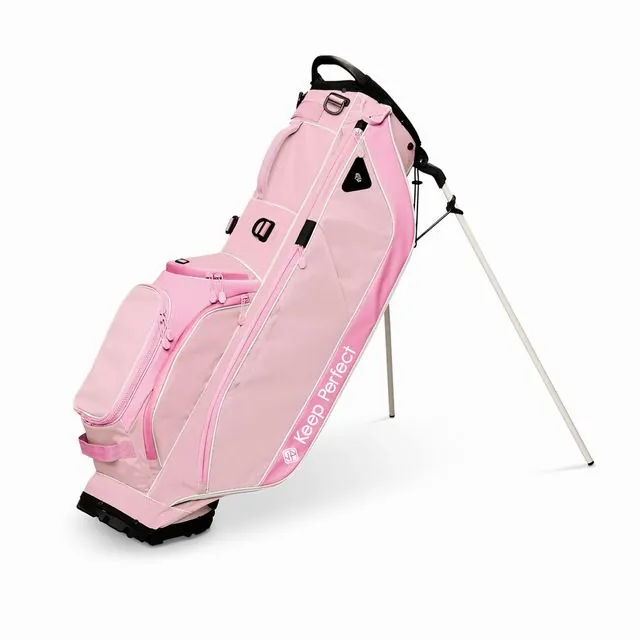
Ergonomic golf bag design makes carrying comfortable through four principles: padded, contoured dual shoulder straps that spread the load across both shoulders; a balanced frame that keeps the weight close to your back and centre of gravity; thick padding in the straps and back panel that absorbs pressure and shock; and stable, full-length dividers that stop clubs shifting as you walk. When a bag follows these principles, carrying a full set over eighteen holes is manageable and comfortable rather than punishing. This guide is the ergonomics and comfort engineering brief we use at our affiliated factory, QUANZHOU JUNYUAN BAGS (founded 2014, our founder active in the industry since 2004), which designs and produces bags for 200+ brands across more than 100 countries.
What Ergonomics Means for a Golf Bag
Ergonomics in a golf bag means designing the bag to fit the human body and minimise strain. A golf bag is carried for several kilometres on a walking round, and how it is strapped, padded, balanced and stabilised determines whether that distance is comfortable or exhausting. Ergonomic design is the engineering, much of it invisible, that turns a heavy load into a manageable one.
Every ergonomic feature works toward the same goals: spread weight evenly, keep it stable and close to the body, absorb shock and pressure, and put the least possible demand on your shoulders, neck and back. When these goals are met, the bag disappears from the experience and feels like part of you; when they are missed, the bag dominates the round in discomfort.
Ergonomics matters for more than comfort - it affects performance and long-term health. A comfortable, well-balanced bag lets you conserve energy and focus on your game, and steady, strain-reducing design reduces the accumulated stress of many rounds. This is why ergonomics is a core part of how a quality bag is built, not an afterthought.
The Four Pillars of Comfort Design
Comfort in a golf bag rests on four pillars that work together. First, strap geometry: padded, contoured dual straps that spread the weight across both shoulders. Second, padding: quality cushioning in the straps and back panel that absorbs pressure and shock. Third, balance: a frame that keeps the load close to the back and centre of gravity so the bag does not swing or tilt. Fourth, stability: full-length dividers and secure construction that stop clubs shifting.
No single pillar is enough on its own - a bag with great straps but poor balance still sags and swings, a balanced bag with thin straps still digs into shoulders. Real comfort comes from all four working together in a coherent design. When you assess a bag's ergonomics, check each pillar rather than just one feature in isolation.
Dual Straps: The Foundation of Carry Comfort
For any player who carries, the strap system is the most important ergonomic component. Dual, padded shoulder straps spread the bag's weight evenly across both shoulders and across the upper back, in stark contrast to a single strap that concentrates everything on one shoulder. The result is far less pressure on any one point and much less fatigue over a round.
The harness matters as much as the straps themselves. A well-designed dual-strap system is contoured and adjustable so the bag sits snugly and at the right height, holding the load stable against your back rather than bouncing or swinging as you walk. Short, medium and long torso lengths all adjust to fit, so the strap geometry works for different body types.
Comfort is also about the straps staying put. Quality construction prevents straps from slipping or pulling loose mid-round, which would force you to constantly readjust. A bag with dependable, well-padded, adjustable dual straps removes the single biggest source of carry discomfort. For the mechanics of the strap system, see our golf bag strap design guide.
Padding and Pressure Distribution
Padding is what turns a well-designed load into a comfortable one. Quality padding in the shoulder straps and the back panel absorbs pressure and shock, distributing weight across a wider area instead of concentrating it on small points. On a bag carried for miles, this is one of the most meaningful comforts you can feel.
The placement of padding matters as much as its thickness. Straps should be padded where they cross the shoulders, and the back panel cushioned where it contacts your back. Poorly placed or thin padding lets pressure build into uncomfortable points even on a light bag. Dense, durable padding that does not flatten over many rounds keeps its comfort for the life of the bag.
Padding is especially valuable in winter, when a bag of heavy clothing and layers adds weight to an already loaded carry. A well-padded bag keeps that extra load comfortable. For how ergonomics and carry interact across the year, see our seasonal usage guide.

Balance: Keeping the Load Close and Stable
Balance is the ergonomic feature that separates a bag that feels effortless from one that wears you out carrying the same weight. A well-balanced bag keeps its load close to your back and near your centre of gravity, so it sits still and stable as you walk. A poorly balanced bag with weight swinging away from your body makes your core constantly correct the movement, multiplying perceived effort.
Designers achieve balance through weight distribution - placing the heavier parts low and near the back, keeping the overall profile compact, and routing pockets so their contents stay near the body. The result is a bag that hugs you rather than one you fight. When a bag carries well, it feels lighter than its actual weight, which is the clearest sign of good balance.
Testing balance is simple: load the bag with its usual contents and walk with it, noticing whether it swings, tilts or pulls you to one side. A balanced bag stays centred with almost no effort. For how weight and portability interact, our golf bag weight and portability analysis goes deeper.
Full-Length Dividers for Walking Stability
Full-length dividers play a quiet but important ergonomic role for walkers, beyond protecting clubs. Because they separate clubs all the way down the bag, they stop clubs shifting, rattling and sliding with every step. This keeps the load stable and predictable as you walk, which reduces the small constant adjustments your body would otherwise make against a moving load.
A bag whose clubs slide and knock as you walk also demands more attention and feels less secure, adding to fatigue. Full-length dividers keep everything in place, so the bag stays balanced and quiet across the round. This is especially noticeable on uneven ground, where a well-divided bag holds its load firmly while a loosely packed one shifts with every stride.
For the choice between configurations, see our divider comparison guide. Whichever you choose, keeping the dividers intact preserves both club protection and walking stability.
The Standing Mechanism and Ergonomic Balance
A stand bag's folding leg mechanism, which lets it stand upright anywhere, also contributes to ergonomics. A well-engineered stand mechanism deploys smoothly and holds the bag stable on grass, sand and slopes, so you are not straining to prop the bag up or wrestling it upright. The legs should be light, durable and easy to operate without bending awkwardly.
The stand also needs to be balanced with the bag so that setting it down is a calm, predictable action rather than a fight. A bag whose stand is poorly placed or where the weight is awkward makes every set-down and pick-up more effort than it should be. When the mechanism and balance work together, the bag feels natural throughout the whole round.
| Ergonomic Feature | Why It Matters | Comfort Payoff |
|---|---|---|
| Padded dual straps | Spreads weight across both shoulders | Less pressure, less fatigue |
| Back & strap padding | Absorbs pressure and shock | Comfort over long carry |
| Balanced frame | Keeps load close and stable | Bag feels lighter than it is |
| Full-length dividers | Stops clubs shifting as you walk | Stable, quiet load |
| Easy stand mechanism | Holds bag upright smoothly | Less effort at set-down |
Ergonomic Design for Riders: Lifting and Handling
Ergonomics matters for riders too, though the emphasis shifts. A rider lifts the bag on and off the cart and carries it short distances, so an ergonomic cart bag has a well-designed, comfortably placed handle, a hip pad that cushions contact, and construction light enough to move easily. These features reduce the strain of handling that even riders experience every round.
A comfortable handle and balanced cart bag make the many small lifts - into the boot, onto the trolley, into the bag room - feel easier and safer. Ergonomic handling design is especially appreciated by players with back or joint considerations who ride to reduce the physical demands of the game. Even on a cart, comfort design keeps the experience pleasant and strain-free.
Adjusting the Bag to Fit Your Body
Ergonomics only delivers when the bag is adjusted to fit you. Take the time to set the dual straps so the bag rides at a comfortable height, snug against your back without sagging or bouncing. The weight should distribute across your upper back and shoulders rather than dragging low against your hips or riding too high. Proper adjustment is the point where good design meets your individual body.
Revisit the adjustment periodically, especially if your fitness, posture or the load you carry changes. A bag that was adjusted for a light summer set may need different settings with heavy winter layers or vice versa. For step-by-step adjustment, see our how to adjust stand bag straps guide.
Common Ergonomics Mistakes
The most common ergonomic mistake is buying on weight alone and ignoring balance, padding and strap design, so a light but poorly balanced bag feels heavier than a slightly heavier, well-designed one. Another is choosing a single strap or an ill-fitting harness that concentrates pressure on one shoulder. Skipping adjustment of the straps is also common, so even a good bag sits wrongly.
Avoid these by assessing all four pillars - straps, padding, balance and stability - rather than any single number, and by adjusting the bag to your body before you judge its comfort. A bag that fits and balances well will always outperform one that is technically lighter but poorly ergonomically designed. For how comfortable construction is built, our quality standards guide explains what makes a bag carry well.
How Ergonomics Is Built in at the Factory
Ergonomic comfort starts in the design and construction process at the factory, not with a brand name. Padded straps must be sewn to handle a full load without slipping, the frame must be built to balance correctly, and quality padding must survive many rounds without flattening. These are engineering and manufacturing decisions made during production.
At our affiliated factory we build ergonomically-designed bags across 7 production lines with 126 sewing machines and a team of 137 employees, to a monthly capacity of around 200,000 pieces, and every order passes a documented quality-control stage. We have also passed an SGS factory audit in March 2026. For how a factory builds comfort and durability, see our materials guide and OEM/ODM process guide.
Need a Golf Bag Designed for Real Comfort?
Choose ergonomic dual straps, balanced frames and quality padding, customised to your brand. Standard 200-piece MOQ (test orders from 100 pieces), quality-assured production, sampling in 10-20 days and bulk delivery in 45-60 days. All orders are run through an SGS-audited affiliated factory in Quanzhou.
Explore Custom Golf Bags →Conclusion
Ergonomic golf bag design is what makes carrying a full set comfortable rather than punishing. Choose or design a bag that spreads weight through padded dual straps, absorbs pressure with quality padding, keeps the load balanced and close to your back, and stabilises the clubs with full-length dividers. Adjust the straps to fit your body, assess all four pillars rather than weight alone, and buy from a manufacturer that builds comfort into construction. A comfortable bag makes you a fresher, more focused player for the whole round and every round.
Sources
The Relationship Between Weight and Ergonomics
Weight and ergonomics are closely linked, but they are not the same thing. A bag can be light yet uncomfortable if it is unbalanced, poorly padded or ill-fitting, and a slightly heavier bag can be genuinely comfortable if it spreads and balances the weight well. The goal of good ergonomic design is to make the necessary weight as easy to carry as possible through geometry, padding and balance.
When you evaluate a bag, consider how its weight is handled rather than the weight alone. A bag that manages its load intelligently will typically feel better to carry over a long round than one that is merely light. This is the practical insight that separates good ergonomic design from a simple weight race.
Comfort design accounts for the fact that golfers differ in body type, strength and how they play. A younger, fitter walker may want the lightest possible ultra-light bag, while a player with back or shoulder considerations benefits most from generous padding and careful balance. Some players prefer the flexibility of a full-featured stand bag, others the simplicity of a minimal carry. Matching the ergonomic emphasis to the player is as important as the design itself.
The practical way to match is to consider how the bag will be used over a whole season and to prioritise the ergonomic features that matter for that use. A bag that suits the player's body and habits is the one that gets used comfortably and well, so the best ergonomic design is the one fitted to the individual.
Ergonomic comfort is also felt in small but meaningful ways across a round: the bag not digging in when you bend to retrieve a club, the straps not chafing by the back nine, the load not bouncing on every uneven step. These small comforts add up to a fundamentally more pleasant experience and let you walk freely and naturally rather than brace against the bag. The best ergonomics disappear into the round entirely, which is the clearest sign they are working.
When you are choosing between bags that are otherwise similar, prioritising the ergonomic features that matter for your carrying style repays the decision many times over. Because comfort affects energy, attention and long-term physical ease, thoughtful ergonomic choices protect both your game and your body across the years of golf ahead.
Finally, it helps to remember that no single number or feature tells the whole ergonomic story, so a little experience with the bag is the best guide. Whenever possible, load the bag realistically and carry it a short distance to feel how the straps sit, how the load balances and how the padding works. This practical test confirms whether the design principles are realised for your body, and it is the most reliable way to choose a bag that is genuinely comfortable.
Where you cannot try the bag, rely on the credibility of the build and the brand's reputation for ergonomics, since these are the indicators that good design has been carried through to production. Combining a proven build with your own feel test gives you the highest confidence in comfortable, lasting comfort.
Frequently Asked Questions
- What makes a golf bag comfortable to carry?
- A comfortable golf bag spreads the load through padded, contoured dual straps, sits balanced against your back with the weight kept close and low, and uses full-length dividers and stable construction so clubs do not shift as you walk. Ergonomic design means your body does the least work possible while carrying a full set.
- Are dual straps better than a single strap?
- For most players, yes. Padded dual shoulder straps spread the weight evenly across both shoulders and across the back, reducing pressure points and fatigue compared to a single strap. Dual straps also let the bag sit more stable against the body, which improves both comfort and control while walking.
- How heavy is too heavy for a golf bag?
- A comfortable carry weight depends on you, but a reasonable target is a stand bag that weighs about 1.5 to 2.5 kg before clubs. When fully loaded with a set and gear, the total should feel manageable for the distance you walk. If it is a strain to lift and carry, the bag is too heavy for your needs.
- Does padding matter on a golf bag?
- Padding matters a lot when you carry. Quality padding in the shoulder straps and the back panel absorbs pressure and shock across a round, reducing discomfort. On a bag you carry for miles, thick, well-placed padding is one of the most important ergonomic features.
- How does balance affect golf bag comfort?
- Balance is critical for walkers. A well-balanced bag keeps the load close to your back and your centre of gravity, so it does not swing, tilt or pull you to one side. A poorly balanced bag carrying the same weight feels much heavier because your body constantly corrects against the movement.
- Should the bag sit high or low on my back?
- The bag should sit comfortably with most of its weight distributed across your upper back and shoulders, not pulling low against your hips or bouncing high. Adjust the straps so the bag rides snugly without sagging, and check it stays stable as you walk.
- What ergonomic features matter on a cart bag?
- Even on a cart, comfort features matter: a padded hip pad and a well-designed handle make the bag easier to lift, carry short distances and move on and off the trolley. Ergonomic cart bags are simpler to handle around the course and the clubhouse.
- Can ergonomic design help prevent injury?
- Yes. Ergonomic design - dual straps, good padding, balanced weight distribution and a snug fit - reduces the strain that could otherwise accumulate when carrying a full set. This helps prevent shoulder, neck and back discomfort over many rounds, especially for players who walk regularly.