Golf Bag Manufacturing Processes and Production Workflow 2025
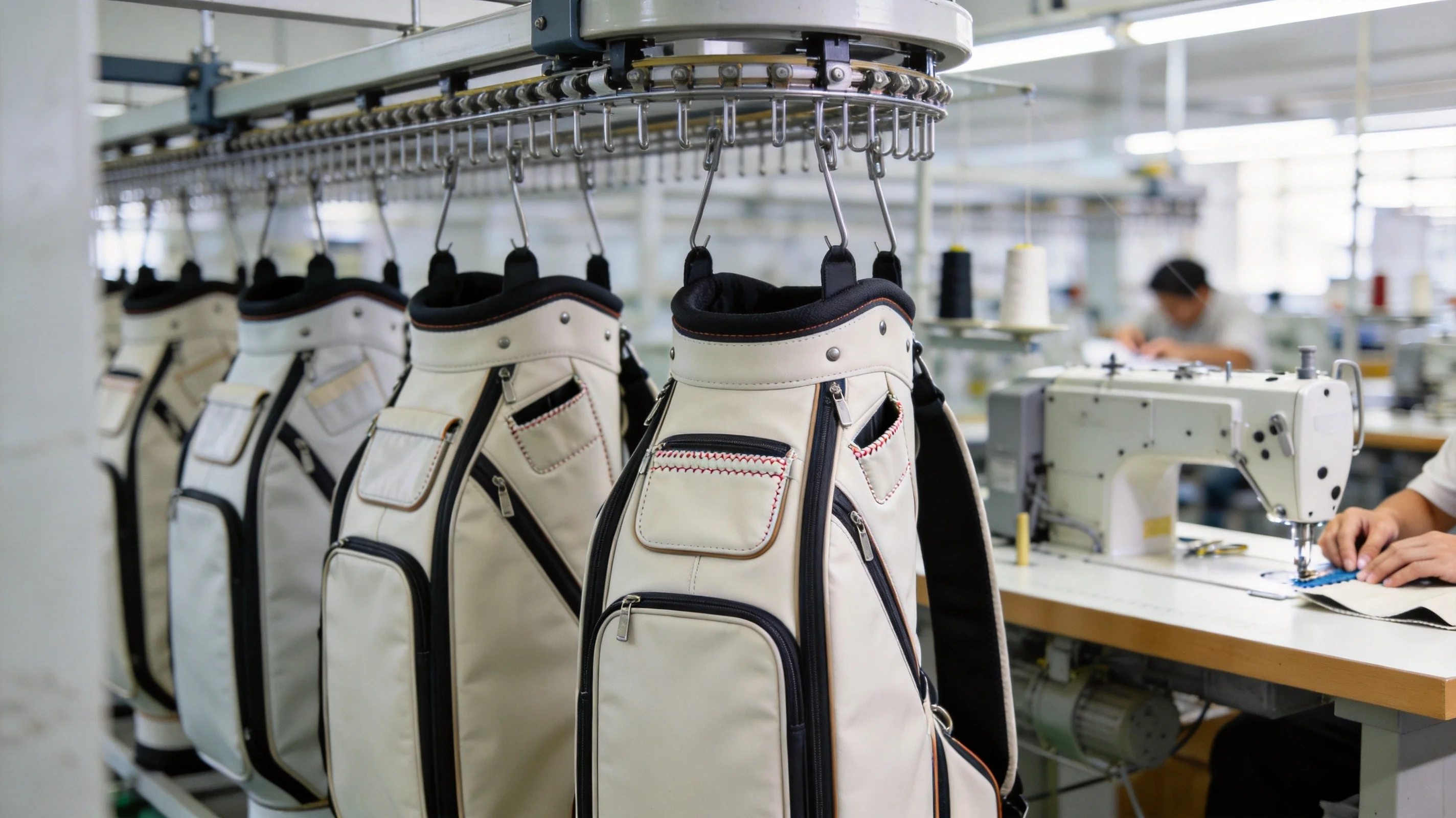
By 2025 the professional golf bag production workflow is built on digital pattern making, disciplined line balancing, ERP-based order tracking and interlocked quality gates, enabling a factory with 7 production lines and 126 sewing machines to comfortably sustain a 200,000-unit monthly capacity while holding a standard 200-piece MOQ, 100-piece test orders, 10-20 day sampling and 45-60 day bulk lead times. This is a working explanation of that modern workflow, written from the floor of QUANZHOU JUNYUAN BAGS.
The Shift From Workshops to Managed Production Workflows
Ten years ago, much of the golf bag industry still relied on workshop-style production: a handful of versatile sewers each building a complete bag, guided by paper patterns and the memory of the most experienced operator. That model worked for small volumes, but it broke down the moment a brand ordered consistent thousands of identical units. Different operators produced slightly different bags, quality fluctuated, and there was no clean way to trace a defect back to its cause.
The managed workflow replaced versatility with specialisation. Today a modern factory divides the build into defined operations and runs them in a fixed sequence, each operator mastering a single task. This is the structural change that made consistent, high-volume production possible, and it remains the backbone of how we produce across our 7 production lines and 126 sewing machines. The practical consequences for a buyer are large: the same workflow that supports a 200,000-bag month also produces a more uniform bag for a first-time 200-piece order.
Planning the Workflow: From Order to Production Schedule
A production workflow does not begin on the sewing floor; it begins with planning. When a confirmed order enters, the factory creates a production schedule that sequences material purchasing, pattern preparation, cutting, sewing, finishing and inspection so that each stage is ready exactly when the next needs it. Poorly planned factories either stall waiting for materials or rush stages and introduce defects.
Central to modern planning is an ERP (Enterprise Resource Planning) or production-tracking system. Every order is logged with its due date, quantity, design references and current stage. As work moves from cutting to sewing to finishing, the system updates in near real time, so the buyer can be told, with confidence, exactly where an order stands at any point. This transparency is one of the strongest reasons to partner with a factory that invests in managed workflow rather than improvisation.
Digital Pattern Making and the 2025 Sampling Advantage
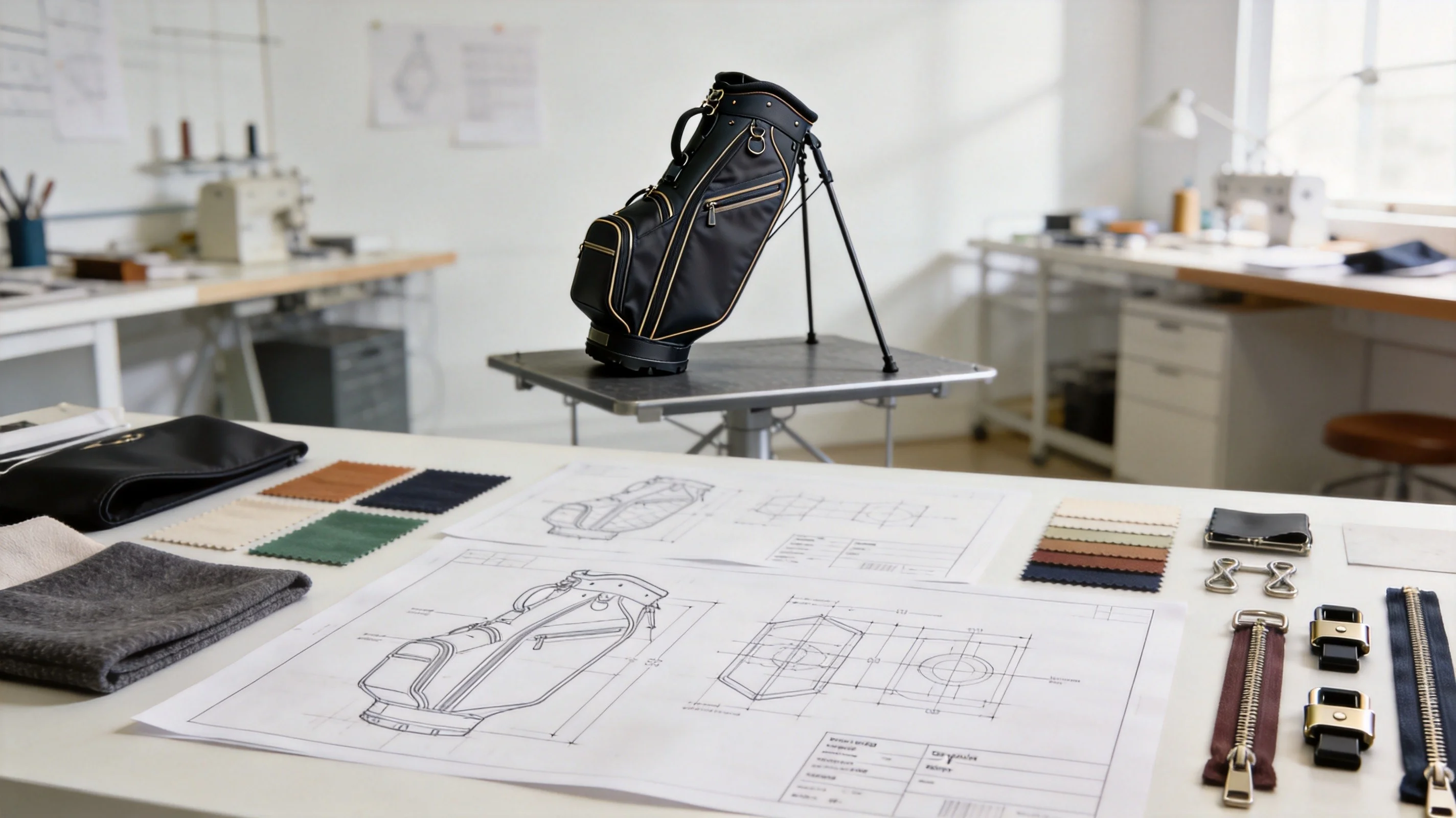
Pattern making is being transformed by digital tools. Computer-aided design and cutting software now generate patterns, nest them efficiently on fabric and even drive automated cutters directly. Digital patterning cuts material waste, improves dimensional accuracy and shortens the gap between a design concept and a testable sample.
For buyers the tangible benefit is a faster, more accurate sampling loop. Where a factory can produce a first sample in 10-20 days, and can regenerate patterns quickly when a brand asks for a taller divider or an extra pocket, the whole development is de-risked. Sample revisions no longer require rebuilding paper patterns from scratch. We explain the complete development loop in our OEM/ODM process guide, and the upfront sampling phase itself is where most of that value is captured.
Line Balancing: The Heart of an Efficient Workflow
Line balancing is how a factory keeps a production line flowing at a steady, predictable rate. The concept is simple: each workstation in the line should take roughly the same amount of time to complete its operation, so no station bottlenecks the rest. If pocket sewing takes one minute and zip insertion takes three, the line jams at the zip station and downstream workers idle.
Experienced factories balance lines by grouping operations of similar duration, assigning more workers to heavy tasks and sequencing steps so work flows smoothly from station to station. A well-balanced line keeps output high, quality stable and lead times predictable — precisely the properties a brand needs when committing to a 45-60 day bulk schedule. Our 137 employees are organised on this principle across the plant.
The Manual Skills That Automation Hasn't Replaced
Despite the advances in planning and patterning, golf bag construction remains genuinely skilled manual work. The decisive operations — controlling seam tension on curved joins, aligning plush fabrics, setting zippers that must glide for years, anchoring a strap so it never pulls free — are done by trained hands. Automation has improved cutting and patterning, but the sewing and finishing that define build quality are still human craft executed to a repeatable standard.
This is why workforce matters in supplier selection as much as machinery. A factory with stable, well-trained operators on 126 sewing machines produces more consistently than one with more machines but high staff turnover. It is also why our manufacturer selection guide tells buyers to look past empty factory photos and ask about training, supervision and inspection ratios.
Quality Gates Embedded in the Workflow
In a modern workflow, quality is not a final check; it is a sequence of gates. Incoming materials are verified against spec before cutting. Cutting supervision rejects flawed fabric. Sewing line supervisors inspect work at defined intervals, catching slips before they compound. After finishing, every bag is checked against the approved sample, then a representative batch is random-sampled to an acceptance standard before packing.
The acceptance standard is usually expressed as an AQL (Acceptable Quality Limit) sampling plan, where a sample of the lot is inspected and the lot is accepted or rejected based on the number of defects found. This is the objective, statistically grounded way serious buyers and factories agree on quality. Our quality standards guide explains how to set and verify these limits against your own expectations.
The 2025 Production Workflow at a Glance
For a buyer planning a custom programme, the workflow reduces to a predictable sequence. Understanding it lets you ask the right questions and set realistic expectations at every hand-off point.
| Workflow Stage | Key Activity | Quality Gate |
|---|---|---|
| Order & planning | ERP scheduling, material ordering | Spec confirmed |
| Digital patterning | CAD patterns, nesting, cutting | Material inspection |
| Sewing & assembly | Dedicated station operations | In-process checks |
| Hardware & dividers | Zippers, straps, stand, base | Function test |
| Finishing & decoration | Trimming, embroidery, labels | Visual vs sample |
| Inspection & packing | AQL sampling, carton | Pre-shipment check |
How Workflow Improvements Shrink Lead Times
The concrete payoff of a modern workflow is compressed, dependable lead time. Because planning is front-loaded and materials are sequenced properly, the factory avoids the idle gaps and rushed corrections that stretch schedules. Sampling holds at 10-20 days, bulk production at 45-60 days after approval, and freight then adds transport time to your port.
Equally important, the workflow makes lead times reliable, not just fast. A reproducible process lets the factory commit to a date and hit it, which is what brands actually need when aligning a container with a retail launch or a tournament season. For a full cost and timing model, our wholesale pricing guide pairs lead times with unit-cost structures.
Building a 2025-Ready Production Programme?
Leverage a managed, ERP-tracked workflow across 7 production lines with 200+ brands and 100+ countries served. Contact us to schedule a capability review and live order-tracking demonstration.
Start a Production Discussion →Capacity as a Workflow by-Product
Capacity is downstream of workflow quality. A factory does not achieve high output by forcing machines faster; it achieves it by removing bottlenecks, balancing lines and eliminating rework. Our capacity of 200,000 bags per month across 7 lines and 126 sewing machines is the natural result of a stable, well-managed process — not of pushing operators past a sustainable pace.
Sustainable capacity matters because it protects existing clients and welcomes new ones. When a supplier runs at the ragged edge, any new order or hiccup cascades into delays for everyone. A factory with real headroom can take on your programme without compromising the deadlines of its other customers, which is the quieter reason capacity is a quality signal in its own right.
Visibility and Communication in the Modern Workflow
A 2025 workflow is also a transparent workflow. Because orders live in a tracking system, the factory can give buyers clear, current status rather than vague reassurance. You can confirm when cutting starts, when sewing completes and when inspection passes — which removes a huge share of the anxiety that plagues first international orders.
Communication discipline extends to spec changes. In a managed workflow, every change is logged against the order, priced and scheduled rather than absorbed informally. This protects both parties: you know exactly what a mid-production change costs and what it does to your date, and the factory knows it will be compensated for the disruption. This is the kind of predictability that underpins the long-term partnerships we build with OEM and ODM clients.
Conclusion
The 2025 golf bag production workflow is a managed, transparent and quality-gated system rather than a loose assembly process. Digital patterning accelerates sampling, line balancing keeps output steady, ERP tracking delivers visibility, and embedded quality gates protect consistency. For a buyer, choosing a factory that runs this kind of workflow is the single most reliable way to get a uniform, on-schedule product at scale — whether that scale is 200 pieces or 200,000.
The Modern Production Workflow in Practice
A contemporary golf bag production workflow is designed around flow, minimising downtime and moving work smoothly from stage to stage. Rather than producing components in isolation, a modern line sequences sub-assemblies so that pockets, dividers and shells are built in parallel and converge at assembly. This reduces waiting time, balances the workload across stations and keeps the line continuously productive.
Workflow design is a genuine competitive discipline. A well-balanced line completes orders on the lower end of the 45-60 day bulk window reliably; a poorly organised one slips to the upper end or beyond, regardless of how good the machines are. Asking how a factory sequences its work — how it feeds the cutting floor, how it balances the sewing stations and how it schedules material and equipment — reveals a great deal about whether delivery promises are realistic.
Modern workflow also integrates planning tools and production scheduling. Orders are queued against available line capacity, material is committed in advance, and bottlenecks are flagged early so they do not become delays. Our facility runs this scheduling discipline across seven lines, which is how we hold a 200,000-unit monthly pace while completing each order to a reliable schedule. For a buyer, this organisation is the quiet difference between a delivery that lands on time and one that drifts.
Digitally Connected Stages and Visibility
One of the most striking changes in the 2025 workflow is how connected and visible the stages have become. Digital records tie each order's material lots, production batch and inspection results together into a single traceable history. A buyer or auditor can reconstruct, after the fact, exactly which materials went into a batch, when each stage was completed and what quality checks were recorded at every gate.
This visibility is possible because the workflow generates data at each stage. Cutting records panel counts and dye lots; sewing records station-level checks; finishing records decoration validation; and pre-shipment records the AQL result. Aggregated across orders, this data also enables continuous improvement — defect trends are analysed, root causes are identified and corrective action is proven effective over subsequent runs.
For a buyer the practical benefit is confidence. Instead of being reassured that quality is fine, you can be shown the recorded checks for your own order. This is the standard of transparency that defines a credible modern supplier, and it is a key reason the quality systems described in our quality standards guide emphasize documentation alongside measurement.
Workflow, Capacity and On-Time Delivery
Capacity and workflow are inseparable. A factory can only promise a schedule if its workflow can actually move an order through at the required pace. Our capacity of 200,000 units a month comes from seven parallel production lines, 126 sewing machines and a 137-person team organised so that work flows without congestion. Scale is not just about having many machines; it is about having them arranged so they are continuously productive.
Workflow also protects delivery against the unpredictability that plagues smaller workshops. When a factory runs full-flow lines with reserved capacity, a new order can be inserted into a stable schedule rather than interrupting a chaotic one to jump the queue. This is why our delivery timelines — 10-20 days sampling and 45-60 days bulk — are commitments we can stand behind, and why evaluating a factory's workflow is one of the most reliable ways to predict whether its promises hold. Planning a full programme with realistic lead times is covered in our production timeline guide.
Materials, Vendors and Workflow Integration
A modern workflow is only as strong as its least reliable input, which is why material and vendor management are integrated into the flow itself. Materials are sourced from qualified suppliers to stable specifications and verified at intake before they enter the workflow. This stops an off-spec fabric lot or a weak hardware batch from disrupting either quality or schedule downstream.
Vendor quality is managed with the same discipline that governs production. Suppliers are evaluated on consistency, their lots are checked on arrival, and problems are fed back so they are corrected at source. Over time this builds a dependable supply base that protects the workflow from the costly surprises — a late shipment, a wrong grade, an inconsistent dye — that undercut delivery and quality. For a buyer, a factory's supplier discipline is a leading indicator of its reliability, because a disrupted input inevitably becomes a disrupted product.
Integrating vendors into the workflow also protects the schedule. By committing material availability in advance and keeping qualified suppliers on standby, a well-managed factory prevents procurement delays from pushing a 45-60 day bulk run toward the far end of its range. This integration is part of how we keep delivery realistic, and it is a capability buyers should probe when evaluating how a factory actually sustains its promised lead times.
Workflow Flexibility for Custom and OEM Orders
Custom and OEM orders demand a workflow that can flex around each client's specification without losing the discipline of standardised flow. This is where a mature production system earns its value. Because the core stages are standard, a bespoke design enters the same proven pipeline as a standard product, gaining the process reliability while accommodating the unique layout, materials and decoration of the custom brief.
Flexibility also shows in how the stages adapt. A complex staff bag with extensive branding needs more sewing and finishing time than a simple carry, and the workflow must allocate accordingly without starving other orders. A factory that balances this — reserving line capacity, scheduling complex work deliberately, and sequencing orders to keep every line busy — can take a custom project from brief to delivery predictably.
This is the practical value of our OEM/ODM services, which fit custom and 100-piece to 200-piece-plus orders into a workflow designed for reliability. Whatever your brief, the underlying workflow gives you the same quality gates, material discipline and delivery realism as a standard product. Choosing a factory whose workflow flexes to your requirements while holding its standards is how you protect both uniqueness and dependability.
Production Capacity and Scaling
Behind the workflow is a question every buyer asks: can the factory deliver at my volume, and can it scale with my growth? We answer that with concrete capacity rather than vague claims. Our facility in China runs seven production lines with 126 sewing machines and a team of 137 employees, producing roughly 200,000 golf bags a month across the product range. That capacity supports programmes from a 100-piece test order to large seasonal runs.
Capacity also governs how a workflow adapts under load. A factory with multiple lines can segregate a complex, low-tolerance order onto a dedicated line so it is not diluted by high-volume, faster-moving products sharing the same equipment. This segregation protects the quality of a specialty order even when the plant is producing at capacity, and it is one of the practical advantages of operating several lines rather than one.
When planning a programme, openly stating your volume and expected growth lets the factory schedule sensibly. Whether you begin with the 100-piece test or a full production order, understanding the ceiling and how capacity is allocated helps you predict lead times as you scale. Our workflow is structured to absorb growth smoothly, which is why long-term brands keep expanding their programmes with us.
Getting Started With a Qualified Partner
The most practical way to turn this groundwork into a reliable product is to engage a factory with verifiable credentials, proven output and transparent process. A qualified facility founded in 2014, staffed by a team whose founder entered the industry in 2004, brings more than twenty years of hands-on knowledge to every programme. That experience shows in faster sampling, fewer defects and sound advice at each decision point.
At our facility in China, seven production lines and 126 sewing machines support a 137-person team producing about 200,000 golf bags a month for 200+ brands sold to 100+ countries. Backed by SGS factory audits and BSCI-aligned practices, we combine real capacity with documented quality control, so you can validate us before committing. Whether you begin with a 100-piece test order or move straight to a full production run, the milestones you have read here are the milestones we apply to your order.
To start, bring a detailed specification and an honest sense of your volume and deadline, and we will map the stages, timings and costs for your exact programme. With direct contact to our export team, service@junyuanbags.com or +86 17750020688, you can begin a conversation that moves quickly into a structured plan. The process and standards described above are not theory; they are the operating reality you are welcome to verify before your first container ships.
Our Factory Profile and How It Shapes This Story
The figures and workflows discussed above reflect how QUANZHOU JUNYUAN BAGS actually operates. We build golf bags in a 4,950 sqm affiliated production facility, founded in 2014 by a founder who entered the industry in 2004 — more than twenty years of experience. Seven production lines and 126 sewing machines support a 137-person team, producing about 200,000 golf bags per month for more than 200 brands in over 100 countries.
For custom and OEM/ODM work our standard MOQ is 200 pieces, and a 100-piece test order is available to validate a design before scaling. Prototype sampling takes 10-20 days; bulk production runs 45-60 days. These timings are the real operating window, not a best-case estimate. The facility has completed SGS factory audits and runs its management system to the ISO 9001 standard, giving independent weight to the quality and delivery claims in this article.
If you would like these numbers mapped to your own product, our export team is available at service@junyuanbags.com or +86 17750020688. You can also see the practical expression of this capacity on our OEM/ODM services and OEM/ODM process guide pages. Either way, these are the operating facts behind the story this guide tells.
Sources
Frequently Asked Questions
- How has the golf bag production workflow changed for 2025?
- Factories now use digital patterning, ERP tracking, lean line balancing and dedicated sewing stations, holding sampling at 10-20 days and bulk at 45-60 days.
- What is a production line in a golf bag factory?
- A fixed sequence of dedicated stations building one product type in flow. Our 7 lines with 126 sewing machines produce up to 200,000 bags monthly.
- How do factories track a golf bag order through production?
- Via ERP or production-tracking systems that log each order from material receipt through cutting, sewing, finishing, inspection and packing with live status.
- What is the MOQ and timeline for 2025 custom production?
- Standard MOQ is 200 pieces, with 100-piece test orders. Sampling is 10-20 days and bulk production 45-60 days after approval.
- How do factories ensure quality in a high-volume workflow?
- Incoming material checks, in-process inspections, finished-goods checks against the sample, and optional third-party pre-shipment inspection.