Golf Bag Price Analysis and Buying Guide
A realistic retail golf bag runs roughly $50-120 for budget, $120-250 for mid-range, and $250-500+ for premium — and the best value is usually the mid-range tier, because the biggest cost drivers are materials, full-length dividers, waterproofing and construction quality, not branding, while factory-direct wholesale pricing removes retail markup entirely. This guide, from a golf bag factory, unpacks what you are actually paying for and how to buy smart at any budget.
The Real Cost Spread: Budget to Premium
One reason the spread is so wide is that a golf bag can be pitched at almost any level of the market and still find buyers. The budget bag is engineered to cost as little as possible while still carrying clubs acceptably, trading durability and features for accessibility. The premium bag is engineered to protect a valuable set and last, adding materials, construction and branding that steadily raise the cost. What is surprisingly thin on the ground, and what this guide is designed to help you find, is the honest middle ground where durability and features are strong without paying for pure brand margin.
Golf bags span a wide price range, and the gap is mostly explained by two things: how the bag is built and what logo is on it. Budget bags around $50-120 use standard materials, simpler dividers and fewer features — perfectly fine for beginners and occasional golfers. Mid-range bags at $120-250 add better materials, more pockets and stronger construction. Premium bags at $250-500+ bring full-length dividers, waterproofing, premium trims and a well-known badge.
The trap is assuming price equals value. A mid-range bag can outlast and outperform a hyped budget product, and a premium bag's badge adds cost that does not improve the carry of the bag. Understanding where the money goes lets you buy the build, not just the name.
What Actually Drives Golf Bag Cost
Inside the factory, cost is driven by predictable inputs. Materials are the biggest lever: heavier nylon or polyester, waterproof laminates and premium liners cost more. Construction complexity follows: full-length dividers, welded waterproof seams and reinforced stress points add labour. Features like cooler pockets, valuables compartments and many-pockets raise both material and sewing cost. Decoration adds a further layer.
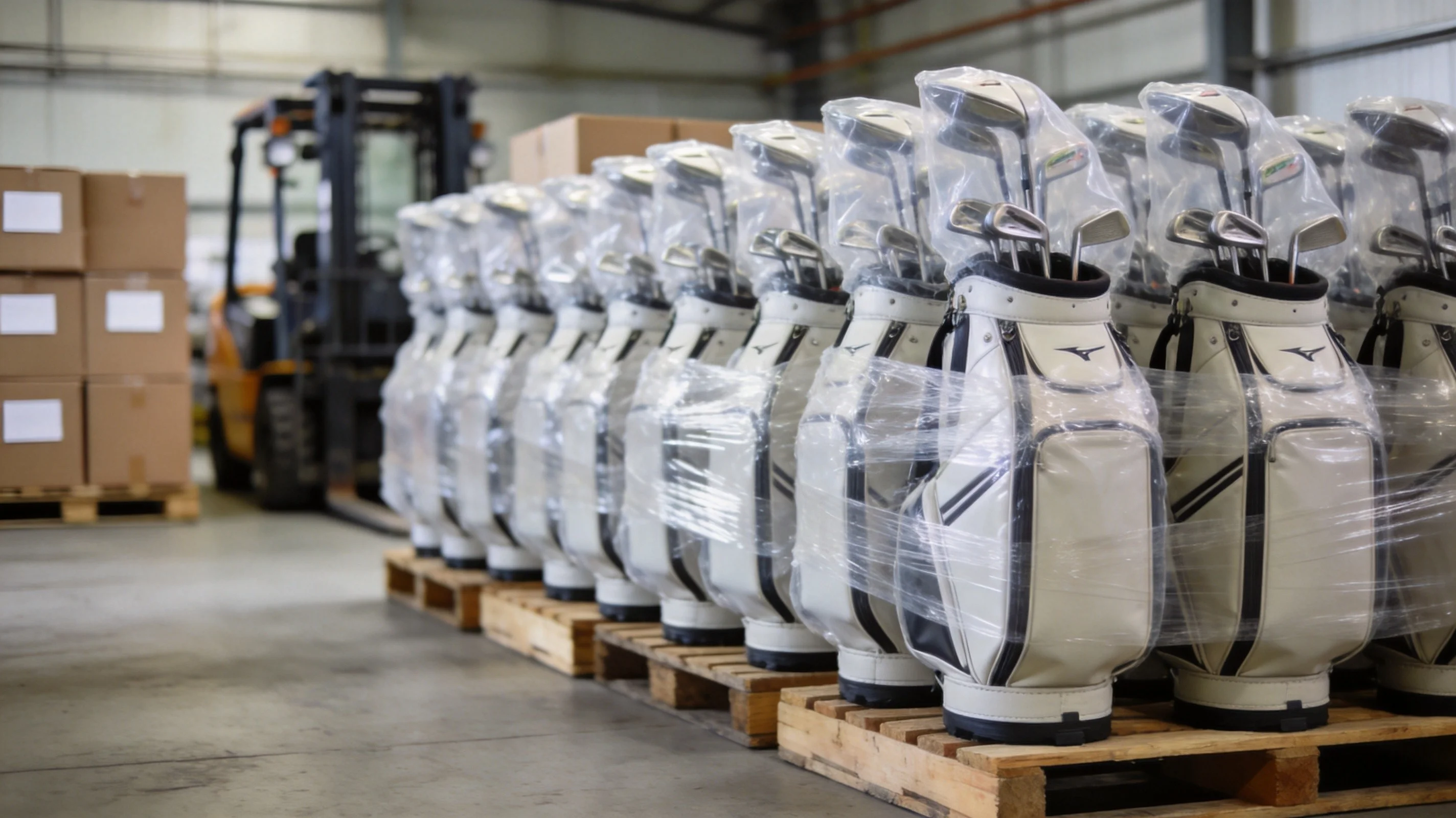
Volume is the great equaliser. The same bag built in higher volume drops per-unit cost as cutting and machine setup are amortised. This is why factory-direct and wholesale pricing at volume beats retail dramatically — you are paying for materials and labour, with retail markup and distribution stripped out.
| Tier | Retail range | Typical build | Best for |
|---|---|---|---|
| Budget | $50-120 | Standard material, fewer pockets | Beginners, occasional play |
| Mid-range | $120-250 | Better material, more features | Regular players — best value |
| Premium | $250-500+ | Full-length dividers, waterproof, trims | Serious players, club protectors |
Budget Bags: When They Make Sense
There are also smart ways to make a budget bag last longer than its price suggests. Mindful use helps a lot: keep it clean, avoid overstuffing pockets, store it properly dry and upright, and catch zipper or seam issues early. A budget bag looked after can surprise with its service life, while a premium bag neglected fails quickly, so care is a genuine equaliser. If budget is your reality, treat the bag well and plan the timeline to your upgrade, and you will get honest value from the money you can spend.
Budget bags are the right choice in two situations: you are a true beginner unsure you will stay with the game, or you want a light, simple bag for occasional travel and casual outings. At this price you get functional construction that carries clubs without fuss, but you trade away durability, dividers and features that heavier players will miss within a few seasons.
The risk is not the bag failing on day one — it is premature wear on seams, zippers and bases from regular use. If you expect to play weekly, a budget bag will likely be replaced quickly, making the "cheap" option the expensive one over time. Budget wisely by matching it to your actual commitment.
Mid-Range: The Value Sweet Spot
The mid-range tier wins on value because it concentrates spend on the two things that genuinely define a good bag: durable construction and solid club protection. It typically brings heavier face materials, a real divider system, dependable hardware and a stable base, all of which the cost per use metric shows paying off over a four-to-eight-year life. The reason so many experienced players settle here is that the marginal cost of moving up to premium buys largely prestige and incrementally better materials, while the jump from budget to mid-range buys a step-change in durability that a frequent player notices immediately.
For most regular golfers, the mid-range tier is the honest recommendation. It delivers most of the durability and features of premium bags — better materials, reinforced stress points, a solid divider system — at a fraction of the price. The extra $100 versus budget buys years of extra life and noticeably better club protection, which most players find the best value decision they make.
When choosing in this tier, prioritise construction over minor feature differences: a solid base, robust zippers and reinforced handles matter more than a marginal pocket count. Inspect build quality first, and you will rarely regret a well-made mid-range purchase.
Premium Bags: Paying for Protection and Prestige
It is worth separating the two reasons people buy premium so you can choose deliberately. Protection value is what full-length dividers, real waterproofing and heavier construction bring, and it is rational to pay for when your set is expensive or your play is intense. Prestige value is the brand, the finish and the feeling, which is valid but personal. Many golfers happily pay for both; the important thing is knowing which you are buying, because paying for prestige when you believe you are buying protection leaves the feature budget in the wrong place.
Premium bags justify their price through two things that genuinely protect your investment: full-length dividers that stop club chatter on expensive shafts, and durable waterproofing that shields your whole set in any weather. If you carry a premium set, the bag protecting it is a rational insurance buy, not vanity. Premium construction also typically lasts the longest, lowering cost per year of use.
Just be clear-eyed about the badge. Part of a premium retail price is brand positioning and margin, which you can avoid by buying factory-direct or considering an equivalent custom build. The protection features are worth paying for; the logo markup is optional. Distinguish the two and you shop smarter.
Factory-Direct and Wholesale Pricing
For a buyer at volume, the wholesale cost stack is the one that matters, and it changes the value judgement completely. Because retail markup, distribution and branding are stripped out, the factory price reflects materials, labour and decoration, which is where the visible quality of the bag actually lives. That is why so many retail brands and pro shops source their own labelled bags directly: they capture the margin that would otherwise go to a brand they are not using. Understanding wholesale economics is how a retailer or brand turns the cost of a quality bag into a profitable range, and it is the perspective this buyer's guide is ultimately building toward.
If you are a retailer, club or brand, wholesale pricing changes the entire equation. Buying direct removes retail markup and distribution layers, and ordering at volume (a standard 200-piece MOQ, or 100-piece test order) amortises setup costs across units. The result: you pay for materials, labour, decoration and volume — not brand positioning. That margin is how retail brands thrive, and it is available to you directly.
Understanding the factory cost structure lets you model your own margin and retail price intelligently. Our wholesale pricing guide walks through every component of cost so you can see exactly where the money goes and where to negotiate.
Hidden Costs: Freight, Duty and Value Retention
Value retention is an under-appreciated part of the analysis because it operates in the other direction from the initial outlay. A quality bag holds a stronger resale or trade-in value than a budget bag, clawing back part of the higher upfront cost and narrowing the real price gap. Combined with total landed cost, this means the honest comparison between budget and premium is smaller than the sticker prices suggest in most markets and seasons. A buyer who models the full picture, costs in transportation and duty on the way in and residual value on the way out, gets a much truer measure of what each tier actually costs.
Price analysis is incomplete without total landed cost. Freight, customs duty and insurance add up, especially for imported bags, and a cheap unit can become an expensive one by the time it arrives. Conversely, a quality bag holds resale and trade-in value far better than a cheap one, which offsets its higher upfront price. Model the full cost, not the sticker.
For international buyers, getting the landed-cost picture right is decisive. Our import guide for the US market covers freight, duty and documentation considerations in one place.
Cost Per Use: The Metric That Matters
Cost per use is the metric that reconciles a cheap and a premium bag honestly. It asks what you actually pay for each round a bag realistically serves you, and it is the figure that shows quality winning. A bag that costs more but lasts far longer, and protects a costly set through that life, is cheaper per round than a bargain that fails quickly and offers little protection. Especially for the golfer who plays weekly, framing the purchase as a per-round cost rather than a shelf price reveals the true value and prevents the short-sighted over-saving that leads to more spending later.
The most honest way to compare bags is cost per use over their expected life. A $200 bag lasting 8 years with weekly play costs far less per round than a $90 bag replaced every 2 years. Framed this way, quality consistently wins. When a bag is built to last and you use it often, the higher upfront price is the cheaper choice in real terms.
This lens also guides custom and wholesale decisions: spend on durability materials that survive years of use, rather than on feature theatre that adds cost without extending life. Evaluate any purchase on what it costs you per round, and the value becomes obvious.
A Practical Budgeting Approach
For businesses buying at volume, comparing factory-direct pricing through an OEM and ODM partner alongside wholesale channels can reveal structural savings that retail pricing simply cannot match.
Putting it together, a practical approach is to set three numbers: the value you place on your clubs, how often you play, and the longest you are willing to keep a bag. Your clubs and frequency tell you how much construction your bag must justify, and your expected ownership period tells you how to amortise the cost. From those three inputs you can arrive at a sensible tier and a target spend without being swayed by marketing or FOMO. This clears the decision of emotion and anchors it in the real value the bag will deliver over its life.
Set your budget relative to your set and your frequency, not a round number. If your clubs are worth thousands and you play weekly, protecting them with a mid-range or premium bag is a clear, rational spend. If you are a casual, occasional player, match the bag to the usage and keep more of your money. Then focus the spend on build quality and the features you genuinely use.
Buying Direct For Your Brand or Retail Line?
Understand the full cost structure, model your margin, and source quality bags at factory-direct pricing. Standard 200-piece MOQ with 100-piece test orders.
Explore Wholesale →Golf bag pricing is explainable: materials, construction, features and branding stack up to the retail price, with margins on top. Buy the build quality that matches your set and play frequency — mid-range usually wins on value — and consider factory-direct sourcing to strip out retail markup. Frame every decision by cost per use, and you will never overpay for a golf bag again, and you will know exactly what you are paying for every time.
How Retail Pricing Is Built Up
A retail price is not a single number; it is a stack of costs assembled by the seller. At the base sits the factory cost, which itself is built from materials, labour, decoration and overhead. On top of that the wholesaler or distributor adds margin and logistics, and the retailer adds their own margin to reach the shelf price. Brand positioning sits somewhere in that chain, inflating or defending the total depending on how the brand is marketed. Understanding this stack tells you why two superficially similar bags can be priced very differently and where the leverage for a better deal actually lies.
For a buyer, the practical implication is that you are rarely paying for the physical product alone. You are paying for distribution, margin and brand, none of which improve how the bag carries your clubs in the same physical sense that materials and construction do. That is not a criticism; it is simply where the money goes. The insight is that a value-conscious buyer who understands the stack can choose to pay for construction and skip the parts that add cost without adding performance, which is exactly the calculation factory-direct sourcing can shift in your favour.
Seasonal Pricing, Promotions and Market Timing
Golf bag prices move with the calendar and the retail cycle, so timing a purchase can meaningfully change what you pay. New season launches tend to arrive priced at the top of the range, while prior-season models are discounted to clear stock, offering a genuine value window for buyers who do not need the very latest release. Sales events, end-of-season clearances and holiday promotions further depress prices, and the gap between a launch price and a clear-out price can be striking for nearly identical products.
For retailers and brands sourcing bags, timing also shapes cost, because ordering to a season and taking advantage of manufacturing cycles affects both unit price and lead time. Buying at the right point in the product calendar, and negotiating volume against the fixed setup costs, mirrors the consumer timing advantage at a wholesale scale. Whether you are buying one bag or a thousand, knowing when to buy is worth real money, and it compounds with every subsequent order as your relationship and volume mature.
Material and Feature Drivers Revisited
Because materials and features are where the bulk of manufacturing cost lives, they deserve the sharpest scrutiny when you compare value. Heavier face fabrics, waterproof laminates, full-length dividers, robust hardware and a sound base all add cost, but each also adds genuine durability and protection, so they are the places where your money buys real performance. Feature theatre by contrast, marginal extras that sound appealing but do little, adds cost without proportional benefit. Learning to tell the difference between value-add and feature theatre is the core skill of a smart buyer, and it applies whether you are picking a single bag or designing a range to sell.
Budgeting for Your First, Upgrade or Tournament Bag
Your buying budget should reflect the stage of your golf, because the right spend differs completely by situation. A first bag for a beginner who may not yet play often reasonably sits at the budget end, with the expectation of an upgrade as commitment grows. An upgrade for a regular player who has outgrown an old bag justifies the mid-range or premium tiers, because the longer service life and better protection pay back the higher price. A tournament or presentation bag, meanwhile, may warrant premium build for both performance and appearance, since it represents the player or brand prominently in a competitive setting.
Letting your stage, not someone else's recommendation, set the budget is the honest way to spend. It forces the question of how much value the bag will actually deliver to you rather than how impressive it looks on a shelf. When you align the spend to your real, current use, you avoid both overpaying for unused capability and underbuying the durability your frequency genuinely requires.
Conclusion
Buying a golf bag smartly is a matter of seeing through the sticker price to the cost stack behind it and aligning spend with real value. Compare retail tiers by materials, construction, features and volume rather than by branding, buy at the right time in the product and seasonal cycle, decide your budget by your stage of play, and weigh cost against per-use cost over the life of the bag. For anyone sourcing at volume, factory-direct pricing removes the retails markup while keeping the construction. Do these things consistently, and the right bag at the right price stops being a gamble and becomes a routine, well-reasoned decision that protects both your clubs and your budget for many seasons of play.
And remember that a golf bag interacts directly with your enjoyment of the game, so the cheapest option is not always the cheapest in practice. Frame the purchase as value delivered across the years it serves you: protecting clubs, staying comfortable and causing no trouble justifies a fair price every single round. That consistent framing keeps the price in perspective and turns buying a bag into a sound investment in a long, enjoyable life of play.
Sources
- How much should a good golf bag cost?
- Budget runs $50-120, mid-range $120-250, and premium $250-500+. Pay for build quality and features, not just branding. Always compare like for like and weigh construction above brand.
- What makes a golf bag more expensive?
- Materials, construction complexity (dividers, waterproofing), features, decoration and volume — plus retail markup on top of factory cost.
- Is a more expensive golf bag worth it?
- Usually yes for durability and club protection. The mid-range tier often delivers the best value. Judge on construction, not price alone.
- Why are custom or wholesale golf bags cheaper per unit?
- Factory-direct removes retail markup and layers, and volume spreads setup costs — you pay for the bag, not the logo.
- What is a fair budget for a first golf bag?
- A budget bag of $50-120 is fine if you expect to upgrade; stepping up to mid-range is better value if you play regularly.